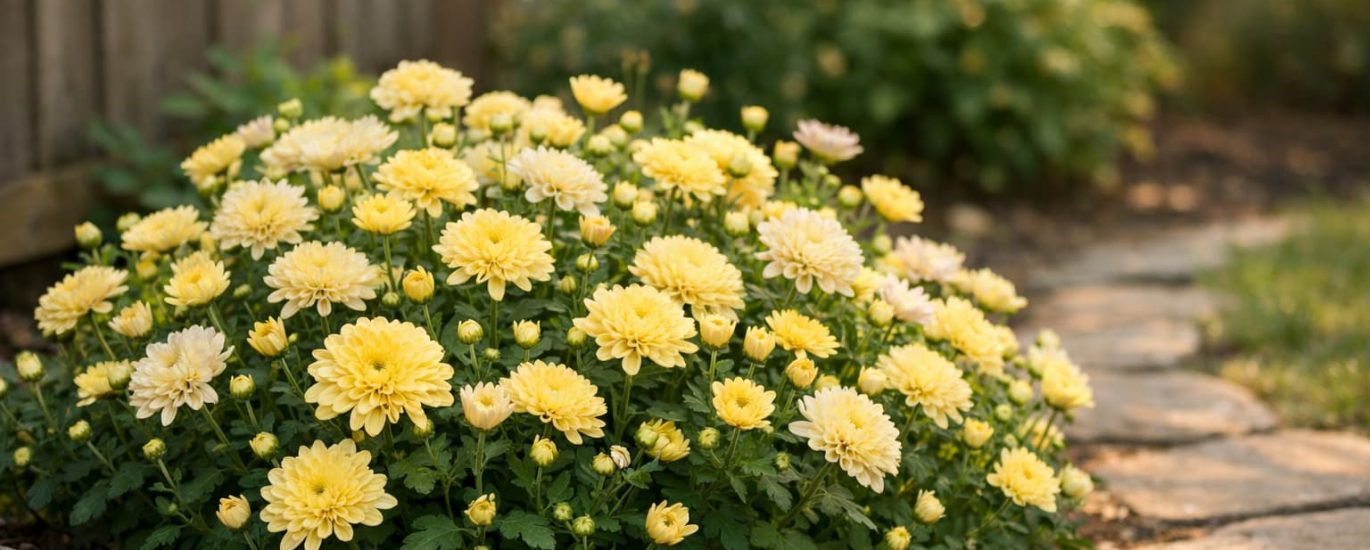
If you’ve ever walked past a garden center in fall, you’ve seen them everywhere — neat mounds of color labeled simply as “mums.”
But what exactly is a chrysanthemum?
A chrysanthemum is a perennial flowering plant in the daisy family (Asteraceae), grown for its fall blooms, cultural symbolism, and remarkable adaptability across climates.
In the U.S., chrysanthemums are often treated as seasonal decorations. In reality, many varieties are long-lived plants with precise growth rhythms — misunderstood not because they’re difficult, but because their biology is rarely explained.
This guide breaks down what chrysanthemums really are, how they grow, what they mean, and how to care for them — focusing on the details that quietly determine whether they thrive or disappear after one season.
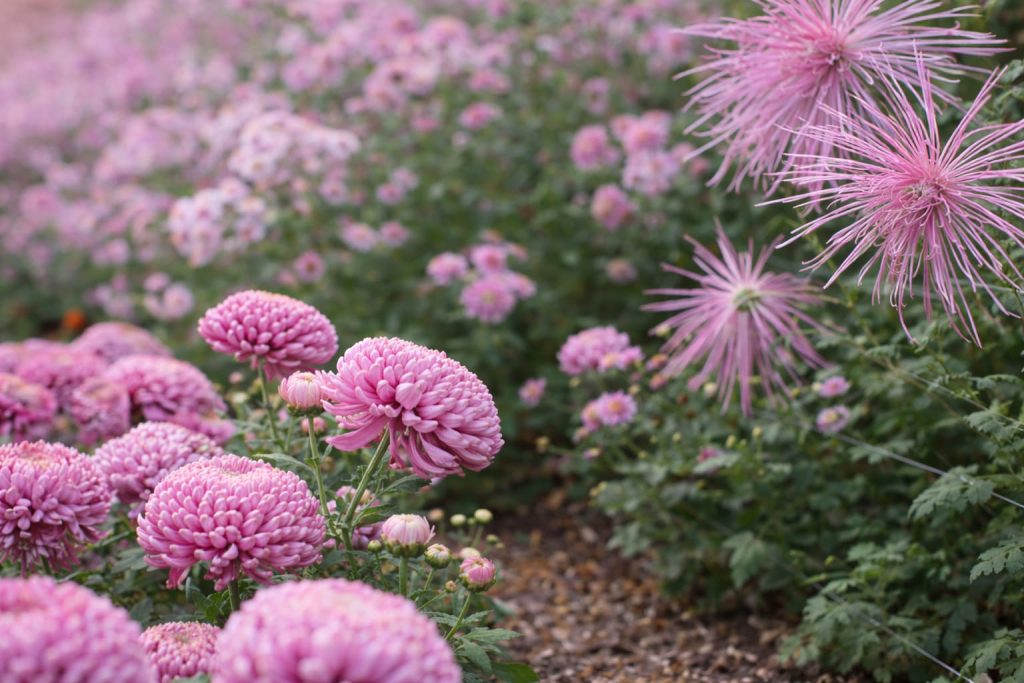
What Is a Chrysanthemum?
Chrysanthemums belong to the genus Chrysanthemum, a group of flowering plants native primarily to East Asia. They have been cultivated for more than 2,000 years, long before they became associated with fall gardens in North America.
Botanically, chrysanthemums are:
- Perennial plants, capable of returning year after year
- Members of the daisy family, with composite blooms made of many tiny florets
- Photoperiod-sensitive, meaning bloom timing depends on day length rather than temperature
Are Mums and Chrysanthemums the Same?
Yes. “Mum” is simply the shortened name for chrysanthemum.
The confusion comes from how the term is used in gardening.
- “Mums” usually refers to compact, heavily bred varieties sold in fall
- “Chrysanthemums” may include garden perennials, florist types, and heirloom forms
While all mums are chrysanthemums, not all chrysanthemums are the short-lived plants people expect. Many varieties are fully capable of overwintering and returning — if planted and cared for with timing in mind.
Popular Chrysanthemum Types
Most guides list chrysanthemum flower shapes. What actually helps gardeners is understanding how different types behave.
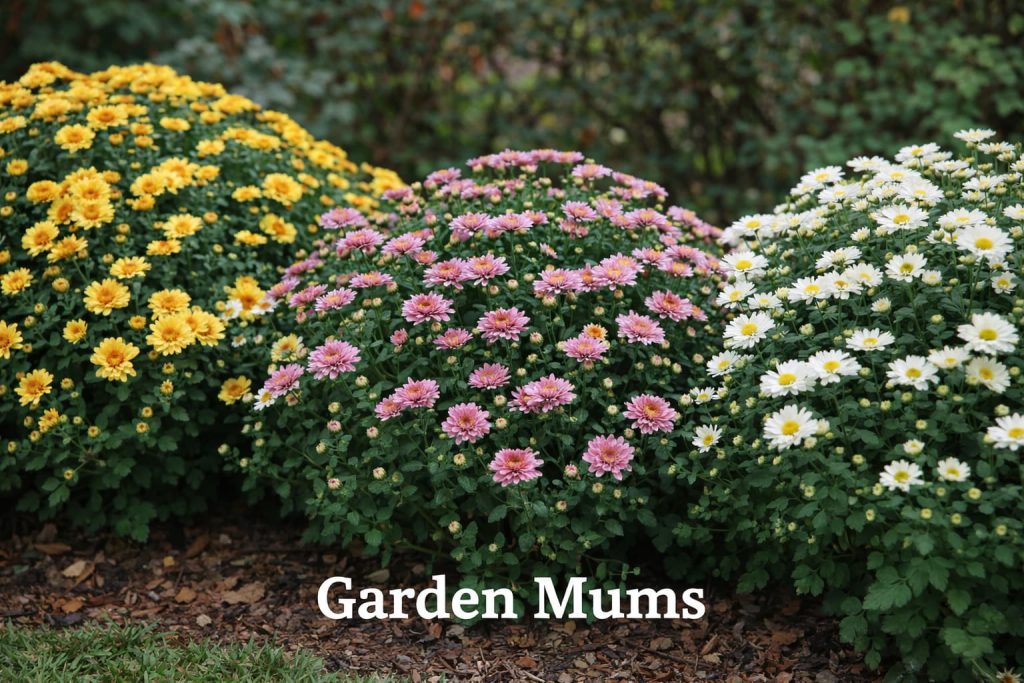
Garden Mums
- Cold-hardy perennials
- Designed for outdoor planting
- Best chance of returning if planted early
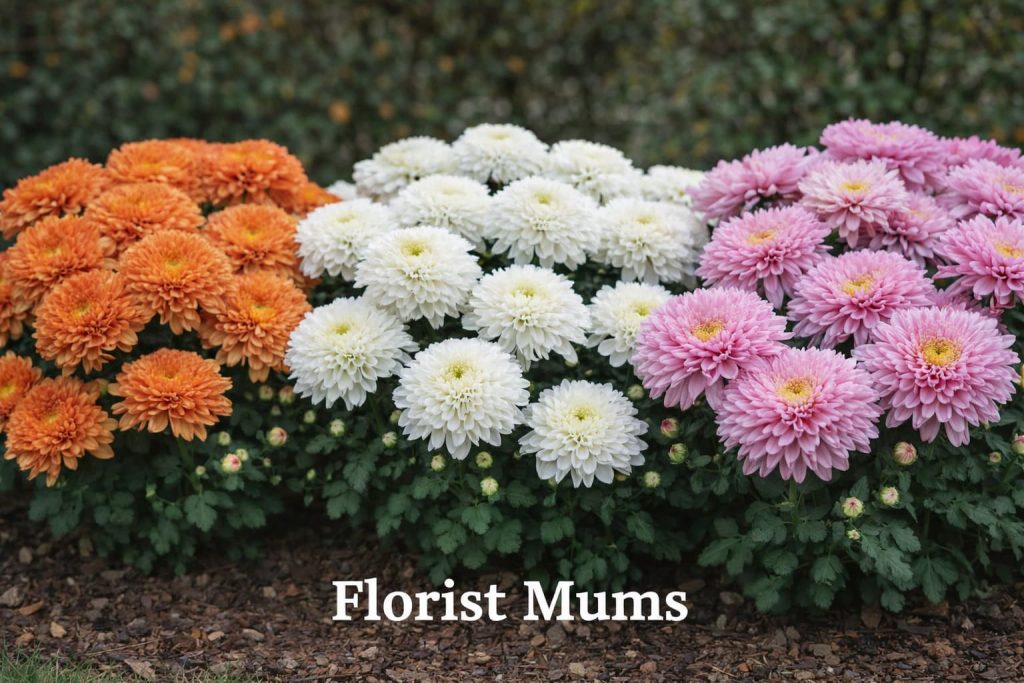
Florist Mums
- Grown for cut flowers
- Often not winter-hardy
- Bred for large, long-lasting blooms
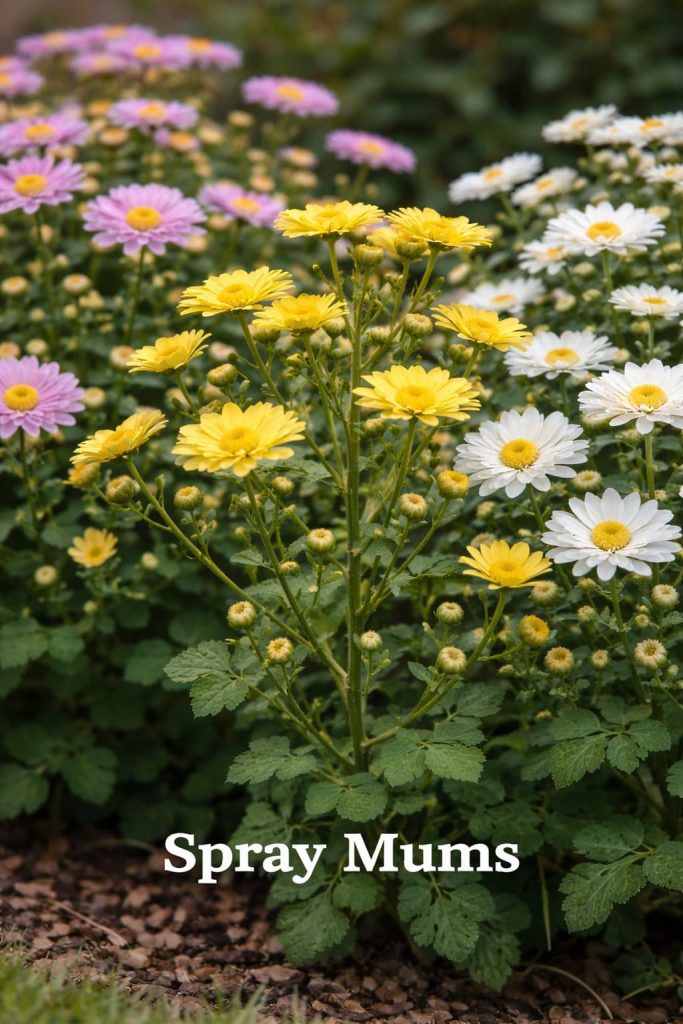
Spray Mums
- Multiple smaller blooms per stem
- Common in bouquets
- Often mistaken for daisies
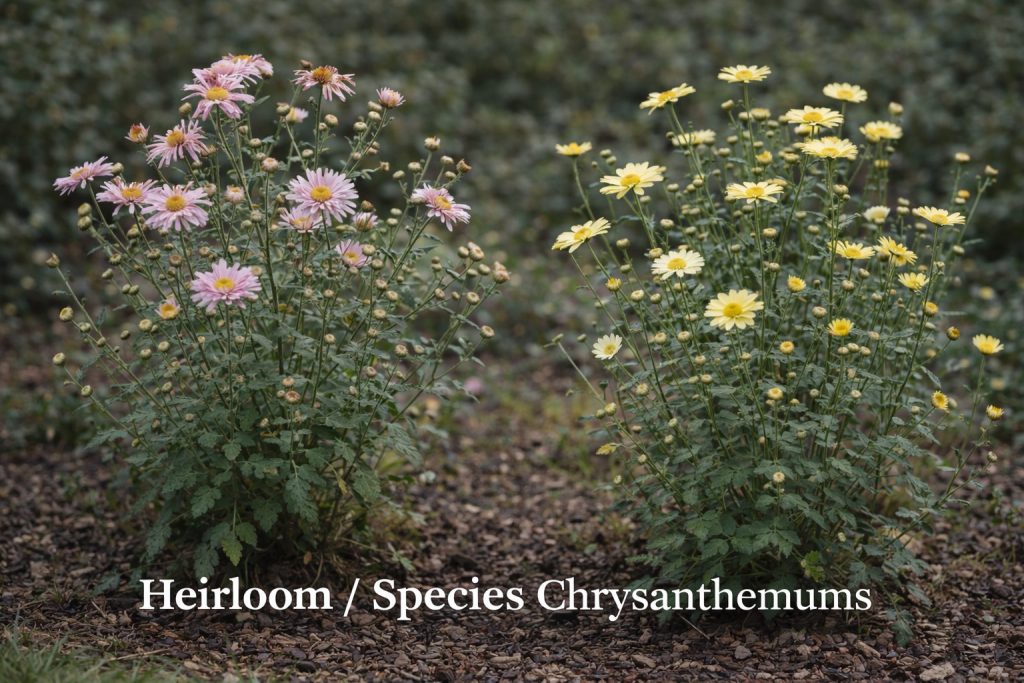
Heirloom & Species Chrysanthemums
- Looser, more natural growth
- Fewer but longer-lived blooms
- Often more resilient than modern hybrids
Why this matters:
Buying the wrong type for your climate is one of the main reasons gardeners assume mums “never come back.”
How Chrysanthemums Grow
Chrysanthemums are triggered to bloom by long nights, not cooler temperatures.
As days shorten in late summer:
- Plants shift from leaf growth to bud formation
- Any artificial light at night can interrupt this process
Mums planted near porch lights, street lamps, or garage lights may grow vigorously — and never flower.
Another overlooked detail: chrysanthemums develop shallow, spreading root systems. Because of this, drainage matters more than depth. Roots sitting in wet soil struggle long before leaves show stress.
Chrysanthemum Care Basics
Sunlight
- Full sun is ideal (6+ hours daily)
- Morning sun is preferable to intense afternoon heat
Soil
- Well-draining soil is essential
- Heavy clay or compacted soil shortens lifespan quickly
Watering
- Keep soil consistently moist, not saturated
- Deep watering followed by proper drainage is key
Pinching (The Secret to Better Blooms)
Pinching back stems in late spring and early summer:
- Encourages bushier plants
- Prevents floppy growth
- Dramatically increases flower count
Stop pinching by mid-summer to avoid delaying blooms.
Common Problems & Mistakes
“My mum looked fine, then suddenly collapsed.”
Often a drainage issue, not disease.
“It bloomed once and never returned.”
Usually planted too late for roots to establish before winter.
“Lots of leaves, no flowers.”
Commonly caused by:
- Nighttime light exposure
- Late-season fertilizing
- Excess nitrogen
“Flowers faded quickly.”
Often due to heat stress or inconsistent watering during bud formation.
Quiet Mistakes That Shorten a Mum’s Life
Many chrysanthemums don’t fail dramatically.
They fade quietly — because of small decisions made early.
Experienced growers often notice the same patterns:
- Planting too late in fall, leaving roots no time to establish
- Leaving pots on cold concrete, which amplifies temperature stress
- Ignoring nighttime light exposure, delaying or preventing buds
- Feeding heavily late in the season, encouraging leaves instead of flowers
None of these mistakes look serious on their own. Together, they explain why mums so often disappoint — even in otherwise healthy gardens.
Chrysanthemum Meaning
Chrysanthemum meaning varies widely by culture.
In the U.S.:
- Friendship
- Optimism
- Seasonal abundance
In Europe:
- Remembrance
- Respect
- Memorial traditions
In East Asia:
- Longevity
- Integrity
- Inner strength
Color also plays a role:
- White: remembrance, honesty
- Yellow: joy, loyalty
- Red: love, vitality
- Blue (rare or dyed): mystery and imagination
Chrysanthemum vs Other Fall Flowers
| Flower | Best For | Key Difference |
|---|---|---|
| Chrysanthemum | Structure & longevity | Day-length blooming |
| Aster | Pollinators | Looser growth habit |
| Dahlia | Showy blooms | Not frost-tolerant |
| Marigold | Easy care | Shorter bloom season |
Chrysanthemums stand out because they anchor fall gardens when most plants begin to slow down.
A Final Perspective
Chrysanthemums aren’t just fall decorations.
They’re perennial plants with deep history, precise biological rhythms, and surprising resilience — when grown with intention.
When you understand how and why they bloom, chrysanthemums stop being seasonal fillers and start becoming reliable garden companions.
That shift — from decoration to understanding — is what turns mums into plants worth growing year after year.