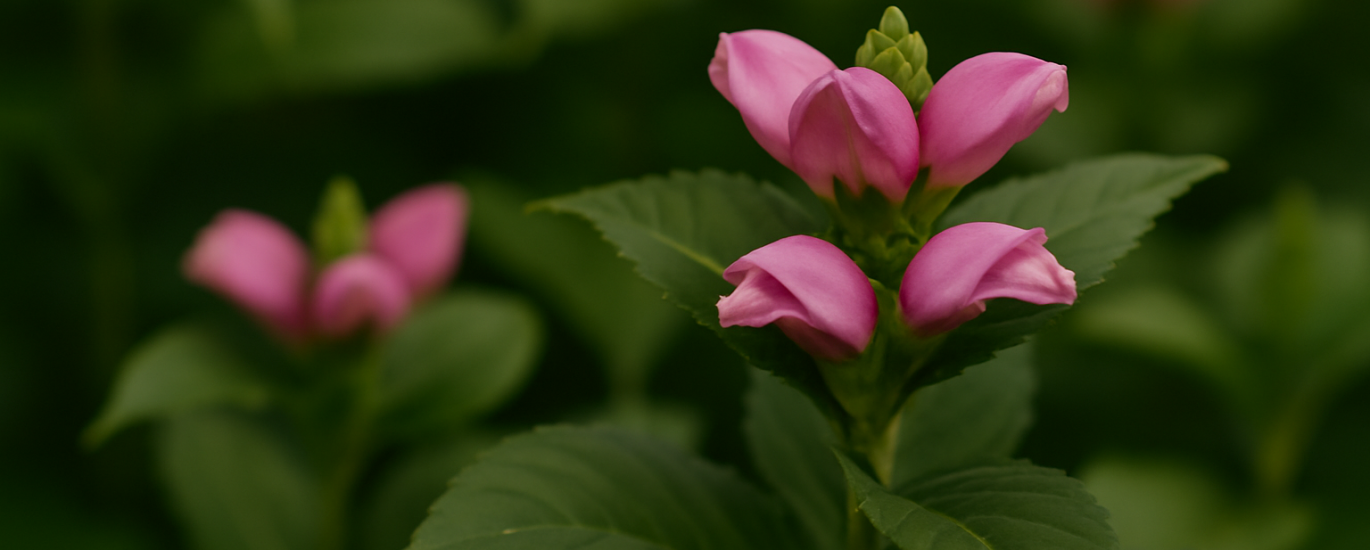
If you’ve ever wished for a plant that brings soft color, unique personality, and woodland charm to the shadier corners of your garden, Turtlehead might be the perfect fit. Named for its adorable blooms that resemble little turtles opening their mouths, this native perennial is one of the most delightful—and underrated—plants of late summer and early fall.
Thriving where many other flowers struggle, Turtlehead lights up moist, shady areas with pink, rose, or purplish blooms just as summer begins to shift toward autumn.
Symbolism: Why Turtlehead Is the Perfect Plant for Transitional Seasons
In folklore and modern garden culture, Turtlehead represents:
Playfulness & curiosity
New beginnings in overlooked places
Resilience in difficult conditions
A quiet, steady presence in the landscape
It is a wonderful plant for moments of seasonal transition, making it a great choice for:
- Back-to-school garden refresh
- Labor Day gatherings
- Late-summer forest-themed arrangements
- Soft autumn garden corners
Its shape alone makes people smile—children especially love identifying the “little turtles.”
How to Identify Turtlehead (Visual Profile)
Turtlehead is easily recognized by its:
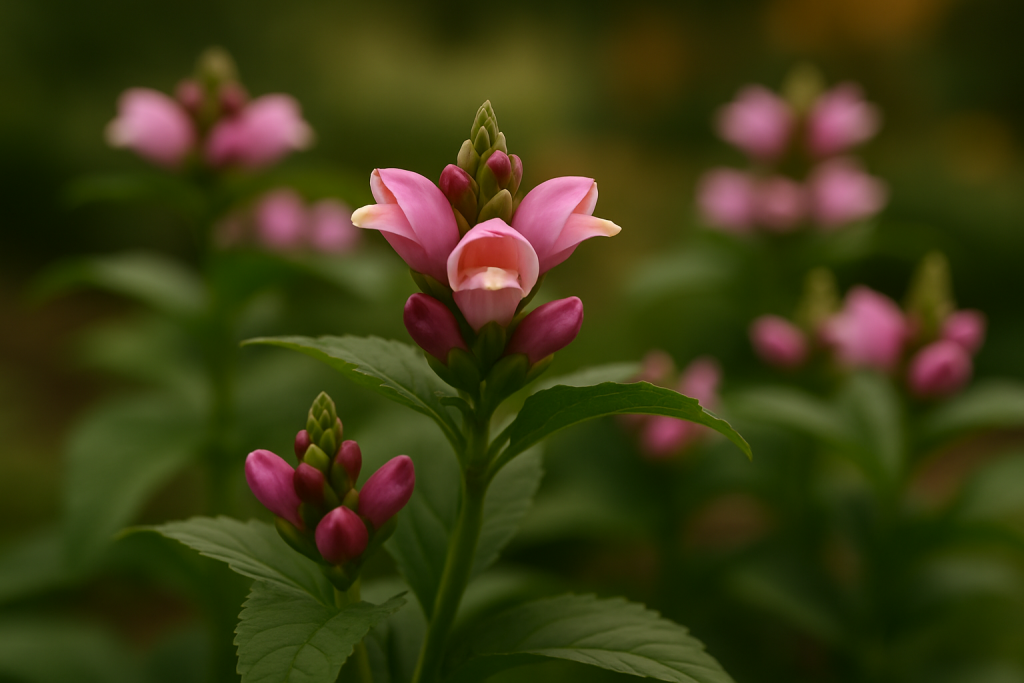
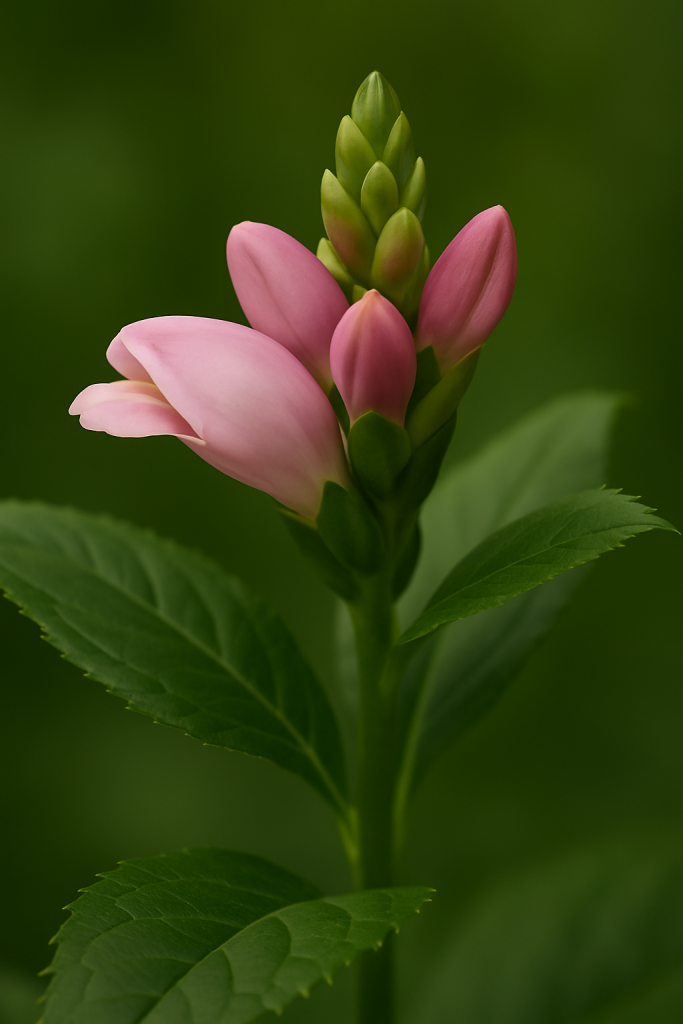
- Snapdragon-like flowers shaped like tiny turtles
- Pink to deep rose-purple blooms (depending on cultivar)
- Large, glossy, lance-shaped leaves with a woodland texture
- Upright, clumping form that stays tidy and architectural
It looks especially stunning when planted in small colonies along shady streams, rain gardens, or moist woodland edges, where the light filters through tree canopies.
Growing Conditions (Beginner-Friendly)
Light
Partial shade to full sun
(Bloom color is richer in morning sun + afternoon shade.)
Soil
Moist, well-drained soil is ideal
Perfect for:
- Wet spots
- Rain gardens
- Streamside plantings
- Naturally humid microclimates
USDA Zones
3–8
Height
2–3 feet
A perfect mid-border or woodland understory height.
Watering
Moisture-loving; do not allow soil to dry out completely.
Bloom Season
Turtlehead blooms beautifully from late summer through early fall, offering soft color precisely when many shade perennials have finished.
This extended bloom time helps balance gardens transitioning out of summer and into autumn hues.
Ecological Benefits: A Pollinator Favorite
Turtlehead is an undervalued powerhouse for woodland pollinators.
- Bumblebees are especially drawn to it, using their weight to pry open the “turtle mouths.”
- Acts as a late-season nectar source for many native insects.
- A key species in wetland and riparian ecosystems.
If you care about building a habitat-supportive garden, Turtlehead is a must-have.
Where Turtlehead Truly Shines
1. Rain Gardens
Its love for moisture and sturdy growth make it an ideal rain garden plant.
2. Shaded Woodland Borders
Adds brightness and unexpected color to darker garden areas.
3. Moist, Low-Lying Corners
Perfect for spots where other perennials fail due to dampness.
4. Naturalistic Garden Style
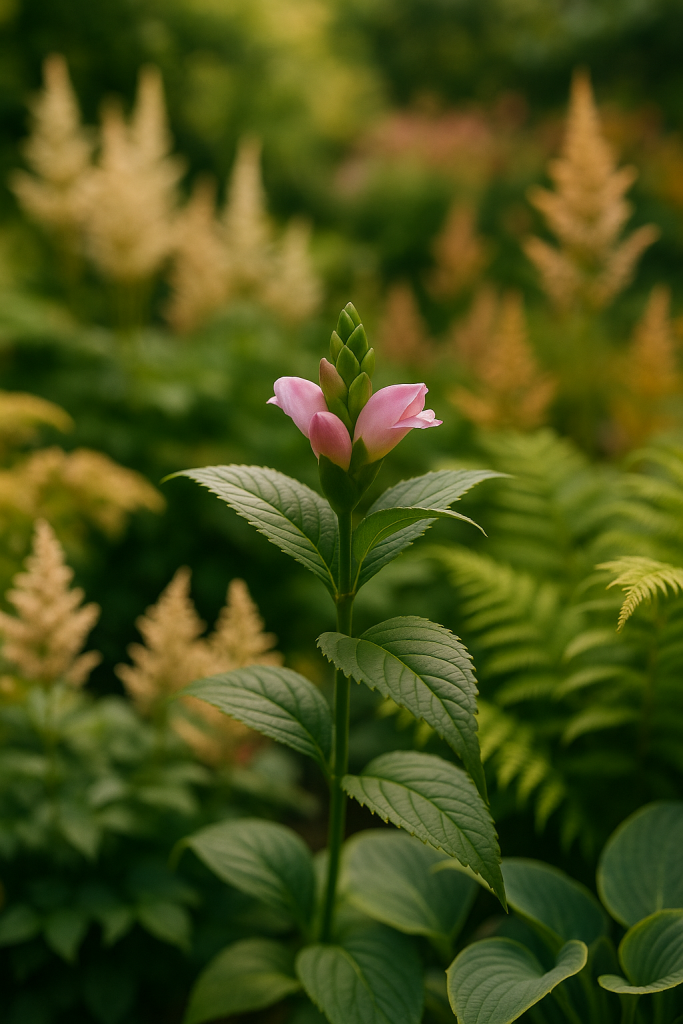
Pairs beautifully with ferns, Joe Pye weed, astilbe, and cardinal flower.
Real Problems Gardeners Face — And How Turtlehead Helps
Problem 1: “My shady areas look flat and boring.”
Turtlehead brings structure, shine, and color to low-light spaces.
Problem 2: “Most flowers hate wet soil.”
Turtlehead thrives in moist, even soggy soil.
Problem 3: “I want pollinator plants beyond full-sun areas.”
Turtlehead feeds bumblebees and native bees in woodland gardens.
Turtlehead as a Symbol of Quiet Strength
While bold autumn perennials steal the spotlight, Turtlehead works quietly in the background—steady, dependable, always blooming on time.
Its distinctive flowers remind us that even in overlooked spaces, nature creates charm and resilience.
This is the plant for gardeners who love discovering beauty in the margins.
Turtlehead may not be the loudest bloom in the fall garden, but it is certainly one of the most heartwarming.
Plant it in the right spot, and it will return every year—bringing color, texture, and ecological life just when your garden needs it most.
A gentle bloom with a strong spirit.
A woodland perennial with unforgettable personality.
A must-have for late-summer and early-fall gardens.