Sunflowers vs. Zinnias: Which Summer Bloom Is Right for Your Garden?
Quick Summary
Choose sunflowers for height, wildlife value, edible seeds, and bold seasonal structure. Choose zinnias for continuous bloom, container flexibility, drought tolerance, and a wider color range.
For many gardens, the strongest design uses both: sunflowers at the back of the border and zinnias in front or in nearby containers.
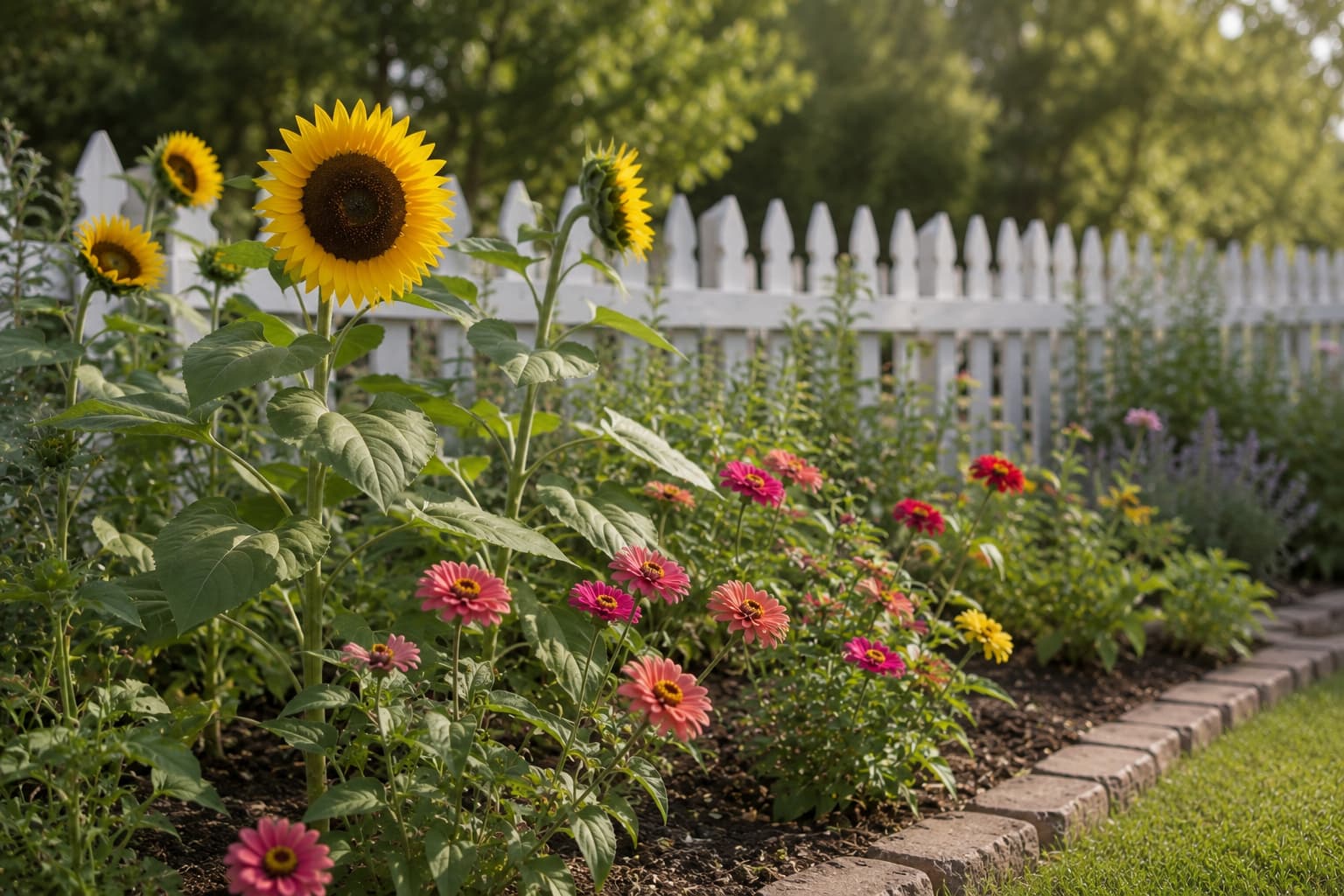
Every summer, the gardening corners of the internet light up with the same debate: sunflowers or zinnias? Both are classic summer annuals. They produce armloads of flowers. In addition, both are easy to grow from seed. However, they're fundamentally different plants with different strengths, and choosing between them — or deciding how to use both — comes down to understanding what each one does best.
For example, I've grown both in the same garden for several years, and I've learned that the question isn't really "which is better." It's "which is better for what you want." Here's the honest comparison, based on real growing experience.
Head-to-Head Comparison
| Category | Sunflowers | Zinnias |
|---|---|---|
| Height | 2–12 feet depending on variety | 6 inches to 4 feet depending on variety |
| Bloom period | Single-stem types produce one main bloom; branching types can flower for several weeks. Succession sowing extends the display. | Continuous from first bloom until frost with regular cutting or deadheading. |
| Days to bloom from seed | Usually 55–90 days, depending on variety, temperature, and growing conditions. | Usually 60–75 days, depending on variety and growing conditions. |
| Water needs | Moderate. Established plants tolerate short dry spells, but even moisture supports stronger stems and larger flowers. | Low to moderate. Established plants handle short dry spells, though flowering improves with occasional deep watering. |
| Sun requirements | Full sun (6+ hours) | Full sun (6+ hours) |
| Soil preference | Well-drained, moderately fertile soil; avoid excessive nitrogen, which can encourage weak, leafy growth. | Well-drained soil with average fertility; overly rich soil can produce more foliage and fewer flowers. |
| Vase life | 7–10 days | 7–10 days |
| Pollinator value | Excellent for bees; seeds feed birds in fall | Excellent for butterflies and bees |
| Pest resistance | Aphids, beetles, birds, or squirrels may damage plants or developing seeds. | Generally few major pests, but powdery mildew and spider mites can appear in stressful conditions. |
| Container suitability | Compact and dwarf varieties are easiest; use a deep, stable container with good drainage. | Excellent. Match the mature size of the variety to the container. |
Variety and climate matter: Branching sunflowers bloom longer than single-stem cutting types, while compact and disease-resistant zinnias behave differently from tall cutting varieties. Bloom dates also shift with local frost dates, summer temperatures, and day length, so use the comparison as a practical guide rather than a fixed calendar.
Sunflowers: The Drama Queens of the Summer Garden
To begin with, sunflowers are one of the most gratifying plants to grow from seed. A seed the size of your fingernail becomes a 6-foot plant in 60 days. There's nothing subtle about them — they're bold, structural, and impossible to ignore. However, they come with trade-offs that are worth understanding before you commit to them.
What sunflowers do better than zinnias
Height and structure. First, sunflowers create vertical drama that zinnias cannot match. For example, a row along a fence or at the back of a border adds strong seasonal structure. Giant varieties such as 'Mammoth' may reach 10 feet or more in favorable conditions, while branching varieties such as 'Autumn Beauty' and 'Lemon Queen' usually stay shorter and produce several side blooms.
Pollinator and wildlife value. In addition, sunflowers are exceptional bee plants. A single sunflower head contains hundreds of individual florets, each producing nectar and pollen. After flowering, the seed heads become a natural bird feeder. For example, goldfinches, chickadees, and other small birds will cling to the heads and pick out seeds for weeks. If you want a garden that feeds wildlife as well as your eyes, sunflowers deliver.
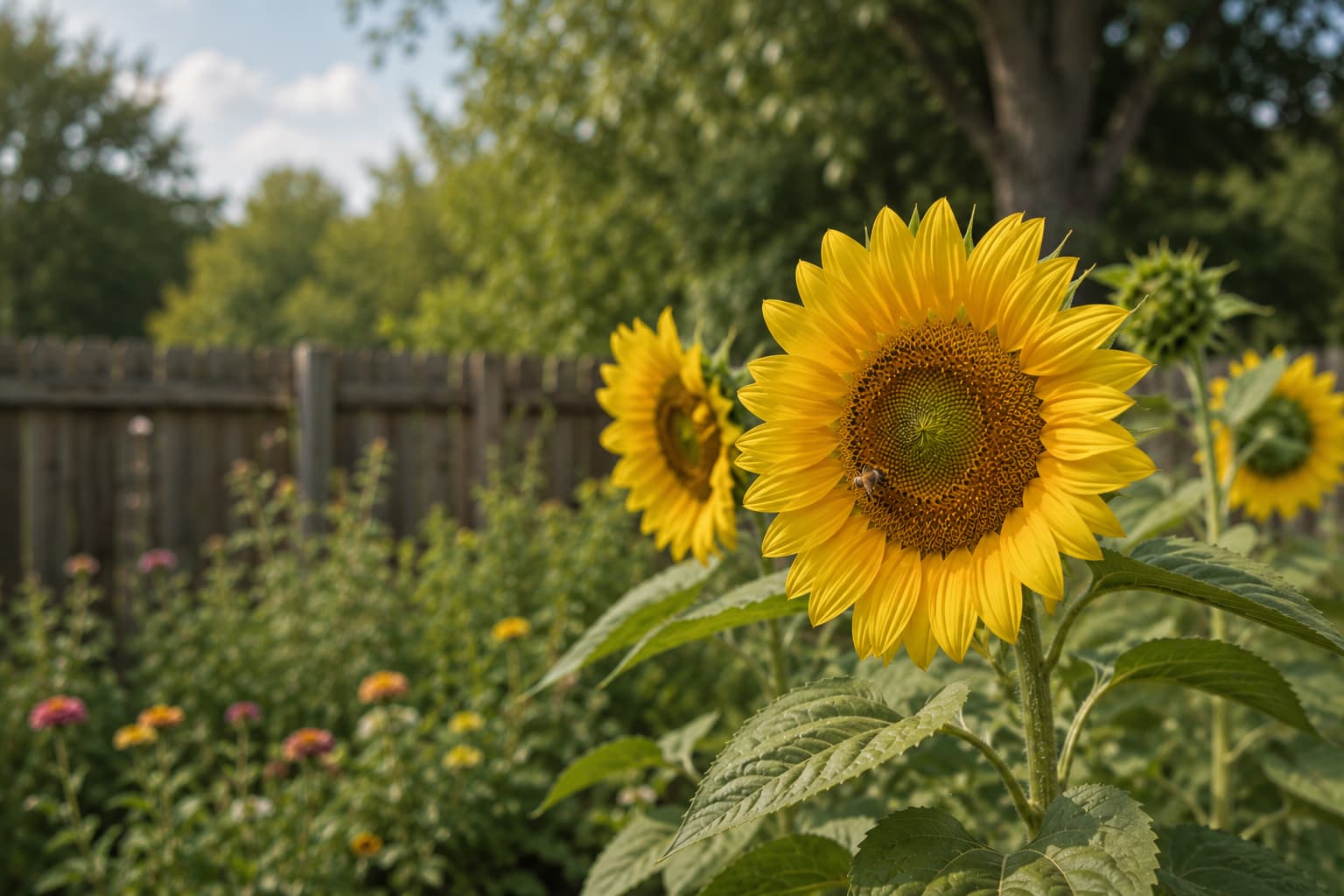
Edible harvest. Finally, this is something zinnias cannot offer in the same way. Sunflower seeds are a legitimate food crop — you can harvest them for yourself, leave them for the birds, or both. The seeds are high in protein, healthy fats, and vitamin E.
What sunflowers do worse
Bloom duration. However, single-stem sunflowers usually produce one main flower and are finished after that bloom fades. By comparison, branching varieties can continue producing smaller side flowers for several weeks, but succession sowing remains the most reliable way to maintain a continuous sunflower display. Therefore, sow a small batch every 2–3 weeks from late spring into midsummer, adjusting the final sowing date to your local growing season.
Water needs. Meanwhile, established sunflowers can tolerate short dry periods, especially when grown in the ground, but consistent moisture produces stronger stems and larger flower heads. For example, water deeply when the upper soil begins to dry rather than keeping the root zone constantly wet. Therefore, container-grown plants need more frequent checks because their soil dries faster.
Space requirements. In addition, tall and giant sunflowers need generous root space and may require support in exposed locations. However, compact cultivars can grow successfully in containers, but they still perform best in a deep, stable pot with drainage. For small spaces, choose a named dwarf or compact variety rather than assuming every sunflower will stay manageable.
Zinnias: The Reliable Workhorses
By contrast, zinnias are the reliable performers. In addition, they do not require succession planting for a long display, and regular cutting encourages more branching. In many climates they bloom from early or midsummer until the first frost, although the exact season depends on local temperatures and planting time.
What zinnias do better than sunflowers
Continuous bloom. Most importantly, continuous bloom is the decisive advantage. For example, a single zinnia plant, given regular cutting, will produce dozens of flowers over a season. As a result, each time you cut a flower, the plant responds by sending up two or three new stems. Therefore, this cut-and-come-again habit means you can fill vases all summer and the plant will just keep going. By comparison, sunflowers give you one dramatic show; zinnias give you a season-long supply.
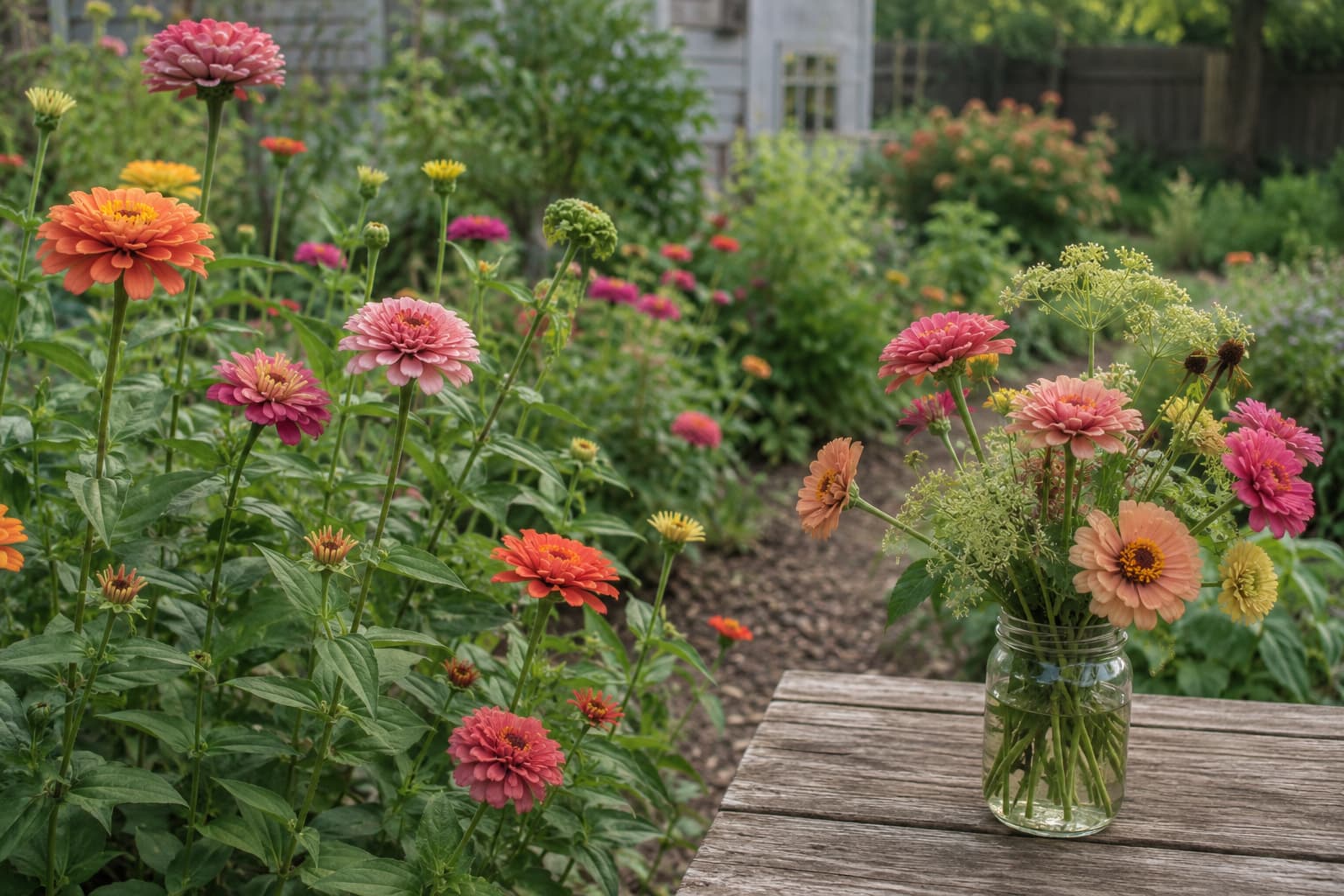
Drought tolerance. Meanwhile, once established, zinnias handle short dry spells better than many common summer annuals. However, they may slow flower production during extended heat or drought, but they usually recover when watered deeply. Therefore, young plants and container-grown zinnias still need regular moisture while roots are developing.
Container and small-space versatility. For containers, zinnias range from compact border varieties to tall cutting-garden types. For example, smaller series work well in pots, window boxes, and balconies, while taller varieties need larger containers and more spacing. Therefore, always check the mature height and spread on the seed packet rather than choosing by flower color alone.
Color range. Finally, zinnias come in nearly every common flower color except true blue. There are pure whites, soft pastels, vivid oranges and reds, deep burgundies, lime greens, and bicolors. By comparison, sunflowers are mostly yellow, with some varieties offering orange, red, or bronze tones. Therefore, if you're looking for a specific color palette, zinnias give you far more options.
What zinnias do worse
Powdery mildew. However, powdery mildew is one of the most common complaints about zinnias. For example, in humid conditions or with poor air circulation, a white powdery coating can develop on the leaves. It doesn't usually kill the plant, but it looks bad and can reduce blooming. Therefore, space plants properly (don't overcrowd), water at the soil level rather than from above, and choose resistant varieties. 'Profusion' and 'Zahara' series zinnias are bred for mildew resistance.
Structural presence. By contrast, zinnias are bushy, medium-height plants. However, they do not create the vertical drama that sunflowers do. Therefore, in a garden design, they work as filler plants in the middle of a border, not as the eye-catching vertical elements that sunflowers provide.
The Verdict: When to Choose Which
First, choose sunflowers if: You want dramatic height, strong wildlife value, harvestable seeds, or a bold focal point, and you have enough root space for the variety you choose. Pick branching types for a longer display or succession-sow single-stem types.
By comparison, choose zinnias if: You want repeat flowers from one planting, are growing in containers or a small space, prefer a broad color range, or need an annual that handles short dry spells once established.
In practice, my personal choice: I grow both. Sunflowers along the back fence for height and birds; zinnias in the front beds and containers for cutting. In other words, they do not compete; they complement each other. However, if I had to choose only one, and I was limited to containers or a small space, I'd pick zinnias every time. The continuous bloom is just too valuable to give up.
Quick Answers
01Can I grow sunflowers and zinnias together?
Yes. For example, they can share a sunny border when each plant has enough spacing, airflow, and root room. Therefore, in most Northern Hemisphere gardens, place tall sunflowers toward the north side of the bed so they are less likely to shade the zinnias. However, avoid crowding zinnias against sunflower stems, because restricted airflow can increase powdery mildew.
02Which is easier for a beginner?
In general, both are easy to start from seed. For small spaces, zinnias have a slight advantage because they flower repeatedly and adapt well to containers. However, sunflowers germinate readily too, but the variety's mature height, root space, and possible staking needs require more planning.
03Which blooms longer?
In general, zinnias usually provide the longer season from a single sowing because regular cutting encourages new branches and flowers. By comparison, single-stem sunflowers produce one main bloom, while branching varieties can flower for several weeks. Therefore, succession sowing is the most dependable way to keep sunflowers blooming.
04Do I need to stake sunflowers?
In practice, staking depends on the variety, soil, and exposure. For example, tall or top-heavy plants in windy locations often benefit from staking, while compact varieties in sheltered sites may stand without support. Therefore, install the stake early and tie the stem loosely. Tall cutting zinnias may also benefit from netting or a support cage.
The Bottom Line
Overall, sunflowers and zinnias are not direct substitutes. For example, sunflowers provide height, strong seasonal structure, seeds, and wildlife value. By contrast, zinnias provide repeat flowers, broad color choices, and greater flexibility in containers. Therefore, the most effective combination places sunflowers where their height will not shade smaller plants and uses zinnias to fill the middle or front of the planting.
For beginners, zinnias are often the more forgiving place to begin, zinnias are often the more forgiving place to begin because one successful sowing can provide months of flowers. Then, add compact or branching sunflowers when you have enough depth and space, or succession-sow single-stem varieties when you want a steady supply for cutting. Ultimately, matching the variety to the site matters more than choosing one flower as the universal winner.