7 Drought-Tolerant Flowers That Thrive in Hot, Dry Gardens
Quick Summary
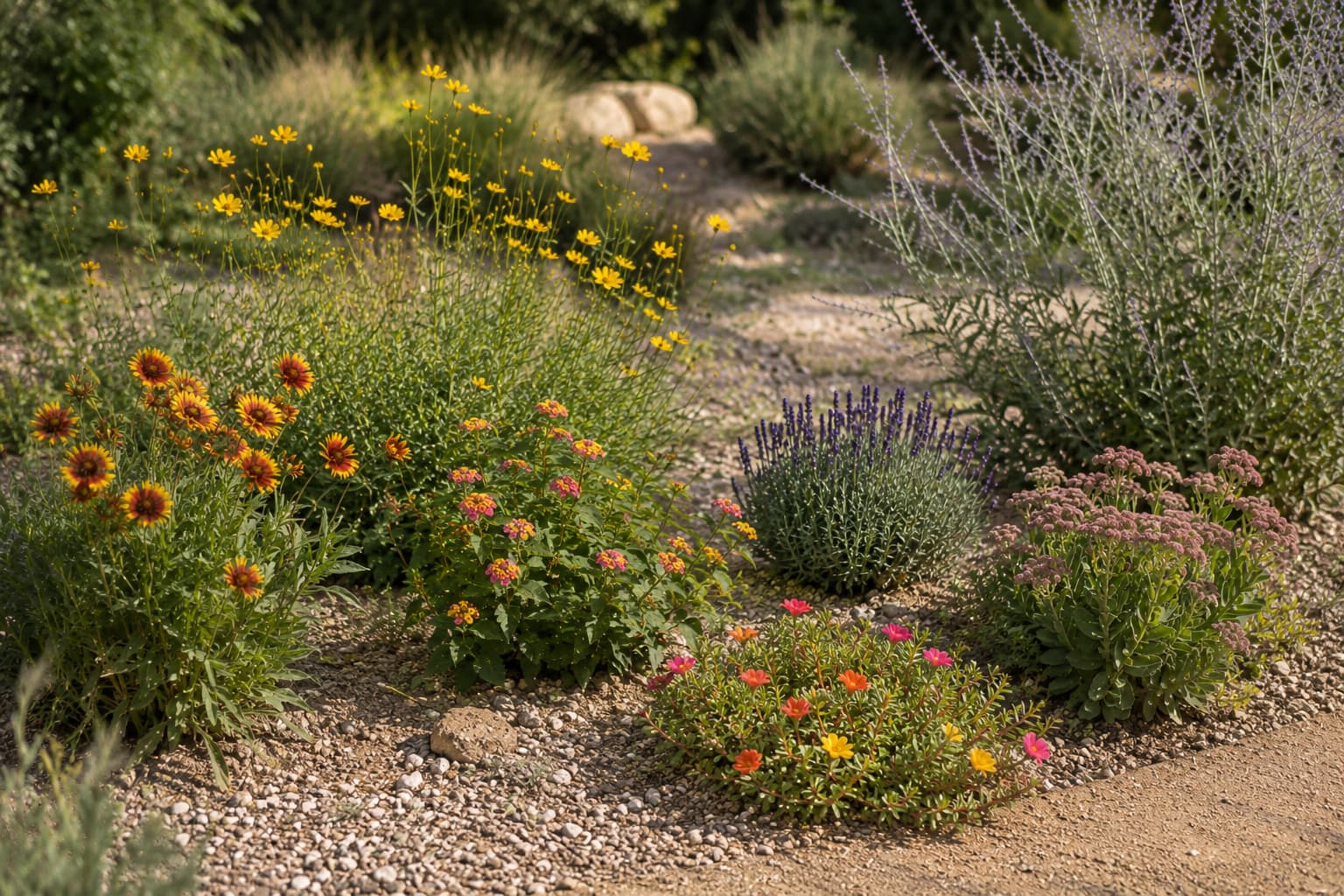
Gaillardia, coreopsis, portulaca, lantana, lavender, sedum, and Russian sage can all perform well with less supplemental water once established. Full sun, excellent drainage, climate-appropriate plant choice, and deep but well-spaced watering are more important than simply choosing a plant labeled “drought tolerant.”
Last summer, my city imposed outdoor watering restrictions for six weeks. Twice a week, one hour each, no exceptions. My neighbor's lawn turned brown. His hanging baskets — petunias and fuchsias — were dead by week three. Meanwhile, my gaillardia, coreopsis, and portulaca were in full bloom. They looked better during the drought than they had during the rainy spring.
This isn't magic. It's biology. Some plants evolved in environments where going weeks without water is normal. Their leaves, roots, and metabolism are built for it. If you're gardening in a drought-prone area, or if you simply don't want to spend your summer dragging a hose around, these are the flowers that will thrive — not just survive — when water is scarce.
7 Drought-Tolerant Flowers at a Glance
| Flower | Water needs | Sun | Bloom period | Special feature |
|---|---|---|---|---|
| Gaillardia | Very low | Full sun | June–frost | Blooms more in poor soil |
| Coreopsis | Low | Full sun | June–September | Self-seeds reliably |
| Portulaca | Very low | Full sun | June–frost | Succulent leaves store water |
| Lantana | Low | Full sun | May–frost | Butterfly magnet |
| Lavender | Very low | Full sun | June–August | Fragrant foliage |
| Sedum | Very low | Full sun | August–October | Winter interest |
| Russian Sage | Low | Full sun | July–October | Height and airy texture |
1. Gaillardia (Blanket Flower) — The Toughest Flower You'll Ever Grow
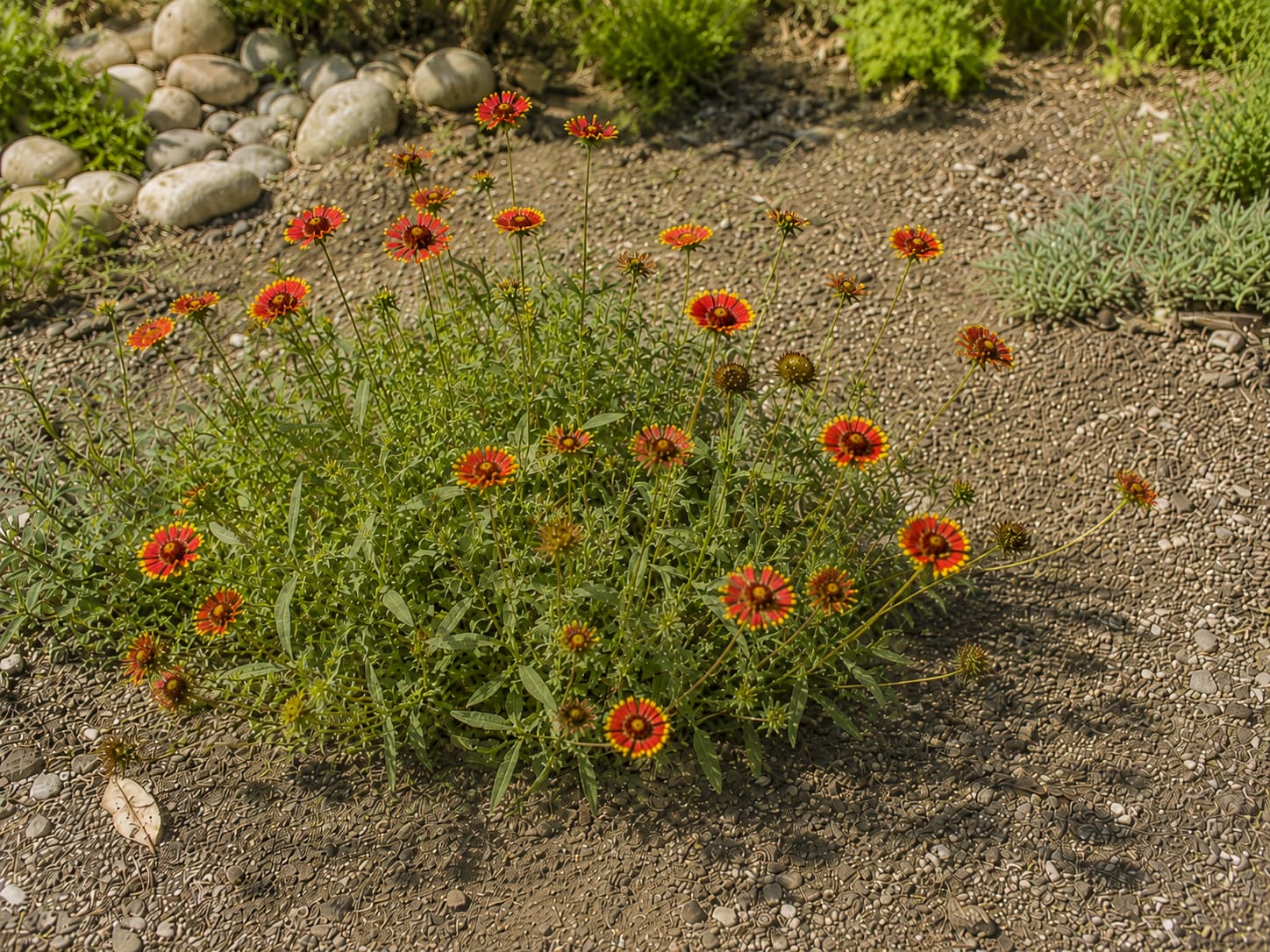
Gaillardia is native to the American plains and prairies, where summer temperatures regularly exceed 100°F and rain can be absent for weeks. Its deep taproot — often reaching 2–3 feet down — pulls moisture from soil layers that other annuals can't access. The flowers are daisy-like, in shades of red, orange, and yellow, often with striking bicolor patterns. Gaillardia blooms continuously from early summer through frost, and it actually produces more flowers in poor, dry soil than in rich, well-watered soil. Overwatering and overfertilizing are the two most common causes of gaillardia failure — this plant genuinely prefers neglect.
Growing tip: Plant in well-draining soil. Do not add compost or fertilizer — lean soil produces more flowers and sturdier stems. Deadhead spent flowers to extend blooming, or leave a few to go to seed — gaillardia self-seeds reliably. Water deeply once every 2–3 weeks during extended drought, but only if the plant shows signs of stress (wilting in the morning, not just the afternoon heat).
2. Coreopsis (Tickseed) — The Cheerful, Self-Reliant Bloomer
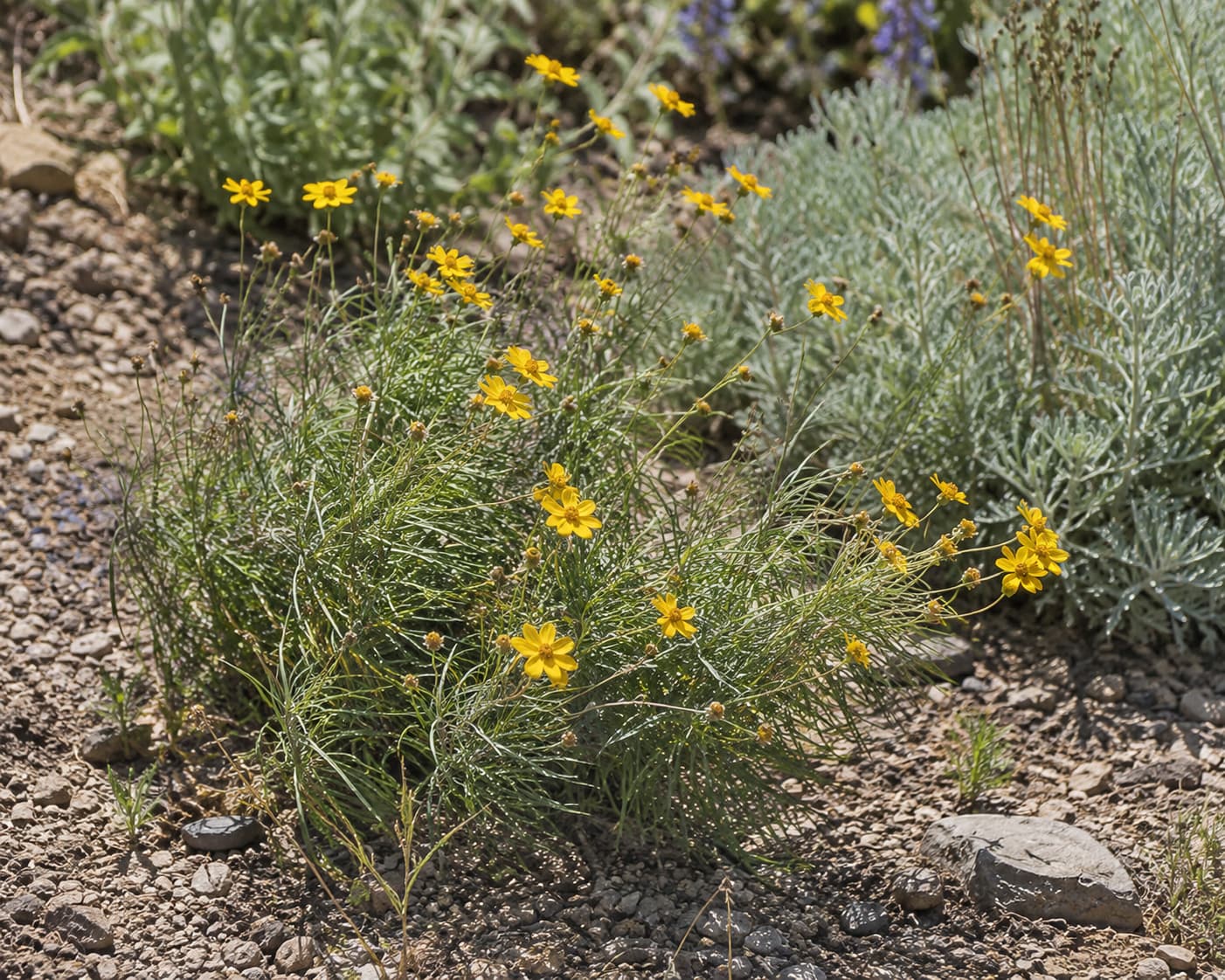
Coreopsis is another native prairie plant that's adapted to drought, poor soil, and intense sun. Its thread-like leaves have a very small surface area, which minimizes water loss through transpiration — a classic drought adaptation. The bright yellow, daisy-like flowers begin blooming in early summer, and if you shear the plant back by about one-third after the first flush of flowers fades, it will produce a second wave of blooms in late summer. Coreopsis is one of the lowest-maintenance perennials you can grow. It doesn't need fertilizer, doesn't need rich soil, and doesn't need frequent watering. It just needs sun.
Growing tip: The threadleaf coreopsis (Coreopsis verticillata) varieties like 'Moonbeam' and 'Zagreb' are the most drought-tolerant and longest-blooming. They form tidy, mounded clumps that don't need staking. Water deeply every 2–3 weeks during drought. Cut back after the first bloom flush for a second round.
3. Portulaca (Moss Rose) — The Succulent That Blooms Like an Annual
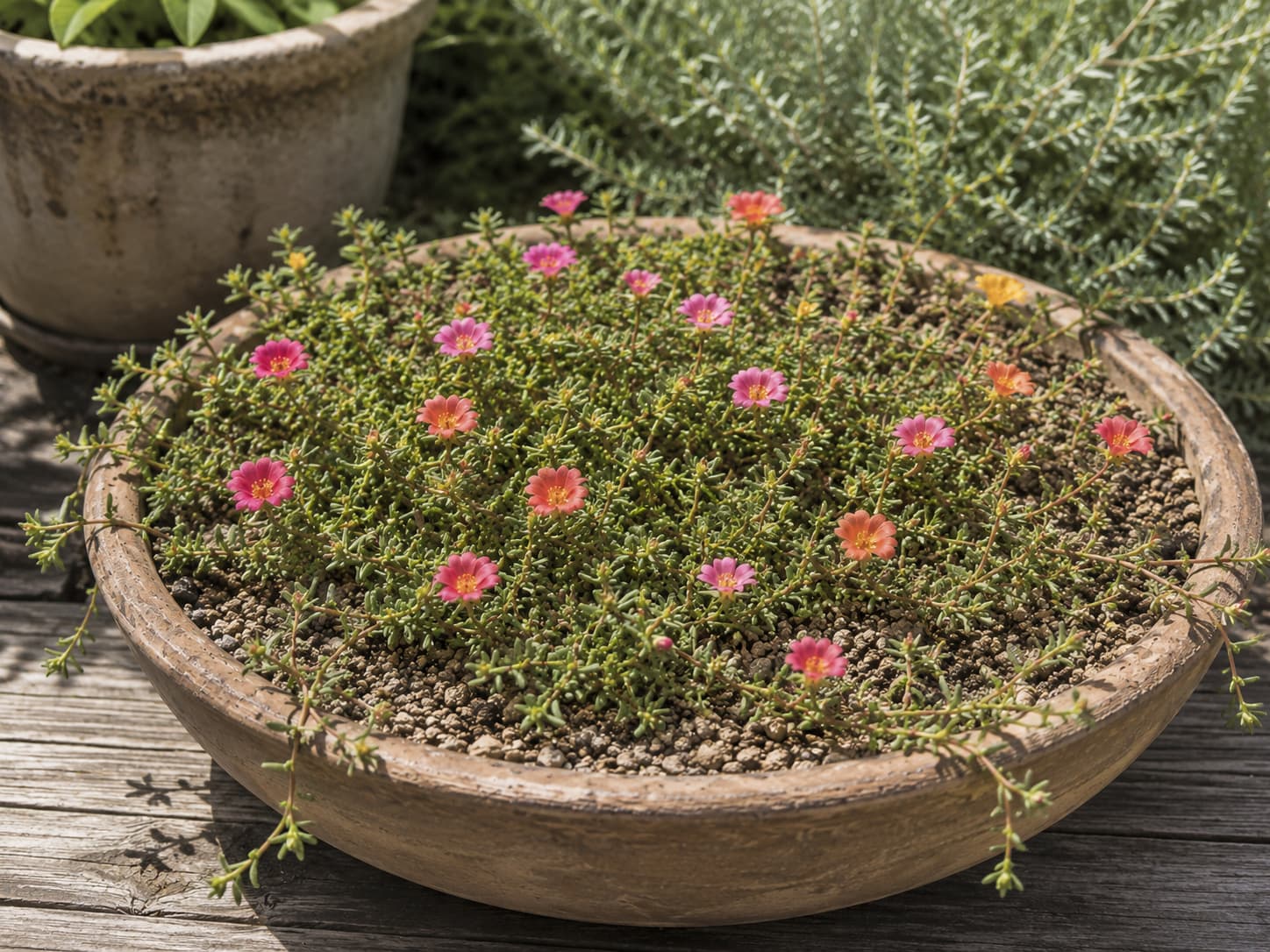
Portulaca is technically a succulent — its fleshy, cylindrical leaves are water storage organs — but it blooms with the intensity of a flowering annual. Its native habitat is the hot, dry, sandy soils of South America, which means it's pre-adapted to conditions that would kill most garden flowers. The flowers open in bright sun and close at night, and they come in vivid, almost neon shades of pink, orange, yellow, red, and white. Portulaca blooms continuously from early summer through frost without deadheading, and it's one of the few plants that genuinely prefers to dry out between waterings.
Growing tip: Portulaca needs full sun and well-draining soil — it will rot in heavy, wet soil. Use a cactus mix for containers. Water only when the soil is completely dry, which might be every 10–14 days or longer. Overwatering is the fastest way to kill portulaca. The flowers are self-cleaning — no deadheading needed.
4. Lantana — The Heat-Loving Butterfly Magnet
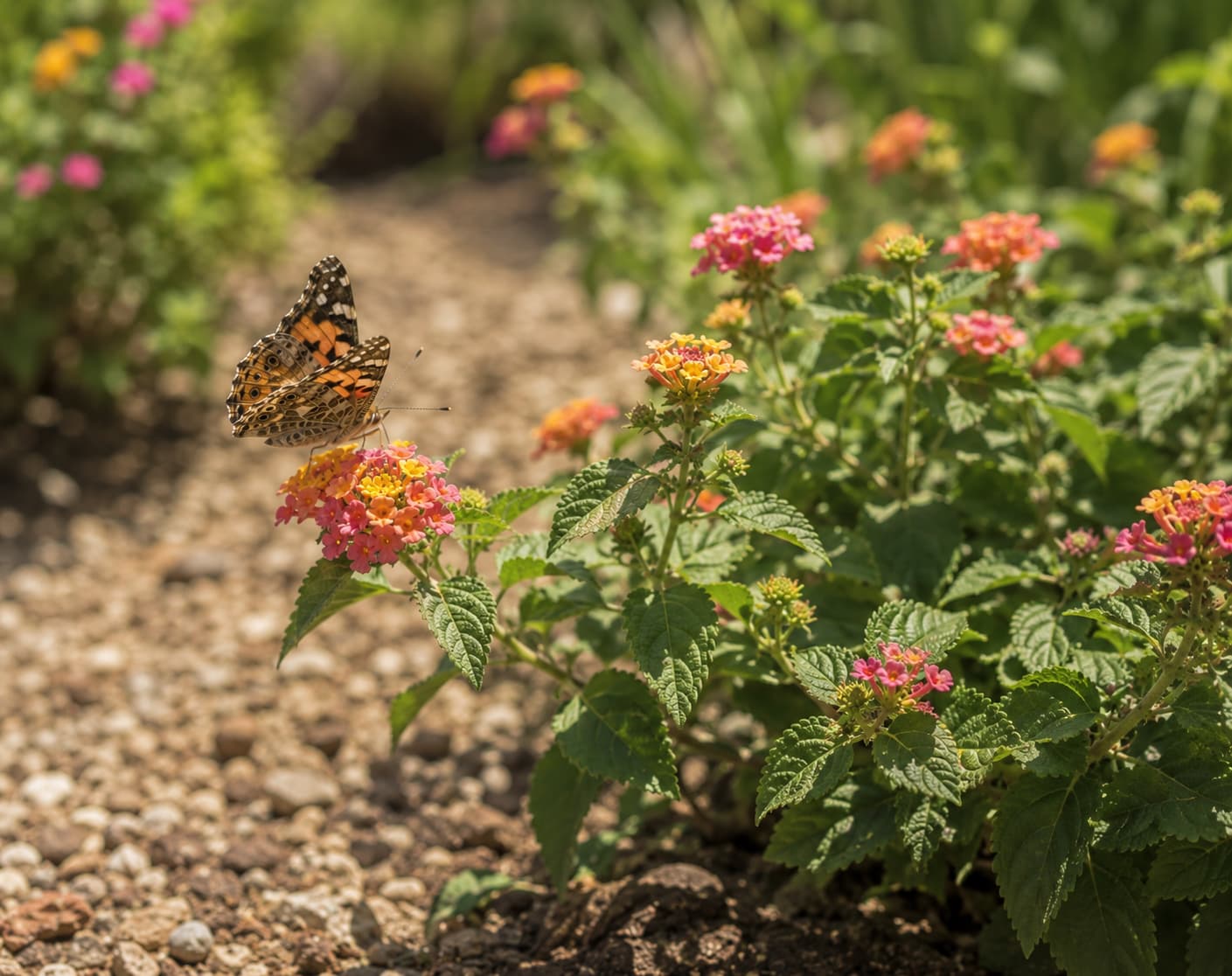
Lantana is the plant that keeps blooming when everything else has given up. Its small, clustered flowers are produced continuously from late spring through frost, and the plant gets more drought-tolerant as it establishes. In its first year, lantana needs regular water to develop a deep root system. By year two, a well-established lantana can go 2–3 weeks between waterings without showing stress. The flowers are a reliable nectar source for butterflies and hummingbirds, even in the hottest weather.
Growing tip: In containers, lantana needs more frequent water than in the ground — every 3–5 days in summer heat. In the ground, once established, it's remarkably drought-tolerant. The trailing varieties are excellent for slopes and retaining walls where water runs off quickly. Deadheading is not necessary — lantana naturally drops spent flowers.
5. Lavender — The Mediterranean Classic
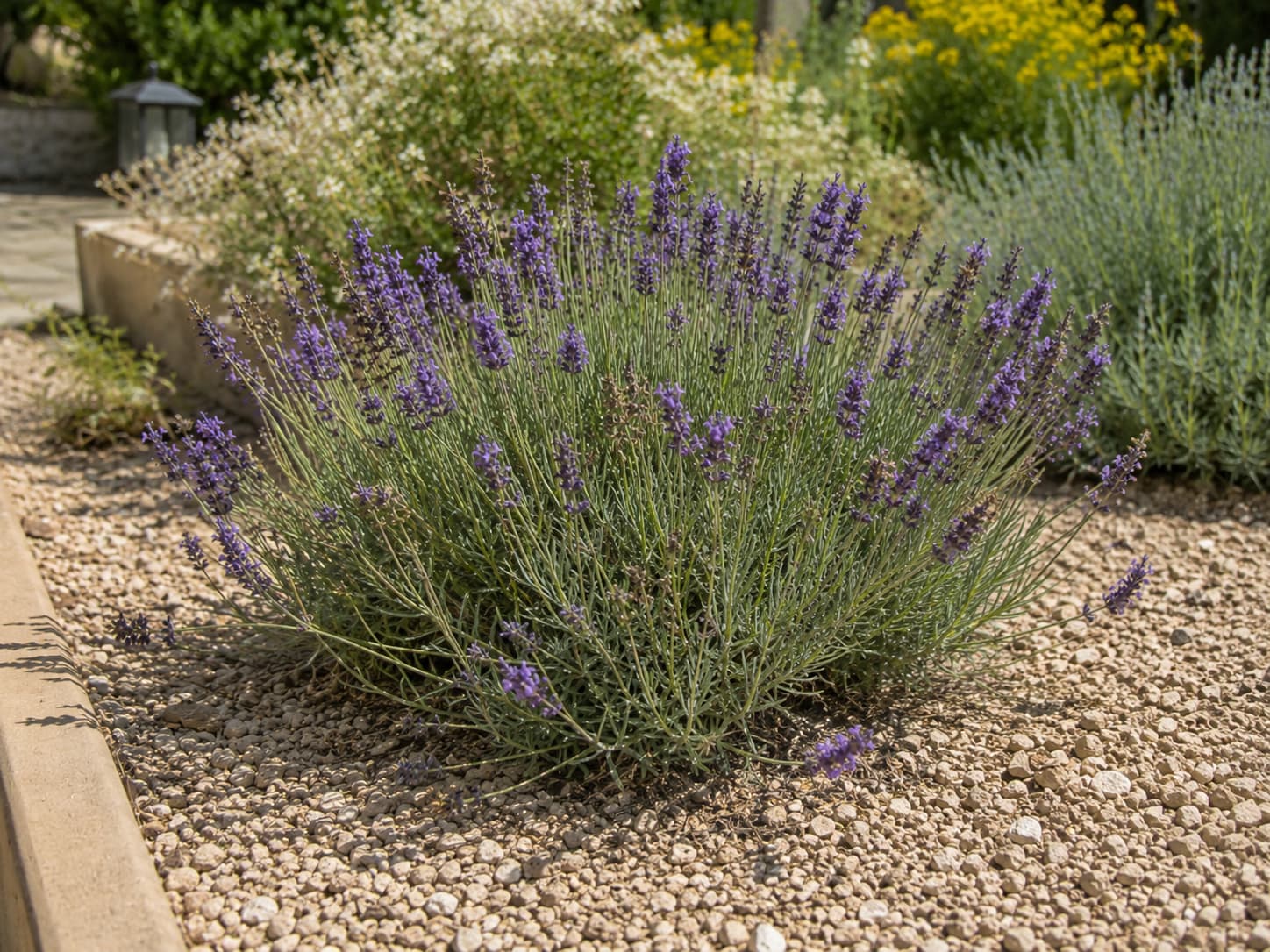
Lavender is the quintessential drought-tolerant plant. Native to the rocky, sun-baked hillsides of the Mediterranean, it evolved in soil that's poor, alkaline, and fast-draining. Its silvery, needle-like leaves are covered in fine hairs that trap moisture and reflect light, and its essential oils — the source of that famous fragrance — are actually a drought adaptation: they reduce water loss from the leaf surface. Lavender's biggest enemy is not drought but wet, heavy soil. More lavender plants die from root rot in poorly drained soil than from any other cause.
Growing tip: Plant lavender in full sun in soil that drains extremely well. If you have clay soil, grow lavender in raised beds or containers with a gritty, sandy mix. Do not add compost or rich organic matter — lavender prefers lean, alkaline soil. Water deeply but infrequently, only when the soil has dried out completely. Prune back by about one-third after flowering to maintain a compact shape and prevent woody growth.
6. Sedum (Stonecrop) — The Indestructible Succulent
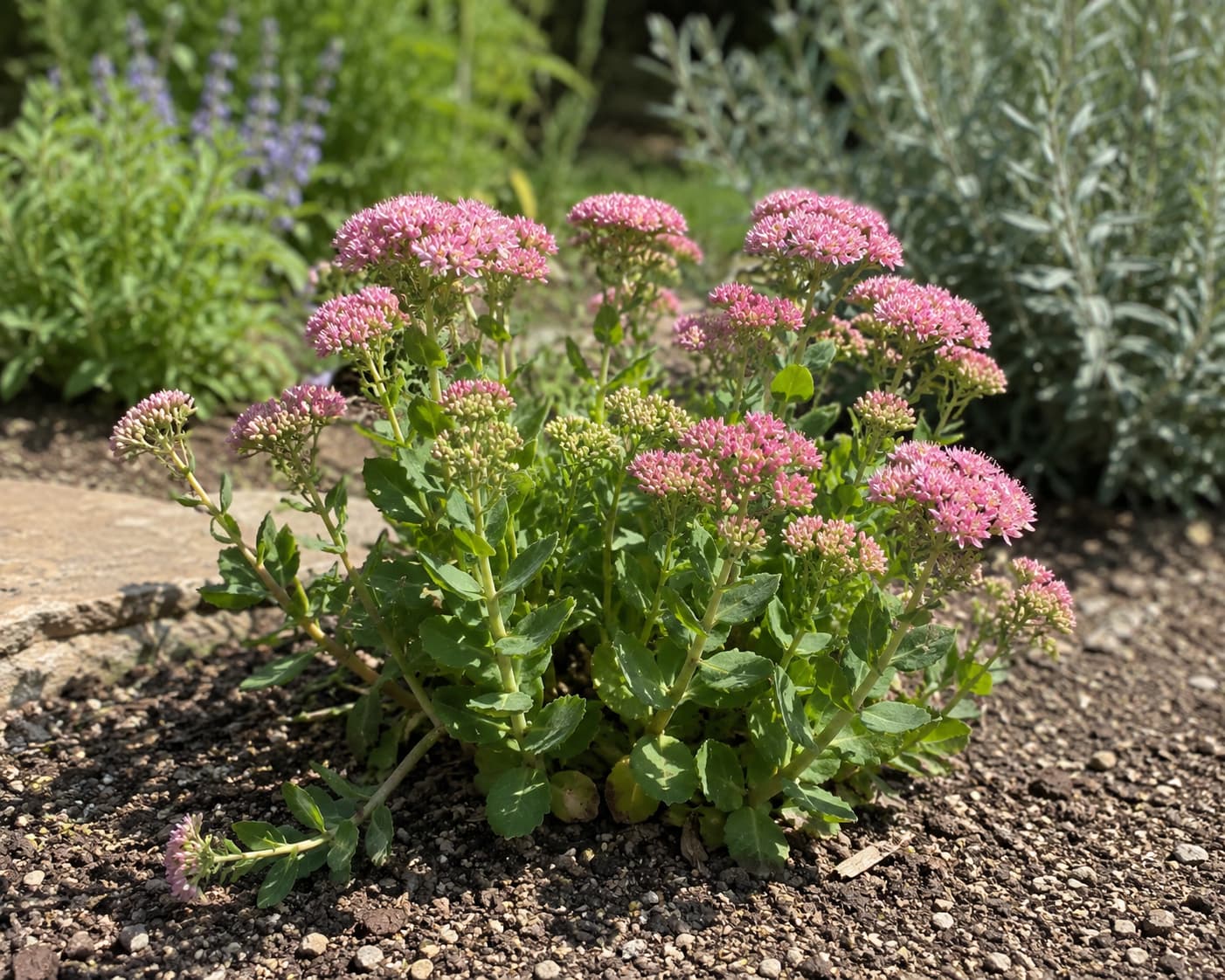
Sedums are succulents in the Crassulaceae family, and they store water in their thick, fleshy leaves. There are two main types: low-growing, ground-cover sedums (like Sedum spurium and Sedum acre) and upright, clumping sedums (like 'Autumn Joy' and 'Matrona'). Both types are exceptionally drought-tolerant. The upright varieties produce large, flat flower heads in late summer and fall that start pink or white and deepen to rich burgundy as the season progresses. Sedums are also one of the best plants for pollinators in late summer, when many other flowers have finished blooming.
Growing tip: Sedums need full sun and well-draining soil. They will rot in wet, heavy soil. No fertilizer is needed. The upright varieties can be divided every 3–4 years to maintain vigor. Leave the dried flower heads standing through winter — they provide structure and interest in the dormant garden, and birds eat the seeds.
7. Russian Sage (Perovskia atriplicifolia) — The Airy, Drought-Proof Tower
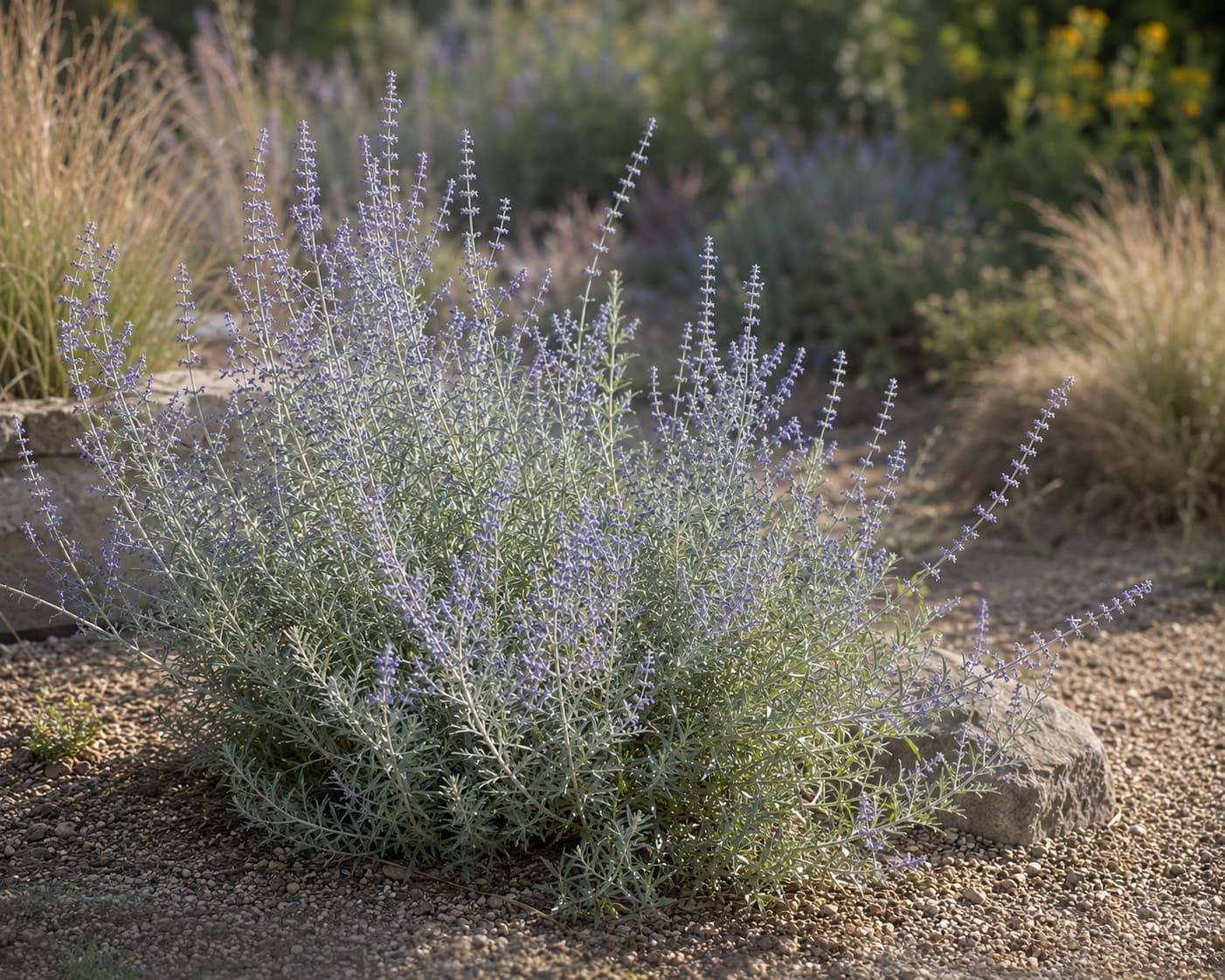
Russian sage is native to the steppes of central Asia, where summers are hot and dry and winters are brutal. Its finely cut, silvery foliage is highly aromatic and virtually untouched by pests or diseases. The plant produces tall, airy spikes of lavender-blue flowers from mid-summer through fall, creating a haze of color that works beautifully at the back of a border or as a standalone specimen. Once established, Russian sage is one of the most drought-tolerant perennials available — it can go 4–6 weeks without supplemental water.
Growing tip: Russian sage needs full sun and well-draining soil. It will flop over and produce fewer flowers in rich soil or partial shade — lean, dry conditions produce the best form. Cut back to about 12 inches in early spring before new growth emerges. Do not cut back in fall — the woody stems protect the crown through winter. 'Little Spire' is a compact variety that reaches 2 feet instead of the typical 4–5 feet, making it suitable for smaller gardens.
The Principles Behind Drought-Tolerant Gardening
Understanding why these plants thrive with little water makes it easier to choose and care for them. Most drought-tolerant plants share a set of physical adaptations:
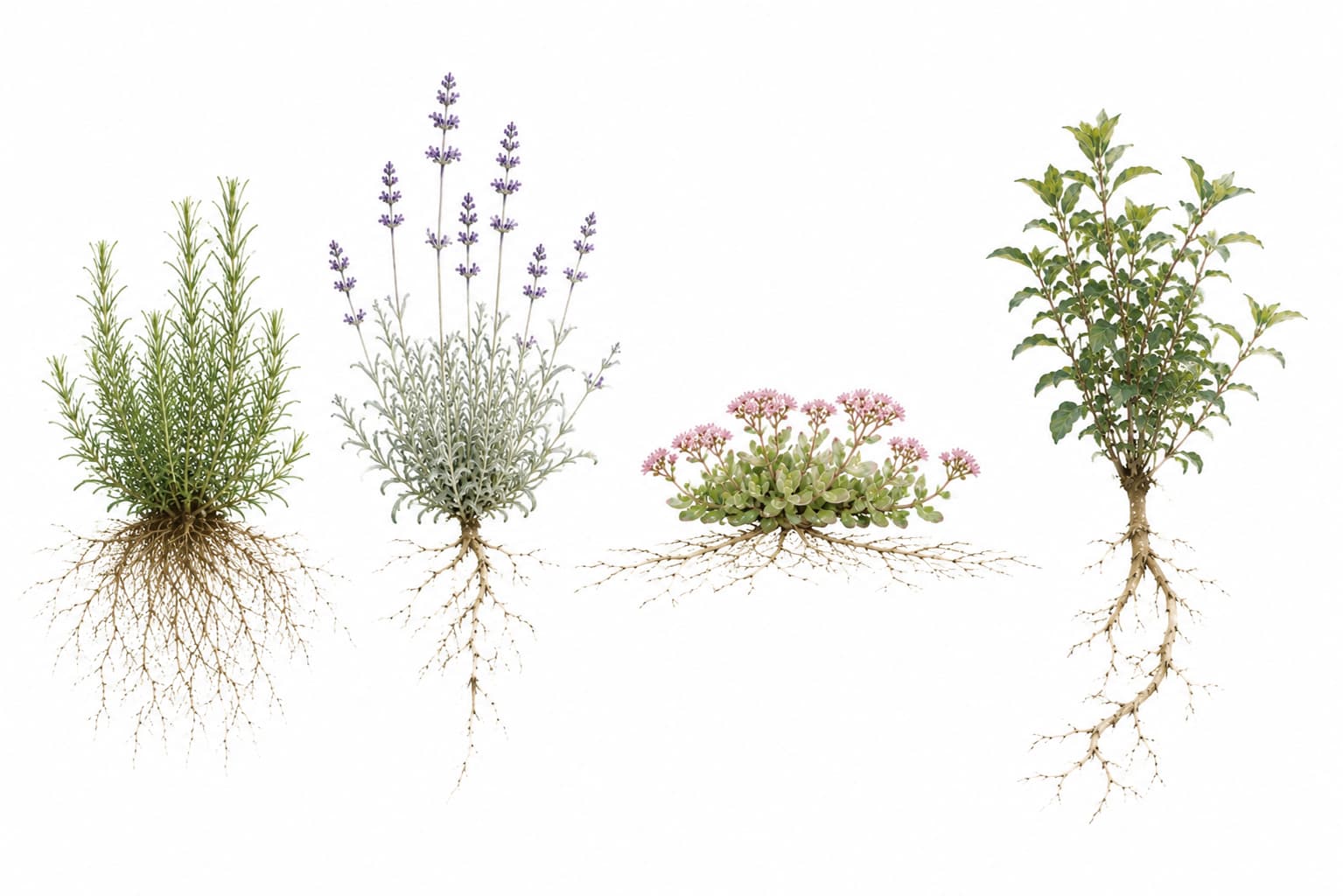
Small or narrow leaves (coreopsis, lavender, Russian sage) reduce the surface area through which water evaporates. Hairy or silvery leaves (lavender, Russian sage, gaillardia) reflect light and trap a boundary layer of moist air near the leaf surface, slowing transpiration. Succulent leaves (portulaca, sedum) store water for the plant to use during dry periods. Deep taproots (gaillardia, coreopsis) access moisture from soil layers that shallow-rooted plants can't reach. Waxy leaf coatings (lantana, sedum) seal moisture inside the leaf.
When you're choosing drought-tolerant plants, look for these physical traits. They're reliable indicators of drought tolerance, regardless of what the plant tag says.
Frequently Asked Questions
1. How long can these plants really go without water?
Once established (after the first growing season), most of these plants can go 2–3 weeks without supplemental water. Lavender, Russian sage, and sedum can go 4–6 weeks. Portulaca in a container will need water more frequently — every 7–10 days. These are guidelines, not guarantees. During an extreme heat wave (100°F+), even drought-tolerant plants may need water more frequently.
2. Do drought-tolerant plants still need mulch?
Yes, and it's actually more important for drought-tolerant gardens than for regularly watered ones. A 2–3 inch layer of gravel, crushed stone, or coarse bark mulch reduces soil surface evaporation, keeps the root zone cooler, and suppresses weeds that compete for water. Gravel mulch is often preferred for Mediterranean plants like lavender because it reflects heat and keeps the crown dry.
3. Can I grow these in containers?
Yes, but containers dry out faster than ground soil, so drought-tolerant doesn't mean zero-maintenance. Use a well-draining potting mix with added perlite or coarse sand. Terracotta pots are ideal because they're porous and allow evaporation. Expect to water container-grown drought-tolerant plants every 7–10 days in summer, rather than the 2–3 week intervals for ground-planted specimens.
The Bottom Line
Gardening in a drought-prone area doesn't mean giving up on flowers. It means choosing plants that evolved in conditions similar to the ones you're dealing with. Gaillardia, coreopsis, portulaca, lantana, lavender, sedum, and Russian sage are all native to regions where surviving weeks without rain is normal. Their leaves, roots, and metabolism are built for it.
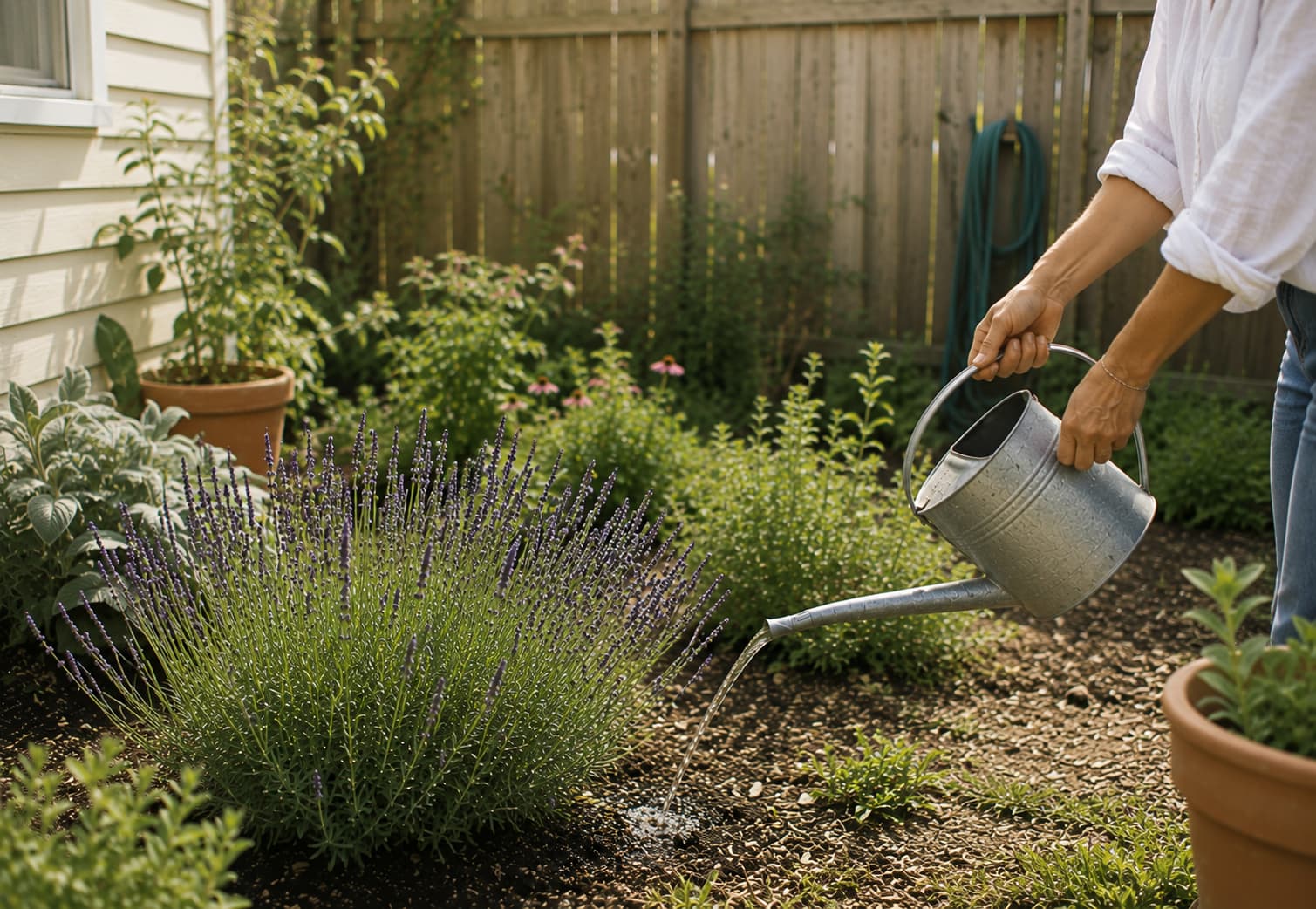
The single most important thing you can do is water deeply but infrequently, even when the plants are young. This trains roots to grow downward, creating a self-sufficient plant that can find its own water. And if you're ever unsure whether a drought-tolerant plant needs water, wait another day. These plants are far more likely to be killed by overwatering than by drought.
Which flower has handled dry weather best in your garden, and what are your soil and summer conditions? Share the details so other gardeners can compare real growing experiences.