Your Tomatoes Looked Ready. The Weather Said Otherwise.
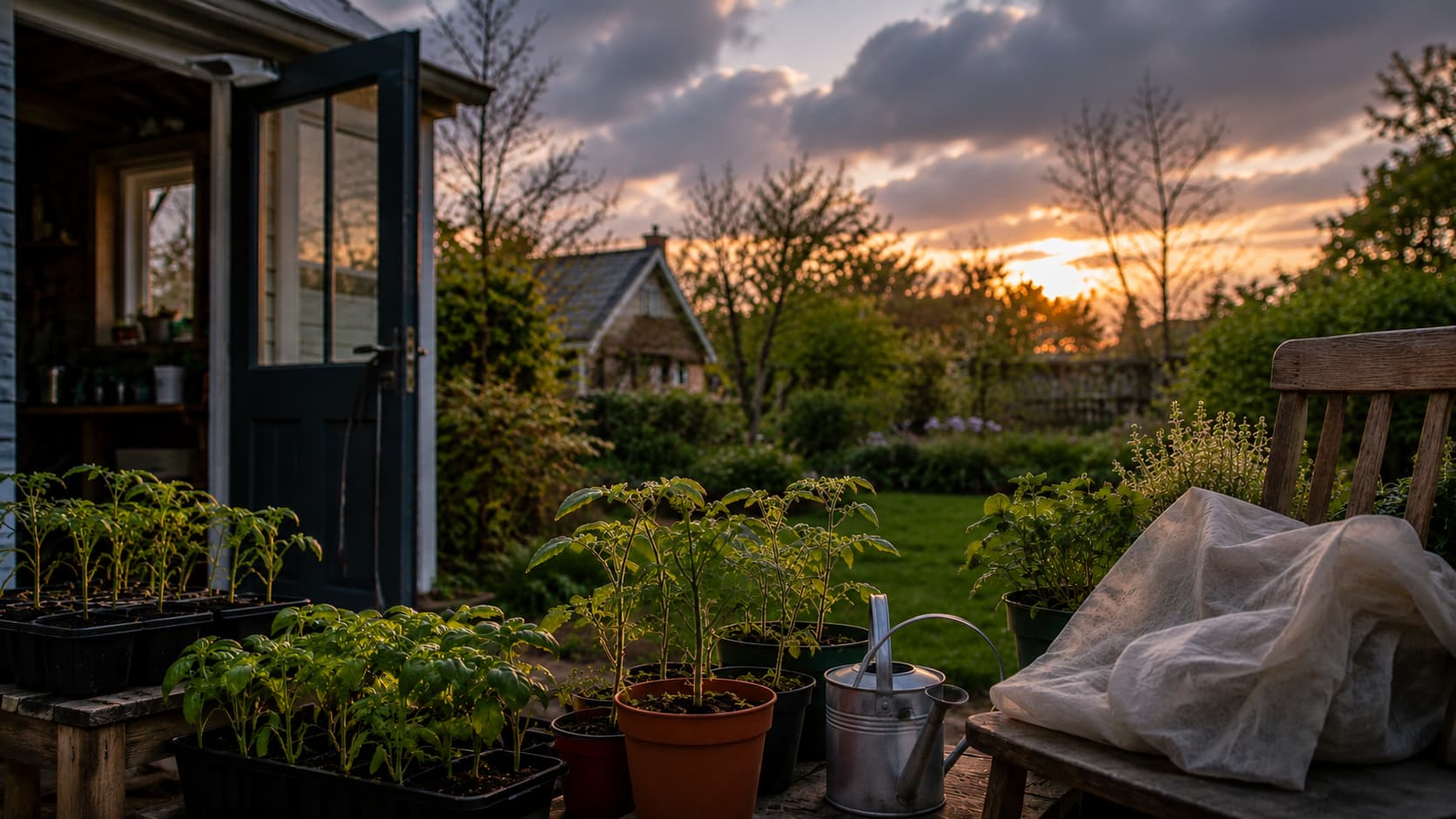
Your seedlings looked healthy.
The afternoons suddenly felt warm again.
Garden centers were crowded.
People around you had already planted tomatoes.
Then one cold night hit.
Suddenly:
- basil turned limp overnight
- pepper seedlings stopped growing
- tomato leaves curled
- cucumbers looked strangely stalled
If that happened to you this May, you’re not alone.
Across much of the U.S., Southern Canada, and parts of Europe, gardeners are still dealing with:
- warm afternoons
- cold nights
- dry wind
- unstable spring temperatures
- sudden cold reversals after warm weekends
According to NOAA and regional weather agencies, many areas continued recording below-average nighttime temperatures well into May this year.
Warm afternoons fool gardeners more than cold mornings do.
QUICK REALITY CHECK
If nighttime temperatures still drop below 50°F (10°C), basil and peppers are usually safer indoors overnight.
Even without frost, repeated cold nights can:
- slow root development
- stall growth
- increase transplant shock
- weaken stems
Is It Safe to Leave Seedlings Outside Yet?
Usually yes — if:
- nights stay above 50°F (10°C)
- seedlings are already hardened off
- wind exposure stays mild
- soil temperatures remain reasonably warm
Probably not yet — if:
- nights still drop below 45–50°F
- basil or peppers still look soft
- cold rain or strong wind is forecast
Warm-season plants care more about nighttime lows than daytime sunshine.
Why This Spring Has Been So Hard on Seedlings
This spring has been unusually difficult because temperatures have been unstable rather than steadily warming.
Plants adapt well to consistent conditions.
They struggle with unpredictability.
Research from University of Minnesota Extension and University of Illinois Extension shows:
| Temperature | Tomato Response |
|---|---|
| 60–75°F | Healthy growth |
| Around 55°F | Growth slows |
| Below 50°F | Stress begins |
| Below 45°F | Chilling damage risk |
Survival and healthy growth are not the same thing.
DISCOVER MOMENT
A lot of gardeners are not “behind” this year.
The weather itself has been inconsistent.
That’s why so many plants look stressed right now — even in experienced gardens.
What Hardening Off Actually Means
Hardening off helps indoor-grown seedlings gradually adjust to outdoor life.
Indoor plants are protected from:
- strong UV light
- wind movement
- rapid moisture loss
- cold nights
- fluctuating temperatures
Outdoors changes everything.
A seedling raised indoors needs time to learn the outdoors.
Why Seedlings Suddenly Struggle Outdoors
Indoor-grown seedlings usually develop:
- softer stems
- thinner leaves
- weaker stress tolerance
That’s why plants often look healthy indoors — but struggle after one difficult day outside.
Outdoor sunlight is dramatically stronger than indoor windows.
Even light wind changes plant structure quickly.
Common signs of stress:
- pale leaves
- crispy edges
- drooping after sunset
- curling foliage
- white sunburn patches
Most seedlings don’t fail immediately after cold stress — they simply stop growing.
The Mid-May Hardening-Off Schedule
Days 1–2
- 1–2 outdoor hours
- bright shade only
- minimal wind
Days 3–4
- gentle morning sun
- 3–4 hours outdoors
- mild airflow
Bring plants indoors before temperatures drop.
Days 5–6
- partial sun
- longer outdoor exposure
- gentle breeze
Rotate trays occasionally.
Days 7–10
Only test overnight exposure if temperatures remain above:
- 50°F for tomatoes, basil, peppers, cucumbers
- 45°F for tougher greens and flowers
Tomato & Basil Cold Tolerance
| Plant | Stress Starts | Damage Risk |
|---|---|---|
| Tomato | 55°F | Below 45°F |
| Basil | 50°F | Below 45°F |
| Pepper | 50°F | Below 45°F |
| Cucumber | 50°F | Below 45°F |
Why Basil Usually Fails First
Basil is one of the least cold-tolerant herbs commonly grown in home gardens.
Below 50°F (10°C), basil struggles to regulate moisture and leaf function properly.
This often causes:
- blackened leaves
- drooping stems
- stalled growth
Many gardeners think basil needs fertilizer.
Usually, it just got cold.
Basil usually doesn’t die from lack of care — it dies from one night that felt “almost warm enough.”
Tiny Sign Your Seedlings Are Finally Adjusting
One subtle thing experienced gardeners notice:
After several days outdoors, seedlings stop looking “soft.”
- leaves feel firmer
- stems stay upright naturally
- plants recover faster after outdoor exposure
That’s usually when real adaptation begins.
Can I Leave Them Outside Tonight?
If tonight drops below 50°F:
- bring basil and peppers indoors
- move containers near walls
- cover tomatoes with frost cloth
If tonight drops below 45°F:
- protect all warm-season seedlings
- avoid leaving cucumbers outdoors overnight
Simple protection for one night can prevent weeks of stress later.
Experienced gardeners trust nighttime temperatures more than spring excitement.
Best Time to Harden Off Seedlings by Region
Midwest U.S.
Late frosts often continue well into May.
Northeast U.S.
Sunny afternoons can hide dangerously cold nights.
Pacific Northwest
Cold wet soil frequently slows peppers and basil.
UK Gardens
Cold spring wind is often more damaging than temperature itself.
A Gentler Way to Think About Spring Gardening
Experienced gardeners eventually stop treating planting season like a deadline.
Some years arrive early.
Some hesitate.
And honestly, this year many gardens are simply moving slower than expected.
That’s normal.
Plants respond to conditions — not calendars.
A patient seedling planted later often outgrows a stressed seedling planted early.
Clara Moss is the gardener behind Greenmuse. Over the past 10+ years, she has grown herbs on windowsills, tested cactus and succulent soil mixes, rescued struggling houseplants, and learned many lessons through trial and error. Greenmuse is where she shares honest, practical plant care advice for real homes — based on hands-on experience, not perfect greenhouse conditions. When she’s not writing, Clara is usually propagating succulents or trying to keep a calathea happy.