Rosemary Not Growing? 7 Common Causes and Gentle Fixes
If your rosemary is not growing, one or more growing conditions may be out of balance. Check light, soil drying, drainage, root space, pruning, temperature, and airflow before adding more fertilizer or watering more often.
If your rosemary is not growing well, check light, soil drainage, watering, root space, pruning, temperature, and airflow before changing anything else. Rosemary performs best in sun and free-draining soil; in containers, the safest watering cue is how quickly the root zone dries rather than a fixed calendar schedule.
Rosemary Not Growing? Start With the Symptom Pattern
Rosemary (Salvia rosmarinus) is an evergreen Mediterranean shrub. In a garden or container, it generally responds best to strong light and soil that drains freely rather than staying wet around the roots.
“Not growing” can mean several different things. A plant with pale, stretched stems points toward a different problem than a plant with yellow lower leaves and wet soil. Before you repot, fertilize, or prune, look at the whole pattern.
| What you see | Check first | Likely direction |
|---|---|---|
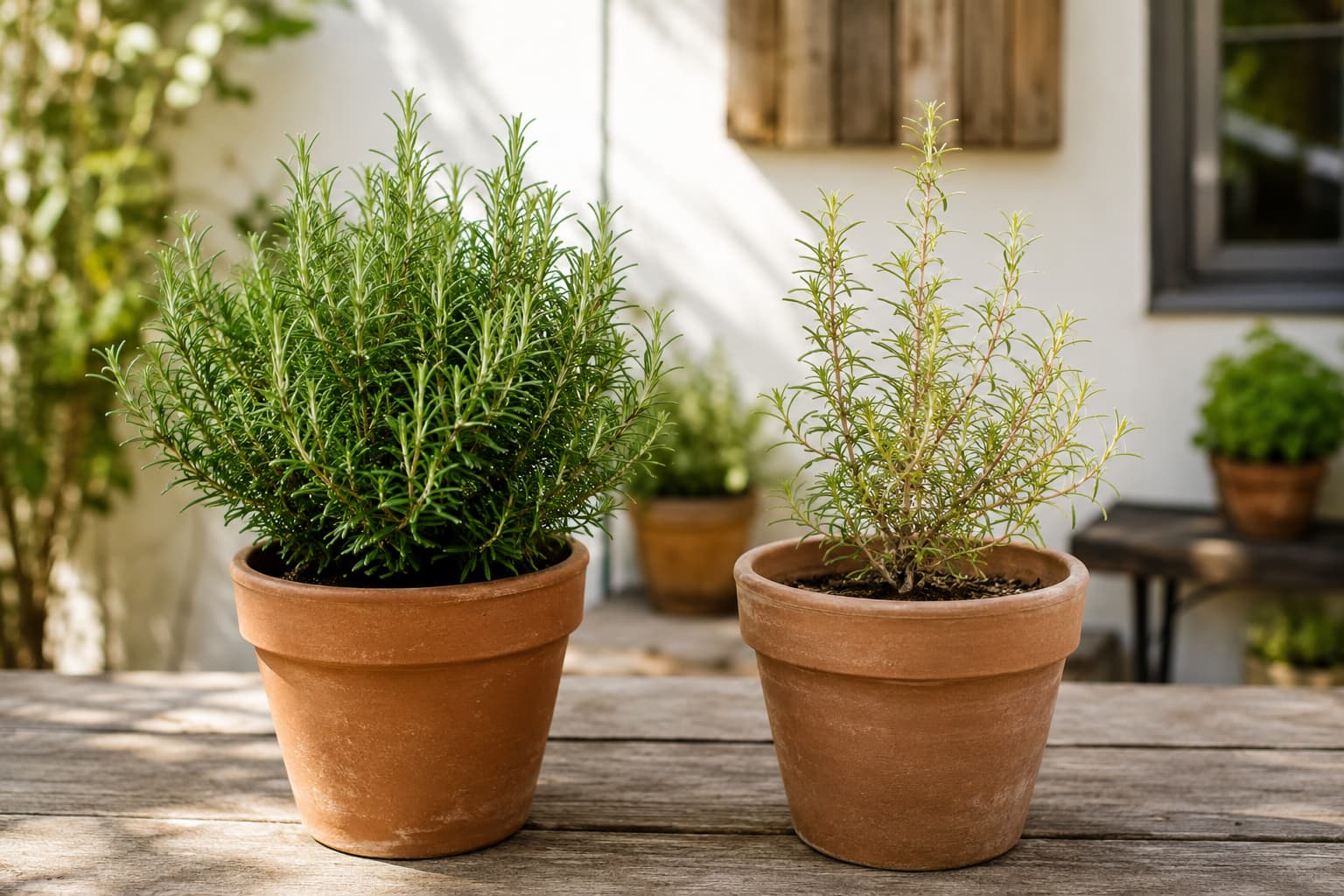
| Long, pale, widely spaced stems | Light exposure | Move toward stronger light before feeding more. |
| Yellow lower leaves with damp soil | Watering and drainage | Let the root zone dry more between waterings and check drainage. |
| Plant dries extremely fast and roots circle the pot | Root space | Consider moving up one container size. |
| Woody, sparse plant with little branching | Pruning history | Trim green growth lightly to encourage branching. |
| Growth slows after moving indoors or during winter | Season, light, temperature | Some slowdown may be normal; avoid compensating with extra water. |
1. Rosemary Not Growing Indoors? Check the Light
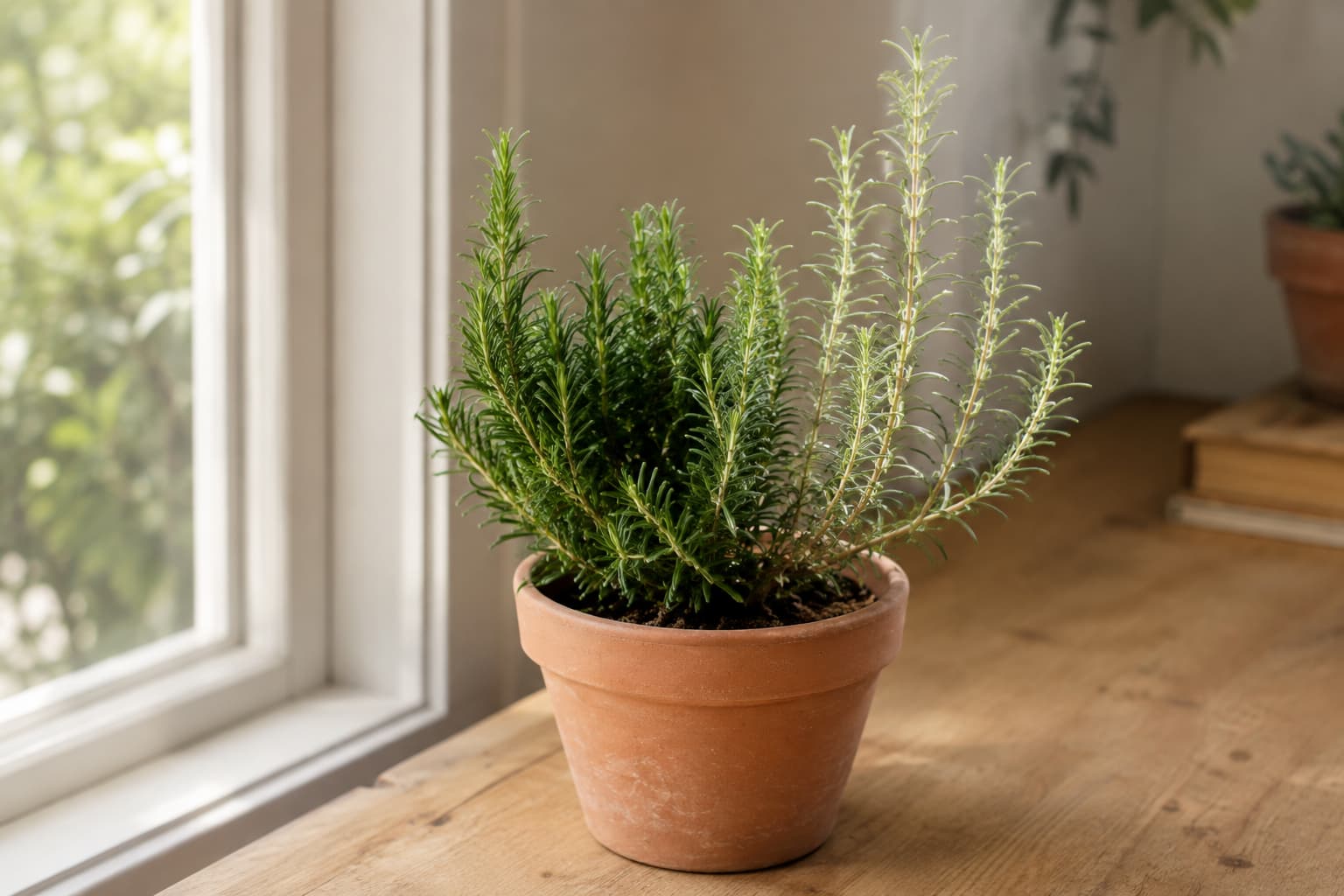
Low light is one of the first things to check when rosemary grows slowly indoors. Instead of staying compact, the plant may stretch toward the window, produce longer gaps between leaves, and lose some of its dense, sturdy form.
Signs to Look For
- Long, thin or leaning stems.
- Paler foliage than the plant had in brighter conditions.
- Very little fresh tip growth during an otherwise active growing period.
Give rosemary the brightest unobstructed position you can. Outdoors, full sun is ideal. Indoors, use the brightest window available and rotate the pot occasionally so growth does not lean strongly in one direction. If daylight is not sufficient, a properly positioned grow light can supplement it.
Increase light gradually if the plant has been living in a dim position. A sudden move from weak indoor light to intense outdoor sun can stress foliage. If natural light is limited, compare practical options in the Greenmuse grow light guide for indoor herbs.
2. Overwatering
Rosemary roots need both moisture and oxygen. When potting mix stays wet for too long, root function can decline even if you are not watering every day.
Signs to Look For
- Yellowing or dull lower foliage while the mix still feels damp.
- Drooping that does not improve even though the soil is wet.
- Slow growth combined with a heavy pot that takes a long time to dry.
Water thoroughly, let excess water drain, then wait until the upper part of the root zone has begun to dry before watering again. Use soil feel, pot weight, season, temperature, and plant size as cues rather than watering on a fixed weekly schedule.
If the mix stays wet for many days, the problem may be the soil or container rather than the amount of water you pour at one time.
3. Poor Drainage or Heavy Potting Mix
Rosemary prefers free-draining soil. A dense, compacted mix can hold water around the roots longer than the plant tolerates, especially indoors where evaporation is slower.
Check the Container and Mix
- The pot should have an unobstructed drainage hole.
- The mix should not stay dense and waterlogged after watering.
- Mineral amendments such as grit, coarse sand, or perlite can improve drainage when appropriate for the base mix.
There is no single percentage formula that works for every potting mix. Start with a quality container mix and adjust drainage based on how quickly it dries in your climate, pot material, and growing location. If container behavior is part of the problem, see Containers vs. In-Ground Planting for a broader drainage comparison.
4. Lack of Pruning
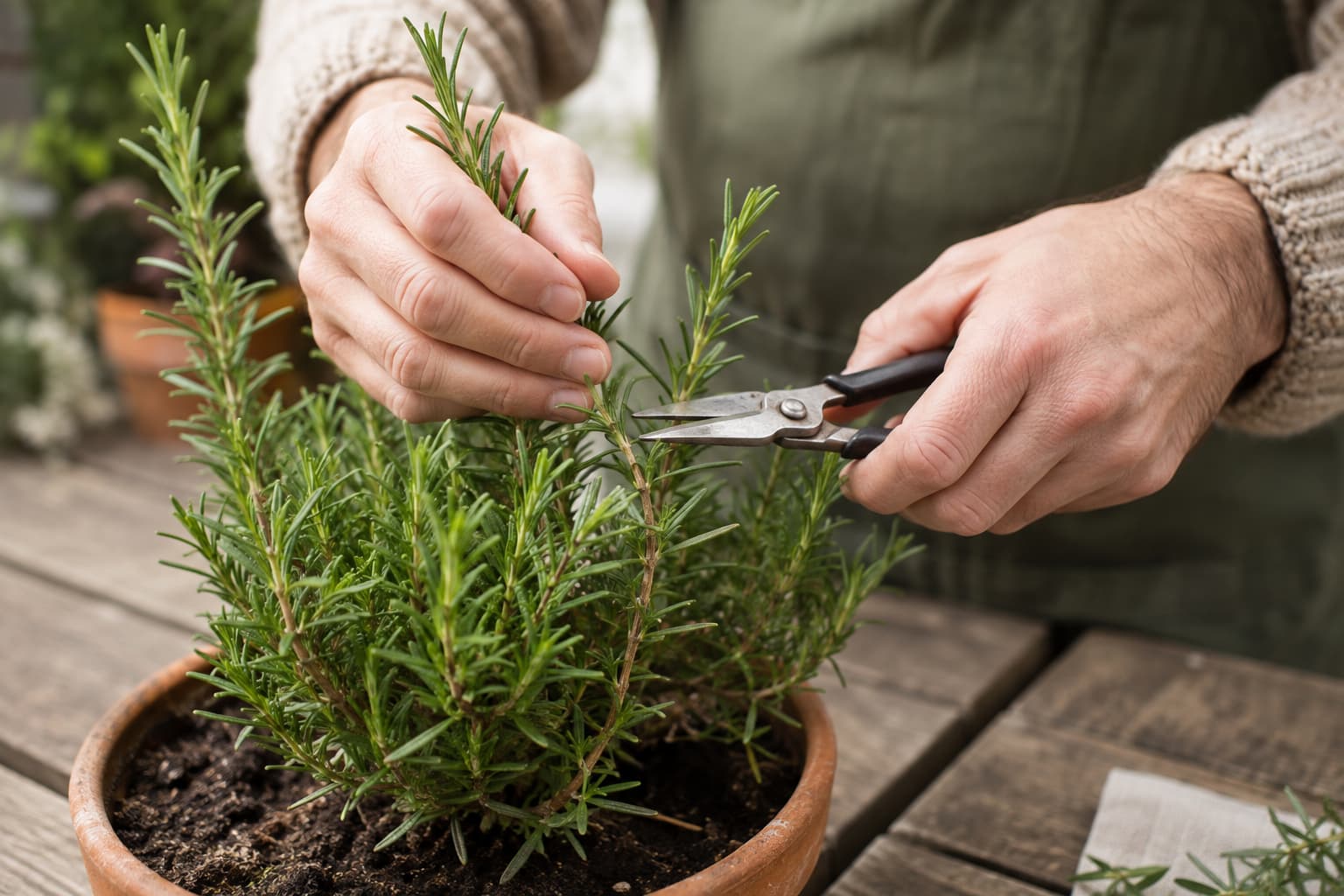
Rosemary is a woody shrub. Light, regular trimming of green growth can encourage branching and help a container plant stay compact. A plant that is never harvested or trimmed may become increasingly woody and sparse with age.
Signs to Look For
- Long shoots with most foliage concentrated near the tips.
- Few side branches.
- A plant that looks tall and open rather than dense and compact.
Pinch or trim young green stems just above leafy growth to encourage branching. Avoid trying to completely reshape an old, woody plant in one aggressive cut; gradual pruning is safer and easier to evaluate.
5. Root Restriction
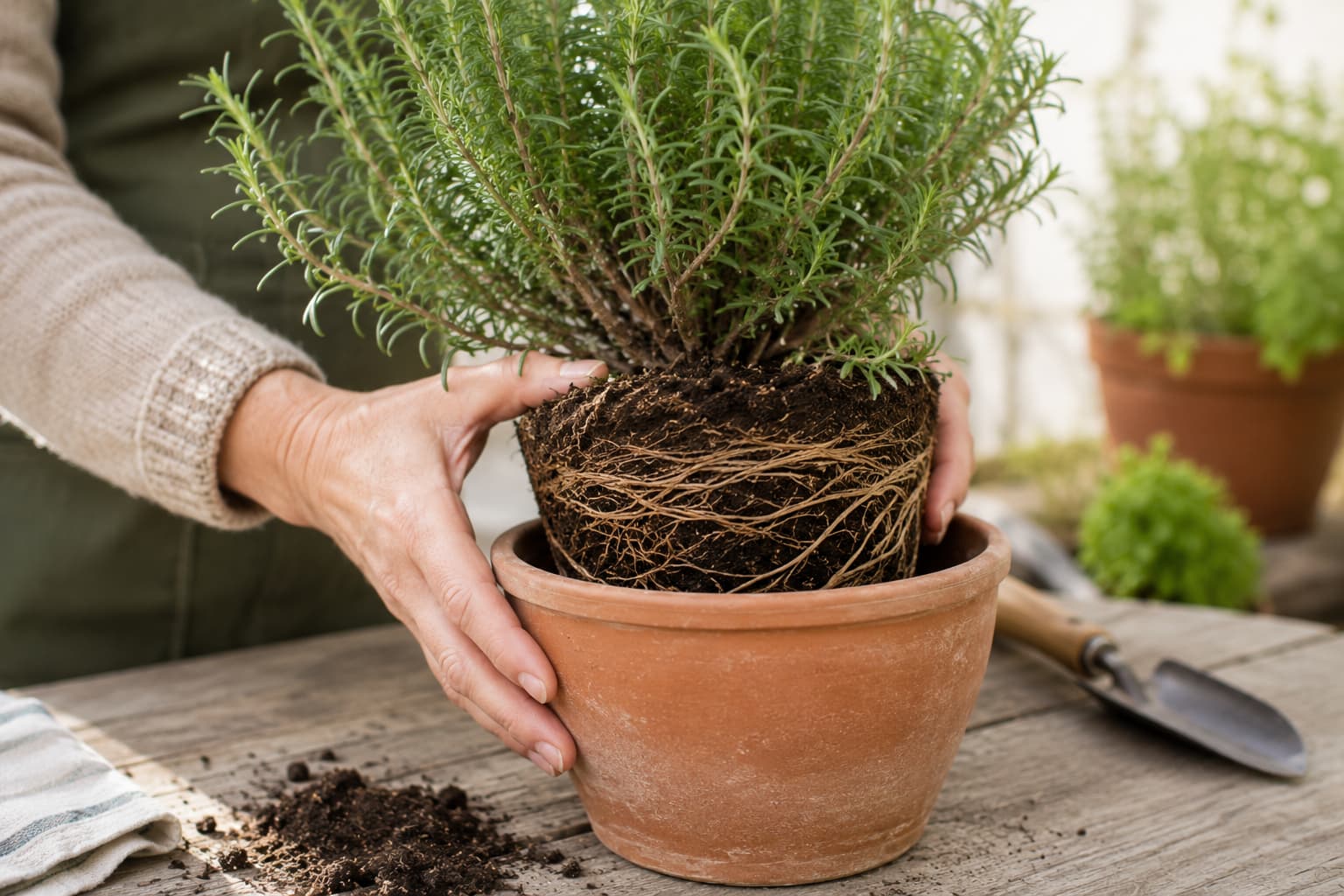
A rosemary plant does not need a huge pot, but a badly root-bound container can make watering difficult and slow new growth. The clue is not the age of the pot—it is what the roots and drying pattern are telling you.
Signs to Look For
- Roots circling densely around the outside of the root ball.
- Water running through very quickly because little mix remains.
- The plant wilting or drying much faster than it used to.
- Growth slowing during the active season despite adequate light.
If the plant is genuinely root-bound, move it into a container only slightly wider than the root ball and refresh the mix. Oversizing the pot can keep a large volume of unused soil wet for too long.
Terracotta can be useful where mixes dry slowly because the porous pot allows more evaporation, but it is not mandatory. A well-drained plastic or glazed pot can also work when watering is adjusted correctly.
6. Temperature Stress
Rosemary can handle cool conditions, but growth may slow when the plant experiences low light, cold drafts, very warm indoor air, or rapid temperature changes. These stresses often overlap with watering problems because cooler, darker conditions also slow soil drying.
What to Do
- Keep indoor plants away from hot heating vents.
- Avoid pressing foliage against very cold window glass.
- When moving a plant outdoors, acclimate it gradually to stronger sun and changing temperatures.
- Reduce watering frequency naturally when growth and soil drying slow.
7. Poor Airflow and Crowded Placement
Rosemary does not need a wind tunnel, but stagnant, crowded conditions can make indoor growing harder. Air movement helps foliage dry after splashes and reduces the humid, still microclimate that develops when several plants are packed together.
Leave a little space around the foliage, open a nearby window when conditions are suitable, or use gentle room circulation. The goal is ordinary air movement—not a fan blasting directly at the plant all day.
Indoor vs Outdoor Rosemary: What Changes?
| Condition | Indoor rosemary | Outdoor rosemary |
|---|---|---|
| Light | Often the limiting factor; window distance matters. | Full-sun positions are easier to provide. |
| Soil drying | Usually slower, especially in winter. | Often faster with sun and wind. |
| Air movement | May be limited in crowded rooms. | Usually more natural circulation. |
| Watering | Needs careful adjustment to slower drying. | Containers may need more frequent checking in hot weather. |
| Growth habit | Can stay compact if light is strong; may stretch if it is not. | Usually easier to maintain vigorous, compact growth in suitable sun. |
Outdoor growing is often easier because rosemary naturally receives stronger light and airflow, but indoor rosemary can still perform well when those conditions are recreated thoughtfully. For the full indoor setup, see our guide to growing rosemary indoors in pots.
Rosemary Not Growing? Signs of Recovery
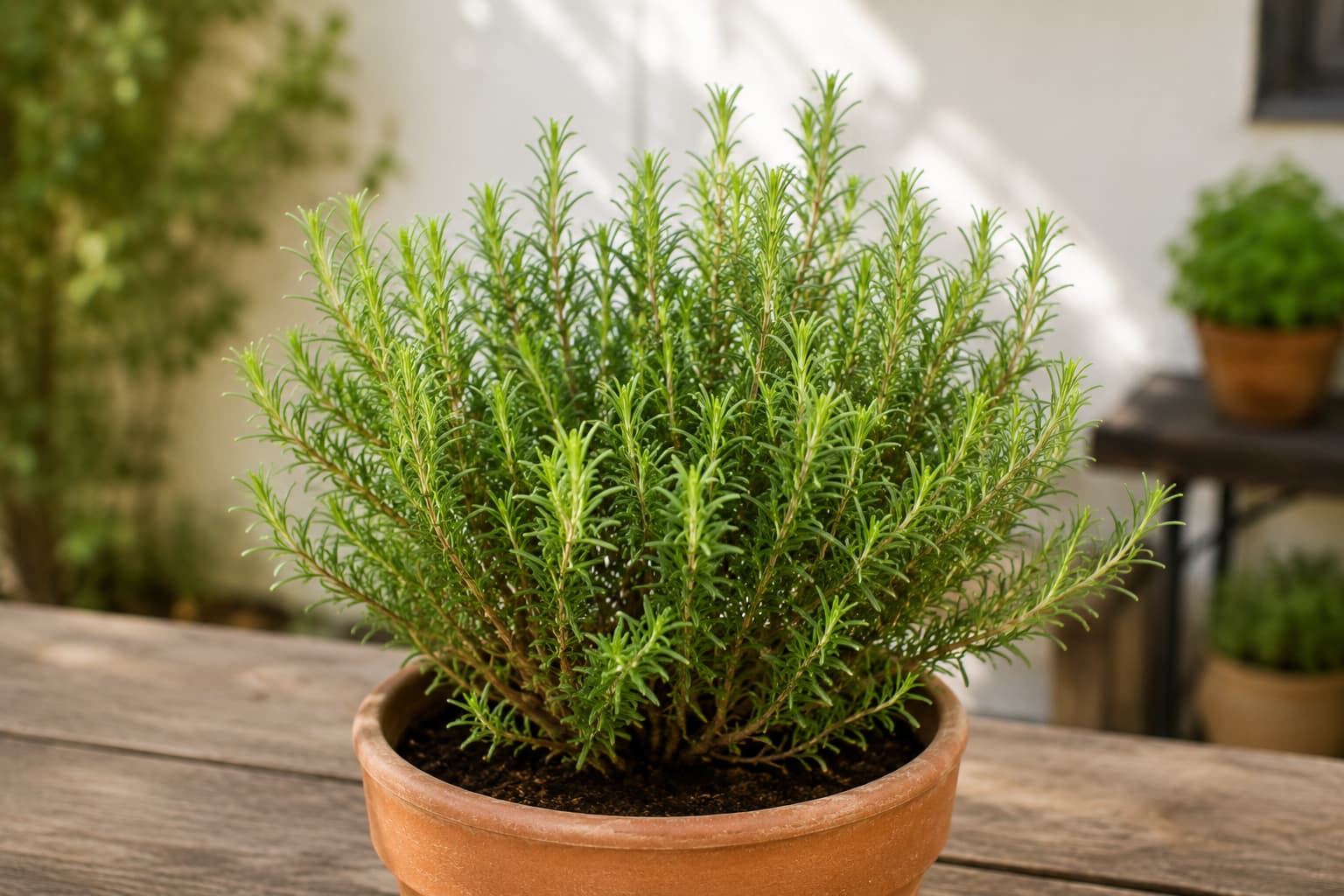
Do not judge recovery by damaged leaves turning green again—they usually will not. Watch the growing tips instead. Depending on season, light, root condition, and how stressed the plant was, visible improvement may take several weeks.
- Fresh green shoots appearing at the tips.
- Shorter spacing between new leaves.
- New stems that feel sturdy rather than stretched.
- The pot beginning to dry at a more predictable rate.
- No continued spread of yellowing, soft growth, or dieback.
When Slow Growth Is Normal
Slow growth does not always mean something is wrong. Rosemary often grows more slowly during darker seasons, after repotting, or while adapting to a new indoor location. A healthy plant can remain relatively quiet without declining.
- The foliage is still firm and mostly green.
- The soil dries normally and does not remain waterlogged.
- There is no spreading dieback or soft stem tissue.
- The slowdown began with shorter days or a recent move.
In that situation, keep conditions steady and avoid “fixing” slow growth with extra fertilizer or frequent watering.
The Greenmuse 3-Step Rosemary Recovery Routine
Step 1: Diagnose Before You Change Anything
If your rosemary is not growing, check light, soil moisture, drainage, root space, temperature, airflow, and the pattern of new growth. Pick the strongest clue instead of changing everything at once.
Step 2: Correct the Biggest Stress First
Move a low-light plant to brighter conditions, let a wet root zone dry, improve drainage if the mix stays saturated, or repot only when the roots truly need more room.
Step 3: Give the Plant Time to Respond
Keep care steady and watch the tips. New compact growth is a better success signal than repeatedly adjusting water, light, soil, and fertilizer from day to day.
Rosemary responds best when you remove the source of stress and then stop interfering long enough to see what changes. One thoughtful correction is usually more useful than five simultaneous “fixes.”
Frequently Asked Questions
1. Why is my rosemary alive but not growing?
If the plant is still green but producing little new growth, check light first, then soil drying, drainage, root space, season, and temperature. Slow growth can also be normal during darker months or shortly after a move.
2. How much sun does rosemary need?
Rosemary performs best in full sun outdoors. Indoors, give it the brightest unobstructed window available and supplement with a grow light if the plant becomes pale, stretched, or inactive.
3. How often should I water rosemary?
There is no reliable universal schedule. Water thoroughly, let excess water drain, and water again only after the upper part of the root zone has begun to dry. The interval changes with season, pot size, pot material, temperature, light, and plant size.
4. Why is my rosemary turning yellow?
Yellowing combined with persistently damp soil often points toward excess moisture or poor drainage. Yellowing can have other causes, so also check light, temperature, roots, and whether the plant is naturally shedding a few older leaves.
5. Should I repot rosemary when growth slows?
Only if the root ball is genuinely crowded, the pot dries unusually fast, or little usable potting mix remains. Moving an already stressed rosemary into a much larger pot can make moisture management harder.
6. Can rosemary grow indoors year-round?
Yes, but strong light is usually the hardest condition to provide indoors. Good drainage, careful watering, reasonable airflow, and distance from hot heating vents also matter.
7. How can I tell if rosemary is recovering?
Look for fresh green shoot tips, compact new growth, sturdy stems, and a stable drying pattern in the pot. Old damaged leaves may remain damaged even after the plant begins recovering.
Final Thoughts
Rosemary is easier to revive when you stop treating every slowdown as a demand for more care. Give it strong light, a root zone that drains and breathes, enough—but not excessive—water, and room for air to move around the foliage.
Then watch the new growth. A few compact green tips are often a more useful sign of progress than an immediate dramatic transformation.
What does your rosemary look like right now? Share the symptoms, where you grow it, and how the soil feels before watering. That makes diagnosis much easier than guessing from one brown or yellow leaf.