Night-Blooming Jasmine Care: How to Grow Cestrum nocturnum Safely
Night-blooming jasmine care starts with the right light, drainage, pruning, and winter protection — while also managing its powerful fragrance, toxic berries, and invasive potential.
Quick Summary
Good night-blooming jasmine care begins with understanding the plant itself. Cestrum nocturnum is an exceptionally fragrant night-blooming shrub — a single shrub can fill an entire garden with sweet, intoxicating perfume after dark. But it's also one of the most misunderstood. It's not a true jasmine. It's invasive in warm climates. All parts should be treated as toxic if ingested, with particular concern around the berries. And for some people, the fragrance is so strong it causes headaches and respiratory irritation. This guide covers everything: how to grow it successfully, how to keep it under control, how to stay safe, and whether it's actually the right plant for your garden.
In This Guide
- What Is Night-Blooming Jasmine? (Hint: It's Not Jasmine)
- Plant Profile at a Glance
- The Fragrance: Glorious or Overwhelming?
- How to Grow and Care for Night-Blooming Jasmine
- Pruning: When, How, and Why It Matters
- The Invasiveness Warning (Especially in Warm Zones)
- Toxicity: What Every Gardener Must Know
- Winter Care and Container Growing for Cold Zones
- Why Isn't It Blooming? Troubleshooting Guide
- Frequently Asked Questions
What Is Night-Blooming Jasmine? (Hint: It's Not Jasmine)
To begin with, let's clear up the biggest misconception right away: night-blooming jasmine is not a jasmine.
True jasmines belong to the genus Jasminum (olive family, Oleaceae). The plant commonly called "night-blooming jasmine" is Cestrum nocturnum, a member of the nightshade family (Solanaceae) — which makes it a relative of tomatoes, peppers, and, more relevantly, toxic plants like Datura and Brugmansia. In other words, the shared name comes from fragrance, not botanical relationship.
| Characteristic | Night-Blooming Jasmine (Cestrum nocturnum) | True Jasmine (Jasminum spp.) |
|---|---|---|
| Family | Solanaceae (nightshade) | Oleaceae (olive) |
| Growth Habit | Woody shrub, 6–12 ft tall | Vining or shrubby, varies by species |
| Flowers | Small, tubular, greenish-white, in clusters | Pinwheel-shaped, white or yellow, often larger |
| Fragrance | Extremely strong, only at night | Sweet, often daytime-fragrant |
| Toxicity | All parts toxic, especially berries | Generally non-toxic |
| USDA Zones | 9–11 (tender) | Varies; many hardy to Zone 7–8 |
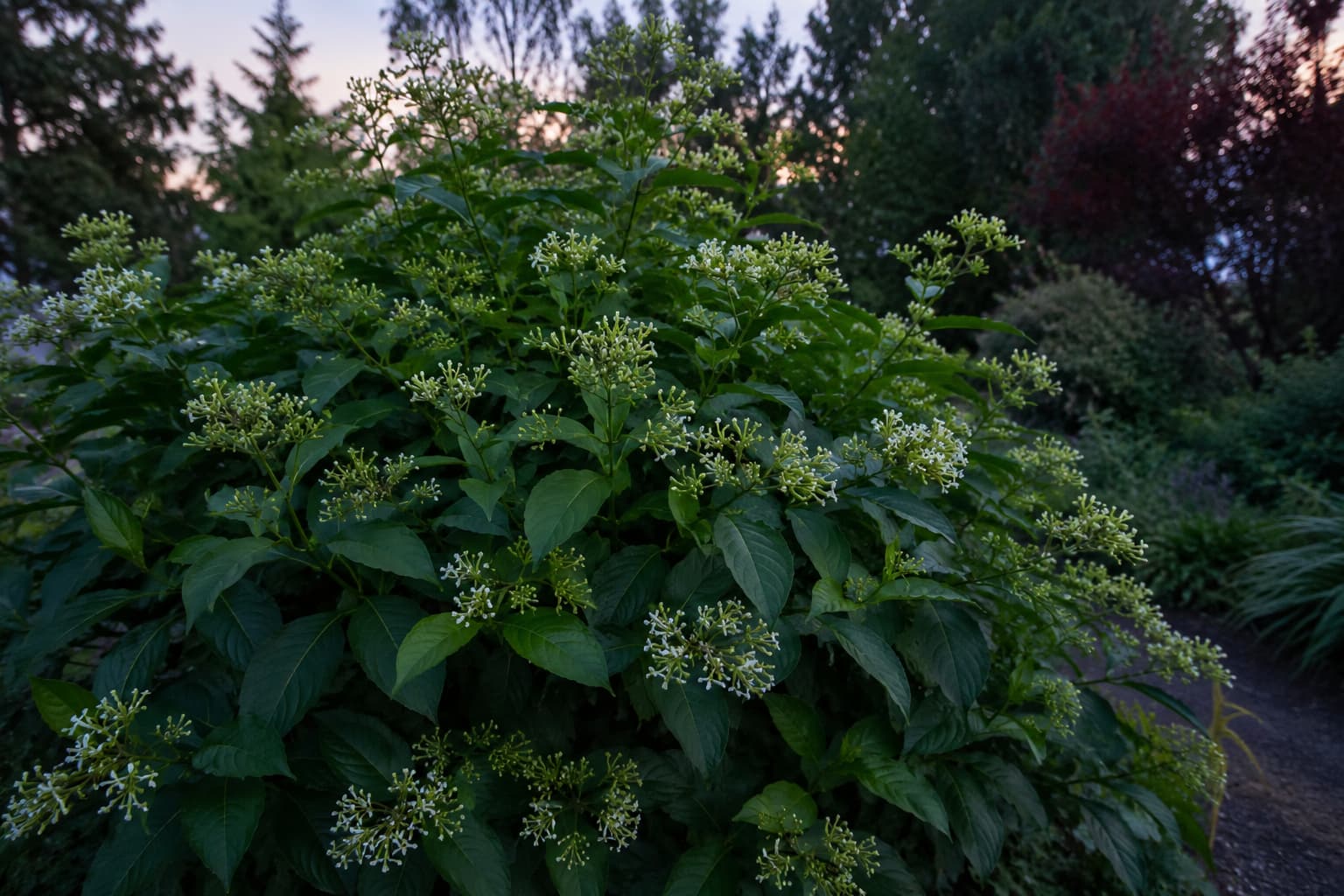
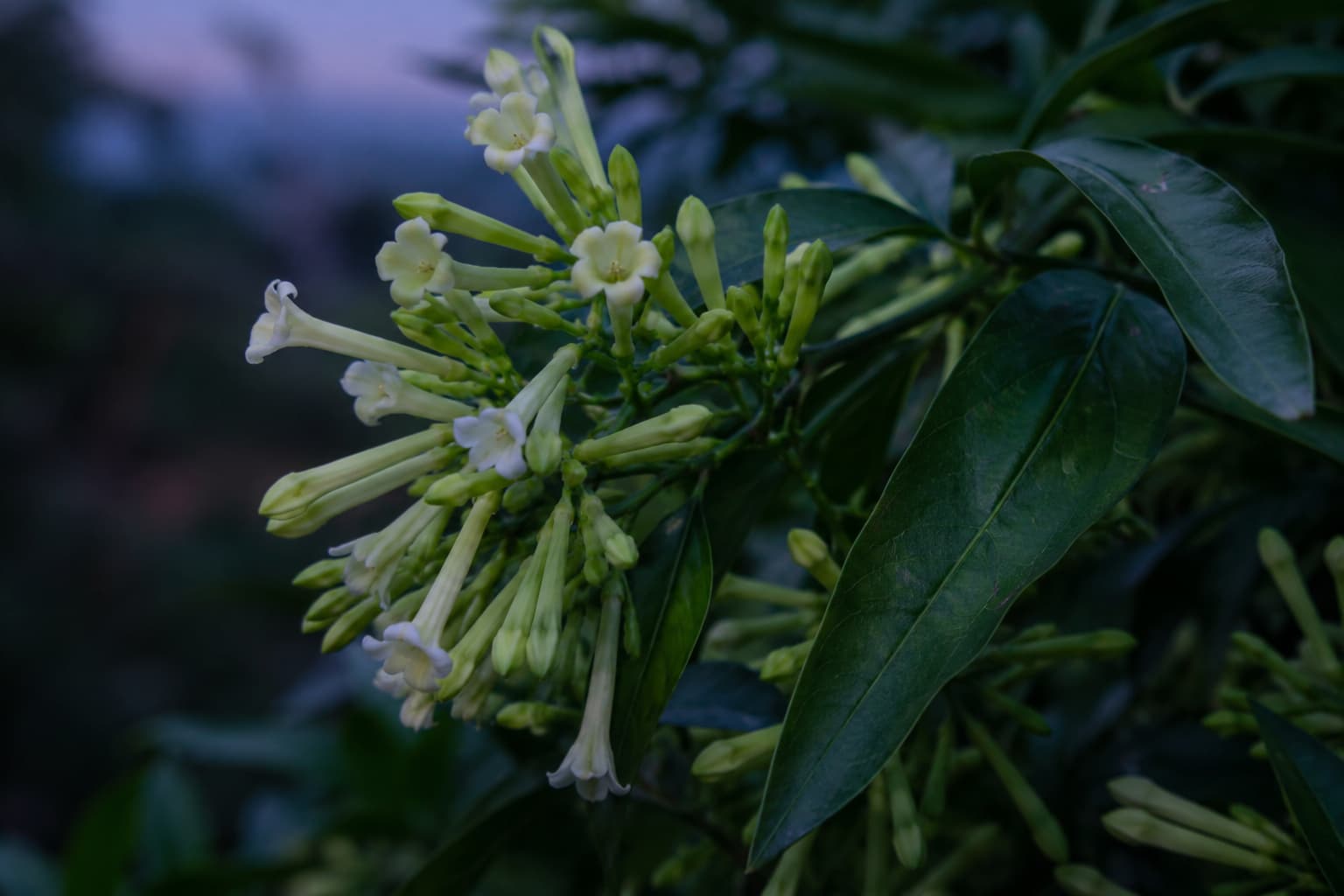
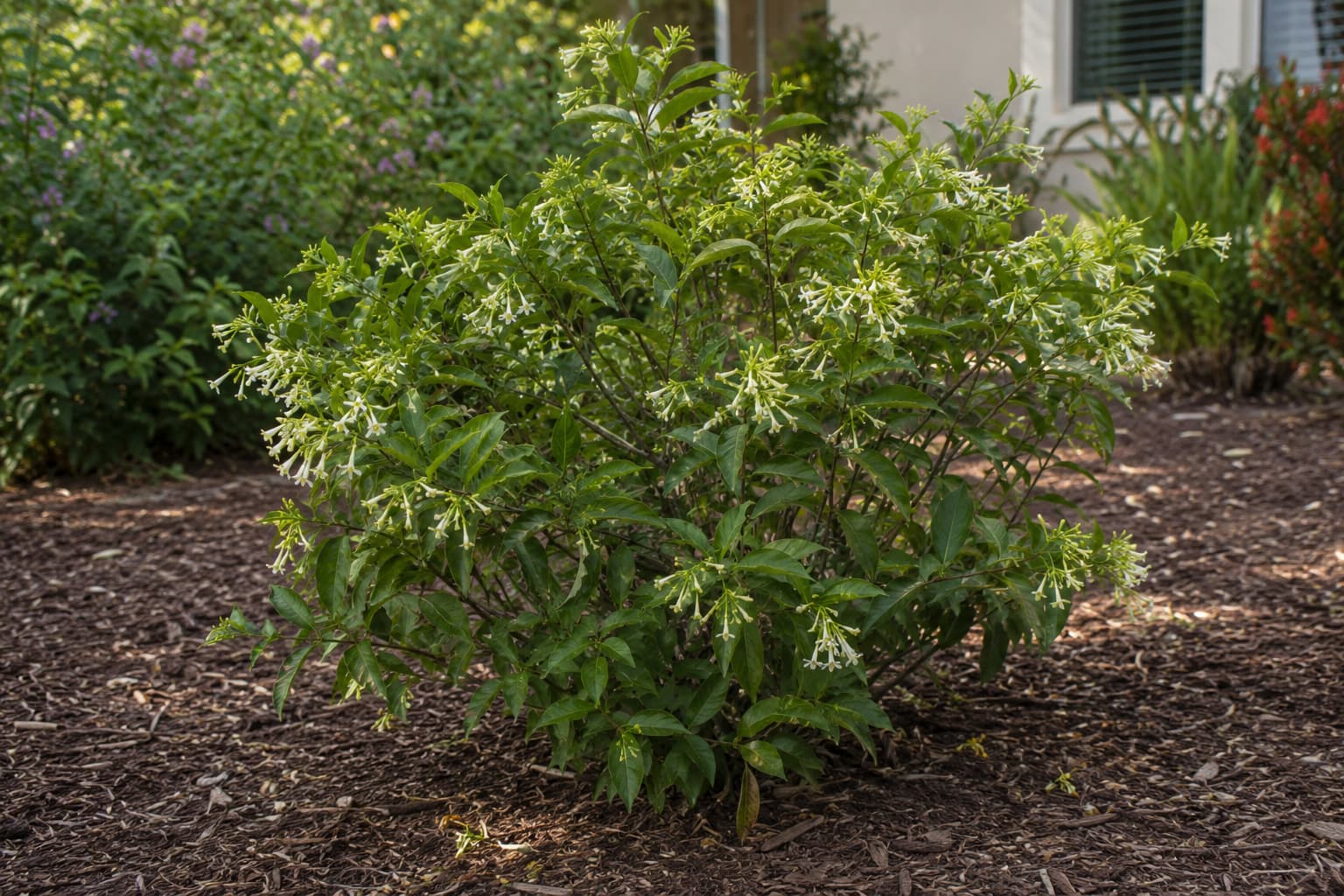
Meanwhile, Cestrum nocturnum has naturalized across many warm regions beyond its native range. It's a woody, evergreen-to-semi-evergreen shrub that can reach 6–12 feet tall and 3–6 feet wide. Visually, the flowers are small and relatively understated — clusters of slender greenish-white tubes that open at night. But what they lack in visual drama, they make up for in fragrance: the scent can carry for hundreds of feet on a warm, still evening.
Know What You're Buying
For that reason, garden centers and online nurseries may label Cestrum nocturnum simply as "night-blooming jasmine" without emphasizing the botanical name. Therefore, always check the botanical name on the tag. If you want a fragrant plant that's safer around pets and children, look for true jasmine — Jasminum sambac (Arabian jasmine) or Jasminum polyanthum (pink jasmine) — instead.
Plant Profile at a Glance
| Feature | Details |
|---|---|
| Common Name | Night-Blooming Jasmine, Night Jessamine, Lady of the Night, Queen of the Night |
| Scientific Name | Cestrum nocturnum |
| Plant Type | Evergreen to semi-evergreen woody shrub |
| USDA Zones | Perennial in Zones 9–11; container-grown in Zone 8 and below |
| Mature Size | 6–12 ft tall, 3–6 ft wide (can be kept smaller with pruning) |
| Bloom Time | Late spring through fall; heaviest bloom in summer; flowers open at night |
| Fragrance | Extremely strong, sweet, pervasive; strongest from dusk through midnight |
| Sun Needs | Full sun to partial shade; best fragrance with 6+ hours of sun |
| Soil | Well-drained, loamy; slightly acidic to neutral (pH 6.0–7.0) |
| Toxicity | All parts toxic if ingested; berries especially dangerous; sap may irritate skin |
The Fragrance: Glorious or Overwhelming?
When it comes to fragrance, night-blooming jasmine divides opinion sharply. Some people describe the fragrance as heavenly — sweet, rich, and utterly intoxicating. Others find it cloying, headache-inducing, or even nauseating, especially at close range in enclosed spaces.
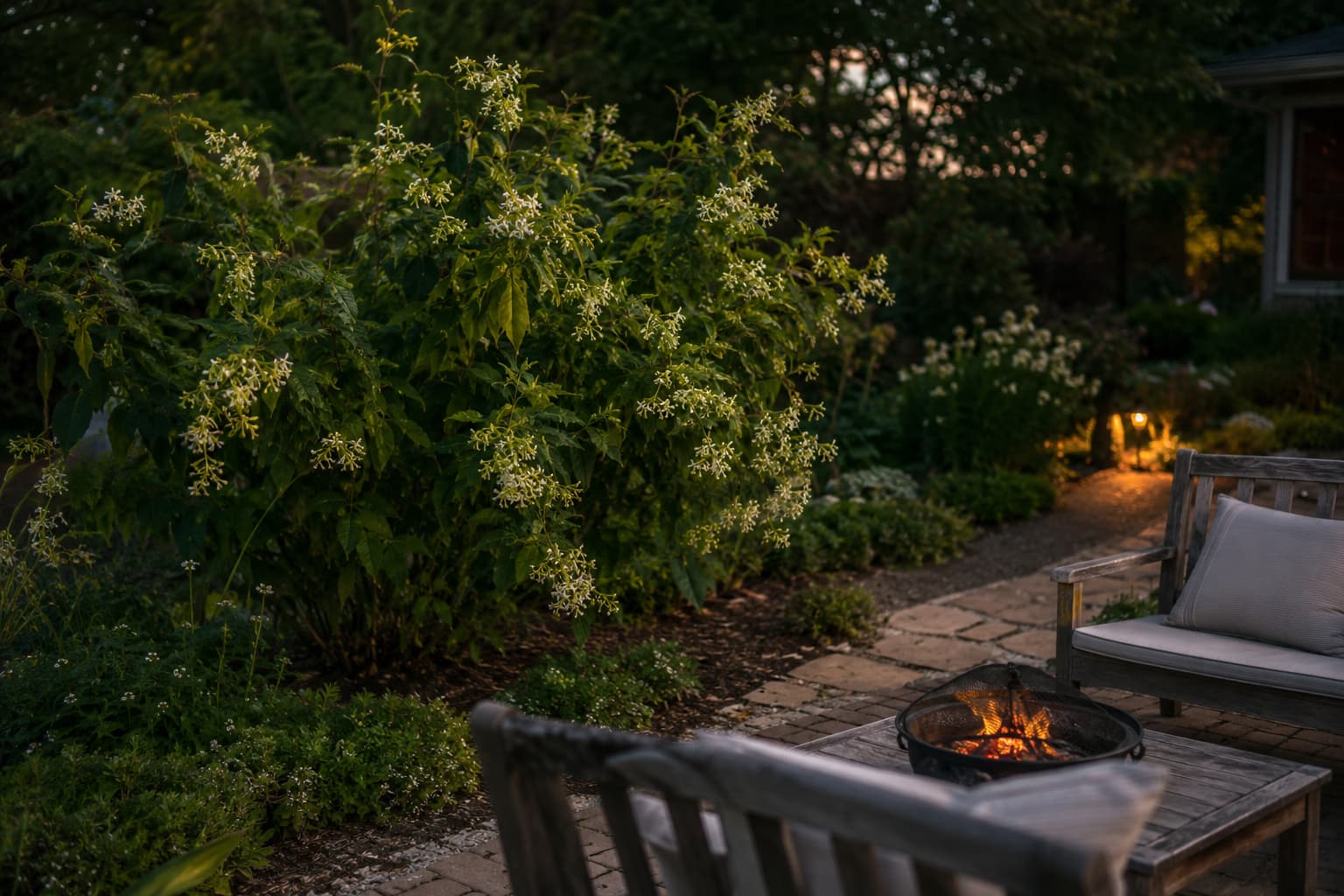
Both reactions are valid. In practice, the fragrance can be extremely strong — a single mature shrub can perfume an entire yard. On a warm, still evening, the scent can travel well beyond the planting area. For example, a larger garden can let the fragrance disperse more gently. A small patio, bedroom window, or enclosed courtyard may concentrate the scent much more strongly.
Placement Is Everything
Good placement: 20–30 feet from seating areas, downwind of the house, near a garden path you walk in the evening. Bad placement: directly under a bedroom window, next to a small patio where people sit for hours, in an enclosed courtyard where fragrance has nowhere to go. The scent should reach you as a pleasant drift, not a direct hit.
How to Test the Fragrance Before Planting
If you've never experienced the fragrance before, try to smell one in person at a botanical garden or nursery before planting. What smells glorious to one person can be genuinely unpleasant to another, and once the shrub is established, relocating or removing it can require repeated work.
Night-Blooming Jasmine Care: Light, Soil, Water & Feeding
Light Requirements
For reliable night-blooming jasmine care, start with light. The shrub grows in full sun to partial shade, but the amount of light directly affects both growth and fragrance. With 6–8+ hours of direct light, plants are generally more compact and floriferous. By contrast, partial shade often produces looser growth with fewer flowers.
In hotter climates, some afternoon shade can help reduce leaf stress without sacrificing too much bloom. By contrast, cooler regions usually benefit from the brightest warm site available.
Soil and Planting
- Well-draining soil is essential. While night-blooming jasmine tolerates a range of soil types, it will not survive standing water or persistently soggy conditions.
- Ideal pH: 6.0–7.0 (slightly acidic to neutral).
- When planting in the ground, dig a hole twice the width of the root ball but no deeper. Backfill with the native soil — don't amend heavily, as this encourages roots to stay in the planting hole.
- Space at least 3–4 feet from walls, fences, and other shrubs to allow for mature spread and good air circulation.
Watering
Watering is one of the most important parts of night-blooming jasmine care. Aim for even moisture during active growth without keeping the root zone soggy.
- Growing season (spring through fall): Water deeply when the upper inch of soil begins to dry, adjusting for rainfall, heat, and soil drainage. Container plants may need more frequent checks during hot weather because pots dry faster than garden soil.
- Winter (dormant or semi-dormant): Reduce watering during cool or semi-dormant periods, but do not allow the root ball to remain completely dry for long.
- Signs of overwatering: Yellowing leaves, leaf drop, soft or mushy stems near the base.
- Signs of underwatering: Wilting, crispy leaf edges, flower buds dropping before opening.
Fertilizing
For feeding, night-blooming jasmine is a moderate feeder. If growth is pale or weak, apply a balanced fertilizer at the label rate in spring. Avoid feeding automatically on a fixed schedule; plants in fertile soil may need little or no additional fertilizer.
However, avoid high-nitrogen fertilizers — they push soft, leggy growth that's more susceptible to pests and cold damage, and they reduce flowering.
Night-Blooming Jasmine Pruning: When and How to Cut It Back
Pruning is another key part of night-blooming jasmine care. The shrub flowers on new growth, so pruning timing can affect flowering. Therefore, make major cuts before vigorous spring growth begins, then use lighter pruning as needed to control size and shape.
When to Prune
- Major pruning: Late winter to very early spring, before new growth begins. At that point, moderate size reduction can help control shape before vigorous new growth begins.
- Light pruning: After each major bloom flush during the growing season. Remove spent flower clusters and any wayward branches. In addition, light post-bloom pruning can keep the plant tidier and may support further flowering.
- Deadheading: Not strictly necessary, but removing spent flower clusters before they form berries serves two purposes: it redirects energy into more blooms, and it prevents toxic berries from developing — a critical safety measure if children or pets are present.
How to Prune
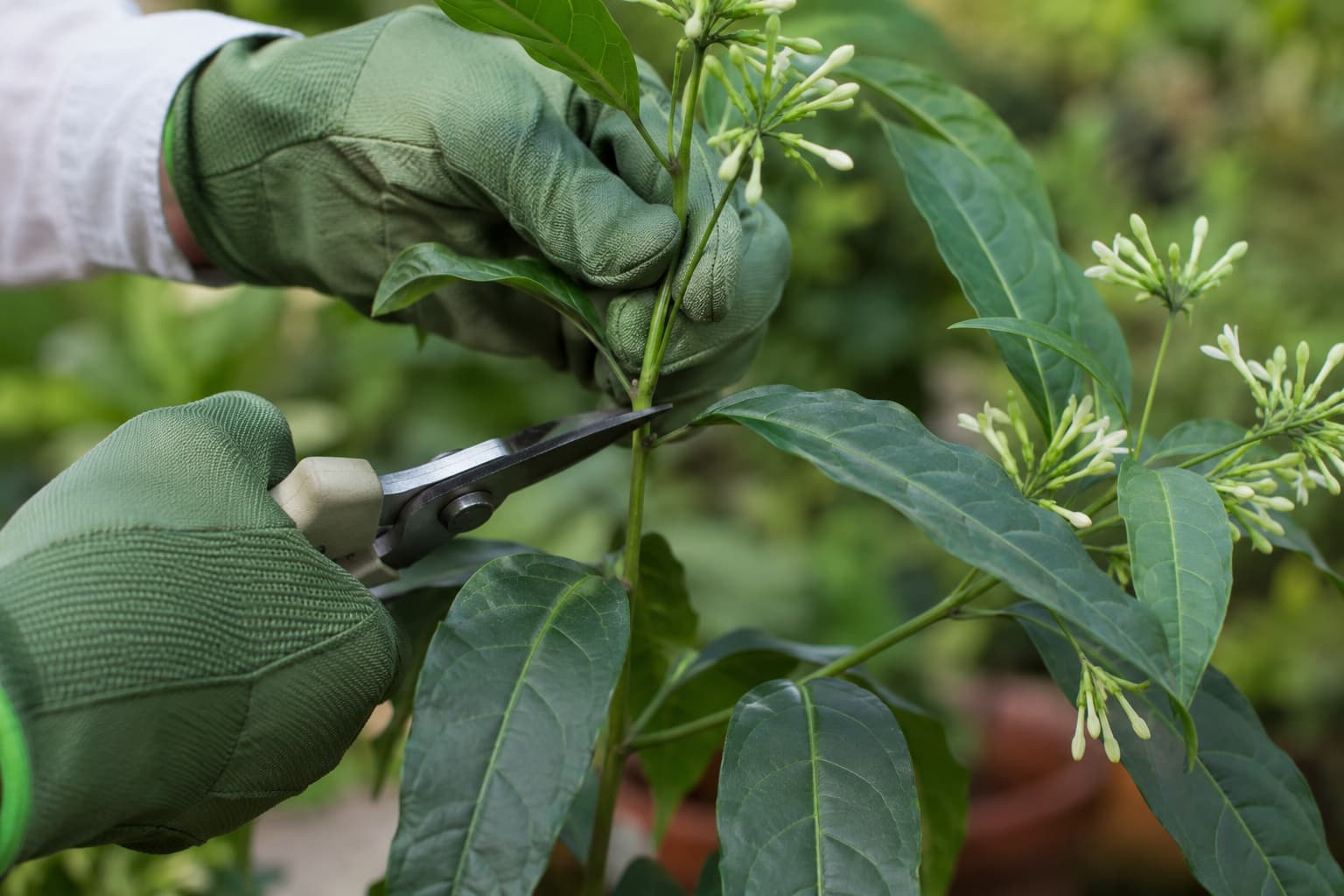
- Use clean, sharp bypass pruners or loppers. Disinfect blades between plants if you suspect disease.
- Remove dead, damaged, or crossing branches first — cut back to healthy wood or to the branch collar.
- Thin out dense interior growth to improve air circulation. Night-blooming jasmine can become a thicket.
- Cut back the remaining stems to shape, always cutting just above a leaf node or outward-facing bud.
- For container plants or those you want to keep compact, cut back by up to one-third each spring.
Wear Gloves
In addition, the sap of Cestrum nocturnum can irritate sensitive skin. Wear gardening gloves when pruning, and wash your hands thoroughly afterward. Avoid touching your face or eyes while working with the plant.
Invasiveness Warning for Warm Climates
Importantly, night-blooming jasmine is reported as invasive in some warm regions and has naturalized in Hawaii, Texas, and other warm regions. As a result, birds can disperse seeds beyond the original planting area, and the plant's vigorous growth allows it to form dense thickets that crowd out native vegetation.
Before You Plant, Check Your Region
Before planting in a warm region, where Cestrum nocturnum has been reported as invasive, consider alternatives. Contact your local extension office or check the Invasive Plant Atlas before planting. In sensitive areas, the safest choice is to grow it only in containers where you can control berry production by deadheading.
Why Berry Control Matters
Because birds can move seeds beyond the planting area, preventing fruit formation is one of the most practical ways to reduce spread where the plant is permitted to grow.
How to Keep It Under Control
- Deadhead spent flowers before they form berries. This matters because removing spent flowers before fruit develops reduces the chance of seed dispersal by birds.
- Prune after each bloom flush to remove developing fruit.
- Grow in a large container (18–24 inches wide) instead of in the ground. This restricts root spread and makes berry control much easier.
- Monitor surrounding areas for volunteer seedlings, especially under trees where birds perch. Pull them while they're small.
- If you need to remove an established plant — cut back the top growth, dig out as much of the root system as practical, and monitor repeatedly for regrowth. In invasive regions, ask your local extension service or a qualified landscape professional for region-appropriate removal guidance.
Night-Blooming Jasmine Safety & Toxicity
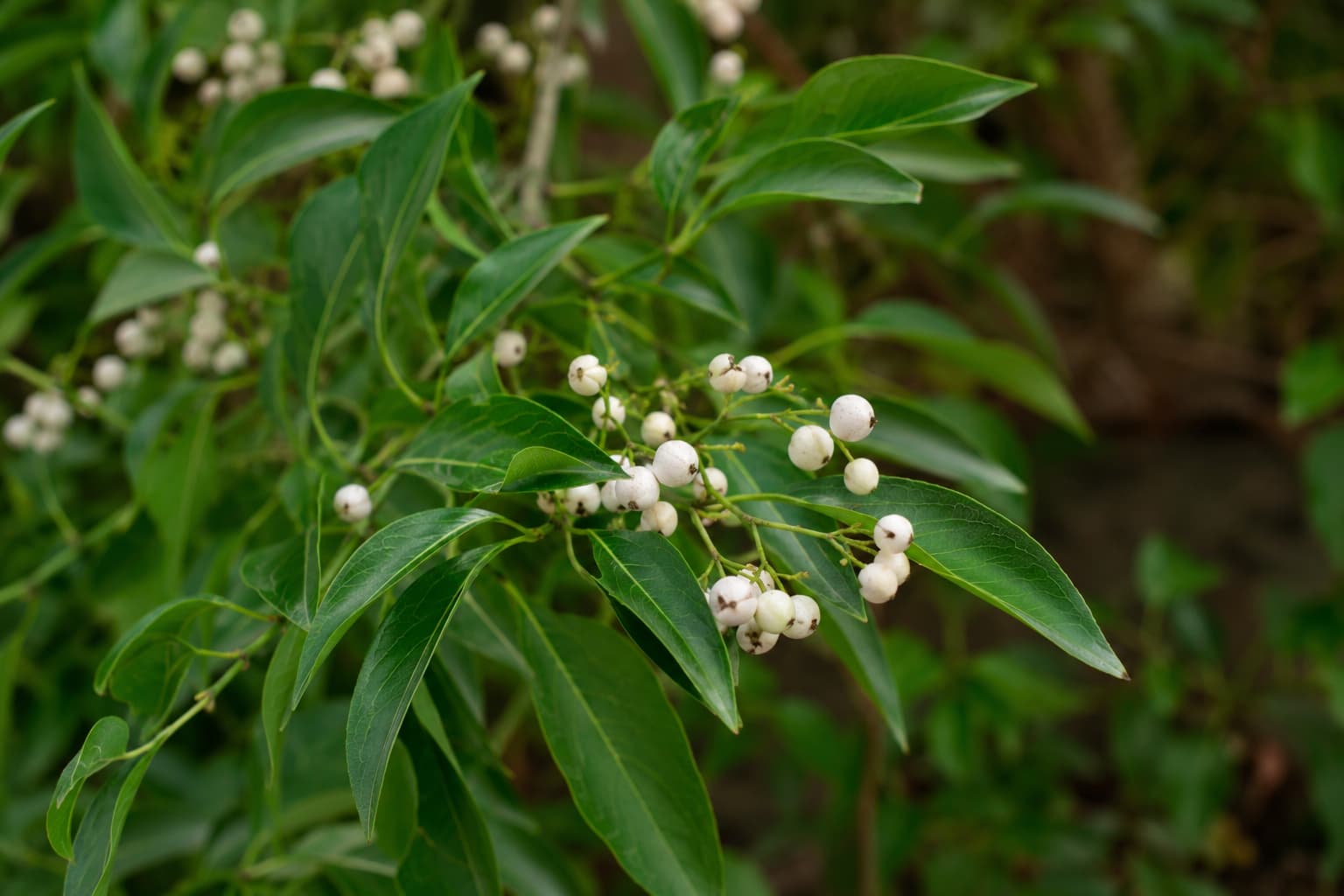
Safe night-blooming jasmine care also includes careful placement. From a safety standpoint, all parts of Cestrum nocturnum should be treated as toxic if ingested. Especially concerning are the berries, which can attract attention because they are small and clustered. Ingestion can cause serious symptoms including vomiting, diarrhea, elevated heart rate, and in severe cases, neurological effects.
Critical Safety Information
Keep children and pets away from this plant. The berries are especially dangerous. Homes with young children who put things in their mouths, or dogs that eat fallen fruit, may be better served by a safer alternative. If ingestion is suspected, contact your local poison-control service, emergency medical provider, or veterinarian immediately.
Who Should Avoid This Plant
In particular, homes with young children, pets that chew plants, or frequent public access should take the toxicity warning seriously before planting Cestrum nocturnum.
Safety Precautions
- Deadhead flowers before berries form. This eliminates the most dangerous part of the plant.
- Plant in a fenced or gated area that children and pets can't access unsupervised.
- Grow in elevated containers out of reach of small children and pets.
- Wear gloves when handling — sap can irritate skin in sensitive people.
- Teach children that this plant is for looking and smelling only — never for touching or eating.
- If you have berry-producing plants near a public sidewalk or where neighborhood children pass, consider removing the plant or replacing it with a safer alternative.
Safer Fragrant Alternatives
If toxicity or invasiveness makes this plant unsuitable, consider true jasmine, gardenia, flowering tobacco, or a locally native evening-blooming species. For a cool-climate spring-flowering shrub, see our complete lilac care guide. Confirm regional suitability and pet safety before planting.
Night-Blooming Jasmine Winter Care & Container Growing
Winter is where night-blooming jasmine care changes most. The shrub is not frost-hardy. Temperatures below 30°F (-1°C) will damage or kill the plant. In the warmest suitable zones, it can remain outdoors through winter. In marginal climates, however, winter survival depends on exposure, cold duration, and protection, but expect some dieback. For colder areas, container culture is usually the more controllable option.
Growing Night-Blooming Jasmine in Containers
For colder climates, container culture gives you much more control over winter temperature, fruiting, and plant size. It also makes it easier to move the shrub under cover before damaging cold arrives.
Overwintering Container Plants
- Bring indoors before nighttime temperatures drop below 50°F (10°C). Don't wait for frost — the plant will begin to suffer well before freezing.
- Prune lightly before bringing inside — reduce size by about one-third to make it manageable and reduce leaf drop indoors.
- Inspect thoroughly for pests. Check leaf undersides for aphids, spider mites, whiteflies, and scale. Treat any infestations before bringing the plant inside.
- Place near a bright, south or west-facing window. Supplemental grow lights are helpful in northern winters. Expect some leaf drop as the plant adjusts to lower light — this is normal.
- Water sparingly — every 2–3 weeks, just enough to keep the soil from completely drying out. The plant will be semi-dormant.
- Do not fertilize during winter. Resume feeding in early spring when new growth appears.
- Move back outdoors gradually in spring, after all danger of frost has passed. Harden off over 7–10 days: start in shade, gradually increase sun exposure.
Indoor Bloom Warning
Night-blooming jasmine rarely blooms indoors during winter — the light levels are too low. But if it does, the fragrance in an enclosed space can be overpowering. If you're sensitive to strong scents, consider overwintering the plant in a spare room, garage with a window, or sunroom rather than a bedroom or main living area.
Why Isn't It Blooming? Troubleshooting Guide
If your night-blooming jasmine is healthy and green but producing few or no flowers — or if the fragrance is weak — here's what to check, in order of likelihood:
1. Not Enough Sun
First, inadequate light is one of the most common reasons for weak flowering. Night-blooming jasmine needs at least 6 hours of direct sun for good flowering. In partial shade, growth is fine but blooms are sparse and fragrance is weak. If your plant is in a spot that's become shadier over time (trees growing larger, new structures), that's your problem.
2. Pruning at the Wrong Time
Next, because flowers form on new growth, poorly timed pruning can reduce flowering. Do major pruning only in late winter/early spring. Light deadheading after blooms is fine.
3. Too Much Nitrogen
In addition, dark green, lush growth with few flowers can point to excess nitrogen. — often from lawn fertilizer runoff. Pause feeding if growth is excessively lush, then reassess light, soil moisture, and fertilizer use before applying more.
Age, Temperature & Water Stress
If light, pruning, and fertilizer are already appropriate, age, seasonal temperatures, and moisture stress are the next factors to check.
4. Plant Is Too Young
Similarly, a young or recently established plant may flower lightly at first. Give it a full growing season to establish before expecting heavy flowering.
5. Temperature Issues
Temperature also matters: night-blooming jasmine generally flowers best during sustained warm weather. In cooler coastal areas or at higher elevations, bloom may be reduced. Conversely, extreme heat (100°F+) can cause bud drop.
6. Water Stress
Finally, both underwatering and overwatering can reduce flowering. Consistent moisture during the growing season — without sogginess — produces the best results.
Frequently Asked Questions
Identity, Invasiveness & Safety
011. Is night-blooming jasmine the same as regular jasmine?
No. Night-blooming jasmine (Cestrum nocturnum) is in the nightshade family (Solanaceae), while true jasmines (Jasminum spp.) are in the olive family (Oleaceae). They're not related. The name confusion comes from the similarity of the fragrance. True jasmines differ botanically and may have different safety profiles — while Cestrum nocturnum is toxic in all parts.
022. Is night-blooming jasmine invasive?
In warm, humid regions — particularly Florida, Hawaii, and parts of the Gulf Coast — yes, it can be invasive. Birds disperse the seeds, and the plant forms dense thickets that crowd out native species. In these regions, grow it only in containers and deadhead flowers before berries form. Check with your local extension office before planting in the ground.
033. Is night-blooming jasmine poisonous to dogs and cats?
Yes. All parts are toxic if ingested — leaves, stems, flowers, and especially the berries. Symptoms can include vomiting, diarrhea, elevated heart rate, and neurological effects. If your pet eats any part of this plant, contact a veterinarian immediately. If you have pets that chew on garden plants, this is not a safe choice.
044. Can the fragrance cause headaches or allergies?
Yes. The fragrance is extremely potent, and some people are sensitive to it. Reported reactions include headaches, nausea, respiratory irritation, and exacerbation of asthma symptoms. The effect is strongest in enclosed spaces (never bring a blooming plant indoors into a bedroom). Plant at a distance from seating areas and windows. For fragrance-sensitive households, it is wise to experience the plant in person before committing to it.
Flowering, Winter Care & Containers
055. Why isn't my night-blooming jasmine flowering?
For night-blooming jasmine care, the most common flowering checks are not enough sun (needs 6+ hours direct light), pruning at the wrong time (blooms on new growth — prune only in late winter), excess nitrogen (too much leaf growth at the expense of flowers), or the plant is too young (first-year plants may not bloom heavily). Check the troubleshooting section above for a full diagnostic guide.
066. How do I overwinter night-blooming jasmine in cold climates?
For cold climates, grow it in a movable container and bring it under protection before damaging cold arrives. Place near a bright window, water sparingly (every 2–3 weeks), stop fertilizing, and expect some leaf drop as it adjusts. Move back outdoors gradually in spring after all frost danger has passed. In Zones 9–11, it can stay outdoors year-round.
077. Can night-blooming jasmine grow in a container?
Yes. In many regions, container growing is one of the easiest ways to control size and fruiting. It controls the plant's size, makes it easier to deadhead before berries form, and allows cold-climate gardeners to overwinter it indoors. Use a pot at least 18–24 inches wide with excellent drainage. Expect to water more frequently than in-ground plants, especially in summer.
088. How fast does night-blooming jasmine grow?
Under favorable conditions, growth can be rapid. As a result, vigorous growth can make management more important in favorable climates. Regular pruning helps keep container or garden plants within their intended space. In containers, growth is slower but still vigorous during the warm season.
Related Greenmuse Guides
- Moonflower Guide — another dramatic evening-blooming plant for night gardens.
- Four O'Clock Flower Guide — a colorful evening bloomer with a different growth habit.
Sources & Further Reading:
Final Thoughts
Night-blooming jasmine is one of those plants that demands an honest conversation. The fragrance can be extraordinary in the right setting. However, toxicity concerns, invasive potential in some regions, and the intensity of the scent mean this shrub is not suitable for every garden.
If you have the right space — a large yard in a cooler zone where invasiveness isn't a concern, no young children or pets that chew plants, and a spot far enough from the house that the fragrance drifts rather than dominates — it can be a magnificent addition to an evening garden.
If any of those conditions don't apply, there are safer, equally rewarding alternatives that deliver night fragrance without the complications.
Here's what to remember:
- It's not a true jasmine — it's Cestrum nocturnum, in the nightshade family
- All parts are toxic, especially the berries — deadhead before fruit forms
- Invasive in warm regions — check locally; grow in containers if in doubt
- The fragrance is extremely strong — plant at a distance, not under windows
- Needs full sun, well-drained soil, and consistent water — prune in late winter for best blooms
If you found this guide helpful, you might also enjoy our guides on Moonflowers and Four O'Clock Flowers — two more evening garden favorites that pair beautifully with night-blooming jasmine.
Have you grown night-blooming jasmine? Share your climate zone, container or in-ground setup, and how you manage the fragrance and berries.