Night-Blooming Cereus Care: Growing the Queen of the Night
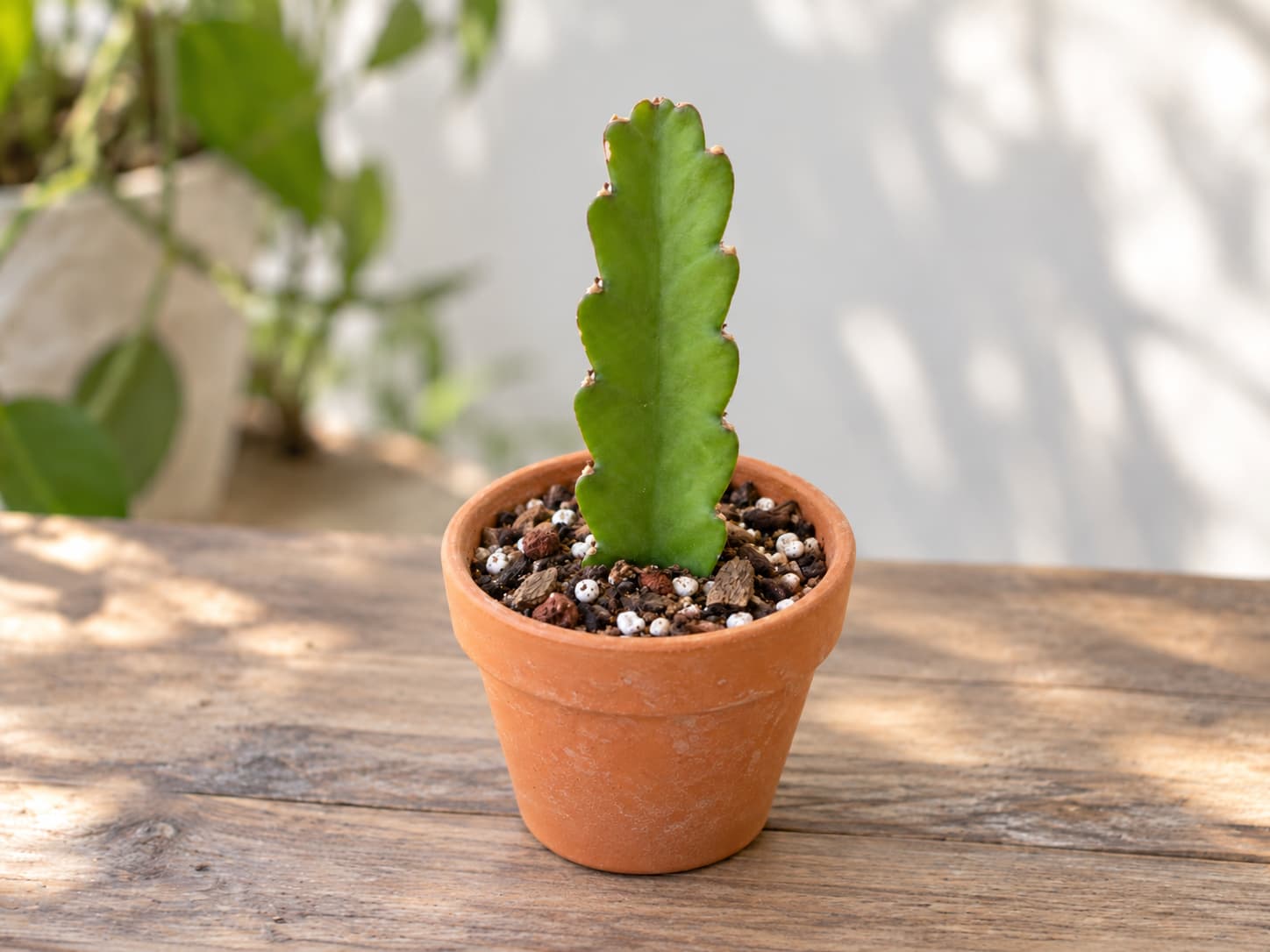
Night-blooming cereus care starts with identifying the plant. This guide covers Epiphyllum oxypetalum, often called queen of the night. It is a jungle cactus with flat, leaf-like stems and large white flowers that open at night and fade the next morning. Its roots need an airy mix and more regular moisture than a desert cactus.
Use the stem shape to confirm your plant, then follow the light, watering, winter rest, and propagation steps below. The bloom checklist helps you find the most likely reason a mature plant has not flowered.
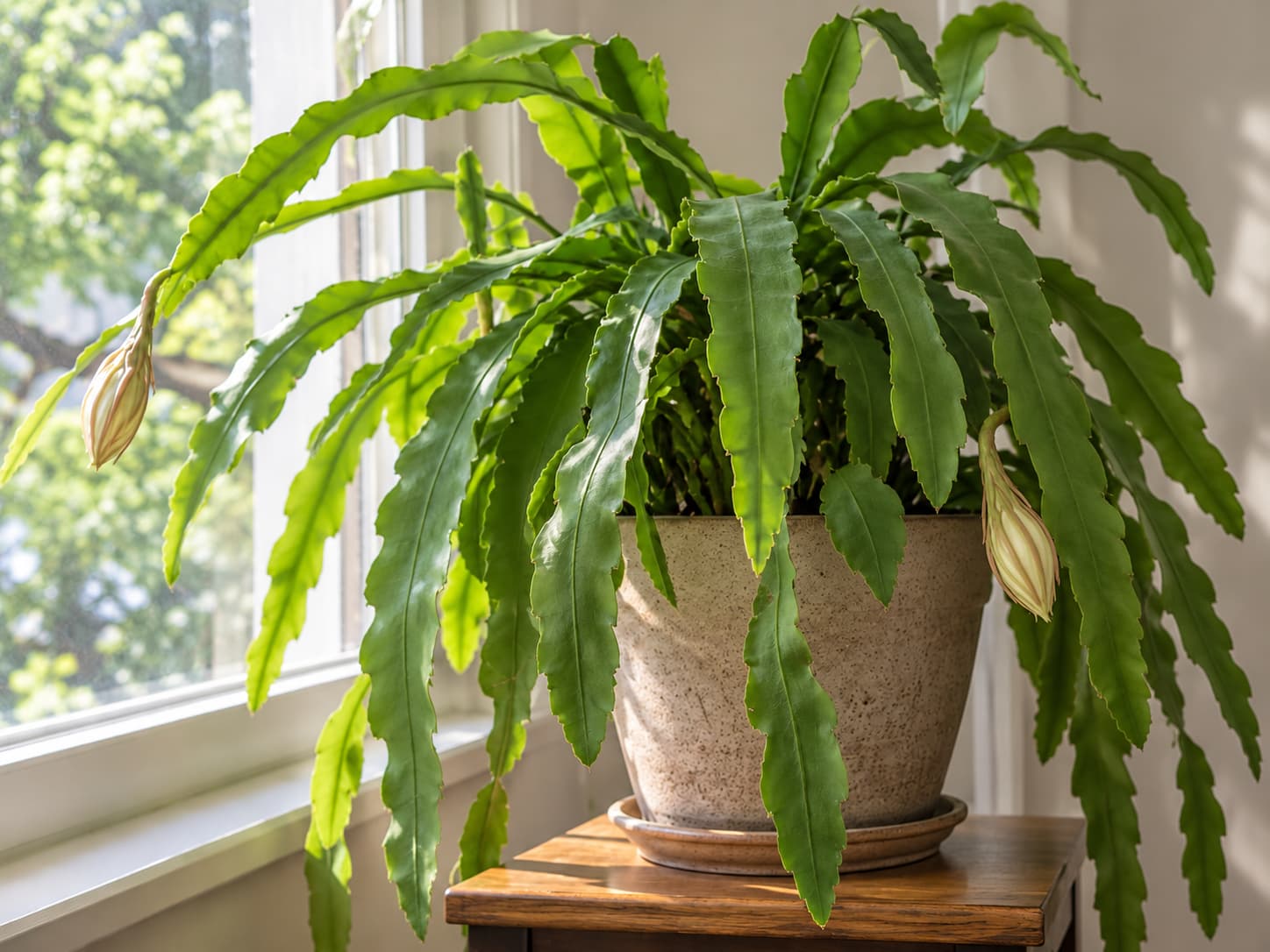
Night-Blooming Cereus Care at a Glance
Give Epiphyllum oxypetalum bright filtered light, a loose draining mix, and water as the top begins to dry. In winter, a cooler bright spot and reduced watering may encourage flowers; keep the mix just moist rather than completely dry. Protect the flat stems from strong afternoon sun.
| Factor | What it wants | What usually goes wrong |
|---|---|---|
| Light | Bright, indirect; some gentle morning sun is fine | Scorching midday/afternoon sun on the flat stems |
| Water | Water when the top begins to dry; reduce in winter without drying out completely | A constantly wet mix or a completely dry winter rootball |
| Mix | Loose, draining epiphytic cactus mix or cactus compost amended for airflow | Compacted, waterlogged soil |
| Temperature | Above 60°F (15°C) in growth; a bright 52–57°F (11–14°C) winter rest if available | Frost, cold drafts, or a wet pot in a cold room |
| Pot | A draining pot only slightly larger than the rootball when repotting is needed | Oversized pots that stay wet |
First, Which "Night-Blooming Cereus" Do You Have?
Several cacti share the name "night-blooming cereus." Check the stems before following a care guide:
- Epiphyllum oxypetalum (queen of the night) — broad, flat, wavy, leaf-like stems; a jungle epiphyte. This is the classic indoor "night-blooming cereus" and the subject of this guide.
- Dragon fruit (Selenicereus undatus, formerly Hylocereus undatus) — three-angled climbing stems that often need support; its flowers also open at night.
- Other Selenicereus species — climbing or trailing jungle cacti with stem shapes that vary by species. Identify the species before applying this guide.
- Desert "cereus" types — spiny, globe- or column-shaped cacti that actively want full sun and grit. If yours looks like that, see our Echinopsis guide instead.
The Bloom: One Night, Then Gone
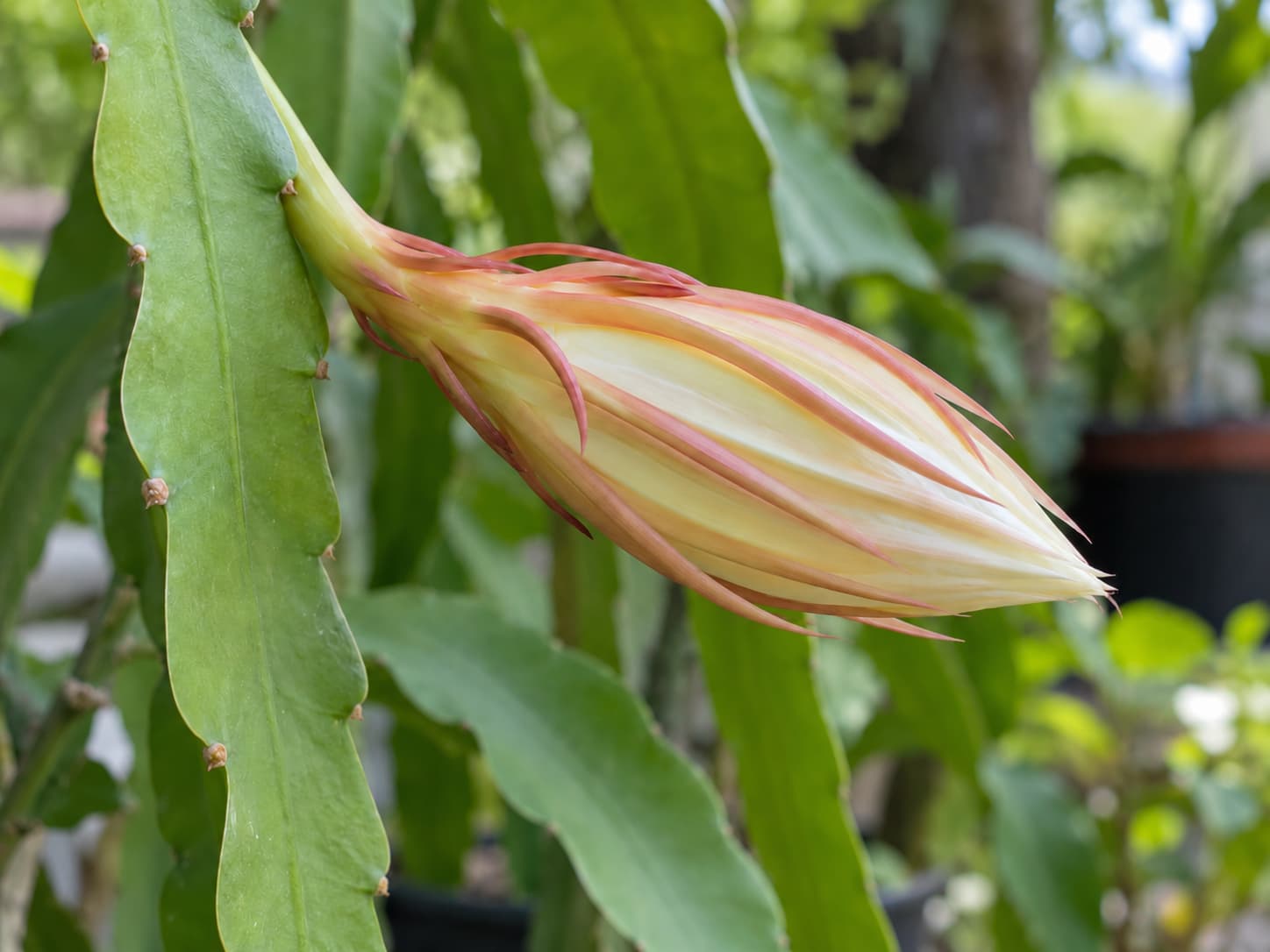
Understanding the bloom helps everything else make sense. A mature queen of the night may form long buds in late spring or summer, although indoor flowering can be sporadic. Each large, white, fragrant flower opens after dark and usually wilts by the next morning. A plant can form more than one bud, so one spent flower does not necessarily end the season.
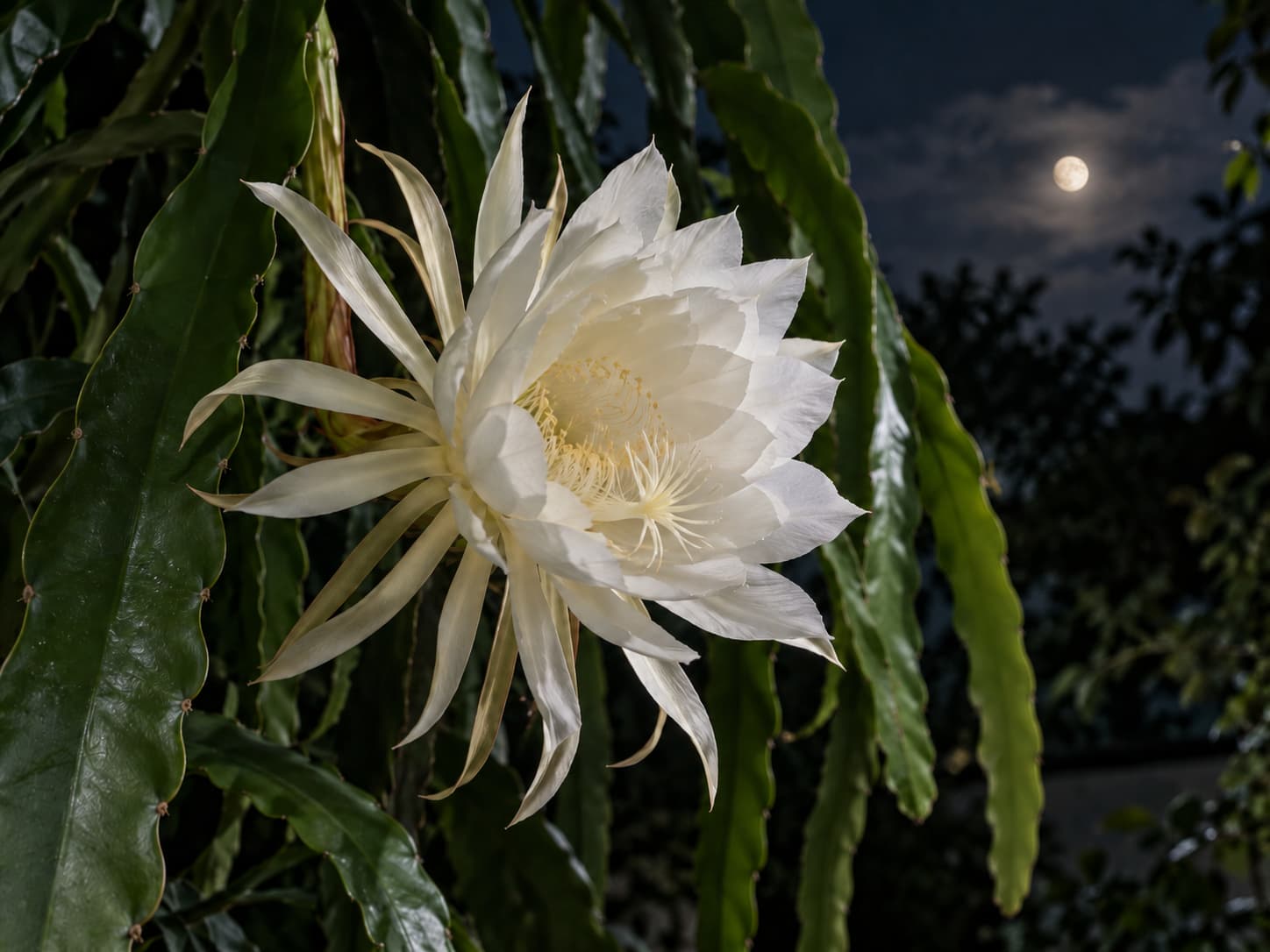
Before the flower opens, an elongated bud grows from a flattened stem. Check it regularly as it lengthens so you do not miss the evening bloom.
Light, Water, and Soil
Light: provide bright, filtered light near a window. Gentle morning sun may be fine, but strong midday or afternoon sun can scorch the flat stems. A very dim position can limit growth and flowering.
Water: during active growth, water as the top of the mix begins to dry, then let excess drain away. In a cool winter resting place, water less often while keeping the mix just moist. Do not let the rootball dry completely or leave the pot standing in water.
Soil: this epiphytic cactus needs a loose mix that holds some moisture and still drains freely. A peat-free cactus mix with added grit is one option; a light houseplant mix amended with bark and perlite is another. Use a pot with drainage holes and avoid compacting the medium.
Feeding: feed sparingly during active growth, following the label for cactus or houseplant fertilizer. Pause feeding during the cool winter rest. More fertilizer will not compensate for insufficient light or an absent seasonal rest.
Temperature: keep it above about 60°F (15°C) during active growth. A bright winter location around 52–57°F (11–14°C) can encourage flowering. Protect it from frost and bring outdoor pots inside before nights approach 50°F (10°C).
A Seasonal Rhythm That Encourages Blooming
Night-blooming cereus care changes as growth slows and resumes. Use the plant and the potting mix to guide watering within this seasonal rhythm:
- Spring: increase watering as new growth begins and resume light feeding. Move the plant gradually into brighter filtered light.
- Summer: check the mix more often in warm weather. Give bright filtered light and steady care while buds develop; avoid sudden drought or a sharp change in light.
- Fall: stop feeding as growth slows and begin reducing water in response to cooler conditions.
- Winter: keep it bright and cooler if possible. Water less often, but keep the mix just moist; a cold, saturated pot risks root damage.
Why Won't Mine Bloom?
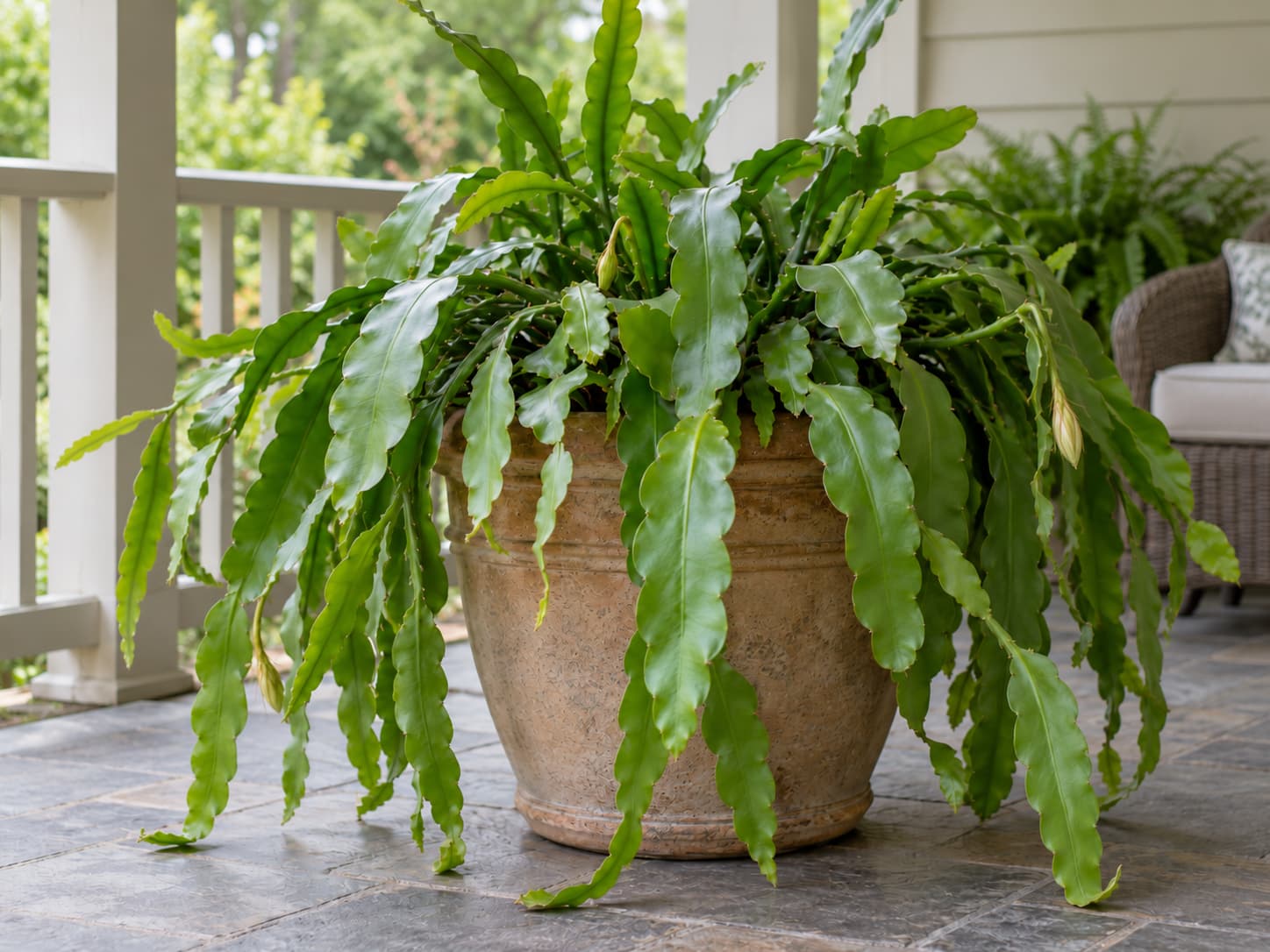
A healthy plant may bloom sporadically indoors. If a mature plant has never formed buds, check its light, winter care, pot size, and feeding:
| Symptom | Likely cause | First check |
|---|---|---|
| Healthy stems, never any buds | Immature plant or insufficient seasonal cues | Review age, bright filtered light, and winter conditions |
| Lush, fast growth but no buds | Feeding may be generous; light or winter rest may also be lacking | Feed sparingly and check the growing position |
| No buds after a warm winter | Cooler, somewhat drier rest may be missing | Try a bright 52–57°F (11–14°C) winter position |
| Buds form, then fall off | Possible abrupt changes in moisture, light, or temperature | Check the mix and avoid sudden environmental shifts |
| Thin, weak, stretched stems | Not enough light | Brighten its position gradually |
Pruning and Propagating
Prune only if long or crowded stems need tidying. After flowering, shorten a stem with clean shears; new growth can form behind the cut. Leave developing buds and the stems supporting them intact.
To propagate, cut a healthy flat stem into a 6–9 inch (15–23 cm) section and let the cut end callus for several days. Insert that end 1–2 inches (2.5–5 cm) into a loose, lightly moist mix. Keep it warm in bright filtered light, with the mix just moist. Roots often form in about three to six weeks; flowering time varies with the size of the cutting and growing conditions.
Frequently Asked Questions
01Is the night-blooming cereus a cactus?
Yes. Epiphyllum oxypetalum is a jungle cactus that grows on trees and rocks in its native habitat. Give it bright filtered light, a loose draining mix, and water as the mix starts to dry.
02How long does a queen of the night flower last?
An individual flower usually opens after dark and wilts by the next morning. A mature plant can produce more than one bud, although indoor flowering may be sporadic.
03Why won't my night-blooming cereus bloom?
First check whether the plant is mature and receives bright filtered light. A cooler, somewhat drier winter rest can help trigger buds. Also check for an oversized pot and excessive feeding; avoid abrupt changes once buds develop.
04Is queen of the night the same as dragon fruit?
No. Dragon fruit is commonly grown from Selenicereus undatus (formerly Hylocereus undatus), a cactus with three-angled climbing stems. The flat-stemmed queen of the night in this guide is Epiphyllum oxypetalum.
05How often should I repot it?
Check every few years, but repot only when the roots or deteriorating mix make it necessary. Do it after flowering and choose a draining pot only slightly larger than the rootball.
06Can a night-blooming cereus spend the summer outdoors?
Yes, in warm weather. Acclimate the plant to a sheltered, lightly shaded spot and protect it from strong midday sun. Bring it indoors before nighttime temperatures approach 50°F (10°C).
Related Reading
- Echinopsis: The Firework Bloomers of the Cactus World — if your "night-blooming cereus" turns out to be a spiny desert type.
- Night-Blooming Jasmine — a different queen of the evening, grown for fragrance.
- Succulent Soil Mix — compare a fast-draining desert-style mix with the more moisture-retentive mix used here.
Sources and Further Reading
- NC State Extension — Epiphyllum oxypetalum (identification, light, water, and bloom).
- Royal Horticultural Society — How to Grow Epiphyllum Cacti (seasonal care, repotting, and cuttings).
- Kew Plants of the World Online — Hylocereus undatus (dragon fruit name synonym).