Four O’Clock Flower Care: How to Grow Mirabilis jalapa
Learn how to grow four o’clock flowers from seed, encourage evening blooms, manage spreading, overwinter tubers, and handle the plant safely.
Quick Summary
Four o'clock flowers (Mirabilis jalapa) are one of the most surprising plants you can grow — they open their trumpet-shaped blooms in the late afternoon, release a sweet fragrance through the evening, and often display multiple flower colors on a single plant. They tolerate dry conditions once established, usually have few serious pest problems, and need relatively little maintenance. But they also have a reputation for spreading aggressively, and their tubers and seeds are toxic if ingested. This guide covers everything: how to grow them from seed, how to control their spread, how to dig and store tubers in cold zones, and how to build an evening garden around their unique clockwork blooms.
In This Guide
- What Are Four O'Clock Flowers?
- Why Four O'Clocks Deserve a Comeback
- Quick Plant Profile at a Glance
- How to Grow Four O'Clocks: Step-by-Step
- Starting from Seed vs. Tubers
- Ongoing Care and Maintenance
- The Invasiveness Problem: How to Keep Them in Check
- Overwintering: Digging and Storing Tubers
- Toxicity Warning: What Every Gardener Needs to Know
- Building an Evening Garden Around Four O'Clocks
- Frequently Asked Questions

What Are Four O'Clock Flowers?
Four o'clock flowers (Mirabilis jalapa) are tender perennials native to tropical South America, widely grown for their unusual habit of opening their blooms in the late afternoon — around 4 PM, give or take — and staying open through the night. Each flower lasts only until the next morning, but the plant produces new blooms continuously from midsummer through fall.
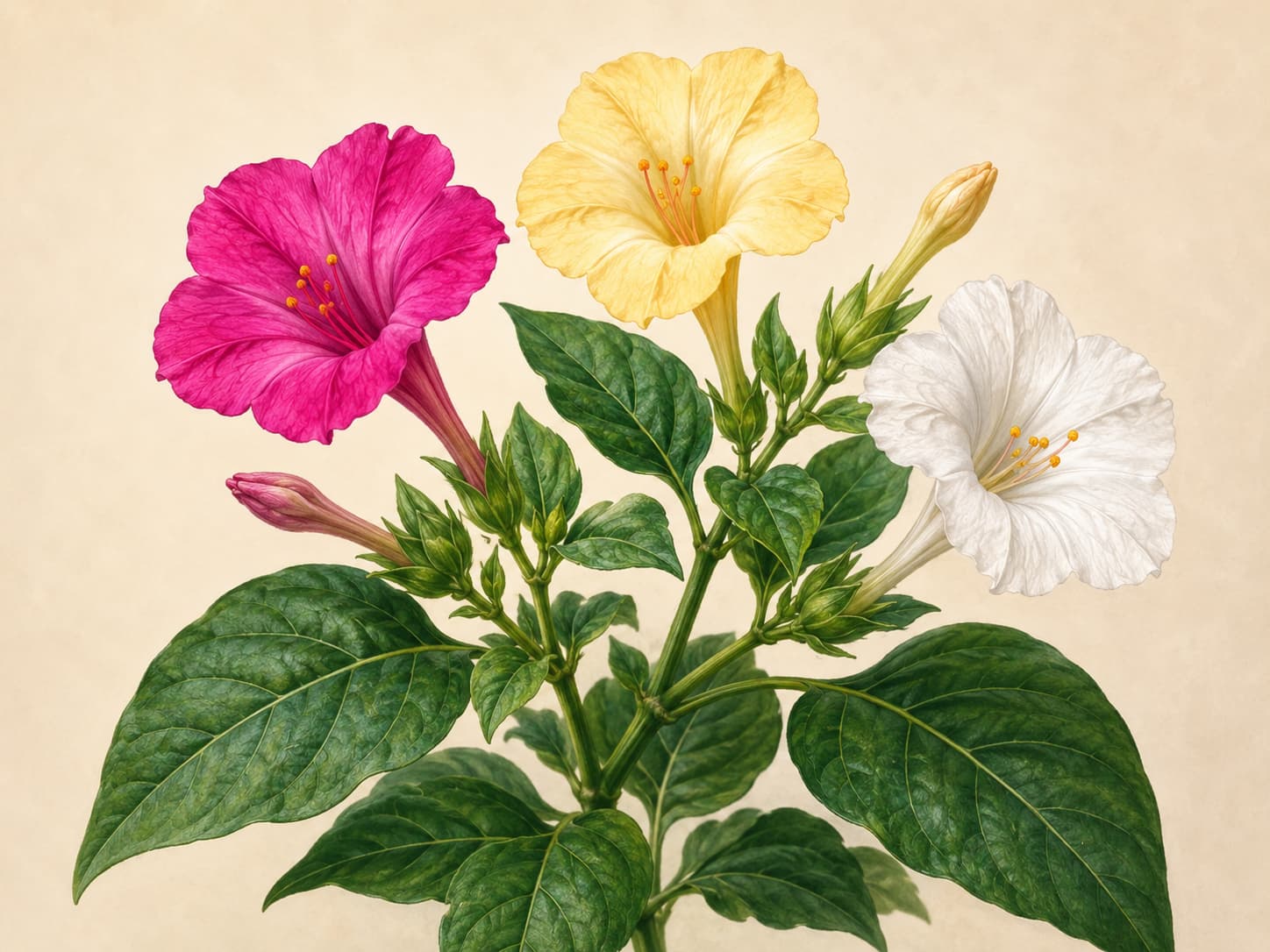
Their most famous trait: a single plant can produce flowers in multiple colors — pink, yellow, white, magenta, and bicolored stripes — all at the same time. This isn't grafting or hybrid magic. It's a natural genetic quirk of Mirabilis jalapa, which carries genes for multiple pigments that can express differently even on adjacent branches.
Other names you'll hear: Marvel of Peru, beauty-of-the-night, and marvel flower. In warmer zones (7–11), they grow as perennials from fleshy tuberous roots. In colder zones, they're grown as annuals or the tubers are dug and stored like dahlias over winter.
Four O'Clocks vs. Moonflowers — Don't Confuse Them
Both are evening bloomers, but they're very different plants. Four o'clocks (Mirabilis jalapa) are bushy, 2–3 ft tall, open around 4 PM, and come in pink/yellow/white. Moonflowers (Ipomoea alba) are climbing vines with large white saucer-shaped flowers that open after dark. They pair beautifully together in an evening garden but need different care.
Why Four O'Clocks Deserve a Comeback
Four o'clocks were a staple of grandmothers' gardens for generations, then fell out of fashion in favor of more predictable bedding plants. They're making a comeback now, and for practical reasons that go beyond nostalgia:
- Drought tolerance that actually works. Once established, four o'clocks need very little water. They thrive in lean, dry soil where petunias and impatiens would collapse. For water-conscious gardeners in the West and Southwest, this alone makes them worth planting.
- Evening fragrance that fills the garden. Their sweet, jasmine-like scent intensifies as dusk falls — exactly when you're most likely to be sitting on the porch or patio enjoying the garden.
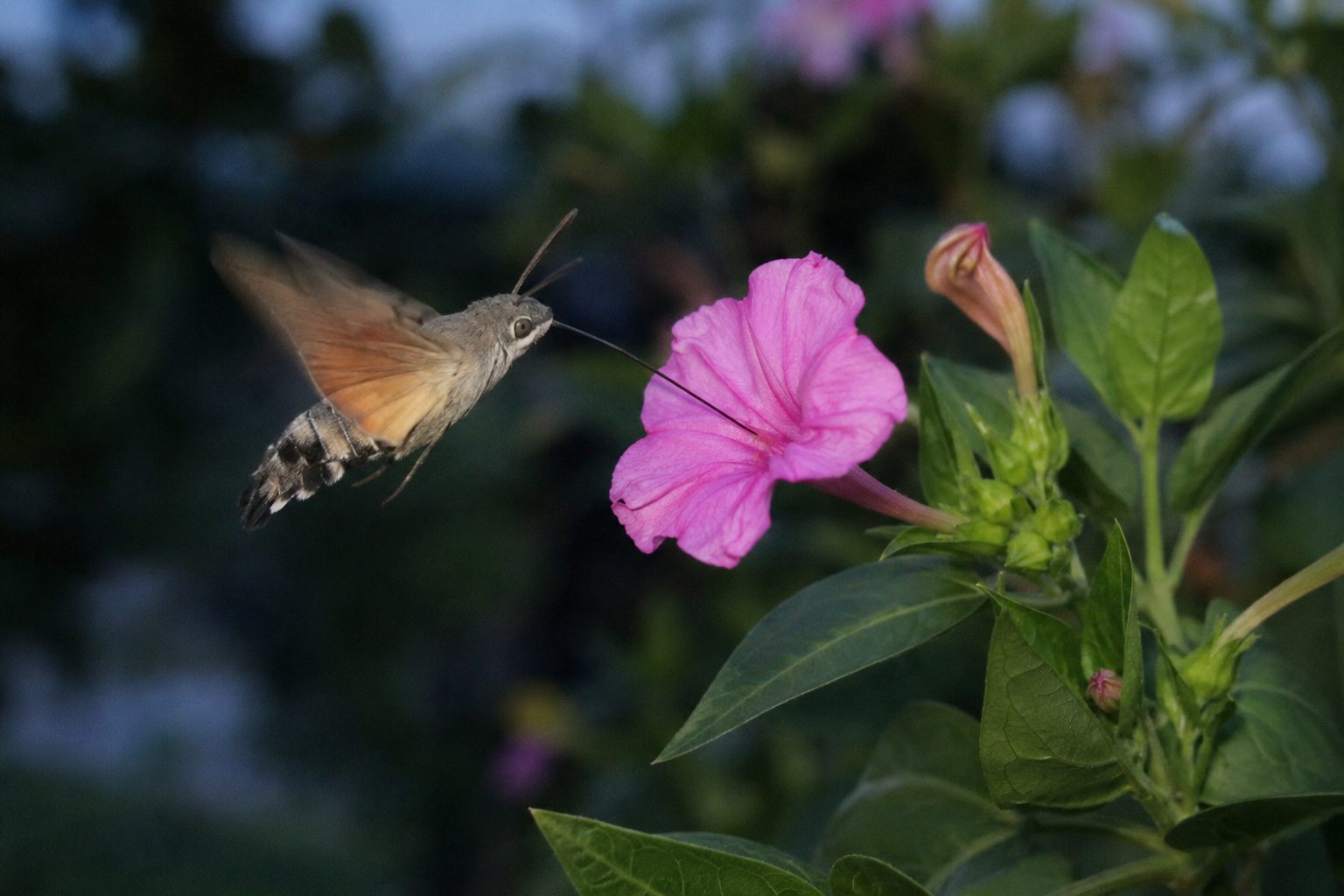
- A pollinator magnet for creatures most gardens miss. Four o'clocks attract hummingbird moths (sphinx moths), hawk moths, and other nocturnal pollinators that day-blooming flowers ignore. If you care about supporting the full pollinator ecosystem, not just bees and butterflies, these plants fill an important niche.
- Color surprises built into the DNA. The multicolor trait means every plant is a little different. You might get solid magenta from one stem and yellow streaked with pink from another — on the same root system. It never gets boring.
- Few serious pest and disease problems. Four o'clocks are remarkably resistant to the usual garden afflictions. Japanese beetles, aphids, powdery mildew — most of the things that plague other summer flowers leave four o'clocks alone.
Quick Plant Profile at a Glance
| Feature | Details |
|---|---|
| Common Name | Four O'Clock, Marvel of Peru |
| Scientific Name | Mirabilis jalapa |
| Plant Type | Tender perennial (grown as annual in Zones 2–6) |
| USDA Zones | Perennial in Zones 7–11; annual or tuber-stored in Zones 2–6 |
| Bloom Time | Mid to late afternoon until the following morning, midsummer through frost |
| Sun Needs | Full sun to light afternoon shade |
| Soil | Well-drained; tolerates poor, sandy, and clay soils |
| Fragrance | Sweet, jasmine-like, strongest in early evening |
| Mature Size | 2–3 ft tall and wide (can reach 4 ft in ideal conditions) |
| Toxicity | Seeds and tubers are toxic if ingested; keep away from children and pets |
How to Grow Four O'Clocks: Step-by-Step
Choosing a Location
Four o'clocks need at least 6 hours of direct sun for maximum blooms. In Zones 9–11, they appreciate some afternoon shade — the intense midday heat of the Deep South and Southwest can cause wilting even in established plants. In cooler zones, give them the sunniest spot you have.
They're not picky about soil. Sandy, loamy, even clay soils work as long as water drains reasonably well. The one thing they won't tolerate: soggy, waterlogged soil. Their tuberous roots rot quickly in standing water. If your soil is heavy clay, plant on a slight mound or amend with compost and coarse sand to improve drainage.
Pick the Spot Carefully — You May Not Be Able to Move Them Later
Four o'clocks develop a large, deep taproot-like tuber. Once established, they're extremely difficult to dig up completely — and any tuber fragment left behind will regrow. If you're not sure you want them in a particular spot forever, grow them in a large container instead.
Spacing
Space plants 18–24 inches apart. They'll fill in and create a dense, bushy hedge by midsummer. Closer spacing (12 inches) works if you want a tight mass planting, but you'll need to thin or divide sooner.
Starting from Seed vs. Tubers
Starting from Seed (Easiest Method)
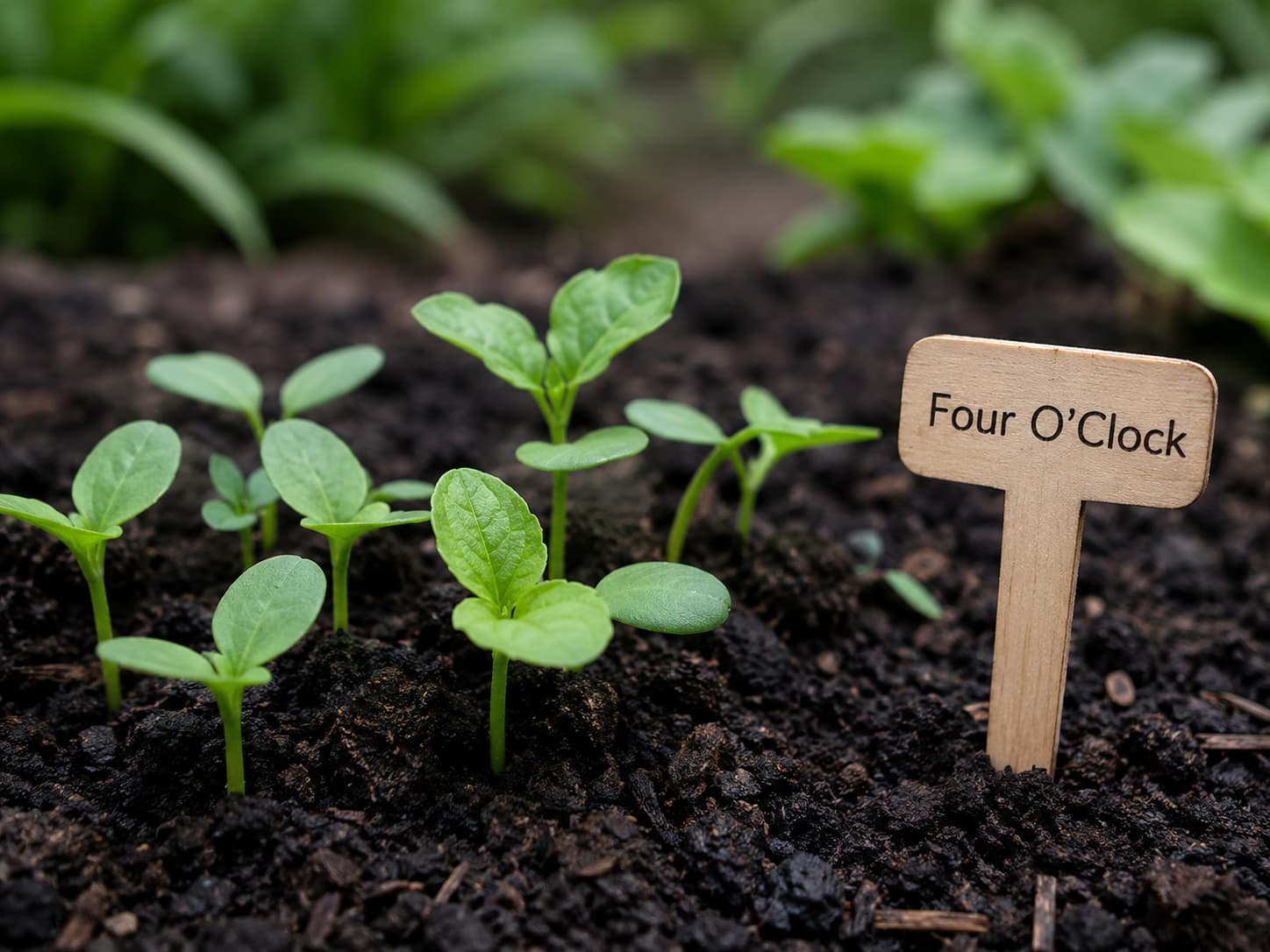
Four o'clocks are one of the easiest flowers to grow from seed. The seeds are large, black, and hard — they look like miniature black peppercorns. You can direct-sow them after the last frost, or start them indoors 6–8 weeks before your last frost date for earlier blooms.
Direct sowing: Soak seeds in warm water for 24 hours before planting (this softens the hard seed coat). Plant ½ inch deep, water in, and keep the soil moist until germination — usually 7–14 days. Thin to 18–24 inches apart once seedlings are a few inches tall.
Indoor starting: Sow in individual 3–4 inch pots (they don't love root disturbance). Use seed-starting mix, keep at 65–70°F, and provide bright light once they emerge. Harden off gradually before transplanting outdoors after all danger of frost has passed.
Starting from Tubers
If you dug and stored tubers from last year (or bought them), plant them in spring after the last frost, about 3–4 inches deep with the growing points facing up. Water once at planting, then wait until you see growth before watering again — dormant tubers in cool soil rot easily if kept wet.
The Self-Seeding Shortcut
Once you have four o'clocks in your garden, you'll probably never need to plant them again. They self-seed enthusiastically — some would say too enthusiastically. In spring, you'll find volunteer seedlings around the parent plant. You can transplant these while they're small, or thin them out and give them away. It's the laziest (and most reliable) propagation method there is.
Ongoing Care and Maintenance
Watering
Established plants are genuinely drought-tolerant. Water deeply once a week during dry spells; more often if you're growing in containers. A common mistake with four o'clocks is overwatering — their tuberous roots store moisture and rot quickly in soggy soil. If leaves are yellowing and the plant looks limp despite moist soil, you're probably overwatering.
Fertilizing
Four o'clocks are light feeders. Too much fertilizer — especially nitrogen — produces lush leaves at the expense of flowers. If your soil is reasonably decent, skip the fertilizer entirely. If growth is slow or leaves are pale, apply a balanced slow-release fertilizer once in early summer. That's all they need.
Pruning and Deadheading
Four o'clocks drop their spent blooms cleanly — no deadheading required. But they can get leggy and floppy by midsummer, especially in rich soil or partial shade. If your plants are looking tired in July or August, cut them back by one-third to one-half. They'll respond with a flush of fresh growth and renewed blooming within 2–3 weeks. This mid-season reset also helps control self-seeding if you cut before seeds mature.
Pests and Diseases
The good news: four o'clocks are remarkably trouble-free. They're resistant to deer and rabbits (the toxic compounds that make them dangerous to eat also make them unpalatable to browsing animals). Japanese beetles are usually less troublesome on them than on many other summer flowers. Powdery mildew can appear in late summer in humid conditions but rarely does serious damage. If you see it, improve air circulation by thinning crowded stems.

The Invasiveness Problem: How to Keep Them in Check
Let's address the elephant in the room. If you spend any time on gardening forums, you'll see the same complaint over and over: "I planted four o'clocks three years ago and now they're everywhere."
Four o'clocks are not officially classified as invasive in most of North America, but they are aggressive self-seeders with large tuberous roots that make established plants very difficult to remove. In warmer zones (8+), a single plant can produce hundreds of seeds, and the tubers expand year after year. Here's how to enjoy them without letting them take over:
Control Strategy 1: Deadhead Before Seeds Form
Each spent flower produces a single large black seed. If you want to prevent spread, snap off spent blooms before the seed develops — usually 2–3 days after the flower fades. The developing seed looks like a small green berry at the base of the old flower. This takes a few minutes every couple of days during peak bloom but is by far the most effective control method.
Control Strategy 2: Grow in Containers
Four o'clocks grow beautifully in large pots (at least 14–16 inches wide). Container growing solves two problems at once: it prevents underground tuber spread and makes it much easier to collect seeds before they scatter. It also lets you move the plants to a prominent spot in the afternoon when they're about to bloom, then tuck them away in the morning when the flowers have closed.
Control Strategy 3: Pull Volunteers Early
If you inherit a garden with runaway four o'clocks, the key is to pull seedlings while they're small — ideally within the first 4–6 weeks after they emerge in spring. Young seedlings pull easily. Mature plants with established tubers require a shovel, patience, and the willingness to dig deep. Any tuber fragment left in the soil will regrow.
Control Strategy 4: Mulch Heavily
A 3–4 inch layer of mulch in early spring suppresses many volunteer seedlings before they can establish. Combine this with Strategy 1 (deadheading) and you'll have a manageable population rather than an occupation.
Check Local Guidelines Before Planting
In some regions — particularly parts of the southeastern U.S. — four o'clocks have escaped cultivation and naturalized in wild areas. Check with your local extension office or native plant society before planting if you live near natural areas. If you're in a sensitive zone, consider native evening-blooming alternatives like evening primrose (Oenothera spp.) instead.
Overwintering: Digging and Storing Tubers
In Zones 7 and warmer, four o'clocks usually survive winter in the ground with a layer of mulch for protection. In Zones 6 and colder, the tubers will freeze and die unless you dig them up. Here's how:
- Wait for the first light frost to kill the top growth. Don't dig before the foliage dies back naturally — the plant is moving energy into the tuber for next year.
- Cut back dead stems to about 4–6 inches above the soil.
- Dig carefully with a garden fork, starting 8–10 inches from the center of the plant. The tubers are large — sometimes the size of a sweet potato — and surprisingly deep.
- Brush off excess soil but don't wash the tubers. Let them dry in a cool, shaded, well-ventilated spot for a few days.
- Store in barely damp peat moss, sawdust, or vermiculite in a cardboard box or paper bag. Keep at 40–50°F (a cool basement, unheated garage, or root cellar). Check monthly and discard any that are soft or moldy.
- Replant in spring after all danger of frost has passed.
Tuber Storage Tip
The biggest storage mistake: keeping tubers too wet. They rot in moist conditions. The packing material should feel barely damp — like a wrung-out sponge. If condensation forms inside the storage container, it's too wet. Open the lid for a day to let excess moisture escape.
Toxicity Warning: What Every Gardener Needs to Know
Four o'clocks are beautiful, but they are not edible. The seeds and tubers contain toxic compounds that can cause significant gastrointestinal distress if ingested — vomiting, diarrhea, and abdominal pain. The roots have been used in traditional medicine in some cultures, but only after careful processing; raw plant parts should never be consumed.
Practical precautions:
- Keep seeds away from children. The large black seeds look intriguing and could be mistaken for something edible by a curious toddler. Store collected seeds in labeled containers out of reach.
- Pets generally avoid them, but don't count on it. The bitter taste deters most dogs and cats, but some animals will chew on anything. If you have a dog that digs up and chews roots, plant four o'clocks in a fenced-off area or in containers out of reach.
- Wear gloves when handling tubers if you have sensitive skin — some people experience mild skin irritation from prolonged contact with the sap.
This is not a reason to avoid growing four o'clocks. Many common garden plants — daffodils, foxgloves, lily of the valley — are toxic. The key is knowing and taking basic precautions, especially with children and pets.
Building an Evening Garden Around Four O'Clocks
Four o'clocks are the anchor plant for an evening garden — but they're even better with companions that extend the twilight show. Here's how to design a garden that peaks just as the day winds down.
Best Companion Plants for an Evening Garden
| Plant | Why It Works | Bloom Time |
|---|---|---|
| Moonflower (Ipomoea alba) | Large white saucer blooms open after dark; climbing habit adds vertical interest | Dusk through morning |
| Flowering Tobacco (Nicotiana alata) | Intensely fragrant at night; tubular flowers in white, pink, and lime green | Late afternoon through night |
| Evening Primrose (Oenothera) | Native alternative; pale yellow blooms open visibly at dusk; drought-tolerant | Dusk through morning |
| Angel's Trumpet (Brugmansia) | Huge, pendulous, intensely fragrant trumpets; dramatic container specimen | Evening through night |
| Dusty Miller (Jacobaea maritima) | Silvery foliage glows in low light; excellent drought-tolerant foreground plant | Foliage interest all season |
Design Tips for Maximum Evening Impact
- Plant near seating areas. Put four o'clocks where you'll actually experience them — near a patio, porch, deck, or along a path you walk in the evening.
- Add soft lighting. Solar path lights or warm-white string lights amplify the evening magic and make the blooms visible after dark.
- Include white and pale-colored flowers. White, pale yellow, and soft pink blooms glow in low light and are more visible at dusk than dark reds and purples.
- Layer heights. Tall moonflowers or nicotiana in back, bushy four o'clocks in the middle, and silvery ground covers like dusty miller in front — this creates depth that reads beautifully in twilight.

Frequently Asked Questions
1. Why do four o'clock flowers open at 4 PM?
The flowers respond to changes in light and temperature as the afternoon transitions to evening. The drop in light intensity and slight cooling triggers the blooms to unfurl. On overcast days, they may open earlier; on very hot, bright days, they may open later. This timing evolved to attract nocturnal pollinators — particularly moths — that are active at dusk.
2. Are four o'clock flowers invasive?
They are aggressive self-seeders in many regions, especially Zones 7 and warmer. While not officially classified as invasive by the USDA, they can spread rapidly in gardens and have naturalized in parts of the southeastern U.S. Control them by deadheading before seeds form, growing in containers, or pulling volunteer seedlings early in spring. Check with your local extension office if you live near natural areas.
3. Why aren't my four o'clocks blooming?
The most common causes: not enough sun (they need at least 6 hours of direct light), too much nitrogen (excess fertilizer pushes leaves at the expense of flowers), or the plants are too young (seed-started plants may not bloom until 8–10 weeks after sowing). If the plant is healthy and green but flowerless, try reducing fertilizer and making sure it gets full sun.
4. How do I dig and store four o'clock tubers for winter?
Wait until the first light frost kills the top growth. Cut stems to 4–6 inches, dig carefully with a garden fork starting 8–10 inches from the center, brush off soil, let dry for a few days, then store in barely damp peat moss or vermiculite at 40–50°F. Check monthly for rot. Replant after the last spring frost.
5. Are four o'clock flowers poisonous to dogs and cats?
Yes. The seeds and tubers are toxic if ingested, causing vomiting, diarrhea, and abdominal pain. The bitter taste usually deters pets, but dogs that dig and chew roots are at risk. If you have pets that eat garden plants, grow four o'clocks in containers or fenced-off areas. Contact a veterinarian immediately if you suspect ingestion.
6. Can four o'clock flowers grow in pots?
Yes, and container growing is actually recommended — it controls their spread and lets you move them to prime viewing spots in the afternoon. Use a pot at least 14–16 inches wide with good drainage. Container plants need more frequent watering than in-ground plants but still prefer to dry out between waterings.
7. Do four o'clock flowers come back every year?
In Zones 7–11, yes — they're perennial and will return from their tuberous roots each spring. In Zones 6 and colder, they'll die over winter unless you dig and store the tubers. However, even in cold zones, they self-seed so reliably that you'll often get volunteer plants the following spring from seeds dropped the previous fall.
8. How do I get rid of four o'clocks if they're taking over?
Pull seedlings early in spring while they're small and the soil is moist — they come out easily at this stage. For established plants, dig out the entire tuber (any fragment left behind will regrow). Deadhead relentlessly to stop seed production. In large infestations, cut back all top growth, cover the area with heavy black plastic for a full growing season to solarize the soil, then dig remaining tubers. It may take two seasons to fully eradicate them.
Sources & Further Reading:
Final Thoughts
Four o'clock flowers are one of those rare plants that deliver far more than they ask. Give them sun, well-drained soil, and a bit of space — and they'll reward you with months of fragrant evening blooms, a parade of hummingbird moths, and the quiet pleasure of watching flowers open on their own internal clock.
The key is going in with your eyes open. Know that they'll self-seed. Know that the tubers are toxic. Know that once established, they're not going anywhere without a fight. If you're okay with that — and you take basic steps to keep them in check — you'll wonder why you didn't plant them years ago.
Here's what to remember:
- Full sun, well-drained soil, light water — that's the care formula
- Deadhead if you don't want volunteers — or let them self-seed and enjoy the surprises
- Dig tubers in Zones 6 and colder — store like dahlias over winter
- Keep seeds and tubers away from children and pets — beautiful but not edible
- Pair with moonflowers and nicotiana — build a garden that peaks at dusk
If you found this guide helpful, you might also enjoy our articles on Maple Tree Care: A Year-Round Guide and Daylily Care Through the Seasons — two more guides that take the guesswork out of garden care.
Have four o’clock flowers surprised you? Share your climate zone, bloom colors, and best control tip with the Greenmuse community.