Brown Spots on Fiddle Leaf Fig: 7 Causes and How to Fix Them
Noticed brown spots on your fiddle leaf fig? Before changing your watering routine, look closely at the marks. Dry brown edges, dark spreading patches, tiny reddish dots on new leaves, and pale sun-scorched areas can have very different causes. The right fix starts with the pattern—not the color alone.
Your fiddle leaf fig (Ficus lyrata) can develop brown marks from root stress, inconsistent watering, edema, leaf infections, strong sunlight, pests, or physical damage. This guide shows you what to check, when to act, and which leaves can safely stay on the plant. A brown mark is permanent, but it does not automatically mean the whole plant is in danger.
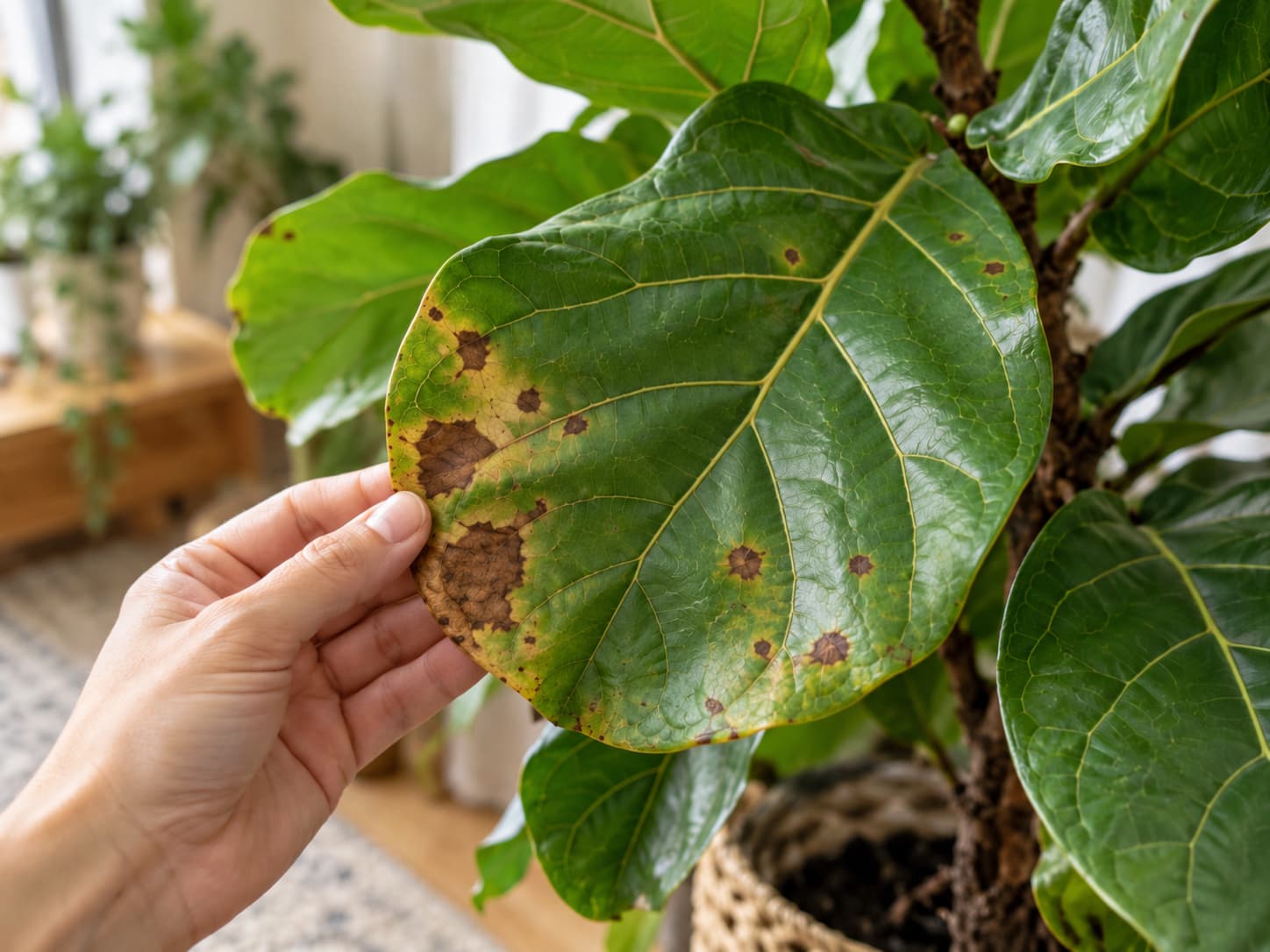
Quick Answer: What Do the Brown Spots Mean?
Take a clear photo of the affected leaves today. Then inspect the potting mix, the underside of the foliage, and any recent changes in light or temperature. Comparing the plant again after several days is often more useful than trying several treatments at once.
Brown Spot Symptom Checker: Match the Pattern First
| What the spots look like | Possible cause | Best first check |
|---|---|---|
| Dark brown or black patches; several leaves declining | Root stress from excess moisture; possible root rot | Is the mix still wet deep down? Are roots firm? |
| Dry, crisp brown tips or margins | Underwatering, low humidity, or temperature stress | Root-ball moisture and nearby heating or cooling vents |
| Small red-brown specks, especially on newly unfurled leaves | Edema (oedema) | Recent watering and whether marks remain stable |
| Dark lesions that enlarge, sometimes with a yellow halo or water-soaked edge | Bacterial or fungal leaf spot | Are spots increasing? Do leaves stay wet? |
| Bleached tan or papery patches on light-facing leaves | Sun scorch | Recent exposure to stronger direct sun |
| Fine stippling, silvery scars, tiny insects or sticky residue | Spider mites, thrips, scale, or mealybugs | Undersides, midribs, leaf joints, and nearby plants |
| One localized brown crease or patch after a move or cold draft | Physical damage or temperature shock | Recent handling, cold glass, doorways, or vents |
Important: an irregular dark spot does not prove root rot, and a yellow halo does not prove bacterial disease. The University of Maryland Extension notes that environmental injury and leaf infections can look similar. Use multiple clues rather than treating the table as a laboratory diagnosis.
Cause 1: Wet Soil, Damaged Roots, and Possible Root Rot
Root problems deserve an early check because damaged roots cannot take up water efficiently. A fiddle leaf fig left in saturated potting mix may develop yellowing, drooping, leaf drop, and dark patches. However, brown spots alone are not sufficient evidence that the roots have rotted.
Check Drainage Before You Unpot the Plant
- Check below the surface. Push a clean wooden skewer several inches into the mix, or feel deeper where you can. A dry top layer may hide a wet root zone.
- Lift the nursery pot. If it sits inside a decorative outer pot, check for standing water and empty it.
- Look for a pattern. Persistently wet soil combined with worsening leaves, yellowing, or unexplained wilting is a stronger reason to inspect roots than an isolated old spot.
- Inspect roots if decline continues. Gently slide out the root ball. Living roots are usually firm, even when naturally tan or stained by soil. Dead roots may feel mushy, collapse, or smell foul.
If roots are healthy, correct drainage and let the potting mix dry to an appropriate level before watering again. Do not repot a stable plant solely because one leaf looks unattractive.
What to Do When You Actually Find Root Rot
With clean tools, remove clearly mushy, dead roots while preserving firm tissue. Replace waterlogged or broken-down potting mix with a well-draining houseplant medium and use a pot with open drainage holes. A huge new pot can remain wet for too long, so size the replacement sensibly for the remaining roots.
After repotting, provide bright filtered light and monitor moisture carefully. Avoid heavy fertilizer while the roots recover. Our orchid root rot guide explains how to identify dead roots by texture; remember that a fiddle leaf fig needs an appropriate soil-based houseplant medium, not an orchid's bark-only setup.
Cause 2: Crispy Brown Edges From Dryness or Irregular Watering
If the damage is confined to crisp leaf tips or margins, investigate moisture stress. A pot that dries out completely may cause leaf edges to brown. Very dry indoor air, warm heating vents, and cold drafts can make the symptoms worse. Similar-looking injury can also occur after root damage, so check soil moisture rather than assuming the plant needs more water.
When the root ball is genuinely dry, water thoroughly until excess drains away. If the mix has become hard and water runs down its sides without soaking in, add water slowly in several passes and confirm that the center becomes moist. Then return to checking the pot before each watering.
A fixed weekly schedule is less reliable than the soil itself. As a starting point, check the upper couple of inches and compare the weight of the pot. A large plant in a cool, dim room will usually dry more slowly than one growing actively in bright light. If winter air is very dry, a room humidifier can help; avoid directing heater or air-conditioner airflow onto leaves.
Cause 3: Tiny Red-Brown Dots on New Leaves — Edema
New fiddle leaf fig leaves sometimes emerge with tiny reddish-brown specks or slightly blistered areas. This can be edema (also spelled oedema), a physiological problem that occurs when roots absorb moisture faster than the leaves can release it. Young leaf tissue can become damaged, leaving little corky marks.
Check whether the dots appeared while the leaf was unfolding, whether they stay in the same place, and whether the rest of the plant looks healthy. Edema often becomes less noticeable as a leaf matures, although permanent marks may remain. The New York Botanical Garden's fiddle leaf fig guide describes these small red-brown spots on fresh growth as a useful moisture clue.
Correct persistently wet conditions, give the plant suitable bright light, and water more consistently according to root-zone moisture. Do not spray fungicide or cut off new leaves solely because of a few stable reddish specks. If the marks expand, merge, or appear alongside pests, revisit the diagnosis.
Cause 4: Bacterial or Fungal Leaf Spot
Some brown lesions result from pathogens rather than watering or sunlight alone. Bacterial spots can begin as small water-soaked areas and later darken, sometimes with yellowish margins. Certain fungal leaf spots also create enlarging dark lesions. Yet these appearances overlap with environmental damage, and confirmation may require a plant diagnostic laboratory.
What to Do if Spots Are Actively Spreading
- Separate the plant from nearby houseplants while you investigate.
- Keep foliage dry. Water the potting mix rather than repeatedly wetting or misting the leaves. Improve gentle air circulation.
- Remove only severely affected leaves when disease is strongly suspected, using clean pruners. Do not strip a plant that still has mostly healthy green foliage.
- Disinfect tools between affected plants, and avoid handling wet foliage unnecessarily.
- Seek local guidance if lesions continue to spread. Do not apply an indoor fungicide or bactericide unless it is labeled for the plant, location, and suspected problem.
The University of Florida IFAS documents bacterial leaf spots affecting ornamental Ficus, including Ficus lyrata. Meanwhile, the University of Maryland Extension cautions that home diagnosis is difficult because infections and environmental injuries can resemble one another.
Cause 5: Sunburn on Leaves Facing a Bright Window
Sun scorch often leaves tan, bleached, or papery patches on foliage that receives intense direct sun. It is especially likely after a plant is suddenly moved from dim conditions into strong afternoon light. The marked tissue will not return to green.
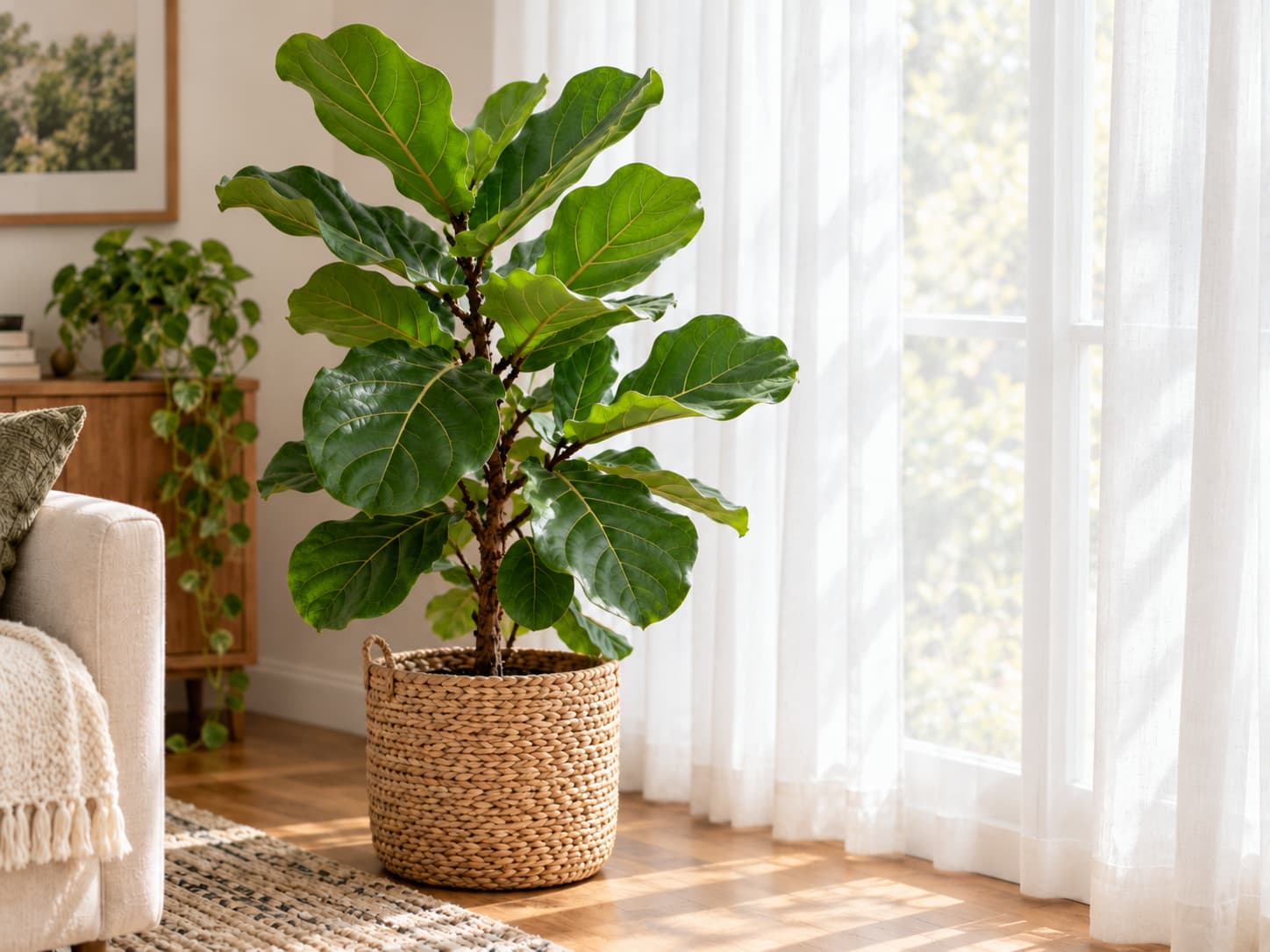
Choose a location with generous bright, filtered daylight. If a window produces strong midday or afternoon sun, use a sheer curtain or move the pot slightly farther from the glass. Plants already acclimated to brighter light may tolerate more sun than a newly purchased houseplant, so adjust light gradually rather than moving it repeatedly.
Cause 6: Pest Damage That Resembles Brown Spots
Not every small brown mark is a leaf disease. Thrips can leave silvery scarring and dark specks of waste. Spider mites cause fine stippling and, during heavier infestations, delicate webbing. Scale insects may appear as raised bumps, while mealybugs resemble small cottony clusters around leaf joints.
Inspect both sides of several leaves with a bright light. Pay attention to veins, undersides, new growth, and stem joints. If you find pests, isolate the plant and identify the culprit before choosing a treatment. Wipe or rinse accessible pests where appropriate, and use only plant-safe, locally approved controls according to the label. Repeat inspections because hidden insects or eggs may remain.
North Carolina State Extension recommends monitoring fiddle leaf figs for scale, thrips, mealybugs, aphids, and spider mites. A closer look for actual pests prevents unnecessary watering changes and fertilizer treatments.
Cause 7: Cold Drafts, Heat Vents, and Physical Scars
A damaged leaf may have been pressed against cold glass, exposed to an air-conditioner draft, or brushed against furniture during a move. Scars caused by handling tend to stay fixed in one place. Temperature injury may appear as irregular brown areas after the exposure, sometimes accompanied by leaf drop.
Move the pot away from strong vents and frequently opened cold doors, while still keeping it near an appropriate light source. If the damage is limited and new leaves remain healthy, there is usually no need for further treatment. Photograph the mark and watch for changes.
A Five-Minute Diagnosis and Seven-Day Follow-Up
When you're worried about losing the plant, the temptation is to water, repot, spray, and fertilize all at once. Instead, use one small sequence to find the strongest evidence first.
- Minute 1: identify whether the damage is crispy, dark and soft-looking, red and speckled, or bleached.
- Minute 2: note which leaves are affected—new, old, window-facing, or scattered throughout the plant.
- Minute 3: check soil moisture below the surface and empty any standing water.
- Minute 4: inspect leaf undersides and stem joints for insects.
- Minute 5: photograph the plant and write down recent changes in watering, light, location, or temperature.
| When | Action | What improvement means |
|---|---|---|
| Today | Check roots only if the plant is declining and the pot remains saturated; otherwise correct the clearest issue | You have a reason for the change, rather than a guess |
| Days 2–3 | Recheck mix moisture, leaf undersides, and any active lesions | No new pests or rapid expansion |
| Days 4–7 | Compare new photos with the originals; keep conditions stable | Fewer new spots and no additional leaf drop |
| Following weeks | Watch developing leaves and root-zone drying | Healthy new growth and stable existing foliage |
Existing brown tissue usually will not heal. Recovery means the damage stops progressing and newer growth develops with fewer symptoms. Seven days is a monitoring window, not a deadline for a new leaf.
Should You Cut Brown-Spotted Fiddle Leaf Fig Leaves?
Usually, no. A leaf that is still mostly green continues to photosynthesize, even if one edge or patch has turned brown. For simple edema, sunburn, or a small physical scar, leaving the leaf is often better than removing useful foliage.
If a leaf is mostly dead, has dropped naturally, or is heavily affected by a suspected spreading infection, removal may make sense. Cut the leaf stem with clean, sharp pruners without tearing the bark. Avoid removing many healthy leaves at once, especially while the plant is already stressed.
Protect your skin and pets. Fiddle leaf figs release milky latex sap that can irritate skin. Wear gloves when pruning, wash exposed skin, and keep cuttings away from children and pets. Ficus lyrata is toxic if chewed or swallowed and can cause mouth and stomach irritation in cats and dogs. If a pet ingests plant material, contact a veterinarian.
Frequently Asked Questions
01Are brown spots on fiddle leaf figs always root rot?
No. Root stress is one possibility, but edema, sun scorch, leaf infections, pests, and physical damage can create brown marks too. Check the root-zone moisture and root firmness before concluding that rot is present.
02Why are tiny red dots appearing on new fiddle leaf fig leaves?
Small red-brown specks on newly expanding leaves often indicate edema, especially when the potting mix stays too wet or water use changes suddenly. Stabilize watering and lighting, but recheck if spots spread or pests are visible.
03Will the brown parts of the leaf turn green again?
Dead brown tissue does not normally turn green again. Successful care prevents additional damage and supports healthy new leaves. A leaf with mostly green tissue can often stay on the plant.
04How can I tell sunburn from a leaf infection?
Sunburn often leaves pale tan, papery patches on the light-facing side after a sudden increase in direct sun. Leaf infections may produce enlarging lesions and sometimes yellow or water-soaked margins. Patterns overlap, so inspect the environment and monitor whether spots change.
05How often should I water a fiddle leaf fig?
Water according to the potting mix, light, temperature, and plant size—not a fixed weekday. Check moisture a little below the surface, then water thoroughly when the root zone has dried appropriately and allow excess to drain.
06Should I remove every spotted leaf?
No. Retain mostly green leaves with minor stable scars. Consider removing leaves that are largely dead or severely affected by an advancing infection, using clean tools and avoiding excessive pruning.
07Is fiddle leaf fig toxic to cats and dogs?
Yes. Chewing the plant may irritate the mouth and digestive tract, and the milky sap can irritate skin. Keep it away from pets and ask a veterinarian for advice if ingestion is suspected.
Related Reading
- How to Diagnose Orchid Root Rot — learn why root texture matters more than color alone.
- Why Monstera Leaves Turn Yellow — compare watering, light, pest, and root-stress clues.
- Why Houseplants Drop Leaves in Winter — check seasonal indoor changes before blaming disease.
Sources and Further Reading
- NC State Extension — Ficus lyrata (light, moisture, common pests, scorch, and toxicity).
- New York Botanical Garden — Fiddle-leaf Fig Guide (indoor care and red-brown edema spots).
- University of Maryland Extension — Brown Spots and White Substance on Fiddle Leaf Fig (limitations of appearance-only diagnosis).
- University of Florida IFAS — Ornamental Ficus Diseases (bacterial and fungal leaf spot characteristics).
- ASPCA — Is That Houseplant Safe for Your Pets? (fiddle leaf fig toxicity to cats and dogs).