Types of Philodendron: 12 Popular Varieties and How to Identify Them
Looking at different types of philodendron in a plant shop? Some trail from shelves, while others climb supports or grow into broad floor plants. To narrow down your options, check growth habit first, then leaf shape and color. Next, compare the 12 varieties below, from easy Heartleaf to pink-variegated Pink Princess and crawling Gloriosum.
You do not need to memorize every botanical name. Instead, match the plant to your available space and use the leaf clues below to identify it.
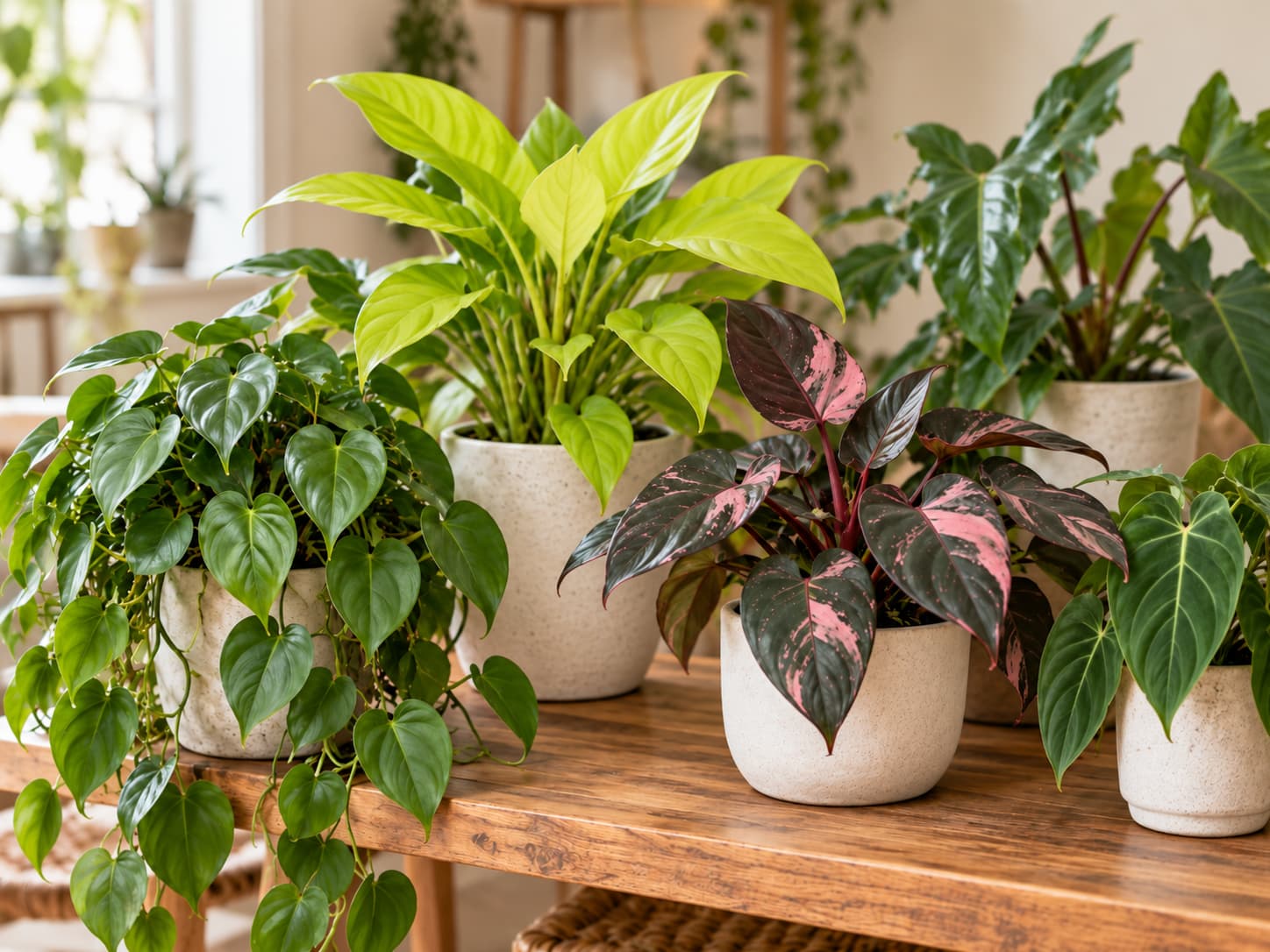
Quick Answer: Which Philodendron Should You Choose?
In general, these plants prefer bright indirect light, a pot with drainage, and water once the upper layer of mix begins to dry. However, low-light tolerance does not mean a plant will thrive in a dark corner. RHS guidance on philodendron care is a useful reference for that shared baseline.
Three Growth Habits That Help You Identify the Plant
Vining and climbing: individual nodes are spaced along a lengthening stem. Heartleaf, Brasil, Lemon Lime, Micans, Silver Sword, and Pink Princess belong in this practical group. With support, many climbers can develop larger mature leaves. However, smaller-leafed vines can also trail from a shelf.
Self-heading: leaves appear closely grouped around a short central stem rather than a long trailing vine. Birkin, Moonlight, Prince of Orange, Xanadu, and Selloum are commonly sold in this form. Over time, large specimens may develop visible woody stems. Therefore, "self-heading" does not mean a plant stays a compact rosette forever.
Crawling: Gloriosum extends a thick stem horizontally across the surface of the potting mix. Unlike a climber, it needs space to spread sideways instead of a moss pole.
12 Popular Types of Philodendron at a Glance
| Type | Growth habit | Key identification clue | Best fit |
|---|---|---|---|
| 01 · Heartleaf | Vining | Soft green, heart-shaped leaves | Beginners; shelves |
| 02 · Brasil | Vining | Green hearts with lime or yellow-green stripes | Colorful trailing display |
| 03 · Lemon Lime | Vining | Chartreuse to lime heart-shaped leaves | Bright shelf or hanger |
| 04 · Micans | Vining | Velvety green-bronze hearts | Texture and soft light |
| 05 · Silver Sword | Climbing | Silvery leaves that become more arrow-shaped | Vertical support |
| 06 · Pink Princess | Climbing | Dark leaves with irregular pink patches | Variegation collectors |
| 07 · Birkin | Self-heading | Dark green leaves with cream pinstripes | Compact feature plant |
| 08 · Moonlight | Self-heading | Bright lime new leaves, turning greener | Colorful tabletop plant |
| 09 · Prince of Orange | Self-heading | Copper-orange emerging leaves | Warm foliage color |
| 10 · Xanadu | Self-heading | Dense mound of deeply lobed leaves | Open floor space |
| 11 · Selloum | Large self-heading | Very large, deeply divided leaves | Large room or conservatory |
| 12 · Gloriosum | Crawling | Velvety hearts with bright pale veins | Wide horizontal planter |
Identification note: named cultivars and hybrids may vary with maturity, lighting, and growing conditions. Therefore, use leaf color together with stem shape and growth habit, rather than relying on color alone.
Six Vining and Climbing Types
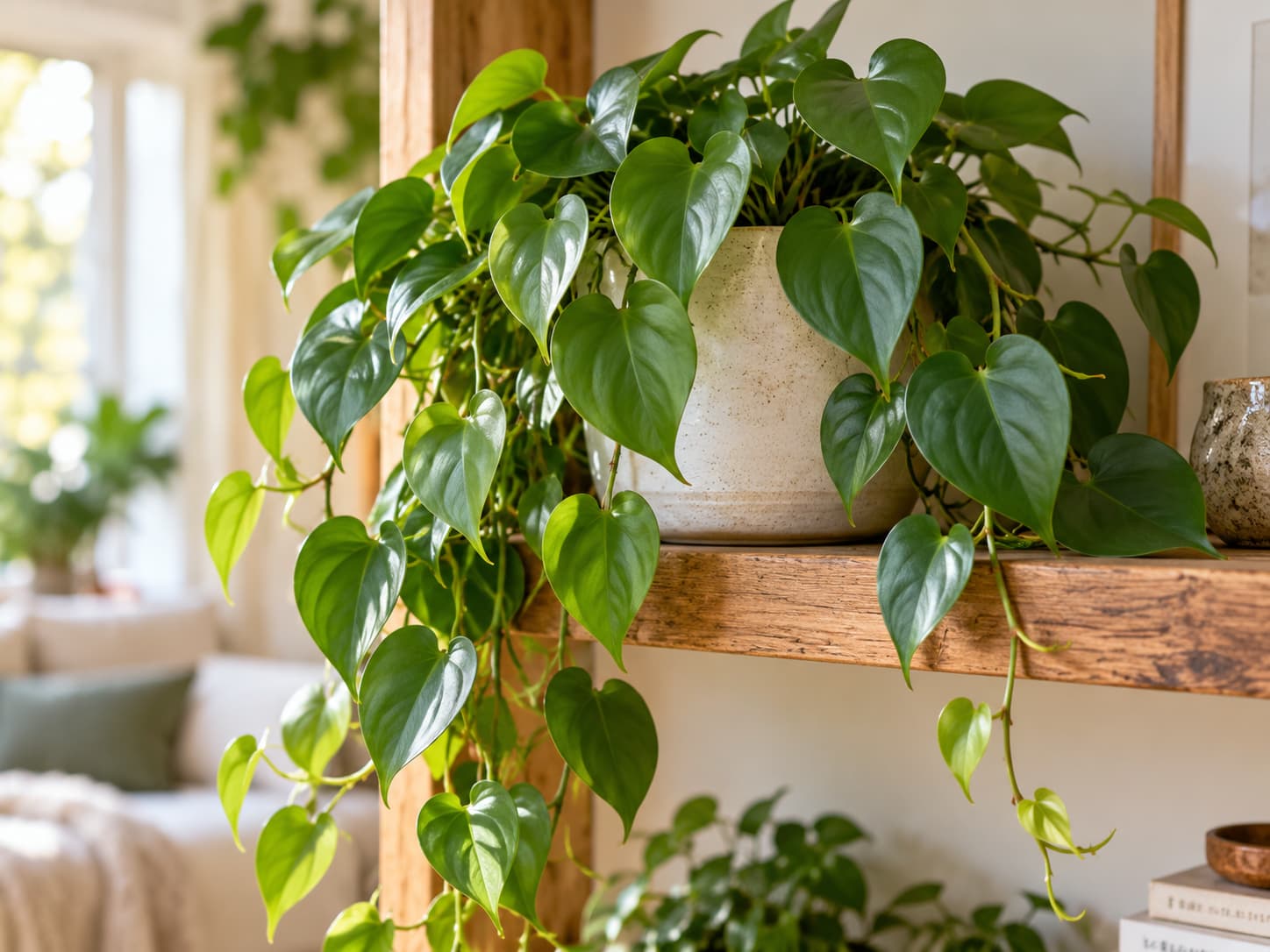
01. Heartleaf Philodendron — Philodendron hederaceum
Identification: slender green vines carry soft, roughly symmetrical heart-shaped leaves. Heartleaf is one of the most adaptable beginner options. It can trail from a shelf or climb a support. Care: give it bright indirect light, although it tolerates somewhat lower light. Water once the upper mix begins to dry. If gaps between new leaves become unusually long, try a brighter location.
02. Brasil — Philodendron hederaceum 'Brasil'
Identification: green heart-shaped leaves show irregular lime or yellow-green bands, often near the midrib. However, the pattern differs between leaves. Care: provide bright indirect light and a loose potting mix. Like plain Heartleaf, Brasil trails readily, making it an easy colorful alternative.
03. Lemon Lime — Chartreuse Heartleaf Type
Identification: this trailing heartleaf type has bright chartreuse leaves rather than green foliage with central stripes. It is commonly sold as a heartleaf cultivar. Care: choose a bright position without strong afternoon sun. Despite its vibrant color, Lemon Lime will not flourish in a windowless corner.
04. Micans — Velvet-Leaf Philodendron
Identification: velvety heart-shaped leaves shift between deep green, bronze, and copper as the light changes. Unlike glossy Heartleaf, Micans has a soft, almost shimmering finish. Care: use gentle bright light and a freely draining mix. Also, protect its foliage from harsh direct sun.
05. Silver Sword — Philodendron hastatum
Identification: cool silvery-green foliage gradually develops longer, more arrow-shaped leaves as the plant matures. Unlike variegated plants, its silvery appearance extends across much of the leaf. Care: give Silver Sword bright indirect light and a climbing support. As it grows, allow room for increasingly mature foliage.
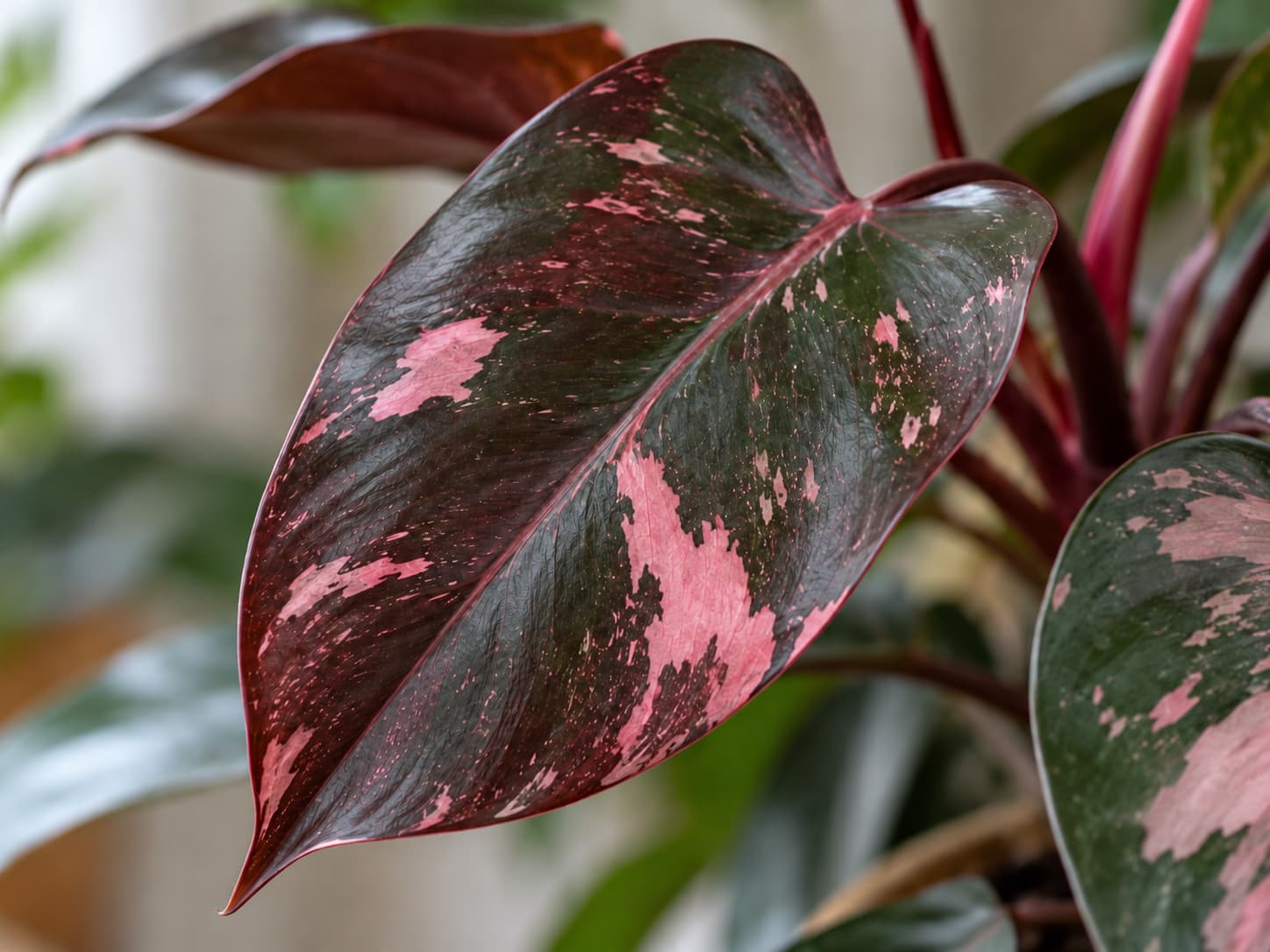
06. Pink Princess — Pink-Variegated Climbing Philodendron
Identification: dark green to burgundy leaves carry uneven pink patches, flecks, or larger sectors. Because the pattern is unpredictable, some leaves may have little pink while nearly all-pink leaves have limited green tissue. Care: supply bright indirect light, stable conditions, and a climbing support. However, better light cannot guarantee pink variegation on the next leaf.
Five Self-Heading and Architectural Types
07. Birkin — Cream-Pinstripes on Dark Leaves
Identification: compact growth supports dark glossy leaves with fine cream pinstripes. However, new leaves may show fewer stripes, and occasional reversions can occur. Care: provide medium to bright indirect light and water after the mix partly dries. Above all, judge the plant by its overall health, not by whether every leaf has matching stripes.
08. Moonlight — Lime-Green Upright Foliage
Identification: this tidy upright plant produces vivid lime-yellow new leaves that gradually turn greener. In contrast, Lemon Lime produces long trailing stems. Care: use bright indirect light and a pot sized to its roots. Although young Moonlight plants suit tabletops, they need more room with age.
09. Prince of Orange — Copper-Colored New Leaves
Identification: fresh leaves emerge orange or coppery, then gradually shift toward green as they mature. As a result, the upright plant often displays several colors at once. Care: give it bright filtered light. A warm, stable position also helps support healthy new growth.
10. Xanadu — Dense, Deeply Lobed Leaves
Identification: Xanadu forms a spreading mound of deeply divided green leaves and is generally more compact than Selloum. You may also see the nursery name Thaumatophyllum xanadu; Kew currently accepts Philodendron xanadu. Care: provide bright indirect light and steady moisture without waterlogging. In addition, leave enough width for the clump to expand.
11. Selloum / Tree Philodendron — Oversized Split Leaves
Identification: enormous, deeply lobed leaves create a broad tropical silhouette; older plants may form a substantial trunk-like stem. Kew accepts Philodendron bipinnatifidum, although older tags may say Philodendron selloum or Thaumatophyllum bipinnatifidum. Care: allow ample bright filtered light and a stable large pot when required. Most importantly, reserve generous floor space rather than treating it as a compact Xanadu substitute.
One Crawling Philodendron Worth Knowing
12. Gloriosum — Velvety Leaves, Horizontal Growth
Identification: broad velvety hearts display striking pale veins, while the thick stem crawls horizontally across the pot. Unlike a climbing philodendron, Gloriosum needs width, not height. Care: choose bright indirect light, a breathable mix, and a broad planter. Keep the advancing crown above constantly wet soil. Although steadier humidity can help, airflow and careful watering remain essential.
How to Pick the Right Type for Your Home
Before buying, use these three simple checks:
- First, check the space. Heartleaf, Brasil, and Micans suit shelves. Meanwhile, a young Moonlight or Birkin fits a bright tabletop. Reserve larger floor areas for Xanadu or a mature Selloum.
- Next, check the light. Most varieties prefer a bright window with filtered daylight. Green Heartleaf can tolerate somewhat less, whereas strongly variegated plants usually need a brighter position.
- Finally, check the stem direction. Give a climber support, Gloriosum a wide pot, and a self-heading type room around its base.
How Care Changes Between These Philodendron Types
Light and Water
Light: most varieties perform best in bright indirect light. However, lower-light tolerance varies, and dim rooms commonly produce slower growth or stretched vines. Also, protect the leaves from strong afternoon sun.
Water: let the upper layer of mix dry slightly before watering thoroughly. Then, empty any standing water from the saucer. Larger plants are not automatically thirstier: instead, check how quickly their actual potting mix dries.
Soil, Humidity, and Support
Soil and pots: choose a houseplant mix that retains some moisture while letting excess water drain. For example, bark and perlite can improve airflow. For proportions, see our aroid soil mix guide. Also, avoid oversized pots that remain saturated for too long.
Humidity: many easy varieties adapt to ordinary indoor air. By contrast, velvety collector types may prefer more humidity. Still, clean leaves, ventilation, and protection from cold drafts matter more than chasing one exact percentage.
Support: use a pole or board if you want a climber to mature upward. In contrast, self-heading plants need no pole, and Gloriosum needs horizontal room.
For general watering, light, pruning, and aerial-root care, continue with our philodendron care guide.
Philodendron vs. Pothos: How to Tell Them Apart
Heartleaf philodendron and golden pothos are commonly confused. First, examine the whole plant: heartleaf philodendron usually has thinner, softer, more evenly heart-shaped leaves, while golden pothos often has thicker, waxier leaves and a different petiole shape. However, these clues are not definitive for every cultivar.
Next, check emerging leaves. On heartleaf philodendron, a thin protective cataphyll surrounds developing growth and later dries. In contrast, golden pothos does not make the same separate cataphyll. Our golden pothos guide provides the other side of the comparison.
Are Philodendrons Safe for Cats and Dogs?
No. Because philodendrons contain insoluble calcium oxalate crystals, chewing them can cause irritation. Reported effects include mouth pain, drooling, vomiting, and difficulty swallowing. The ASPCA identifies heartleaf philodendron as toxic to cats and dogs. Therefore, keep trailing vines and large floor plants out of reach. Contact a veterinarian if a pet chews one.
Frequently Asked Questions
Choosing and Identifying Philodendrons
01What is the easiest type of philodendron?
Plain green Heartleaf (Philodendron hederaceum) is a dependable beginner choice. Likewise, Brasil and Micans are approachable in bright indirect light with good drainage.
02Which philodendron is best for lower light?
Green Heartleaf is among the more tolerant common choices, but it still needs enough light to grow. However, tolerating low light is not the same as thriving in darkness. Colorful cultivars usually display better growth in brighter filtered light.
03Does Pink Princess always produce pink leaves?
No. Pink variegation is variable, and some new leaves may have little or no pink. Although bright indirect light supports healthy growth, it cannot guarantee the next leaf will have pink patches.
04Does a philodendron need a moss pole?
Only some climbing types benefit from a pole or other support. For example, Heartleaf can trail, whereas self-heading forms stay upright and Gloriosum crawls sideways.
Botanical Names, Growth Habits, and Safety
05Are Xanadu and Selloum still philodendrons?
There are differing taxonomic treatments. Some use Thaumatophyllum, while Kew currently accepts Philodendron xanadu and Philodendron bipinnatifidum. Therefore, plant-shop labels may use either treatment.
06What is the difference between Lemon Lime and Moonlight?
Lemon Lime is a bright, chartreuse, trailing heartleaf type. Moonlight is a more upright, self-heading plant with vivid young leaves. As a result, their growth habits distinguish them more reliably than color alone.
07Are philodendrons toxic to pets?
Yes. Common philodendrons contain insoluble calcium oxalates that can irritate the mouth and digestive system when chewed. Therefore, keep plants out of reach and contact your veterinarian after suspected ingestion.
Related Reading
- Philodendron Care Indoors — light, water, pruning, and growth habits.
- Aroid Soil Mix Recipe — drainage and airflow for tropical foliage plants.
- Golden Pothos Care — the houseplant often confused with heartleaf philodendron.
Sources and Further Reading
- Royal Horticultural Society — How to Grow Philodendrons (houseplant forms, watering, light, training, and potting).
- NC State Extension — Philodendron hederaceum (heartleaf identification and cultivation).
- Kew Plants of the World Online — Philodendron xanadu (accepted botanical name and synonym).
- Kew Plants of the World Online — Philodendron bipinnatifidum (accepted botanical name and Selloum synonyms).
- University of Illinois Extension — Philodendron vs. Pothos (new leaf growth and cataphylls).
- ASPCA — Heartleaf Philodendron (pet toxicity and clinical signs).