How to Prune Pothos for Fuller, Healthier Vines
Wondering how to prune pothos without damaging the plant? Start with one simple rule: cut just above a node on the vine you want to keep. That leaves a growing point behind, helps control leggy stems, and gives your pothos a chance to produce fresh shoots. You can also root the healthy pieces you remove to make the pot look fuller.
You don't need special equipment or a perfect plant. This guide shows you exactly where to cut, how much to remove, and what to do with the cuttings afterward.
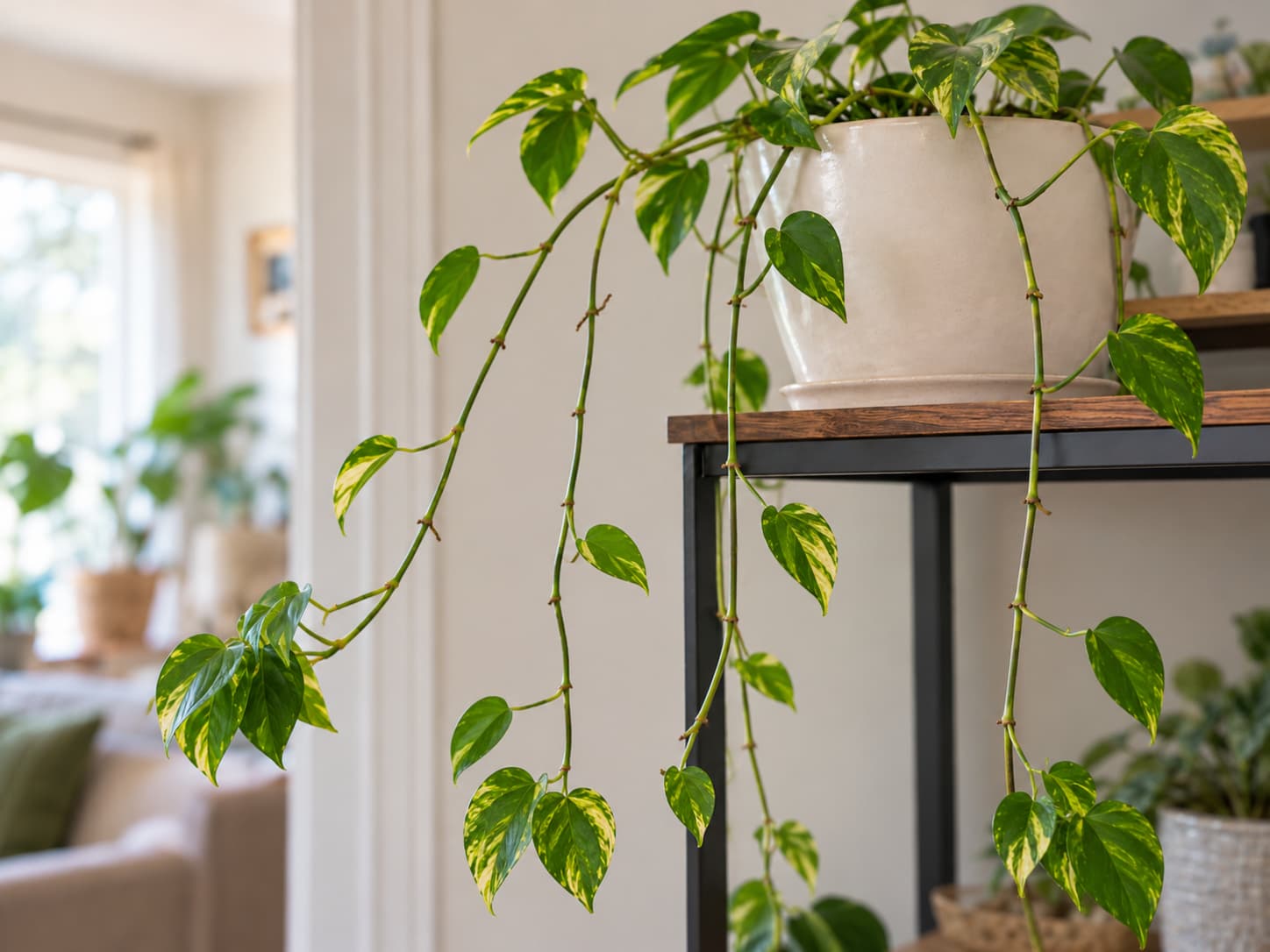
Quick Answer: Where Do You Cut a Pothos?
Prune healthy, actively growing pothos more heavily in its growing season. A cautious starting point is to remove no more than about one-third of the foliage at once, then reassess. This is a practical guideline, not a biological limit.
Why Prune a Pothos?
- Shorten trailing vines. Keep a shelf, plant stand, or hanging basket at a manageable length.
- Encourage a denser shape. Cutting vine tips can stimulate growth from nodes below the cut, although one cut does not guarantee multiple new branches.
- Reshape leggy growth. Shortening stretched vines helps the plant start a more compact growth pattern once its light conditions are improved.
- Remove damaged foliage. Tidy fully yellow, dead, or badly damaged leaves. If many leaves are turning yellow, first check why pothos leaves turn yellow rather than treating pruning as the cure.
- Grow new plants. Healthy node-bearing sections can become rooted cuttings, either in a separate pot or back alongside the parent plant.
Grooming vs. Shaping vs. a Hard Reset
Decide how much work your pothos really needs before making the first cut.
| Approach | Use it when | What to remove | Best timing |
|---|---|---|---|
| Grooming | A few leaves are dead or one tip is too long | Only affected leaves or a short tip | Any time, as needed |
| Shaping | Vines are uneven or the plant looks sparse | Selected healthy vines, cutting above retained nodes | During active growth |
| Gradual reset | Several vines are long and mostly bare | Shorten stems in stages while keeping viable nodes | During active growth on a healthy plant |
The Node Rule: Find This Spot Before Cutting
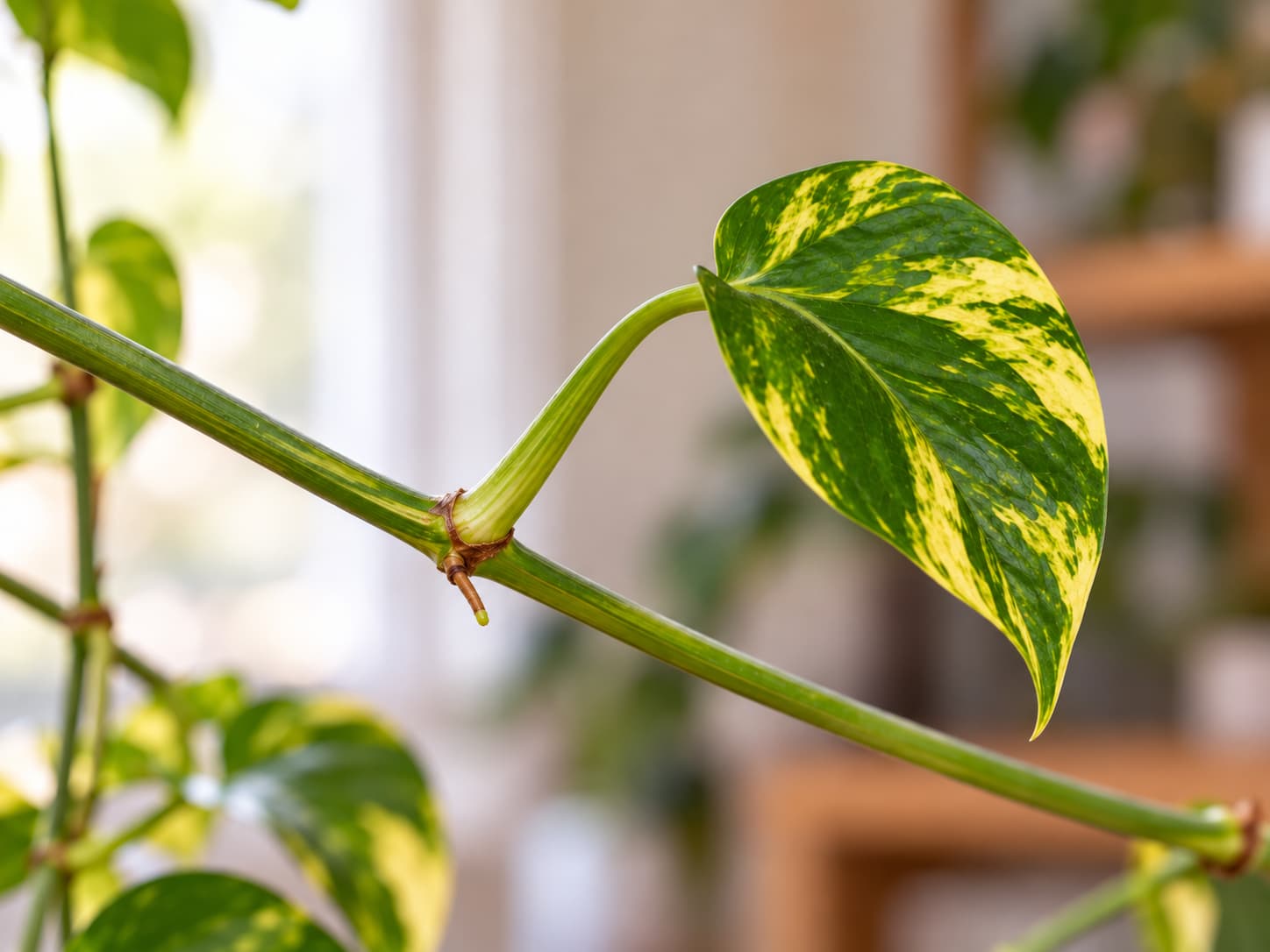
A node is a joint on the main vine where a leaf stalk joins the stem. You may also see a little brown aerial-root bump. The smooth stretch between two nodes is called an internode.
- Parent plant: cut just above the node you want to leave behind.
- Cutting to root: keep at least one node on each cutting; trim its bottom end just below that node.
- New growth: a growing point below the cut may activate. A previously missing leaf will not reattach, but an old node can sometimes produce a new side shoot.
How to Prune Pothos, Step by Step
- Choose your goal. Look for trailing tips, thin stretches, or damaged vines. Decide which nodes you want to keep so the remaining plant has a balanced outline.
- Clean the tools and protect your hands. Use sharp scissors or pruners cleaned with rubbing alcohol and allow the blades to dry. Wear gloves if the sap irritates your skin.
- Remove fully damaged leaves. Snip the leaf stalk cleanly without tearing or gouging the main stem. Diagnose widespread yellowing separately.
- Make a clean cut above a node. On a healthy, overlong vine, leave about ¼ inch (5–6 mm) of stem beyond a node. Do not cut into the node itself.
- Pause and review the overall plant. Start with the longest vines. For routine shaping, remove a modest amount first; avoid stripping a stressed plant of most of its green leaves.
- Save the healthy lengths. Cut them into node-bearing sections for water or potting-mix propagation. Discard diseased or pest-infested material rather than sharing it.
How to Fix a Leggy Pothos and Make It Look Fuller
Leggy pothos has long stretches of stem with relatively few leaves. Too little light is a common reason for stretched new growth, but older leaves may also drop from aging or plant stress. Look at the plant's conditions as well as its shape.
- Shorten the bare or overlong vines. Choose a node nearer the pot, but leave healthy stem and growing points. If the plant is very sparse, prune a few vines now and the rest after it responds.
- Give the new growth suitable light. Bright indirect light usually supports stronger growth than a dim corner. Move the plant gradually, away from harsh direct sun.
- Root cuttings and add them back. This is often the most dependable way to make the top of a pothos pot look fuller: you are adding more rooted stems, not relying on one trimmed vine to produce several branches.
What to Do With Pothos Cuttings
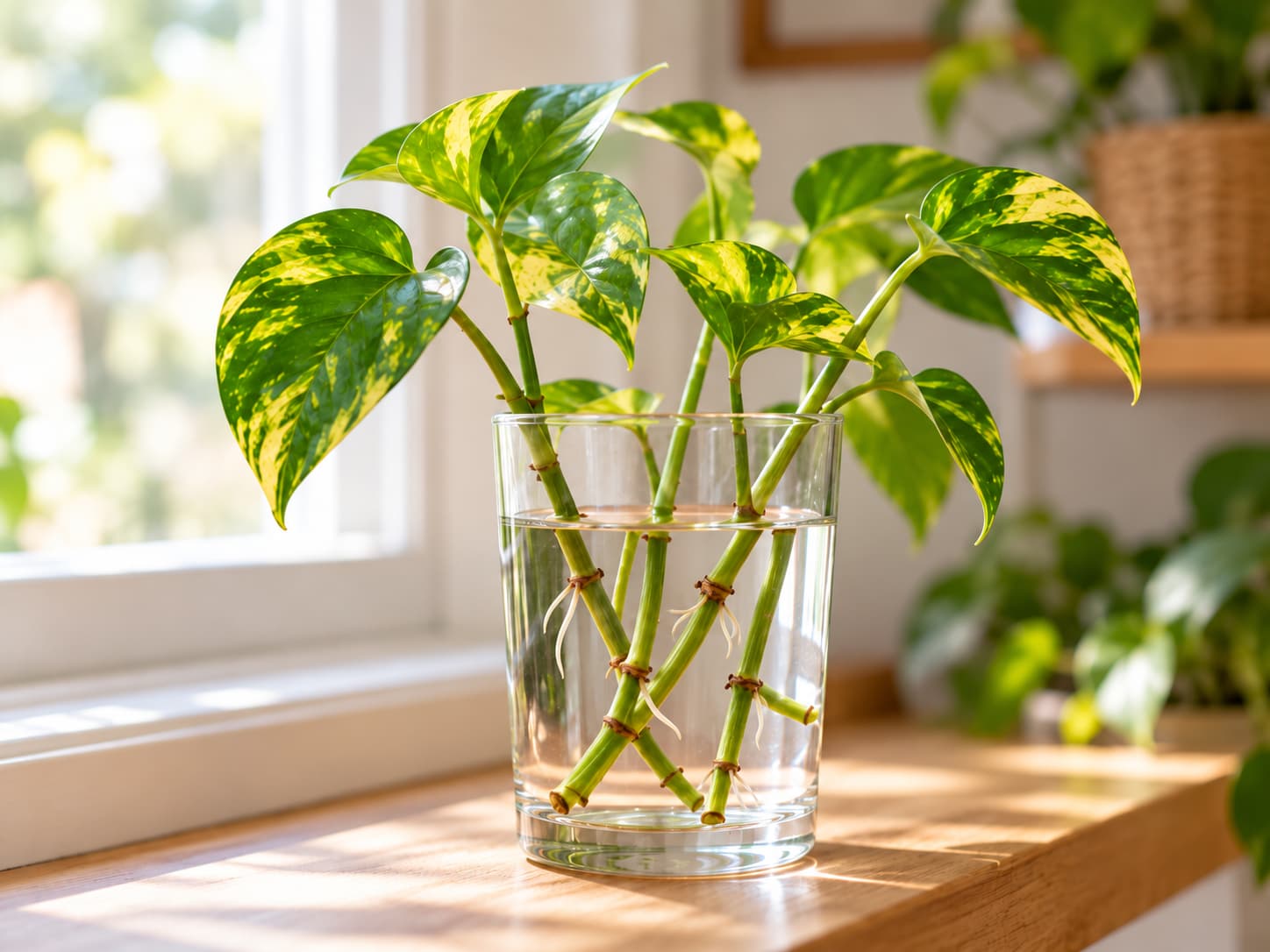
Turn the healthy vines you removed into new plants. Pothos is well suited to water propagation, and seeing the roots develop makes this easy for beginners.
- Prepare a piece with one or more nodes. Make the lower cut just below a node, and remove any leaf that would sit below water.
- Place the node in clean water. Keep the leaves above the waterline and the jar in bright, indirect light.
- Refresh the water regularly. Replace cloudy water promptly; changing it about once or twice weekly is a useful routine.
- Pot after roots develop. When roots are roughly 1–2 inches (2.5–5 cm) long, transfer to a draining houseplant mix and keep it evenly, lightly moist while the cutting establishes.
Roots may appear within a few weeks in warm conditions, but timing varies. For broader watering, light, and propagation guidance, see our golden pothos care guide.
Aftercare: What to Expect After Pruning
Return the pothos to bright, indirect light and its usual stable conditions. Water when the upper layer of potting mix is approaching dryness, then let excess drain out. Avoid leaving a freshly pruned plant in saturated soil.
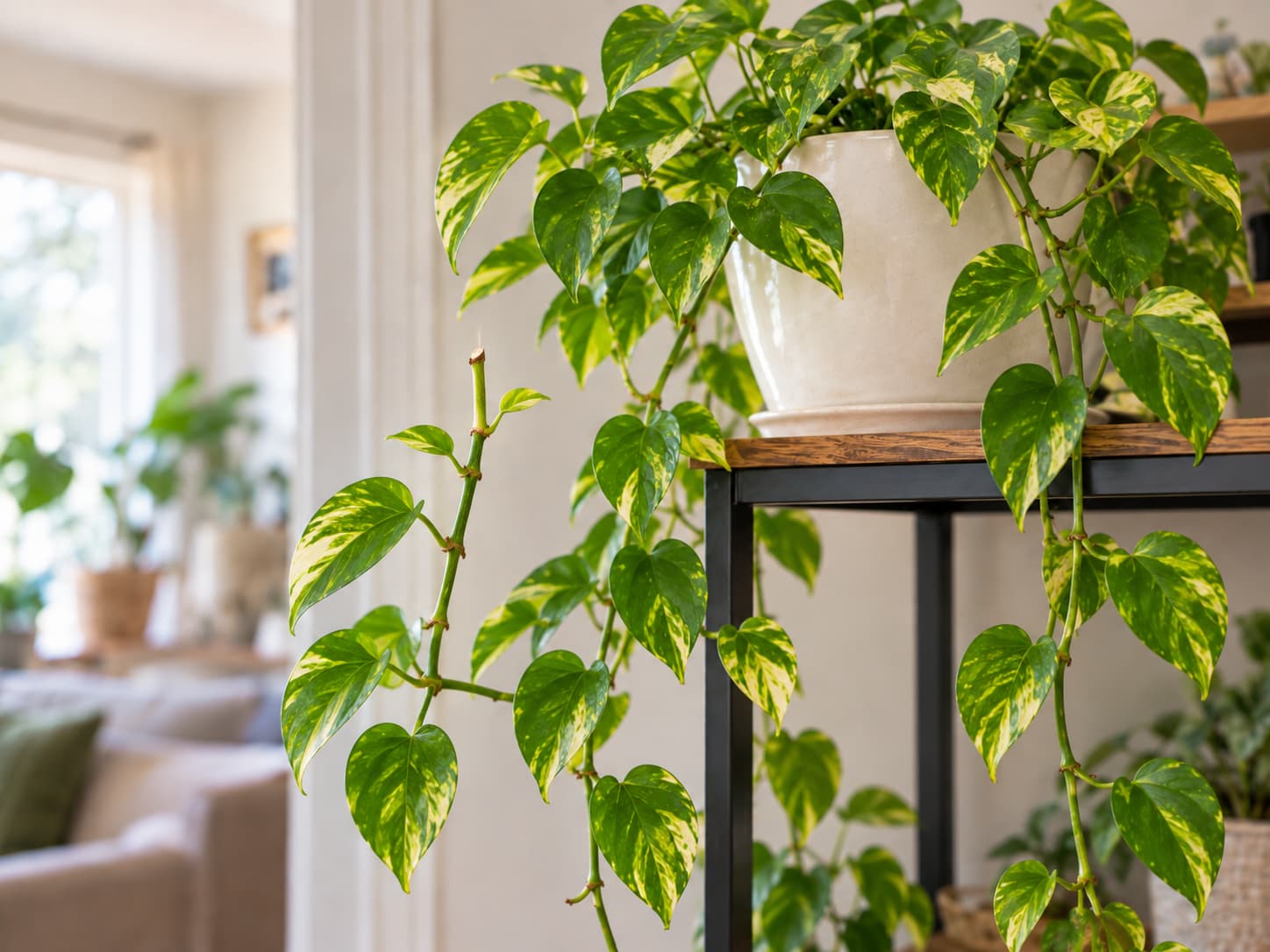
Small buds or new shoots may become visible from nodes below the cut over the following weeks, especially while the plant is actively growing. Winter growth can be slower. You do not need an extra dose of fertilizer to force a response; resume your normal, modest growing-season feeding routine when the plant is growing well.
If the plant remains bare, check light, roots, pests, and watering before cutting it again. One careful pruning session is a beginning, not an instant transformation.
Safety Notes: Pets, Sap, and Cuttings
Pothos contains insoluble calcium oxalate crystals. Its sap can irritate skin, and chewing the plant can cause mouth irritation, drooling, vomiting, and difficulty swallowing in pets. The ASPCA lists pothos as toxic to cats and dogs.
Wear gloves if you are sensitive, wash your hands after pruning, and collect cuttings immediately so pets and children cannot reach them. If a pet chews pothos, contact a veterinarian or animal poison service for advice.
Frequently Asked Questions
01 Does pruning make pothos bushier?
Pruning can stimulate a new shoot from a node below the cut, but a single vine may produce just one replacement shoot. For a visibly fuller pot, combine light tip pruning with several rooted cuttings planted back into the container.
02 When is the best time to prune pothos?
Small tidy-ups are fine as needed. Make major shaping cuts when the plant is actively growing, often spring through summer in temperate homes. In warm climates or consistently bright indoor conditions, active growth may occur at other times.
03 How short can I cut a pothos vine?
You can shorten a healthy vine substantially if you leave viable nodes on the rooted stem. For a very leggy plant, work in stages instead of removing nearly all its leaves in one session.
04 Will a cut pothos vine grow again?
Yes, if the rooted vine still has healthy growing points. Growth usually starts from a node below the cut rather than from the flat cut surface itself.
05 Can I prune a sick or stressed pothos?
Remove fully dead or diseased material with clean tools, but postpone extensive shaping until you have addressed problems with roots, pests, temperature, or watering. A stressed plant may regrow slowly.
06 What if I accidentally cut off too much?
Keep the remaining plant in stable, bright indirect light, avoid overwatering, and give it time. Recovery depends on the health of its roots and remaining nodes; it may take several weeks or longer to look full again.
07 Should I fertilize immediately after pruning?
No extra feeding is necessary simply because you have pruned. Follow the normal diluted houseplant fertilizer schedule during active growth; avoid trying to push a weakened plant with a strong dose.
Related Reading
- Golden Pothos Care — light, watering, feeding, and propagation basics.
- Pothos Leaves Turning Yellow — diagnose the cause before removing too much foliage.
- Why Your Philodendron Is Thriving Indoors — understand another popular trailing houseplant.
Sources and Further Reading
- Royal Horticultural Society — How to Grow Epipremnum (pruning above leaf joints, care, and propagation).
- NC State Extension — Epipremnum aureum (plant identification, care, and pruning).
- Iowa State University Extension — Stem Tip Cuttings (node-bearing cuttings, water changes, and transplanting).
- ASPCA — Devil's Ivy (pet toxicity and clinical signs).