Orchid Root Rot: How to Diagnose It and Save the Plant
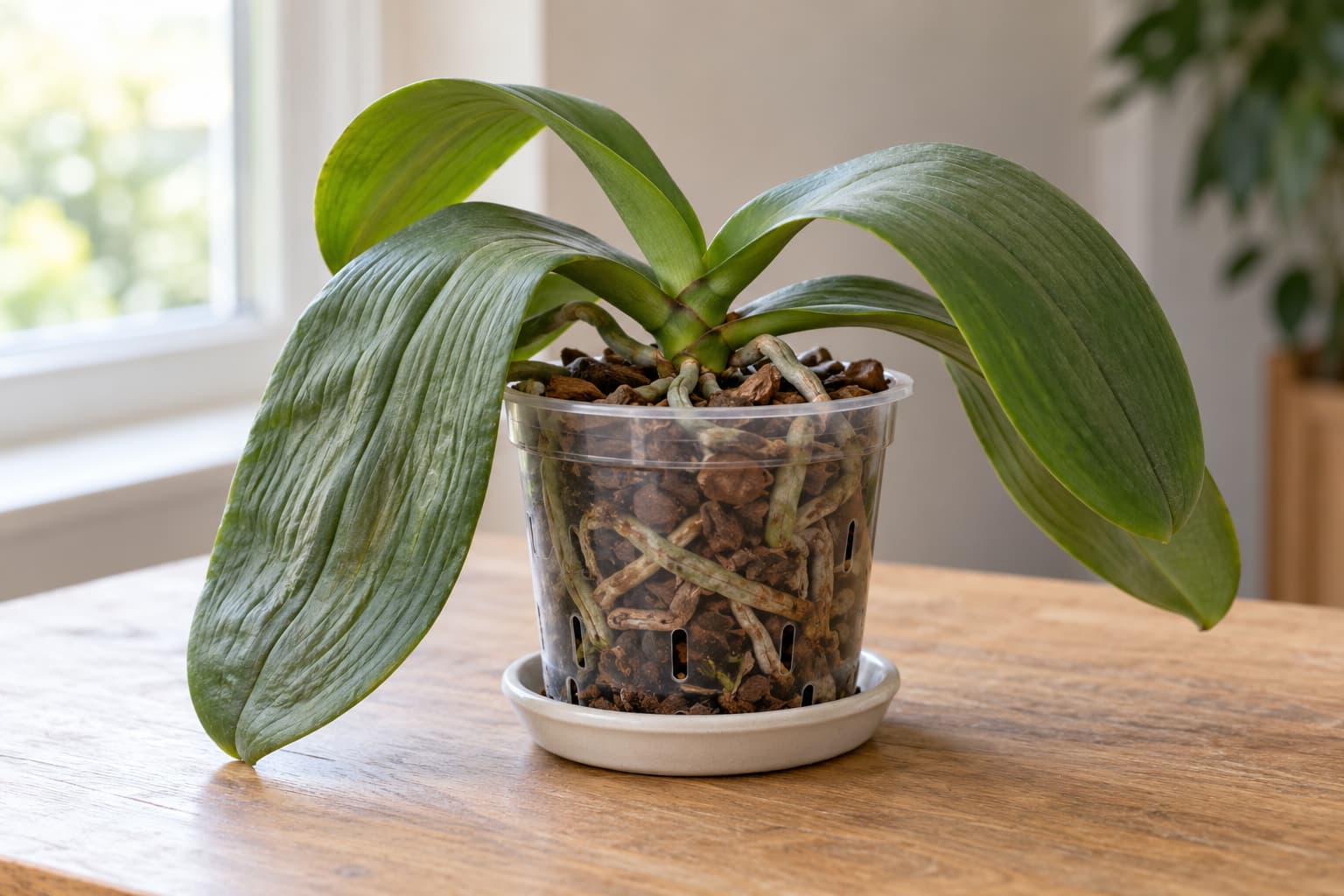
Orchid root rot can make a moth orchid (Phalaenopsis) look thirsty even while its potting mix is wet. Roots need both moisture and air. If bark breaks down or water sits in the pot, roots can die and the leaves may wrinkle. A firm crown and some living roots give the plant a chance to recover.
Here is how to check the roots, remove damaged tissue, repot in fresh bark, and water during recovery.
Quick Answer: Can This Orchid Be Saved?
Orchid Root Rot: Healthy vs Rotting Roots
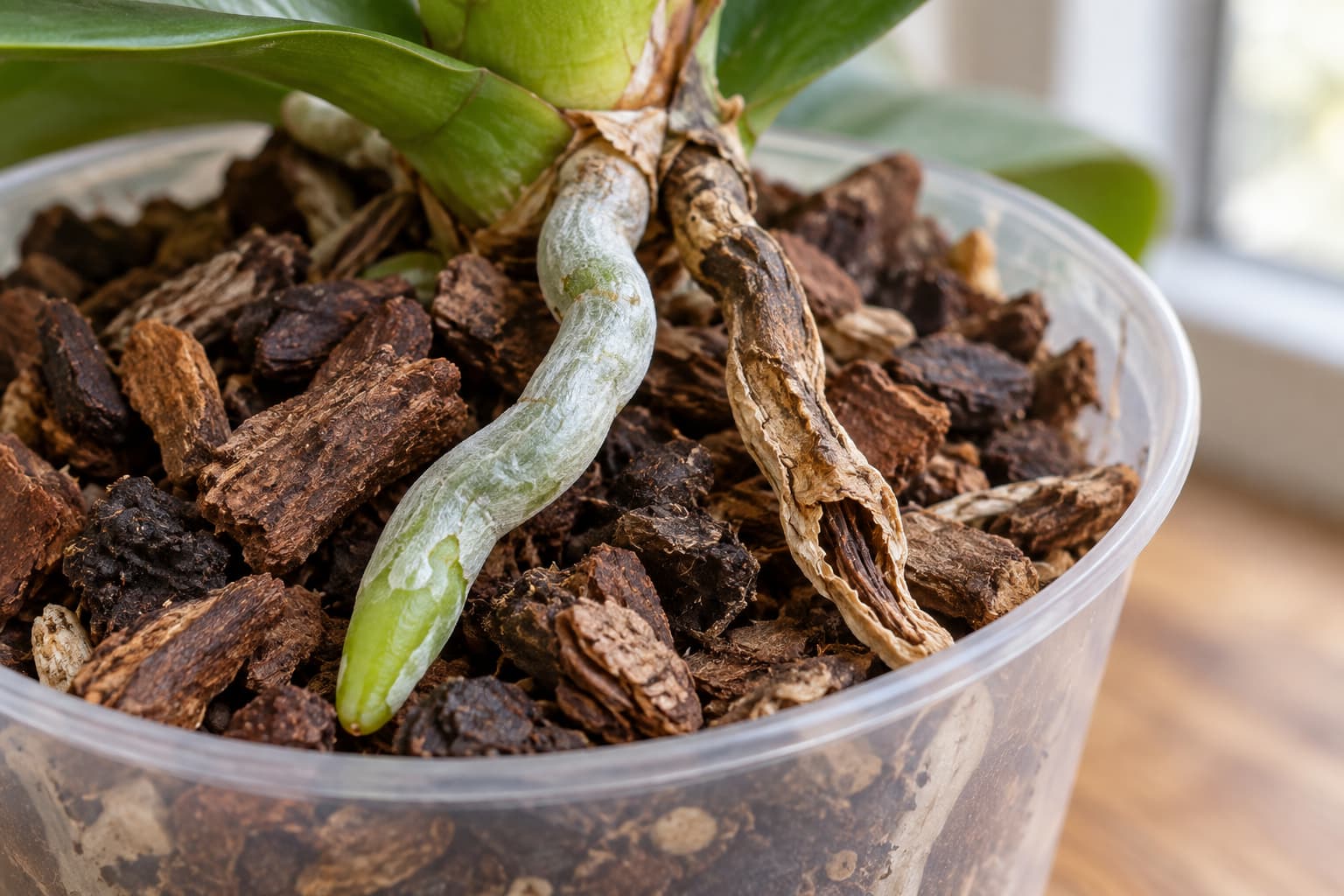
Check texture first. A living root is firm, whether it looks silvery, green, or stained by bark. A dead root feels mushy or collapses into a hollow outer layer with a thin inner strand.
| Healthy root | Rotting or dead root | |
|---|---|---|
| Color | Often silvery when dry and green when wet; buried roots may be stained | Often dark or discolored, but color alone is inconclusive |
| Texture | Firm and slightly springy | Mushy, collapsed, or papery and hollow |
| Squeeze test | Gives slightly, then springs back | Collapses; the outer skin slides off a stringy core |
The Confusing Symptom: A Wilted Orchid Sitting in Wet Mix
Limp, wrinkled leaves can suggest thirst. If the mix is still damp, however, pause before adding water. Check the roots to find out whether they can take up moisture.
Damaged roots cannot supply the leaves well, even when the mix holds plenty of water. Adding more water to a wet pot may prolong the conditions that harmed the roots. Inspect the root system and crown before deciding what the plant needs.
What Usually Causes Root Rot
- Aged, broken-down bark. Bark gradually decomposes and becomes finer. As the mix compacts, it can hold water longer and leave less air around the roots. Check the medium itself, as well as your watering routine.
- Standing water. A decorative cachepot or saucer left holding water keeps the root zone saturated for days.
- No drainage hole in the growing pot.
- Watering by the calendar instead of by the dryness of the mix.
- Cool, dim conditions. In winter the plant uses less water and the mix dries more slowly, so a summer watering rhythm becomes too much.
Rescue a Rotted Orchid, Step by Step
- Ease the plant out of its pot and remove all of the old mix. Hold the pot sideways and support the base; don't pull by the leaves.
- Rinse the roots gently with lukewarm water if old medium clings to them. Handle living roots carefully.
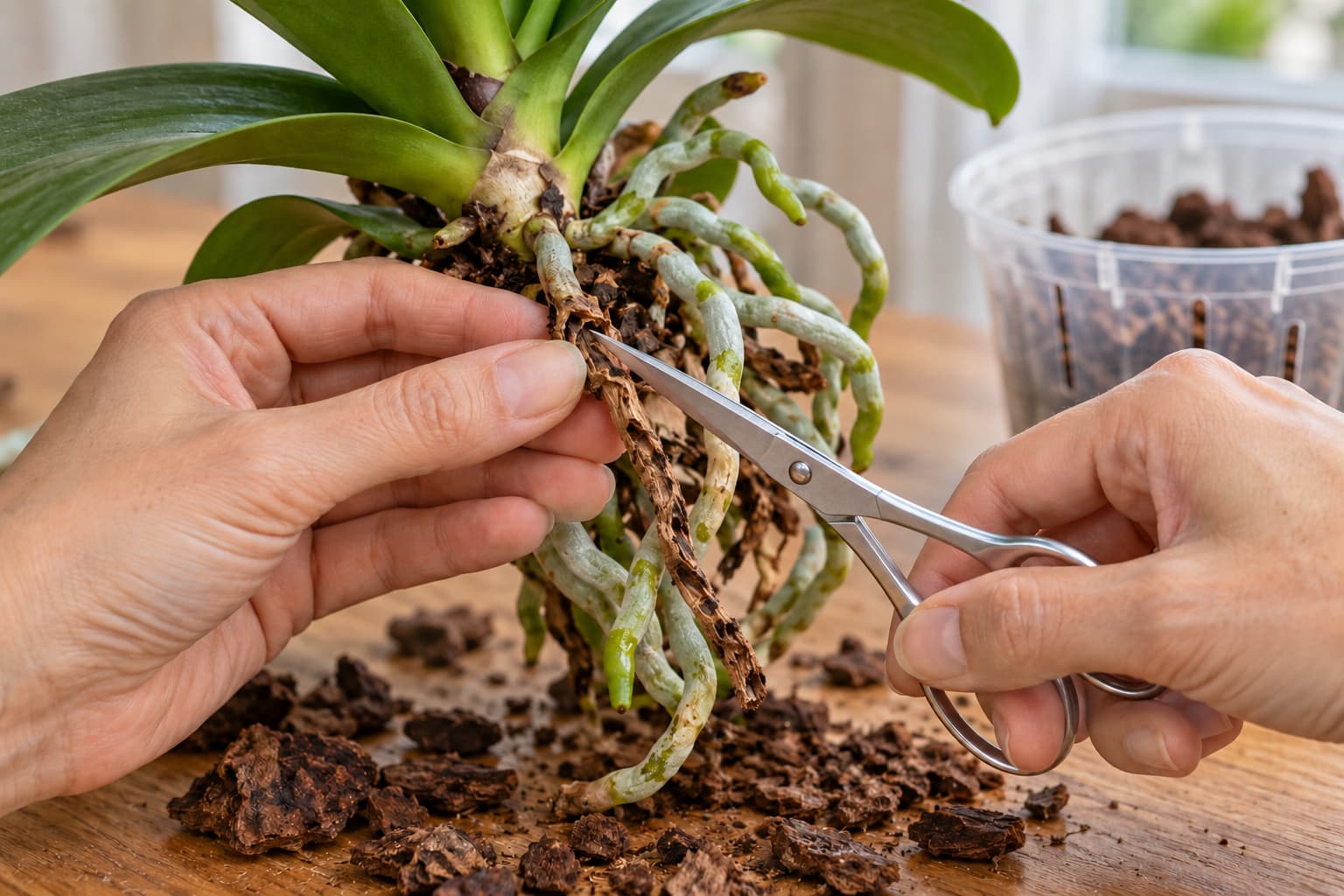
- Sort by texture: keep firm roots, including firm roots stained brown by bark. Identify mushy or hollow roots for removal.
- Trim dead tissue with clean scissors, wiping the blades with rubbing alcohol between cuts. Stop at firm tissue. Avoid cutting healthy roots based on color alone.
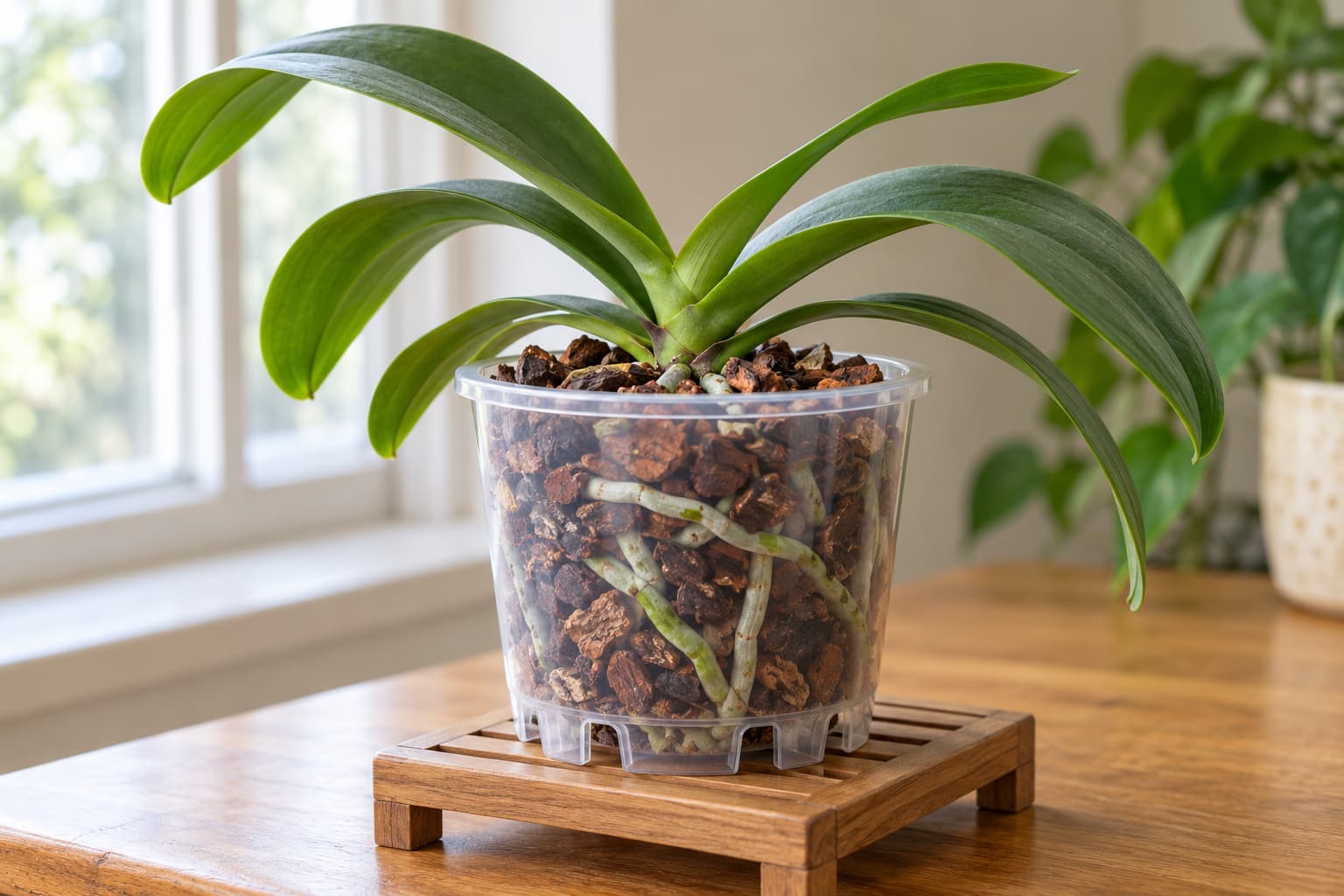
- Repot in fresh mix. Choose an airy bark-based orchid mix and a clean pot with drainage holes, sized for the roots that remain. Clear plastic makes the roots easier to see. Arrange the roots gently and keep the crown above the medium.
- Water lightly after repotting and let excess water drain. During recovery, check the mix before watering again; a smaller root system and cool conditions may slow drying.
- Provide bright, indirect light and moderate humidity. Wait for active new root or leaf growth before resuming diluted fertilizer.
Aftercare That Prevents a Repeat
Preventing orchid root rot starts with fresh, airy bark and a watering routine that responds to the mix.
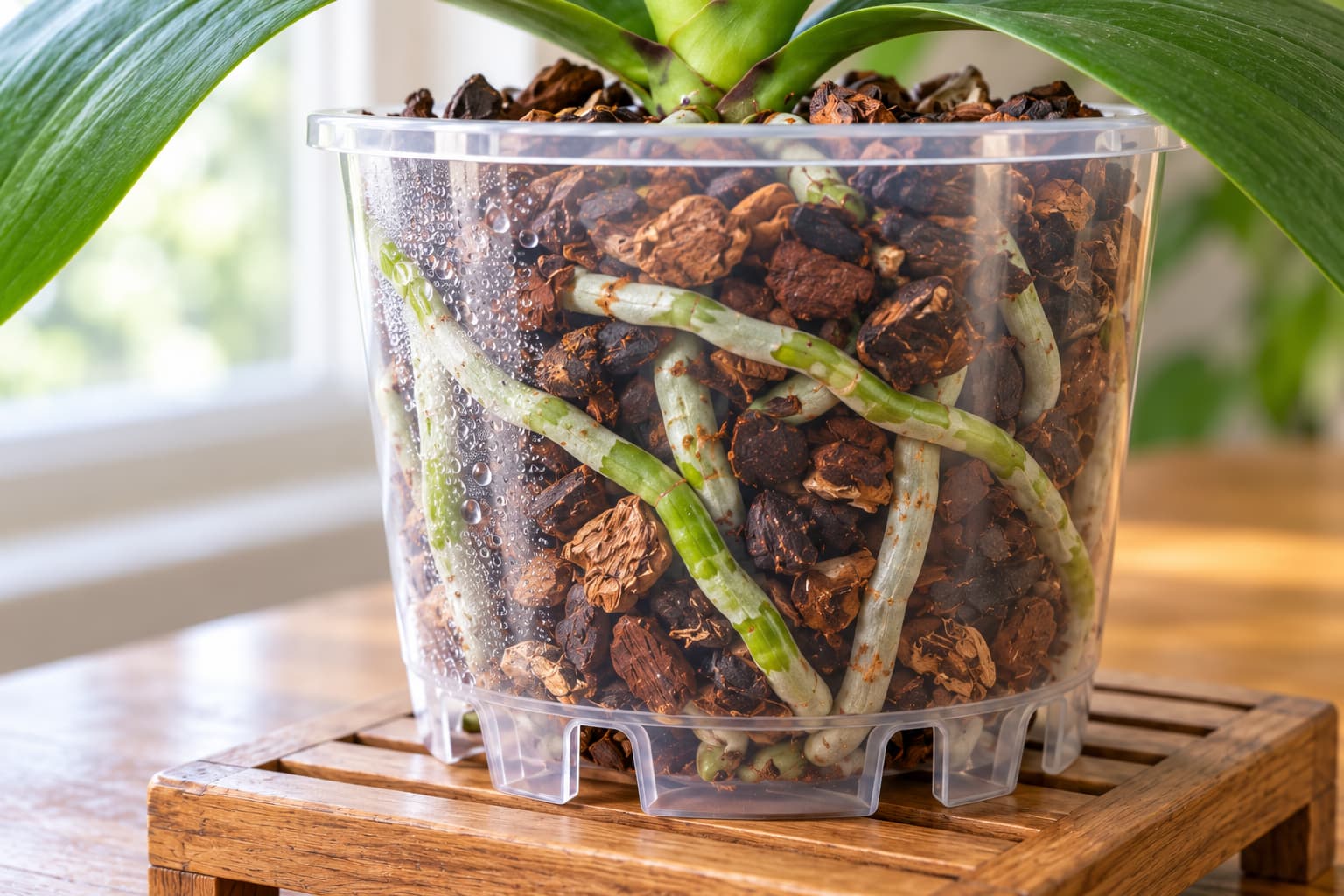
- Water by the mix, not the weekday. Check below the surface, feel the pot's weight, and look at the roots through a clear pot. Condensation is one clue, not a reliable test on its own.
- Water thoroughly once recovery begins. When the mix approaches dryness, run room-temperature water through it and let the pot drain completely. Empty any cachepot or saucer.
- Watch the smaller root system. Its water use may change after trimming, so reassess the mix rather than assuming the old interval still works.
- Replace degrading mix. Phalaenopsis often needs fresh bark within about one to three years. Repot sooner when the mix breaks down, compacts, or stays wet much longer than before.
- Feed only into growth. Resume a weak, diluted fertilizer only once the plant is producing new leaves or roots.
When It Is Probably Not Root Rot
A few common look-alikes deserve a second thought before you unpot a plant:
- One older, lower leaf yellowing slowly while the rest of the plant looks healthy is usually just the natural aging of the oldest leaf.
- Buds dropping soon after you bring the plant home is a common reaction to relocation — changes in light, temperature, and humidity — and is normally temporary.
- A few flattened or dried aerial root tips are common and not, by themselves, a sign of rot below.
- Wrinkled leaves in a dry mix can reflect underwatering, but check root firmness too: dead roots can leave a pot dry while the plant stays dehydrated.
The separating test is always the same: check the roots and the crown before acting on the leaves.
Is a Moth Orchid Safe Around Cats and Dogs?
The ASPCA lists Phalaenopsis orchids as non-toxic to cats and dogs. If a pet has eaten part of a plant and develops symptoms, contact a veterinarian.
Frequently Asked Questions
01Can an orchid with root rot be saved?
It may recover if the crown is firm and some living roots remain, including aerial roots. Remove roots that are mushy or hollow, repot in fresh bark, and adjust watering to the mix. A soft, black crown greatly lowers the chance of recovery.
02What do healthy orchid roots look like?
Healthy roots feel firm. Exposed roots may look silvery when dry and green when wet; roots under bark may be stained. Mushy or hollow texture is a stronger sign of damage than color alone.
03Should I really cut off all the mushy roots?
Yes. Remove mushy or hollow roots with clean scissors and stop at firm tissue. Keep roots that are firm, even if bark has stained them tan or brown.
04How often should I repot an orchid?
For Phalaenopsis, often within one to three years, depending on the medium and conditions. Repot sooner if bark breaks down, becomes compact, or stays wet too long.
05Is watering with ice cubes okay for orchids?
A controlled study of Phalaenopsis grown in bark found no harm to display life from its tested ice-cube watering method. Ice is not a treatment for root rot, though, and a fixed number of cubes does not tell you when the mix needs water. For routine care, check the mix and water through the pot with room-temperature water when needed, then drain it.
06My orchid lost every root. Is it still worth trying?
Sometimes, if the crown remains firm. Keep the plant in bright, indirect light with moderate to high ambient humidity, and seek species-specific re-rooting guidance. Recovery can be slow and is uncertain when no living roots remain.
Related Reading
- Aroid Soil Mix Recipe — the same idea of an airy, chunky mix, applied to another group of houseplants.
- Monstera Leaves Turning Yellow — reading leaf symptoms on tropical plants without guessing.
- Why Houseplants Drop Leaves in Winter — seasonal stress that can look like disease.
Sources
- American Orchid Society — Phalaenopsis Culture Sheet (watering, medium, and repotting).
- American Orchid Society — Growing Phalaenopsis: What Can Go Wrong? (root-rot symptoms and recovery).
- Ohio State University — Watering Phalaenopsis Orchids with Ice Cubes (controlled ice-cube comparison).
- ASPCA — Phalaenopsis Orchid (pet toxicity classification).