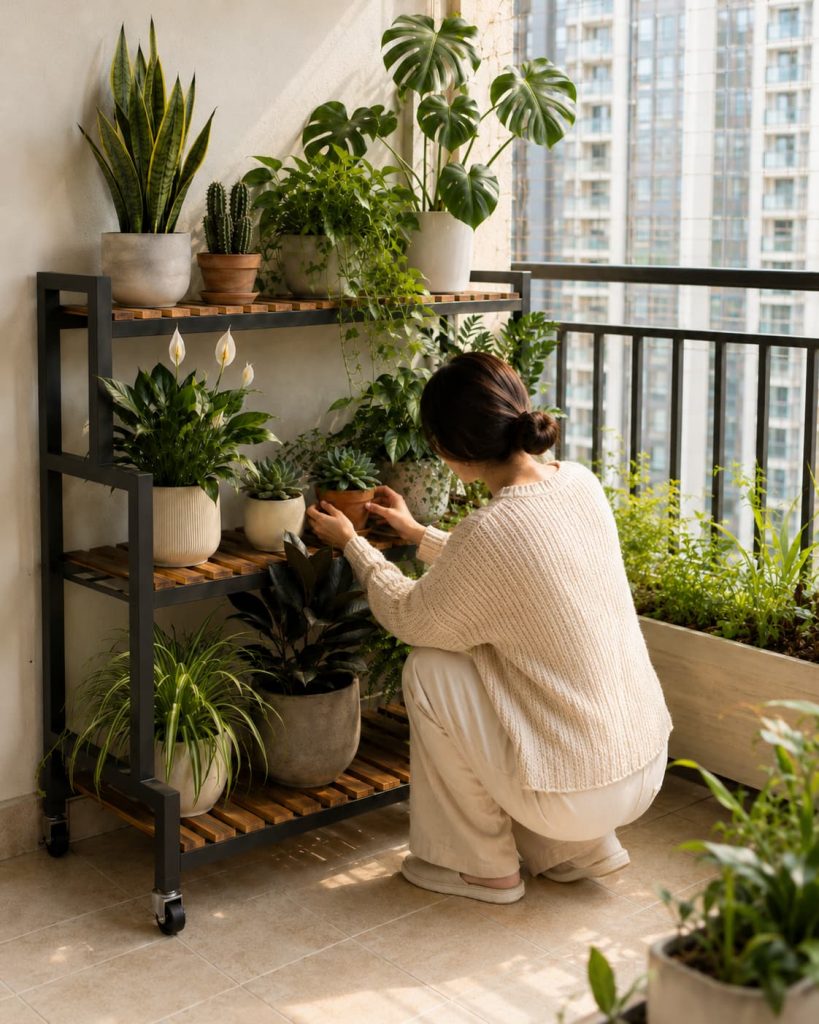
Aroid Soil Mix Recipe: A Simple 1-1-1 Mix for Monstera, Philodendron & Pothos
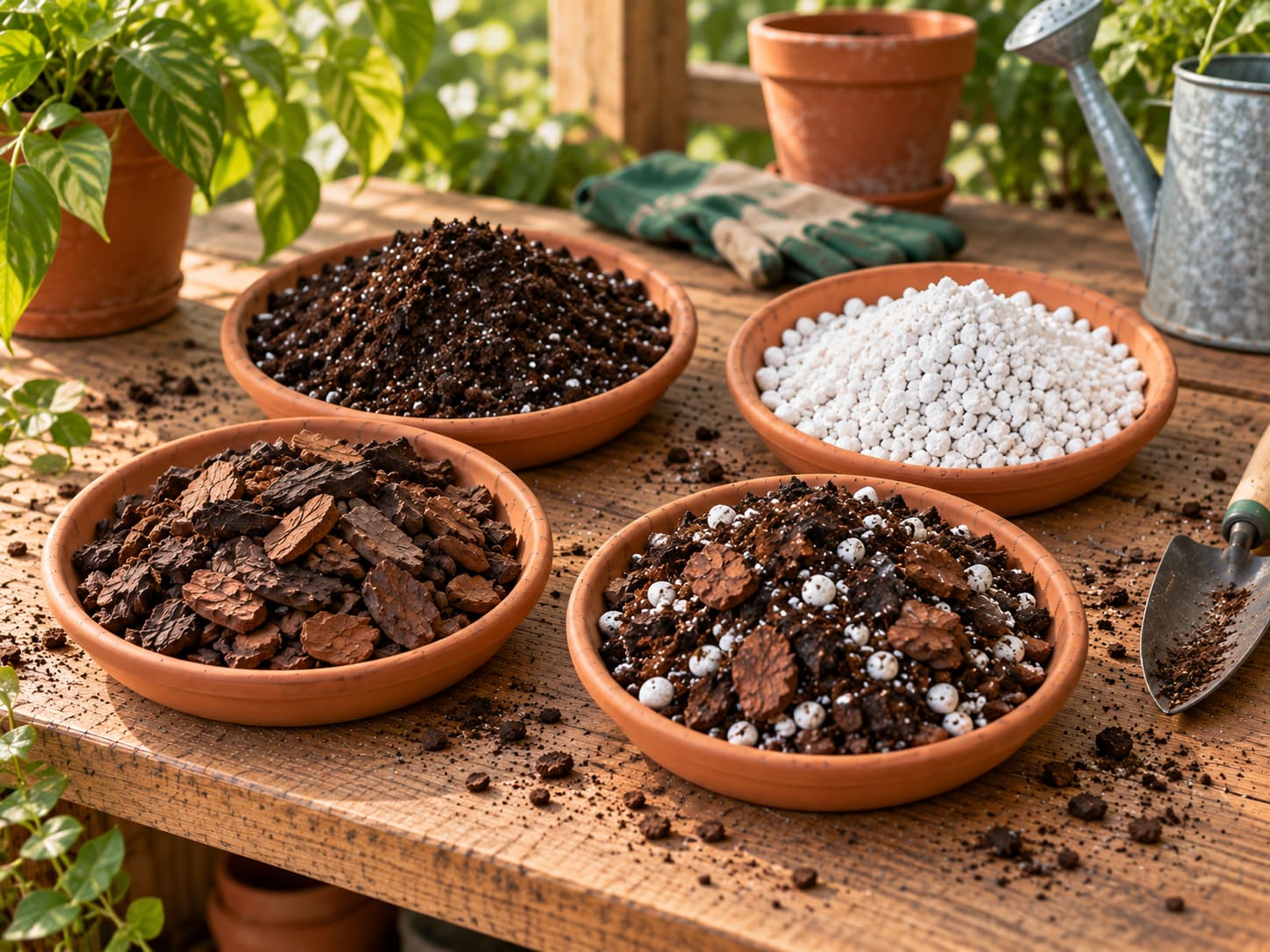
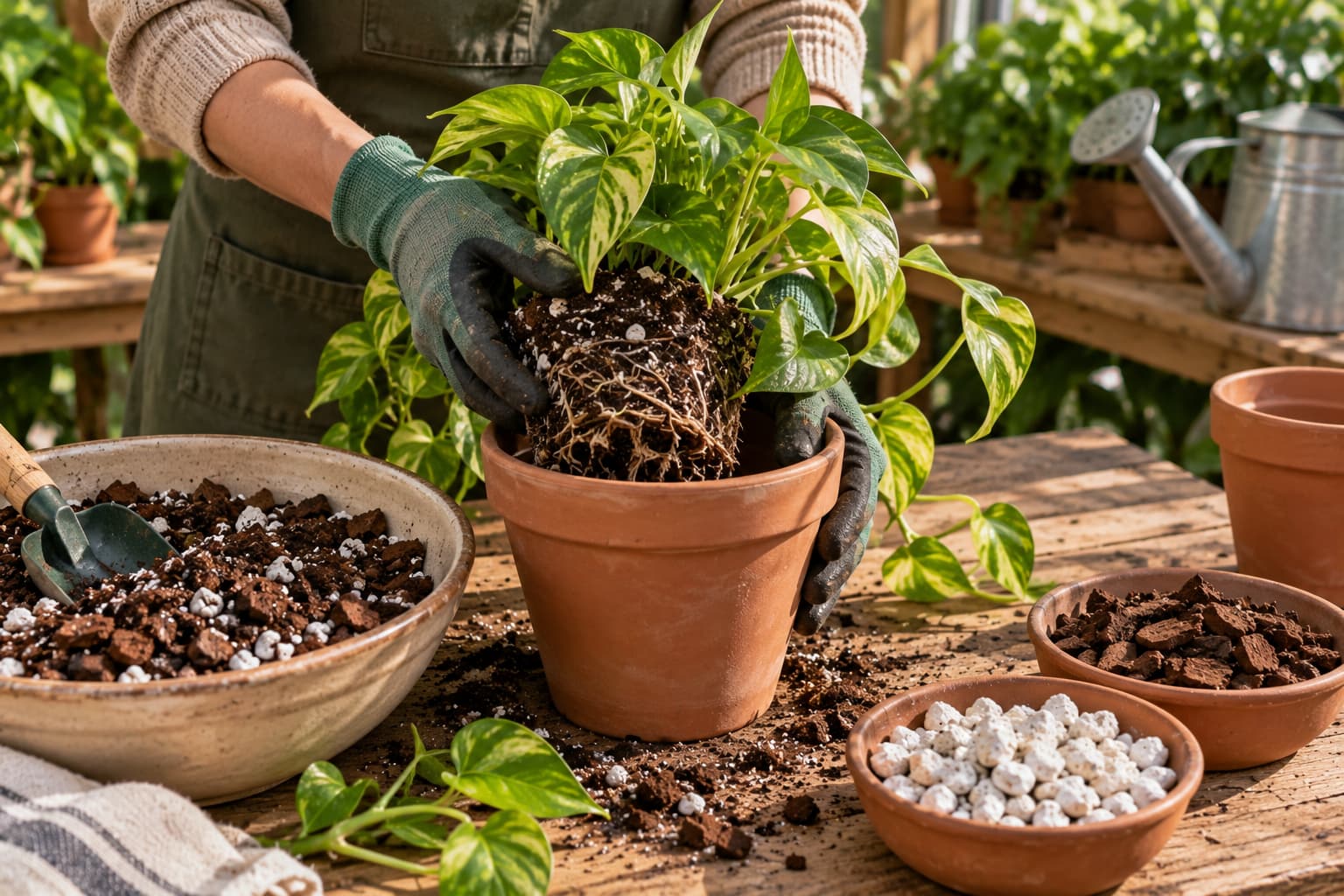
A good aroid mix is not about making water disappear as fast as possible. It is about balancing air, moisture, and structure around the roots. For Monstera, many climbing Philodendrons, and Golden Pothos, a simple 1:1:1 blend of potting mix, coarse perlite or pumice, and orchid bark is a useful starting point — then you adjust it to your home.
The 1-1-1 Aroid Mix at a Glance
| Ingredient | Starting ratio | Main job | What to look for |
|---|---|---|---|
| Quality potting mix | 1 part | Holds useful moisture and provides the fine fraction around roots | A clean container mix that rewets evenly and does not collapse into a dense mass |
| Coarse perlite or pumice | 1 part | Adds air-filled pore space and reduces compaction | Coarse, low-dust material rather than mostly fines |
| Orchid bark | 1 part | Adds large, irregular pores and long-lasting structure | Clean medium-grade bark with a mix of natural chunk sizes |
Drag the bar below or swipe horizontally to view the remaining columns.
The ratio is by volume, not weight. A one-cup scoop, one-quart container, or small bucket all work. The actual unit does not matter as long as the same unit is used for all three ingredients.
Why Monstera, Philodendron & Pothos Benefit From More Air Around the Roots
It is easy to say “aroids need chunky soil,” but the botanical picture is more nuanced. The Araceae family contains many growth habits. Monstera species are climbing hemiepiphytes, and many Philodendron species are climbing hemiepiphytes or epiphytes, while other aroids are terrestrial. So this recipe is aimed mainly at the common climbing houseplant aroids people grow indoors — not every member of the family.
For these plants, the practical goal is a root zone that contains both water and oxygen. Penn State Extension recommends a well-draining soilless mix for Monstera and specifically notes that bark or perlite can be added to increase drainage and structure. Perlite and bark are also recognized propagation-media components because they provide strong aeration and drainage.
- Air space: coarse particles keep the medium from settling into one dense block.
- Even moisture: the finer potting-mix fraction stores water between irrigations.
- Structure: bark helps preserve larger pores as the mix ages.
- More forgiving watering: an airy mix gives you a wider margin than a compact, slow-drying medium — but it does not make overwatering impossible.
What Each Ingredient Actually Does
1. Potting Mix: The Moisture-Holding Base
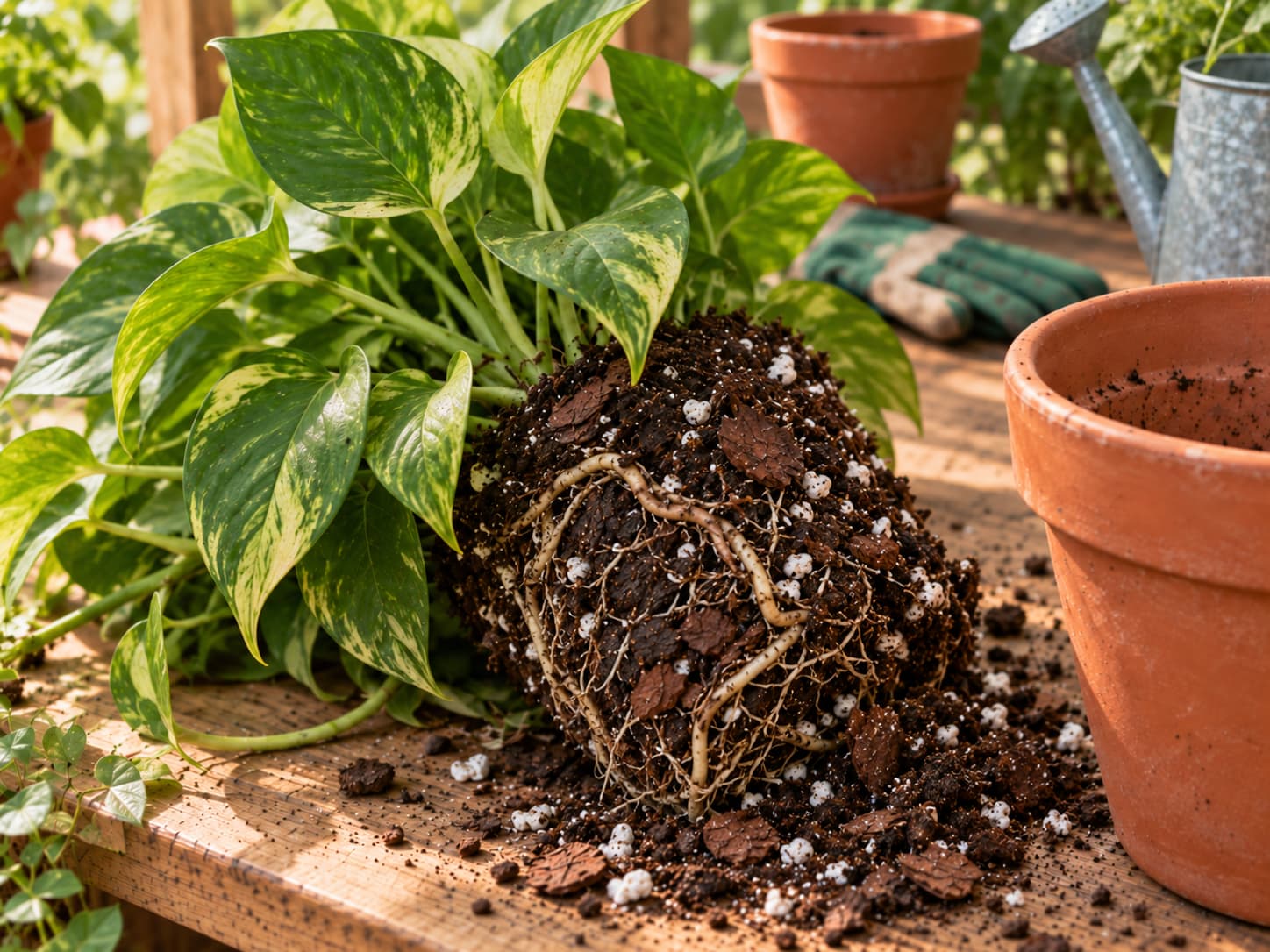
The base fraction keeps the recipe from becoming so coarse that it dries immediately. A quality container mix may contain peat, coir, bark fines, perlite, limestone, wetting agents, and fertilizer depending on the product.
FoxFarm Ocean Forest is one workable base. FoxFarm currently lists aged forest products, sphagnum peat moss, perlite, sandy loam, fertilizer, earthworm castings, bat guano, fish emulsion, and crab meal in the product description and label information. The old version of this article said it “feeds for about 30 days.” That fixed timeline is not supported by FoxFarm, so the refreshed article does not use it.
PRO-MIX HP can also serve as a high-porosity base, but it should not be described as fertilizer-free. Premier Tech states that PRO-MIX HP contains a starter fertilizer charge and recommends beginning a fertilizer program roughly 7–10 days after planting, adjusted for the crop and water quality.
2. Perlite or Pumice: The Mineral Aeration Fraction
Perlite is a lightweight expanded volcanic material commonly used in potting media. Its practical value here is simple: it creates additional pore space and resists the compaction you would get from using only fine organic material. Penn State Extension lists perlite as a material that provides good drainage and aeration.
Coarse perlite is inexpensive and easy to find, but it can be dusty. Dampen it before mixing and avoid breathing airborne dust; follow the product label or safety data sheet for handling advice. You do not need to create a cloud of dry perlite dust to make a good houseplant mix.
Pumice can fill the same structural role. It is heavier, stays in place more readily, and can help stabilize tall or top-heavy pots. It is not automatically “better” — use whichever coarse mineral amendment is practical and available to you.
3. Orchid Bark: The Chunky Structural Fraction
Orchid bark creates larger, irregular spaces than fine potting mix alone. Bark also changes gradually as it ages, so the physical structure of any bark-containing mix will evolve over time. That is one reason to judge an older pot by how it behaves now rather than repotting strictly because a calendar says 12 or 18 months have passed.
Look for a bark product dominated by useful chunks rather than a bag full of fine dust. “Orchid mix” is not always bark-only; read the ingredient list before you buy.
How to Make the Mix in 3 Steps
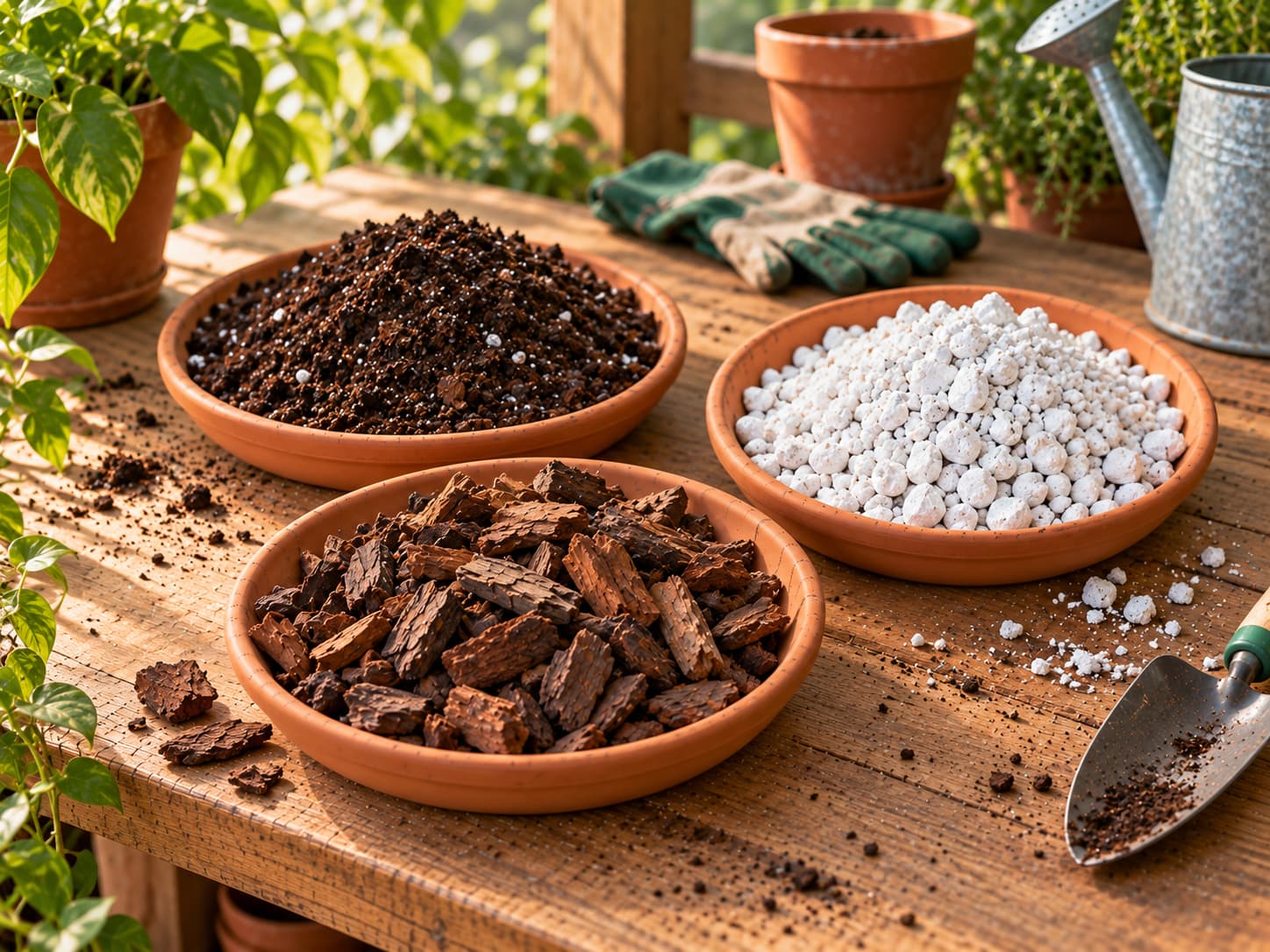
Step 1: Measure Equal Parts by Volume
For a small batch, use 4 cups of each ingredient. For a larger batch, use one bucket of each. The measuring container can be any size; consistency is what matters.
Step 2: Combine Until the Texture Is Even
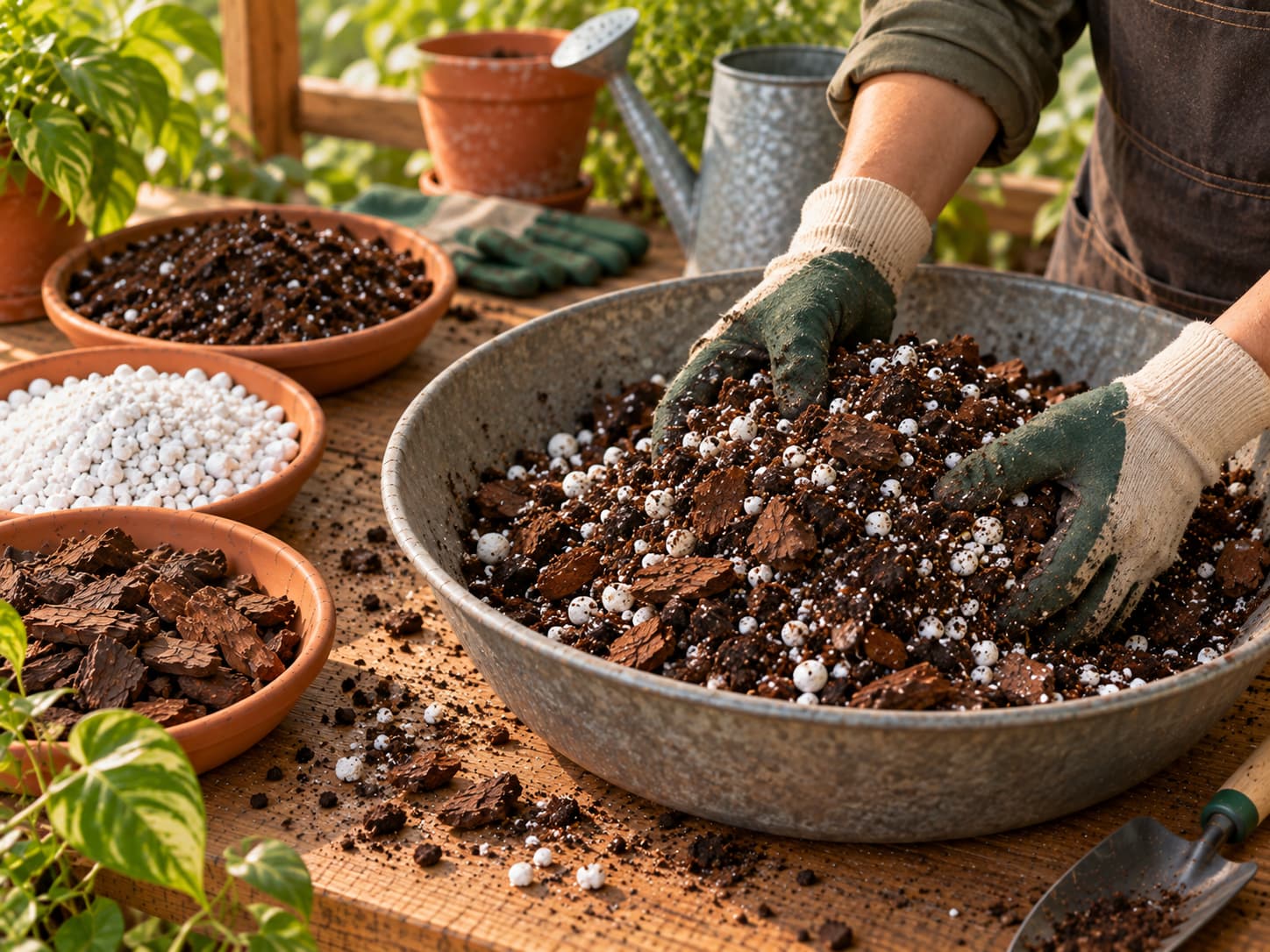
Mix until bark, mineral particles, and fine potting mix are distributed throughout the batch. You should not have one bark-heavy corner and one peat-heavy corner. Wear gloves if you prefer, and dampen dusty ingredients before handling.
Step 3: Pre-Moisten Before Repotting
Add water gradually and turn the mix until it feels evenly damp rather than dripping wet. Penn State Extension specifically recommends moistening potting media before repotting so it absorbs water evenly.
What the Greenmuse 10-Week Home Trial Suggests
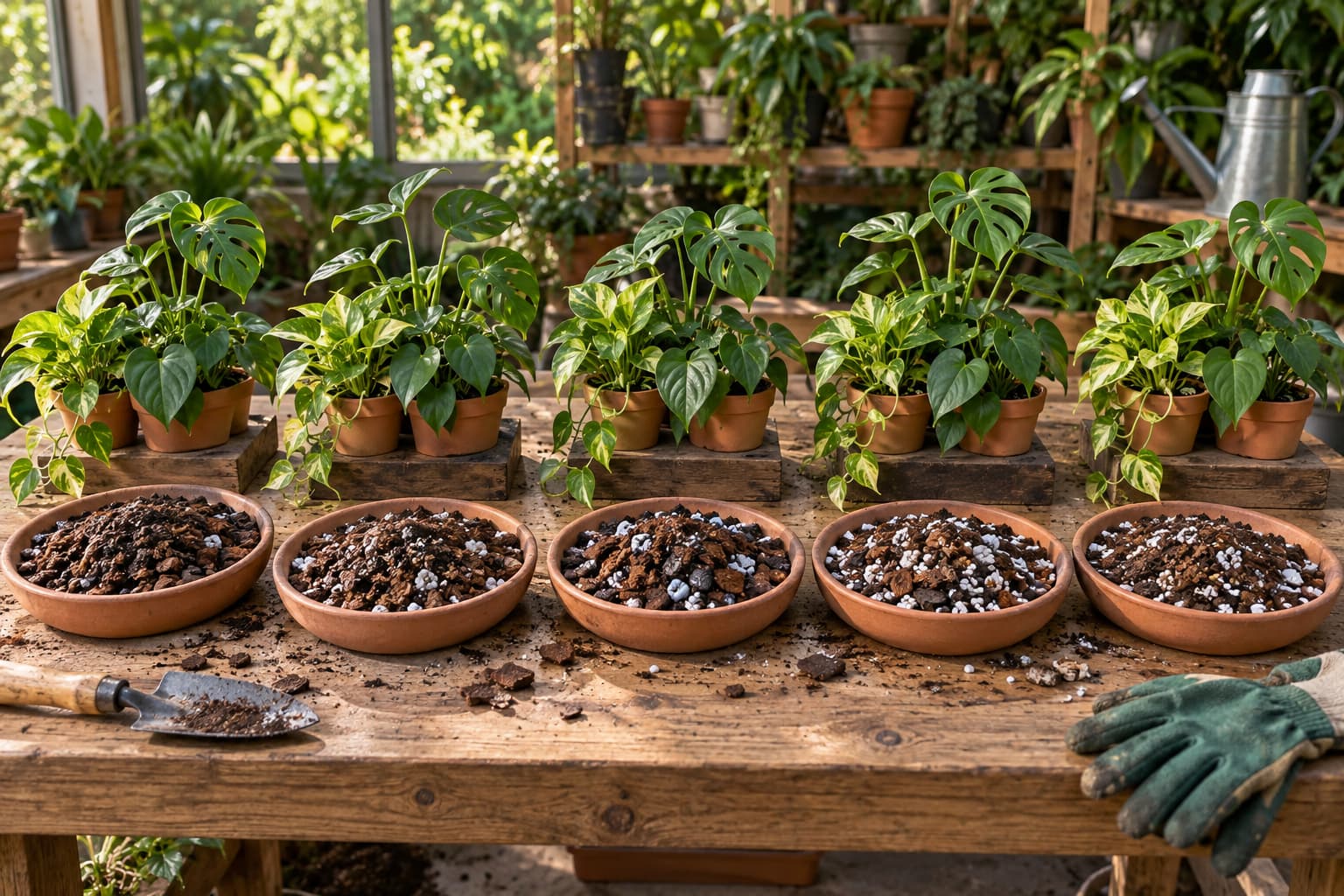
The source notes for this article describe a small Greenmuse home comparison using five mix ratios across 16 aroids over 10 weeks. Plants were similar-sized cuttings or recently rooted propagations. This is useful observational evidence, but it is not a replicated scientific experiment, and the numbers should not be treated as a universal ranking for every home.
| Mix | New leaves recorded | Root score in notes | Gnats observed? | Home-trial result |
|---|---|---|---|---|
| 1 soil / 1 perlite / 1 bark | 14 | 9/10 | None recorded | Strongest result in this trial |
| 1 soil / 1 perlite / 0.5 bark | 11 | 8/10 | Minimal | Good |
| 2 soil / 1 perlite / 1 bark | 9 | 6/10 | Light | Fair |
| 1 soil / 0 perlite / 1 bark | 8 | 6/10 | Light | Fair |
| Straight potting mix | 6 | 4/10 | Moderate | Weakest result in this trial |
Drag the bar below or swipe horizontally to view the remaining columns.
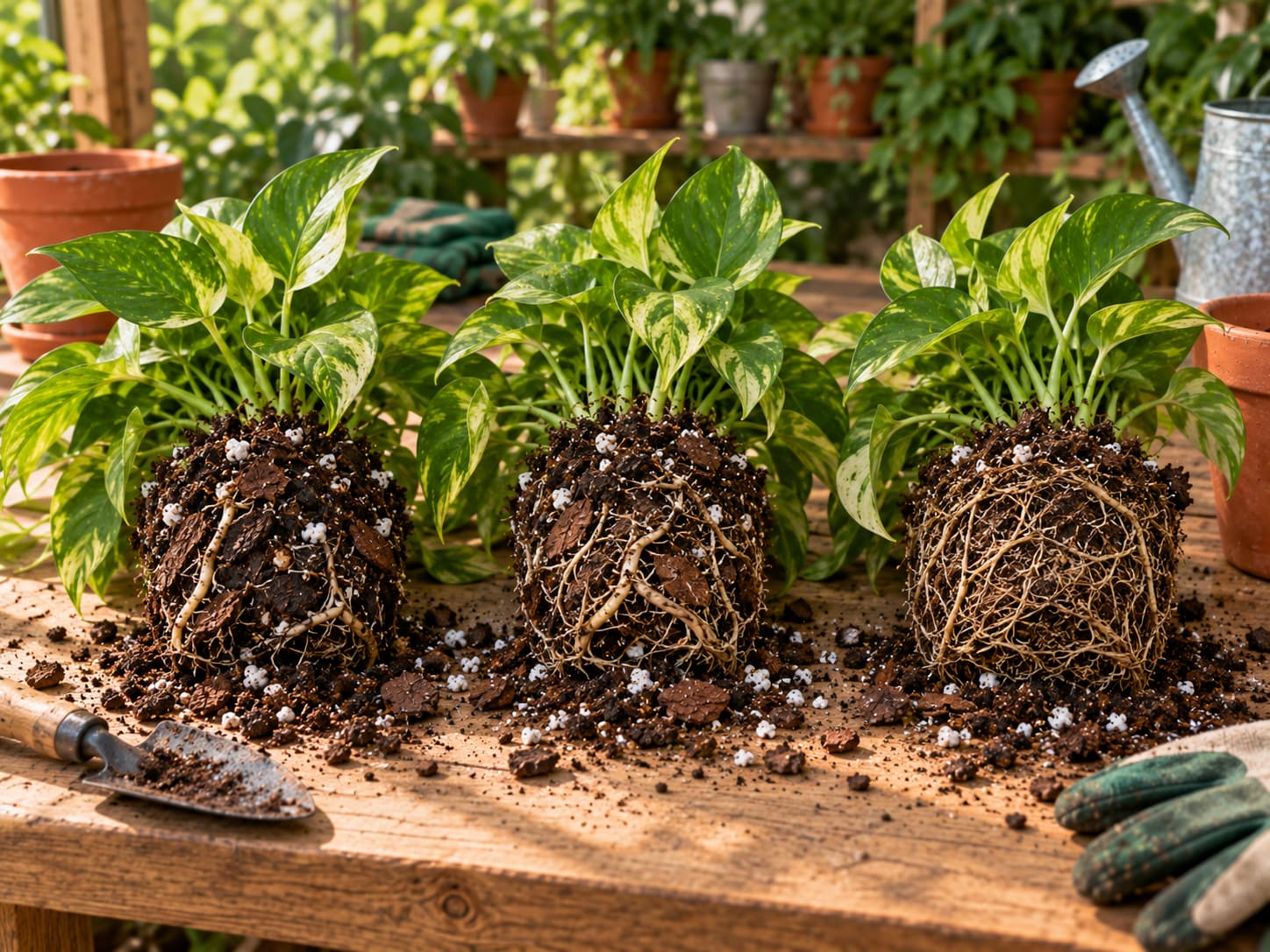
In these home notes, the 1:1:1 group produced the strongest combination of visible growth and root condition. That does not prove the ratio is universally superior. With only 16 plants and several different mixes, starting root mass, plant genetics, watering, and pot-to-pot variation can influence the result.
The fungus-gnat observations also need careful interpretation. UC IPM explains that gnats thrive in moist organic media and are favored by overwatering, poor drainage, and prolonged wet surfaces. A chunky mix can help the surface dry sooner, but no 1:1:1 recipe is “gnat-proof.”
Perlite vs Pumice: Which Should You Use?
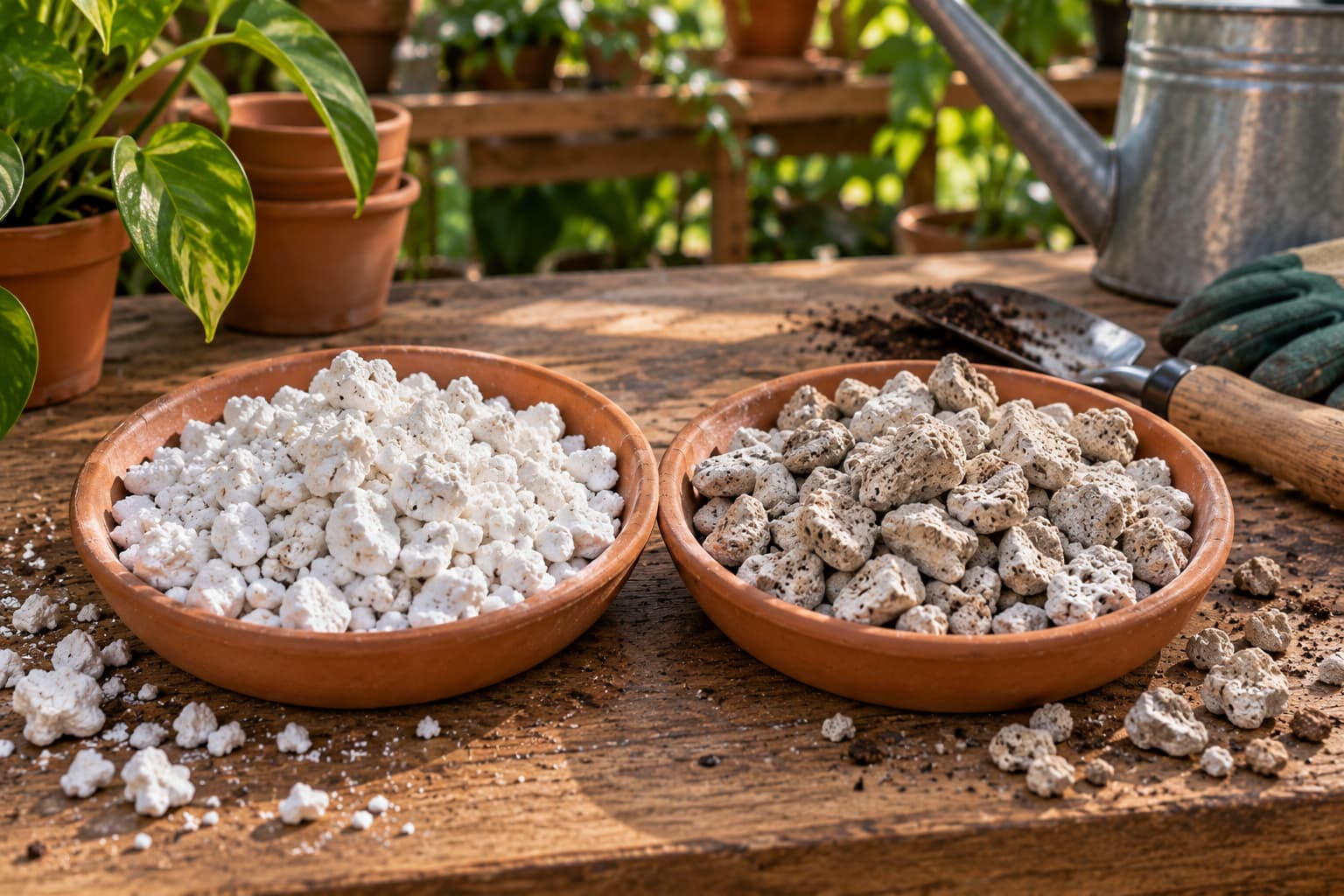
| Factor | Perlite | Pumice |
|---|---|---|
| Weight | Very light | Heavier |
| Availability | Usually easy to find | More regional / specialty dependent |
| Movement in pots | Can migrate toward the surface | Tends to stay in place |
| Structural role | Adds aeration and pore space | Adds aeration and pore space |
| Best reason to choose it | Affordable, lightweight, widely available | Extra weight and a more stable mineral fraction |
Drag the bar below or swipe horizontally to view the remaining columns.
For most indoor growers, coarse perlite is perfectly workable. Pumice becomes especially useful when you want a heavier potting mix for tall Monstera or when locally available pumice costs about the same as good coarse perlite.
How to Adjust 1-1-1 Without Turning It Into a Complicated Formula
The old draft used very precise “add 10% for this plant” rules. That looks scientific, but home growing conditions vary too much for those percentages to be universal. A simpler approach is to adjust according to how the pot behaves.
| What you observe | What it may mean | Adjustment for the next batch |
|---|---|---|
| Pot remains wet much longer than expected | Too much fine material for the light, pot, or root mass | Increase coarse bark/mineral aeration or use a smaller pot |
| Mix dries so quickly the plant repeatedly wilts | Too little moisture-holding fraction for your conditions | Increase the base fraction slightly |
| Mix collapses and becomes finer over time | Organic structure is aging | Refresh when the physical behavior has clearly changed |
| Tall plant tips easily | Mix/container combination is too light | Use pumice, a heavier pot, or both |
Drag the bar below or swipe horizontally to view the remaining columns.
Monstera deliciosa
Start with 1:1:1. Penn State recommends a well-draining, organic-rich soilless mix and specifically mentions bark and perlite as useful additions. Large plants may benefit from pumice or a heavier container for stability.
Philodendron
Many climbing Philodendrons respond well to a similar airy starting mix. Let your dry-down time and root condition determine whether you need a little more moisture retention or aeration.
Golden Pothos / Epipremnum aureum
Pothos is adaptable, so 1:1:1 is often more aerated than strictly necessary — but it remains a useful, forgiving indoor mix. If your home is very bright, warm, and dry, a slightly higher base fraction may reduce how often you need to water.
Anthurium, ZZ Plant & Other Aroids
Do not assume every member of Araceae wants exactly the same recipe. Anthurium species vary widely, and ZZ Plant has a different terrestrial, rhizomatous growth habit. Treat 1:1:1 as a starting concept — not a family-wide prescription.
When Should You Repot Into a Chunkier Mix?
You do not need to disturb a healthy plant simply because you discovered a new recipe. Repot when there is a reason:
- The roots are in trouble. If you find soft, dark, decaying roots, remove compromised material with clean tools and correct the watering/root-zone problem.
- The medium stays saturated for an unreasonably long time in your conditions. First check pot size, drainage holes, light, and watering frequency; the medium is only one part of the system.
- The plant is truly root-bound or has outgrown its container. Roots circling heavily or emerging through drainage holes can be signs that a larger pot is appropriate.
- The old medium has physically broken down. If water movement and dry-down have changed because the mix has collapsed, fresh media can restore structure.
How to Tell Whether the Mix Is Working
Skip rigid targets like “the pot must dry in exactly five days.” Instead, look for a pattern of healthy growth and a root zone that behaves predictably.
- Roots are firm rather than soft or foul-smelling.
- The medium accepts water evenly instead of immediately channeling all water down the sides.
- The pot does not remain continuously saturated under your normal conditions.
- New growth is consistent with the season, light, and maturity of the plant.
- You can water based on the plant and moisture level rather than constantly trying to rescue it from extremes.
Fungus gnats are not a pass/fail test for a potting mix. They can occur in almost any moist organic medium. UC IPM recommends reducing excess moisture, providing good drainage, allowing the surface to dry when the plant tolerates it, and using yellow sticky traps to monitor adults.
Frequently Asked Questions
Is 1-1-1 the best soil mix for every aroid?
No. It is a useful starting recipe for common climbing houseplant aroids such as Monstera, many Philodendrons, and Pothos. Araceae includes terrestrial, epiphytic, hemiepiphytic, and rhizomatous plants, so one ratio cannot be optimal for the entire family.
Can I use Miracle-Gro or another regular potting mix as the base?
Yes, provided the finished mix behaves appropriately in your conditions. The point of adding bark and coarse mineral aeration is to change the physical structure of the base. Do not assume a brand is automatically “too wet” or “gnat-free”; judge the finished medium and how you water it.
Do I need to rinse perlite?
You do not need to wash every particle, but dampening dusty perlite before handling is sensible. Avoid breathing fine airborne dust and follow the handling instructions on the product label or safety data sheet.
Should I use perlite or pumice?
Either can work. Perlite is light and widely available; pumice is heavier and tends to stay in place. Choose based on local availability, pot stability, and price rather than assuming one material is universally superior.
How long does a chunky aroid mix last?
There is no exact universal expiration date. Organic particles change and decompose over time, and repeated watering can alter the structure. Repot or refresh when the mix has clearly become compacted, contaminated, difficult to rewet, or otherwise behaves differently from when it was fresh.
Does a chunky mix prevent fungus gnats?
No. Fungus gnats are favored by prolonged moisture and organic material. A better-aerated mix may help the surface dry sooner, but moisture management, sanitation, covered media storage, and monitoring remain important.
Should I fertilize immediately after repotting?
It depends on the base medium and the condition of the roots. Some mixes already contain fertilizer. For example, PRO-MIX HP includes a starter charge and Premier Tech recommends a regular fertilizer program around 7–10 days after planting. Follow the product label and avoid applying an unnecessary heavy dose simply because the plant was repotted.
Related Greenmuse Guides
- FoxFarm vs Miracle-Gro vs PRO-MIX HP: Potting Mix Comparison
- Why Your Monstera Leaves Are Turning Yellow
- Philodendron Care Indoors
- Containers vs In-Ground Planting
- Houseplant Heat Stress: Signs & Fixes
- Succulent Soil Mix That Actually Works
Sources & Product References
- Royal Botanic Gardens, Kew — Monstera genus and hemiepiphytic habit
- Royal Botanic Gardens, Kew — Philodendron growth habits
- Penn State Extension — Monstera as a Houseplant
- Penn State Extension — Repotting Houseplants
- Penn State Extension — Perlite and bark as aerated media components
- University of California IPM — Fungus Gnats
- FoxFarm — Ocean Forest Potting Soil
- Premier Tech — PRO-MIX HP