Evening Garden Plants: 5 Picks That Shine at Sunset
Evening garden plants do not all have to open at night. Some earn their place through fragrance, pale flowers, strong silhouettes, or a way of catching the last light. The goal is a garden that feels worth walking through after the heat and noise of the day begin to fade.
Quick Answer
For an evening garden, combine one strongly fragrant plant, one pale or reflective flower, and one structural plant that still reads clearly at dusk. Then keep pathway lighting low and targeted. Tuberose, evening primrose, true jasmine, agapanthus, and night-blooming jasmine can all contribute, but their climate needs and safety profiles are very different.
Why Evening Gardens Feel Different
As the sun lowers, harsh contrast softens and fragrance can become more noticeable. For many gardeners, that makes dusk a useful time to notice details that disappear during the brighter part of the day.
However, an evening garden is not the same thing as a strictly night-blooming garden. Some of the best sunset plants, including agapanthus and true jasmine, are valuable because of color, form, or scent rather than because their flowers open only after dark.
5 Evening Garden Plants to Consider
| Plant | Evening value | Best use | Cold-climate strategy | Important note |
|---|---|---|---|---|
| Tuberose Agave amica | Strong fragrance and white flower spikes | Containers, seating areas | Overwinter frost-free | Harmful if eaten by pets; sap may irritate skin |
| Night-blooming jasmine Cestrum nocturnum | Very strong fragrance after dusk | Large warm-climate spaces | Container culture where appropriate | Toxic if ingested; invasive in some warm regions |
| Evening primrose Oenothera biennis | Yellow flowers opening toward evening | Naturalistic beds | Often grown as a hardy biennial | Can self-seed freely |
| Common jasmine Jasminum officinale | Fragrance and vertical form | Trellis, arch, wall | Hardiness varies by species | Do not confuse true jasmine with Cestrum |
| Agapanthus | Strong spherical silhouette and blue or white flowers | Path edges, containers | Protect tender types from frost | Not a night-opening flower |
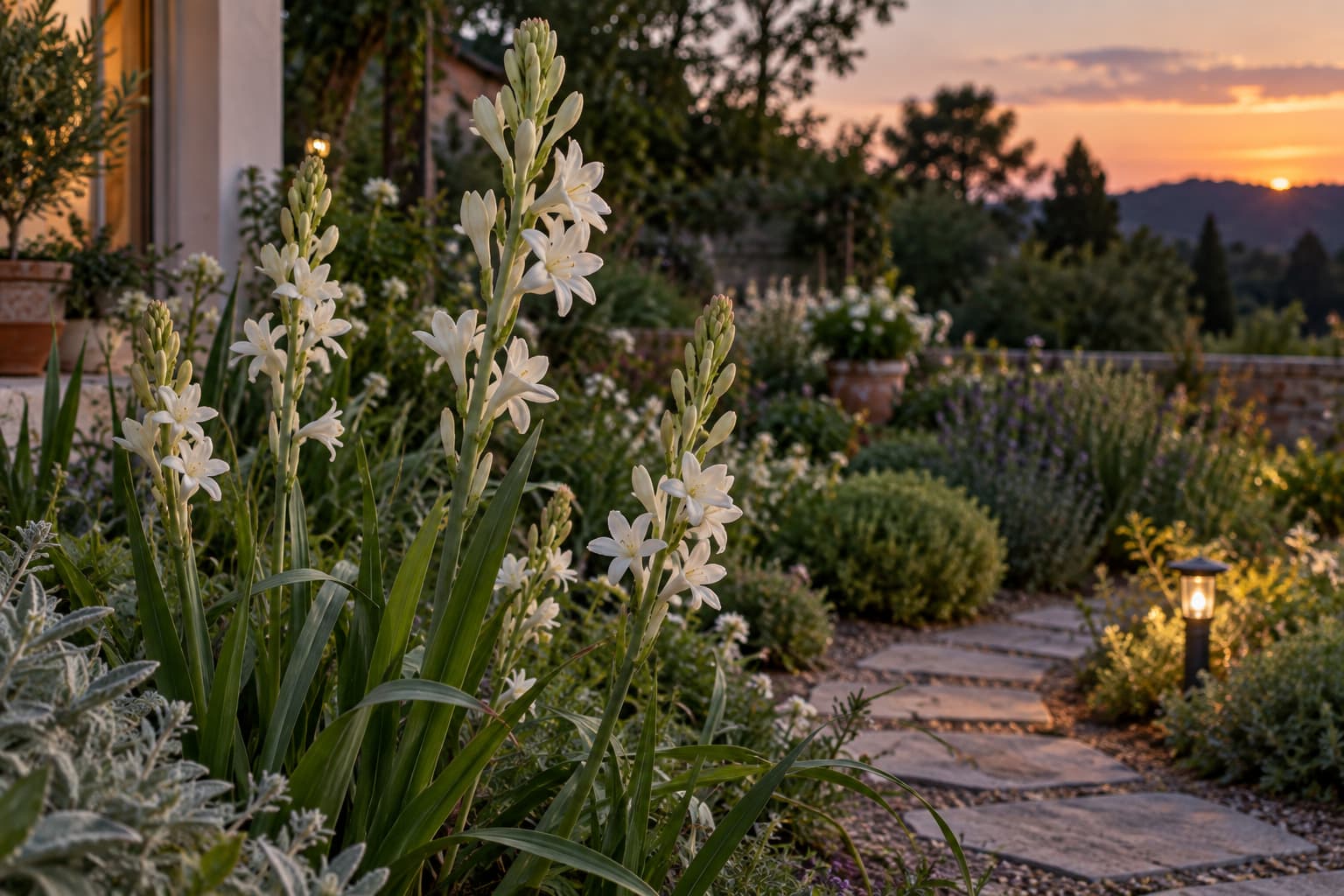
1. Tuberose (Agave amica)
Tuberose is a strong choice when fragrance is the priority. Its upright spikes of waxy white flowers work especially well near a patio or along a route you use in the evening. For best growth, give it full sun and well-drained soil.
In colder climates, container growing makes seasonal protection easier. Tuberose is tender and benefits from frost-free overwintering.
2. Night-Blooming Jasmine (Cestrum nocturnum)
Night-blooming jasmine can perfume a large garden after dusk, but its strong scent, toxicity, and invasive potential make placement especially important. Importantly, it is not a true jasmine and it is a woody shrub rather than a climbing Jasminum.
If you want a larger fragrant shrub for an evening garden, night-blooming jasmine is worth considering only after checking local invasive status and household safety. Our dedicated guide covers light, watering, pruning, winter care, toxicity, fragrance, and container growing.
Safety comes before scent
Cestrum should be treated as toxic if ingested. Therefore, households with children or chewing pets should choose placement carefully or use a different fragrant plant.
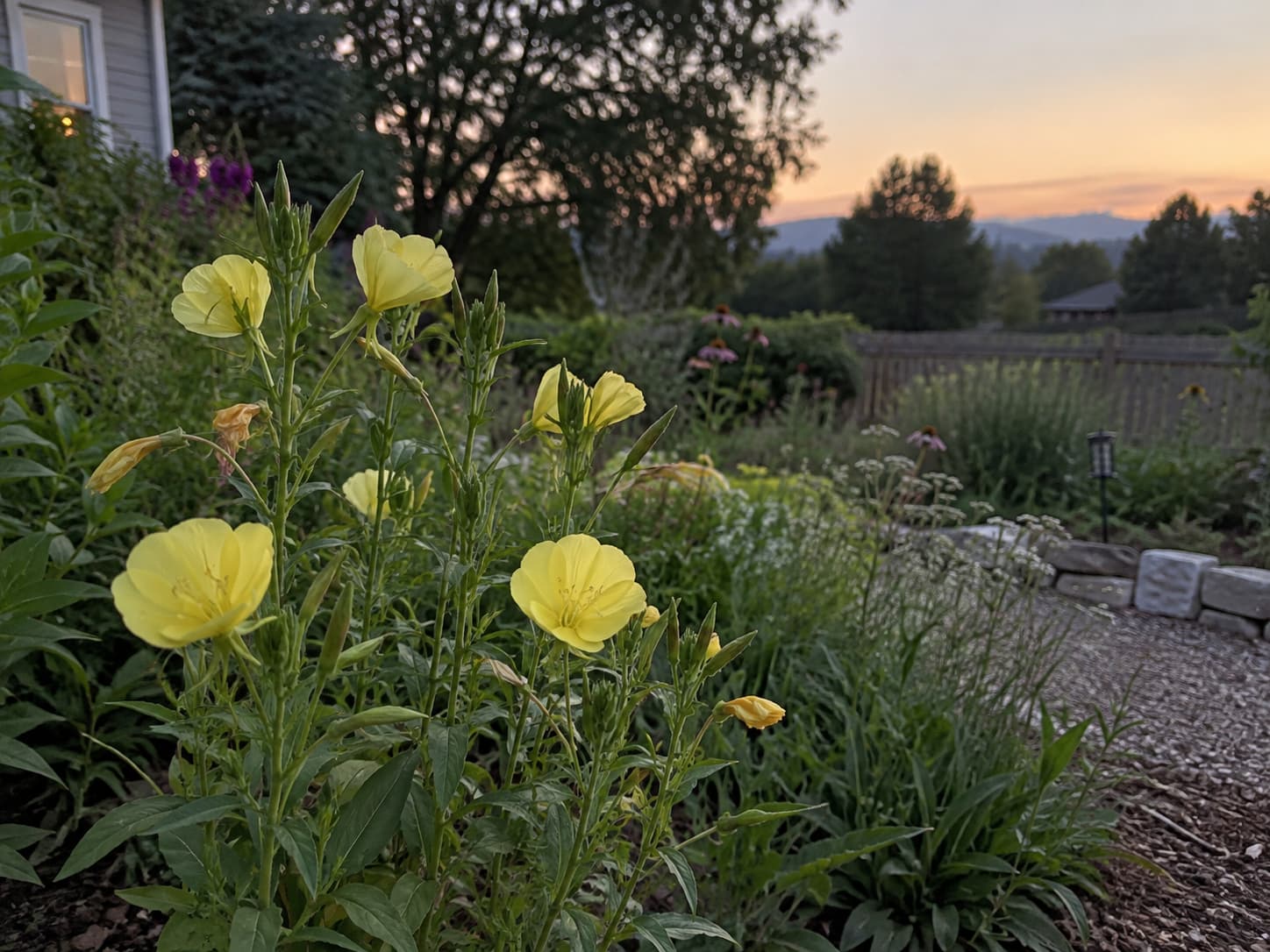
3. Evening Primrose (Oenothera biennis)
Common evening primrose fits a looser, more naturalistic garden. Its yellow flowers open toward evening and can attract night-flying insects. However, it may self-seed readily, so it is usually easier to manage where a little movement around the bed is welcome.
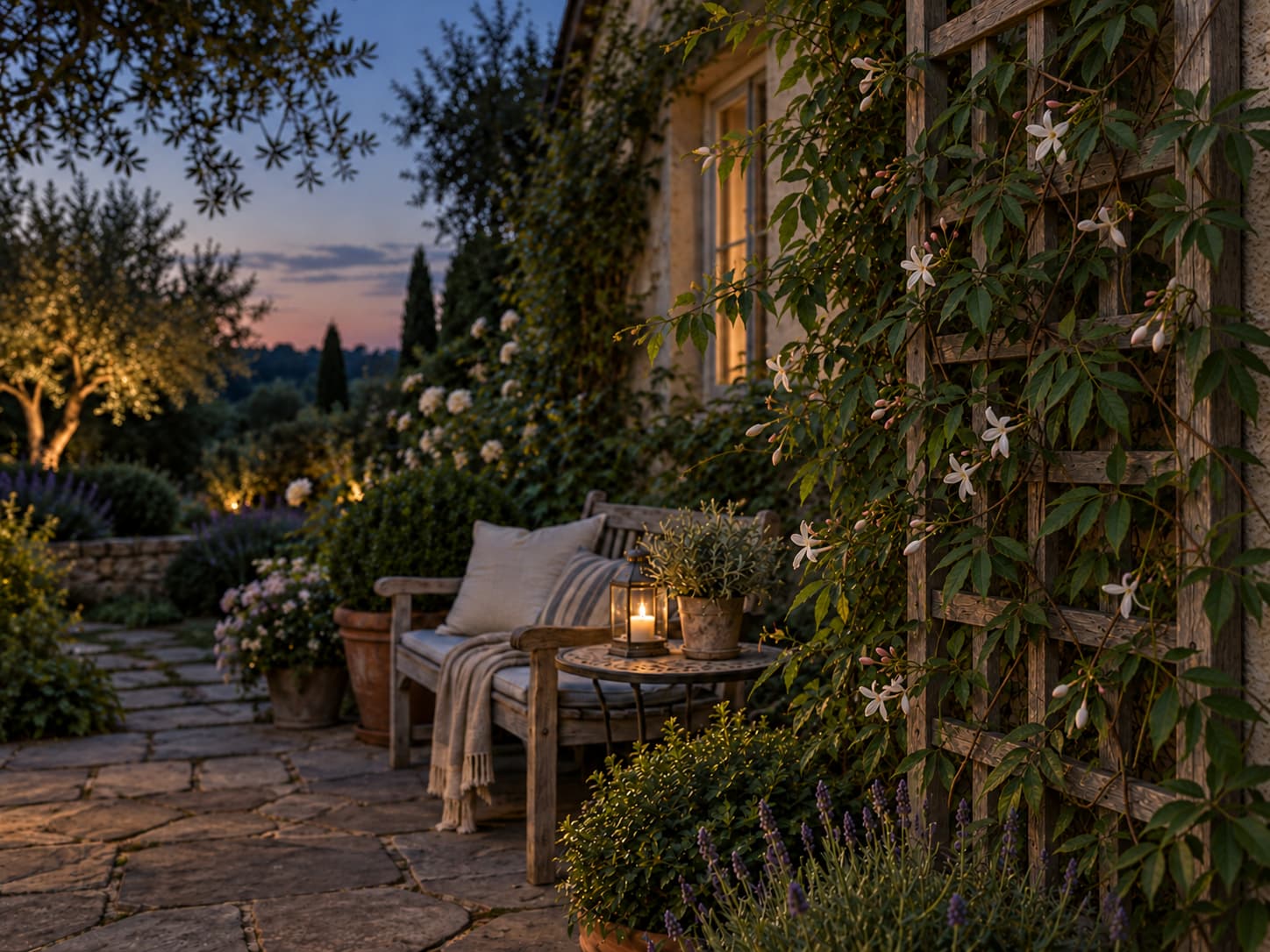
4. True Jasmine (Jasminum officinale)
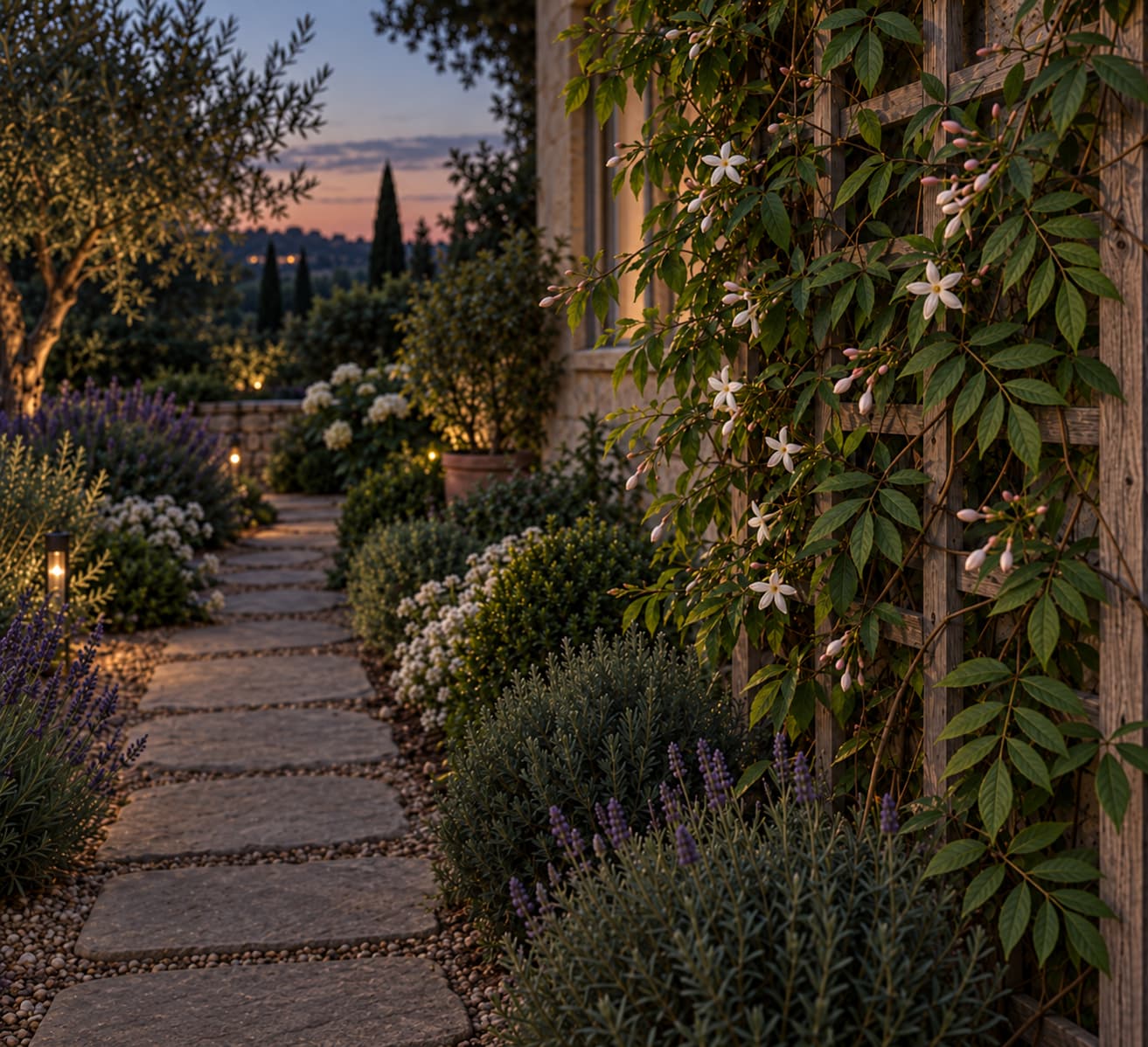
Common jasmine is a vigorous fragrant climber that can cover a trellis, arch, or warm wall. By contrast, this is a true Jasminum, unlike night-blooming jasmine. Jasmine species vary in hardiness, so check the exact species before assuming a plant can overwinter outdoors.
5. Agapanthus
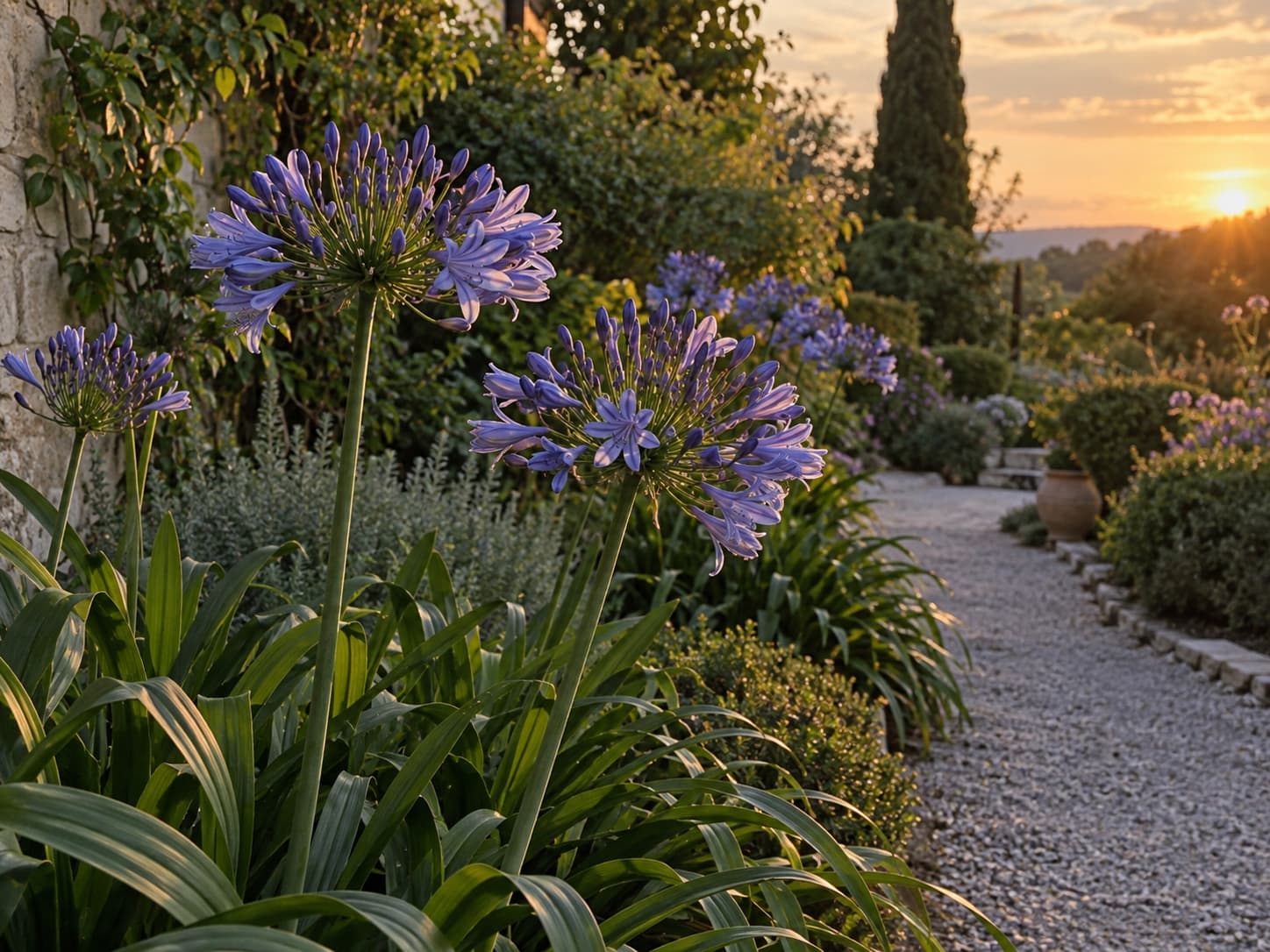
Agapanthus does not open specifically at night, so it belongs in this guide for a different reason: its large rounded flowerheads and strappy foliage hold their shape well in low-angle evening light. In addition, blue, purple, and white cultivars can create strong contrast near paths and seating.
Agapanthus generally performs best in full sun and well-drained soil. As a result, container culture is useful where winter protection is needed for tender types.
Greenmuse 3-Step Evening Bloom Walk
1. Start with a five-minute route
Choose a path you already use: from the back door to a bench, around a patio, or between two containers. Then, build the planting around that short route rather than trying to redesign the whole garden at once.
2. Put fragrance where it can drift
Strong scent is often more comfortable when it comes from a little distance. For example, keep very fragrant shrubs away from an open bedroom window or tiny enclosed patio, while lighter fragrance can sit closer to the seating area.
3. Notice one thing instead of doing ten things
An evening garden does not need to become another task list. Instead, use the walk to notice one flower opening, one scent becoming stronger, or one change in the light. That small routine fits Greenmuse better than treating the garden as a performance that must always look perfect.
Lighting the Path Without Lighting the Whole Garden
Bright decorative lighting can flatten the dusk effect and disturb night-flying insects. For that reason, use the lowest practical brightness, aim fixtures downward, and light only the places where a person needs to walk safely.
In practice, that means fewer fixtures, less spill, and timers or motion controls instead of keeping an entire flower bed illuminated all night.
Greenmuse Path-Light Rule
- Light the step, not the flower.
- Keep fixtures low and shielded.
- Use warm light where possible.
- Leave part of the planting genuinely dark.
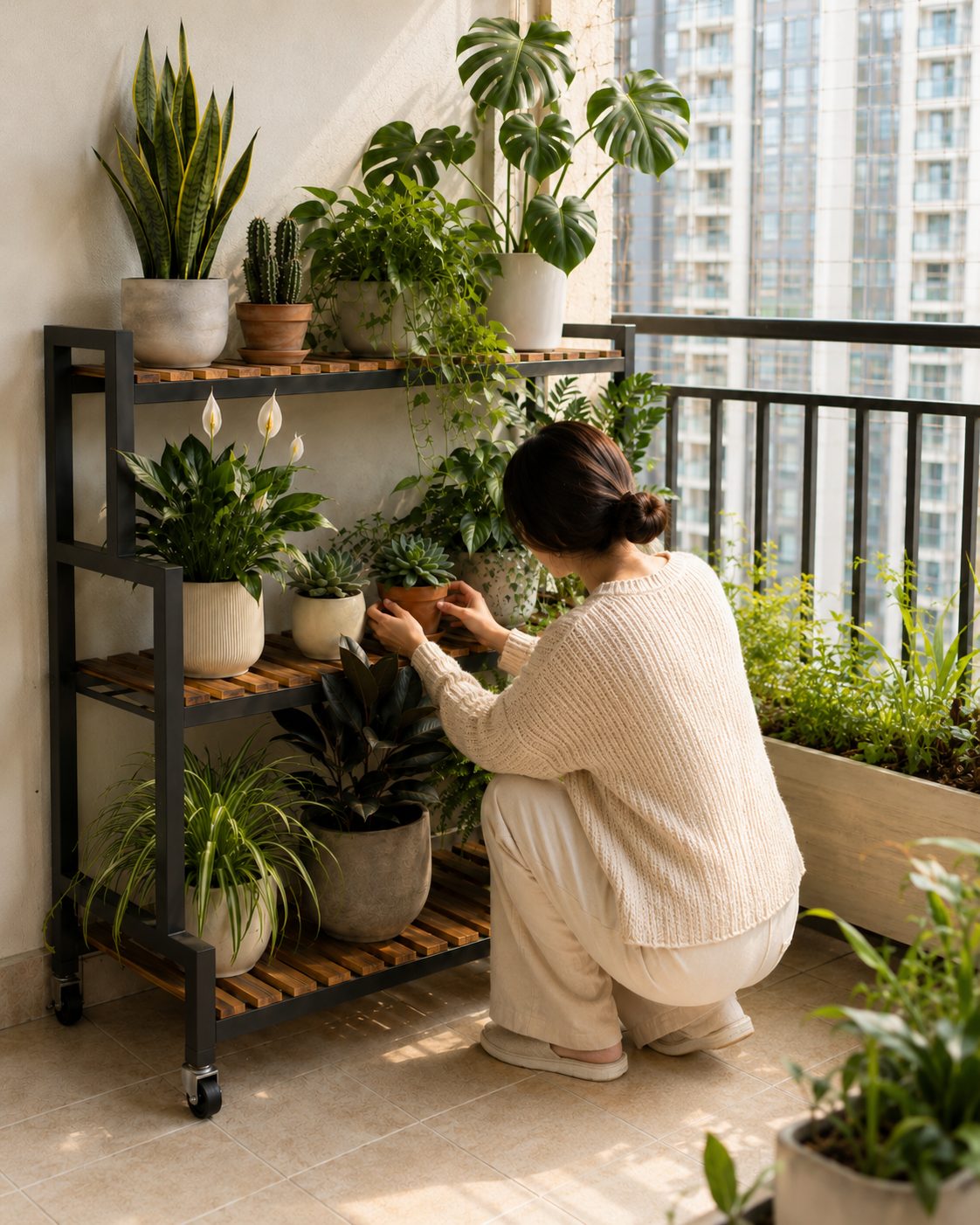
A Small Evening Garden for a Patio or Balcony
You can create the same effect with three containers. First, use one upright or climbing plant for height. Next, add one fragrant plant where the scent will not become overwhelming. Finally, use a lower pot with pale flowers or silver foliage to catch the last light.
For a more complete layout, see our guide to creating a night-blooming garden from scratch.
A Calmer Way to End the Day
The original version of this article called the garden a “therapy walk.” The idea is worth keeping, but the claim should stay modest. In other words, an evening walk can be a calming personal routine without being presented as medical treatment.
Spend five minutes outside, notice what has changed since the previous evening, and stop there. Sometimes, gardening feels restorative precisely because nothing else is required.
Frequently Asked Questions
1. Which evening garden plant has the strongest fragrance?
Tuberose and night-blooming jasmine are both known for strong fragrance, but intensity varies with weather and individual sensitivity. Night-blooming jasmine can be especially powerful, so placement deserves extra care.
2. Is night-blooming jasmine the same as true jasmine?
No. Night-blooming jasmine is Cestrum nocturnum, while true jasmines belong to the genus Jasminum. They differ in plant family, growth habit, care, and safety.
3. Can agapanthus be used in an evening garden?
Yes. It is not a night-opening flower, but its strong flower shape and blue, purple, or white color can remain visually useful around sunset. Choose a cultivar that fits your local winter conditions.
4. Should I use string lights along an evening garden path?
Only if they serve a real purpose and are kept restrained. Low, shielded, warm lighting aimed at steps or edges is usually better than bathing the whole garden in decorative light.
5. Can these plants grow in containers?
Many can. Tuberose, agapanthus, and some jasmines are commonly grown in containers. Night-blooming jasmine can also be container-grown where appropriate, but its mature size, toxicity, strong fragrance, and local invasive status still matter.
6. What is the easiest way to start an evening garden?
Start with one route and three plants: one vertical, one fragrant, and one lower plant for color or texture. Add only enough path lighting for safe movement, then observe how the space feels before adding more.
Evening Bloom Checklist
The original printable checklist is still available if you prefer to plan on paper.
Sources & Further Reading:
Which plant changes most after sunset in your garden? Share your climate zone and whether your evening garden is a border, patio, or balcony.