
A Greenmuse guide for real homes, real lawns, and real results.
Why Winter Prep Matters More Than You Think
If you’ve ever stepped onto your lawn in early spring and wondered why some patches wake up green while others stay dull and sluggish, the answer usually traces back to one season: winter.
Winter lawn care is not glamorous. There are no flowers, no lush summer blades, no instant gratification. But beneath the soil, your grass is making one of the most important transitions of its life cycle — storing energy, protecting its crown, reorganizing root structure, and preparing for the burst of growth that spring demands.
This guide blends practical, homeowner-friendly steps with the deeper horticultural insights many blogs skip. Whether you manage a small suburban yard or a compact patch behind your urban balcony, these steps will set your lawn up for a strong recovery next year.
1. Identify Your Grass Type
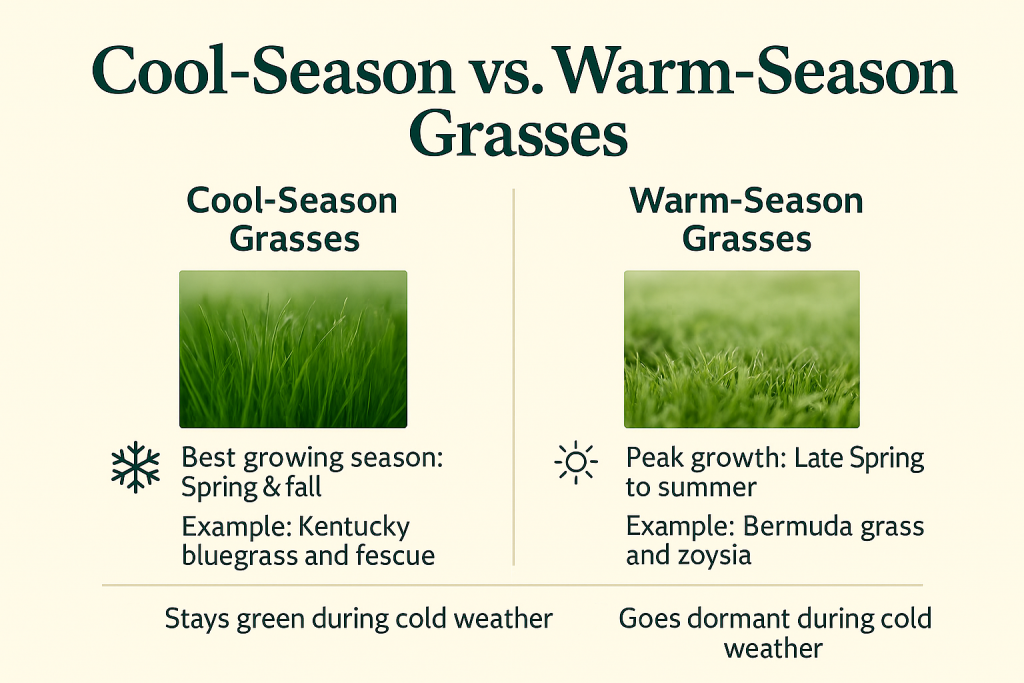
Before winter prep even begins, you must know which category your lawn belongs to:
Cold-Season Grasses
Kentucky bluegrass, tall fescue, perennial ryegrass
✔ Actively grow in fall
✔ Benefit greatly from late-season fertilizing
✔ Winter care = strengthening root reserves
Warm-Season Grasses
Bermuda, zoysia, St. Augustine
✔ Enter full dormancy in winter
✔ Sensitive to nitrogen before cold snaps
✔ Winter care = protect crowns & reduce stress
Why this matters:
Every recommendation—fertilizer, mowing height, watering, even raking—depends on your grass type.
2. Adjust Mowing Height: The Two Most Important Cuts of the Year
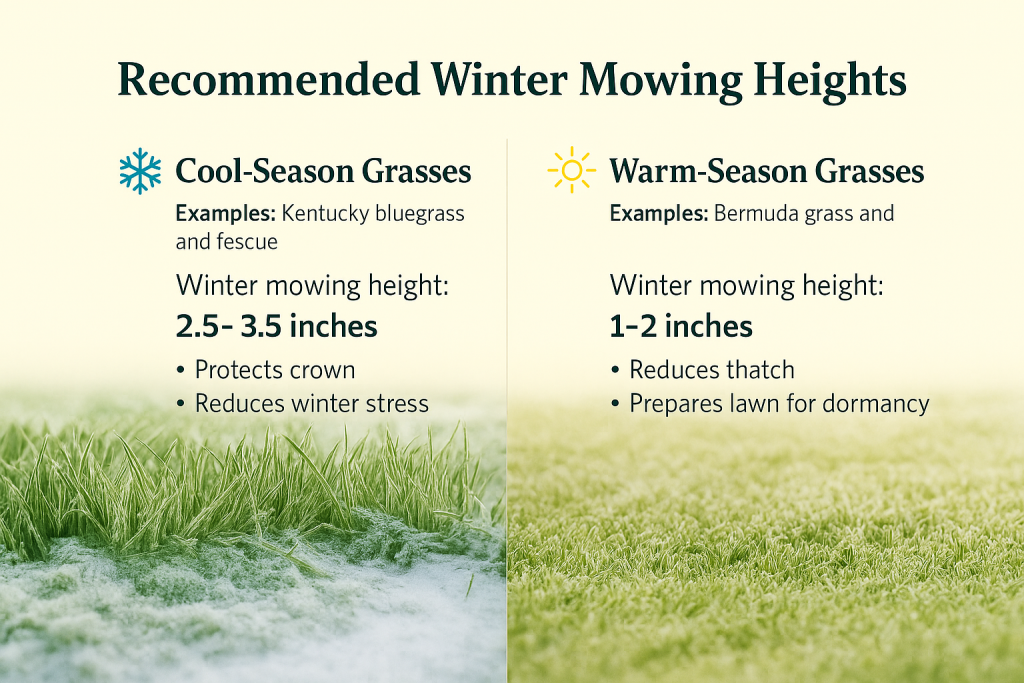
Early Fall Cut
Maintain a height of 3–3.5 inches. This lets the grass maximize photosynthesis and store more carbohydrates in its roots for winter survival.
Final Late Fall Cut
Lower the blade by 0.5 inch (do not scalp!).
This:
- Reduces snow mold risk
- Prevents matting under snow or heavy dew
- Allows better airflow around the crown
Why lawn experts avoid cutting too low:
If the crown is exposed, frost injury becomes much more likely.
3. Handle Leaves Properly: Mulch, Don't Remove
Thick leaf layers block light, trap moisture, and invite disease. But removing all leaves is unnecessary.
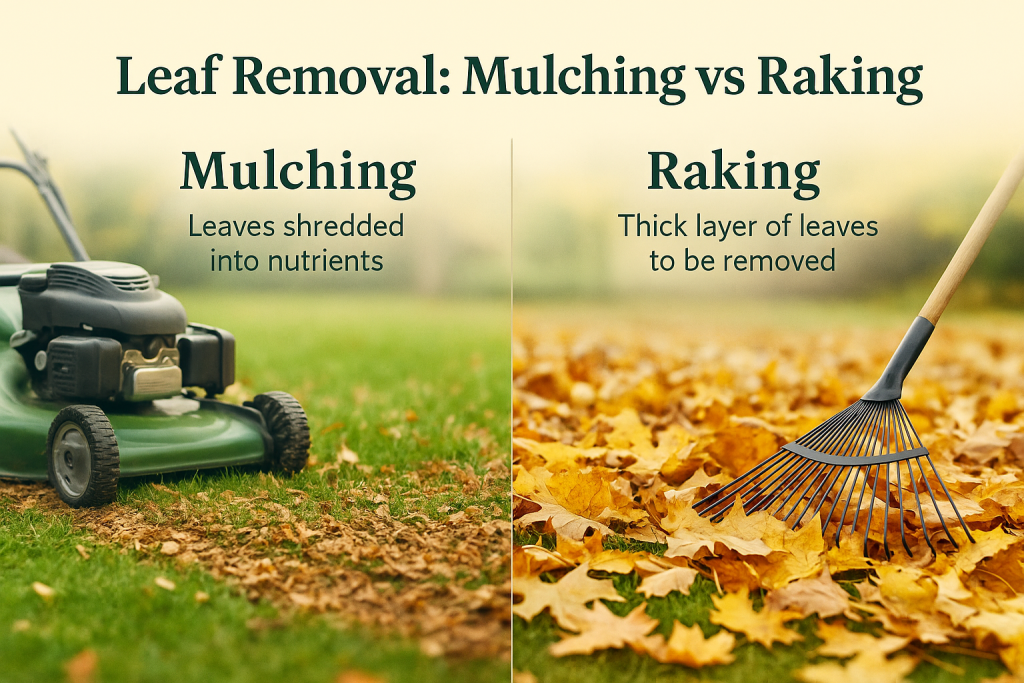
✔ Best practice: Mulching
Use a mulching mower to shred leaves into fine pieces.
These will:
- Feed soil microbes
- Become slow-release organic matter
- Improve soil structure by spring
Tip: If the leaf layer is over 1 inch thick, mulch in two passes.
4. Apply a Winterizing Fertilizer (Cold-Season Lawns Only)
Late-season fertilizing is one of the strongest predictors of a green, vigorous spring lawn.
Choose a formula high in potassium (K):
Examples: 10-0-20, 15-0-15
Potassium improves:
- Cold tolerance
- Stem and root cell structure
- Disease resistance
- Energy storage
For Warm-Season Lawns:
Avoid heavy nitrogen after temperatures drop below 21°C (70°F). Overstimulating late-season growth can injure the lawn just before dormancy.
Professional tip:
Run a soil test. If potassium is already high, winterizer fertilizer is unnecessary and may cause imbalance.
5. Aerate Compacted Areas Before the Soil Freezes
Core aeration relieves compaction that naturally builds over summer.
It improves:
- Root depth
- Spring green-up
- Water infiltration
- Oxygen flow
If your lawn has children, pets, or frequent foot traffic, aeration can make a dramatic difference by spring.
6. Prevent Winter Diseases — Especially Snow Mold
Snow mold occurs when:
- Grass is too long before snow
- Thick leaves mat down
- Moisture stays trapped for weeks
Prevention:
✔ Proper late-fall mowing
✔ Good leaf management
✔ Fungicide treatment (only in heavy-snow regions)
If you’ve ever found white or pink cotton-like patches in spring, this step is for you.
7. Water Before the Freeze — Yes, Really
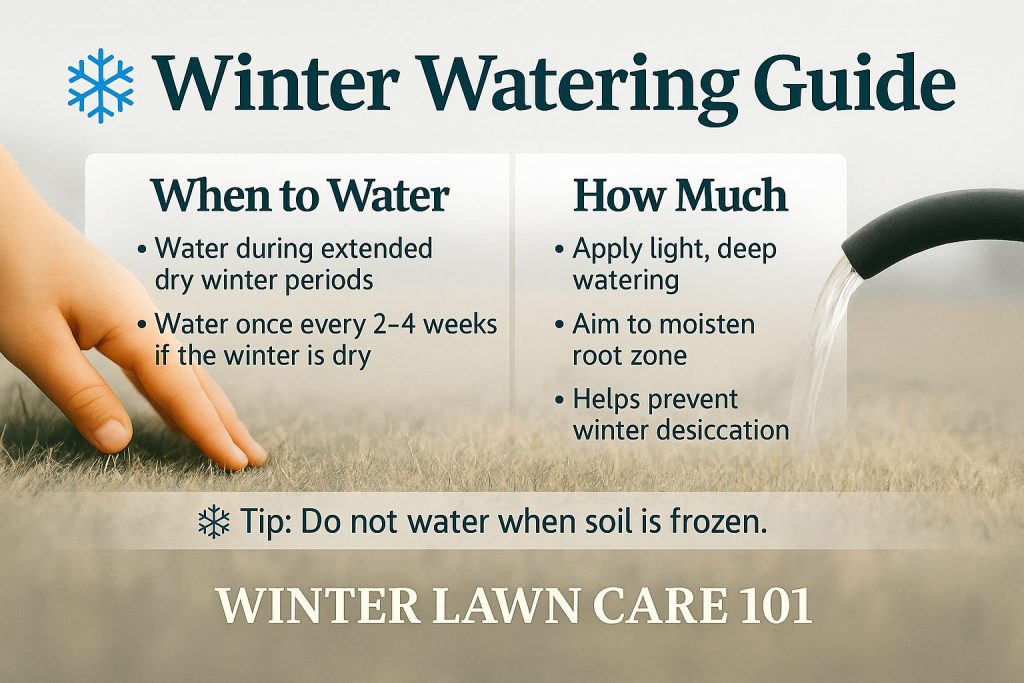
Cold-season lawns still lose moisture in late fall. A deep watering before the ground freezes helps protect roots from desiccation during winter winds.
However:
- Do not overwater
- Avoid watering when frost is already present
- Ensure good drainage
Dry soil + winter winds = patchy brown areas in spring.
8. Store and Maintain Your Tools
Before winter hits:
✔ Clean mower blades (sap + debris cause corrosion)
✔ Oil or sharpen blades
✔ Drain or stabilize mower fuel
✔ Empty & shut down irrigation lines
✔ Dry and store all hand tools indoors
A properly cleaned mower produces cleaner cuts next season — reducing frayed blades and moisture loss in early spring.
9. A Small-Lawn Strategy (Urban, Balcony, or Courtyard Lawns)
If your lawn is small, simplify your checklist:
Must-do:
- Mulching leaves
- Final mow
- One winterizer feeding (cold-season only)
Optional:
- Aeration
- Fungicide
Skip:
- Large machinery maintenance
- Overly strict schedules
Small lawns respond beautifully to precision care. You don’t need “big-lawn strategies” to achieve professional-level results.
10. Your Greenmuse Winter Lawn Journal
Keeping a small seasonal journal dramatically improves long-term results.
Example entries:
- “Mulched leaves earlier than last year — soil already feels softer.”
- “Final cut done at 2.5 inches; watching for snow mold in the shady corner.”
- “Applied 15-0-15 winterizer on Nov 18; check color response next April.”
These notes build your own microclimate map — something no online guide can replace.
FAQ: Winter Lawn Care Questions Homeowners Actually Ask
1. Should I fertilize right before the first snow?
Only if you’re using a winterizing formula and temps are still above freezing. Snow itself does not activate fertilizer.
2. Will mulched leaves smother my lawn?
Not if shredded finely — they decompose quickly and improve soil health.
3. Can I aerate after the first frost?
Light frost is okay, but frozen ground is not. Aeration works only when plugs can be pulled cleanly.
4. Do warm-season lawns need winter prep?
Yes — but mostly protection, not feeding. Their energy storage happens earlier in fall.
5. Is snow mold dangerous to the lawn?
Most cases recover naturally, but large patches may need spring overseeding.
6. Should I overseed before winter?
Only cold-season grasses — and only early fall. Once soil cools, germination stops.
A Healthy Lawn Begins in Winter
Winter lawn care is less about appearance and more about biology.
When you help your lawn store energy, protect its crown, and maintain soil structure through the cold months, you’re giving it everything it needs for a faster, greener, more resilient spring revival.
Clara Moss is the gardener behind Greenmuse. Over the past 10+ years, she has grown herbs on windowsills, tested cactus and succulent soil mixes, rescued struggling houseplants, and learned many lessons through trial and error. Greenmuse is where she shares honest, practical plant care advice for real homes — based on hands-on experience, not perfect greenhouse conditions. When she’s not writing, Clara is usually propagating succulents or trying to keep a calathea happy.