Best Flowers for Balcony Gardens That Bloom All Summer Long
Quick Summary
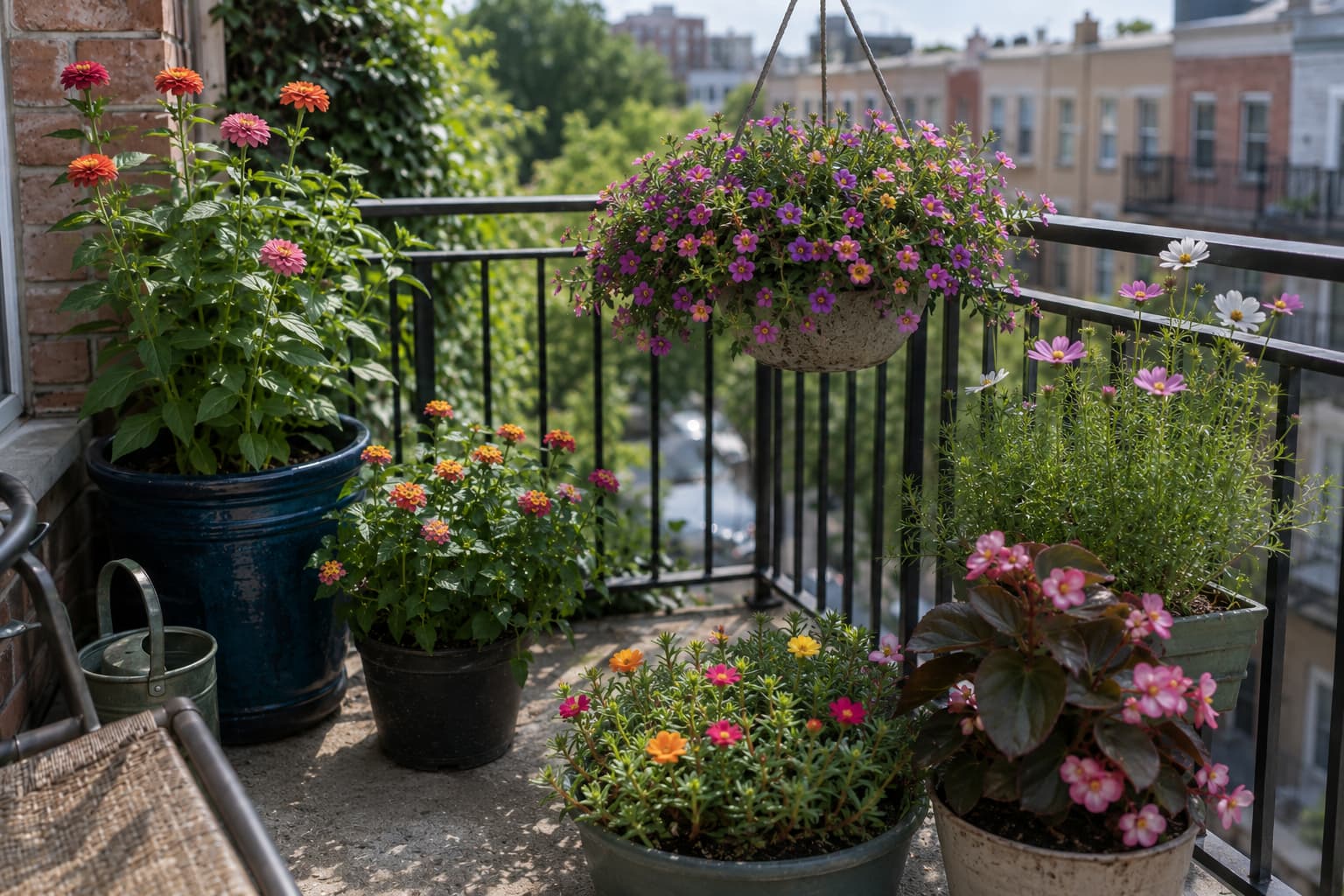
First, for reliable balcony color from early summer to frost, match the plant to your light first. Zinnias, lantana, calibrachoa, portulaca, and cosmos prefer strong sun, while wax begonias are better for partial shade. In addition, large containers, steady watering, airflow, and protection from reflected heat matter as much as the flower choice.
To begin with, my first balcony garden was a disaster. I bought whatever looked pretty at the nursery — petunias, impatiens, a few geraniums — and by mid-July, half of them had stopped blooming. The petunias got leggy, the impatiens fried in the afternoon sun, and I spent more time deadheading than enjoying the view. However, the following year, I did my research, and the difference was night and day. From June through October, my balcony was covered in flowers, and I spent maybe 15 minutes a week maintaining it.
In other words, the secret isn't just picking "pretty" flowers. It's picking flowers that are biologically programmed to bloom continuously — not in one flush, but over and over, for months. These are the plants that deliver. Therefore, here are six flowers that will keep your balcony colorful from early summer through the first frost, plus the balcony-specific care tricks that make the difference.
At a Glance: 6 All-Summer Balcony Flowers
| Flower | Sun | Bloom period | Deadheading needed? | Best for |
|---|---|---|---|---|
| Zinnia | Full sun | June–frost | No (cut-and-come-again) | Bold color, cutting garden |
| Lantana | Full sun | May–frost | No | Heat tolerance, pollinators |
| Calibrachoa | Full sun | May–frost | No (self-cleaning) | Trailing, containers |
| Portulaca | Full sun | June–frost | No | Hot, dry spots |
| Cosmos | Full sun | July–frost | Light deadheading helps | Height, airy texture |
| Begonia (wax) | Part shade | May–frost | No (self-cleaning) | Shady balconies |
1. Zinnia — The Cut-and-Come-Again Champion
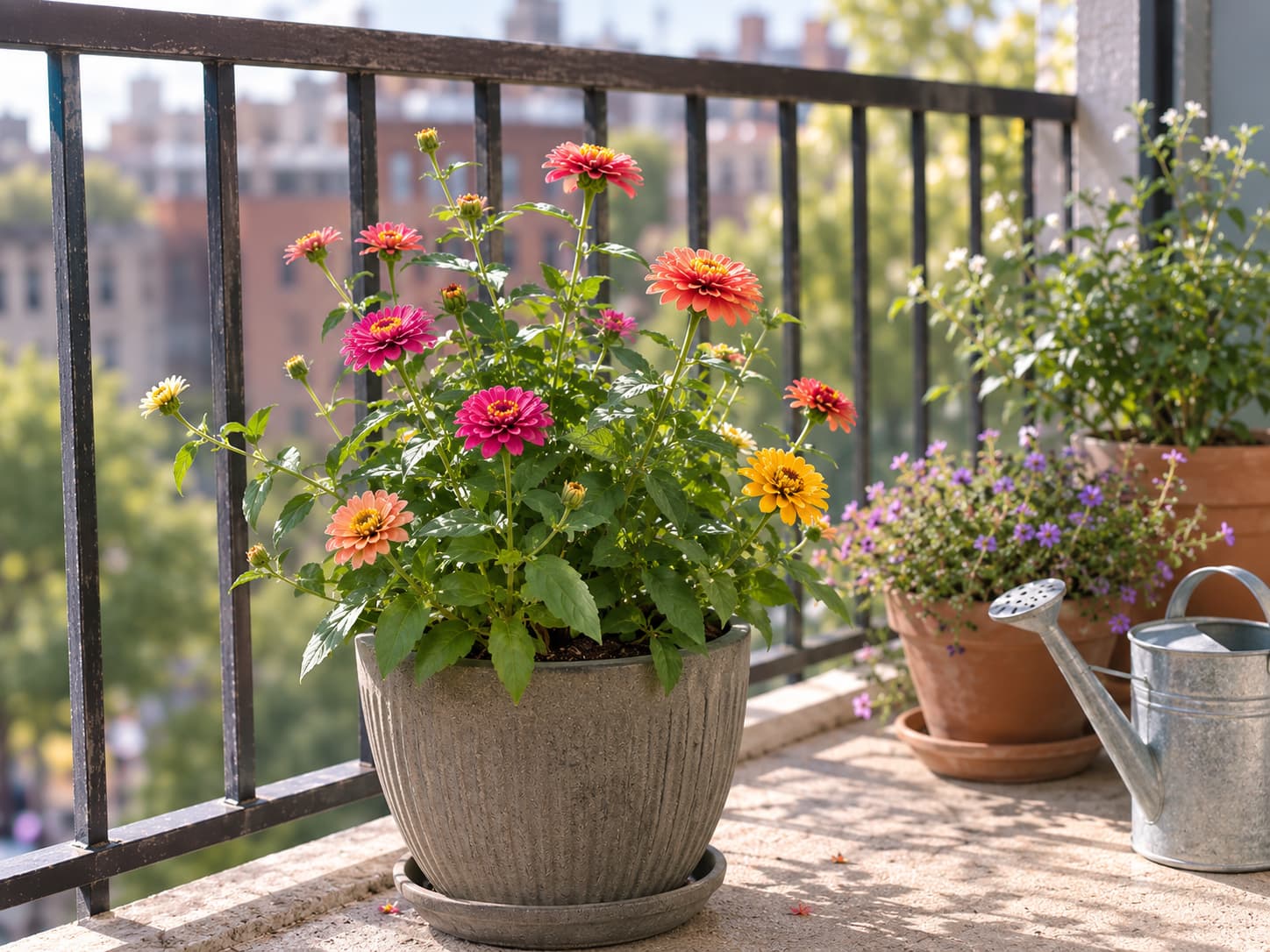
For example, zinnias are the workhorses of the summer balcony. They're native to the hot, dry grasslands of Mexico and the southwestern United States, which means they're genetically programmed to handle the intense heat and bright sun of a south-facing balcony. More importantly, what makes zinnias special is their blooming habit: the more you cut, the more they produce. As a result, each time you snip a flower, the plant responds by sending up two or three new stems. A single zinnia plant, given regular cutting, will produce dozens of flowers over a season. By contrast, zinnias are true cut-and-come-again flowers., zinnias are true cut-and-come-again flowers.
Balcony tip: For containers, grow zinnias in deep pots — at least 10–12 inches. Their roots need room to support the continuous blooming. For example, the dwarf varieties ('Profusion' series, 'Zahara' series) are bred for containers and only reach 12–18 inches tall, which is perfect for balcony railings. Meanwhile, the taller varieties ('Benary's Giant', 'State Fair') need staking in windy balcony conditions. Finally, sow seeds directly in the pot in late spring — zinnias don't love being transplanted.
2. Lantana — The Heat-Loving Butterfly Magnet
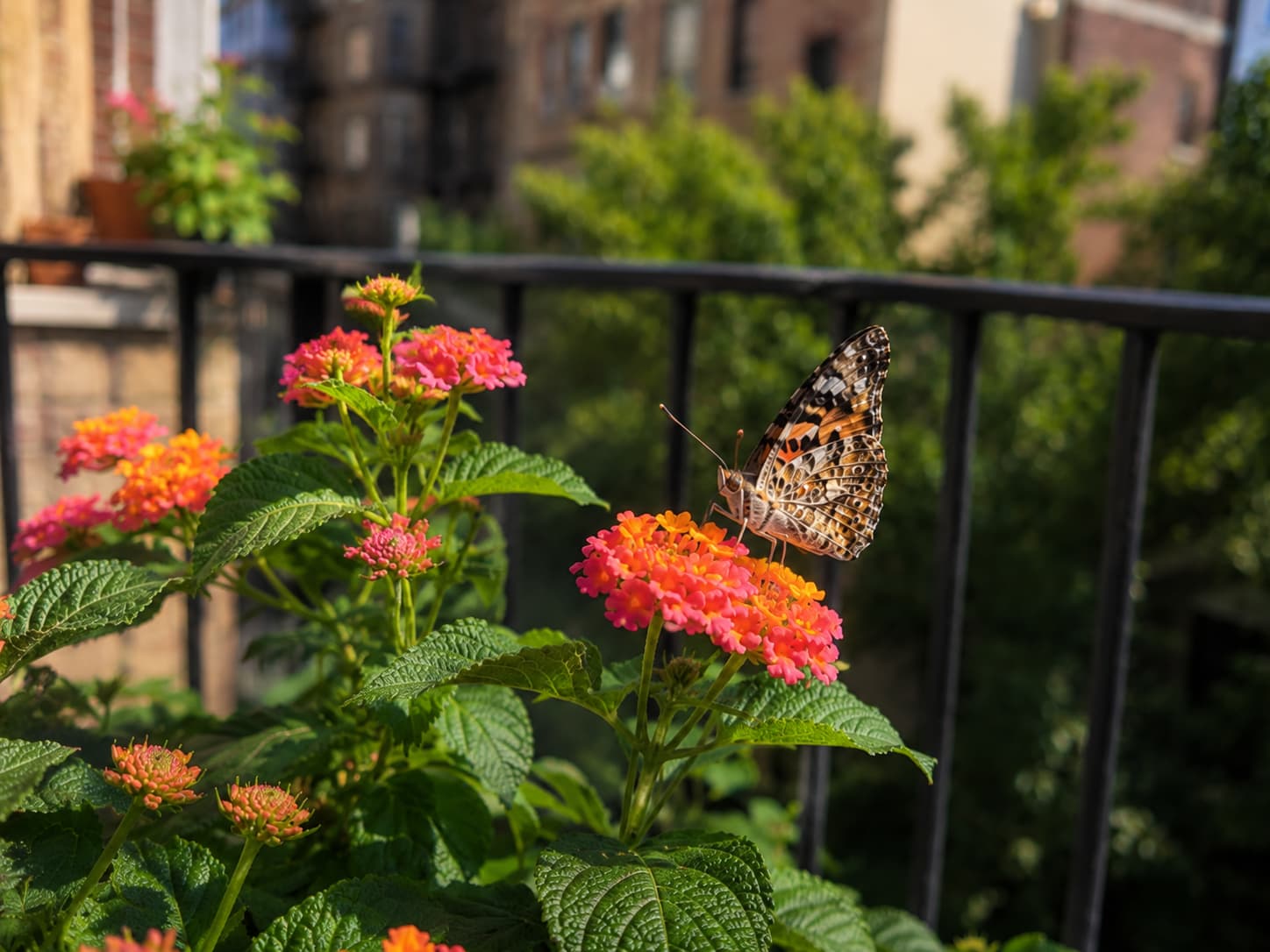
Next, lantana is a strong choice on a balcony that gets blasted by afternoon sun. It's native to tropical regions of the Americas and Africa, and it thrives in conditions that would kill most flowering annuals. In addition, its small, clustered flowers come in combinations of yellow, orange, pink, red, and purple, often with multiple colors on the same flower cluster. As a result, lantana can bloom continuously from late spring until the first hard frost without any deadheading — the plant naturally drops spent flowers and produces new ones. Meanwhile, lantana is also useful for attracting flower visitors you can grow on a balcony. Butterflies and hummingbirds will find it even several stories up.
Balcony tip: However, lantana is only moderately drought-tolerant in a container once established but blooms best with consistent moisture. In a container on a hot balcony, water when the top inch of soil is dry — probably every 2–3 days in peak summer. For example, the trailing varieties ('Luscious' series, trailing lantana) are excellent for hanging baskets and balcony rail planters. Finally, lantana leaves have a distinct scent when touched that some people find unpleasant — place it where you won't brush against it regularly.
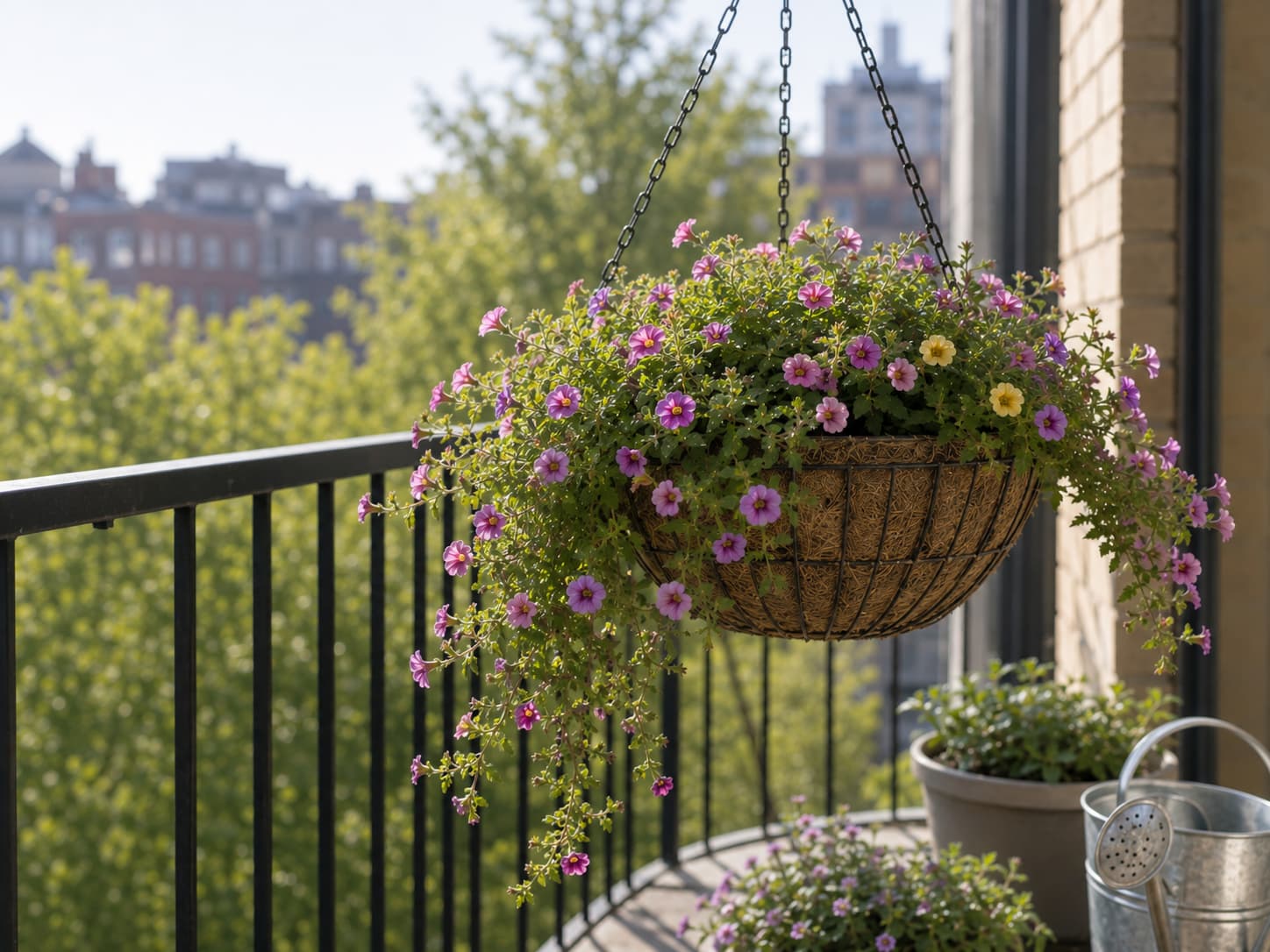
3. Calibrachoa — The Self-Cleaning Trailing Wonder
By comparison, calibrachoa looks like a miniature petunia, but it outperforms petunias in almost every way for balcony growing. For example, calibrachoa is self-cleaning — it drops its spent flowers naturally, so you never need to deadhead. By contrast, petunias, get sticky and leggy without regular deadheading. In addition, calibrachoa can handle exposed container conditions well than petunias, and it's less prone to the fungal diseases that plague petunias in humid summer weather. The flowers come in nearly every color, and the plants produce them so densely that the foliage is often completely hidden by blooms.
Balcony tip: However, calibrachoa is a relatively hungry container plant. In a container, the nutrients in potting mix are depleted within 4–6 weeks. Therefore, feed according to the fertilizer label and the plant's response every 2 weeks through the growing season, or the plant will slow its blooming. Meanwhile, the trailing habit works well for hanging baskets, window boxes, and the front edge of railing planters. As a result, one plant can spread 12–24 inches, so don't overcrowd them. Calibrachoa needs consistently moist soil — on a hot balcony, daily watering may be necessary in peak summer.
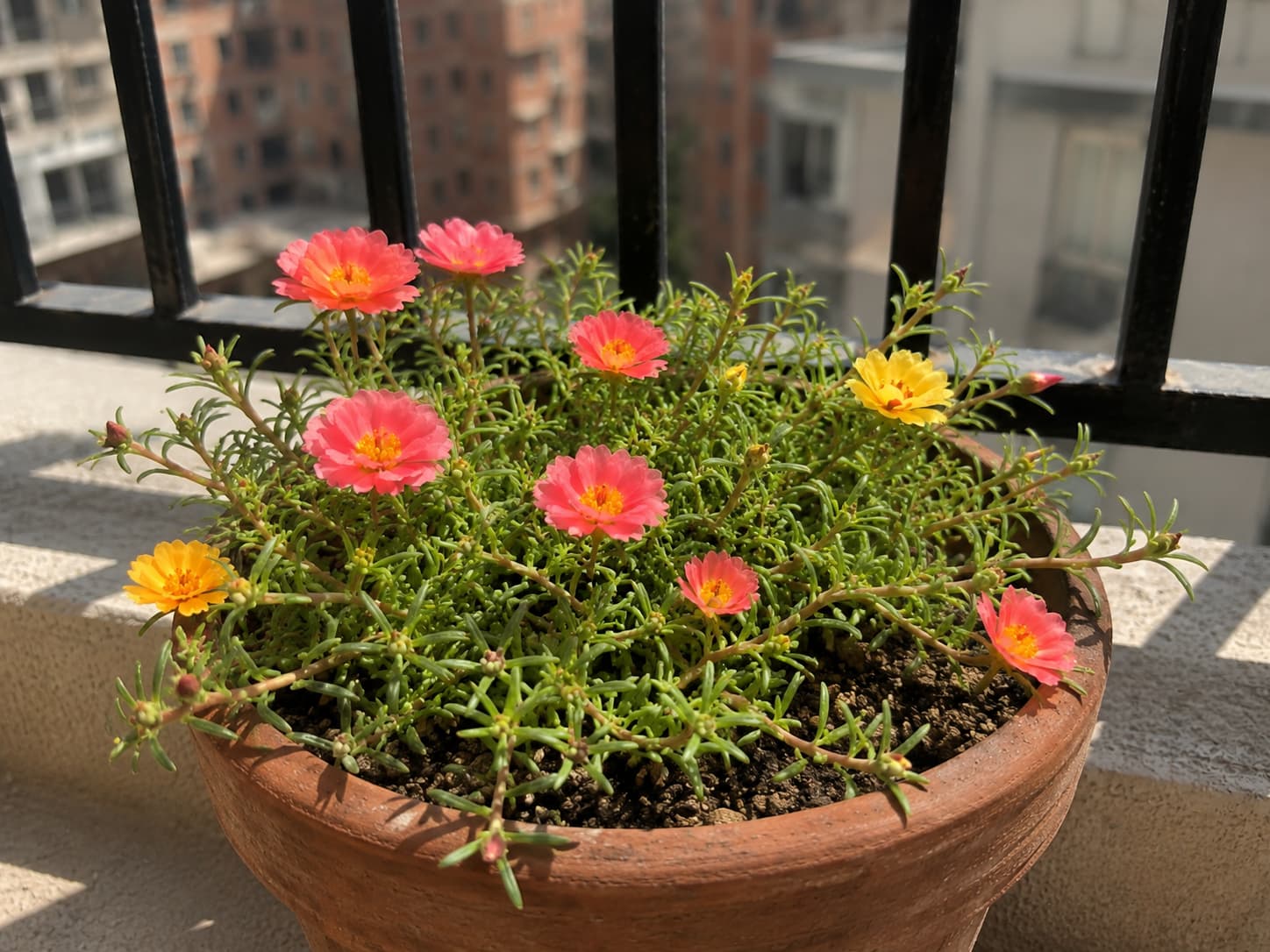
4. Portulaca (Moss Rose) — The Drought-Proof Bloomer
Meanwhile, if you have a balcony spot that gets intense sun and you sometimes forget to water, portulaca is your plant. In other words, portulaca stores water in fleshy foliage — its fleshy, needle-like leaves store water, and its flowers open in bright sun and close in shade or at night. As a result, portulaca is adapted to hot, dry conditions of South America, and it's adapted to thrive in conditions where other flowers would wilt within hours. The flowers come in vivid shades of pink, orange, yellow, red, and white, and they bloom continuously from early summer through frost without any deadheading. A single plant can produce hundreds of flowers over a season.
Balcony tip: Most importantly, portulaca needs strong direct sun to bloom well — at least 6 hours of direct sun. By contrast, in partial shade, it will produce foliage but few flowers. For containers, use a fast-draining mix, not standard potting soil, and make sure the pot has drainage holes. Then, water after the mix has dried appropriately for the plant and container. Portulaca is one of the few balcony flowers that genuinely prefers to dry out between waterings. Overwatering causes root rot faster than almost any other annual.
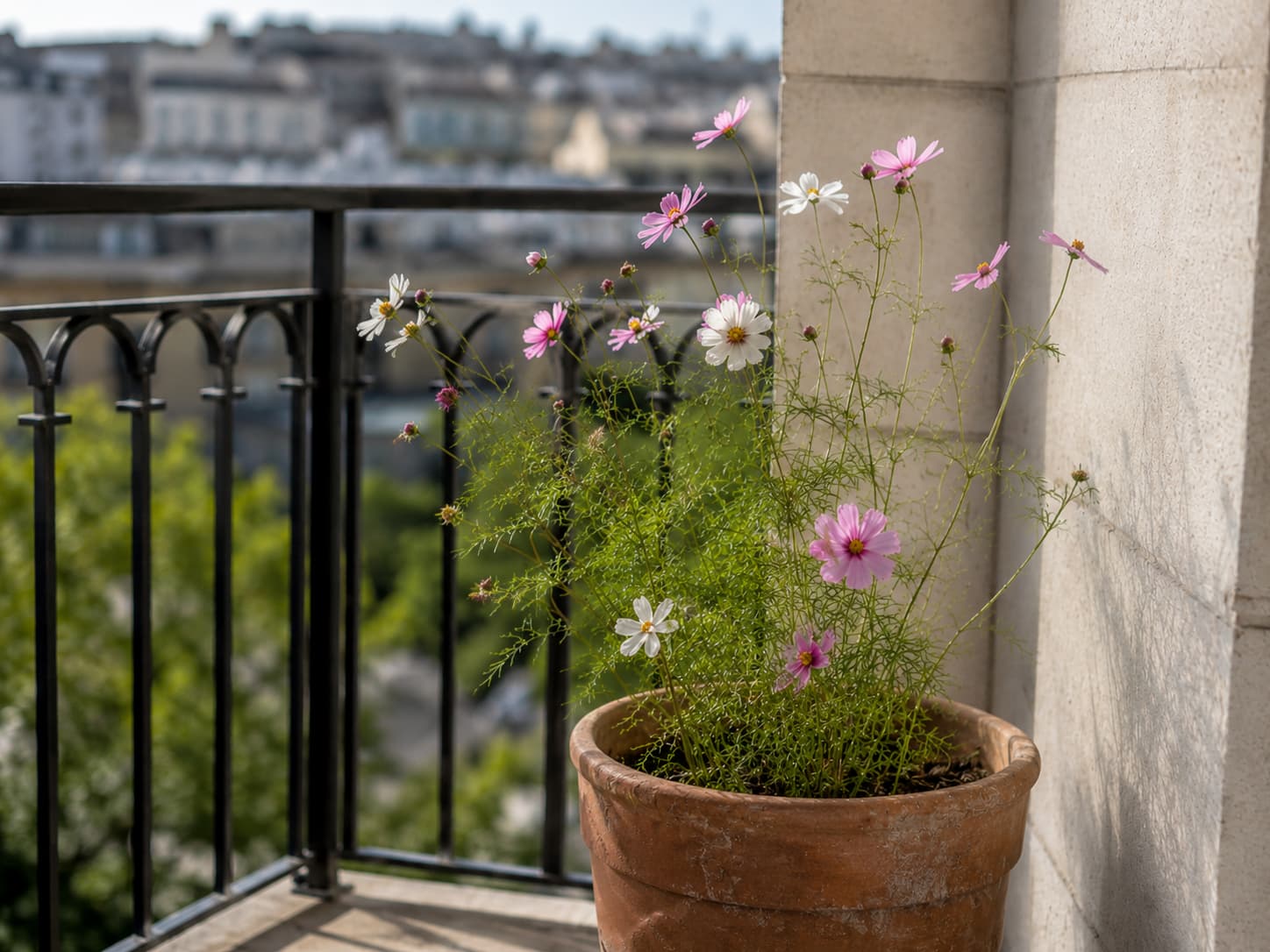
5. Cosmos — The Airy, Effortless Bloomer
Next, cosmos bring an airy wildflower look they belong in a wildflower meadow — and they bring that same effortless energy to a balcony. In addition, their Mexican origins help explain their preference for sun and lean soil, where they grow in disturbed, poor soil in full sun, which makes them ideal for container growing. For example, cosmos are easy to start from seed to grow from seed, and once they start blooming in mid-summer, they don't stop until frost. Therefore, taller cosmos need careful placement, so they're best placed at the back of a balcony planter or in a tall pot against a wall. The feathery foliage adds texture even when the plants aren't in bloom, and the flowers are excellent for cutting.
Balcony tip: However, rich soil can push cosmos toward leafy growth if given too much fertilizer. In a container, use a low-nitrogen fertilizer or skip fertilizing entirely — cosmos genuinely prefer lean soil. Meanwhile, taller varieties may need support in windy balcony conditions. Then, pinch suitable young plants if you want a bushier shape when the plants are about 12 inches tall to encourage bushier growth and more flowering stems. Finally, deadheading spent flowers will extend the bloom period, but it's not strictly necessary — cosmos will keep blooming either way, just with slightly fewer flowers.
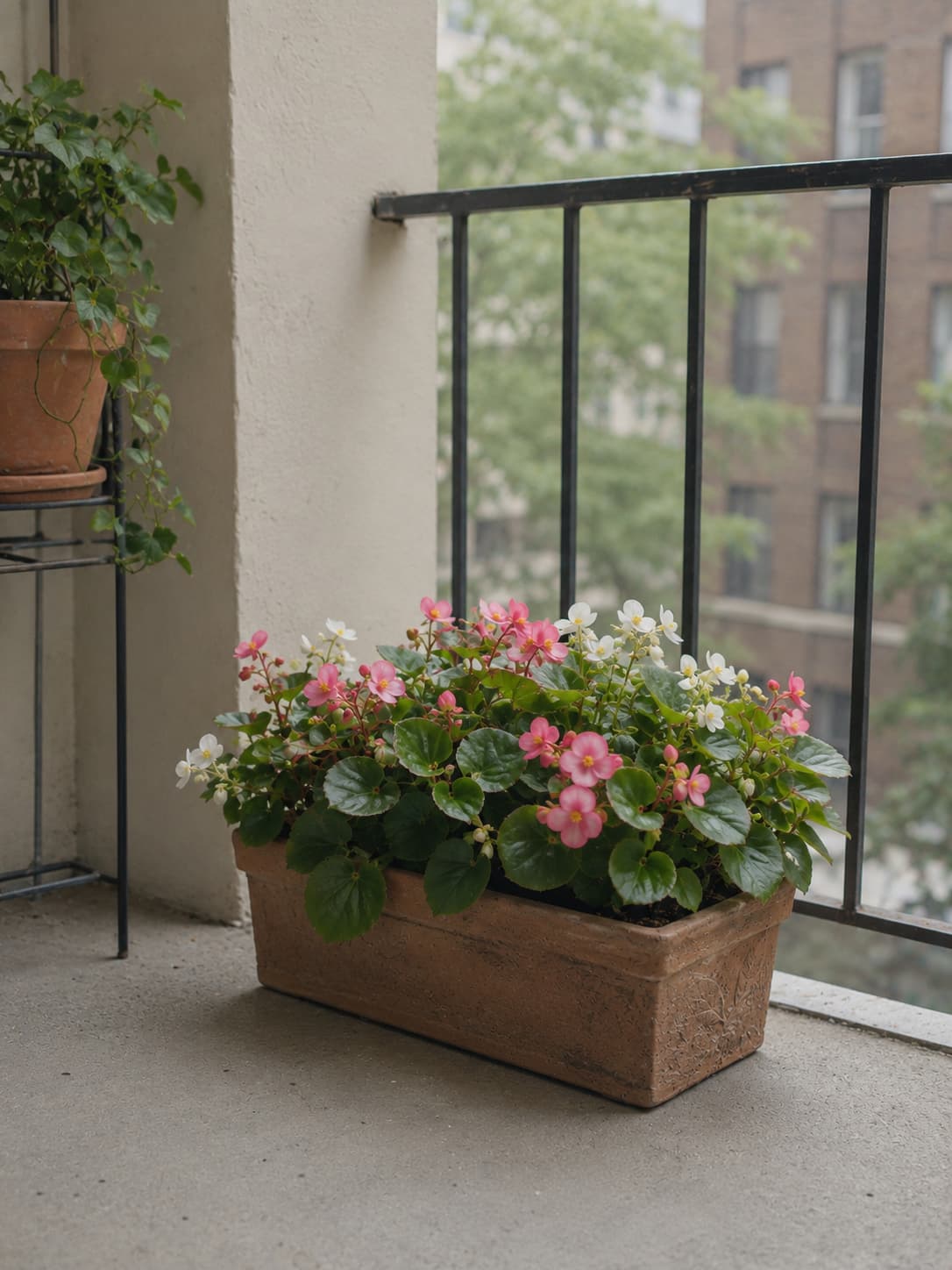
6. Wax Begonia — The Shade Balcony Solution
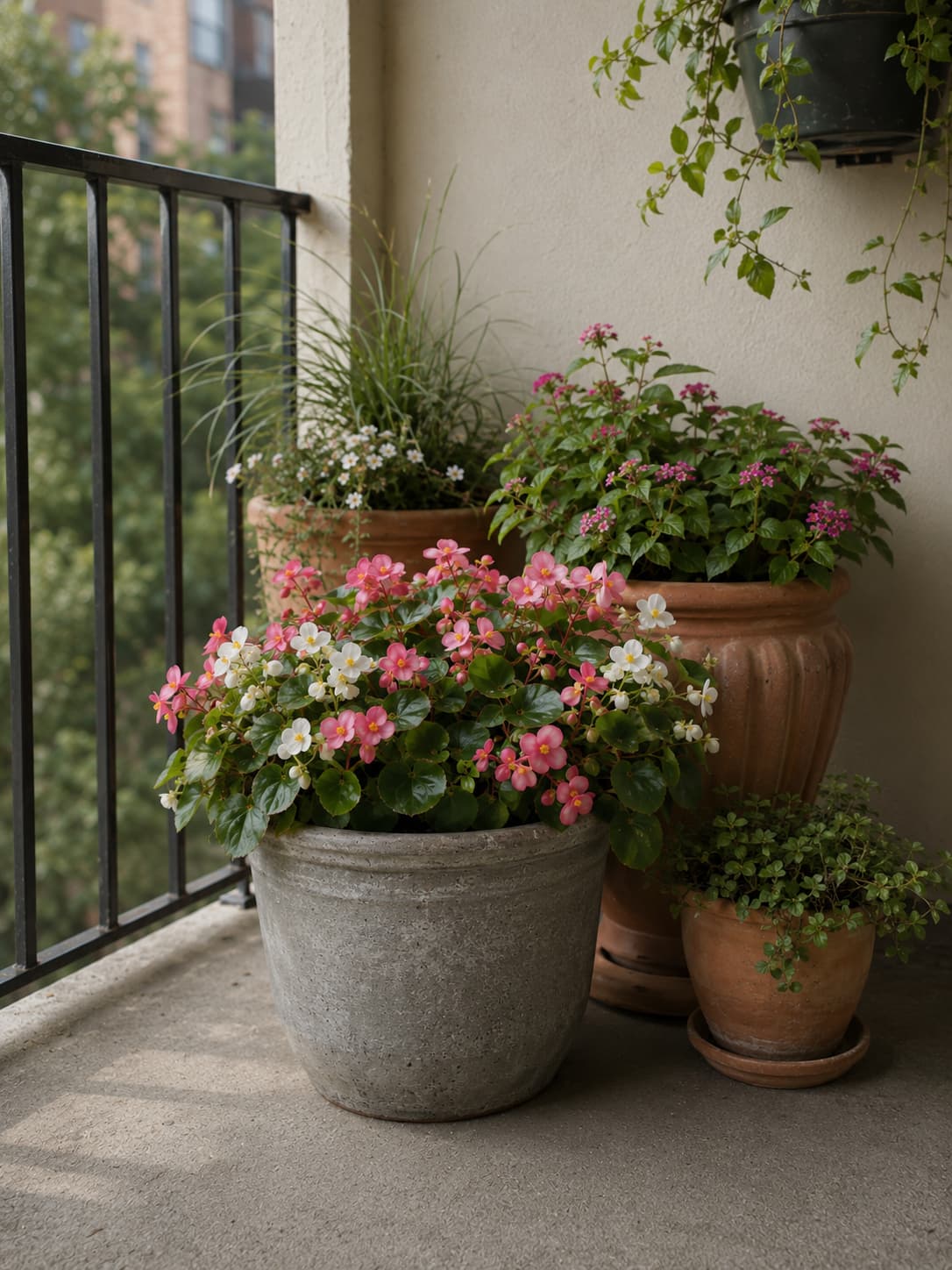
Finally, if your balcony faces north or is shaded by buildings for most of the day, wax begonias are the all-summer bloomers you need. By contrast, wax begonias can bloom with less direct sun, but wax begonias thrive in partial to full shade. In addition, they produce clusters of small flowers in pink, red, or white from late spring through frost, and like calibrachoa, they're self-cleaning — no deadheading required. Meanwhile, the glossy, rounded leaves are attractive even when the plant isn't flowering, and the bronze-leaved varieties add extra visual interest. As a result, wax begonias can be easier to manage in some sheltered balcony settings, which is a bonus on a balcony where pests can be harder to manage.
Balcony tip: However, wax begonias prefer even moisture without standing water but will rot if the pot sits in water. Make sure containers have drainage holes. Therefore, in a shaded location, the soil won't dry out as quickly as it would in full sun, so water less frequently than you would for sun-loving plants. For feeding, follow the product label and adjust to plant growth at half strength will keep them blooming through the season. Finally, give plants enough spacing for airflow and mature spread — they'll fill in to create a solid carpet of color.
Balcony-Specific Growing Tips That Make the Difference
In practice, growing flowers on a balcony is different from growing them in the ground. The containers, the wind, the reflected heat from the building — all of these change the rules. Therefore, focus on three balcony-specific factors: through trial and error that make the difference between a sad balcony and a spectacular one.
1. Use Larger Containers for More Stable Moisture
For example, small pots heat and dry quickly in direct sun heat up rapidly in the sun and dry out within hours on a hot day. The roots of a flowering plant in a small pot can reach 110°F or more on a sunny balcony, which is hot enough to kill root hairs. Therefore, use containers large enough for the plant and safe for the balcony your balcony can reasonably accommodate. In addition, extra soil volume can buffer moisture and temperature swings as a 10-inch pot, and the extra soil volume buffers temperature swings and holds moisture longer. Meanwhile, trailing plants need enough root volume to support summer growth and lantana, a 14-inch hanging basket is the minimum for consistent blooming.
2. Protect Flowers From Balcony Wind
For example, higher balconies can be much windier than ground-level beds, are windier than ground-level gardens. As a result, wind can accelerate water loss from both the soil surface and the leaves, and it can physically damage tall plants. Therefore, position taller plants (cosmos, zinnias) against a wall or railing for wind protection. In addition, use stable containers for taller plants — a lightweight plastic pot with a 3-foot cosmos will tip over in the first gust. Meanwhile, grouping pots can reduce exposure to create a windbreak effect. Finally, if your balcony is particularly windy, stick to the shorter, bushier plants on this list — lantana, portulaca, and wax begonia all handle wind well.
3. Reduce Reflected Heat Around the Root Zone
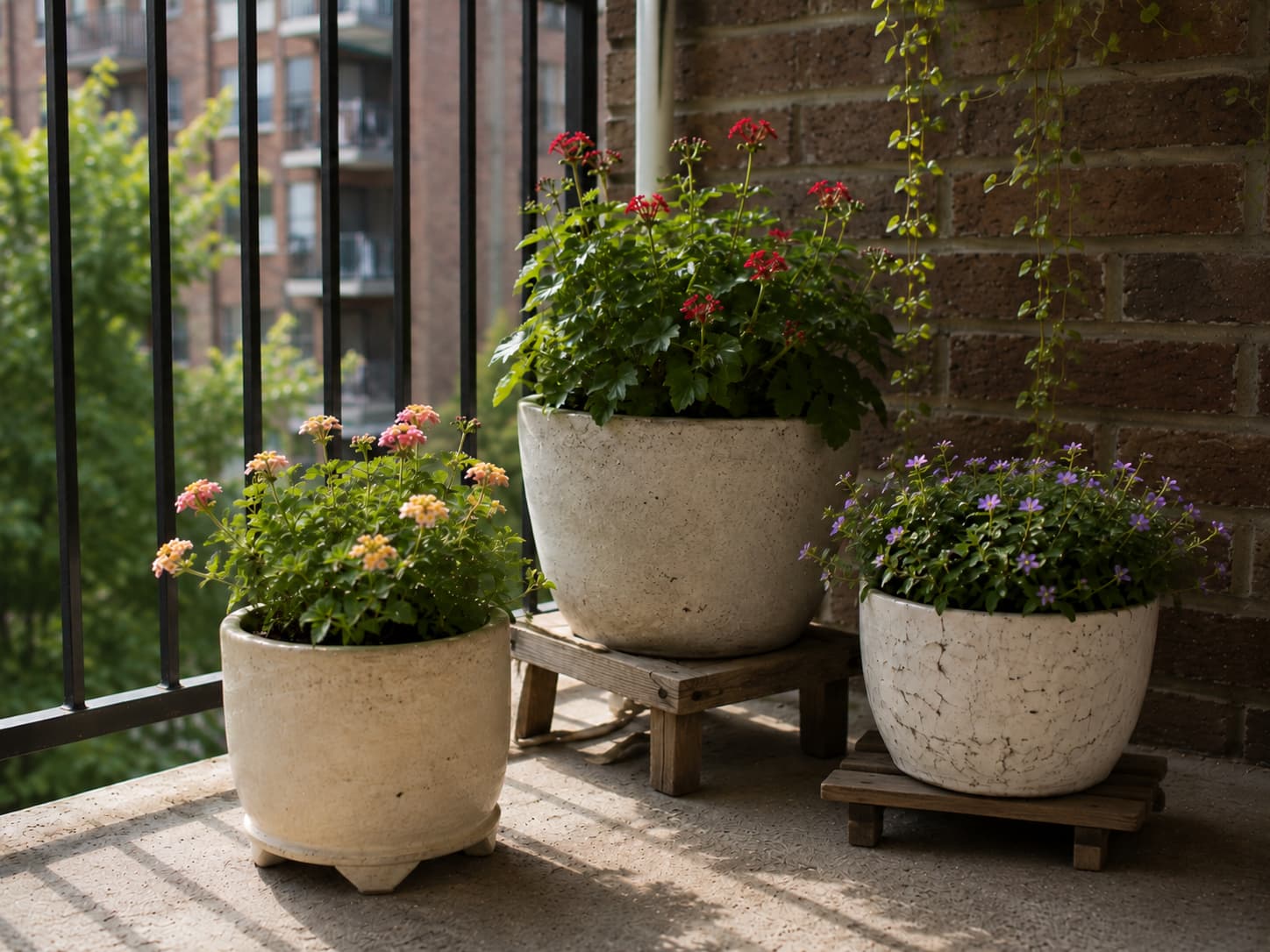
For example, concrete, brick, and stucco can absorb heat all day and release it at night. As a result, a pot sitting directly on hot concrete can have a warmer root zone can be significantly hotter than the air temperature. Therefore, elevate suitable pots to improve airflow underneath, bricks, or a wooden rack to allow air circulation underneath. By comparison, light-colored containers generally absorb less solar heat than very dark ones; dark pots absorb it. On a south-facing balcony in July, the difference between a black plastic pot and a white glazed ceramic pot can be 15–20°F in the root zone.
Frequently Asked Questions
Watering, Feeding & Balcony Light
1. How often should I water balcony flowers in summer?
It depends on the pot size, the plant, and the exposure. In a 12-inch pot in full sun during a heat wave, most of these flowers will need water every 1–2 days. In a 10-inch hanging basket, daily watering is common. The finger test is the most reliable method: stick your finger into the soil up to the second knuckle. If it's dry, water. If it's moist, wait. Water in the morning, not the evening — wet foliage overnight encourages fungal diseases.
2. Do I need to fertilize container flowers?
Yes, more than ground-planted flowers. Container plants can't send roots deeper to find nutrients, and frequent watering leaches nutrients out of the potting mix. A diluted liquid fertilizer (half the recommended strength) applied every 2 weeks during the growing season will keep most of these flowers blooming. Calibrachoa and petunias are particularly heavy feeders and benefit from weekly feeding.
3. What if my balcony only gets morning sun?
Morning sun (east-facing) is actually ideal for many flowering plants — it's bright enough to fuel blooming but not so intense that it causes heat stress. Most of the flowers on this list will do well with 4–6 hours of morning sun. If your balcony gets less than 4 hours of direct sun, focus on wax begonias and impatiens, which bloom reliably in lower light.
Vacation Care for Balcony Flowers
4. How do I keep my balcony flowers blooming when I go on vacation?
For trips of 3–5 days: water thoroughly the morning you leave, move pots out of direct sun if possible, and group them together to create a humidity pocket. For trips of 5–10 days: set up a simple wicking system — place a large container of water above the pots (or at the same level) and run cotton string from the water to each pot. One end in the water, the other end buried an inch into the soil. The water will wick slowly through the string. Ask a neighbor to check on the plants once mid-trip if possible.
The Bottom Line
Ultimately, a balcony garden that blooms all summer isn't about luck or constant maintenance. In other words, success comes from matching plants to the site — ones that are genetically programmed to bloom continuously, not in a single flush. Zinnias, lantana, calibrachoa, portulaca, cosmos, and wax begonias are all built for this. They handle heat, they don't need deadheading (or need very little), and they'll keep producing flowers from early summer through the first frost.
Finally, give them enough root room, appropriate water, and nutrition based on their actual needs, consistent water, and a little fertilizer every couple of weeks, and they'll do the rest. The best balcony gardens I've ever grown were the ones where I planted the right flowers and then mostly got out of their way.
What direction does your balcony face, and which flower has performed best for you? Share your growing conditions and experience so other balcony gardeners can learn from a real-world example.