Best Containers for Balcony Vegetables: Sizes, Materials & Drainage
Choosing a balcony vegetable container looks simple until the first hot week arrives. A pot that seemed roomy in spring can dry out twice a day by midsummer, a tall tomato can turn top-heavy in wind, and a decorative planter with poor drainage can quietly keep roots waterlogged.
The best container is not the most expensive one. It is the one that gives the crop enough root room, drains reliably, stays stable on your balcony, and fits the way you actually water. Tomatoes, peppers, lettuce, and herbs all ask for different things.
This guide shows you how to match vegetable crops to practical container sizes, compare the main pot materials, manage heat and drainage, and avoid the mistakes that make small-space gardening harder than it needs to be.
The Three Decisions That Matter Most: Size, Drainage & Balcony Fit
Before comparing terracotta, plastic, fabric, or self-watering pots, make these three decisions first:
- Choose enough root volume. Fruiting crops such as tomatoes and eggplants need more room than lettuce, radishes, or small herbs.
- Make drainage non-negotiable. Excess water needs a reliable way out, and the growing medium should be designed for containers.
- Match the pot to the balcony. Wind, reflected heat, total weight, runoff, and how easily you can reach the pot all affect whether a container works in real life.
Vegetable Container Size Guide
Container recommendations vary because cultivars and growing conditions vary. A compact patio tomato is easier to manage than a vigorous indeterminate tomato, and a pepper on a cool coastal balcony behaves differently from the same plant on a hot west-facing balcony.
Use the ranges below as practical starting points rather than rigid limits.
| Vegetable | Practical Starting Size | Useful Depth | Balcony Notes |
|---|---|---|---|
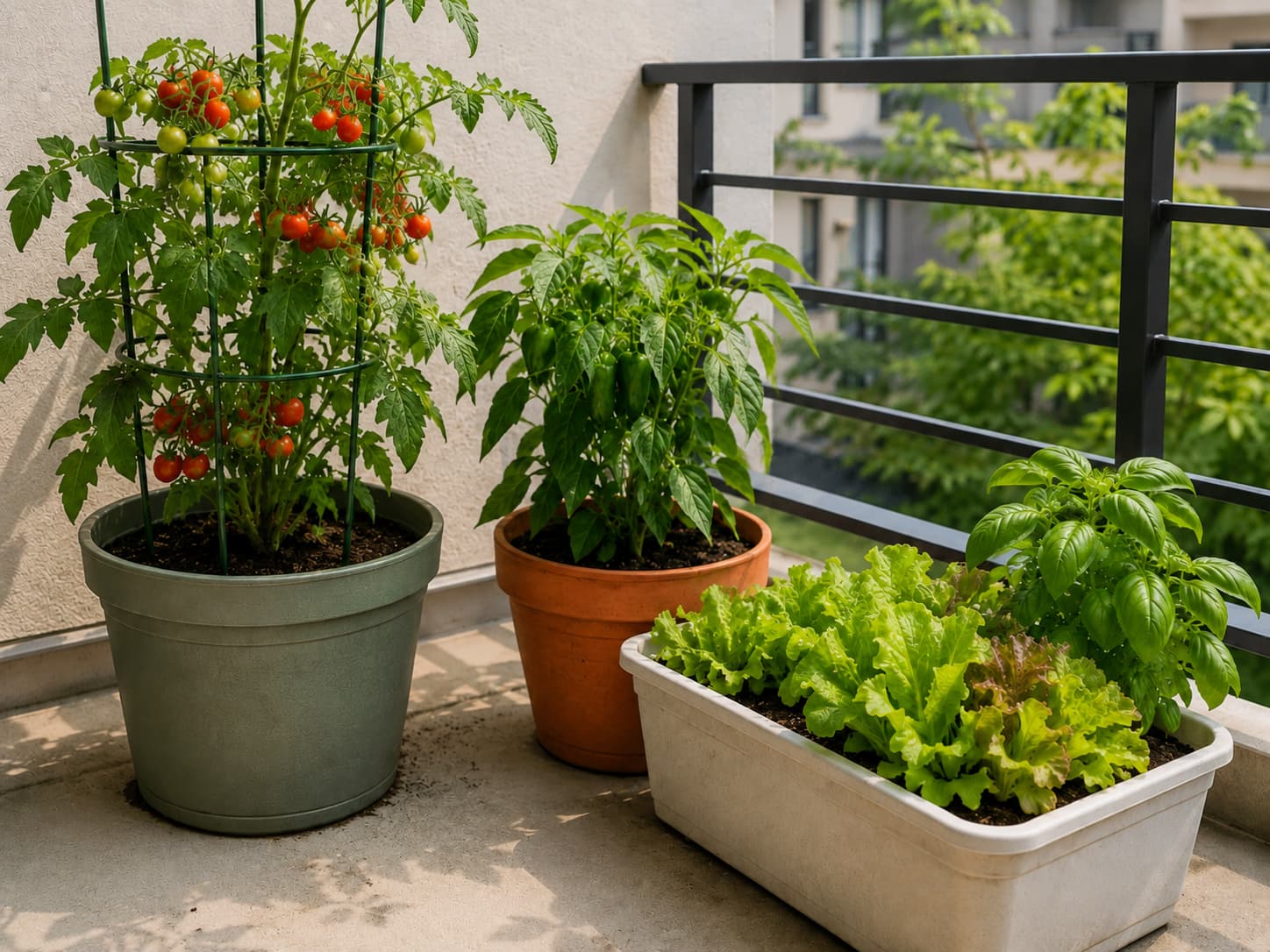
| Compact / patio tomato | 5–7+ gal | 14–18+ in | One plant per container is easiest. Size up in hot or windy exposure. |
| Standard tomato | About 20 in wide; 10+ gal preferred where practical | 16–20+ in | Use a broad, stable pot and install support early. |
| Sweet or chili pepper | 3–5+ gal | 12+ in | The larger end is easier to keep evenly moist in summer. |
| Eggplant | 5+ gal | 12–16+ in | Compact cultivars suit small balconies best. |
| Compact cucumber | 5+ gal | 12–16+ in | Add a secure trellis and keep the container away from the edge. |
| Bush beans | 3–5+ gal, preferably wide | 8–12+ in | Width matters when several plants share one container. |
| Lettuce / arugula | Wide window box or 2–3+ gal | 6–8+ in | Wide, shallow containers work well for leafy crops. |
| Radish | Wide box or 2–3+ gal | 6–8+ in | Match depth to the cultivar, especially for longer roots. |
| Carrot | 3–5+ gal or deep window box | 10–14+ in | Short-rooted cultivars are easier in containers. |
| Kale / Swiss chard | 3–5+ gal per mature plant | 10–12+ in | Baby-leaf crops can be planted more densely. |
| Basil and similar herbs | 1–2+ gal per mature plant | 8–10+ in | Small pots dry quickly on exposed balconies. |
Drag the bar below or swipe horizontally to view the remaining columns.
Terracotta vs Plastic vs Fabric vs Self-Watering
No container material wins in every climate. The right choice depends on how fast you want the root zone to dry, how much weight the balcony can accommodate, and how often you can check moisture.
| Container Type | Strengths | Watch For | Best Fit |
|---|---|---|---|
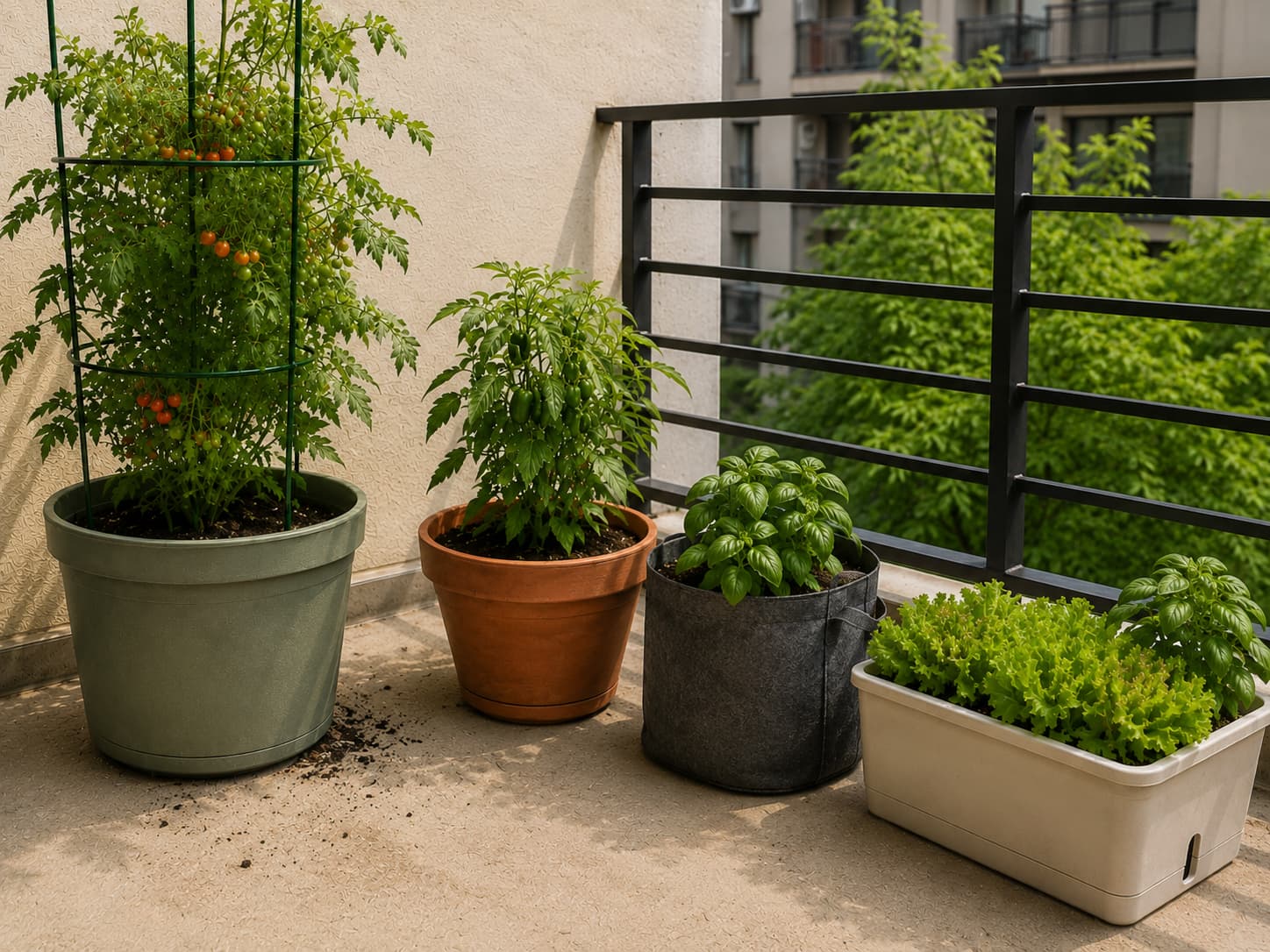
| Plastic / resin | Lightweight, affordable, slower moisture loss than porous clay | Thin pots can flex; dark colors absorb more heat | Strong all-around choice for most vegetables |
| Terracotta | Porous, stable, classic appearance | Dries faster; may be demanding in hot or windy weather | Herbs, peppers, and moderate exposures where watering is easy |
| Fabric grow bag | Light when empty, foldable, easy to store | Can dry very quickly on sunny or windy balconies | Gardeners who can monitor moisture closely |
| Glazed ceramic | Stable and less porous than raw terracotta | Heavy before planting and much heavier when wet | Permanent arrangements where weight is acceptable |
| Self-watering planter | Reservoir can buffer short-term moisture swings | Needs a working overflow and correct setup | Tomatoes, peppers, greens, and busy watering schedules |
| Wood planter | Useful for wide troughs and mixed plantings | Can become very heavy; longevity varies by construction | Permanent balcony layouts with confirmed capacity |
| Metal | Durable, slim, useful as a decorative outer container | Can heat quickly in strong sun and may corrode | Moderate exposure or cachepot use rather than hot-sun default |
Drag the bar below or swipe horizontally to view the remaining columns.
Plastic and Resin: The Easiest All-Round Choice
For most beginners, a sturdy plastic or resin pot is the easiest place to start. It is lighter than ceramic, loses moisture more slowly than terracotta or fabric, and is easy to find in useful vegetable-growing sizes.
On a very hot balcony, lighter colors are usually easier to manage than thin black containers sitting in direct afternoon sun.
Terracotta: Beautiful, Stable, but Thirstier
Terracotta allows moisture to move through the pot wall, which is useful in some conditions but can make a summer vegetable container dry much faster. It works particularly well for herbs and moderate exposures. Tomatoes can grow in terracotta, but a small terracotta tomato pot on a hot balcony can become a watering chore.
Fabric Grow Bags: Flexible but Fast-Drying
Fabric bags are light, easy to store, and useful where permanent heavy planters are impractical. Their trade-off is moisture loss. A fabric bag that performs beautifully in a mild climate can need much more attention in dry wind or reflected afternoon heat.
Self-Watering Pots: Useful When Moisture Swings Are the Problem
A well-designed self-watering planter can reduce the wet-dry swings that stress tomatoes, peppers, and leafy greens. The reservoir is not a license to ignore the plant, though. Keep the overflow working and check the system regularly, especially after heavy rain.
Drainage Is Non-Negotiable
Vegetable roots need water and oxygen at the same time. A container without a reliable drainage path can remain saturated after rain or watering even when the soil surface looks normal.
- Use containers with open drainage holes or a manufacturer-designed drainage system.
- Use potting mix made for containers rather than straight garden soil.
- Keep drainage holes from sealing flat against the balcony floor.
- Do not try to fix poor drainage with a thick layer of rocks or gravel at the bottom.
- If you use a saucer to control runoff, empty retained water instead of leaving the root ball standing in it.
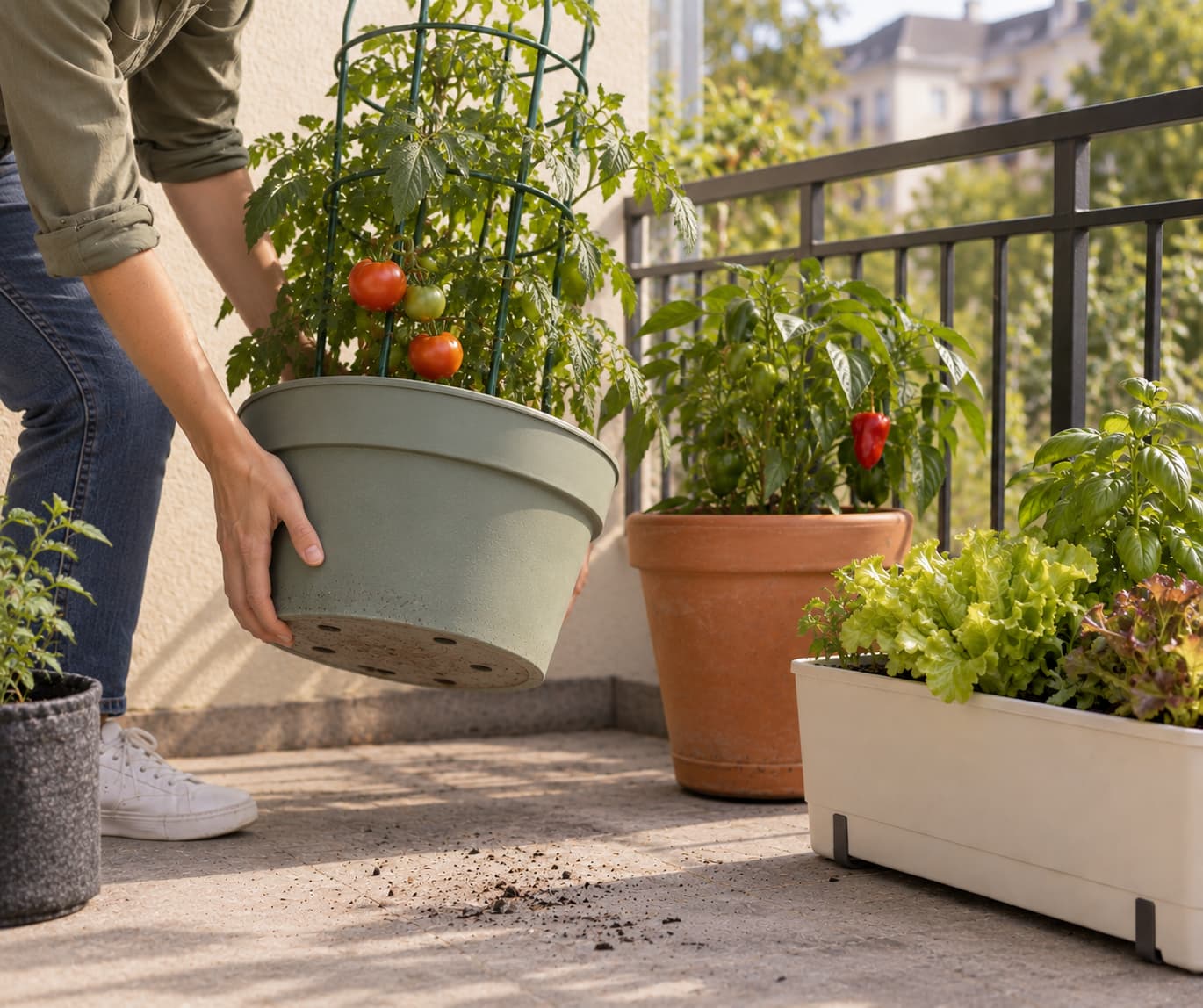
Before You Buy a Large Pot, Check Your Balcony
Final Filled Weight
An empty planter can feel light in a store and become surprisingly heavy after it is filled with wet potting mix, water, stakes, and a mature crop. There is no universal balcony load number that is safe to copy from a gardening article.
For large planters, grouped containers, railing systems, or unusually heavy ceramic and stone pots, check your building, strata, HOA, lease, or property guidance. If the permitted load is unclear, use building-specific professional advice instead of guessing.
Wind
Wind becomes a bigger issue after a tomato, cucumber, or bean plant develops a full canopy. A broad container is usually easier to stabilize than a tall, narrow one, and supports should be secured before the plant becomes top-heavy.
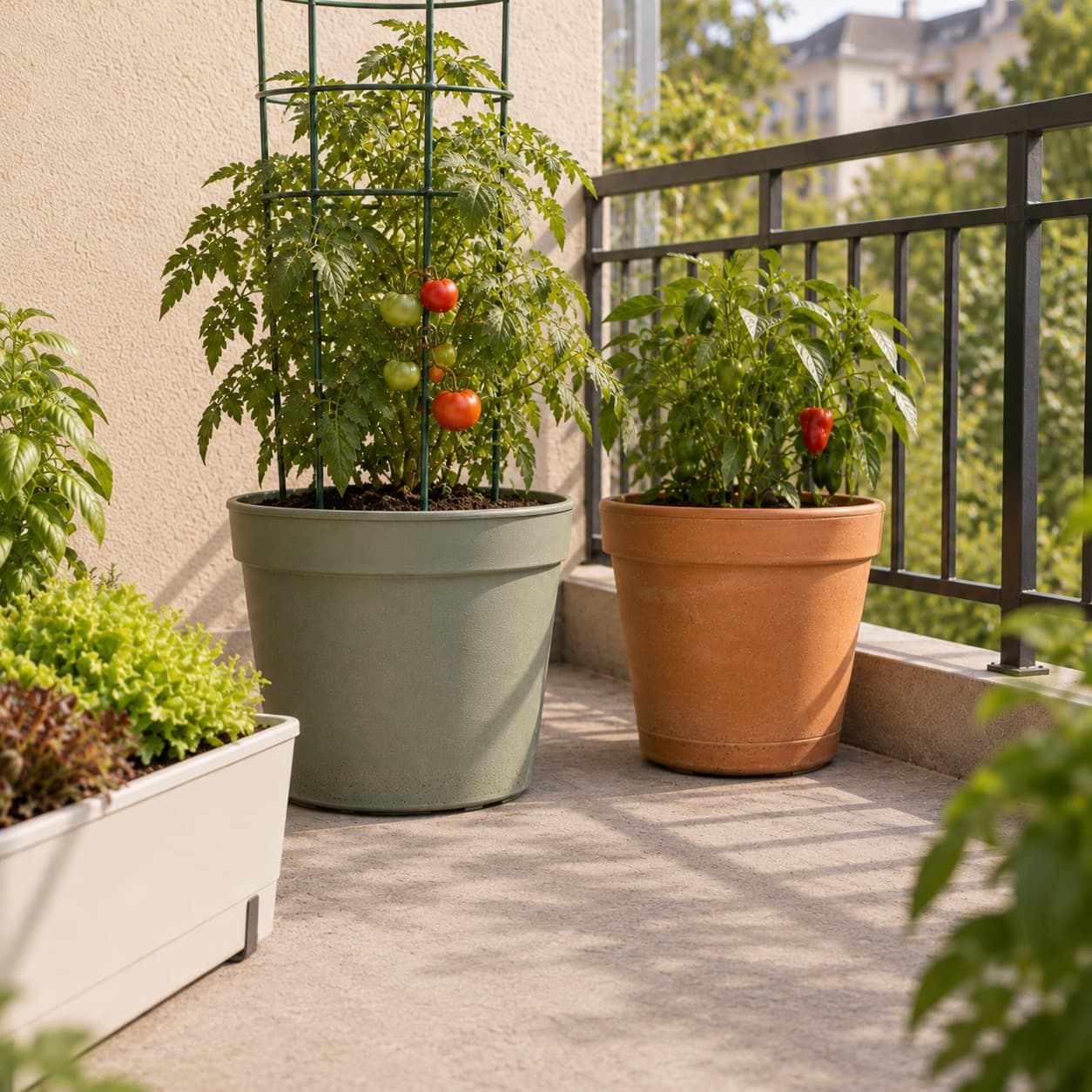
Heat
Balcony floors, dark walls, glass, and exposed metal can all increase heat around the root zone. Small containers also have less soil volume to buffer temperature and moisture swings.
Light
Fruiting vegetables generally need strong light, but the hottest spot is not automatically the best spot. Leafy greens can tolerate less intense exposure than tomatoes and peppers, while a west-facing balcony can create intense late-day heat even when overall sun is excellent.
Access
Place the thirstiest crops where you can reach them easily. A tomato tucked behind furniture may look tidy in spring and become frustrating to water once it fills out in July.
How to Keep Balcony Containers From Overheating
Root-zone heat is easy to overlook because you feel the air temperature, not the temperature inside the pot. A small dark container on sun-baked concrete can dry much faster than the same crop in a larger light-colored pot.
- Size up thirsty crops when space and balcony limits allow.
- Consider lighter-colored containers in intense sun.
- If a black nursery pot sits inside a decorative outer pot, keep an air gap and make sure water cannot collect around the inner pot.
- Add a light organic mulch where appropriate to slow surface evaporation.
- Raise a pot slightly only when needed to keep drainage holes open.
- Check the potting mix before watering rather than watering only because the clock says it is time.
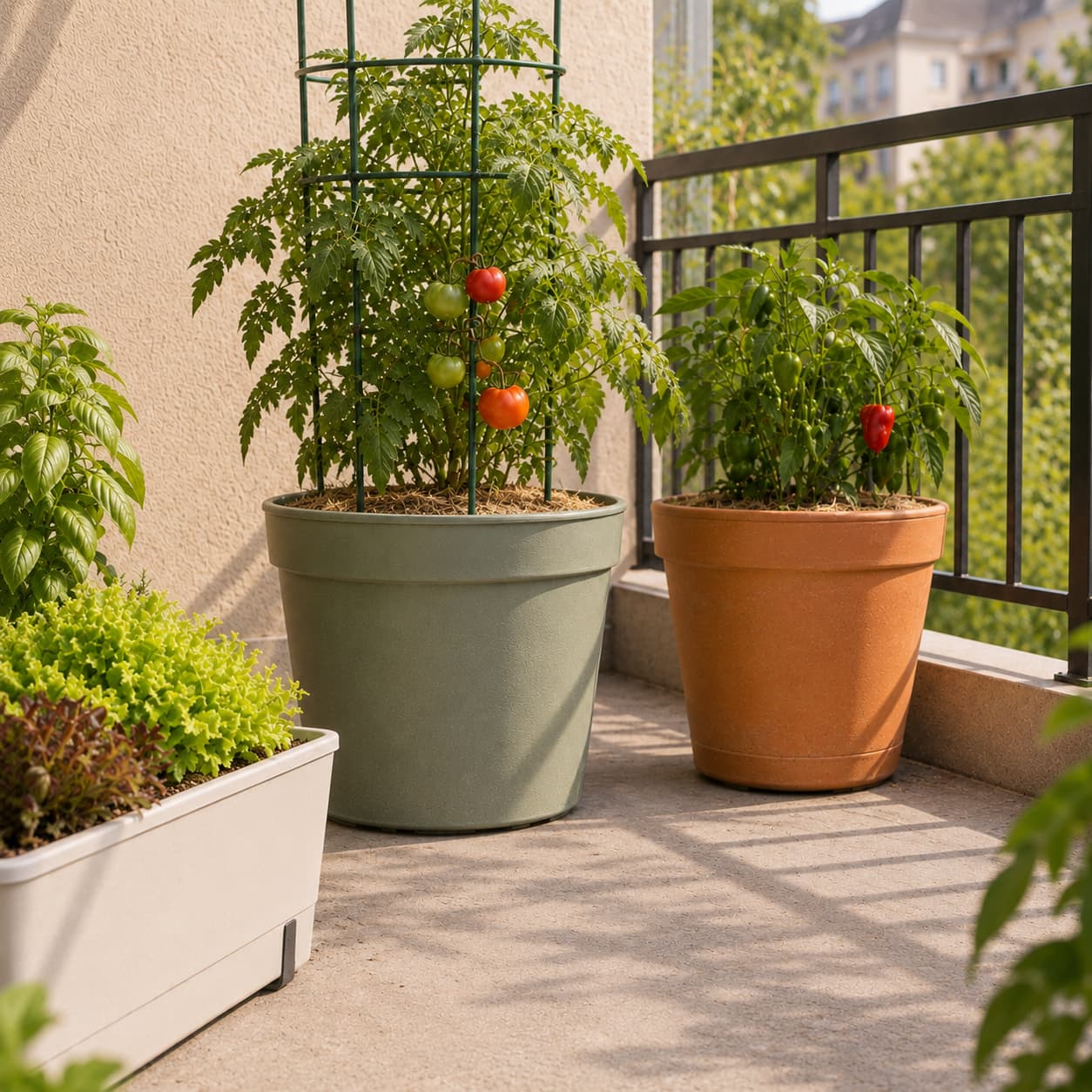
Use Potting Mix, Not Straight Garden Soil
Balcony containers need a growing medium that holds useful moisture while still leaving air around the roots. Straight garden soil is usually too dense and heavy for container growing and may become poorly aerated after repeated watering.
Use a quality mix labeled for containers or potting. Formulas vary, but the goal is the same: moisture retention plus drainage and aeration. Finished compost can be useful as part of the mix, but a container should not be filled with dense compost alone.
A calmer balcony usually comes from fewer, better-sized containers—not a collection of tiny pots that all need rescue-watering at different times.
Water Without Guessing
There is no universal “water every morning” rule for balcony vegetables. Water use changes with temperature, wind, sun, plant size, pot material, and how much moisture is already in the root zone.
Check the mix, then water thoroughly when it is beginning to dry. During hot spells, some vegetable containers need daily checks, and very exposed small pots may need another check later in the day.
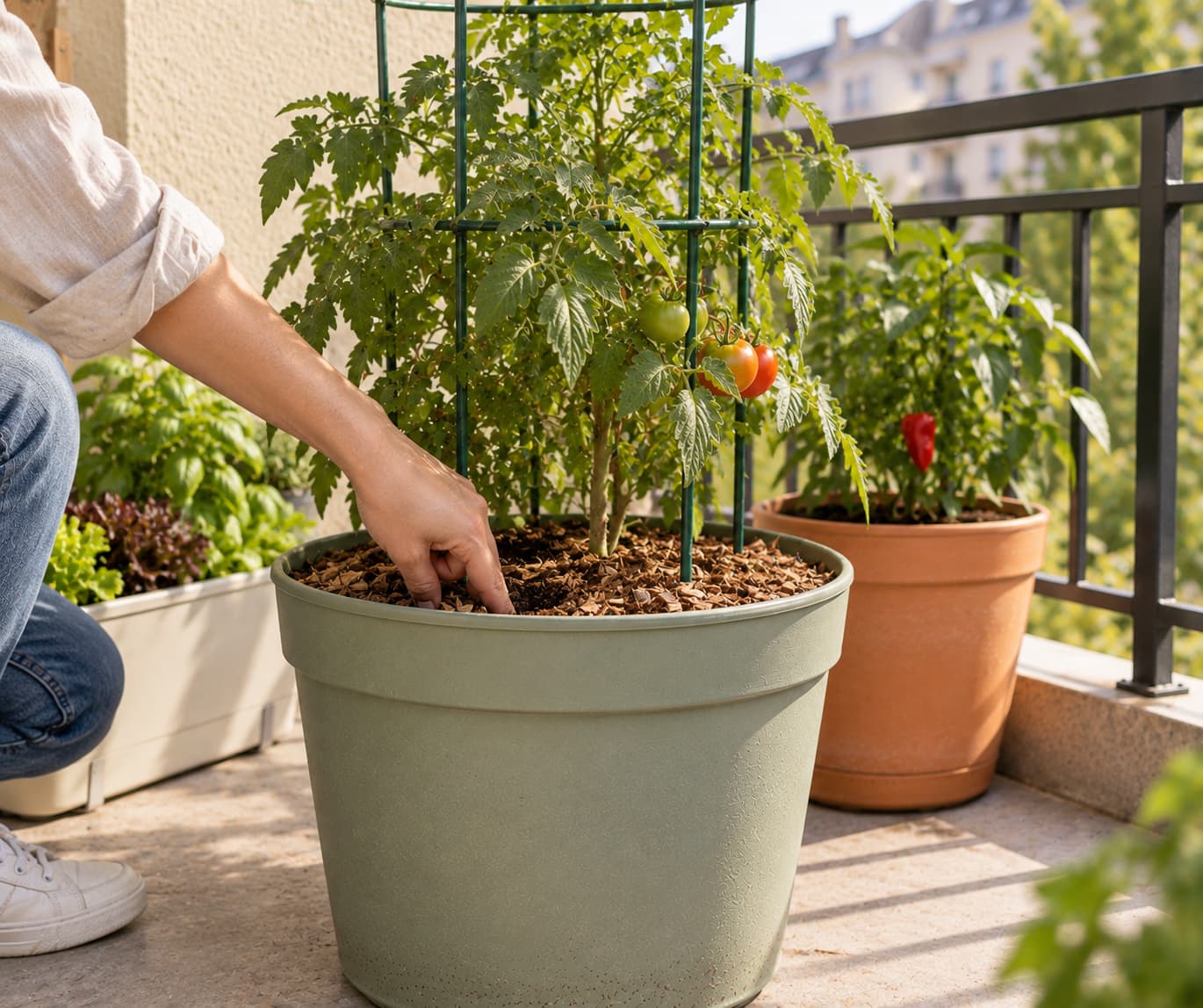
Morning is often a convenient time to water before the hottest part of the day, but the plant's actual moisture status matters more than the clock.
7 Container Mistakes That Make Balcony Gardening Harder
Mistake 1: Choosing the Smallest Pot That Technically Fits
Small root volumes swing from wet to dry quickly. Fruiting vegetables may survive in undersized containers, but they are much less forgiving when weather turns hot or windy.
Mistake 2: Using a Decorative Pot With No Drainage Plan
A beautiful outer pot is fine, but the growing pot still needs a safe way to release excess water. Never leave the inner root ball standing in trapped runoff.
Mistake 3: Using Rocks as a Drainage Fix
A deep rock or gravel layer reduces usable root space and does not replace open drainage holes plus a suitable potting mix.
Mistake 4: Putting a Large Tomato in a Tall, Narrow Pot
Tall fruiting plants become top-heavy. Choose a broad base and install support early so the plant, pot, and trellis act as a stable system.
Mistake 5: Ignoring Heat From the Container Itself
Dark plastic and exposed metal can heat strongly in direct sun. A container that works well in spring may need more buffering or a different position by midsummer.
Mistake 6: Forgetting Final Filled Weight
Wet potting mix, water reservoirs, stakes, and mature plants add substantial weight. Plan for the filled container, not the empty one you carry home.
Mistake 7: Buying Too Many Tiny Pots
Ten little containers can create ten separate watering problems. A few generous containers are often easier for beginners to keep healthy and consistent.
Best Container Strategy by Balcony Type
| Balcony Condition | Container Strategy | Be Careful With |
|---|---|---|
| Hot, sunny, dry | Larger plastic/resin, glazed, or self-watering pots; lighter colors; mulch where suitable | Tiny terracotta pots, small fabric bags, exposed metal |
| Windy upper floor | Broad stable bases, secure supports, compact cultivars | Tall narrow pots and unsecured trellises near the edge |
| Small or partly shaded | Window boxes and compact containers for leafy greens and suitable herbs | Large fruiting crops if light is inadequate |
| Cool / rainy climate | Reliable drainage, airy potting mix, careful moisture checks | Containers sitting in full saucers |
| Limited time for watering | Larger moisture-retentive pots or well-designed self-watering containers | Small porous pots that dry rapidly |
Drag the bar below or swipe horizontally to view the remaining columns.
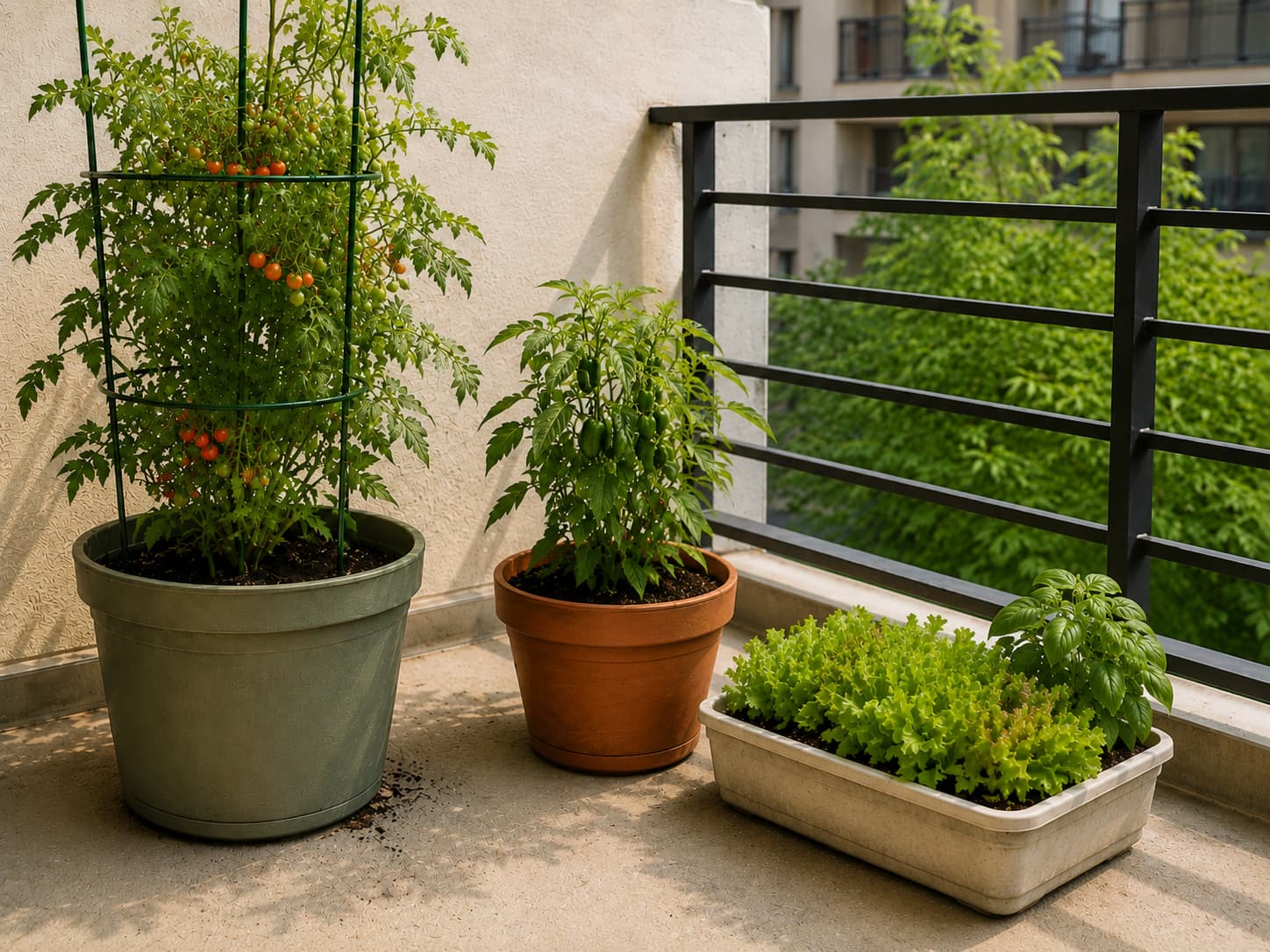
A Simple Three-Container Starter Setup
If you are building your first edible balcony, start with three containers instead of trying to optimize twenty at once:
- One generous tomato container with stable support.
- One medium pepper or eggplant container.
- One wide box for lettuce, radishes, basil, or other quick crops.
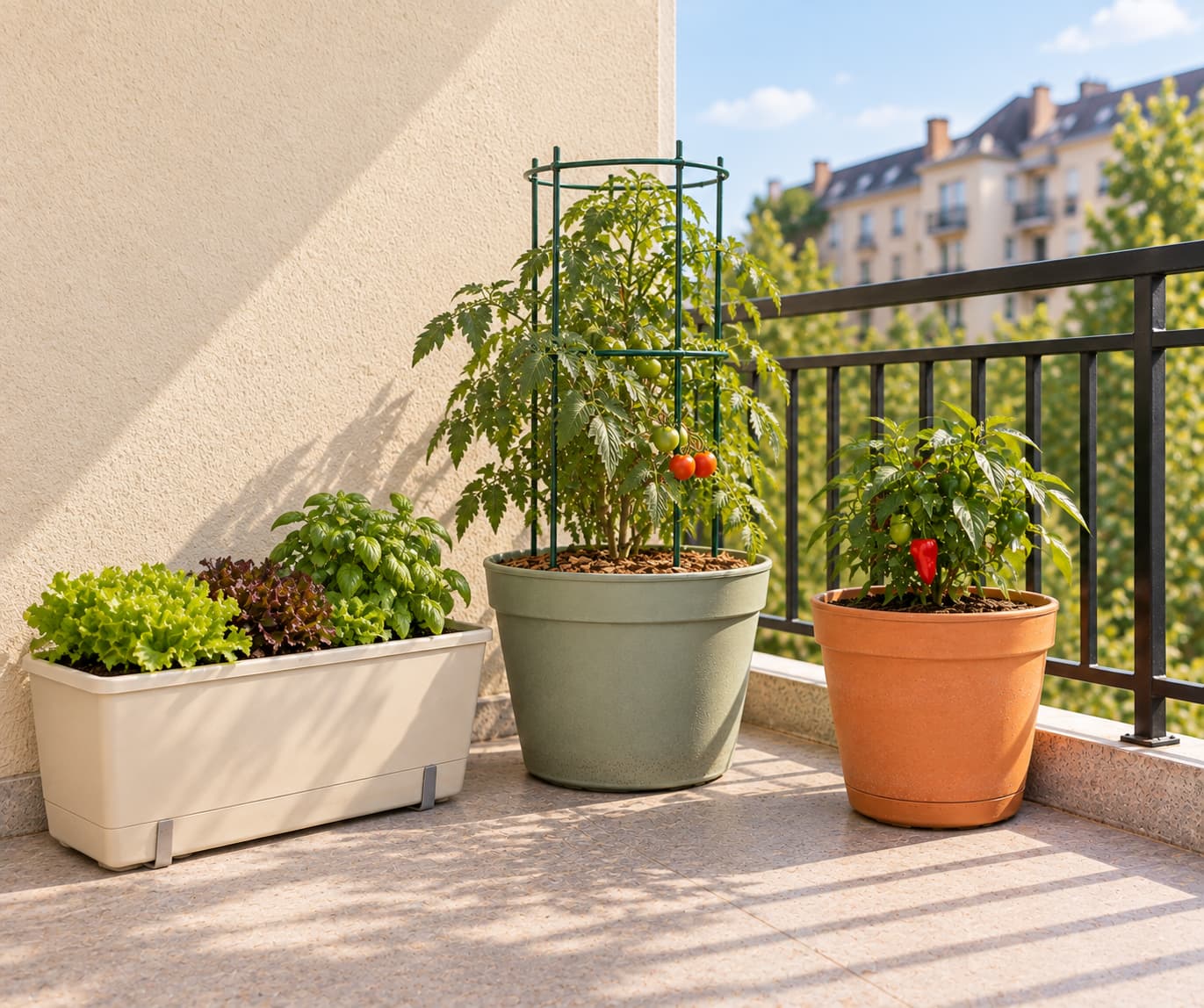
That small setup teaches you how quickly different root volumes dry, where wind is strongest, how much sun the balcony really receives, and whether runoff is easy to manage. Add more only after the routine feels easy.
FAQ: Balcony Vegetable Containers
1. What is the best container for balcony vegetables?
For many beginners, a sturdy plastic or resin pot with drainage is the easiest all-around choice because it is lightweight and loses moisture more slowly than porous terracotta or fabric. The right size still depends on the crop, climate, wind, and watering routine.
2. Is a 5-gallon pot big enough for tomatoes?
It can work for some compact or patio tomato cultivars, but standard tomatoes are generally easier to keep evenly moist and stable in larger containers. If you have safe space for more root volume, size up.
3. Do vegetable pots need drainage holes?
Yes, unless the container is a purpose-built self-watering system with its own overflow and drainage design. Ordinary planted pots need a reliable route for excess water to leave the root zone.
4. Are fabric grow bags good for balconies?
They can work well because they are lightweight when empty and easy to store. Their main trade-off is faster drying, which can become demanding on sunny or windy balconies.
5. Are terracotta pots good for vegetables?
Yes, but porous terracotta loses water faster than plastic or glazed containers. It is often easiest in moderate exposure or where frequent moisture checks are not a problem.
6. Should I put rocks in the bottom of a vegetable pot?
No rock layer is needed to make a normal container drain. Use open drainage holes and an appropriate potting mix. If potting mix washes through a large hole, a small piece of mesh can keep the mix in place without filling the base with stones.
7. How do I know whether a large planter is too heavy for my balcony?
Do not rely on a universal online weight limit. Check your building or property guidance and think about the wet, fully planted weight rather than the empty pot. For large or concentrated loads, get building-specific professional advice.
Sources
- Penn State Extension. “Container Vegetable Gardening: Four Keys to Success.” extension.psu.edu
- University of Illinois Extension. “Growing Vegetables in Containers.” extension.illinois.edu
- University of Illinois Extension. “Container Drainage Options.” extension.illinois.edu
- Royal Horticultural Society. “How to Grow Edibles on Your Balcony.” rhs.org.uk