Sago Palm Turning Yellow: Causes, Checks, and What to Do
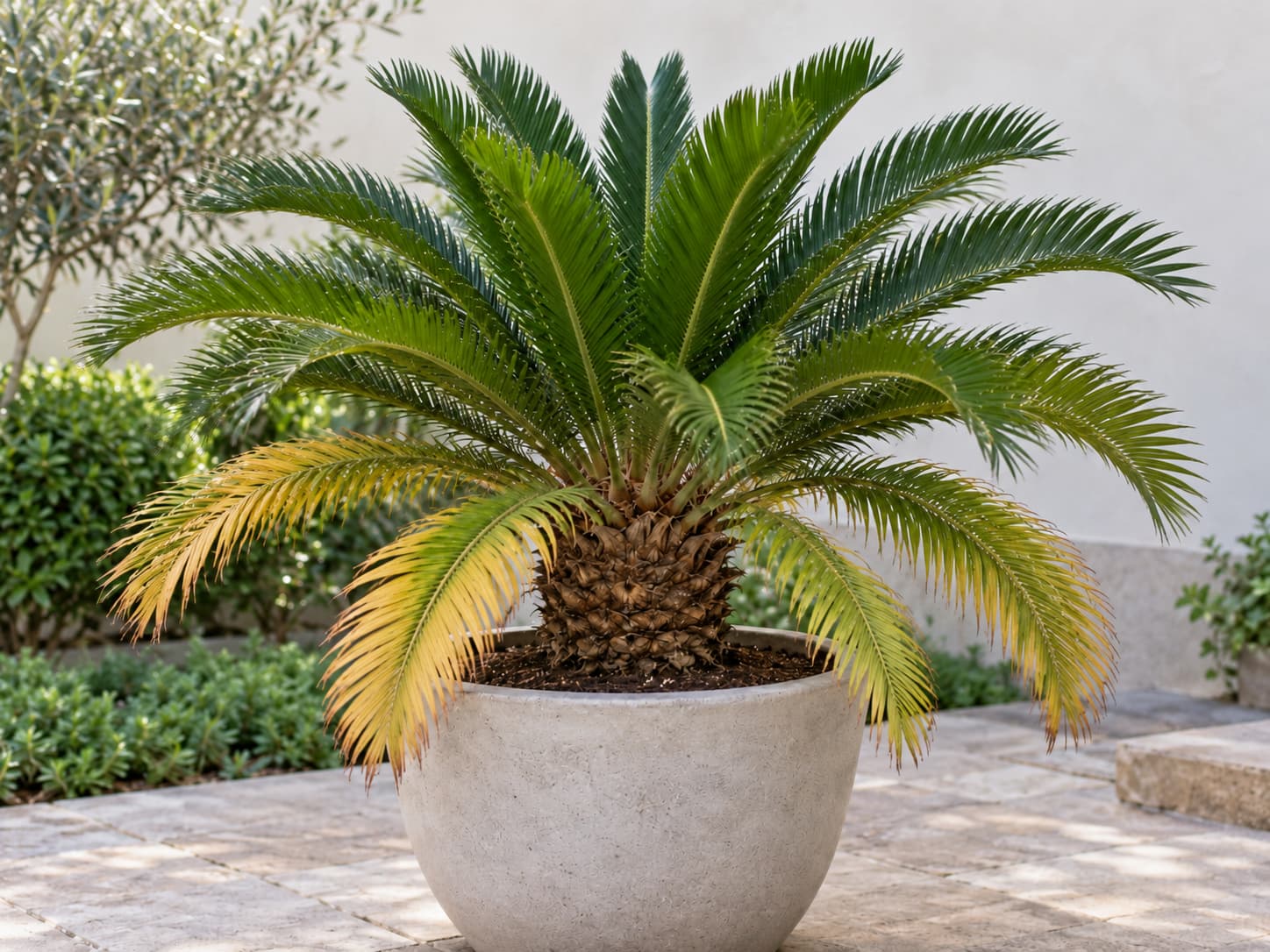
Is your sago palm turning yellow? Look at which fronds are changing before you reach for the watering can. A few old, lower fronds can yellow naturally. Yellow new growth, spreading pale patches, or white crusts beneath the leaves tell a different story—and need different solutions.
A sago palm (Cycas revoluta) is a cycad, not a true palm. It grows slowly and needs a well-drained root zone. This guide helps you distinguish normal aging from water stress, pests, manganese deficiency, light damage, and cold injury. You will also learn what to check first and what not to do.
Quick Answer: Check These Four Things First
If the trunk and center remain firm, the plant may simply need a corrected routine and time. If the crown becomes soft or foul-smelling, or a majority of fronds decline rapidly, investigate root or crown rot promptly.
Sago Palm Yellow Leaves: Match the Symptom to the Cause
| What you notice | Possible explanation | What to check first |
|---|---|---|
| One or a few oldest, lowest fronds yellow gradually | Natural leaf aging | Are younger fronds green and the crown firm? |
| Widespread yellowing with damp, slow-drying soil | Excess moisture, poor drainage, or root damage | Pot holes, standing water, and root firmness |
| Dry, crisp leaflet tips with a very dry root ball | Underwatering or heat-related stress | Moisture deeper in the pot, not only on top |
| Young fronds distorted, short, yellow, or brown-streaked | Manganese deficiency or impaired nutrient uptake | New growth, drainage, recent repotting, and soil pH |
| Yellow blotches with white, crust-like insects under leaves | Cycad aulacaspis scale or another scale insect | Leaflet undersides, stalks, and crown |
| General pale green or yellow foliage without obvious pests | Nutrient limitation, root stress, or insufficient light | Growing conditions and fertilizer history |
| Bleached patches on the brighter side | Sun scorch after sudden exposure | Recent move to stronger direct light |
| Upper fronds brown or yellow following frost | Cold injury | Recent temperatures and condition of central crown |
This is a starting checklist, not a diagnosis based on color alone. Several problems can occur together. For example, poor drainage can damage roots and also prevent normal nutrient uptake. That is why checking the pot and the undersides of the fronds usually tells you more than adding fertilizer.
Normal Aging or a Problem? Read the Pattern
Normal: Only the Oldest Lower Fronds Turn Yellow
Older fronds eventually age out, even on a healthy sago palm. When the lowest fronds yellow slowly and the rest of the plant stays firm and green, there may be nothing to fix. A new flush can appear later when growing conditions are favorable, but sago palms are naturally slow.
Leave a partly green frond in place while it is still functioning. Once it is fully yellow or brown, you can remove it with clean pruners if you want a tidier appearance.
Check Further: Several Leaf Levels Change Together
Yellowing deserves closer attention if middle and upper fronds are also affected, growth emerges distorted, or discoloration spreads rapidly. Also investigate if the pot smells sour, the base becomes soft, or you find insects along the leaflets. Those patterns cannot be explained by old-leaf turnover alone.
Cause 1: Overwatering, Poor Drainage, and Root Rot
Moisture stress is a sensible early check because Cycas revoluta needs roots with access to air as well as water. Dense potting mix, an oversized container, a blocked drainage hole, or standing water in a decorative pot can all prolong saturation. Damaged roots then struggle to supply the foliage, so yellowing may continue even though the soil feels wet.
How to Check the Root Zone
- Feel beneath the surface. Check several centimeters or inches down with a clean wooden skewer or your finger, where reachable. A dry crust on top does not prove the root ball is dry.
- Look under the growing pot. Confirm that drainage holes are open. Empty any water sitting in a saucer or decorative cachepot.
- Review recent watering. Ask whether the soil remains soggy because of low light, cool weather, container size, or a heavy mix—not only how often you add water.
- Inspect roots when symptoms warrant it. If many fronds are declining while the mix stays persistently wet, gently slide the root ball out. Keep firm, healthy roots; look for collapsing, mushy tissue and a bad smell.
How to Fix It Without Overreacting
For a firm plant with healthy roots, correct the cause of slow drainage and let excess water escape. Water thoroughly only when the root zone has dried appropriately for the pot and conditions. There is no universal seven-day or fourteen-day rule. A large pot in a cool room may take much longer to dry than a small pot in bright light.
If you find substantial root decay, remove clearly dead, mushy roots with clean tools and repot in a suitable airy mix. Choose a container with drainage holes, sized reasonably for the remaining roots. Avoid stripping or heavily cutting firm roots just because they look dark. For the general principles of aeration and container drainage, see our fast-draining soil mix guide.
Cause 2: Underwatering and a Dried-Out Root Ball
Underwatering can also produce yellow or dry-looking fronds. The difference is the condition of the root zone. If the pot feels unusually light, the mix is dry deeper down, and leaflet tips are crisp, the plant may not be getting enough moisture.
Water the root ball thoroughly and allow it to drain. If very dry potting mix repels water, apply water gradually so the interior actually becomes moist instead of letting it run straight down the pot's sides. Then wait until the mix has dried back appropriately before the next watering. Do not keep it constantly wet as compensation.
Cause 3: Yellow, Distorted New Fronds — Is It Frizzle Top?
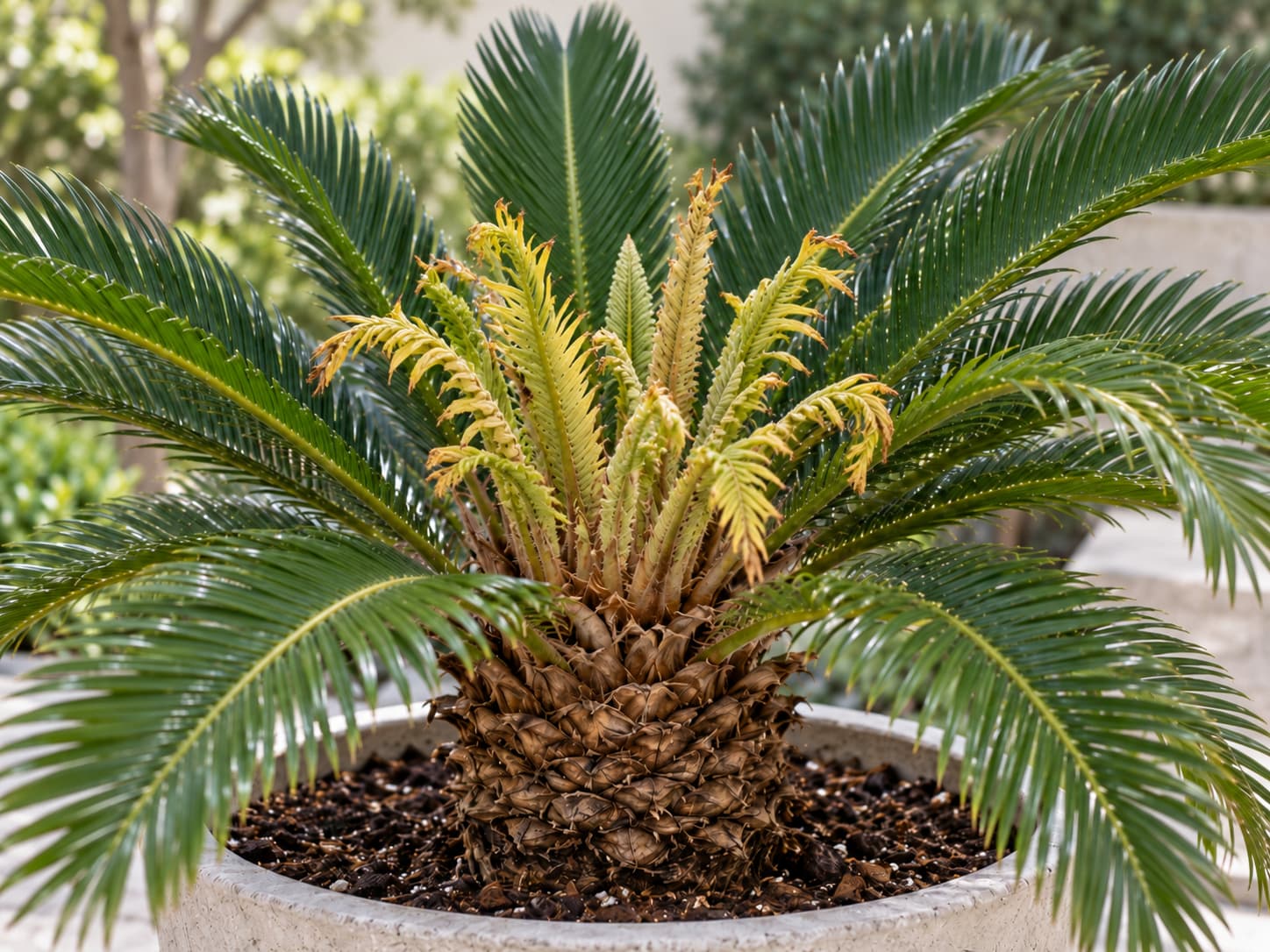
Frizzle top is a characteristic disorder associated with manganese (Mn) deficiency. New sago fronds may emerge shorter than usual, yellow or brown-streaked, and misshapen. In more serious cases, leaflet growth becomes visibly stunted and brown. This differs from ordinary aging, which begins on the older, outer foliage.
However, young yellow fronds alone do not prove a simple fertilizer shortage. The University of Florida IFAS Extension notes that alkaline soil, damaged roots, excessive or insufficient water, and transplant stress can limit manganese uptake.
What to Do About Suspected Manganese Deficiency
- Check the root zone and correct persistent wetness or poor drainage first.
- If the plant is growing in the ground or the problem persists, consider a soil or growing-media pH test and local extension advice.
- When manganese deficiency is reasonably supported, use an appropriate manganese-containing fertilizer or manganese sulfate product strictly according to its label and local guidance.
- Judge success by later healthy growth. Fronds already deformed or necrotic will not return to perfect green.
Manganese is not magnesium. Epsom salt contains magnesium sulfate, so it is not a substitute for a manganese treatment. Avoid adding either nutrient merely because a leaf is yellow.
Cause 4: Scale Insects and Mealybugs
One of the most important sago-specific checks happens on the undersides of the leaflets. Cycad aulacaspis scale (Aulacaspis yasumatsui) appears as tiny white, armored insects. Infested fronds may first develop yellow blotches, then turn yellow and brown as the pests feed. Heavy infestations can create a white, crusted appearance on leaves and stalks.
Other scale insects and cottony-looking mealybugs can also cause yellowing. Distinguish these from ordinary mineral deposits or dust by inspecting the small raised bodies and their distribution on leaf surfaces.
What to Do If You Find Pests
- Isolate movable pots from other plants while you check the infestation.
- Inspect both leaf surfaces, the leaf stalks, and the crown. Cycad aulacaspis scale can persist in protected parts of a plant, including the roots.
- Remove accessible scale with a suitable water spray or gentle cleaning, taking care not to damage the crown.
- Use only locally approved plant treatments. Horticultural oil can help control some scales when properly applied to infested surfaces. Follow the product label, repeat as directed, and avoid application conditions that could burn the foliage.
- Check again. A single cleaning may leave hidden insects or surviving crawlers. For serious infestations, consult a local extension service or qualified plant-care professional.
The UF/IFAS sago palm pest guide provides images and regional treatment information. If insects are present, solve that problem before treating the plant as a nutrient-deficiency case.
Cause 5: Too Much Sun, Too Little Light, or Nutrient Stress
Sun Scorch After a Sudden Move
Sago palms can grow in strong light, but a specimen adapted to indoor shade may scorch when moved straight into intense afternoon sun. Pale, bleached patches often appear on the most exposed leaflets. Acclimate it gradually, and provide bright, filtered light indoors.
Low Light Can Make Moisture Problems Worse
Dim conditions slow water use and can leave potting mix wet longer. Move the plant to a brighter suitable position if needed, but do not suddenly expose soft indoor foliage to hours of harsh sun. Recheck watering after any change in light or season.
Fertilizer Is Not the First Fix
A plant with chronically pale foliage may benefit from appropriate nutrients during active growth. First, though, rule out pests, poor drainage, and major root stress. If feeding is warranted, use a suitable slow-release or other labeled fertilizer at the recommended rate. Excess fertilizer can injure roots and cause more yellowing. Persistent symptoms may justify testing the soil or growing medium.
Cause 6: Cold Injury or Recent Repotting Stress
Cold damage may show up as yellowed or brown sections on exposed upper fronds after a frosty night. The severity depends on the temperature, duration, site, and plant condition. Avoid relying on one temperature number as a guarantee that an outdoor sago is safe.
After a freeze, wait until further frost danger has passed before major cleanup. Damaged fronds may provide some protection while you assess whether the central crown is still firm. According to UF/IFAS, a healthy crown can produce a fresh flush even when older cold-injured leaves look unattractive.
Yellowing after repotting or a sudden move can also reflect disturbed roots or changing conditions. Keep light, temperature, and moisture reasonably stable. Do not repeatedly unpot the plant or add several treatments at once unless there is clear evidence of rot or pests.
A Simple Seven-Day Sago Palm Recovery Check
Recovery takes longer than one week, especially for this slow-growing cycad. Use seven days to identify a cause and stabilize care—not to expect yellow leaves to turn green again.
| When | Action | What to record |
|---|---|---|
| Day 1 | Photograph the entire crown; note whether old or new fronds are affected | Which leaf level changed first |
| Day 1 | Inspect the undersides for scale or mealybugs; check drainage and mix moisture | White crusts, insects, wetness, odors |
| Days 2–3 | Correct the confirmed issue: standing water, a pest infestation, or an unsuitable location | One main change at a time |
| Days 4–7 | Recheck moisture and look for additional yellowing or visible pests | Whether the decline is spreading |
| Following weeks | Keep conditions stable; assess the crown and future frond flushes | Firm center and healthy new growth |
When and How to Cut Off Yellow Sago Palm Fronds
Wait until a frond is fully yellow or brown before routine removal. Partly green fronds can still contribute to the plant, especially when it grows slowly. Use clean, sharp pruners and cut the old frond stalk near its attachment without cutting into the trunk or central growing point.
Do not remove an entire healthy green crown for appearance. After frost, postpone major pruning until the risk of another freeze has passed. Wear protective gloves and long sleeves when working: sago leaflet tips and stalks are sharp, and all parts of the plant are toxic if swallowed.
Sago Palm Toxicity: Important for Homes With Pets and Children
If an animal may have swallowed any part of the plant, contact a veterinarian immediately, even if there are no symptoms yet. In the United States, the ASPCA Animal Poison Control Center can be reached at 888-426-4435 (a consultation fee may apply). Do not wait for vomiting or other signs before seeking help.
If children or pets might chew plants or reach fallen seeds, the safest choice is not to keep a sago palm in an accessible location. Collect fallen seeds using gloves and dispose of them securely.
Frequently Asked Questions
01Why are the bottom leaves of my sago palm turning yellow?
Gradual yellowing of only the oldest, lowest fronds is often normal aging, especially if the rest of the crown stays green and firm. If several levels yellow together, inspect moisture, roots, and insects.
02How often should I water a sago palm indoors?
There is no fixed interval. Check moisture below the surface and water when the root zone has dried appropriately, then let the container drain freely. Pot size, season, temperature, and light change how fast the mix dries.
03Can yellow sago palm leaves turn green again?
Fully yellow or dead fronds generally will not return to green. Correcting the cause can protect remaining green foliage and improve the next growth flush.
04What causes frizzle top on a sago palm?
Frizzle top is commonly associated with manganese deficiency, but poor drainage, root damage, alkaline soil, or other stress may limit manganese uptake. Check the growing conditions before applying manganese fertilizer.
05What is the white powdery or crusty material on my sago palm?
A coating of tiny white armored insects, especially beneath leaflets and along stalks, may be cycad aulacaspis scale. Inspect closely; a heavy infestation can cause yellow blotches and leaf decline and may need repeated, locally appropriate treatment.
06Should I cut yellow fronds off my sago palm?
Remove fully yellow or brown fronds with clean tools if desired, but keep partly green fronds. Do not damage the trunk or crown. If leaves were injured by frost, delay major pruning until frost danger has passed.
07Are sago palms poisonous to dogs and cats?
Yes. All parts are toxic and the seeds are particularly dangerous. If you suspect ingestion, contact a veterinarian or animal poison service immediately. Do not wait for symptoms.
Related Reading
- Succulent Soil Mix — understand drainage, root-zone air, and why a gravel layer is not a fix.
- Orchid Root Rot: Diagnose and Save — compare the general signs of healthy and decaying roots (the potting mix is different).
- Monstera Leaves Turning Yellow — another symptom-first approach to houseplant care.
Sources and Further Reading
- NC State Extension — Cycas revoluta (growth habit, light, drainage, cold sensitivity, pests, and plant toxicity).
- University of Florida IFAS Extension — Key Plant, Key Pests: Sago Palm (cycad scale, mealybugs, manganese deficiency, and cold injury).
- University of Georgia Extension — Sago Palms: Pros, Cons & Care (manganese versus magnesium and common cycad problems).
- ASPCA — Sago Palm (animal poisoning risks and emergency guidance).