A practical guide to diagnosing slow rosemary growth and restoring healthy, compact plants.
Quick Answer
If rosemary stops growing, the most common causes are environmental stress.
The seven most frequent reasons include:
- Insufficient light
- Overwatering
- Poorly draining soil
- Lack of pruning
- Root restriction
- Cold stress
- Poor airflow
Rosemary usually resumes growth once light intensity, drainage, and watering intervals are corrected.
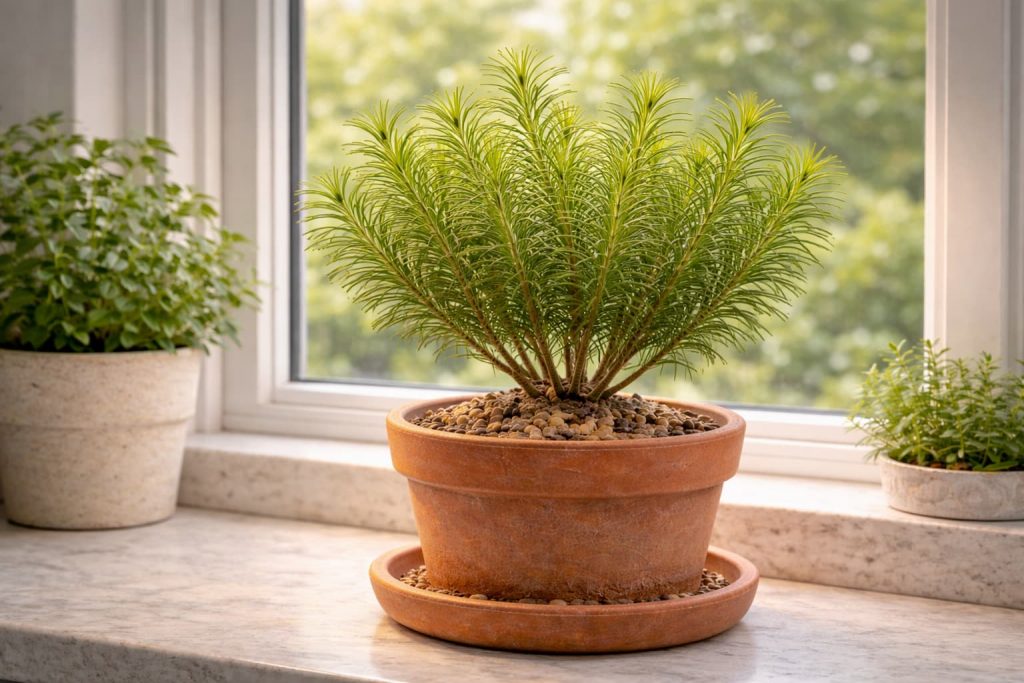
Why Rosemary Sometimes Stops Growing
Rosemary (Salvia rosmarinus) evolved in the Mediterranean under conditions that include:
- intense sunlight
- rocky mineral soil
- dry air
- constant wind
Indoor homes and sheltered gardens often provide the opposite:
- weaker light
- moist soil
- still air
- limited airflow
When conditions differ too much from its natural environment, rosemary often slows its growth dramatically instead of dying immediately.
This pause in growth is a protective stress response.
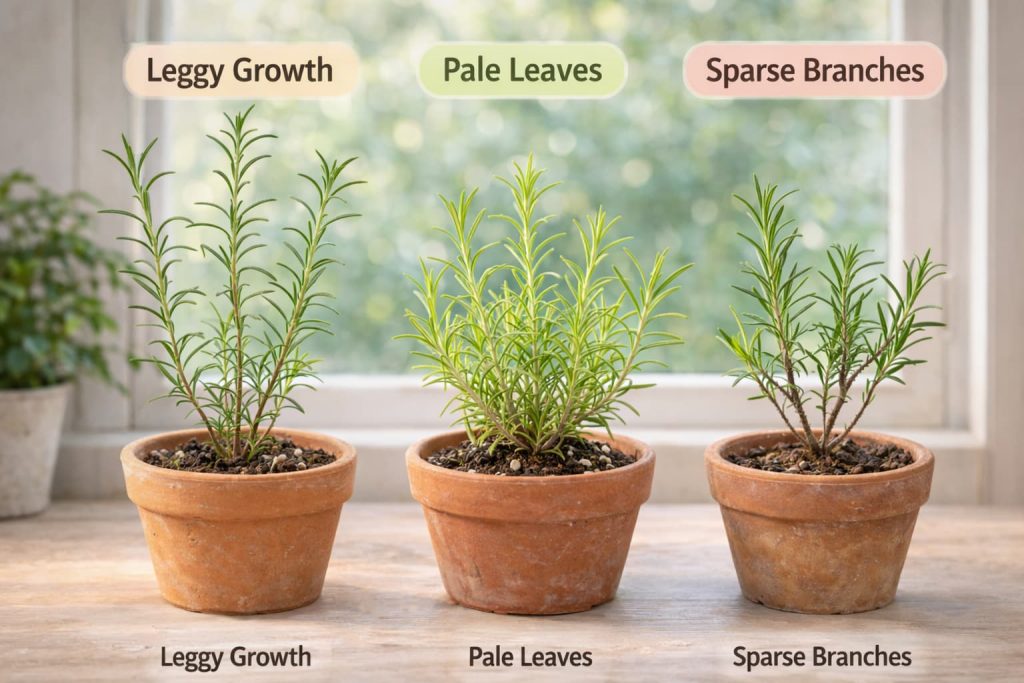
Insufficient Light
Light is the most important driver of rosemary growth.
When light levels are too low:
- stems stretch
- leaves become pale
- growth slows or stops
Minimum Light Requirement
Rosemary needs:
- 6 hours direct sunlight (minimum)
- 8–10 hours strong light (ideal)
Indoor plants often struggle during winter when sunlight intensity drops.
Gentle Fix
Move rosemary to the brightest window available, preferably south-facing.
If natural light is insufficient, a full-spectrum grow light for 10–12 hours daily often restores healthy growth.
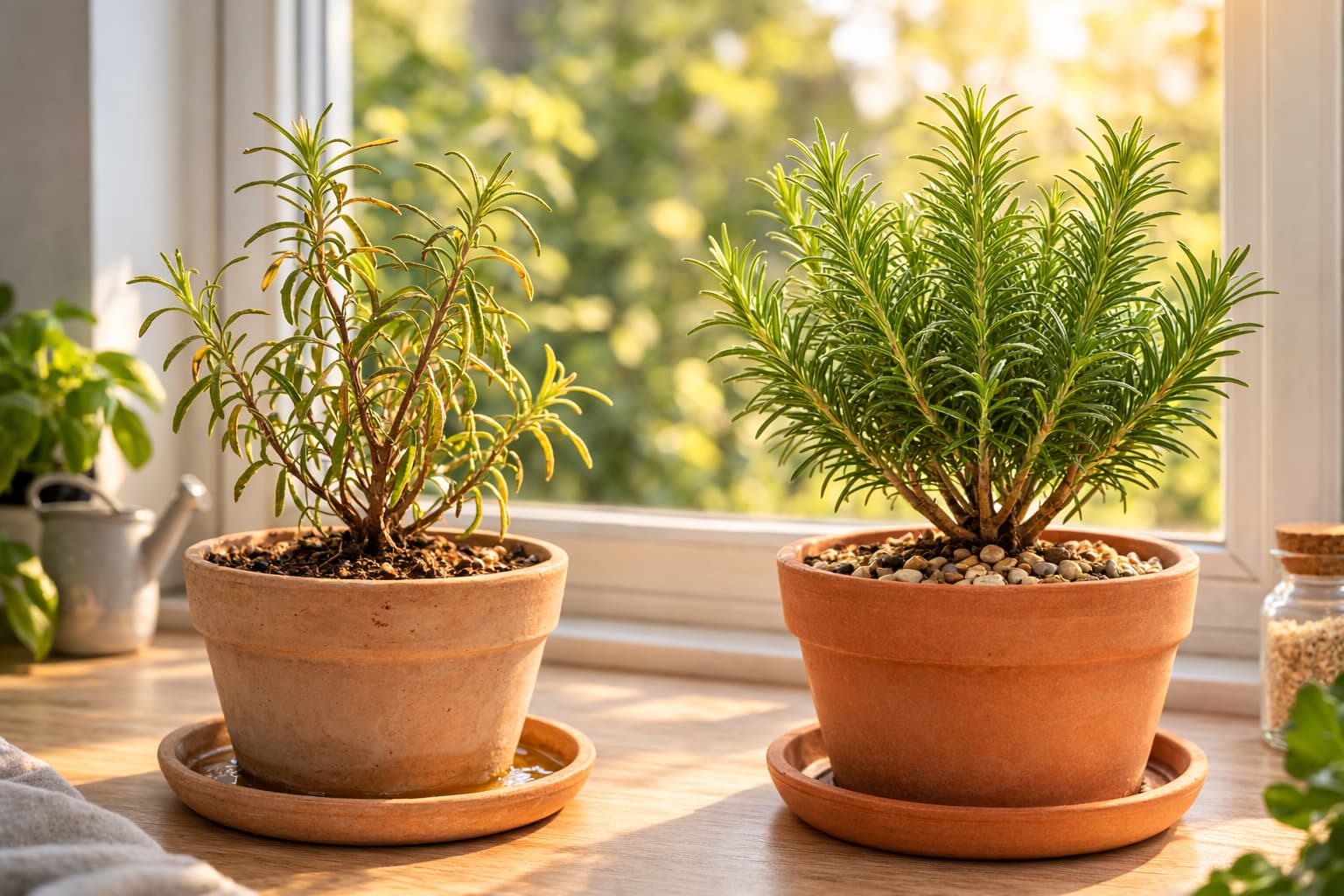
Overwatering
Rosemary roots require oxygen between watering cycles.
Constant moisture reduces oxygen availability and slows root function.
Signs of Overwatering
- drooping despite wet soil
- yellowing lower leaves
- slowed or stalled growth
Gentle Fix
Water deeply, then allow the top 3–5 cm (1–2 inches) of soil to dry before watering again.
Slight dryness is safer than constant moisture.
Heavy Soil
Many potting mixes hold water longer than rosemary prefers.
If soil remains wet too long, root respiration declines.
Ideal Soil Mix
A fast-draining blend works best:
- 60–70% potting soil
- 30–40% sand, grit, or perlite
This improves:
- drainage
- oxygen availability
- root expansion
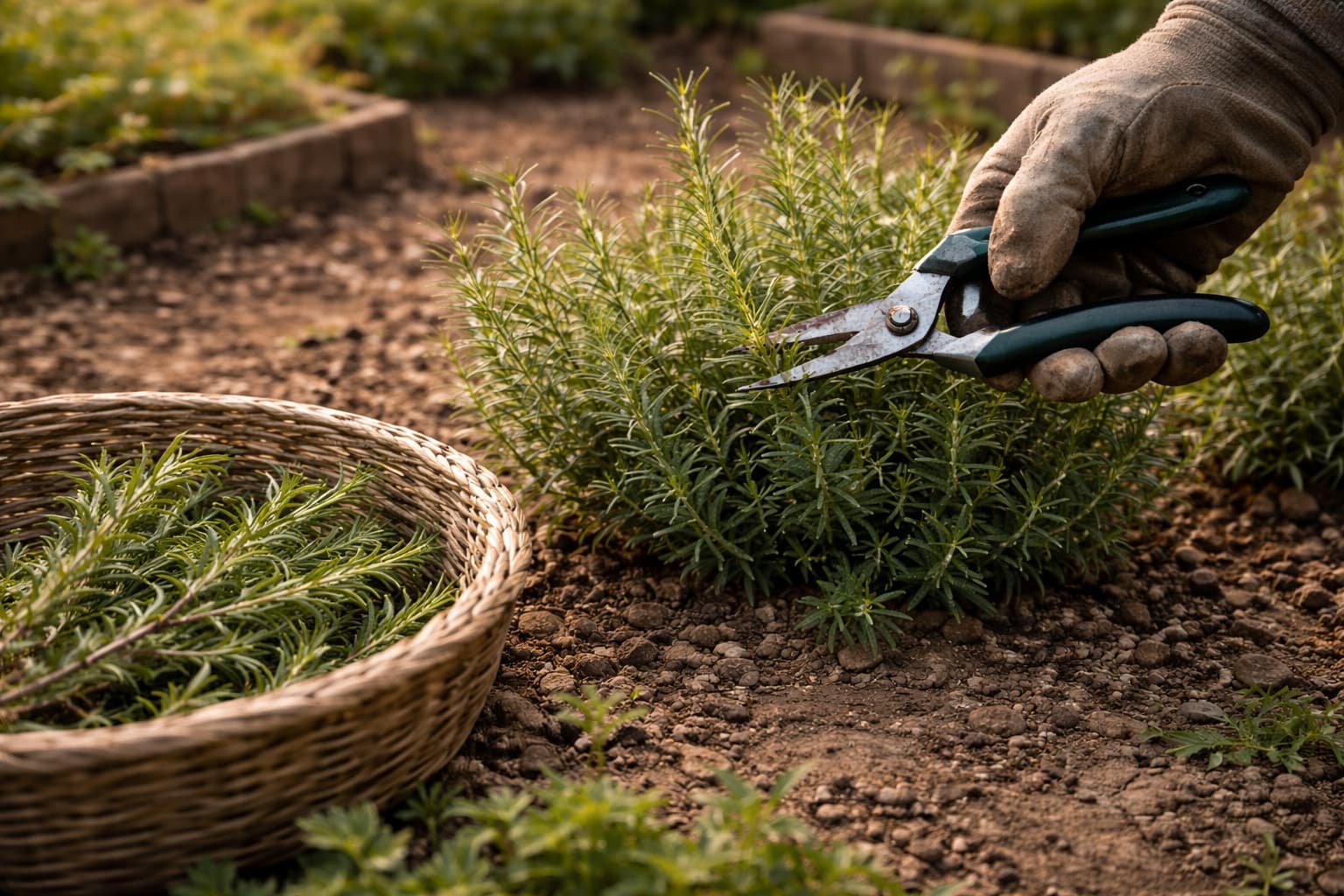
Lack of Pruning
Rosemary is a woody shrub that benefits from regular structural pruning.
Without pruning:
- stems grow tall and thin
- branching decreases
- plant structure weakens
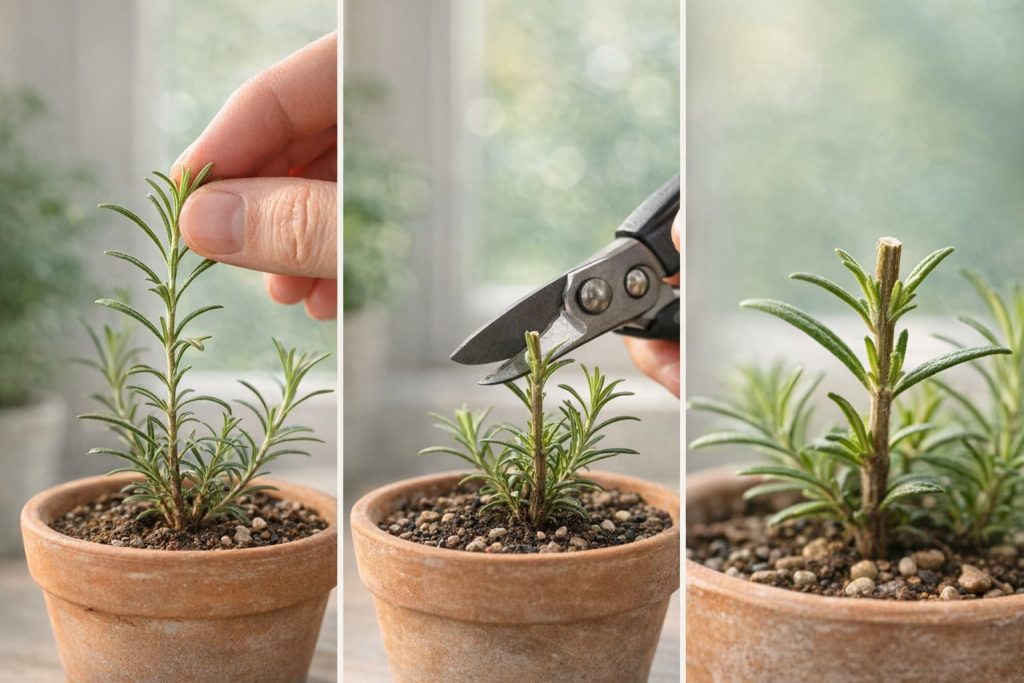
Gentle Fix
Pinch soft tips regularly.
Always prune just above a leaf node.
This encourages:
- branching
- thicker stems
- compact growth
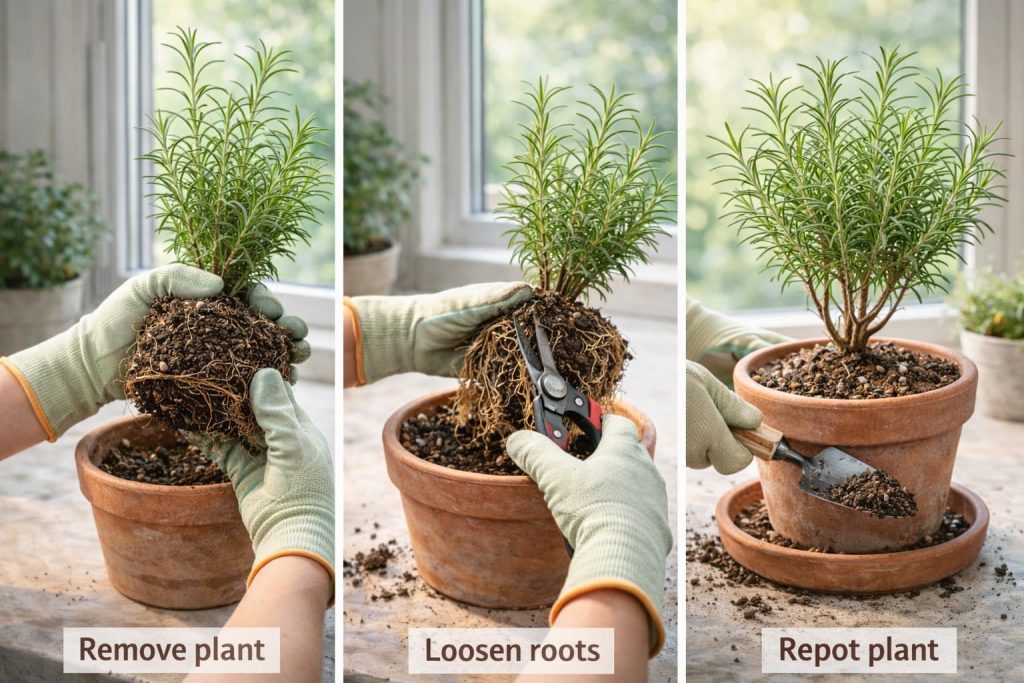
Root Restriction
Container rosemary eventually fills its available root space.
When roots become crowded:
- water circulation slows
- nutrient uptake decreases
- growth declines
Gentle Fix
Repot every 2–3 years into a slightly larger container.
Terracotta pots are ideal because they improve evaporation and drainage.
Cold Stress
Rosemary tolerates cool weather but dislikes sudden temperature shifts.
Ideal indoor conditions:
- 18–22°C (65–72°F) daytime
- slightly cooler nights
Cold drafts from windows or vents may slow growth.
Gentle Fix
Keep plants away from:
- cold window glass
- heating vents
- sudden temperature swings
Poor Airflow
Mediterranean plants expect constant air movement.
Still indoor air can lead to:
- weak stems
- fungal stress
- slower growth
Gentle Fix
Improve airflow with:
- occasional open windows
- small circulating fans
- proper spacing between plants
Air movement strengthens rosemary stems and improves plant health.
Signs Your Rosemary Is Recovering
After correcting environmental conditions, rosemary usually begins improving within 2–4 weeks.
Signs of recovery include:
- new shoot tips
- darker green foliage
- stronger fragrance
- tighter leaf spacing
Compact growth indicates healthy light levels.
When Slow Growth Is Normal
Rosemary naturally slows down during:
- winter months
- low-light seasons
- indoor overwintering
Growth typically accelerates again once daylight increases.
Rosemary Growth Recovery Checklist
Before assuming the plant is failing, check these conditions:
- Does it receive 8+ hours of strong light?
- Does the pot drain quickly?
- Does soil dry between watering?
- Is there airflow around the plant?
- Has it been lightly pruned recently?
Correcting these factors usually restores growth.
Final Thoughts
Rosemary rarely stops growing without reason.
In most cases, the plant is simply responding to environmental imbalance.
Once conditions resemble its Mediterranean origins — with strong light, dry soil cycles, airflow, and occasional pruning — rosemary typically resumes healthy growth.
With the right care, a rosemary plant can thrive for many years.