Rosa chinensis Guide: How to Grow the Chinese Rose
Learn how to grow Rosa chinensis, support repeat blooming, prune correctly, manage common rose diseases, and choose reliable China rose varieties.
Quick Summary
Rosa chinensis — the Chinese Rose or "Monthly Rose" — is arguably the most important rose in history, and almost nobody knows it. Every modern rose that blooms repeatedly through the summer — every Hybrid Tea, Floribunda, and Grandiflora — carries genes from this one species. Before R. chinensis was introduced to Europe from China in the 1790s, all European roses bloomed exactly once per year. This single plant changed rose breeding forever. This guide covers the genetic legacy, the correct pruning for repeat bloomers, the black spot and rose rosette disease reality, and the rose oil infusion safety rule that most DIY guides skip.
In This Guide
- What Is Rosa chinensis? (The Rose That Changed Everything)
- Plant Profile at a Glance
- The Genetics: How One Chinese Rose Created Modern Roses
- Complete Care Guide: Sun, Soil, Water, Fertilizer
- Pruning Rosa chinensis: The Repeat-Bloomer Method
- Rose Diseases: Black Spot and Rose Rosette
- Rose Oil Infusion: The Safety Rule Most Guides Skip
- Best Rosa chinensis Varieties
- Frequently Asked Questions
What Is Rosa chinensis? (The Rose That Changed Everything)
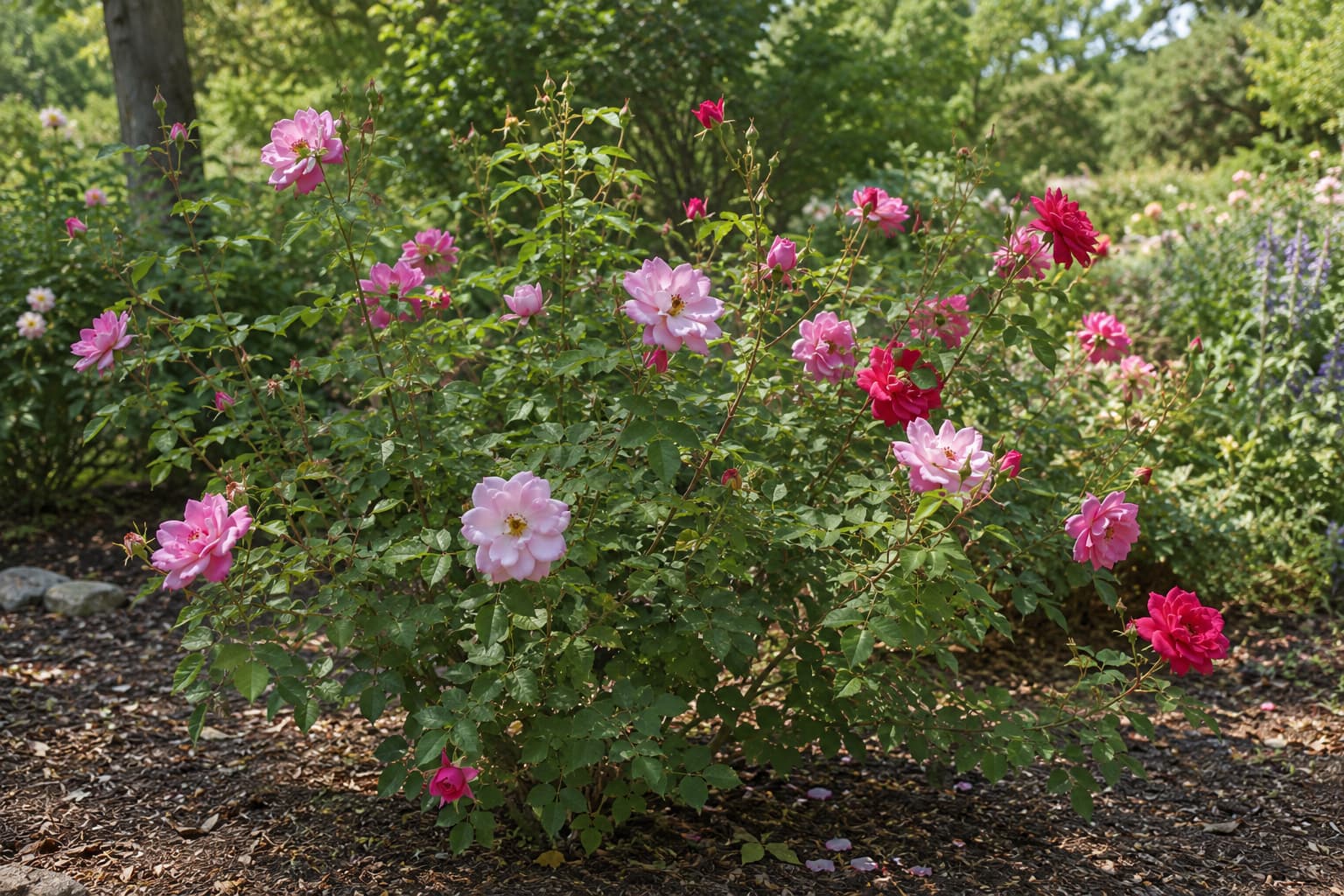
Rosa chinensis , commonly called the Chinese Rose or Monthly Rose (because of its repeat-blooming habit), is a species of rose native to southwest China — primarily Sichuan, Guizhou, and Yunnan provinces. It has been cultivated in China for at least 1,000 years, valued for both its ornamental beauty and its use in traditional medicine.
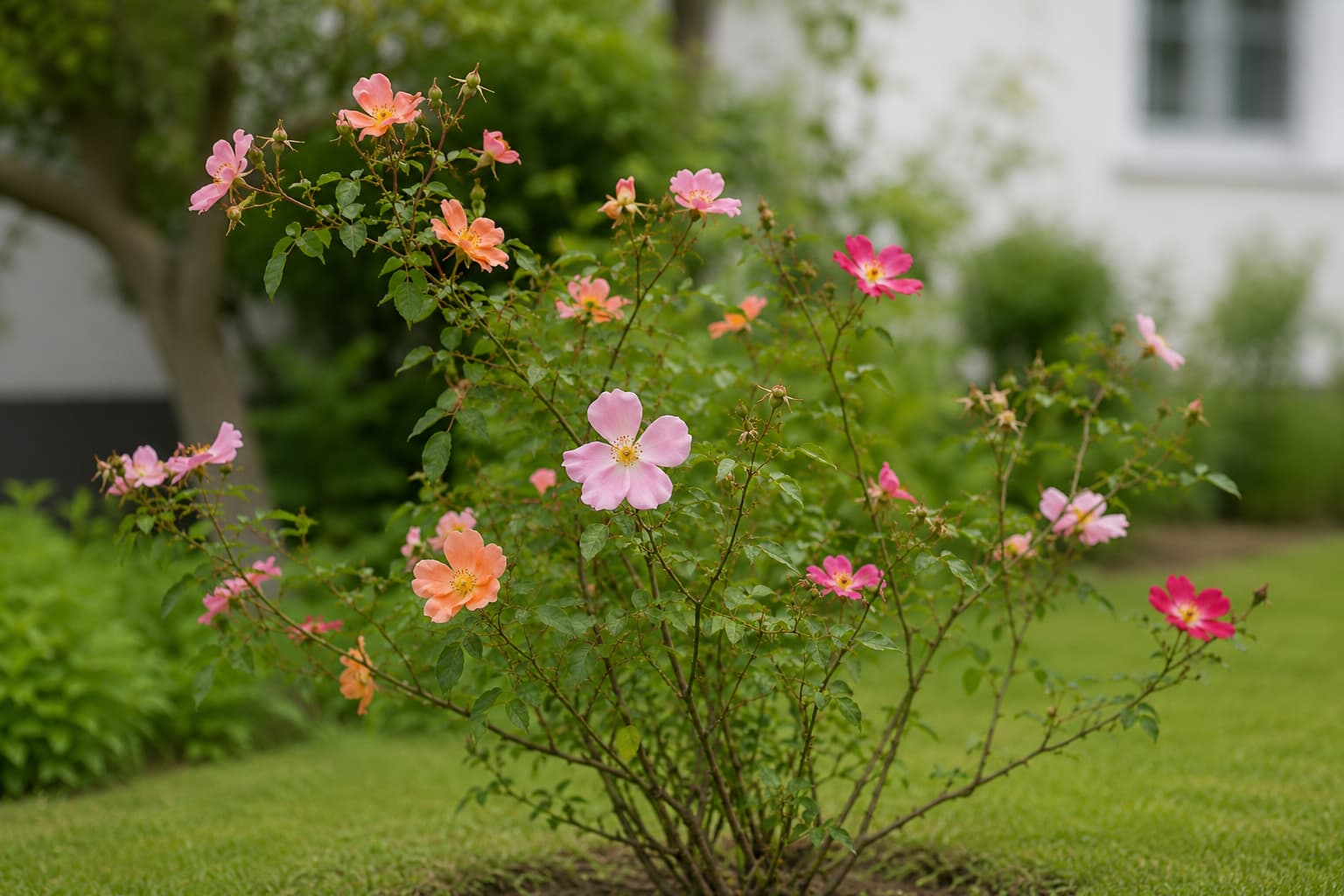
Botanically, it's a member of the large Rosa genus within Rosaceae . It grows as an upright to bushy shrub, 3–6 feet tall, with slender, relatively thornless stems, glossy dark green serrated leaves, and semi-double to single flowers in shades of pink, red, and occasionally white or apricot. The flowers are typically 2–3 inches across with a light, delicate fragrance.
The trait that makes R. chinensis historically significant: it blooms repeatedly throughout the growing season rather than in a single spring flush. This trait is controlled by a recessive gene that suppresses the terminal flowering signal, allowing the plant to produce new flowering shoots continuously. Before R. chinensis reached Europe, every rose in Western cultivation — Gallicas, Damasks, Albas, Centifolias — bloomed once in spring and was done for the year.
Rosa chinensis Is NOT the Same as Rosa rugosa
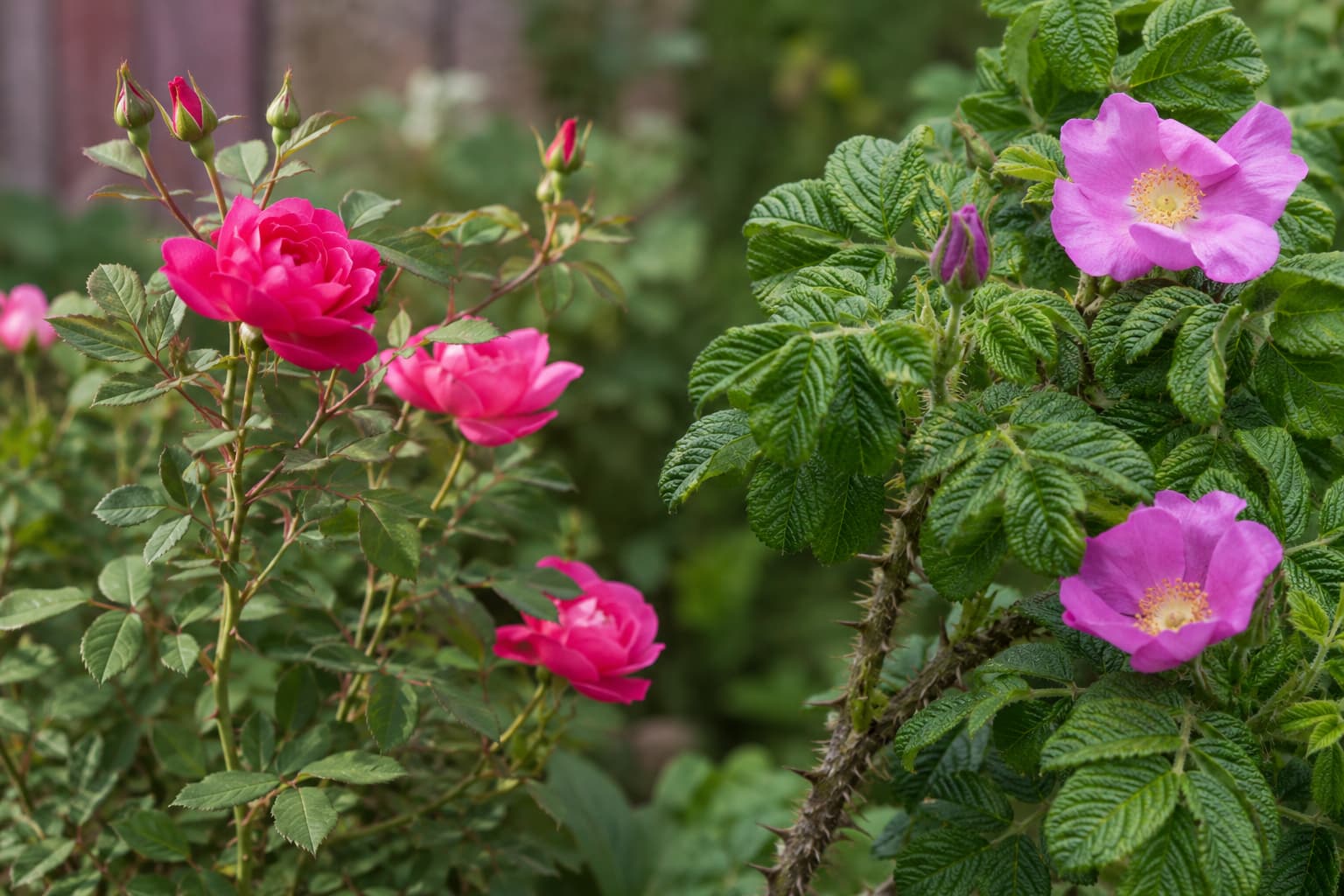
Rosa rugosa (Japanese Beach Rose) is a completely different species — native to East Asia, thick-stemmed, heavily thorned, with wrinkled leaves and large single flowers followed by prominent red hips. R. rugosa also repeats to some degree, but it's not the genetic source of modern repeat-blooming. Both are "true roses" (genus Rosa ). Neither is more "true" than the other. The original article incorrectly framed this as "R. chinensis vs true roses (R. rugosa)" — this is taxonomically wrong. Both are true roses. They're just different species with different traits.
Plant Profile at a Glance
| Feature | Details |
|---|---|
| Common Name | Chinese Rose, Monthly Rose, China Rose |
| Scientific Name | Rosa chinensis |
| Plant Type | Deciduous to semi-evergreen flowering shrub |
| USDA Zones | 6–10 |
| Mature Size | 3–6 ft tall, 2–4 ft wide (varies by variety) |
| Bloom Time | Repeat-blooming from late spring through fall (April–November in warm zones) |
| Flower Colors | Pink, crimson, red, apricot, white; often fading or changing color as blooms age |
| Fragrance | Light to moderate; not as strong as Damask or Gallica roses |
| Sun Needs | Full sun — 6–8 hours direct |
| Soil | Well-drained loam; pH 6.0–6.5 |
| Historical Significance | Ancestor of all modern repeat-blooming roses |
| Toxicity | Non-toxic. Petals are edible. Safe for children and pets when untreated. |
The Genetics: How One Chinese Rose Created Modern Roses
This is the story most rose guides don't tell. Before 1790, every rose in European gardens bloomed once per year — a glorious three-week display in June, then nothing but green leaves until autumn. This was accepted as the nature of roses. No one knew that on the other side of the world, Chinese gardeners had been growing roses that bloomed from spring through frost for centuries.
The key events:
- 1790s: The first Rosa chinensis cultivars — 'Old Blush' (pink) and 'Slater's Crimson' (red) — arrived in Europe via the British East India Company's tea trade routes. They were initially grown as greenhouse curiosities.
- Early 1800s: European breeders began crossing these Chinese roses with existing European varieties. The resulting hybrids — called "Hybrid Chinas" and later "Hybrid Perpetuals" — combined the repeat-blooming gene from R. chinensis with the larger flowers and stronger fragrance of European roses.
- 1867: 'La France' was introduced — the first Hybrid Tea rose, and the dividing line between "Old Garden Roses" (pre-1867) and "Modern Roses" (post-1867). 'La France' carried R. chinensis genes.
- Present day: Every modern repeat-blooming rose — Hybrid Teas, Floribundas, Grandifloras, English Roses, miniature roses — descends from R. chinensis . The repeat-blooming gene has been passed down through 200+ years of breeding into tens of thousands of cultivars.
The repeat-blooming trait is controlled by a recessive allele that modifies the plant's response to terminal flowering signals. In once-blooming roses, the growing tip produces a flower and the stem stops elongating. In R. chinensis and its descendants, the stem continues to grow past the flower, producing new lateral shoots that each terminate in another flower — creating the continuous bloom cycle.
Complete Care Guide: Sun, Soil, Water, Fertilizer
Light
Full sun — 6–8 hours of direct light. Rosa chinensis blooms in direct proportion to sun exposure. In partial shade, it survives but produces dramatically fewer flowers and is more susceptible to black spot and powdery mildew. Morning sun is especially important — it dries dew from leaves, which is the single most effective black spot prevention.
Soil
Well-drained, loamy soil with a pH of 6.0–6.5 . Roses are heavy feeders and benefit from rich organic matter — incorporate 20–30% compost into the planting hole. Avoid heavy clay without amendment; it holds too much water and encourages root rot. If your soil is clay, plant on a slight mound to improve drainage.
Watering
- Deep, infrequent watering is better than frequent shallow watering. Water at the base, never overhead — wet foliage is the #1 enabler of black spot and powdery mildew.
- Growing season: Water deeply 2–3 times per week during hot, dry weather. Aim for 1–2 inches of water per week total (from rain and irrigation combined).
- Winter (dormancy in Zones 6–7): Reduce watering significantly. The plant needs far less water when dormant. In Zones 8–10, continue light watering through winter as the plant may not go fully dormant.
- Mulch heavily with 2–3 inches of organic mulch (compost, shredded bark, or leaf mold) to retain moisture and suppress weeds. Keep mulch 2–3 inches away from the base of the stems to prevent rot.
Fertilizing
Roses are heavy feeders — more than most flowering shrubs. For repeat bloomers like R. chinensis :
- Early spring (as new growth begins): Apply a balanced organic rose fertilizer (like Espoma Rose-tone or similar).
- After each bloom flush (every 4–6 weeks through summer): Apply a light feeding to support continuous flower production.
- Stop fertilizing by late August in Zones 6–7. Late feeding pushes tender growth that winter will kill. In Zones 8–10, you can continue feeding into fall.
- Seaweed extract applied as a foliar spray during bud formation can increase flower size and intensity.
Pruning Rosa chinensis: The Repeat-Bloomer Method
Repeat-blooming roses need different pruning than once-blooming old garden roses. The goal is to encourage continuous production of new flowering shoots while maintaining an open structure that resists disease.
Annual Pruning (Late Winter / Early Spring)
- Remove dead, diseased, or damaged canes — cut back to healthy white pith.
- Remove crossing canes that rub against each other.
- Remove one or two of the oldest, woodiest canes at the base to encourage new basal shoots.
- Cut back remaining canes by about one-third , cutting just above an outward-facing bud. This encourages an open, vase-like shape.
- Remove any growth thinner than a pencil — these spindly stems produce few flowers.
Deadheading (Throughout the Growing Season)
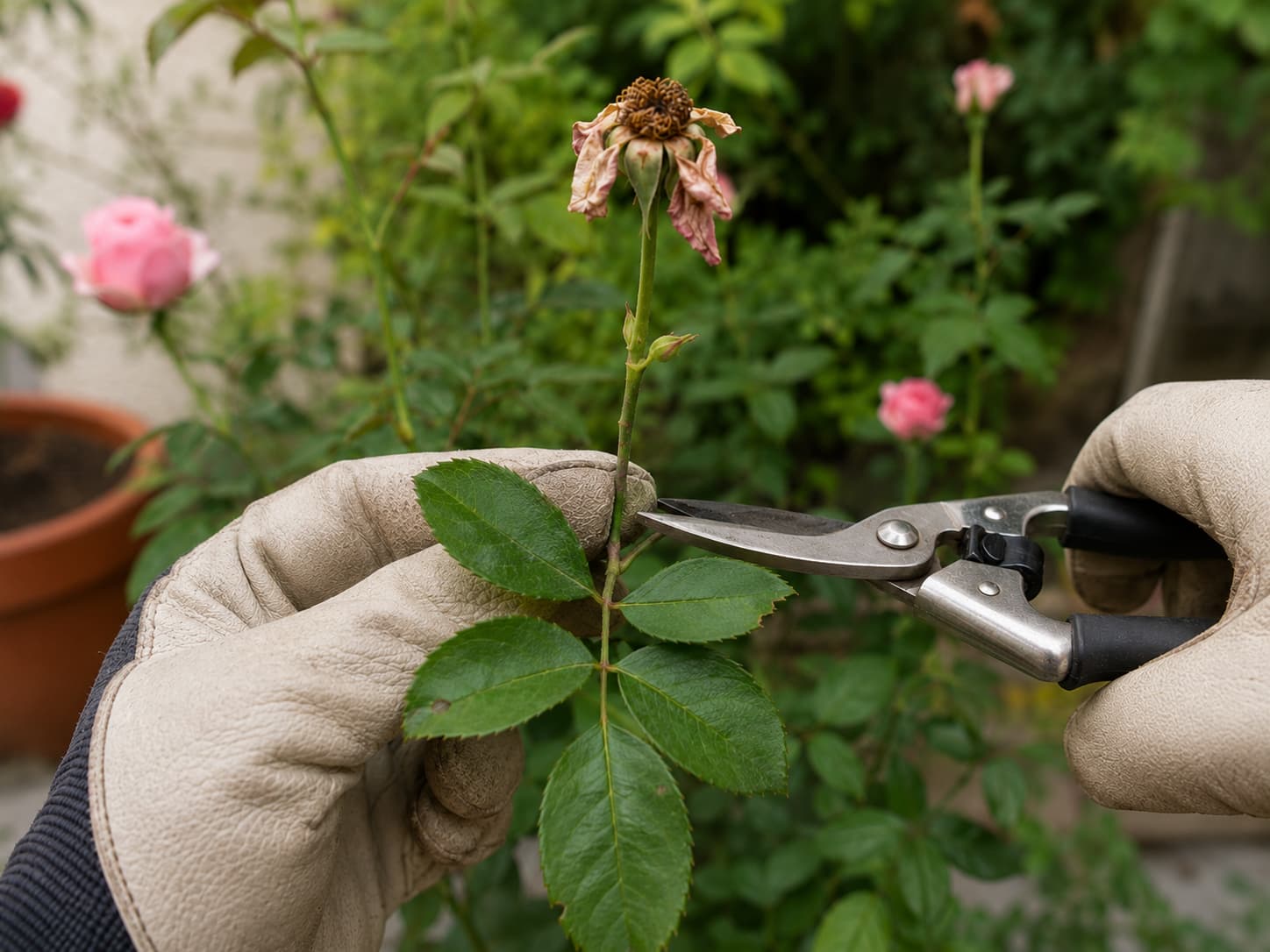
Deadheading is essential for repeat bloomers . Cut spent flowers back to just above the first set of five leaflets (not three leaflets) below the bloom. The five-leaflet node contains the strongest buds for new flowering shoots. If you cut too high (above a three-leaflet node), the new shoot will be weak and may not produce a flower.
The Five-Leaflet Rule
When deadheading roses, always cut back to just above a leaf with five leaflets , not three. The bud at the base of a five-leaflet leaf is stronger, better developed, and far more likely to produce a new flowering stem. Cutting to a three-leaflet node often results in a blind shoot — a stem that grows but never flowers.
Rose Diseases: Black Spot and Rose Rosette
Black Spot (Diplocarpon rosae)
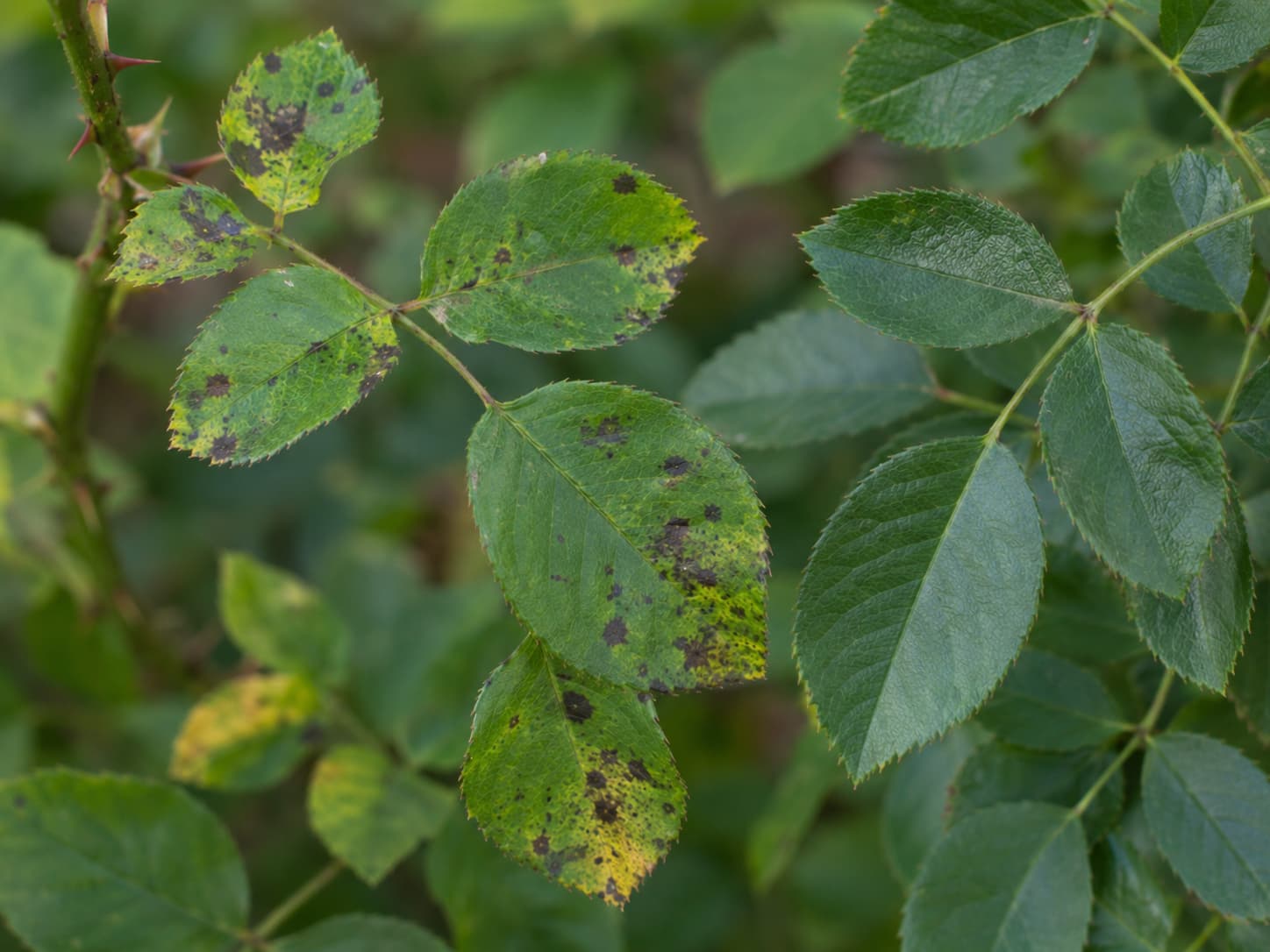
This is the most common and damaging rose disease worldwide. It's caused by the fungus Diplocarpon rosae , which overwinters in fallen leaves and infected stems.
Symptoms: Black spots with fringed margins appear on upper leaf surfaces, surrounded by yellowing tissue. Leaves turn yellow and drop prematurely. Severe infections can defoliate the entire plant by mid-summer. Repeated defoliation weakens the plant and reduces winter survival.
Conditions that promote it: Wet leaves for 7+ hours (from rain, dew, or overhead watering), temperatures of 65–85°F, poor air circulation, and infected leaf litter from the previous season.
Management:
- Water at the base, never overhead. This is the single most effective prevention. Dry leaves can't be infected.
- Rake and dispose of all fallen leaves in autumn. The fungus overwinters in leaf litter. Do not compost infected leaves.
- Prune for open structure. Good air circulation dries leaves faster after rain or dew.
- Apply preventive fungicide. Sulfur-based sprays or neem oil applied every 7–14 days during the growing season, starting when leaves first emerge. These are preventive, not curative — once spots appear, those leaves can't be saved.
- Plant resistant varieties. Many modern R. chinensis hybrids have good resistance. 'Mutabilis' is notably disease-resistant.
Rose Rosette Disease (Emerging Threat)
This is a viral disease that is fatal to infected roses and has no cure. It's spread by an eriophyid mite ( Phyllocoptes fructiphilus ) that is microscopic and travels on wind currents. Rose rosette has spread rapidly across North America since 2010.
Symptoms: Excessive thorniness, bright red distorted new growth (witch's brooms), thickened and elongated stems, deformed flowers. The red growth does not mature to normal green — it stays red and distorted.
If you suspect rose rosette: Remove and destroy the entire plant immediately — bag it and put it in the trash, not yard waste. There is no treatment. Do not replant a rose in the same spot. The mites can travel between nearby roses, so inspect all roses in your garden if one shows symptoms.
Rose Rosette Has No Cure
If your rose develops witch's brooms — clusters of bright red, distorted, excessively thorny growth — do not wait. Remove the entire plant immediately. The disease is fatal and spreads to other roses. There is no chemical treatment, no pruning cure, and no way to save an infected plant.
Rose Oil Infusion: The Safety Rule Most Guides Skip
Rose petals infused in oil make a beautiful skincare and aromatherapy product. But using fresh rose petals in oil carries the same botulism risk covered in our mint and lavender guides. Fresh plant material contains water, and submerging it in oil creates an anaerobic environment where Clostridium botulinum can grow.
Safe Rose Oil Method
- Use only thoroughly dried rose petals. Air-dry petals in a single layer in a dark, well-ventilated space for 3–5 days until crisp and brittle. Fresh petals in oil = botulism risk.
- Pack dried petals loosely in a clean, sterilized glass jar — fill about ⅓ full.
- Pour a carrier oil (jojoba, sweet almond, or grapeseed) over the petals until completely submerged by at least 1 inch.
- Seal and place in a sunny window for 7–10 days, shaking gently every 1–2 days. Alternatively, place in a dark cupboard for 3–4 weeks for a slower, gentler extraction.
- Strain through cheesecloth into a dark glass bottle. Label with the date.
- Refrigerate and use within 1–2 weeks for culinary use, or within 1–3 months for external/skincare use. Freeze for longer storage.
Rose Essential Oil vs. Rose-Infused Oil
Rose essential oil (rose otto) is steam-distilled and requires enormous quantities of petals — about 2,000 lbs of rose petals to produce 1 lb of oil. It's one of the most expensive essential oils in the world. Rose-infused oil is made by steeping petals in a carrier oil — it's mild, easy to make at home, and suitable for skincare. These are completely different products. If you buy "rose oil" that's affordable, it's almost certainly infused, not essential.
Best Rosa chinensis Varieties
| Variety | Flower Color | Size | Notes |
|---|---|---|---|
| 'Old Blush' | Soft pink, semi-double | 3–5 ft | One of the original China roses brought to Europe in the 1790s. Reliable rebloomer. Light fragrance. Disease-resistant for its age. |
| 'Mutabilis' | Apricot → pink → crimson (color-changing) | 4–6 ft | The "butterfly rose." Single flowers open pale and darken over 3 days. All colors present simultaneously. Excellent disease resistance. |
| 'Cramoisi Supérieur' | Deep crimson-red, semi-double | 3–4 ft | Velvety texture. Rich fragrance (stronger than most Chinas). Compact habit — good for containers. |
| 'Ducher' | Pure white, double | 3–4 ft | The best white China rose. Ivory buds open to pure white. Compact and bushy. Light tea fragrance. |
| 'Louis Philippe' | Crimson with darker velvet center | 3–5 ft | Extremely heat-tolerant. Performs well in the Deep South and Gulf Coast. Nearly continuous bloom. |
| 'Hermosa' | Blush pink, very double | 2–3 ft | Compact, almost dwarf habit. Excellent for containers and small gardens. Very double, camellia-like blooms. |
Frequently Asked Questions
Why are my Rosa chinensis leaves turning yellow?
The most common causes: black spot (yellowing leaves with black spots — see the disease section above), overwatering or poor drainage (uniform yellowing, soil stays damp), nutrient deficiency (pale yellow new growth — apply rose fertilizer), or natural aging of the oldest lower leaves. Check for black spots first — they're the most likely culprit on roses.
Is Rosa chinensis the same as Rosa rugosa?
No — they're completely different species. Rosa chinensis is the Chinese Rose: slender stems, glossy serrated leaves, repeat-blooming, light fragrance. Rosa rugosa is the Japanese Beach Rose: thick, heavily thorned stems, wrinkled leaves, large single flowers, strong fragrance. Both are "true roses" (genus Rosa ). R. chinensis is the genetic ancestor of modern repeat-blooming roses; R. rugosa is not.
Why won't my Chinese rose stop blooming?
That's what it does — and it's a feature, not a problem. R. chinensis is genetically programmed to bloom repeatedly from spring through frost. It's the reason the species changed rose breeding. To keep it healthy through its long bloom season: deadhead regularly (cut to the first five-leaflet node), fertilize lightly every 4–6 weeks during the growing season, and water consistently. The plant will naturally slow down in extreme heat (90°F+) and resume when temperatures moderate.
How do I make rose oil from Rosa chinensis petals?
Use dried petals only — never fresh. Fresh petals contain water and create a botulism risk when submerged in oil. Air-dry petals for 3–5 days until crisp. Pack loosely in a sterilized jar, cover with carrier oil (jojoba or sweet almond), seal, and infuse in a sunny window for 7–10 days. Strain into a dark bottle, refrigerate, and use within 1–3 months. See the rose oil section above for the complete safety protocol.
Are Rosa chinensis petals edible?
Yes — when grown without pesticides. Rose petals are edible and used in teas, jams, syrups, and desserts. R. chinensis petals have a lighter, more delicate flavor than strongly fragrant roses like Damasks. Use only petals from plants you know haven't been treated with systemic pesticides or fungicides. Never use petals from florist roses — they're heavily treated with chemicals not approved for food use. Remove the bitter white base of each petal before using.
What's the difference between Rosa chinensis and modern hybrid tea roses?
R. chinensis is the ancestor; hybrid teas are the descendants. China roses have smaller, more informal flowers with a looser petal arrangement. They're generally more disease-resistant, more heat-tolerant, and have a more natural, shrubby habit. Hybrid teas have much larger, more formal, high-centered blooms on long cutting stems — but they're more demanding in terms of care, more disease-prone, and often less cold-hardy. China roses are closer to the original species; hybrid teas are the result of 200+ years of intensive breeding for flower size and form.
Can I grow Rosa chinensis in a container?
Yes — compact varieties like 'Cramoisi Supérieur', 'Hermosa', and 'Ducher' do well in containers. Use a pot at least 16–18 inches wide with excellent drainage. Container roses need more frequent watering and fertilizing than in-ground roses. In Zones 6–7, overwinter the container in an unheated garage or against a sheltered south-facing wall with the pot heavily mulched. Repot every 2–3 years, refreshing the soil.
How do I protect my roses from black spot?
The most effective prevention: water at the base, never overhead (wet leaves enable infection), rake and dispose of all fallen leaves in autumn (the fungus overwinters in leaf litter), prune for open structure (good air circulation dries leaves faster), and apply preventive sulfur or neem oil spray every 7–14 days starting when leaves first emerge in spring. Black spot is far easier to prevent than to cure. Once spots appear, those leaves cannot be saved — focus on preventing spread to new growth.
Sources & Further Reading:
- Royal Horticultural Society — Rose Growing Guide
- Missouri Botanical Garden — Rosa chinensis Plant Finder
- American Rose Society — China Roses and Their History
- Texas A&M AgriLife Extension — Earth-Kind Roses (Disease-Resistant Varieties)
- Rose Rosette Disease — National Research and Education
- USDA Food Safety — Herb-Infused Oils Safety
Final Thoughts
Rosa chinensis is the rose that changed everything — a modest pink flower from the mountains of Sichuan that carried the genetic key to endless summer bloom. Every time you see a Hybrid Tea unfurl its perfect spiral, or a Floribunda cover itself in clusters, you're looking at the legacy of this one species.
Growing it is simpler than growing modern roses. It asks for sun, well-drained soil, consistent water, and a little deadheading. In return, it blooms from April to November, asks for less spraying than its high-maintenance descendants, and connects your garden to a thousand years of Chinese horticulture and two centuries of rose breeding.
Here's what to remember:
- It's the ancestor of all modern repeat-blooming roses. This is its historical significance.
- Full sun, well-drained soil, water at the base. Never overhead — wet leaves cause black spot.
- Deadhead to the first five-leaflet node. This is the rule for continuous rebloom.
- Black spot is preventable; rose rosette is fatal. Know the difference and act accordingly.
- Use dried petals for oil infusions — never fresh. Same botulism risk as any herb-infused oil.
- Non-toxic and pet-safe. Petals are edible when pesticide-free.
If you found this guide helpful, you might also enjoy our guide on How to Make Organic Neem Spray — your first line of defense against black spot and aphids on roses.