Rosemary is one of those plants that looks tough—and it is—but pruning it the wrong way can quietly weaken it over time.
If you’ve ever hesitated with the shears, unsure whether you’re helping or harming your plant, you’re not alone. The good news is that rosemary responds very well to thoughtful pruning. Done correctly, it grows denser, stays healthier, and produces better-tasting leaves.
This guide focuses on why, when, and how to prune rosemary in a way that actually works—especially in real home gardens.
Why Pruning Rosemary Matters
Rosemary doesn’t just grow taller as it ages—it changes internally.
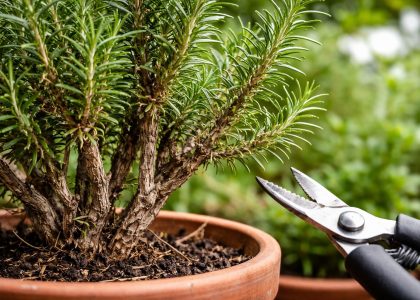
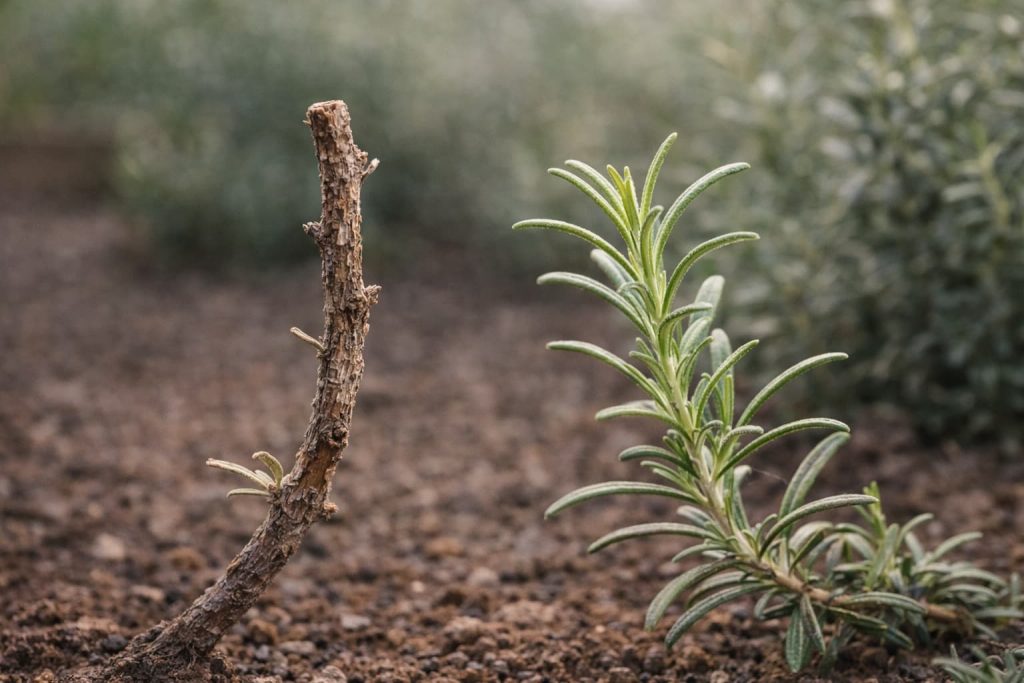
New growth comes only from actively growing, green tissue. Once stems turn woody, they lose most of their ability to produce fresh shoots. Without regular pruning, rosemary gradually becomes leggy, brittle, and difficult to rejuvenate.
Pruning helps by:
- Encouraging new side shoots
- Preventing woody, unproductive stems
- Improving air circulation
- Keeping plants compact and usable for cooking
Pruning isn’t about shaping for looks—it’s about keeping the plant physiologically young.
When to Prune Rosemary
Timing matters more than technique.
Best Time: Spring to Early Summer
This is when rosemary is actively growing and can recover quickly.
- New shoots appear within weeks
- Growth stays compact
- Flavor remains strong
Light Trimming: Late Summer
You can still harvest gently, but avoid heavy cuts.
Avoid Pruning in Winter
Winter pruning is rarely worth the risk.
Rosemary slows its growth dramatically in cold months, and fresh cuts can expose stems to cold damage or rot. If your plant looks messy in winter, it’s usually better to wait.
How Much to Prune at Once
A good rule of thumb:
Never remove more than one-third of the plant at a time.
Cutting too aggressively stresses the plant and can stall growth instead of improving it.
Frequent, light pruning is far more effective than occasional heavy cuts.
Where to Cut (This Is the Most Important Part)
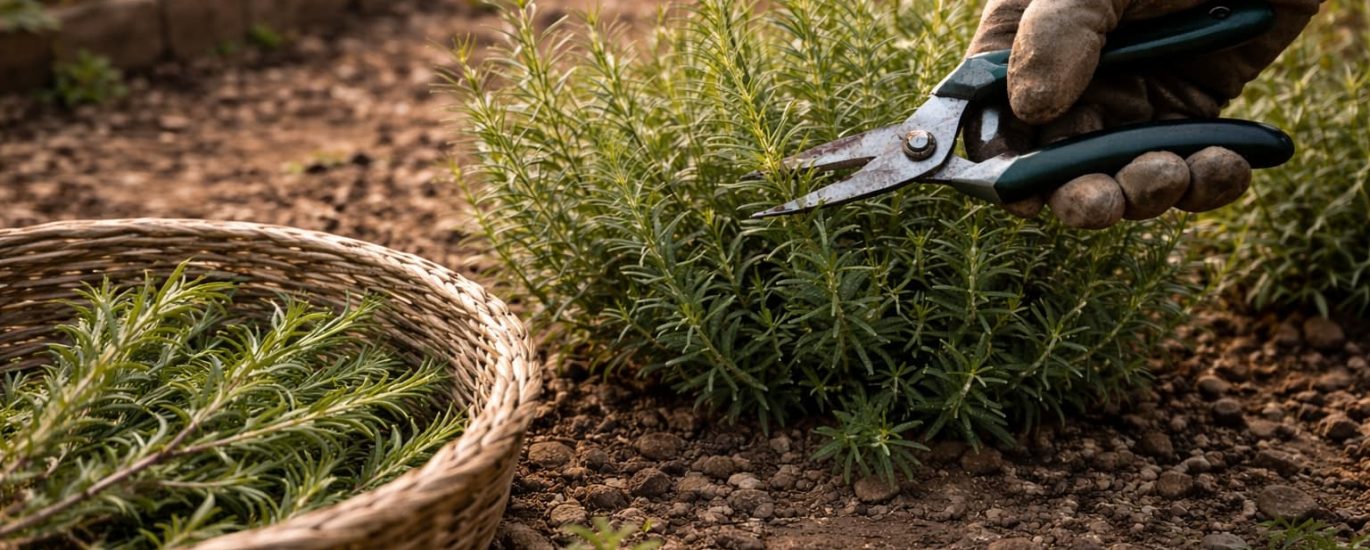
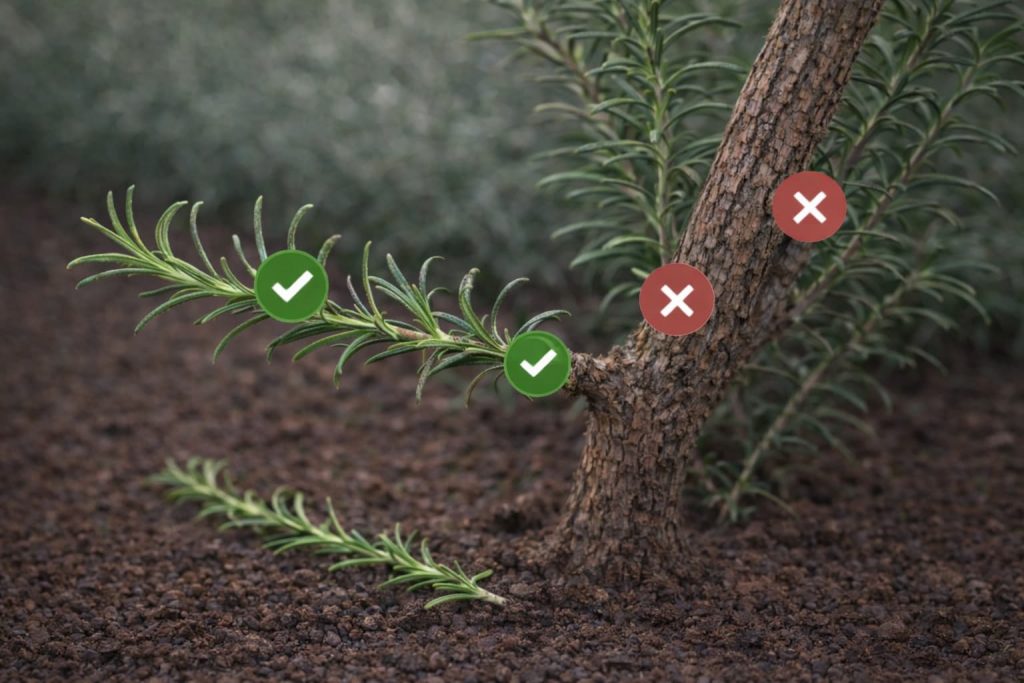
Always prune above green, flexible growth, not into woody stems.
Look for:
- Soft, green tips
- Small side shoots or leaf nodes
- Stems that bend easily
Avoid:
- Thick, brown, woody sections
- Bare stems with no visible growth points
In most cases, rosemary does not regrow from fully woody stems. Once a section has lignified, it’s largely done producing new growth.
Will Pruning Rosemary Kill the Plant?
Pruning itself doesn’t kill rosemary.
What causes problems is:
- Cutting too deep into woody tissue
- Pruning during cold or wet periods
- Removing too much at once
When pruning follows the plant’s natural growth cycle, rosemary is remarkably forgiving.
How to Fix a Woody Rosemary Plant
If your rosemary is already woody at the base, you’re not alone—this happens naturally with age.
What helps:
- Gradual pruning over multiple seasons
- Focusing cuts only on remaining green growth
- Allowing time for side shoots to develop
What usually doesn’t work:
- Cutting the entire plant back into old wood
- Trying to “reset” the plant in one session
Sometimes, the best solution is propagation—starting a fresh plant from healthy cuttings while keeping the old one lightly maintained.
Pruning Rosemary in Pots vs. In-Ground Plants
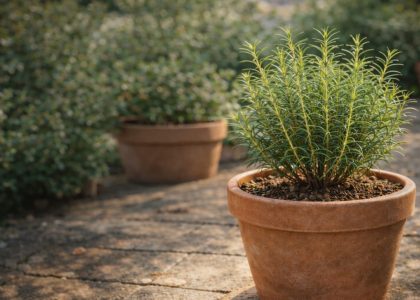
Container-grown rosemary benefits even more from pruning.
In pots:
- Roots are confined
- Growth becomes woody faster
- Regular pruning keeps size manageable
In-ground plants are more forgiving but still need consistent trimming to stay productive.
After Pruning: Simple Care Tips
After pruning:
- Water lightly (don’t soak)
- Ensure good drainage
- Avoid fertilizing immediately
Rosemary prefers stability. Give it time to respond before making further changes.
A Note on Style and Expectations
A healthy rosemary plant doesn’t need to look perfect.
Some uneven growth, a slightly open center, or irregular branching is normal—especially in gardens that are actually used. The goal isn’t symmetry. It’s longevity and flavor.
Prune with intention, not fear.
Related Reading
If you want to go deeper, these guides pair naturally with pruning:
- How to Grow Rosemary in Pots and Containers
- Why Rosemary Turns Woody (and What You Can Do)
- Growing Rosemary Indoors Without Weak Growth
Final Editor’s Note
This isn’t a technique to memorize—it’s a relationship to understand.
Once you see how rosemary responds, pruning stops feeling risky and starts feeling routine. That’s when the plant—and the gardener—both settle in.