How to Grow Rosemary: Complete Care Guide
Quick Summary
Rosemary (Salvia rosmarinus, formerly Rosmarinus officinalis) is one of the most rewarding herbs you can grow — fragrant, evergreen, and nearly indestructible outdoors in the right conditions. Indoors, it's a different story: rosemary is the herb people kill most often, and the cause is almost always overwatering in soil that's too heavy. This guide covers the gritty Mediterranean soil mix that prevents root rot, the pruning rule that keeps rosemary productive for years (never cut into bare woody stems), how to overwinter it indoors without it dying, and why rosemary was reclassified from Rosmarinus to Salvia — making it officially a type of sage.
What Is Rosemary? (Yes, It's Actually a Sage Now)
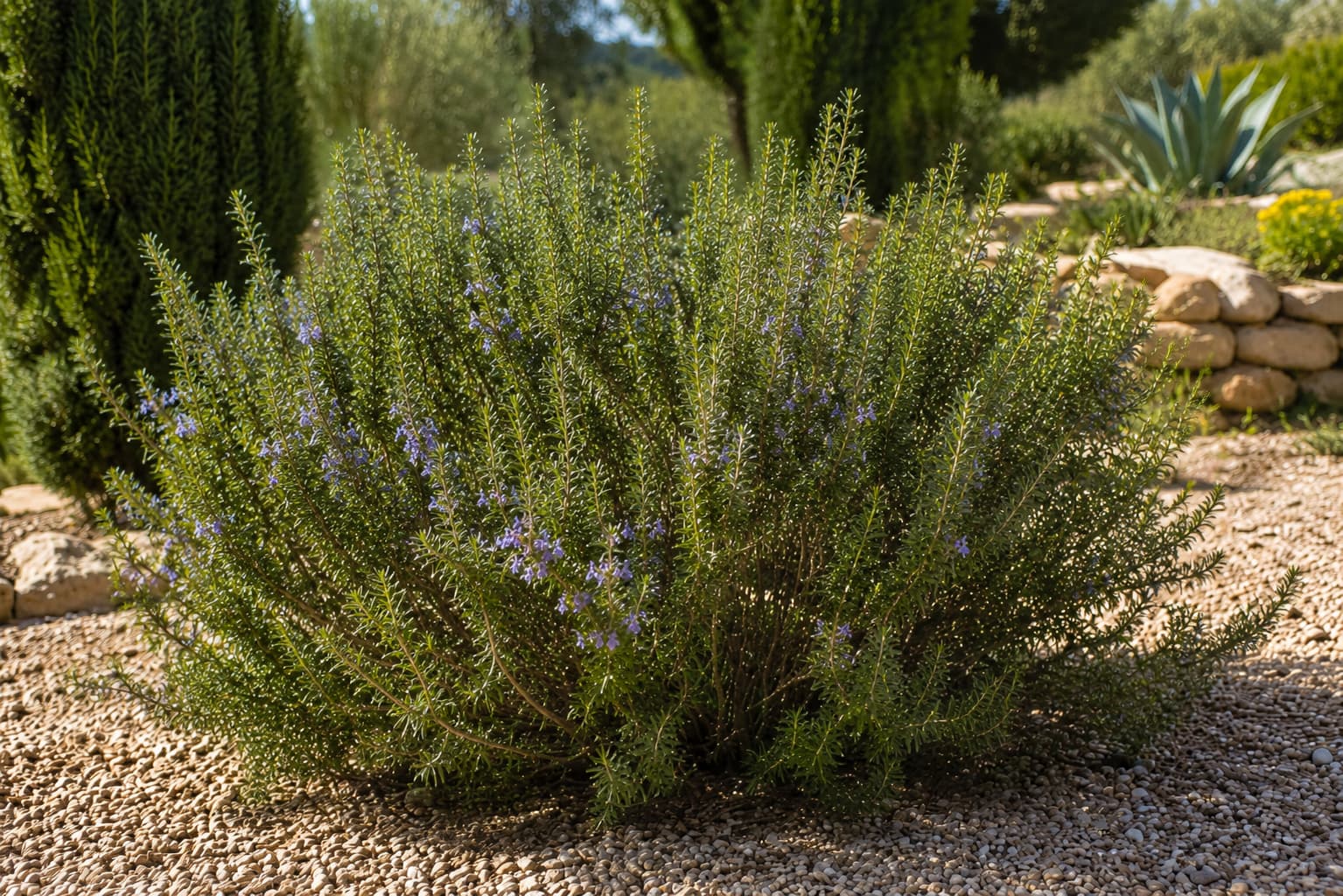
To begin with, rosemary is a woody perennial herb in the mint family (Lamiaceae), native to the rocky, coastal regions of the Mediterranean — Spain, Italy, Greece, and North Africa. In addition, it has been cultivated for centuries for culinary and traditional uses. For context, the name rosmarinus comes from the Latin ros (dew) and marinus (sea) — "dew of the sea" — a reference to its native habitat on sea cliffs where it received moisture primarily from ocean mist.
More recently, botanical research led to rosemary being placed within the genus Salvia. It was moved from the genus Rosmarinus into Salvia — the sage genus — making its official scientific name Salvia rosmarinus. In other words, the change was based on genetic relationships: genetic sequencing showed that rosemary, Russian sage (Perovskia), and other woody Mediterranean mints are so closely related to Salvia that maintaining separate genera was taxonomically inconsistent. For gardeners, however, the name change does not alter how the plant is grown. Garden centers may still label it Rosmarinus officinalis — both names refer to the same plant.
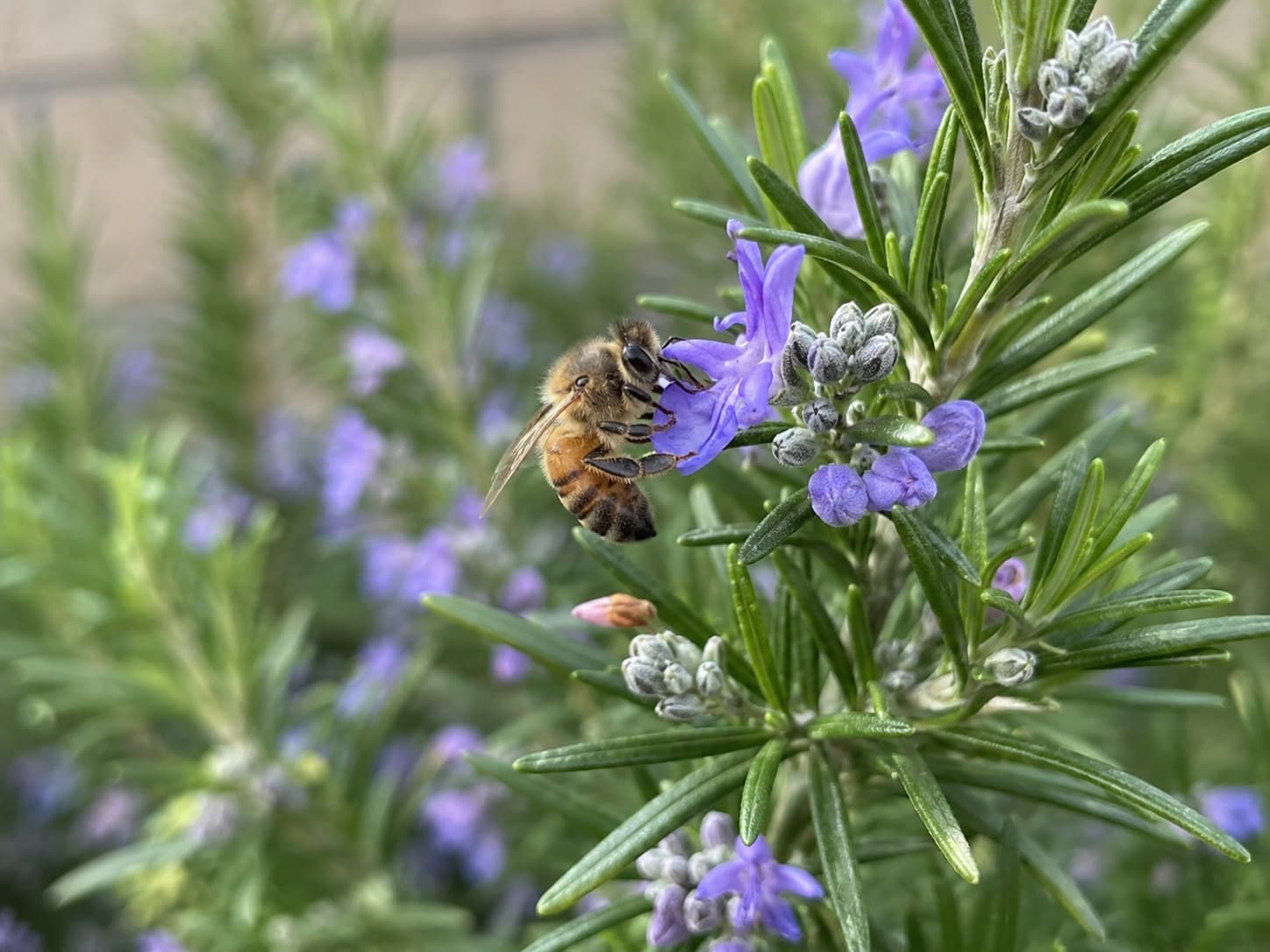
Meanwhile, in suitable climates, rosemary behaves as an evergreen shrub (Zones 8–10), reaching 4–6 feet tall and wide over many years. It produces small blue, purple, pink, or white flowers in late winter through spring — an important early-season nectar source for bees. The needle-like leaves are intensely aromatic, containing essential oils dominated by 1,8-cineole, α-pinene, and camphor.
Plant Profile at a Glance
| Feature | Details |
|---|---|
| Common Name | Rosemary |
| Scientific Name | Salvia rosmarinus (formerly Rosmarinus officinalis) |
| Plant Type | Woody perennial evergreen herb |
| USDA Zones | 7–10 (outdoors year-round); 'Arp' and 'Hill Hardy' to Zone 6 |
| Mature Size | 2–6 ft tall, 2–4 ft wide (varies by variety) |
| Sun Needs | Full sun — 6–8 hours direct; tolerates light shade |
| Soil | Gritty, fast-draining — sandy or rocky; pH 6.0–7.5 |
| Watering | Drought-tolerant; water only when soil is dry; overwatering kills |
| Toxicity | Non-toxic — culinary herb; large amounts of essential oil can be problematic |
The Soil Mix: Why Standard Potting Soil Kills Rosemary
For container growers especially, soil structure is one of the most important parts of rosemary care — especially in containers or indoors. Standard potting soil kills rosemary. It's not hyperbole. Here's why:
Because rosemary evolved in rocky Mediterranean conditions — places where the "soil" is more gravel and decomposed limestone than organic matter. Its roots are adapted to rapid drainage, high oxygen, and mineral substrates. By contrast, a moisture-retentive potting mix can keep the root zone wet for much longer. As a result, roots may lose oxygen and become more vulnerable to decline.
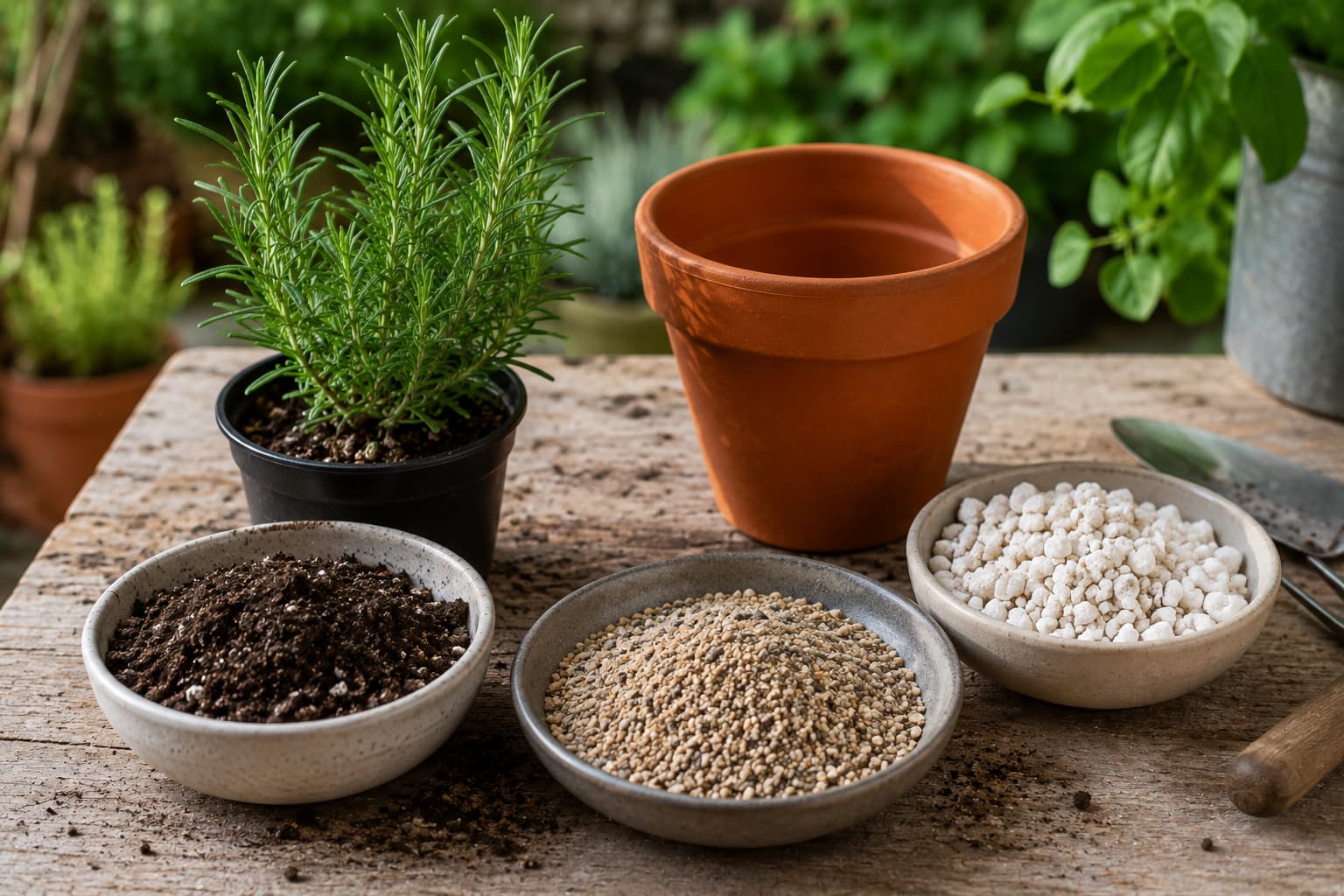
The Gritty Rosemary Soil Mix
| Ingredient | Ratio | Purpose |
|---|---|---|
| Potting soil or coco coir | 1 part | Minimal organic matter — holds just enough moisture |
| Coarse sand or horticultural grit | 1 part | Drainage and aeration — mimics native rocky substrate |
| Perlite or pumice | 1 part | Creates air pockets; prevents compaction |
The goal, therefore, is a mix that drains freely and regains air space quickly after watering. For example, excess water should be able to leave through the drainage hole rather than pooling around the roots. If the mix holds water for more than a few hours, it's too heavy for rosemary.
The #1 Cause of Rosemary Death
Overwatering in heavy soil is the main risk. Pests, disease, and low fertility can cause problems too, but they are usually secondary to a root zone that stays wet for too long. Therefore, fast drainage and condition-based watering matter more than adding extra fertilizer or following a rigid schedule.
Complete Care Guide: Sun, Water, Fertilizer
Light
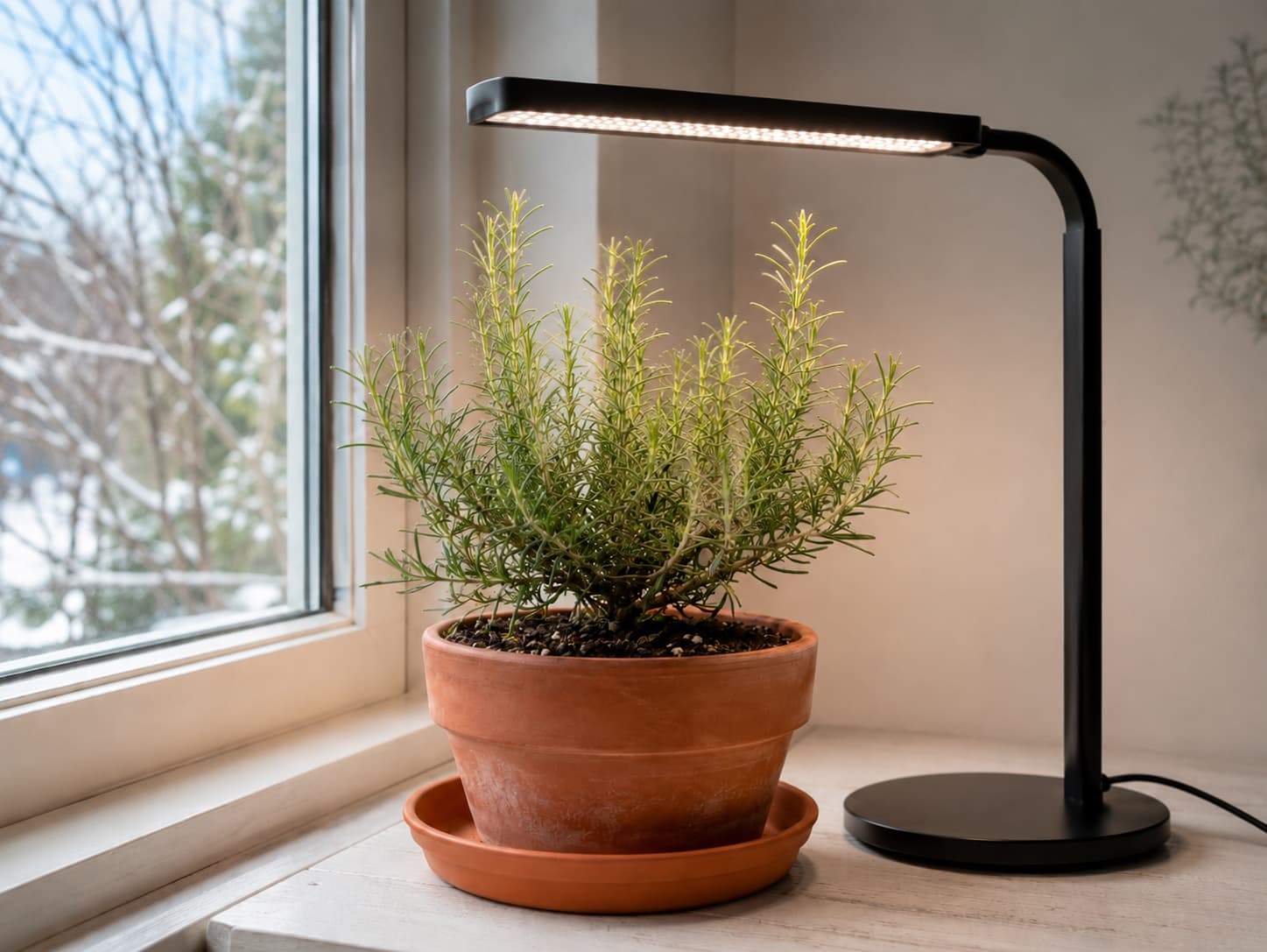
For best growth, aim for full sun — about 6–8 hours of direct light. In general, stronger light supports denser growth and more aromatic foliage. By contrast, weak light can produce looser growth and reduce overall plant vigor. For example, a sunny south-facing outdoor position can work well where summer heat is not extreme. Indoors, a south or west window supplemented with a grow light is essential — rosemary is one of the hardest herbs to grow indoors specifically because of its light requirements.
Watering
- Outdoors, in the ground: Once established (after the first year), rosemary is genuinely drought-tolerant. For example, during extended dry periods, water deeply and then allow the root zone to dry again. However, established plants in some climates may need little supplemental water once roots are well developed.
- Outdoors, in containers: By contrast, container plants dry more quickly, so check the upper root zone before watering. For example, hot, windy weather can shorten the interval substantially. However, cool weather usually slows dry-down.
- Indoors: Instead, water according to how quickly the pot dries rather than a fixed calendar. As a result, indoor rosemary often uses less water in winter. Therefore, avoid adding water while the root zone is still moist.
For example, signs of overwatering include: Lower leaves turn yellow and drop; stems turn brown from the base up; soil smells sour; plant wilts despite wet soil (roots are rotting). By contrast, signs of underwatering include: Needle tips turn brown; leaves feel dry and brittle; plant wilts but perks up within hours of watering.
Fertilizing
When it comes to fertilizer, rosemary is a relatively light feeder. As a result, established plants in suitable soil often need little supplemental feeding. For container plants, use a light feeding approach during active growth rather than frequent fertilizing. However, excessive fertilizer can push soft growth that is less compact. Therefore, a healthy rosemary in suitable soil and strong light usually needs only modest feeding.
The Pruning Rule: Never Cut Into Woody Stems
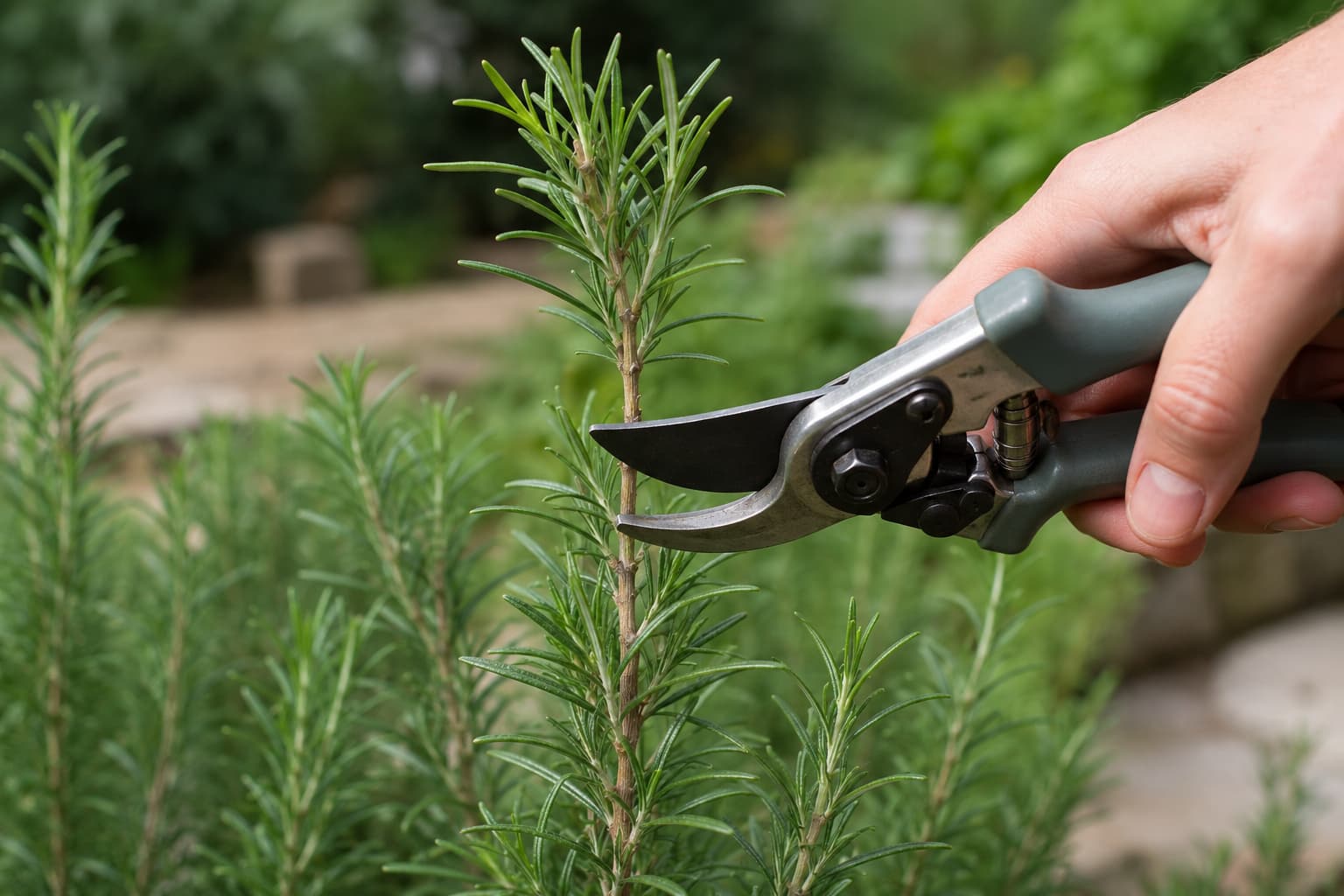
For pruning, the most useful rule to remember is this: never cut into bare, brown woody stems. Unlike some other woody herbs, rosemary does not reliably regrow from old wood. Therefore, if you cut a rosemary stem below the lowest leaves — into the brown, bark-covered section — that stem will likely die back rather than produce new growth.
The Pruning Rule
Always leave green growth below your cut. Cut just above a set of leaves or a node where green growth is visible. If a stem has gone completely woody and bare at the base, you can't prune it back to rejuvenate it — that section will not regrow. Instead, a badly bare plant is often easier to replace or renew from healthy cuttings.
How to Prune Correctly
- First, timing: prune lightly throughout the growing season as you harvest for cooking. Do heavier shaping in spring or early summer after the main flowering flush.
- Next, method: cut 2–3 inches off the tips of green stems, always above a leaf node. This encourages branching and bushiness.
- In addition, when harvesting: cut stems from different parts of the plant rather than repeatedly from the same spot. Never remove more than one-third of the plant at one time.
- Finally, dead or damaged wood: can be removed when necessary. Cut back to healthy green growth or to the base.
- Never shear rosemary like a hedge. It creates a dense outer shell with a dead, bare interior.
Why Indoor Rosemary Dies (and How to Keep It Alive)
Indoors, however, rosemary can be much less forgiving than it is outside. That is because indoor light, airflow, temperature, and soil dry-down can all change at the same time. Here's exactly why, and how to fix each factor:
Reason 1: Not Enough Light
Rosemary needs 6–8 hours of direct sun. By comparison, a north- or east-facing window may provide much less direct light. In winter, even a bright window may deliver fewer usable hours than it does in summer. Therefore, consider a suitable full-spectrum grow light when natural winter light is not enough. This is often necessary for indoor rosemary in homes with weak winter light — without it, the plant slowly starves.
Reason 2: Overwatering in Heavy Soil
In addition, indoor rosemary often uses water more slowly than a plant exposed to outdoor sun and wind. Consequently, a dense mix can remain wet long enough to stress the roots. As a result, use a fast-draining mix, a draining container, and water only after checking the root zone.
Reason 3: Low Humidity
Meanwhile, indoor winter air can become quite dry — often 20–30% humidity. However, very dry heated air can still stress foliage. Instead of chasing a specific humidity number, prioritize cool temperatures, good airflow, and correct watering. In addition, avoid routinely wetting the foliage when air circulation is poor.
Reason 4: Temperature Shock
Finally, moving rosemary from a cool, bright outdoor spot directly into a warm, darker room creates several changes at once: less light, warmer temperatures, and drier air simultaneously. Instead, transition the plant gradually. For example, move it first to a slightly less exposed outdoor position, then into the brightest cool indoor location available. As a result, a cool bright room is usually easier for overwintering than a warm, dim living space.
Winter Care and Cold-Hardy Varieties
Zones 8–10
In the warmest suitable zones, rosemary can remain outdoors through winter with little or no protection. It may continue growing slowly through winter in Zone 9–10.
Zones 7–8
In colder marginal zones, winter survival depends more on cultivar, drainage, exposure, and local conditions. For example, mulch the root zone where winter protection is appropriate. In addition, a sheltered location can reduce exposure to cold wind. However, some winter leaf drop may still occur. 'Arp', 'Hill Hardy', and 'Salem' are the best varieties for these zones.
Zones 6 and Below
For still colder climates, only the most cold-tolerant selections ('Arp' is the gold standard, surviving to Zone 6 with protection) can overwinter outdoors. Alternatively, grow rosemary in a movable container and protect it before severe cold arrives. Therefore, follow the indoor-care principles above when a container must come inside. Alternatively, treat rosemary as an annual — buy a new plant each spring.
The Overwintering Container Strategy
First, grow rosemary in a draining container that can be moved easily. Next, keep it outdoors in strong light during the growing season. Then, move it to a cool, bright indoor position before damaging cold arrives. As a result, the roots remain undisturbed during the seasonal move. For many cold-climate gardeners, this is one of the simplest overwintering strategies.
Companion Planting with Rosemary
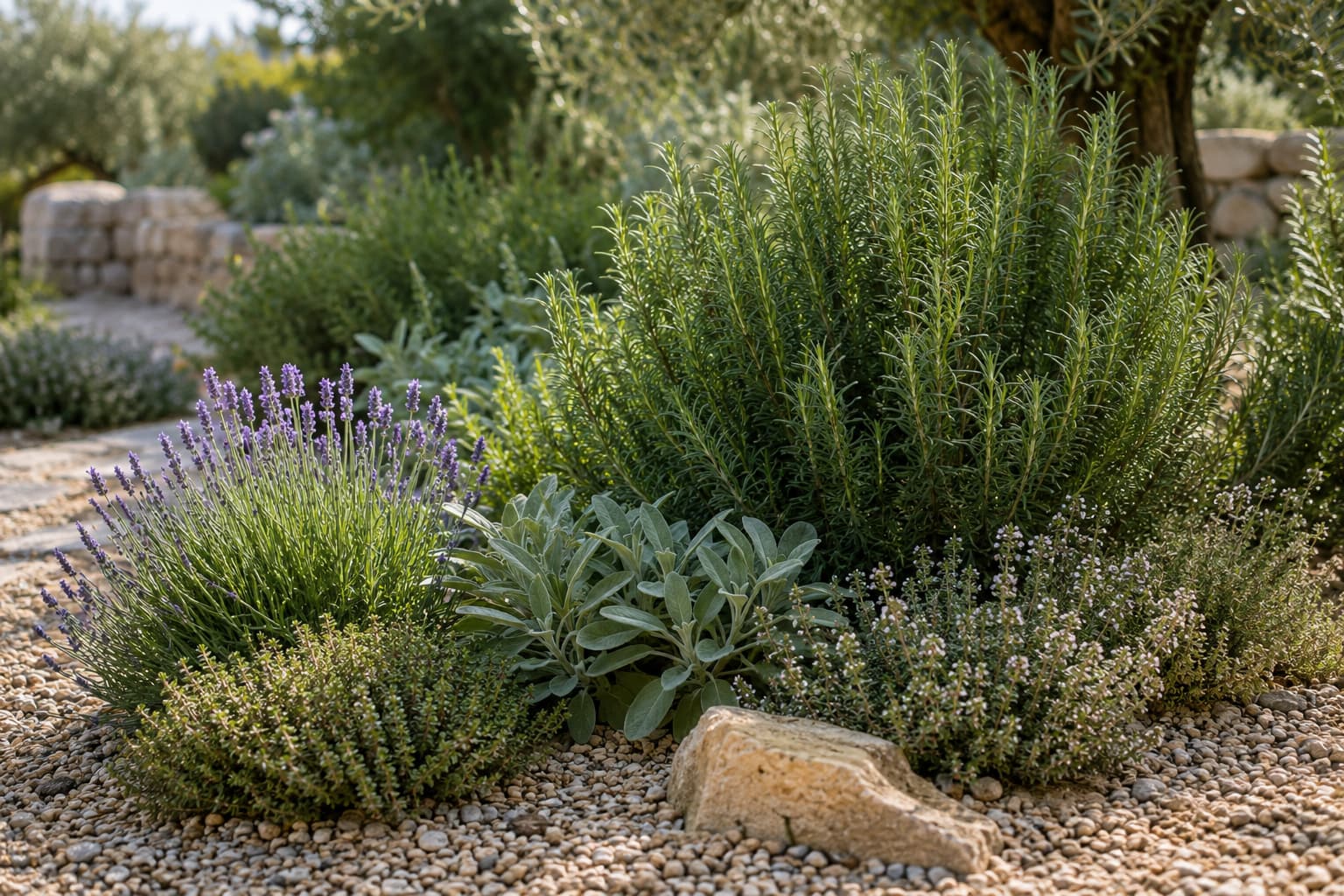
Rather than relying on repellent folklore, pair rosemary with plants that share similar sun, drainage, and watering needs. That makes the combination easier to manage over an entire season.
| Good Companions | Why |
|---|---|
| Cabbage family (brassicas) | Rosemary's strong scent masks brassicas from cabbage moths and loopers |
| Carrots | Deters carrot rust flies; the two don't compete for root space |
| Beans (bush types) | Beans fix nitrogen; rosemary repels bean beetles; complementary water needs |
| Sage, lavender, thyme, oregano | All Mediterranean herbs — same soil, sun, and water requirements. Plant together for a low-water herb garden |
| Bad Companions | Why |
|---|---|
| Basil | Needs rich, consistently moist soil — opposite of rosemary's requirements |
| Mint | Spreads aggressively and needs far more water; will overtake rosemary |
| Cucumbers and melons | Heavy feeders that need constant moisture — incompatible growing conditions |
| Potatoes | Rosemary can inhibit potato growth through root competition |
Best Rosemary Varieties
Finally, cultivar choice matters most when cold hardiness, growth habit, or container size is important.
| Variety | Growth Habit | Cold Hardiness | Best For |
|---|---|---|---|
| 'Arp' | Upright, open, 3–5 ft | Zone 6–10 | Cold climates. The hardiest rosemary. Light blue flowers. Good flavor. |
| 'Tuscan Blue' | Upright, dense, 4–6 ft | Zone 8–10 | Hedges, topiary, landscaping. Deep blue flowers. Excellent culinary flavor. |
| 'Prostratus' | Trailing, 1–2 ft tall, 4–8 ft wide | Zone 8–10 | Groundcover, retaining walls, hanging baskets. Cascades beautifully. |
| 'Hill Hardy' | Upright, 3–4 ft | Zone 6–10 | Second-hardiest after 'Arp'. Good for Zone 6–7 gardens. |
| 'Barbecue' | Upright, 3–4 ft | Zone 7–10 | Thick, sturdy stems — ideal for using as skewers. Strong flavor. |
| 'Salem' | Upright, 3–4 ft | Zone 6–10 | Good cold tolerance. Blue flowers. Reliable performer. |
Frequently Asked Questions
Indoor Care, Pruning & Plant Identity
Why is my indoor rosemary dying?
The three most common causes, usually in combination: overwatering in heavy soil (use gritty mix — 1:1:1 potting soil:sand:perlite — and water only when bone-dry), not enough light (needs 6–8 hours direct sun or a grow light 12–14 hours/day), and low humidity + central heating (place on a humidity tray). Indoor rosemary death is almost never caused by a single factor — it's usually all three working together.
Can I cut back a leggy, overgrown rosemary?
Only if there's green growth on the stems you're cutting. Never cut into bare, brown woody sections — rosemary does not regrow from old wood. If your rosemary is leggy with bare stems at the base, you can lightly tip-prune the green growth to encourage bushiness, but you can't rejuvenate the bare lower portions. If the plant is mostly bare wood, the best solution is to take cuttings from the healthy tips and start new plants.
Is rosemary now called Salvia?
Yes — Salvia rosmarinus is the current scientific name. DNA analysis in 2017 showed that rosemary is so closely related to sage that it belongs in the genus Salvia. Rosmarinus officinalis is the old name. Both refer to the same plant. Garden centers may use either name. The reclassification doesn't affect how you grow or use it — but it does mean your rosemary is technically a type of sage.
How do I make my rosemary bushier?
Prune the tips regularly — every time you harvest for cooking, you're doing this. Cut 2–3 inches off the tips of green stems just above a leaf node. This forces the stem to branch at that point. Full sun is also essential for compact growth — rosemary in partial shade becomes leggy regardless of pruning.
Cold Hardiness & Pet Safety
What's the best rosemary for cold climates?
'Arp' is the gold standard — it survives Zone 6 winters with mulch and a sheltered location (some gardeners report success in Zone 5 with heavy protection). 'Hill Hardy' and 'Salem' are also cold-tolerant to Zone 6. All other varieties should be considered Zone 7–8 minimum for outdoor overwintering. In Zones 5 and below, grow rosemary in containers and bring indoors for winter, or treat as an annual.
Is rosemary toxic to dogs and cats?
No — rosemary is non-toxic and is a common culinary herb. It's safe for pets in normal culinary quantities. However, concentrated rosemary essential oil contains high levels of 1,8-cineole and camphor, which can be toxic if ingested in large amounts. The fresh or dried herb is safe; essential oil is not. Do not apply undiluted essential oil to your pet's skin or food.
Propagation & Yellow Leaves
Can I grow rosemary from cuttings?
Yes — and it's the preferred method. Take 4–6 inch cuttings from the green, non-flowering tips in spring or early summer. Strip the lower leaves, dip in rooting hormone (optional but helpful), and place in a gritty, well-drained mix. Keep in bright indirect light and mist occasionally. Roots develop in 3–6 weeks. Rosemary from seed is slow and unreliable — cuttings are faster and produce plants identical to the parent.
Why are my rosemary leaves turning yellow?
Overwatering — almost certainly. Yellow leaves starting from the bottom and working up, especially if the soil feels damp, is the classic sign of root rot from excess moisture. Stop watering immediately. Check drainage. If the plant is in heavy soil, repot into gritty mix. Other less common causes: nutrient deficiency (rare — rosemary is a light feeder), natural aging of oldest leaves, or sudden temperature change.
Sources & Further Reading:
- Royal Horticultural Society — How to Grow Rosemary
- Oregon State University Extension — Growing Rosemary
- Missouri Botanical Garden — Salvia rosmarinus Plant Finder
- NIH — Rosemary Essential Oil: Chemical Composition
- USDA Agricultural Research Service — Rosemary Cultivation Research
- ASPCA — Toxic and Non-Toxic Plants List
Final Thoughts
Rosemary is not a difficult plant, but it does want conditions that differ from many soft-leaved garden herbs. In practice, that means a gritty root zone, strong light, and enough time for the soil to dry between waterings. Give it those basics and it can remain productive for years.
Above all, the single most important thing you can do is get the soil right from the start. That 1:1:1 mix of potting soil, coarse sand, and perlite in a terracotta pot is the difference between a rosemary that thrives for a decade and one that's dead by Christmas.
In short, here is what to remember:
- Gritty soil is non-negotiable. 1:1:1 potting soil:sand:perlite. Terracotta pot. Drainage holes.
- Water only when bone-dry. Overwatering in heavy soil kills more rosemary than everything else combined.
- Never cut into bare woody stems. Rosemary does not regrow from old wood. Always leave green below your cut.
- Full sun — 6–8 hours direct. Less sun = less flavor, fewer flowers, leggy growth.
- Indoors, add a grow light. Without one, indoor rosemary slowly starves.
- For cold zones, grow 'Arp' or bring containers inside. Most rosemary dies below 10–15°F.
If you found this guide helpful, you might also enjoy our guide on How to Make Organic Neem Spray — for when pests find your rosemary despite its natural resistance.