Struggling to keep rosemary alive indoors? Learn how to grow rosemary indoors without killing it—light, watering, pruning, and common mistakes explained simply.
Why Rosemary Dies Indoors So Often
Let’s be honest:
Rosemary is one of the most misunderstood indoor herbs.
It doesn’t die because you’re bad at gardening.
It dies because most homes offer the opposite of what rosemary evolved to handle.
Rosemary is a Mediterranean shrub adapted to:
- Intense sun
- Dry air
- Fast-draining soil
- Constant airflow
Indoor environments are usually:
- Dim
- Still
- Humid
- Overwatered
Understanding this mismatch is the first step to keeping rosemary alive.
What Rosemary Actually Needs (And Why Homes Are Hard)
Rosemary doesn’t want comfort.
It wants clarity and restraint.
At its core, rosemary needs:
- Strong light
- Dry intervals between watering
- Oxygen around roots
- Gentle pruning
Most indoor deaths come from too much care, not neglect.
Light: The Real Make-or-Break Factor
How Much Light Is Enough?
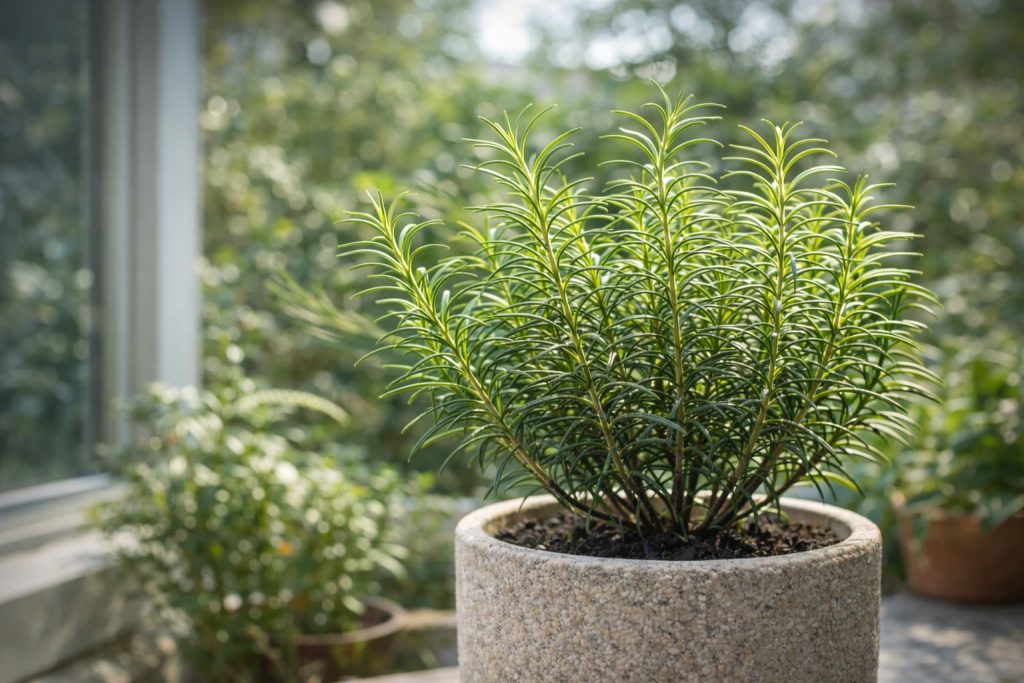
- Minimum: 6 hours of strong direct light
- Ideal: 8–10 hours of bright light daily
South-facing windows help—but for most homes, window light alone is not enough, especially in winter.
Grow Lights Are Not Cheating
If you want rosemary to survive indoors:
- Use a full-spectrum grow light
- Place it 20–30 cm (8–12 inches) above the plant
- Run it 10–12 hours per day
This single change prevents:
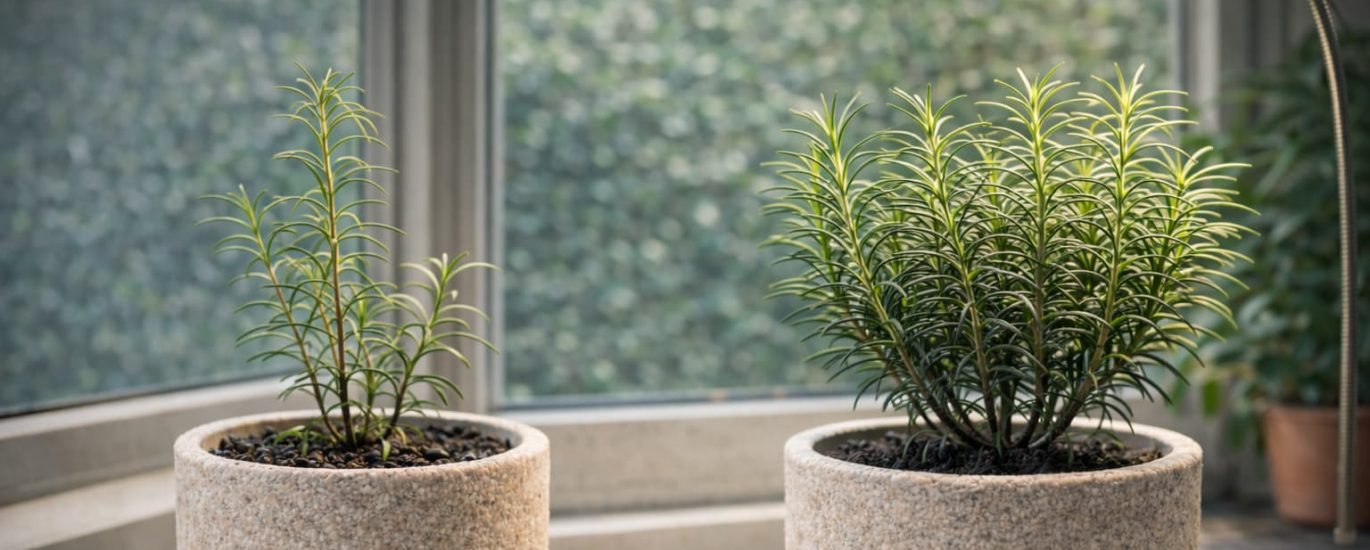
- Leggy growth
- Pale leaves
- Sudden decline
Choosing the Right Pot and Soil
Pot Choice
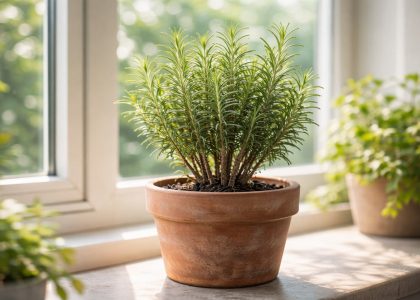
- Terracotta is ideal (breathable, forgiving)
- Always use a drainage hole
- Avoid oversized pots
Soil Mix (Critical)
Rosemary hates wet feet.
Best mix:
- 60–70% potting soil
- 30–40% sand, perlite, or grit
Heavy, compost-rich soils hold water too long and suffocate roots.
Watering Without Root Rot
This is where most indoor rosemary dies.
The Rule
Water less often than you think.
- Water thoroughly
- Let the top 3–5 cm (1–2 inches) dry before watering again
- Never leave water in saucers
Slight dryness is safer than constant moisture.
If the leaves droop suddenly after watering, roots are already stressed.
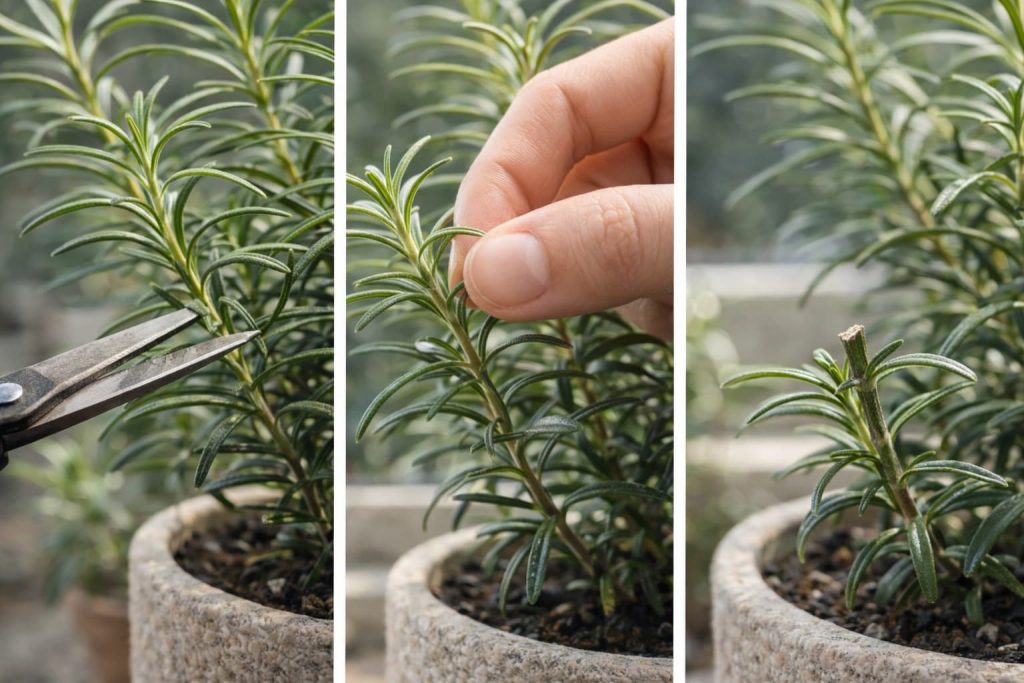
Pruning to Prevent Weak Growth
Pruning is not optional indoors—it’s structural maintenance.
How to Prune Indoors
- Pinch soft tips regularly
- Cut just above a leaf node
- Never cut into bare woody stems
This encourages:
- Branching
- Thicker stems
- Balanced growth
Avoid heavy pruning in winter or low-light months.
Airflow, Temperature, and Indoor Stress
Rosemary dislikes stagnant air.
Ideal Conditions
- Daytime: 18–22°C (65–72°F)
- Cooler nights are beneficial
- Gentle airflow from a fan or window
Air movement strengthens stems and reduces fungal problems.
The Most Common Indoor Rosemary Killers
If your rosemary died before, it was likely due to one (or more) of these:
- Too little light
- Overwatering
- Poor drainage
- No airflow
- Treating rosemary like basil
Rosemary is a shrub—not a tender leafy herb.
Can Rosemary Truly Live Indoors Long-Term?
Yes—but with realistic expectations.
Indoors:
- Growth is slower
- Plants stay smaller
- Light management is essential
Many gardeners succeed by rotating rosemary outdoors in summer and indoors in winter.
This cycle dramatically improves longevity.
Final Thoughts: Grow Rosemary Like a Shrub, Not a Houseplant
If you remember one thing, let it be this:
Rosemary survives indoors only when you stop treating it gently.
Give it:
- Strong light
- Dry cycles
- Air
- Light pruning
And it will reward you with:
- Compact growth
- Strong aroma
- Years of healthy life
Rosemary doesn’t need comfort—it needs respect for its nature.