Chrysanthemum Tea vs Chamomile Tea: Which Is Right for You?
Two calming classics. Different flavors, different moments.
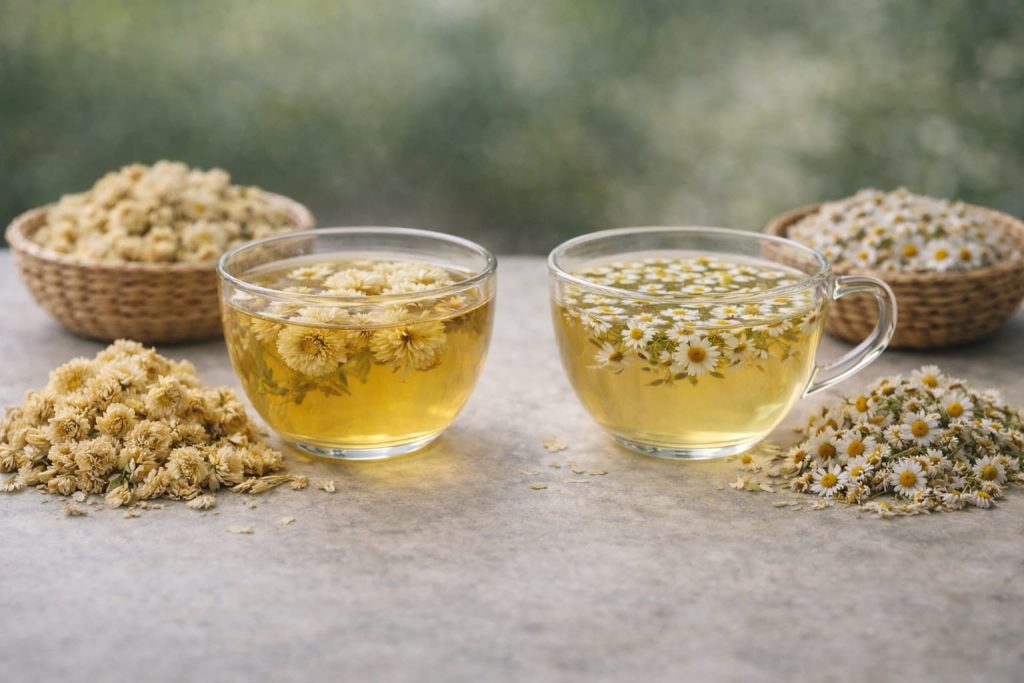
Both chrysanthemum tea and chamomile tea are flower-based, naturally caffeine-free drinks often enjoyed as part of a relaxing routine. The biggest difference is the experience: chrysanthemum feels lighter and more refreshing, while chamomile feels warmer and more comforting.
Why People Compare Chrysanthemum Tea and Chamomile
After learning about chrysanthemum tea benefits, one of the most common next comparisons is “chrysanthemum tea vs chamomile.” That makes sense: both are flower-based teas, naturally caffeine-free, associated with relaxation, and often enjoyed in the evening.
But while they are often grouped together, they offer very different experiences. This guide focuses on flavor, mood, timing, and everyday ritual—without medical claims or hype.
Quick Overview: Chrysanthemum vs Chamomile
| Feature | Chrysanthemum Tea | Chamomile Tea |
|---|---|---|
| Plant type | Flower (Chrysanthemum morifolium) | Flower (Matricaria chamomilla) |
| Caffeine | Caffeine-free | Caffeine-free |
| Flavor | Light, floral, slightly sweet | Apple-like, herbal, fuller |
| Aroma | Clean and airy | Warm and comforting |
| Common use | Refreshing, calming ritual | Evening wind-down ritual |
| Beginner-friendly | Yes | Yes |
Flavor Profile: Light vs Comforting
Chrysanthemum Tea Taste
Chrysanthemum tea is often described as bright, clean, and lightly floral.
- Bright floral character.
- Clean and refreshing.
- Subtly sweet without heaviness.
Many people enjoy it in the afternoon, served over ice in summer, or whenever they want a calm drink without a heavier herbal feel.
Chamomile Tea Taste
Chamomile has a noticeably warmer character, with a softer herbal profile.
- Soft herbal notes.
- Apple-like sweetness.
- Rounder, warmer mouthfeel.
It is often chosen late in the evening, as part of a bedtime routine, or during colder seasons when a cozier cup feels right.
Relaxation Style: Refreshing Calm vs Cozy Calm
This is where personal preference really shows. Neither tea is “stronger” in the lifestyle sense used here—they simply create different moods.
Chrysanthemum Tea
- Feels light and refreshing.
- Associated with balance and cooling traditions.
- Often enjoyed socially or during quiet daytime breaks.
Chamomile Tea
- Feels cozy and grounding.
- Strongly associated with bedtime rituals.
- Often paired with reading or nighttime routines.
When to Choose Chrysanthemum Tea
- Want a caffeine-free option earlier in the day.
- Enjoy floral flavors without herbal heaviness.
- Like teas that can be served both hot and iced.
- Appreciate plant traditions tied to seasonal balance.
When to Choose Chamomile Tea
- Prefer a fuller, warmer flavor.
- Enjoy classic bedtime tea rituals.
- Like herbal teas with a familiar taste.
- Want a cozy evening beverage.
Can You Drink Both?
Absolutely. Many tea drinkers keep both chrysanthemum and chamomile on hand and choose based on the moment.
| Moment | Tea that may fit | Why |
|---|---|---|
| Afternoon break | Chrysanthemum | Light, floral, refreshing character |
| Warm-weather iced tea | Chrysanthemum | Clean flavor that works well chilled |
| Evening wind-down | Chamomile | Warmer, familiar herbal profile |
| Cooler night | Chamomile | Cozy flavor and comforting aroma |
Some people simply rotate them as part of a weekly tea routine rather than choosing one permanently.
Garden Perspective: Which One Grows Better at Home?
From a gardening point of view, chrysanthemums are often grown as ornamentals and can also be used for tea when the variety is suitable, while chamomile is commonly grown specifically for tea and is beginner-friendly in many climates.
Final Thoughts
If you are choosing between chrysanthemum tea and chamomile, there is no wrong answer. Chrysanthemum tea offers lightness and clarity; chamomile tea offers comfort and familiarity.
The better choice is simply the one that fits your flavor preference and daily rhythm.