Chrysanthemum Tea Benefits: 5 Gentle Reasons Americans Are Adding It to Their Daily Ritual
A calming, caffeine-free floral tea that fits naturally into everyday life — simple, light, and quietly grounding.
Quick Summary
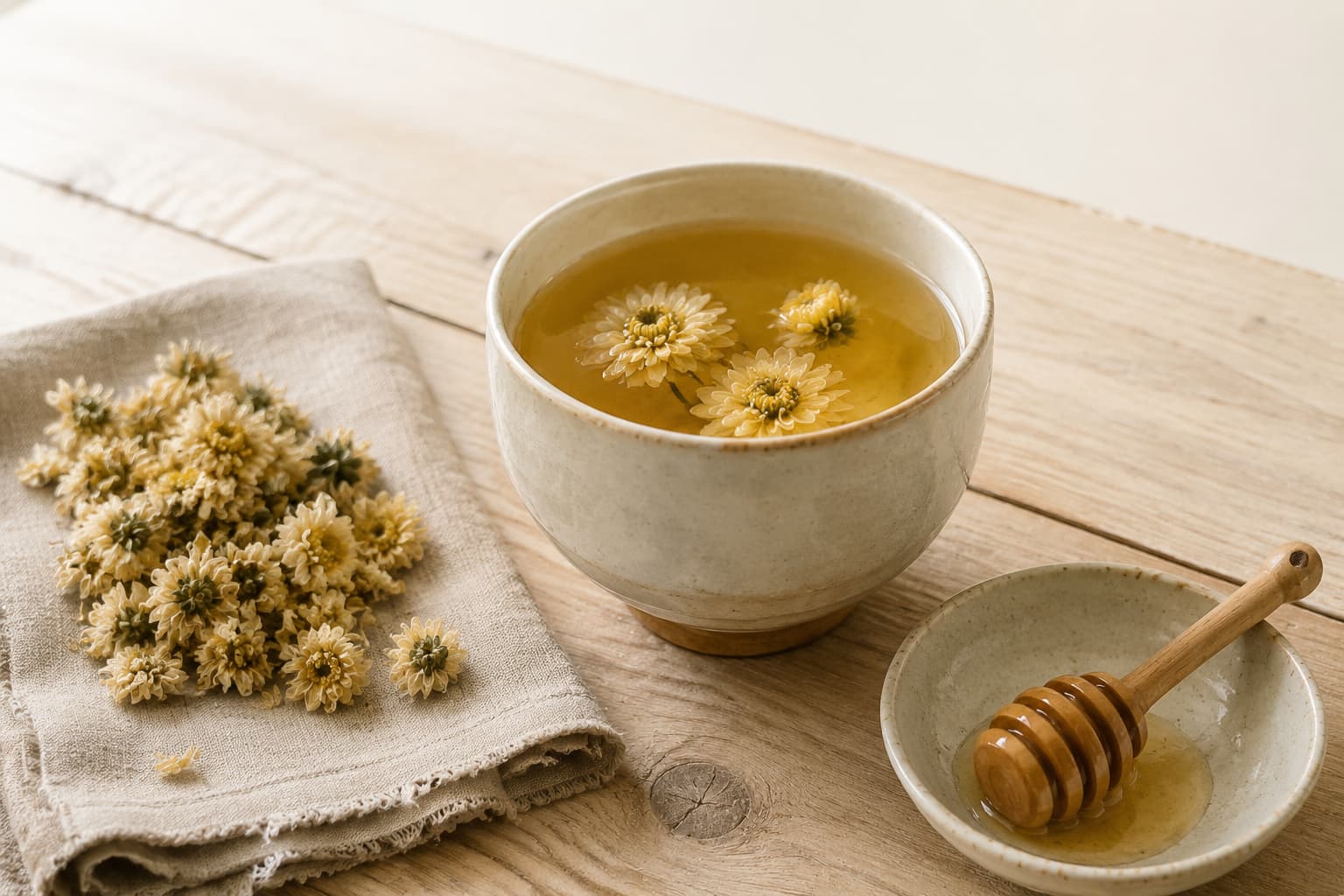
Chrysanthemum tea is a caffeine-free floral infusion usually made by steeping dried, tea-grade chrysanthemum flowers in hot water. It has a light floral aroma, a clean finish, and a soft golden color that makes it feel both simple and special.
The real benefit is not that it “does everything.” It is that it gives you a quiet, plant-based pause in the day — a warm cup after dinner, a mild iced tea in summer, or a simple alternative when you want something lighter than coffee.
Why Chrysanthemum Tea Fits Modern U.S. Wellness Routines
Many American home routines are getting simpler: fewer complicated wellness products, more easy rituals that feel realistic after a long day. Chrysanthemum tea fits that shift beautifully.
It does not need a blender, a supplement cabinet, or a long list of ingredients. A few dried flowers, hot water, and five quiet minutes are enough.
- Caffeine-free, so it can fit into evening routines.
- Light and floral without tasting heavy or overly sweet.
- Easy to drink hot in colder months or iced in summer.
- Beautiful enough to feel like a small ritual, not just another beverage.
Greenmuse note: The best daily rituals are the ones you can actually keep. Chrysanthemum tea works because it is low-effort, gentle, and easy to repeat.
What Is Chrysanthemum Tea?
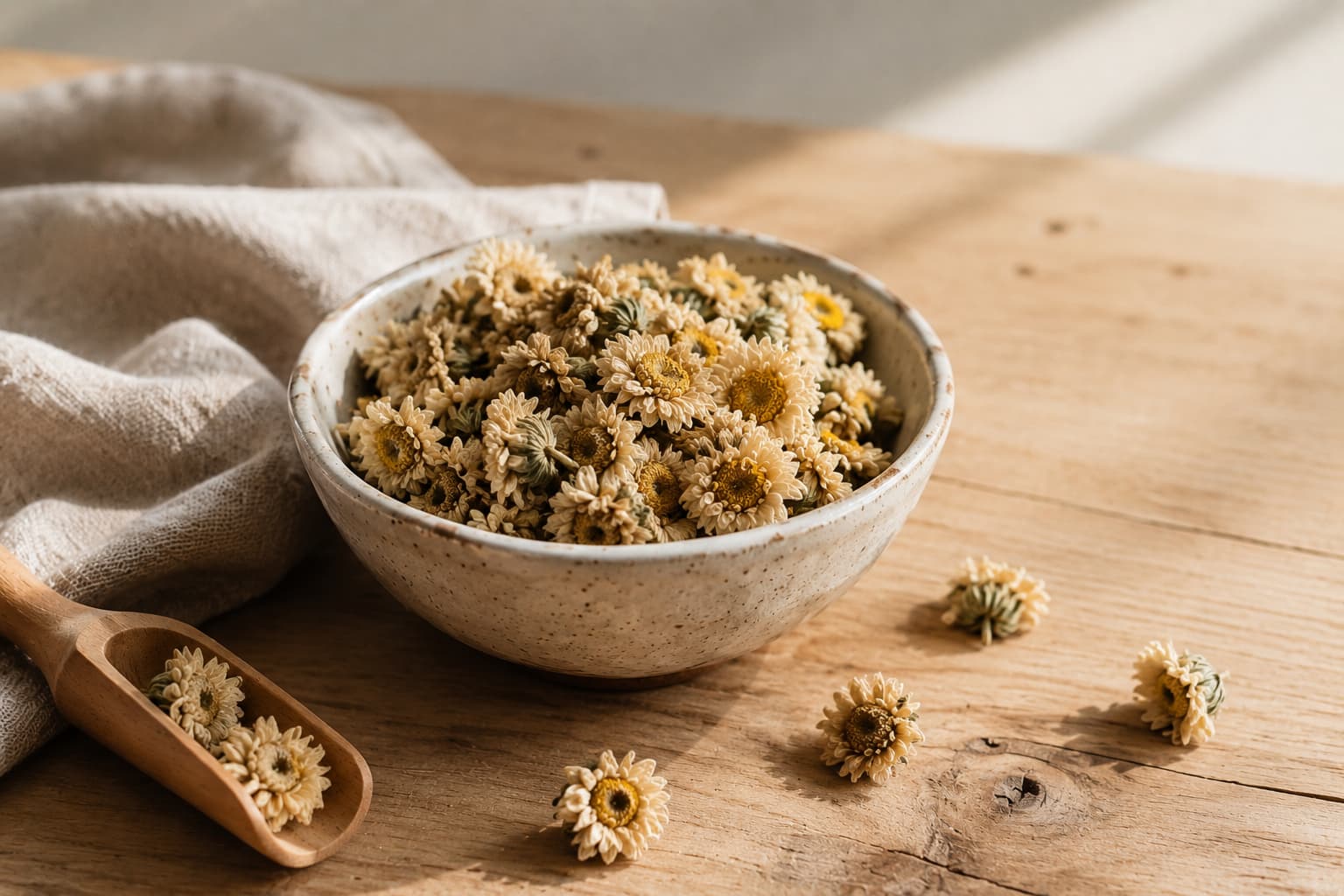
Chrysanthemum tea is a flower-based herbal infusion. Instead of tea leaves from the tea plant, it is made by steeping dried chrysanthemum flowers in hot water.
The flowers most commonly associated with chrysanthemum tea come from edible, tea-grade chrysanthemum types, often connected with Chrysanthemum morifolium or related species used in East Asian tea traditions.
Think of it as a flower tea, not a supplement.
That distinction matters. Chrysanthemum tea can be part of a calm daily routine, but it should not be framed as a treatment, detox, or replacement for medical care.
5 Chrysanthemum Tea Benefits for Everyday Life
The most honest chrysanthemum tea benefits are gentle ones. They are less about dramatic claims and more about how this floral infusion helps create a slower, lighter moment in your day.
1. It is naturally caffeine-free
Chrysanthemum tea is a helpful option when you want a warm drink without adding caffeine late in the day.
2. It makes hydration feel less boring
If plain water feels repetitive, a lightly brewed floral tea can add aroma and flavor without needing sugar.
3. It has a soft, floral taste
The flavor is usually mild, lightly sweet, and clean — floral, but not perfume-like when brewed gently.
4. It turns five minutes into a pause
Measuring the flowers, pouring hot water, and watching the cup turn golden can become a simple mindful ritual.
5. It connects the garden to daily life
For gardeners, chrysanthemum tea is a reminder that plants can be more than decoration — they can shape daily rhythms.
Best for
Evening wind-downs, caffeine breaks, light iced tea, quiet desk moments, and anyone curious about gentle floral teas.
What Does Chrysanthemum Tea Taste Like?
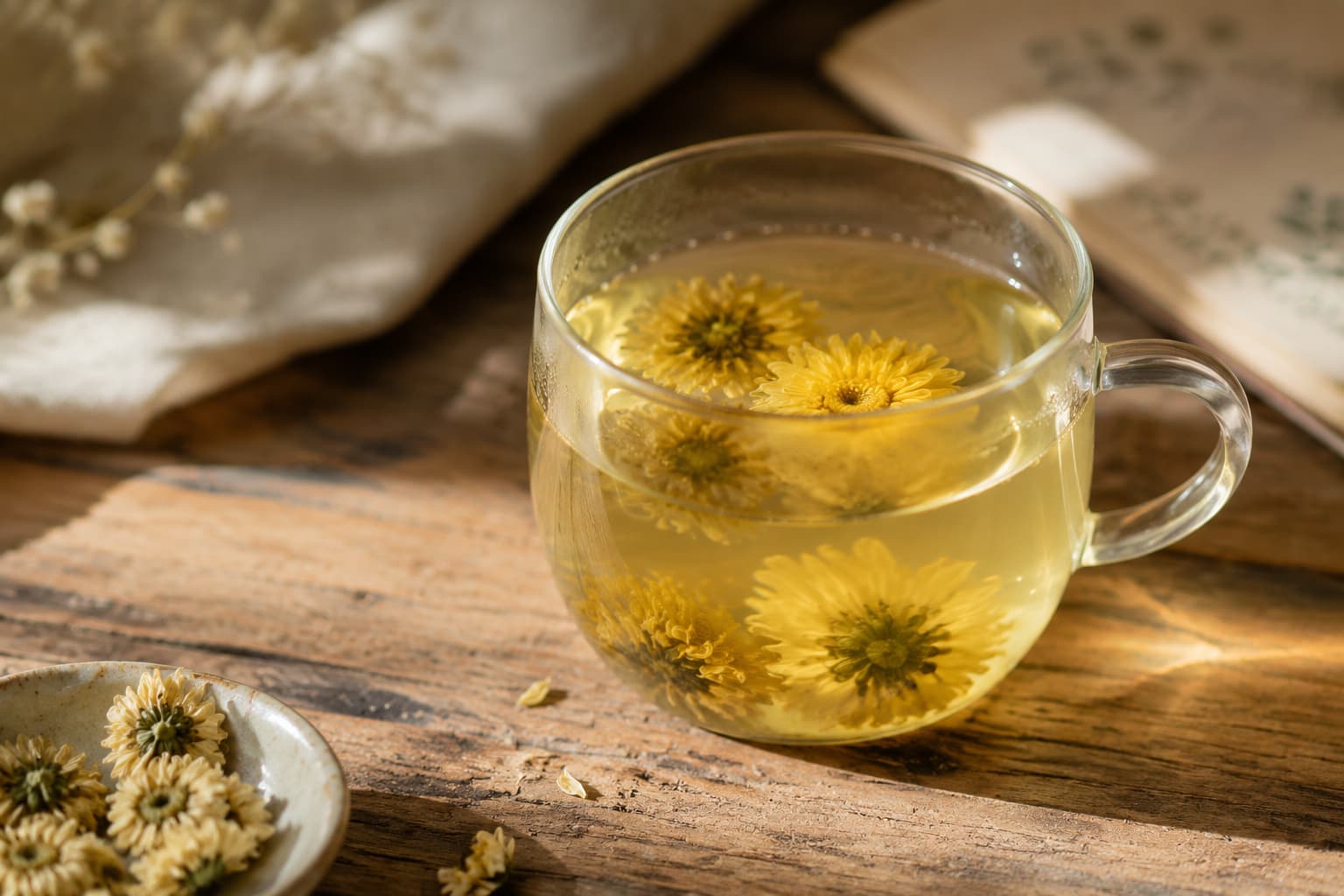
Chrysanthemum tea has a light floral flavor that many beginners find easier than stronger herbal teas. It is often compared to chamomile, but it can taste a little brighter, cleaner, and less apple-like.
| Taste Note | What to Expect |
|---|---|
| Floral aroma | Soft and garden-like, especially when the tea is freshly steeped. |
| Natural sweetness | Mild sweetness without needing much honey or sugar. |
| Clean finish | Light enough to drink after meals or during a quiet afternoon break. |
| Possible bitterness | Usually caused by steeping too long or using water that is too hot. |
Beginner tip: If your chrysanthemum tea tastes bitter, use fewer flowers or shorten the steeping time before adding sweetener.
How to Brew Chrysanthemum Tea
Chrysanthemum tea is forgiving, but the best cup usually comes from a lighter touch. Too much heat or too much time can make the flavor sharper than it needs to be.
Simple 3-Step Method
- Add the flowers. Place 4–6 tea-grade dried chrysanthemum flowers in a cup or small teapot.
- Pour hot water. Use hot water just below boiling, especially if you prefer a softer taste.
- Steep gently. Wait 3–5 minutes, then taste. Add a little honey only if you want extra sweetness.
Hot or Iced?
For iced chrysanthemum tea, brew it slightly stronger, let it cool, then pour over ice. A thin slice of lemon or a small spoon of honey can make it feel more refreshing without turning it into a sugary drink.
| Style | Best Moment | Greenmuse Tip |
|---|---|---|
| Hot | Evening wind-down or cold weather | Use a ceramic mug for a cozy daily ritual. |
| Iced | Warm afternoons or after gardening | Brew stronger first so the ice does not dilute the flavor too much. |
| With honey | When you want a softer floral sweetness | Add honey after steeping, not while the water is very hot. |
What Chrysanthemum Tea Is Not
This is where many online articles become too dramatic. Chrysanthemum tea is lovely, but it should be described honestly.
- It is not a medicine.
- It is not a detox product.
- It is not a cure for eye strain, fever, inflammation, or sleep problems.
- It should not replace advice from a qualified healthcare professional.
Safety note: If you are allergic to ragweed, daisies, marigolds, chamomile, or other plants in the Asteraceae family, approach chrysanthemum tea carefully. If you are pregnant, nursing, taking medication, or managing a health condition, ask a healthcare professional before drinking it regularly.
Use Tea-Grade Flowers Only
Do not brew tea from florist chrysanthemums, supermarket decorative mums, or garden-center plants unless they were specifically grown and sold for food use. Ornamental flowers may have been treated with products that are not meant to be consumed.
For everyday tea, choose dried chrysanthemum flowers clearly labeled for tea or culinary use.
Why Gardeners Love Chrysanthemum Tea
Gardeners often understand chrysanthemum tea in a different way. It is not just a drink. It is part of the same slow relationship we have with soil, seasons, flowers, and light.
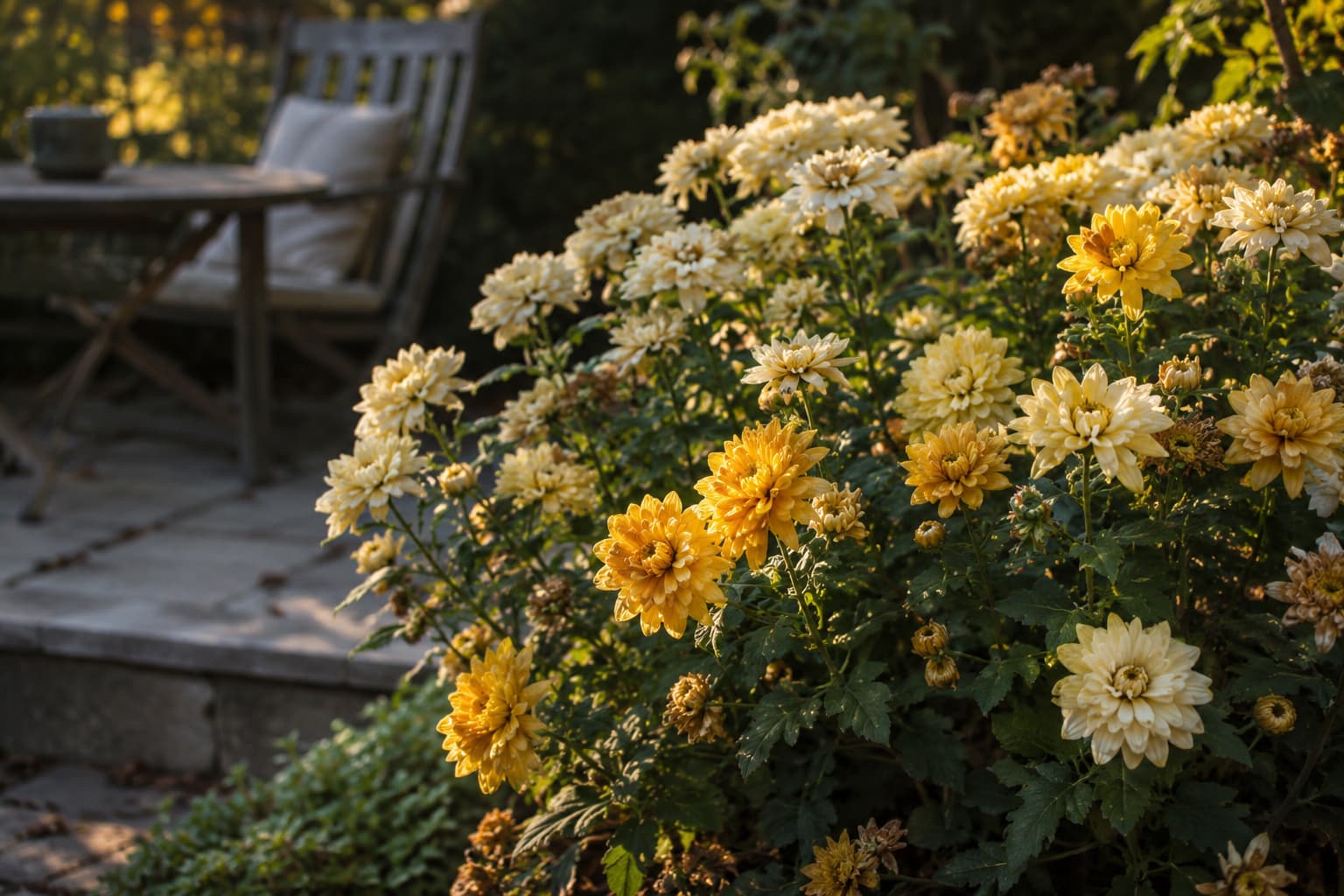
Chrysanthemums bloom when many summer flowers are fading, which makes them feel especially meaningful in late-season gardens. They bring color to patios, borders, and containers just as the year begins to soften.
- They connect a familiar fall flower with a daily home ritual.
- They make floral teas feel less mysterious for beginners.
- They remind us that useful plants can also be beautiful.
Garden-to-cup reminder: Growing chrysanthemums for beauty is different from growing flowers for tea. If you want to harvest your own, start with edible or tea chrysanthemum varieties and avoid synthetic sprays.
Chrysanthemum Tea FAQ
Is chrysanthemum tea caffeine-free?
Yes. Chrysanthemum tea is an herbal flower infusion, not a traditional black, green, or white tea made from tea leaves. That makes it a popular choice for people who want a caffeine-free drink.
Can I drink chrysanthemum tea every day?
Many people enjoy it as an occasional or daily beverage, but daily use is not right for everyone. If you have plant allergies, take medication, are pregnant or nursing, or have a medical condition, check with a healthcare professional first.
Does chrysanthemum tea help you sleep?
It does not contain caffeine, so it can fit well into a calm evening routine. But it should not be described as a sleep treatment. Think of it as a gentle wind-down drink rather than a sleep remedy.
Can I make chrysanthemum tea from garden mums?
Not unless the plant is correctly identified as edible and was grown safely for food use. Many ornamental mums are grown for display, not for drinking. Use tea-grade dried chrysanthemum flowers from a trusted source.
What can I add to chrysanthemum tea?
A small amount of honey, a slice of lemon, or a few goji berries are common additions. For a clean first taste, try it plain before adding anything.
Sources & Further Reading
Greenmuse avoids exaggerated wellness claims. This guide was written as a lifestyle and plant-based ritual article, with safety language informed by botanical and health references.
Final Thoughts
The best chrysanthemum tea benefits are not loud or dramatic. They are quiet: a caffeine-free cup, a soft floral aroma, a few minutes away from screens, and a small reminder that plants can bring calm into ordinary routines.
For beginners, that is more than enough. Start with a small cup, use tea-grade flowers, brew gently, and let the ritual stay simple.
If you try chrysanthemum tea this week, notice when it feels best: after dinner, during an afternoon reset, or as a quiet iced tea after watering your plants.