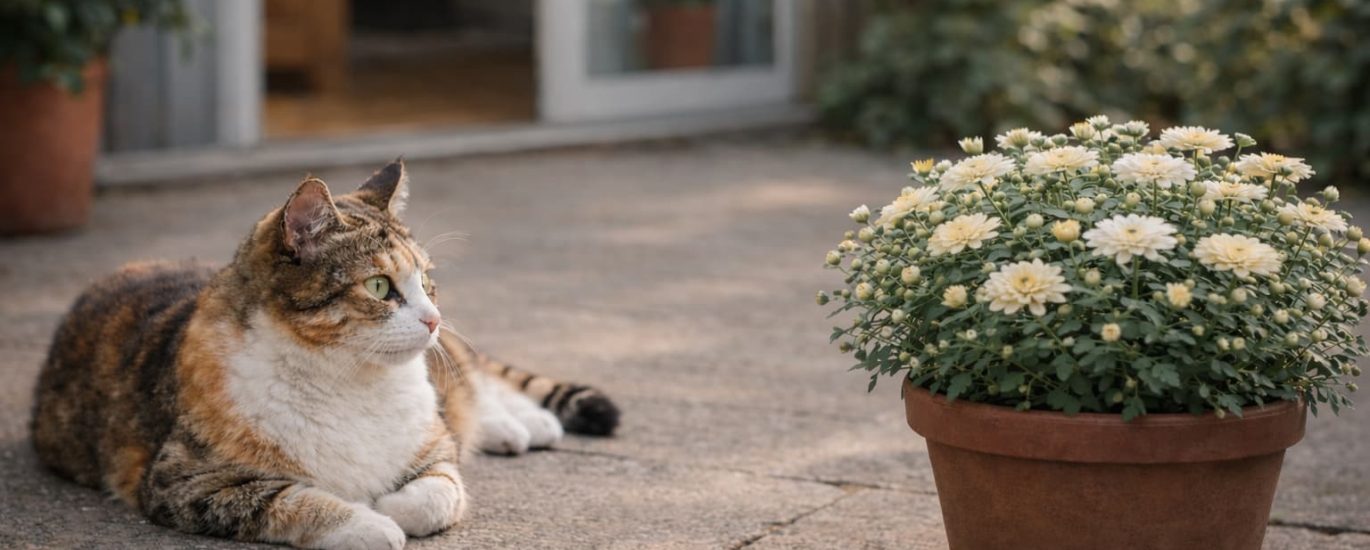
Chrysanthemums—often called mums—are a favorite in fall gardens and seasonal décor.
But if you live with cats, it’s important to know that chrysanthemums are toxic to cats and can pose a real risk if ingested.
This guide explains why mums are harmful, which parts are toxic, common symptoms, and safer alternatives for pet-friendly homes—so you can garden with confidence and care.
Quick Safety Summary
- Toxic to cats: Yes
- Risk level: Mild to moderate (can be serious in some cases)
- Most toxic parts: Flowers and leaves
- Best practice: Avoid planting mums where cats can access them
Why Are Chrysanthemums Toxic to Cats?
Chrysanthemums contain natural compounds called pyrethrins, which are commonly used in insect repellents.
While effective against pests, pyrethrins are toxic to cats, whose bodies cannot efficiently process these chemicals. Even small exposures can cause noticeable reactions.
These compounds are most concentrated in the flowers and leaves, but the entire plant should be considered unsafe.
Which Parts of the Chrysanthemum Are Toxic?
All parts of the plant may cause harm, but the highest risk areas include:
- Flowers (most toxic)
- Leaves
- Stems
- Plant sap
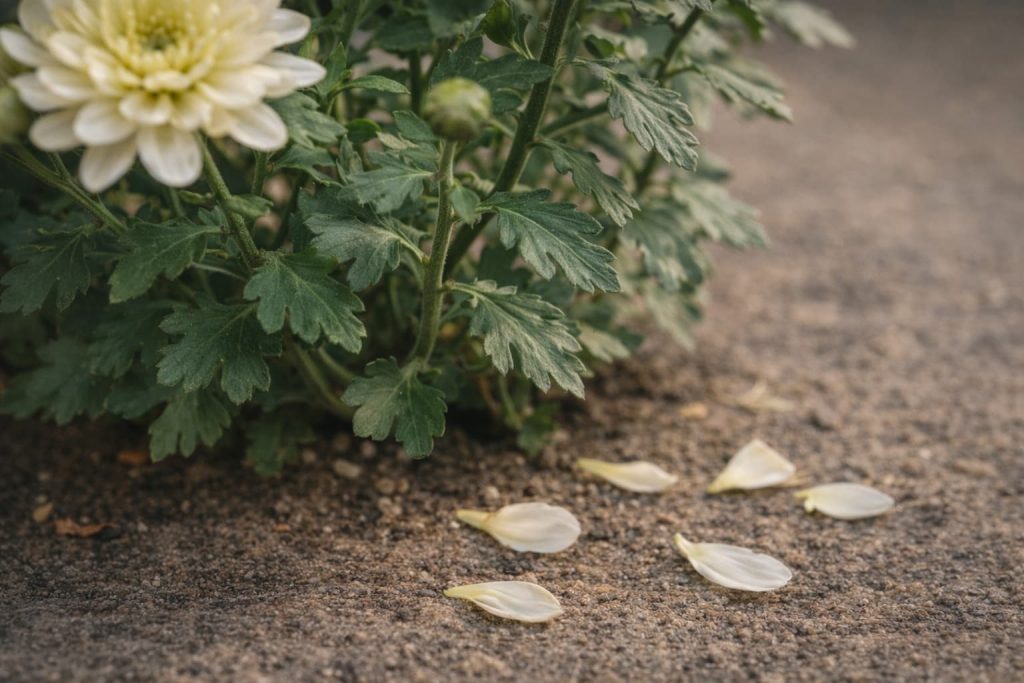
Dried arrangements and fallen petals can also be dangerous, especially for curious indoor cats.
Symptoms of Chrysanthemum Poisoning in Cats
Symptoms typically appear within a few hours of exposure and may include:
- Vomiting or drooling
- Diarrhea
- Loss of appetite
- Lethargy or weakness
- Poor coordination or tremors
- Skin irritation after contact
If neurological symptoms (tremors, difficulty walking) occur, contact a veterinarian immediately.
Indoor vs. Outdoor Risk: Which Is More Dangerous?
Indoor Chrysanthemums
- Higher risk due to prolonged exposure
- Cats may chew leaves or brush against sap
- Toxic dried arrangements are often overlooked
Outdoor Chrysanthemums
- Risk depends on access
- Free-roaming cats may nibble plants
- Fallen petals still pose a hazard
Indoor mums present the greater risk in most homes.
What to Do If Your Cat Eats Chrysanthemum
- Remove access immediately
- Do not induce vomiting unless instructed by a vet
- Contact your veterinarian or a pet poison helpline
- Bring plant identification if possible
Early action significantly reduces complications.
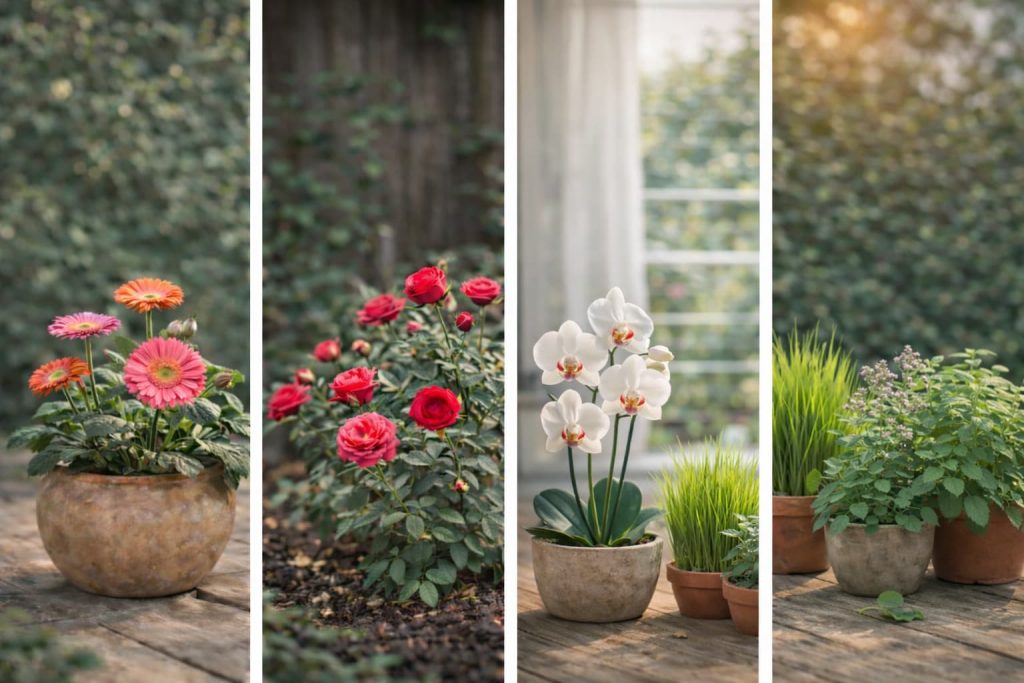
Cat-Safe Flower Alternatives
If you love flowers but prioritize pet safety, consider these non-toxic options:
- Gerbera daisies
- Roses
- Orchids
- Sunflowers
- Cat grass or catnip
These provide beauty without the risk.
Can You Grow Chrysanthemums Safely With Cats?
Yes—but only with strict separation:
- Keep mums in cat-free outdoor areas
- Avoid indoor displays entirely
- Use physical barriers if planted outside
- Choose alternatives if your cat roams freely
For most households, avoiding chrysanthemums altogether is the safest choice.
Final Thoughts
Chrysanthemums may be classic seasonal flowers, but they are not pet-safe plants.
Understanding the risks allows you to make informed decisions that protect both your garden and your cat.
A beautiful home should always be a safe one—for every member of the family.