
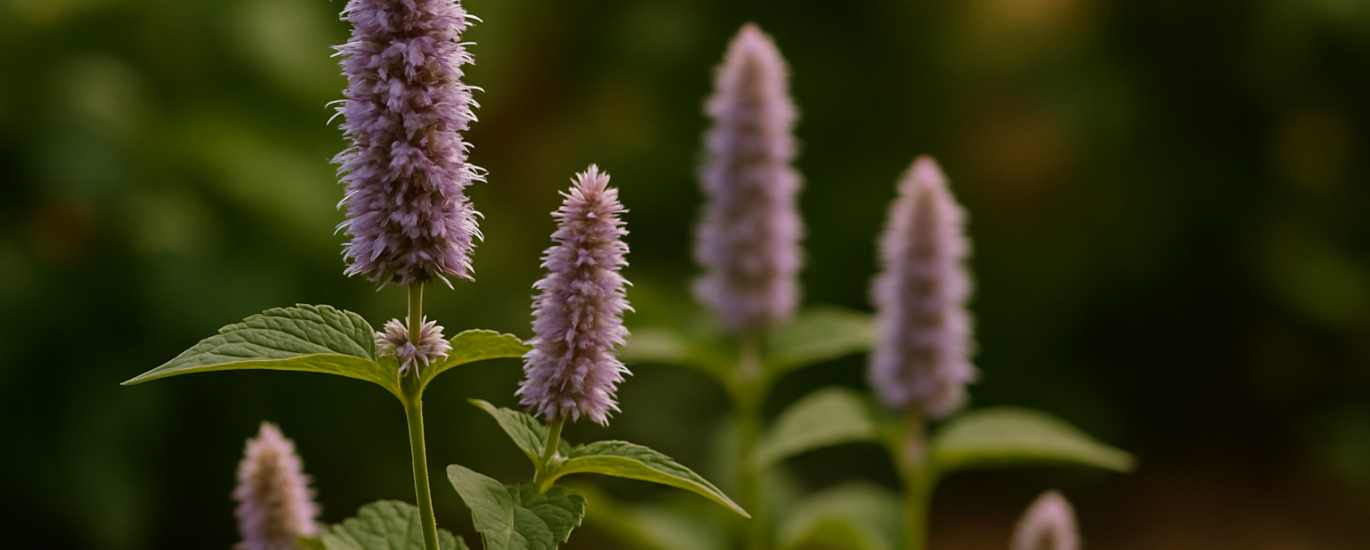
If you’re looking for a plant that brings fragrance, color, movement, and nonstop pollinator activity to your garden, Anise Hyssop is your new must-grow perennial.
Loved for its licorice-scented leaves and long spikes of lavender-purple flowers, this North American native is one of the most rewarding and resilient plants you can add to a sunny border.
It’s beautiful, it’s tough, and it feeds your garden’s ecosystem all season long.
Why Gardeners Love Anise Hyssop
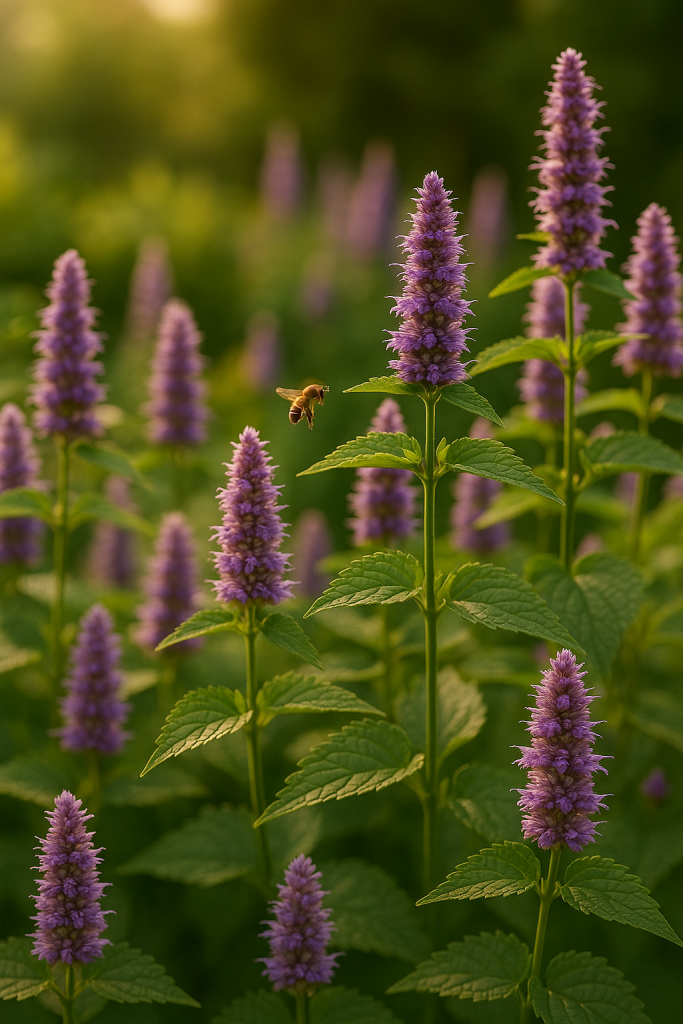
Anise Hyssop has a naturally uplifting presence. The combination of tall flower spires, soft foliage, and sweet fragrance creates a plant that feels both energetic and soothing.
Symbolically, it’s associated with:
- Health and wellness (thanks to its medicinal history)
- Warmth and hospitality
- Sweetness and comfort (from its licorice-like aroma)
It’s the perfect plant for summertime gatherings, backyard dinners, or simply enjoying the slow, warm evenings of late summer.
How to Recognize Anise Hyssop (Plant Profile)
Anise Hyssop is easily identified by:
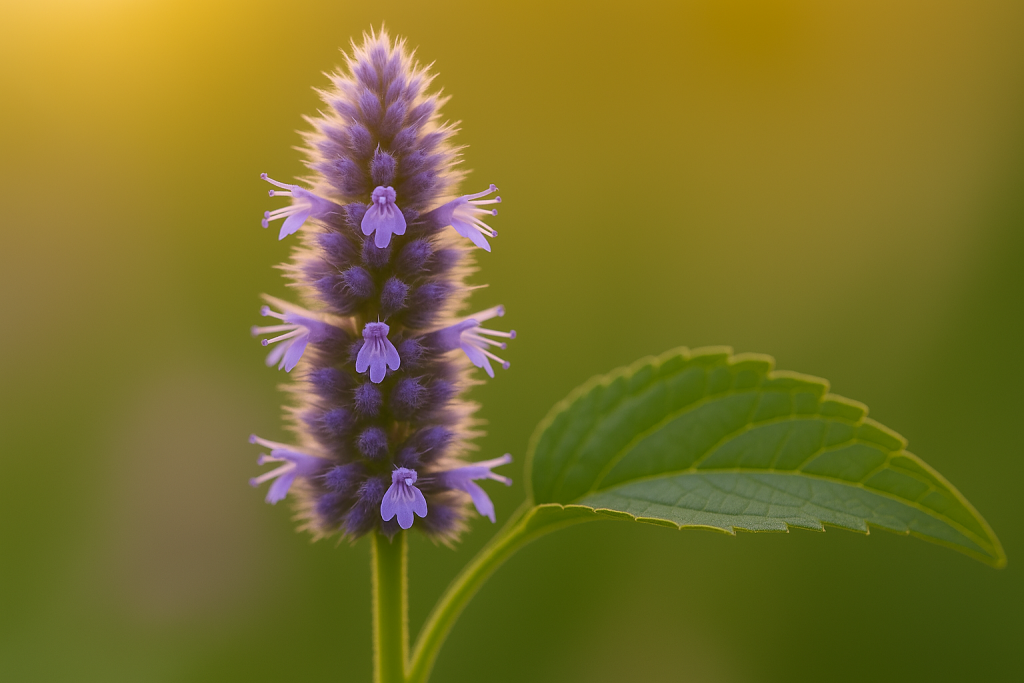
- Upright spikes of soft purple flowers
- Mint-family leaves that smell like licorice or anise
- A graceful, upright habit
- Long bloom period lasting from early summer to fall
The flowers sway beautifully in the breeze and glow in the golden light of late afternoon—making them a favorite among photographers and pollinators alike.
How to Grow Anise Hyssop (Beginner-Friendly Guide)
Light
Full sun for best flowering and strongest growth.
Soil
Exceptionally well-drained soil is key.
This plant does not like wet feet—think sandy, gravelly, or loosened loam.
Hardiness
USDA Zones 4–9
Height
Typically 2–4 feet depending on the variety.
Water
Low water needs.
Once established, it’s impressively drought-tolerant.
Maintenance
- Deadhead for continual blooms
- Cut back in late fall or early spring
- Divide clumps every 3–4 years if they become woody
Bloom Time
Anise Hyssop blooms from summer into early fall, often flowering long after other nectar plants have faded.
This makes it one of the best “bridge plants” between summer vibrancy and early-autumn color.
Ecological Benefits: A True Pollinator Powerhouse
Few perennials offer as much ecological value as Anise Hyssop. It is consistently listed among the top plants for pollinators in North America.
You’ll see:
- Honeybees
- Native bees
- Butterflies
- Hummingbirds
—all visiting the flower spikes daily.
For gardeners building pollinator habitats, this plant is non-negotiable.
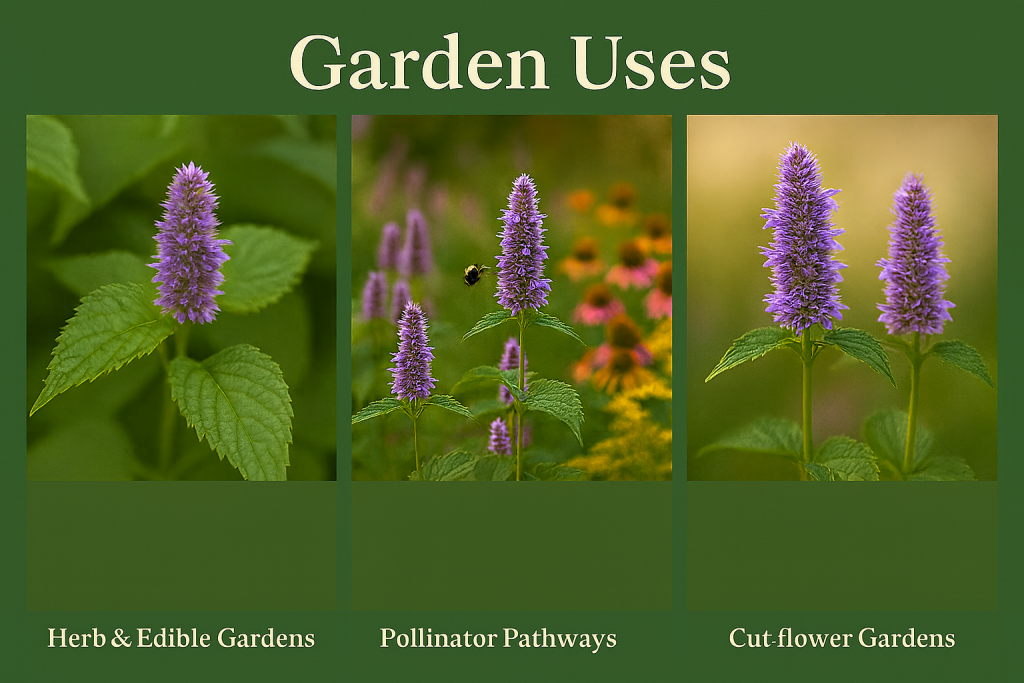
Garden Uses
Anise Hyssop is incredibly versatile:
Herb & Edible Gardens
Its leaves and flowers are edible, lightly sweet, and perfect for teas, salads, and desserts.
Pollinator Pathways
Plant a small drift of 3–7 plants to create a buzzing nectar corridor.
Prairie & Naturalistic Designs
Pairs beautifully with coneflowers, black-eyed Susans, goldenrod, and grasses.
Cut-Flower Gardens
Long-lasting blooms with a soft, herbal fragrance.
Real Problems This Plant Solves
Problem 1: Hot, dry summers
Solution: Anise Hyssop thrives in drought and heat.
Problem 2: Need color that lasts for months, not weeks
Solution: Expect continuous bloom from June through September.
Problem 3: Want more pollinators with minimal effort
Solution: Plant a few clumps and enjoy the show—nature does the rest.
A Wellness Plant for the Garden & Home
Beyond its ecological role, Anise Hyssop offers a unique wellness dimension:
- Its fragrance reduces stress
- Its flowers can be used in teas and calming blends
- Its presence creates a relaxing, sensory-rich garden space
It’s a plant that nourishes both the land and the people who tend it.
With its long flower spikes, soft fragrance, and nonstop pollinator appeal, Anise Hyssop is a standout perennial for anyone wanting a garden that’s beautiful, resilient, and alive with life.
Plant it once, and you’ll wonder how your summer garden ever felt complete without it.
