Calibrachoa Guide: How to Grow Million Bells
Quick Summary
Calibrachoa — also called Million Bells or Mini Petunia — is one of the most rewarding container plants you can grow. It blooms continuously from spring through frost, cleans itself (no deadheading), and trails beautifully from hanging baskets and window boxes. But it has two fatal flaws that kill more plants than all pests combined: overwatering and pH sensitivity. Those yellow leaves everyone posts about on gardening forums? It's not a disease — it's usually iron chlorosis caused by high-pH water or soil. Fix the pH, ease up on the watering, and calibrachoa goes from struggling to spectacular in about two weeks.
What Is Calibrachoa? (And Why It's Not a Petunia)
Calibrachoa is a genus of about 28 species in the nightshade family (Solanaceae) — which makes it a relative of tomatoes, peppers, and petunias. Native to South America (primarily Brazil and Uruguay), it was long classified within the petunia genus until DNA analysis in the 1990s revealed enough chromosomal differences to warrant its own genus.
The key botanical difference: calibrachoa has 18 chromosomes; petunias have 14. This genetic distinction is why the two can't be crossed to create hybrids — and why they have different care requirements despite looking similar.
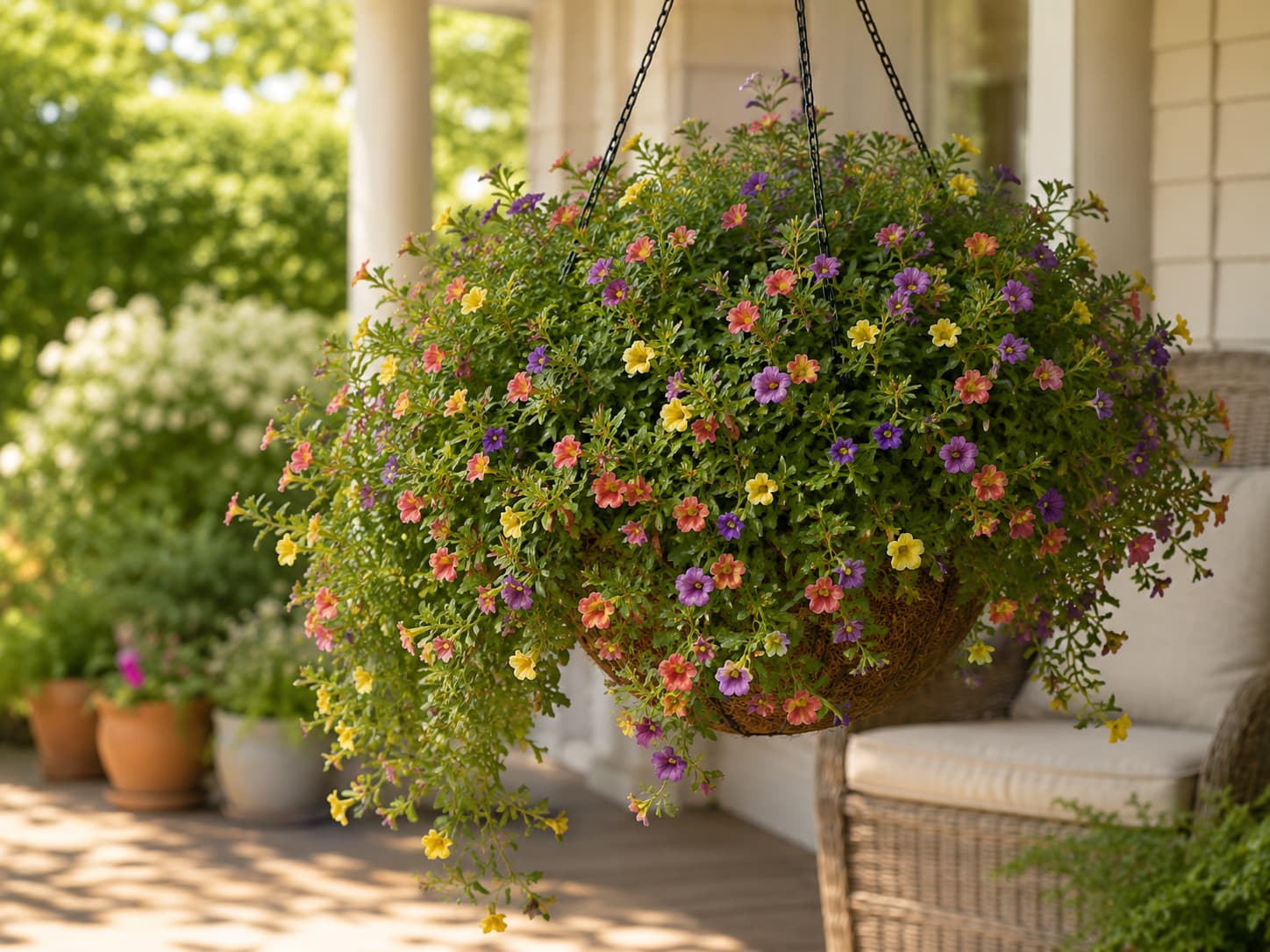
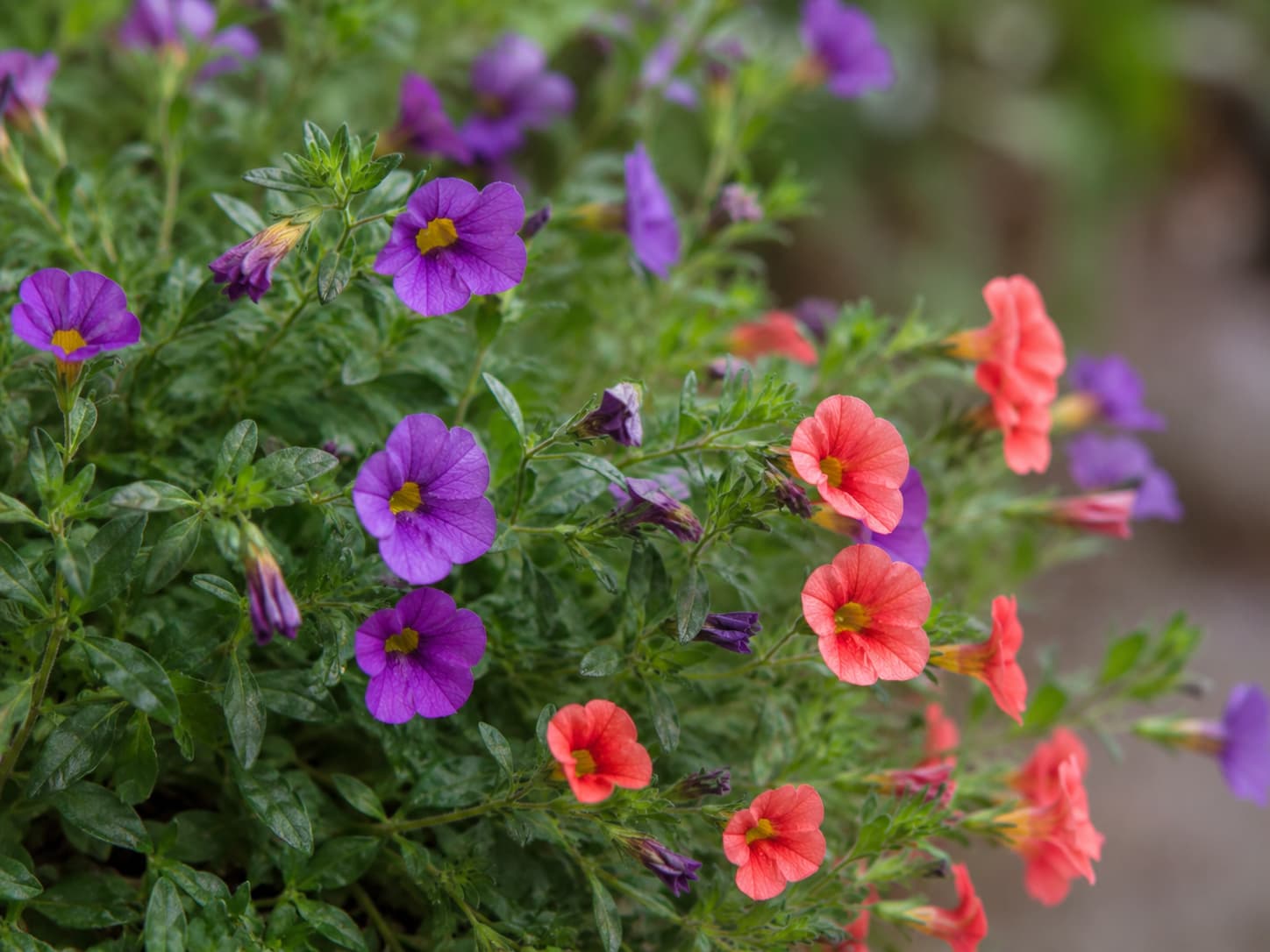
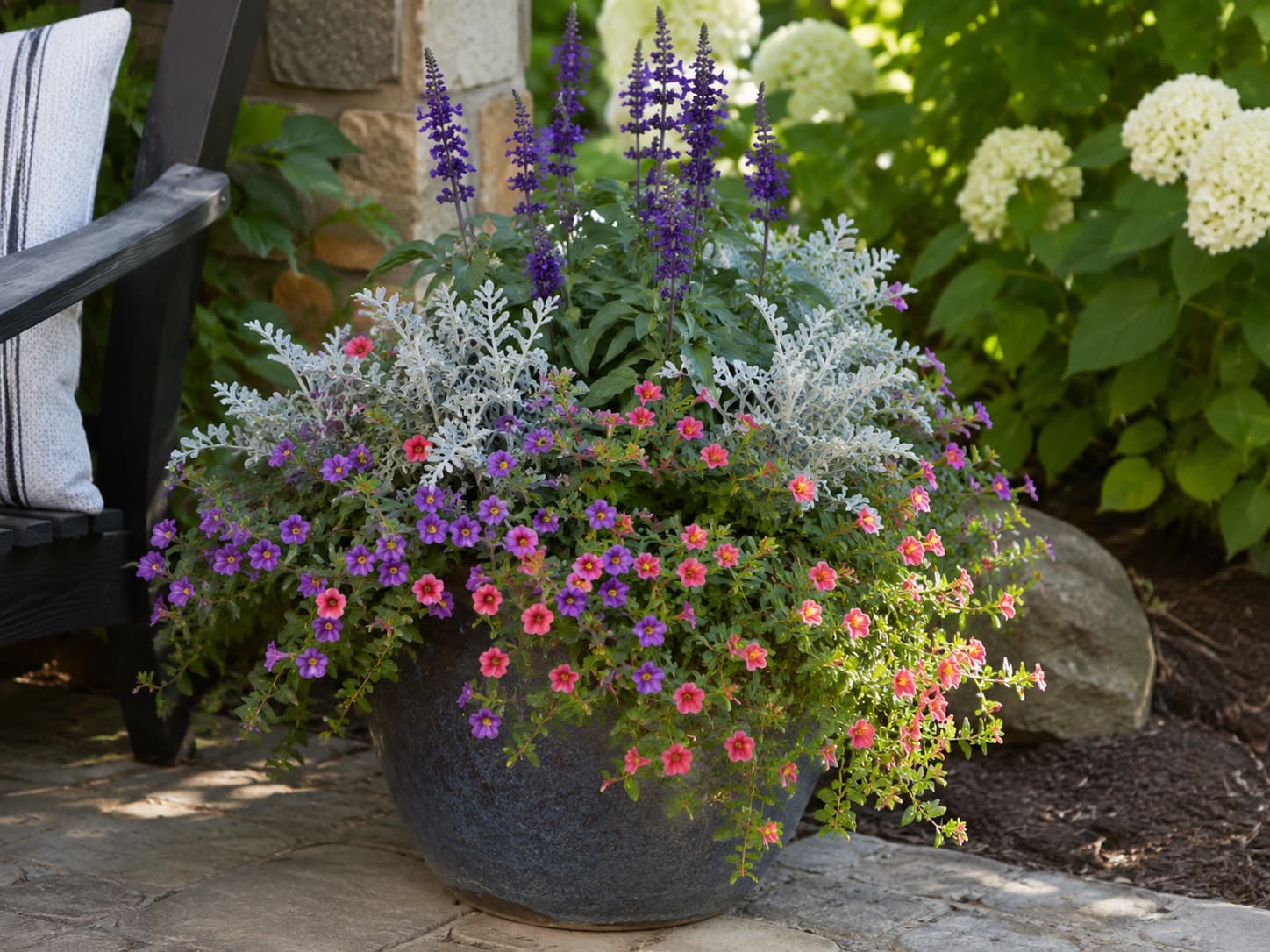
The common name "Million Bells" comes from the plant's extraordinary flowering habit — a single plant in a hanging basket can produce hundreds of small (1–2 inch), petunia-like trumpet blooms simultaneously, from late spring through the first hard frost. Modern breeding has produced varieties in nearly every color except true blue: coral, lemon yellow, hot pink, lavender, deep velvet purple, white, orange, red, and countless bicolor combinations.
Calibrachoa is self-cleaning — spent flowers shrivel and drop naturally, so there's no deadheading required. This trait alone makes it dramatically lower-maintenance than petunias, which get sticky and unattractive as old flowers decay.
Plant Profile at a Glance
| Feature | Details |
|---|---|
| Common Name | Calibrachoa, Million Bells, Mini Petunia |
| Scientific Name | Calibrachoa spp. and hybrids |
| Plant Type | Tender perennial (grown as annual in most zones) |
| USDA Zones | 9–11 (perennial); annual in all other zones |
| Mature Size | 6–12 inches tall, 12–24 inches trailing |
| Bloom Time | Late spring through first hard frost |
| Flower Colors | Nearly every color except true blue; many bicolors and patterns |
| Sun Needs | Full sun — at least 6 hours direct; 8+ for maximum bloom |
| Soil | Well-drained, slightly acidic (pH 5.5–6.0) potting mix |
| Self-Cleaning | Yes — no deadheading required |
| Toxicity | Non-toxic — safe for dogs, cats, and children |
The pH Problem: Why Your Calibrachoa Leaves Are Turning Yellow
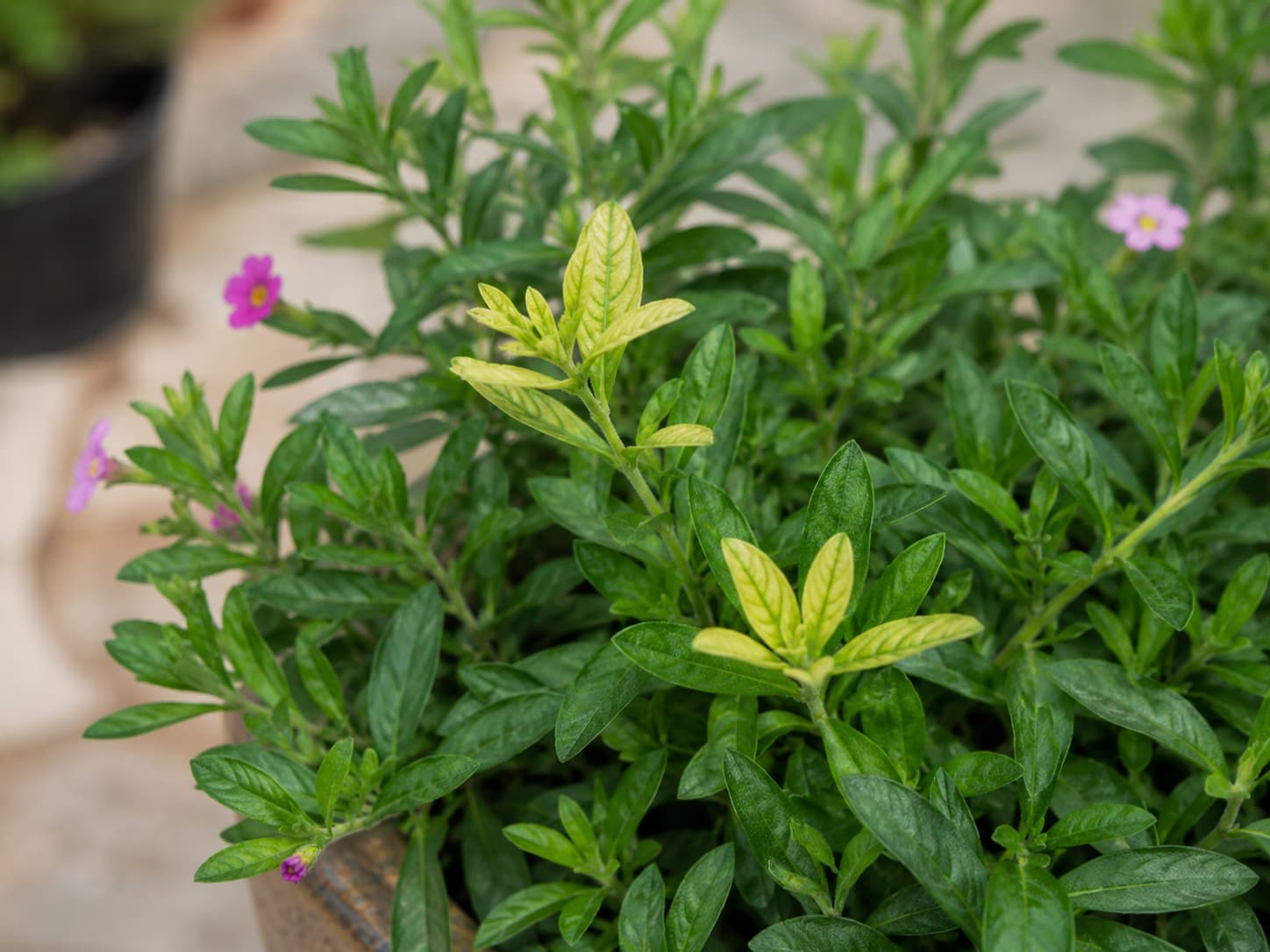
This is the single most important section in this guide. If you search "calibrachoa yellow leaves" on any gardening forum, you'll find thousands of confused posts. The plant looked great for weeks, then the new growth started turning pale yellow while the veins stayed green. People assume it's a disease, overwatering, or a nutrient deficiency they can fix with more fertilizer. More fertilizer makes it worse.
The problem is almost always iron chlorosis caused by high soil pH. Here's what's happening:
Calibrachoa is a member of the petunia group within Solanaceae, and like petunias, it is extremely inefficient at absorbing iron when the growing medium's pH rises above about 6.2. In its native habitat, these plants grow in slightly acidic, well-drained soils. When you water them with tap water — which in most of the U.S. has a pH of 7.0–8.5 — the growing medium gradually becomes more alkaline. As pH rises, iron becomes chemically unavailable to the roots. The plant can't make chlorophyll. New leaves turn yellow.
Do NOT Add More Fertilizer
The plant is not starving. It's surrounded by iron it can't absorb because the pH is wrong. Adding more fertilizer — especially high-phosphorus bloom boosters — actually raises pH further and makes the problem worse. The fix is lowering the pH, not adding more nutrients.
How to Fix and Prevent Iron Chlorosis
- Test your water pH. A simple aquarium pH test kit ($5–10) will tell you what you're dealing with. If your tap water is above pH 7.0, it's slowly raising your potting mix pH with every watering.
- Use an acidifying fertilizer. Products labeled for acid-loving plants (like Miracle-Gro Miracid or Jack's Acid Special) contain ammonium-based nitrogen that lowers pH as the plant feeds. Switch to one of these for all your calibrachoa feeding.
- Apply chelated iron as a foliar spray. This is the fastest fix for existing chlorosis. Chelated iron (Fe-EDDHA or Fe-DTPA) is formulated to remain available to plants even at higher pH. Spray directly on leaves — results visible within 1–2 weeks.
- Check your potting mix. Some inexpensive potting mixes contain lime to buffer pH around neutral — great for most plants, terrible for calibrachoa. Look for mixes labeled for acid-loving plants, or add peat moss to your mix (peat is naturally acidic, pH 3.5–4.5).
- Consider using rainwater or distilled water for your calibrachoa if your tap water is very hard or alkaline. This alone can prevent the problem from developing.
The Quick Diagnostic
New leaves yellow with green veins = iron chlorosis from high pH. Fix the pH, add chelated iron. Old leaves yellow first, plant wilts = overwatering. Let it dry out. Whole plant pale, slow growth = nitrogen deficiency. Feed with acidifying fertilizer. Brown crispy leaf edges = too much sun or fertilizer burn. Move to partial afternoon shade, flush the pot with plain water.
The Overwatering Trap: How to Water Million Bells Correctly
After pH problems, overwatering is the #2 killer of calibrachoa — and the two often look similar, which causes confusion. Here's the key difference: overwatering affects old leaves first (they turn yellow and drop), while pH-related chlorosis affects new leaves first.
Calibrachoa has fine, shallow roots that rot quickly in soggy soil. Unlike petunias, which can tolerate some overwatering, calibrachoa is genuinely sensitive to wet feet. The most common scenario: a well-meaning gardener waters every day "because it's hot," the potting mix never dries out, the roots suffocate, and the plant collapses from the bottom up.
How to Water Correctly
- Check before you water. Stick your finger into the potting mix up to the first knuckle. If it feels damp, wait. If it's dry, water thoroughly until water runs out the drainage holes.
- In summer heat, this might be daily. In cooler weather, it might be every 2–3 days. There is no fixed schedule — check the soil.
- Always use containers with drainage holes. Calibrachoa in pots without drainage will die. Period.
- Empty saucers after watering. Never let pots sit in standing water.
- Signs of overwatering: Lower leaves yellow and drop, plant looks wilted despite wet soil (roots can't take up water because they're rotting), stems feel soft at the base, soil smells sour.
The Wilting Confusion
A calibrachoa that's wilting from underwatering perks up within hours of being watered. A calibrachoa that's wilting from overwatering (root rot) stays wilted after watering because the roots are dead. If you water a wilted plant and it doesn't recover, you've been overwatering.
Complete Care Guide: Sun, Soil, Fertilizer
Light
Full sun — at least 6 hours direct, 8+ for maximum bloom. In Zones 9–11, some afternoon shade helps prolong flowering during peak summer heat. In partial shade, calibrachoa survives but produces dramatically fewer flowers and becomes leggy.
Soil
Use a high-quality, well-drained potting mix with a slightly acidic pH (5.5–6.0). Avoid heavy garden soil or cheap potting mixes — they compact in containers and suffocate roots. Look for mixes containing peat moss (natural acidity) and perlite (drainage). Calibrachoa in the ground needs similarly well-drained, slightly acidic soil.
Fertilizer — The Critical Detail
Calibrachoa is a heavy feeder compared to most annuals, but the type of fertilizer matters more than the amount. Because of its pH sensitivity:
- Use an acidifying fertilizer. Products formulated for petunias, acid-loving plants, or with ammonium-based nitrogen sources. Feed every 7–14 days during the growing season at the recommended rate.
- Avoid high-phosphorus bloom boosters. They raise pH and can make iron deficiency worse. A balanced formula (like 20-10-20 or similar) with micronutrients is ideal.
- Don't skip feeding. Calibrachoa in containers depletes nutrients rapidly — especially in small pots and hanging baskets that get watered frequently. Consistent light feeding produces dramatically more flowers than sporadic heavy feeding.
Calibrachoa vs. Petunia: Which Should You Grow?
| Characteristic | Calibrachoa | Petunia |
|---|---|---|
| Flower Size | Small (1–2 inches) | Large (2–5 inches) |
| Deadheading | Self-cleaning — none needed | Required for best appearance and rebloom |
| Growth Habit | Compact, mounding, trailing | Can be mounding or trailing; often becomes leggy |
| Water Sensitivity | Very sensitive to overwatering | Moderately tolerant |
| pH Sensitivity | Very sensitive — needs acidic conditions | Moderately sensitive |
| Rain Tolerance | Good — small flowers shed rain well | Poor — large flowers become waterlogged and mushy |
| Pest Resistance | Generally good; tobacco budworm is the main threat | Susceptible to aphids, budworm, and fungal diseases |
| Chromosomes | 18 | 14 |
The Bottom Line
Choose calibrachoa if: You want nonstop color with zero deadheading, you're growing in containers or hanging baskets, you want rain-tolerant flowers, and you're willing to manage water pH. Choose petunias if: You want larger individual flowers, you're less concerned about deadheading, you have neutral-to-alkaline water and don't want to manage pH, or you want a more drought-tolerant option.
Winter Care and Overwintering
Calibrachoa is a tender perennial — hardy outdoors year-round only in Zones 9–11. In all other zones, it's grown as an annual or overwintered indoors.
Option 1: Treat as an Annual (Simplest)
Let the plant die with the first hard frost. Compost the spent plant and potting mix. Buy new plants next spring. This is what most gardeners do, and it's perfectly fine — calibrachoa is inexpensive and widely available.
Option 2: Overwinter Indoors (If You Want to Save It)
- Bring indoors before nighttime temperatures drop below 50°F (10°C).
- Cut the plant back by about one-third to reduce stress and make it manageable indoors.
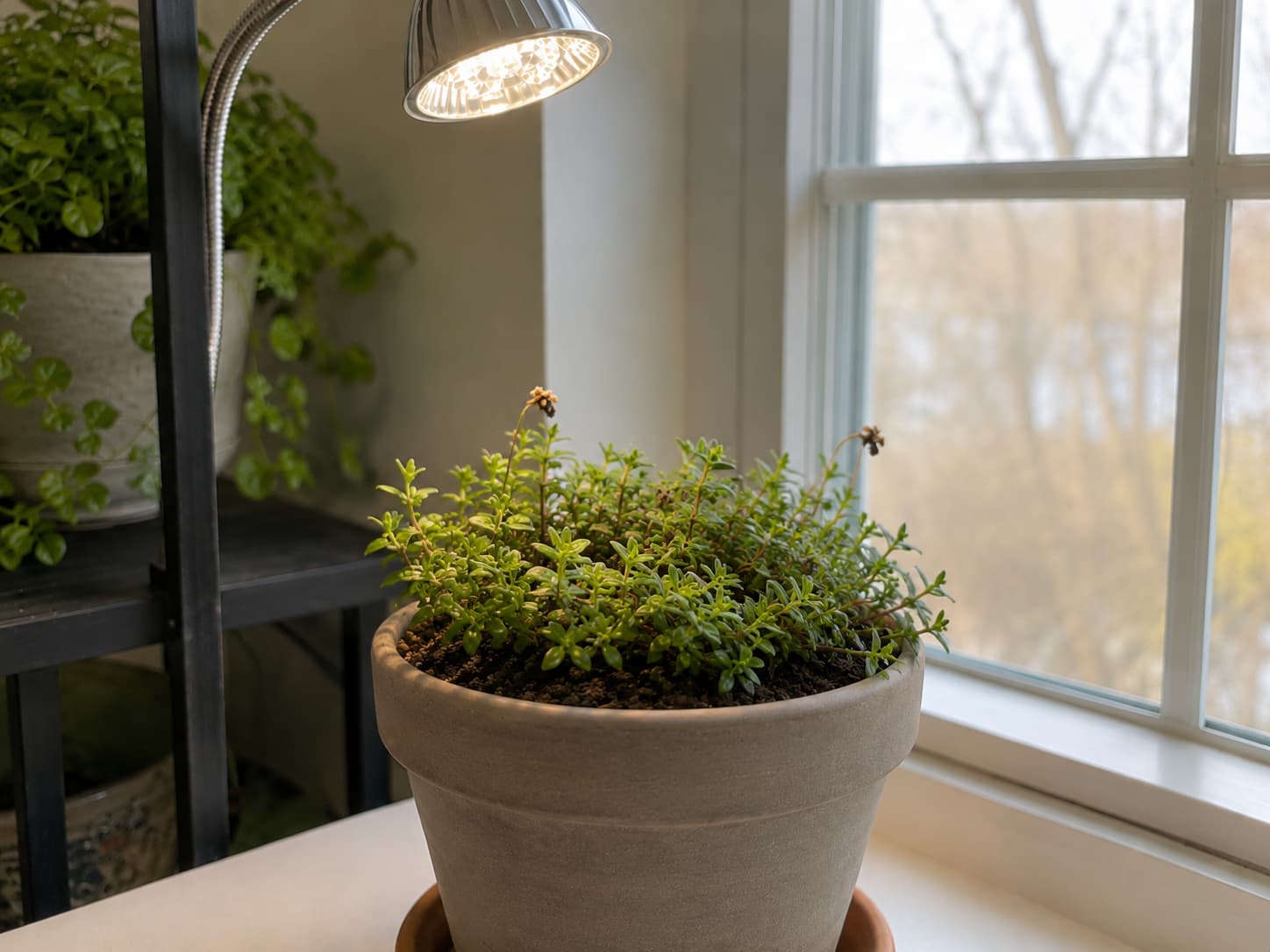
- Place near a bright south-facing window or under a grow light. Calibrachoa needs strong light even in winter.
- Water sparingly — only when the top inch of soil is dry. The plant will be semi-dormant.
- Do not fertilize during winter. Resume feeding in early spring when new growth appears.
- Expect some leaf drop and leggy growth. This is normal with lower winter light. In spring, cut back hard, resume feeding, and the plant will regenerate.
Overwintering Reality Check
Calibrachoa is not the easiest plant to overwinter. It wants strong light even in winter, and it's prone to aphids and whiteflies indoors. Many gardeners find it easier to buy new plants in spring than to nurse last year's plants through winter. If you do overwinter, start with healthy plants — don't try to save one that was already struggling.
Best Calibrachoa Varieties
| Series / Variety | Colors | Habit | Notes |
|---|---|---|---|
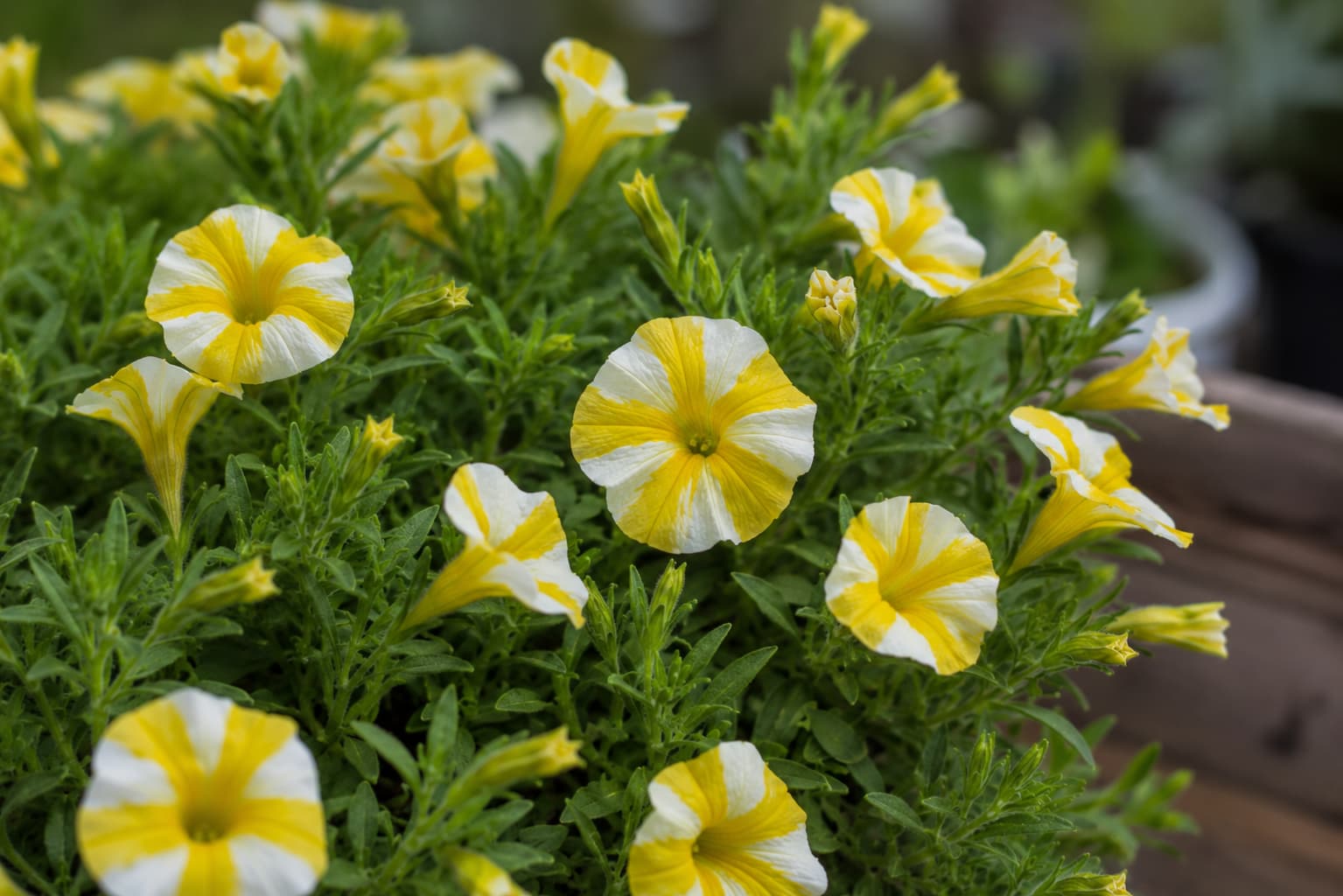
| Superbells® (Proven Winners) | Coralberry Punch, Lemon Slice, Holy Moly, Pomegranate Punch, and 20+ others | Mounding, 6–12" tall | The most widely available series. Excellent vigor. 'Lemon Slice' has unique striped petals. |
| MiniFamous® | Neo Double White, Double Pink, and single-color varieties | Semi-trailing, 8–12" | Double-flowered forms available. More compact than Superbells. |
| Aloha Kona | Hot Pink, Cherry, Pineapple, and others | Trailing, 12–18" | Longer trailing habit — excellent for hanging baskets and window boxes. |
| Cabaret® | Bright Red, White, Yellow, and bicolors | Compact, 6–10" | Early blooming. Very uniform habit. Good for mixed containers. |
| Can-Can® | Bicolor and patterned flowers | Mounding, 8–10" | Unique flower patterns — stripes, stars, and picotee edges. |
Frequently Asked Questions
Why are my calibrachoa leaves turning yellow?
The most common cause is iron chlorosis from high soil pH — new leaves turn yellow while veins stay green. This happens when tap water (pH 7.0–8.5) gradually raises the pH of the potting mix. The fix: switch to an acidifying fertilizer, apply chelated iron as a foliar spray, and consider using rainwater. If older leaves are yellowing first and the plant looks wilted, it's overwatering. See the pH and overwatering sections above for detailed diagnosis.
Do I need to deadhead calibrachoa?
No. Calibrachoa is self-cleaning — spent flowers shrivel and drop on their own. This is one of its biggest advantages over petunias, which get sticky and unattractive without regular deadheading. No maintenance is needed to keep the plant looking tidy.
Why is my calibrachoa wilting even though the soil is wet?
This is the classic sign of root rot from overwatering. The roots have suffocated and can no longer take up water. Stop watering immediately, let the pot dry out completely, and hope the plant recovers. In the future: check the soil before watering, always use pots with drainage holes, and never let the pot sit in standing water. If the plant doesn't recover within a few days of drying out, the roots are too far gone.
What's the difference between calibrachoa and petunia?
Calibrachoa has smaller flowers (1–2" vs. 2–5"), is self-cleaning (no deadheading needed), is more sensitive to overwatering and high pH, and is more compact and rain-tolerant. Genetically, calibrachoa has 18 chromosomes; petunias have 14. They look similar but have different care requirements. See the comparison table above for a full breakdown.
Can calibrachoa grow indoors?
Yes, but it needs very strong light — a bright south-facing window at minimum, and a grow light is strongly recommended in winter. Indoor calibrachoa typically blooms less than outdoor plants. It's best used as a summer patio plant and overwintered indoors if you want to save it, rather than grown as a permanent houseplant.
How often should I fertilize calibrachoa?
Every 7–14 days during the growing season with a liquid fertilizer — but the type matters. Use an acidifying fertilizer (ammonium-based, not nitrate-based) to prevent the pH from creeping up. Balanced formulas like 20-10-20 with micronutrients work well. Avoid high-phosphorus bloom boosters, which can raise pH and worsen iron chlorosis.
Is calibrachoa toxic to dogs and cats?
No — calibrachoa is non-toxic. It's safe for dogs, cats, and children. This makes it an excellent choice for hanging baskets on decks and patios where pets have access, and for households with small children. As always, discourage pets and children from eating any ornamental plant, but calibrachoa poses no toxic risk.
Can I overwinter calibrachoa?
Yes, but it's not the easiest plant to overwinter. Bring it indoors before temperatures drop below 50°F, cut back by one-third, place in bright light, water sparingly, and don't fertilize until spring. Expect some leaf drop. Many gardeners find it simpler to buy new plants each spring — calibrachoa is inexpensive and widely available. If you do overwinter, start with a healthy plant.
Sources & Further Reading:
- Royal Horticultural Society — Calibrachoa Growing Guide
- University of Minnesota Extension — Growing Calibrachoa
- Clemson Cooperative Extension — Calibrachoa Factsheet
- Missouri Botanical Garden — Calibrachoa Plant Finder
- Proven Winners — Calibrachoa (Superbells®) Care Guide
- ASPCA — Toxic and Non-Toxic Plants List
Final Thoughts
Calibrachoa is one of the most rewarding container plants you can grow — months of nonstop color, zero deadheading, and a trailing habit that looks spectacular in hanging baskets and window boxes. The two things that kill it are both preventable: overwatering and high pH causing iron chlorosis. Get those right — let the soil dry between waterings, use an acidifying fertilizer, and watch your water pH — and calibrachoa will be the easiest, most colorful plant on your patio.
Here's what to remember:
- Yellow leaves on new growth = iron chlorosis from high pH. Switch to acidifying fertilizer. Don't add more regular fertilizer.
- Water only when the top inch of soil is dry. Wilting with wet soil = root rot. Let it dry out.
- Full sun (6+ hours) and acidifying fertilizer every 7–14 days. That's the formula for nonstop blooms.
- No deadheading required. Self-cleaning. One less chore.
- Non-toxic and pet-safe. Perfect for family spaces.
- 18 chromosomes, not a petunia. Different care, different needs.
If you found this guide helpful, you might also enjoy our guide on How to Make Organic Neem Spray — because even low-maintenance plants get pests sometimes.