How to Grow a Thanksgiving Herb Garden: Fresh Herbs for Holiday Cooking
Grow sage, rosemary, thyme, parsley, and chives indoors for Thanksgiving, with practical guidance on planting, light, watering, harvesting, cooking, and seasonal table décor.
Quick Summary
A Thanksgiving herb garden is one of the most practical — and satisfying — projects you can start in fall. You don't need a big yard or gardening experience. A sunny windowsill, a few pots, and the right herbs will give you fresh sage, rosemary, thyme, and parsley to use in your holiday cooking, plus natural fragrance and décor that no store-bought arrangement can match. This guide covers which herbs to grow, how to keep them alive indoors through fall and winter, how to actually use them in your Thanksgiving dishes, and the most common mistakes that trip up beginners.
In This Guide
- Why Grow a Thanksgiving Herb Garden?
- 5 Best Herbs for Thanksgiving (and How to Use Them)
- Setting Up Your Herb Garden: Step-by-Step
- How to Use Fresh Herbs in Thanksgiving Cooking
- Thanksgiving Herb Décor: 3 Simple Table Ideas
- Indoor Herb Care Through Fall and Winter
- 5 Common Thanksgiving Herb Garden Mistakes
- Frequently Asked Questions
Why Grow a Thanksgiving Herb Garden?
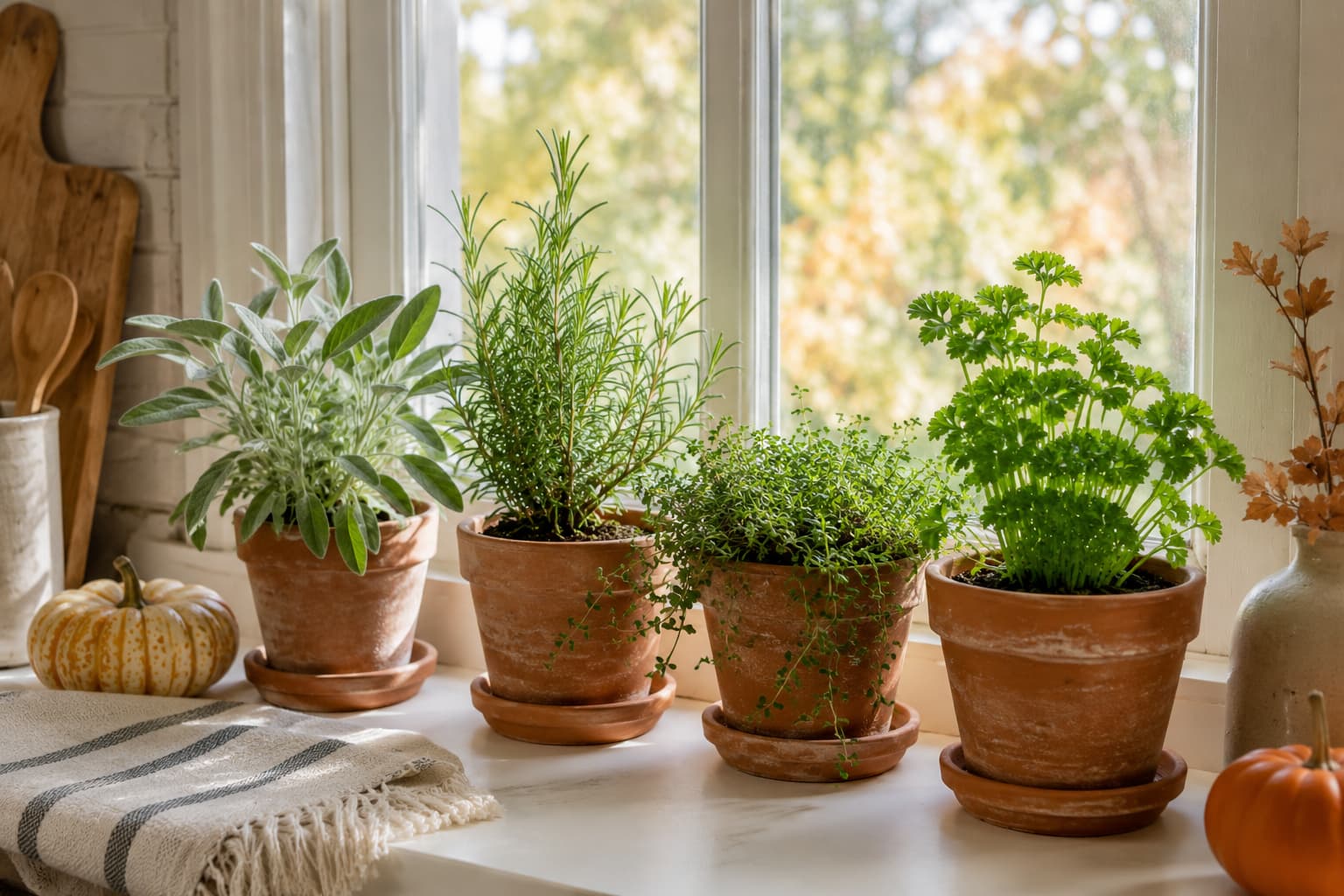
Most people buy fresh herbs at the grocery store a day or two before Thanksgiving. They're expensive, they wilt fast, and you use maybe a third of the package before the rest goes bad. Growing your own herbs in the weeks leading up to the holiday solves all three problems — and it adds something a plastic clamshell never will: the smell of fresh sage and rosemary filling your kitchen every time you walk by.
Here's why a Thanksgiving herb garden is worth the (very small) effort:
- Fresh herbs taste dramatically better than dried. If you've only ever used dried sage in your stuffing, the fresh version will be a revelation — warmer, more aromatic, less dusty.
- Most Thanksgiving herbs thrive in cool fall weather. Sage, rosemary, thyme, and parsley all hit their stride as temperatures drop. You're working with the season, not against it.
- It's cheaper than buying fresh herbs every time. A single sage plant costs about the same as one plastic pack of fresh sage — and it'll keep producing for months.
- It doubles as fall décor. Terracotta pots of herbs mixed with mini pumpkins and dried orange slices make a centerpiece that's both beautiful and useful.
- It's one of the easiest garden projects to start. No yard required, no heavy digging, no months of waiting. You can set this up in an afternoon and start harvesting within weeks.
No Outdoor Space? No Problem.
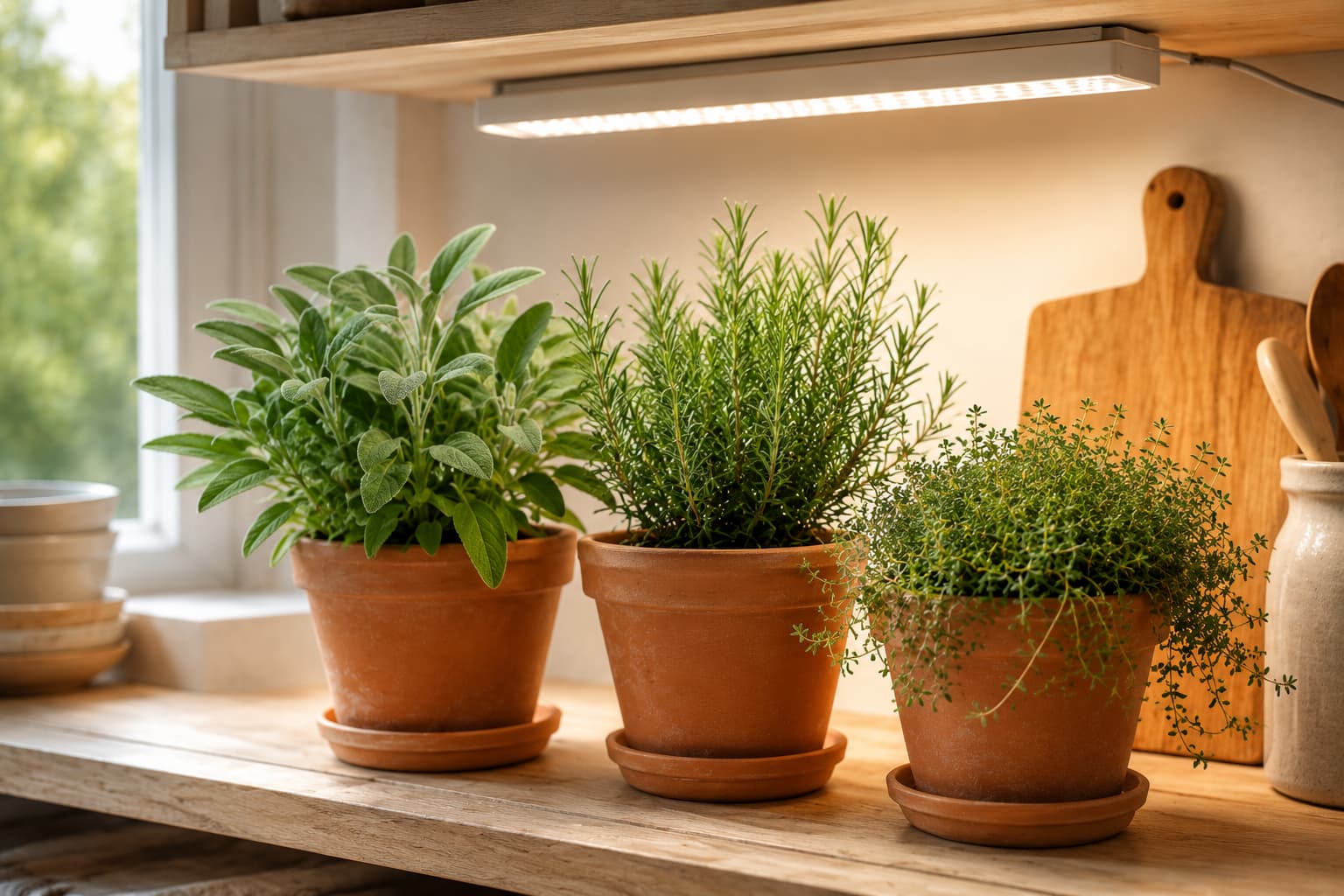
A small-space herb garden does not require a raised bed or even a balcony. A south-facing windowsill is plenty for a handful of culinary herbs. If your windows don't get much light, a basic LED grow light (about $20–30) turns any corner of your kitchen into a viable growing spot.
5 Best Herbs for Thanksgiving (and How to Use Them)
Not all herbs make sense for a Thanksgiving garden. You want herbs that (1) grow well indoors in fall, (2) are actually useful in holiday cooking, and (3) won't die on you the week before the big meal. These five check all three boxes.
| Herb | Flavor | Thanksgiving Use | Grow Tip |
|---|---|---|---|
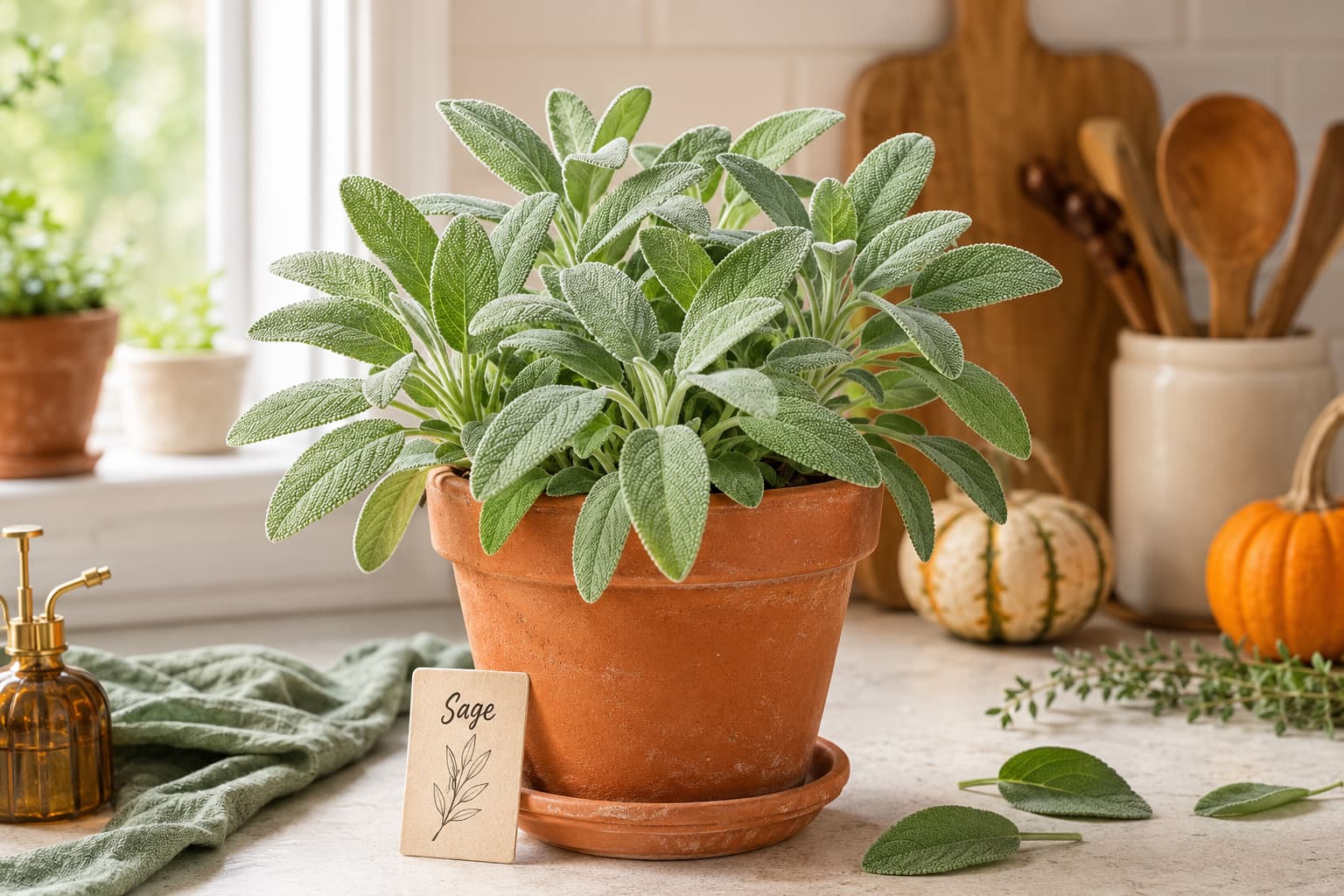
| Sage | Earthy, warm, slightly peppery | Stuffing, compound butter, roasted vegetables, sausage | Loves sun and well-drained soil; let soil dry between waterings |
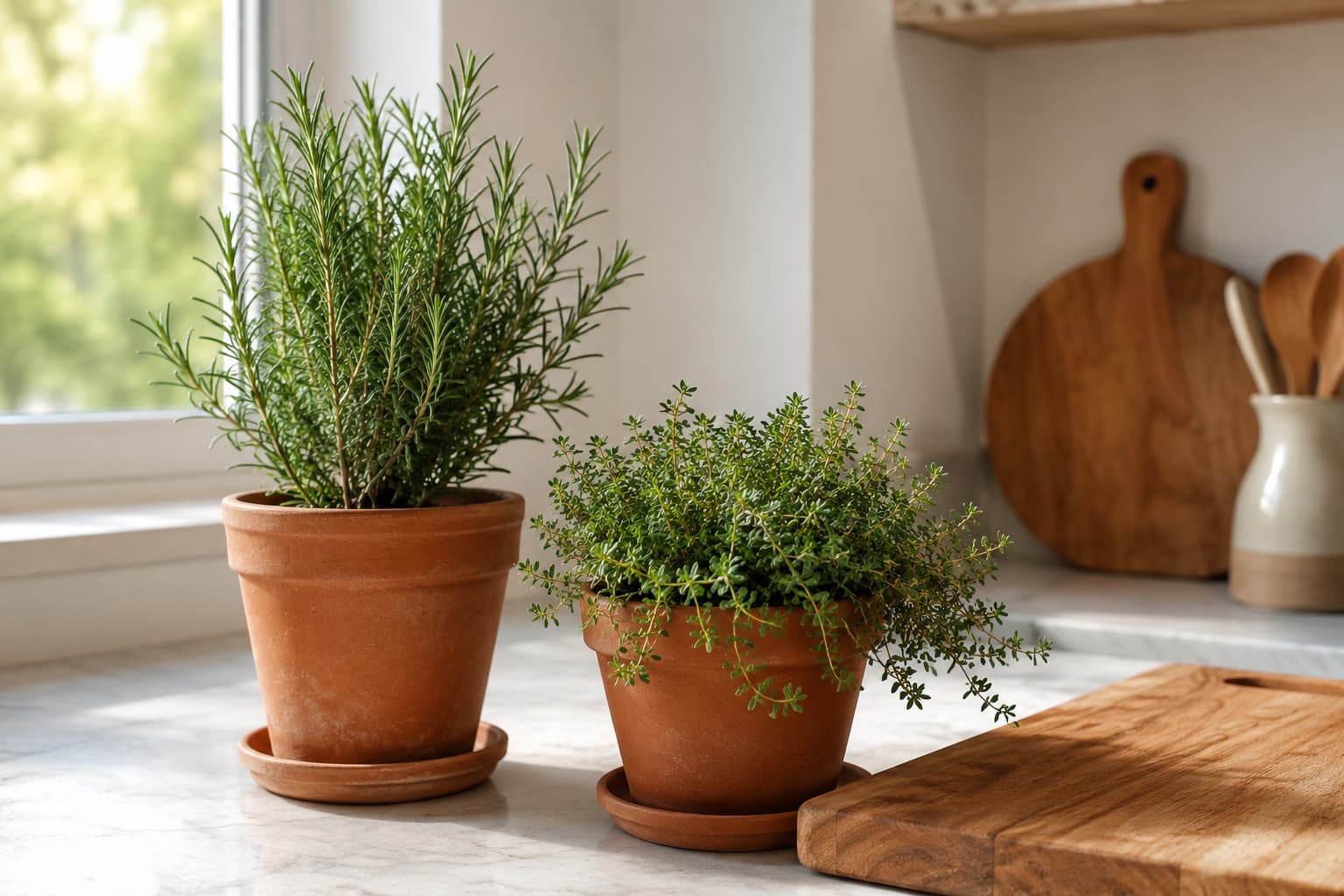
| Rosemary | Piney, bright, aromatic | Turkey rubs, roasted potatoes, breads, simmer pots | Keep on the dry side — overwatering kills rosemary faster than neglect |
| Thyme | Subtle lemon-earthiness | Gravy, roasted root vegetables, soups, chicken | Thrives in cool weather; trim often for bushy growth |
| Parsley | Clean, fresh, herbaceous | Garnishes, herb butters, salads, gremolata | Keep soil consistently moist; one of the easiest herbs to grow indoors |
| Chives | Mild onion, delicate | Mashed potatoes, compound butter, dips, garnish | Cut often to encourage fresh growth; very forgiving indoors |
Why These Five?
These herbs share a few practical traits that make them ideal for a fall-to-winter indoor garden: they're compact enough for pots, they tolerate the lower light of fall and winter better than basil or cilantro would, and they're the workhorses of Thanksgiving cooking — you'll actually use them, not just look at them.
Herbs to Skip for Thanksgiving
Basil hates cool weather and low light — it'll turn black and drop leaves the moment temperatures dip. Cilantro bolts (goes to seed) quickly indoors and tastes soapy to some people anyway. Dill is rarely used in Thanksgiving dishes and gets leggy indoors. Stick with the five above and you'll have better results with less frustration.
Setting Up Your Herb Garden: Step-by-Step
You can set up a Thanksgiving herb garden in under an hour. Here's exactly what to do, in the order that matters.
1. Choose Your Spot
Herbs need light — and in fall, light is the limiting factor for most indoor gardens. Aim for a spot that gets at least 4–6 hours of direct sunlight per day. In practice, that usually means:
- A south-facing or west-facing windowsill (best option)
- A kitchen counter near a large window
- A balcony or porch railing if you're in Zone 7+ and temperatures stay above 40°F at night
If your best window only gets 2–3 hours of sun — which is common in fall and winter — supplement with a basic LED grow light. Position it 6–12 inches above the plants and run it for 12–14 hours a day. This is the single most effective thing you can do to prevent the leggy, weak growth that frustrates so many indoor herb gardeners.
The Leggy Herb Problem (and How to Fix It)
If your herbs are growing tall, thin, and pale with lots of space between leaves, they're not getting enough light. This is one of the most common problems indoor herb growers notice in fall and winter. The fix: move them closer to the window, add a grow light, or both. Increase light gradually and follow the grow-light manufacturer’s recommended distance and daily duration.
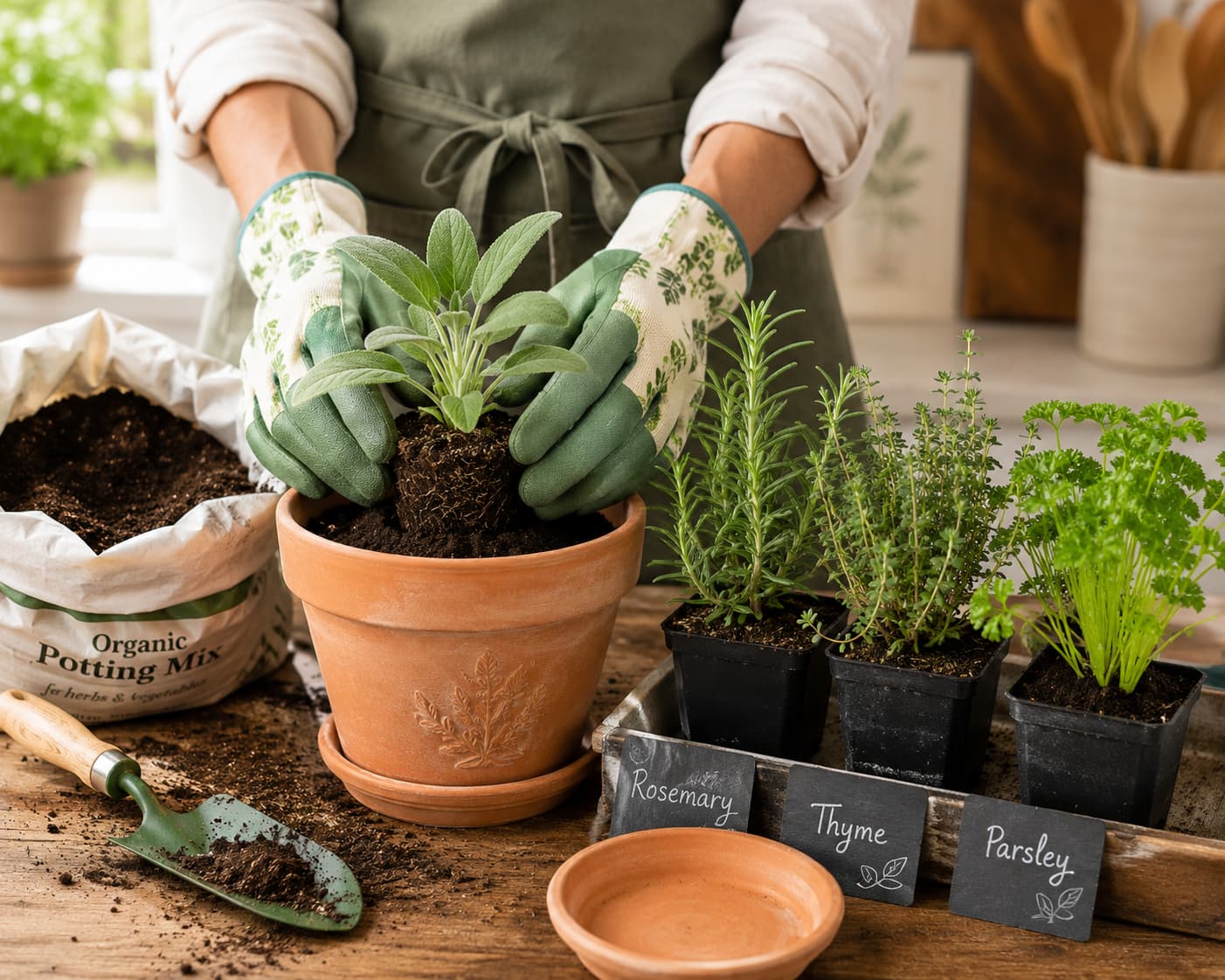
2. Pick the Right Pots
Drainage is non-negotiable. Herbs sitting in soggy soil will develop root rot — especially rosemary and sage. Use pots with drainage holes and a saucer underneath. Terracotta is ideal because it wicks away excess moisture; ceramic works too but holds water longer.
Pot size: 6–8 inches in diameter per plant is enough. Don't overcrowd multiple herbs in one small pot — they'll compete and none will thrive. If you want a grouped look, use individual pots and arrange them together in a tray or basket.
3. Use the Right Soil Mix
Garden soil is too heavy for containers. Use a high-quality potting mix with perlite mixed in for drainage. A simple ratio: 3 parts potting mix to 1 part perlite. Herbs don't need rich soil — in fact, overly fertile soil produces fast, weak growth with less flavor. Skip the heavy compost and fertilizer at planting time.
4. Start from Transplants, Not Seeds
If you're starting in October or November for Thanksgiving (late November), you don't have time to grow herbs from seed. Buy starter plants from a garden center or grocery store. Look for compact, bushy plants with no yellow leaves and no signs of pests (check the undersides of leaves).
If you're planning ahead for next year, start seeds indoors in late August to early September — that gives you 8–10 weeks of growth before the holiday.
5. Arrange by Watering Needs
One of the most practical things you can do: group herbs with similar water needs together. It makes care easier and prevents the #1 cause of indoor herb death — overwatering.
- Dry-side group: Sage, rosemary (water when top inch of soil is completely dry)
- Moist-side group: Parsley, chives (keep soil lightly moist but not soggy)
- Middle ground: Thyme (let soil dry slightly between waterings)
How to Use Fresh Herbs in Thanksgiving Cooking
Having fresh herbs on your windowsill is nice — but the real payoff is using them in your Thanksgiving dishes. Here's how to put each herb to work, with specific dishes and techniques.
The Stuffing Trio: Sage + Rosemary + Thyme
These three herbs together create the unmistakable aroma of classic Thanksgiving stuffing. Use them fresh — not dried — and you'll notice the difference immediately. A rough guideline: 1 tablespoon of chopped fresh herbs replaces 1 teaspoon of dried (fresh herbs are less concentrated by volume).
For a basic stuffing that serves 8–10: finely chop 2 tablespoons of fresh sage, 1 tablespoon of rosemary, and 1 tablespoon of thyme. Sauté them in butter with diced onion and celery before mixing with your bread cubes and broth.
Turkey Rub: Rosemary + Thyme + Parsley
Combine finely chopped rosemary, thyme, and parsley with softened butter or olive oil, minced garlic, salt, and black pepper. Work this mixture under the turkey skin (not just on top) before roasting. The herbs perfume the meat from the inside as it cooks, and the butter keeps the breast moist.
Mashed Potatoes: Chives + Thyme
Chives folded into hot mashed potatoes with butter add a mild, fresh onion note that cuts through the richness. For roasted potatoes, toss halved baby potatoes with olive oil, salt, and fresh thyme leaves before roasting at 425°F until golden and crisp.
Holiday Simmer Pot: Rosemary + Orange + Cinnamon
Fill a small pot with water, add a few sprigs of rosemary, orange peels, and a cinnamon stick. Simmer on the lowest heat throughout the day. Your house will smell like a holiday candle — but it's real, natural, and costs almost nothing. It is a simple way to add a natural seasonal fragrance while you cook.
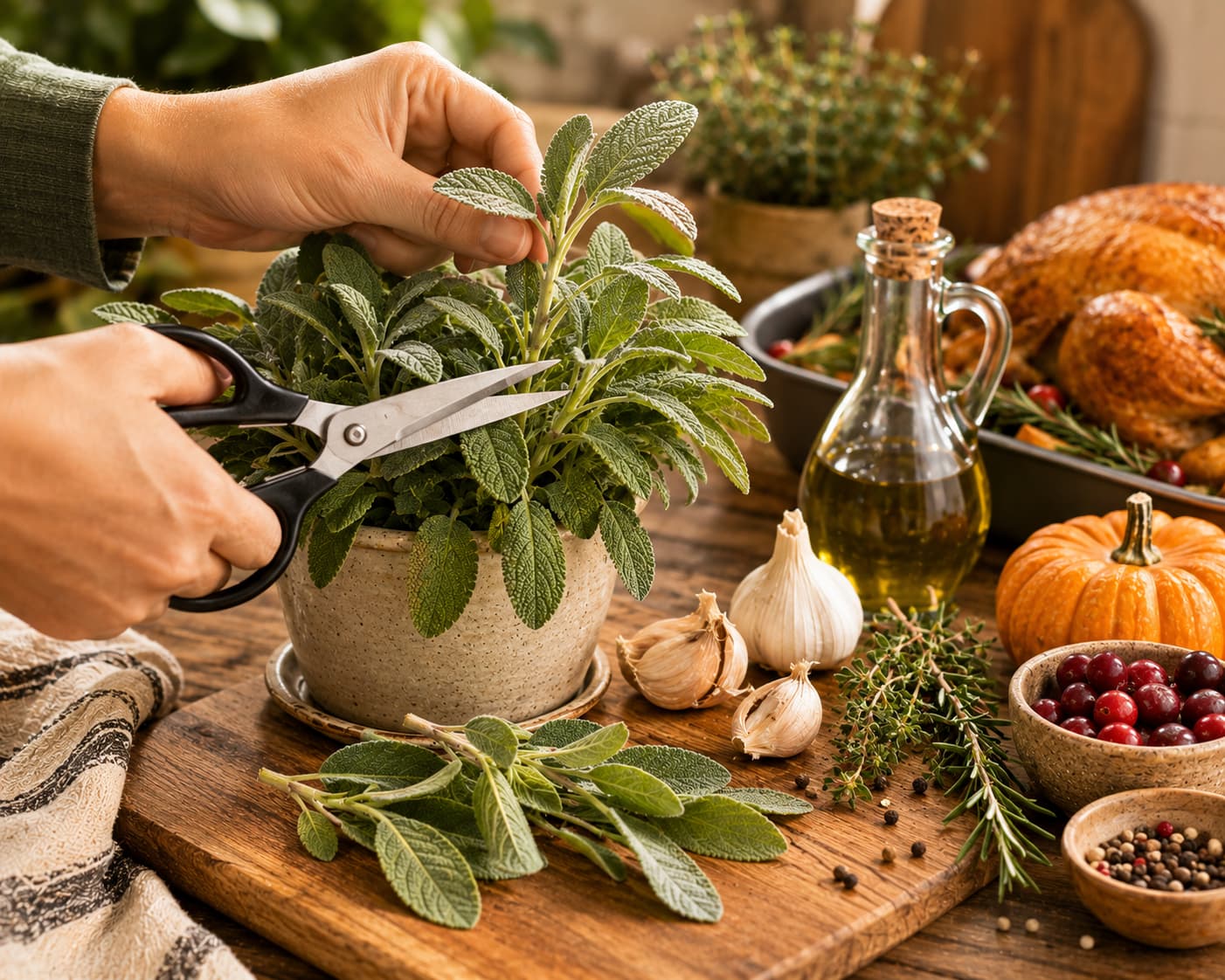
Harvesting Tip: Cut, Don't Pull
Always use clean scissors or pruning snips to cut herb stems just above a leaf node (where leaves meet the stem). This encourages the plant to branch out and grow bushier. Never pull or tear stems by hand — you risk damaging the roots.
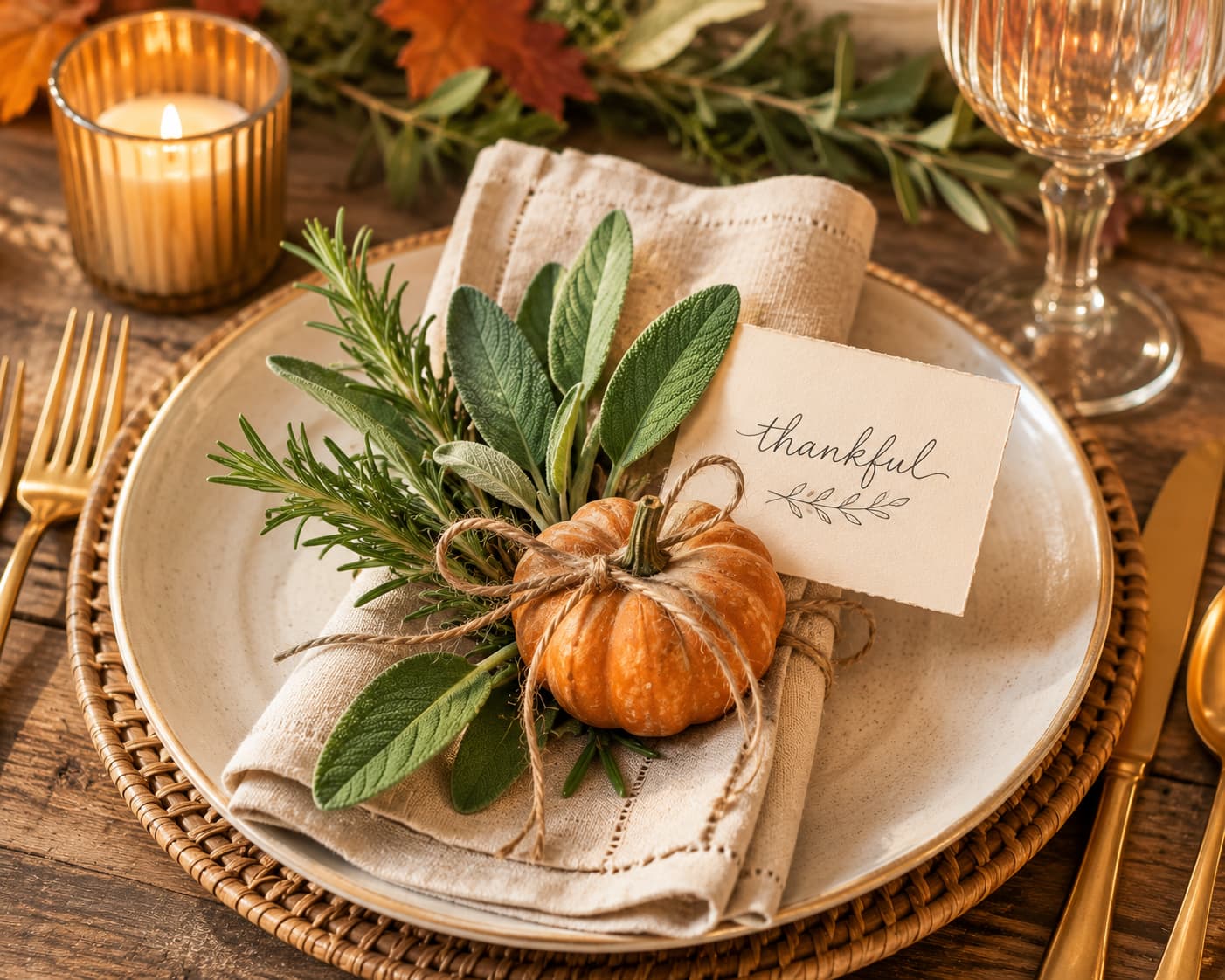
Thanksgiving Herb Décor: 3 Simple Table Ideas
Fresh herbs pull double duty: they're ingredients and decoration. These three ideas take less than 10 minutes each and cost almost nothing — but they make your Thanksgiving table feel intentional and beautiful.
1. Herb Napkin Toppers
Tie a small bundle of rosemary and sage with natural jute twine and place it on each napkin. The fragrance is subtle and seasonal, and guests can take them home if they like. It's the kind of detail people notice and remember.
2. Mini Pumpkin Herb Vase
Hollow out a mini white or orange pumpkin and tuck in a few sprigs of rosemary, a small chrysanthemum bloom, or some dried wheat. Place one at each place setting, or group three in the center of the table. It's rustic, charming, and entirely compostable afterward.
3. Gratitude Place Cards
Write each guest's name on a small kraft paper card, punch a hole, and thread a sprig of rosemary or thyme through it. Place on each plate. It's personal, it smells wonderful, and it gives people something to talk about as they sit down.
Indoor Herb Care Through Fall and Winter
Keeping herbs alive indoors through the darker, cooler months requires a slightly different approach than outdoor growing. Here's what actually matters:
Watering: Less Than You Think
The most common cause of indoor herb death — by a wide margin — is overwatering. In lower light and cooler temperatures, herbs use much less water than they did outdoors. Always check the soil before watering: stick your finger in up to the first knuckle. If it feels damp, wait. If it's dry, water thoroughly until water runs out the drainage holes, then empty the saucer after 15 minutes.
As a rough guide in fall and winter: rosemary and sage may only need water every 7–10 days. Parsley and chives, every 4–5 days. But always check the soil — don't water on a schedule.
Light: The Bigger Challenge
Daylight hours shrink dramatically in fall. In much of the U.S., a south-facing window that got 8 hours of sun in July might only get 3–4 hours by November. Signs your herbs need more light: stems get long and thin (leggy), leaves are pale or yellowing, growth slows to a crawl, and lower leaves drop off.
If you see these signs, add a grow light. A basic LED grow light positioned 6–12 inches above the plants, running 12–14 hours a day, will solve most indoor herb problems. This is not optional for many homes in northern states — it's the difference between herbs that thrive and herbs that barely survive.
Temperature and Humidity
Most culinary herbs are comfortable at normal indoor temperatures (60–75°F). But watch out for cold windowsills at night — if your herbs are pressed against freezing glass, they can suffer cold damage even though the room feels warm. Move pots back a few inches from the window on especially cold nights.
Indoor air in fall and winter is dry from heating systems. Herbs generally don't need high humidity, but if you notice crispy leaf edges, group your pots together (they create a micro-humidity zone) or place the pots on a tray of pebbles with a little water in the bottom (water shouldn't touch the pots).
Fertilizing: Go Easy
Herbs in containers benefit from light feeding, but too much fertilizer produces fast, weak growth with diluted flavor. Use a half-strength liquid fertilizer once a month during the growing season. In deep winter (December–February), skip fertilizing entirely — growth naturally slows and the plants don't need it.
The Rosemary Problem
Rosemary often struggles indoors when drainage, watering, airflow, or light is out of balance. Rosemary is native to the Mediterranean and prefers to be on the dry side. If rosemary browns from the base or develops dark tips, inspect the roots and soil moisture, then also check light levels, airflow, and cold-window exposure. Let it dry out completely between waterings, and make sure the pot has excellent drainage. Some gardeners report going 10–14 days between waterings for indoor rosemary in winter — and the plant is happier for it.
5 Common Thanksgiving Herb Garden Mistakes
These are the most frequent Thanksgiving herb garden mistakes — and how to avoid them before the holiday cooking begins.
1. Starting Too Late
If you buy herb transplants the week before Thanksgiving, you'll have small, stressed plants that haven't had time to settle in — and you'll be afraid to harvest from them because there's not much to harvest. Start in early to mid-October for plants that are established, bushy, and ready to give by late November.
2. Overwatering (Especially Rosemary and Sage)
This bears repeating because it's so common. More indoor herbs die from too much water than from too little. When in doubt, wait another day. Sage and rosemary will tell you they're thirsty — their leaves will look slightly dull and feel softer than usual. That's your signal to water, not before.
3. Using Pots Without Drainage Holes
A cute ceramic pot without a drainage hole is a death sentence for herbs. Water pools at the bottom, roots rot, and the plant dies from the roots up — often with no warning above the soil until it's too late. Either drill a hole in the bottom or use a plastic nursery pot inside the decorative one, and always empty the outer pot after watering.
4. Expecting Herbs to Grow as Fast Indoors as Outdoors
Herbs grow more slowly indoors, especially in fall and winter. That's normal. Don't overcompensate with extra water or fertilizer — it won't help and will likely hurt. Accept the slower pace and harvest lightly. You can still get plenty for Thanksgiving cooking from a few well-established plants.
5. Bringing Outdoor Herbs Inside Without Transitioning
Moving a plant from full outdoor sun to an indoor windowsill is a shock. If you have herbs growing outside and want to bring them in for Thanksgiving, do it gradually: move them to a shadier spot outside for 3–4 days, then bring them in. Check thoroughly for pests (aphids, spider mites, fungus gnats) before they come inside — once pests are indoors with no natural predators, they explode.
The Thanksgiving Countdown: When to Do What
Early October: Buy transplants, set up pots and soil, position grow lights. Mid-October: Plants should be settled in and showing new growth. Begin light harvesting to encourage bushiness. Early November: Herbs should be full and productive. Do a final light feed. Thanksgiving week: Harvest what you need for cooking, but don't strip any plant bare — leave at least ⅓ of the foliage so it can recover.
Frequently Asked Questions
1. Can I grow a Thanksgiving herb garden entirely indoors?
Yes — and for most people, that's the best approach. A south-facing windowsill is ideal. If your light is limited, a basic LED grow light (positioned 6–12 inches above the plants, running 12–14 hours a day) will keep sage, rosemary, thyme, parsley, and chives healthy and productive through the holiday season.
2. When should I start my Thanksgiving herb garden?
Start in early to mid-October for plants that are well-established and ready to harvest by Thanksgiving (late November). If you're starting from seed, begin in late August to early September. Starting the week before Thanksgiving with grocery store plants is better than nothing — but don't expect much harvest from stressed, newly transplanted herbs.
3. Why is my rosemary dying indoors?
Overwatering is common, but low light, poor airflow, cold drafts, and root damage can produce similar symptoms. Rosemary needs to dry out between waterings — in fall and winter indoors, that might mean watering only every 7–14 days. Check that your pot has drainage holes, the soil isn't staying soggy, and the plant is getting enough light. Brown leaves from the bottom up are a classic sign of root rot from too much water.
4. Why are my indoor herbs leggy and pale?
Not enough light. This is especially common in fall and winter when daylight hours shrink. Move plants closer to your brightest window, add a grow light, or both. Leggy growth won't fix itself — you'll need to trim the stretched stems back and improve the light situation for new growth to come in compact and healthy.
5. Can I use herbs from my outdoor garden for Thanksgiving if I bring them inside?
Yes, but transition them gradually. Move outdoor herbs to a shadier spot for 3–4 days before bringing them indoors. Inspect carefully for pests — aphids, spider mites, and whiteflies can hitch a ride and infest your indoor plants. Once inside, expect some leaf drop as the plant adjusts to lower light; this is normal and temporary.
6. What's the difference between using fresh and dried herbs in Thanksgiving recipes?
Fresh herbs have brighter, more complex flavor and more aromatic oils than dried. The general substitution ratio: 1 tablespoon fresh = 1 teaspoon dried. For Thanksgiving dishes like stuffing and turkey rubs, fresh herbs make a noticeable difference — especially sage and rosemary, which lose a lot of their character when dried. Add fresh herbs toward the end of cooking for the best flavor; prolonged heat dulls their brightness.
7. Do I need a grow light for indoor herbs in fall?
If your herbs get 4–6 hours of direct sun through a south or west-facing window, you can get by without one. But if your best window only gets 2–3 hours of sun — or if you notice your herbs getting leggy and pale — a basic LED grow light is worth the investment. It's the single most effective upgrade for indoor herb growing, and a decent one costs about $20–30.
Sources & Further Reading:
Final Thoughts
A Thanksgiving herb garden is one of those rare projects that delivers on every level: it's practical (fresh herbs for cooking), beautiful (natural fall décor), affordable (cheaper than buying fresh herbs repeatedly), and genuinely satisfying (there's something special about snipping herbs you grew yourself while the holiday meal comes together).
You don't need a big yard, years of gardening experience, or a lot of time. A sunny windowsill, five terracotta pots, and an afternoon in October is all it takes. The herbs will do the rest — and by Thanksgiving, you'll wonder why you ever bought those plastic clamshells of wilted sage.
If you enjoyed this guide, you might also like our articles on Growing Rosemary Indoors and Daylily Care Through the Seasons — two more guides for gardeners who want practical, honest advice that actually works.
What herbs do you grow for Thanksgiving? Share your brightest window, growing zone, and most-used holiday herb with the Greenmuse community.