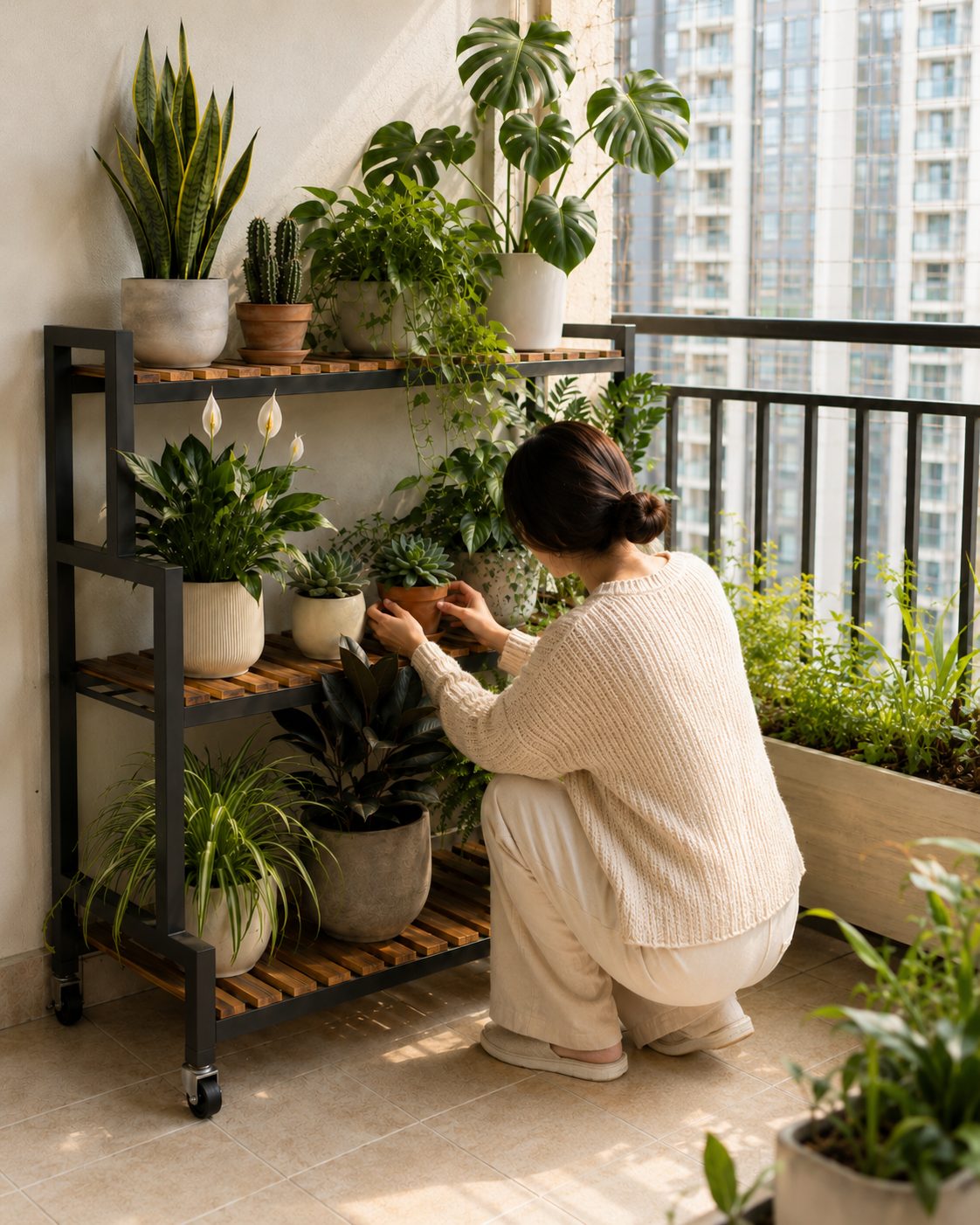
Why Your Philodendron Is Thriving Indoors — Even When You Didn’t Expect It
It usually starts with a quiet realization. You walk past your plant, and suddenly it looks bigger, lusher, and more confident than you remember.
For many plant owners, that moment comes with surprise: “I thought I was barely keeping this alive.”
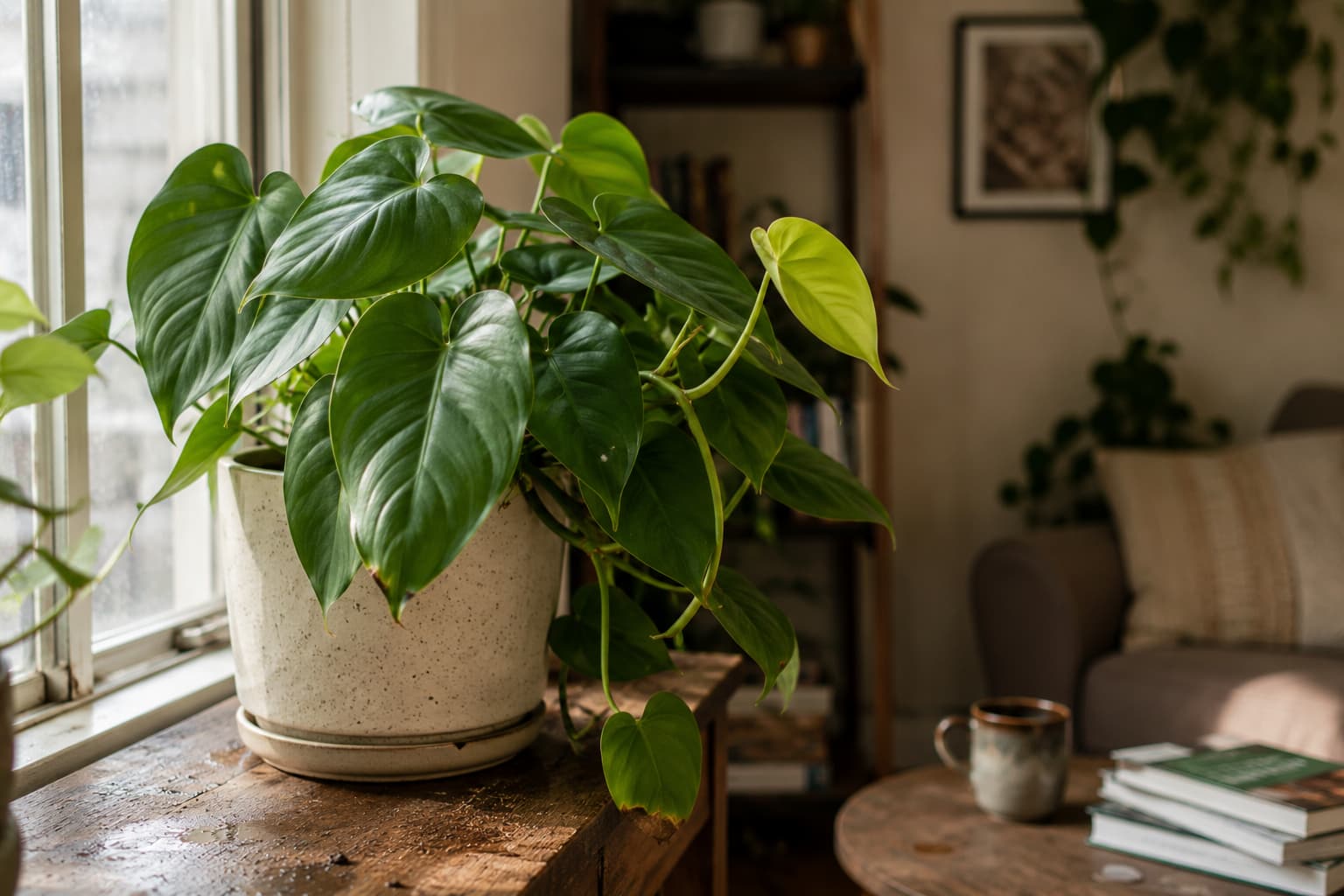
Many philodendrons do not struggle in homes — they settle. They adjust to light, humidity, watering rhythms, and available space faster than we notice.
What feels like mild neglect may simply be a stable environment the plant already knows how to use.
It’s Not Low Light — It’s Forest Light
Philodendrons evolved in tropical forests, where much of the light reaching their leaves has already passed through layers of vegetation.
That does not mean they grow well in darkness. It means they are unusually comfortable with long hours of bright, filtered light rather than harsh direct sun.
- reflected daylight from pale walls and floors
- steady indirect light near a window
- protection from intense midday sun
- more stable temperatures than an outdoor setting
Watch the plant rather than relying only on how bright the room feels to you. Compact growth, gradually larger leaves, and regular new growth are stronger clues than the label “low light.”
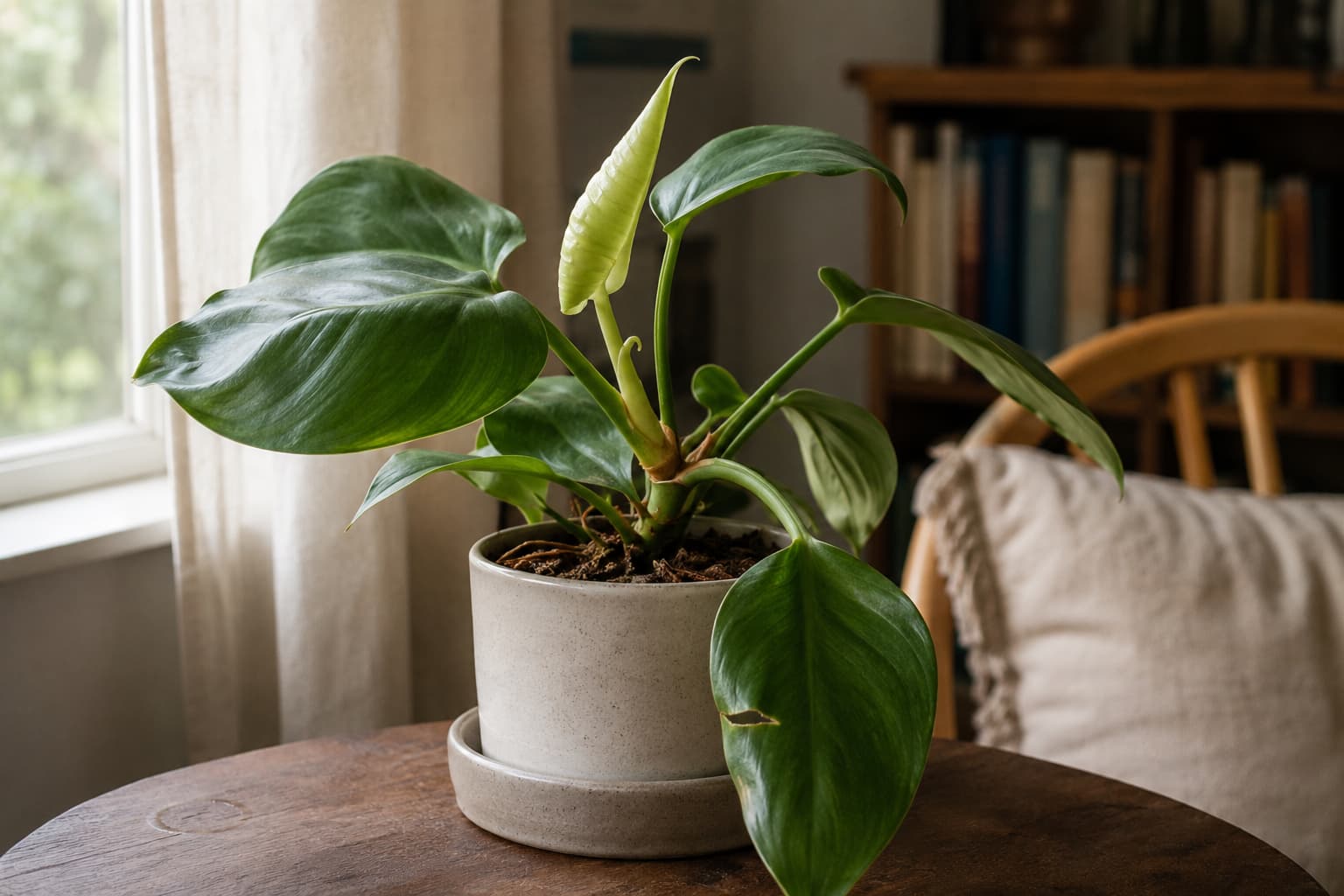
The Aerial Roots You Didn’t Expect
Small brown roots appearing along the stem can look strange when you first notice them. On climbing philodendrons, however, aerial roots are a normal part of the plant’s growth habit.
Their main job is to help the plant attach to bark, moss, or another nearby surface as it grows upward.
- searching for a surface it can grip
- extending into new space
- developing a more mature climbing form
They do not automatically prove that humidity is perfect or that every aspect of care is correct. They are simply normal structures on many climbing philodendrons.
Why Growth Feels Sudden — Even Though It Isn’t
Philodendron growth is easy to overlook while a new leaf is still developing inside its sheath. Roots may also be expanding beneath the soil long before the plant looks different above it.
Then a new leaf opens over a few days, catches the light, and suddenly the whole plant appears larger.
- a new leaf forming inside the protective sheath
- stem and node development
- new root growth within the potting mix
- the plant slowly turning toward its strongest light source
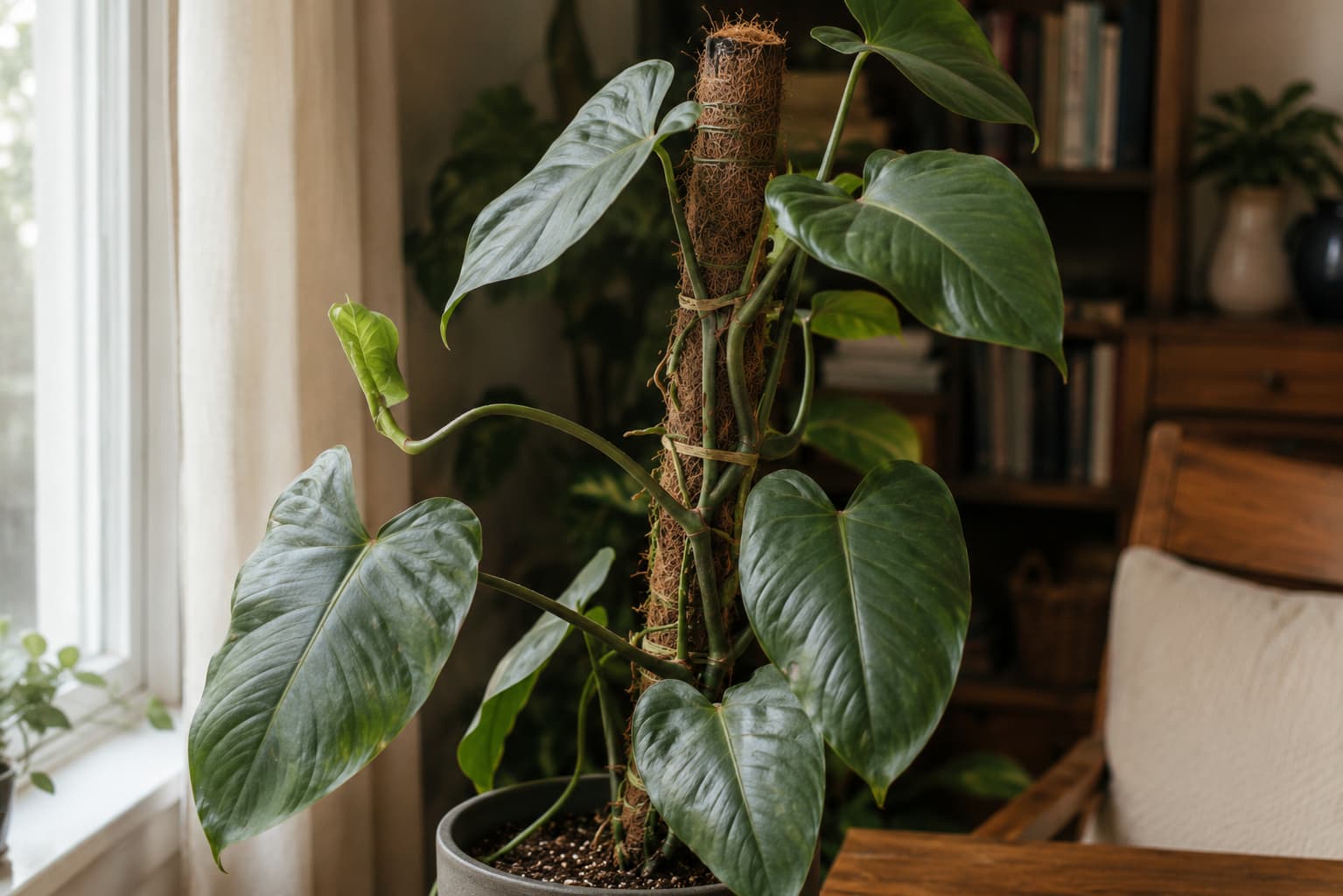
Why a Small Dry-Down Can Help
Philodendrons usually respond better to a sensible watering rhythm than to a rigid calendar.
In many homes, allowing the upper layer of potting mix to dry slightly before watering again helps maintain air around the roots and reduces the risk of prolonged saturation.
- allow more oxygen to remain around the roots
- reduce the likelihood of root rot
- prevent the potting mix from remaining constantly soggy
- make seasonal changes in water use easier to notice
This is not a reason to leave the plant dry for long periods. Water thoroughly when the upper 1–2 inches of mix feel dry, then allow excess water to drain from the pot.
The Real Reason Your Philodendron Is Thriving
Your philodendron is not performing a miracle. It is responding to a collection of ordinary conditions that happen to suit it: filtered light, stable temperatures, breathable soil, and enough time between disruptions.
You may not have created a perfect greenhouse, but you may have created something more useful — a predictable home.
Your home does not need to be perfect. It only needs to give the plant enough light, air, water, and stability to keep moving forward.