How to Winterize Your Lawn: The Complete Guide for a Healthier, Greener Spring
A practical fall lawn-care plan for real homes, small yards, and changing climates — without unnecessary products, rigid dates, or one-size-fits-all advice.
To winterize a lawn, first identify whether you have cool-season or warm-season grass. Then keep mowing while growth continues, prevent leaves from forming a wet mat, water only when conditions are dry, and apply fertilizer only when your grass type, local timing, and soil needs support it.
The goal is not to keep the lawn bright green all winter. It is to protect the crowns, roots, soil structure, and stored energy that support spring recovery.
Why Winter Lawn Preparation Matters
If you have ever looked across your yard in early spring and wondered why one section greens up quickly while another remains thin or dull, the explanation often begins months earlier.
Late fall is when many lawns shift from visible leaf growth toward energy storage, root activity, and dormancy. The work is quiet, but the conditions around the grass still matter.
Good winter preparation does not require a shelf full of products. In most homes, it comes down to a few well-timed decisions: knowing the grass type, avoiding stress, keeping the surface clear, and resisting the urge to apply treatments simply because the label says “winterizer.”
Greenmuse approach: Winterize according to grass type, soil condition, and local weather — not a date printed on a generic checklist.
The three-step version
- Identify the lawn. Cool-season and warm-season grasses enter winter differently.
- Reduce preventable stress. Manage leaves, compaction, drought, and unsuitable mowing.
- Stop at the right time. Once growth has slowed and the ground is freezing, leave the lawn undisturbed.
1. Identify Your Grass Type First
Nearly every winter lawn recommendation changes depending on whether the grass is adapted to cool weather or warm weather.
Cool-season grasses
Kentucky bluegrass, tall fescue, fine fescue, and perennial ryegrass grow most actively during cool spring and fall weather.
Warm-season grasses
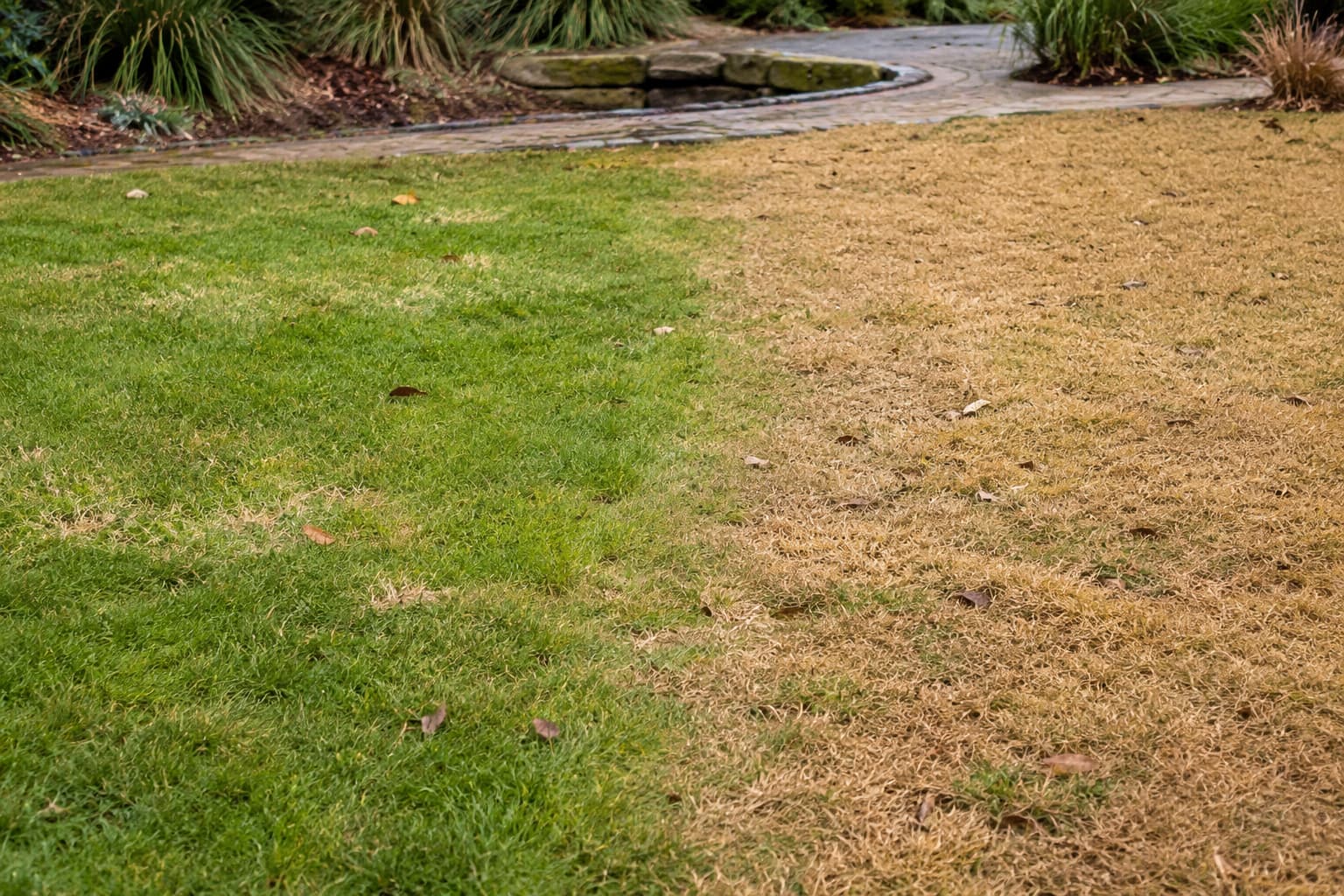
Bermudagrass, zoysiagrass, St. Augustinegrass, and centipedegrass grow most actively during warm weather and commonly turn tan during dormancy.
| Lawn type | Late-season priority | Main caution |
|---|---|---|
| Cool-season | Support fall growth, root activity, and recovery from summer stress. | Do not fertilize frozen ground or stimulate growth after the locally recommended window. |
| Warm-season | Reduce stress as the lawn prepares to enter dormancy. | Avoid late nitrogen that may produce tender growth before cold weather. |
| Transition-zone lawn | Confirm the actual grass species before following regional advice. | Mixed lawns may not respond uniformly to one treatment. |
A dormant warm-season lawn may turn straw-colored and still be healthy. Winter color alone is not proof that the lawn is dead.
2. Keep Mowing While the Grass Is Growing
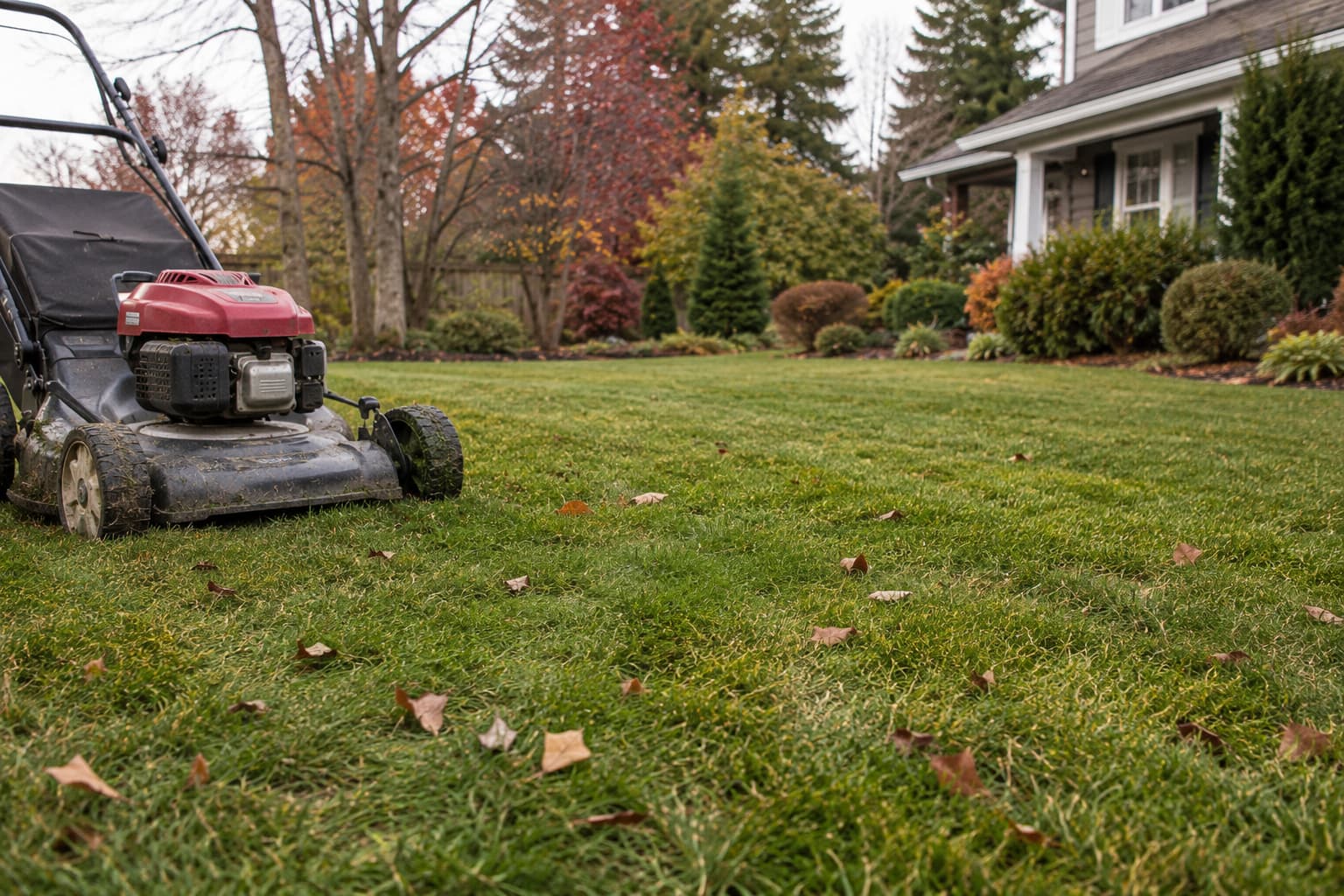
The final mowing date should be determined by growth, not by the calendar. If the lawn is still producing enough growth to look untidy, it may still need mowing.
Continue using the normal recommended height for your grass species and avoid removing more than about one-third of the leaf blade in a single mowing.
- use a sharp mower blade
- mow when the grass is dry
- avoid scalping or exposing the crowns
- remove clumps of wet grass that could smother the surface
- stop once growth has effectively ended
Some gardeners lower the mower slightly for the final cut, but this should never become a dramatic height reduction. Species, climate, lawn condition, and local guidance matter more than a universal number.
Cutting a tall lawn extremely short in one session does not prepare it for winter. It removes useful leaf area and may expose the crown to stress.
3. Manage Fallen Leaves Before They Form a Wet Mat
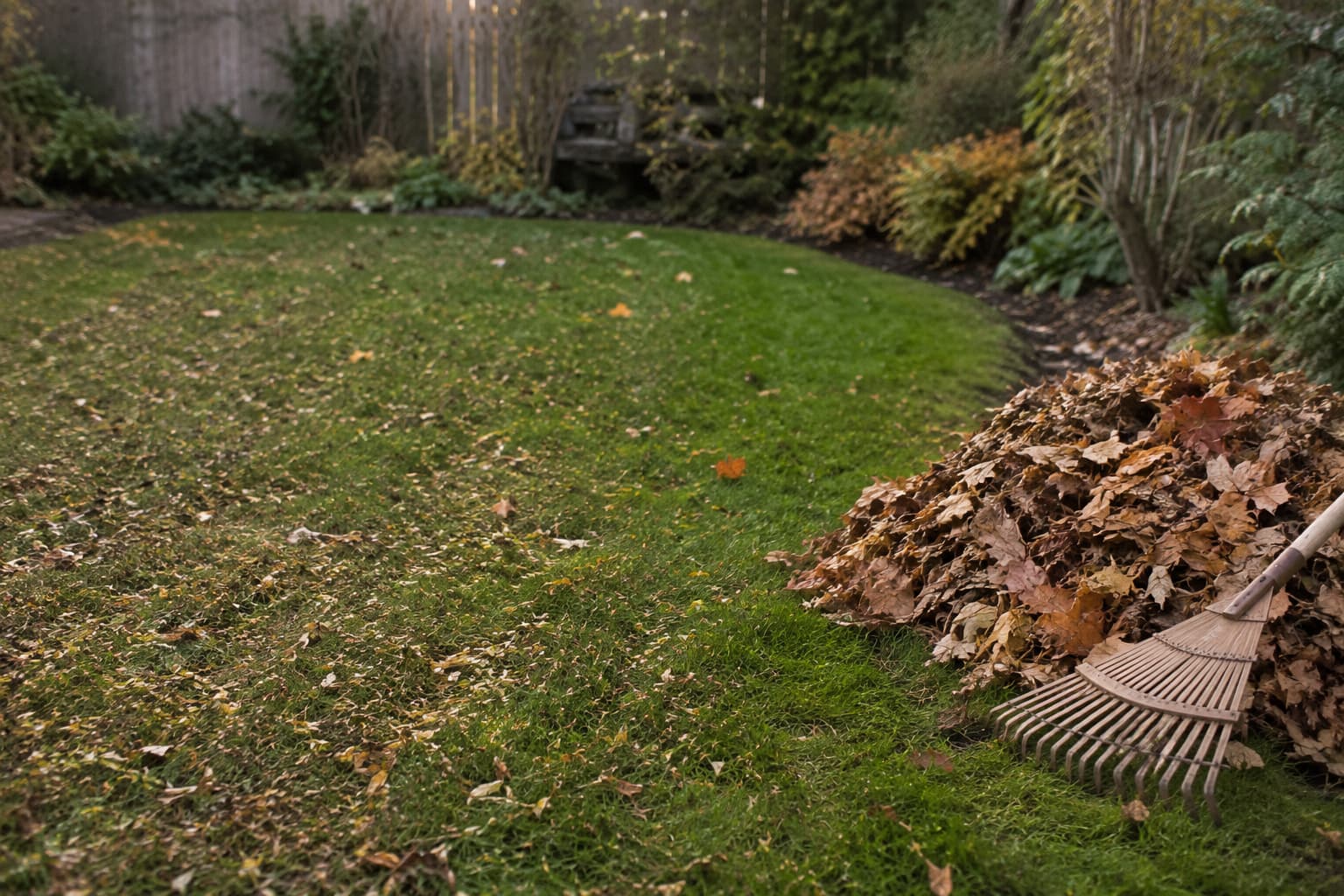
A few scattered leaves are not a crisis. A thick, wet layer that remains on the lawn can block light, reduce airflow, and press the grass flat.
When leaves are dry and the layer is manageable, a mulching mower can shred them into small pieces that settle between the grass blades.
- the leaves are dry enough to shred cleanly
- the fragments fall between the grass blades
- the lawn remains visible after mowing
- you make a second pass when necessary
If the leaf layer is too deep to shred without covering the grass, rake or collect the excess first. The goal is to recycle a reasonable amount of organic material, not bury the lawn.
Collected leaves can be added to compost, turned into leaf mold, or saved as mulch for garden beds.
4. Fertilize Only When the Lawn Actually Needs It
“Winterizer” is a product label, not a universal lawn requirement. The right nutrient, rate, and timing depend on grass type, soil-test results, local regulations, and recent fertilizer history.
For cool-season lawns
A properly timed fall fertilizer application can support recovery and carbohydrate storage while the lawn is still active. However, the best formula and application date vary by region.
For warm-season lawns
Avoid heavy late-season nitrogen as the lawn approaches dormancy. Tender growth produced just before cold weather may be more vulnerable to winter injury.
Do not automatically choose a high-potassium fertilizer. Apply potassium only when a soil test or local recommendation indicates that the lawn needs it.
- the grass species
- the lawn’s recent feeding history
- soil-test results, when available
- the product application rate
- local fertilizer restrictions
- whether rain or frozen ground could carry nutrients away
5. Aerate During the Correct Growing Season
Core aeration can help lawns with compacted soil, poor water infiltration, or heavy foot traffic. But it works best when the grass is actively growing and able to recover.
Cool-season lawns
Early fall is usually the preferred period because the grass can recover in cool, favorable conditions.
Warm-season lawns
Aerate during active warm-weather growth, commonly in late spring or summer rather than immediately before dormancy.
Do not aerate frozen soil, saturated mud, or a lawn that is too dormant to recover. In a small yard, focus on compacted paths, play areas, and frequently used corners rather than treating every square foot.
A screwdriver that is difficult to push into moist soil can suggest compaction, but a professional soil test or local lawn specialist can provide a more reliable diagnosis.
6. Reduce the Conditions That Encourage Winter Disease
Snow mold and other cool, wet-weather problems are more likely where long grass, fallen leaves, poor drainage, and extended moisture overlap.
- finish the season at an appropriate mowing height
- prevent leaves from forming a dense mat
- avoid excessive late nitrogen
- correct standing-water problems where possible
- avoid piling deep snow repeatedly in one area
Preventive fungicide is usually unnecessary for an average home lawn. It is more often considered where severe snow mold has repeatedly damaged valuable turf and professional local guidance supports treatment.
In spring, mild snow mold often improves after the lawn dries and the affected grass is gently raked upright.
7. Water Only If Late Fall Is Dry
Grass roots can still lose moisture during dry, windy weather before the soil freezes. However, this does not mean every lawn needs a ceremonial final watering.
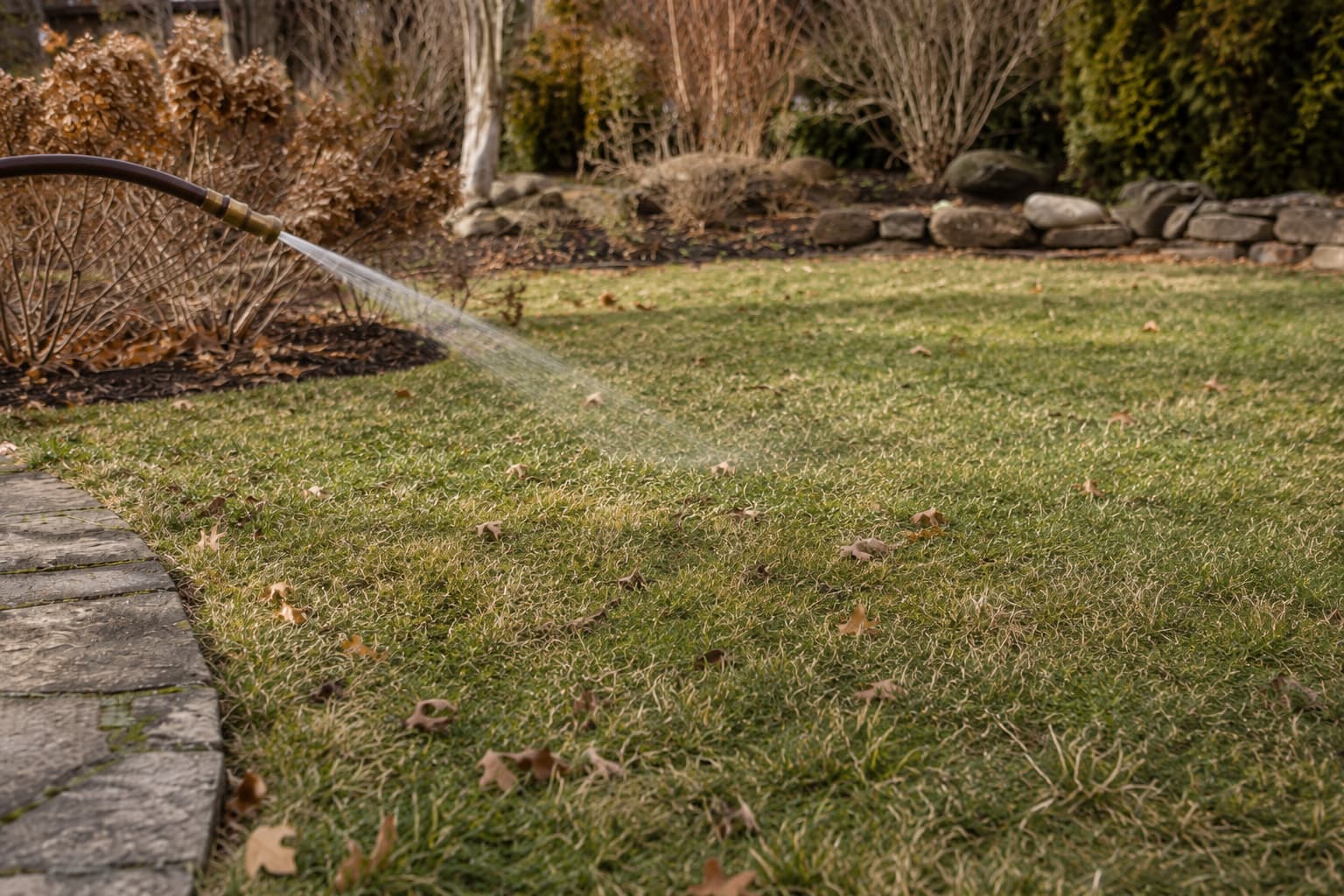
Water only when the soil is genuinely dry, the grass is still active enough to benefit, and the ground can absorb moisture.
- the soil is frozen
- the lawn is already saturated
- standing water is present
- freezing conditions are expected before the surface can drain
Established lawns generally respond better to occasional deep watering than frequent shallow sprinkling. Newly seeded or recently repaired areas may need a different schedule.
8. Know When It Is Too Late to Overseed
Overseeding is not usually a last-minute winter task. Cool-season grass seed performs best when it has enough warmth and time to germinate, establish roots, and survive temperature changes.
In many regions, late summer through early fall is the safest period. If that window has passed, waiting until the next suitable season may produce better results than spreading seed that cannot establish.
Warm-season lawns are normally seeded or repaired during warm, active growth rather than just before winter dormancy.
Dormant seeding is a specialized regional technique, not a universal substitute for proper fall seeding. Follow local guidance before using it.
9. Limit Traffic on Frozen or Waterlogged Grass
A frosty lawn can look firm, but frozen leaf blades are easier to crush. Repeated walking, play, or equipment traffic may leave visible paths once growth resumes.
Waterlogged soil is also vulnerable to compaction. When possible, redirect foot traffic to a path until the lawn has thawed or dried.
- gates and doorways
- pet routes
- children’s play areas
- trash-bin paths
- downspouts and low spots
10. Clean and Store Lawn Equipment
Tool maintenance is one of the few winter lawn tasks that delivers an immediate benefit next spring.
- remove packed grass and soil from the mower deck
- clean and sharpen the mower blade
- follow the manufacturer’s fuel-storage instructions
- charge or store batteries as directed
- drain hoses and protect exposed irrigation components
- clean, dry, and lightly oil metal hand tools
A sharp mower blade makes a cleaner cut, while a poorly maintained blade tears the grass and leaves frayed edges that lose moisture more easily.
A Simpler Winter Plan for Small Lawns
A courtyard lawn, townhouse yard, or compact patch does not need a commercial-scale program. Small lawns often benefit most from careful observation and a few targeted actions.
Usually worth doing
Manage leaves, make the final appropriate mow, fix drainage problems, and keep heavy traffic off frozen grass.
Only when needed
Fertilize after confirming the grass and soil needs, and aerate only where compaction is actually present.
A small lawn makes it easier to notice where water pools, where pets travel, and where shade slows recovery. Those observations are often more useful than an elaborate treatment schedule.
Keep a Simple Winter Lawn Journal
A few seasonal notes can reveal patterns that generic advice cannot see.
- date of the final mow
- areas that remained wet after rain
- sections with heavy leaf cover
- fertilizer product and application date
- snow mold or thinning observed in spring
- areas damaged by pets, traffic, or snow piles
Over time, these notes become a map of your lawn’s microclimates — the shady corner that stays wet, the slope that dries first, and the path that always compacts.
Your Winter Lawn Checklist
- Confirm whether the lawn is cool-season or warm-season.
- Continue mowing only while active growth continues.
- Mulch a light leaf layer or remove excess leaves.
- Fertilize only when timing and soil needs support it.
- Aerate during the grass’s active growing season.
- Water only if conditions are dry and the ground is unfrozen.
- Limit traffic on frozen or saturated turf.
- Clean and store tools before prolonged cold weather.
- Record problem areas to revisit in spring.
Winter Lawn Care FAQ
Should I fertilize immediately before the first snow?
Not simply because snow is forecast. Apply fertilizer only at the recommended time for your grass and region, while the lawn and soil conditions are still appropriate. Never spread fertilizer on frozen ground.
Will mulched leaves smother my lawn?
Finely shredded leaves usually settle between the grass blades and decompose. Large pieces or a thick layer that continues covering the lawn should be collected or shredded again.
Can I aerate after the first frost?
A light frost is less important than soil condition and recovery time. Do not aerate frozen, saturated, or fully dormant turf. Aerate while the grass is actively growing.
Do warm-season lawns need winter preparation?
Yes, but the emphasis is usually on reducing stress, managing leaves, correcting drainage, and avoiding unsuitable late nitrogen rather than trying to maintain winter color.
Is a brown lawn dead?
Not necessarily. Warm-season grasses commonly become tan during dormancy. Wait for suitable growing weather before judging recovery, and inspect the crowns and roots rather than relying on color alone.
Should I water the lawn during winter?
In mild, dry climates, occasional watering may be appropriate when the soil is unfrozen and genuinely dry. In wet or frozen conditions, additional watering can do more harm than good.
Should I use a snow-mold fungicide every year?
Most home lawns do not need routine preventive fungicide. Consider professional or local extension advice only where severe snow mold repeatedly causes meaningful damage.
A Healthier Spring Lawn Begins With Less Winter Stress
Winter lawn care is not about forcing growth through the cold season. It is about leaving the grass, crowns, roots, and soil in the best condition possible before active growth returns.
Identify the grass. Remove what can smother it. Avoid treatments the lawn does not need. Then give the season time to work.
The result may not be visible in December, but it often becomes clear when the lawn wakes up more evenly in spring.
What is the hardest part of winter lawn care in your yard — leaves, drainage, snow, pets, or uncertainty about fertilizer? Share your experience with the Greenmuse community.