What to Do in the Garden in December: A Practical Tulip Care & Planting Guide
A calm, practical guide to December tulip planting, soil checks, watering, winter protection, and container growing — especially for continental Europe, Australia, and other climates where timing depends on conditions.
Quick Answer
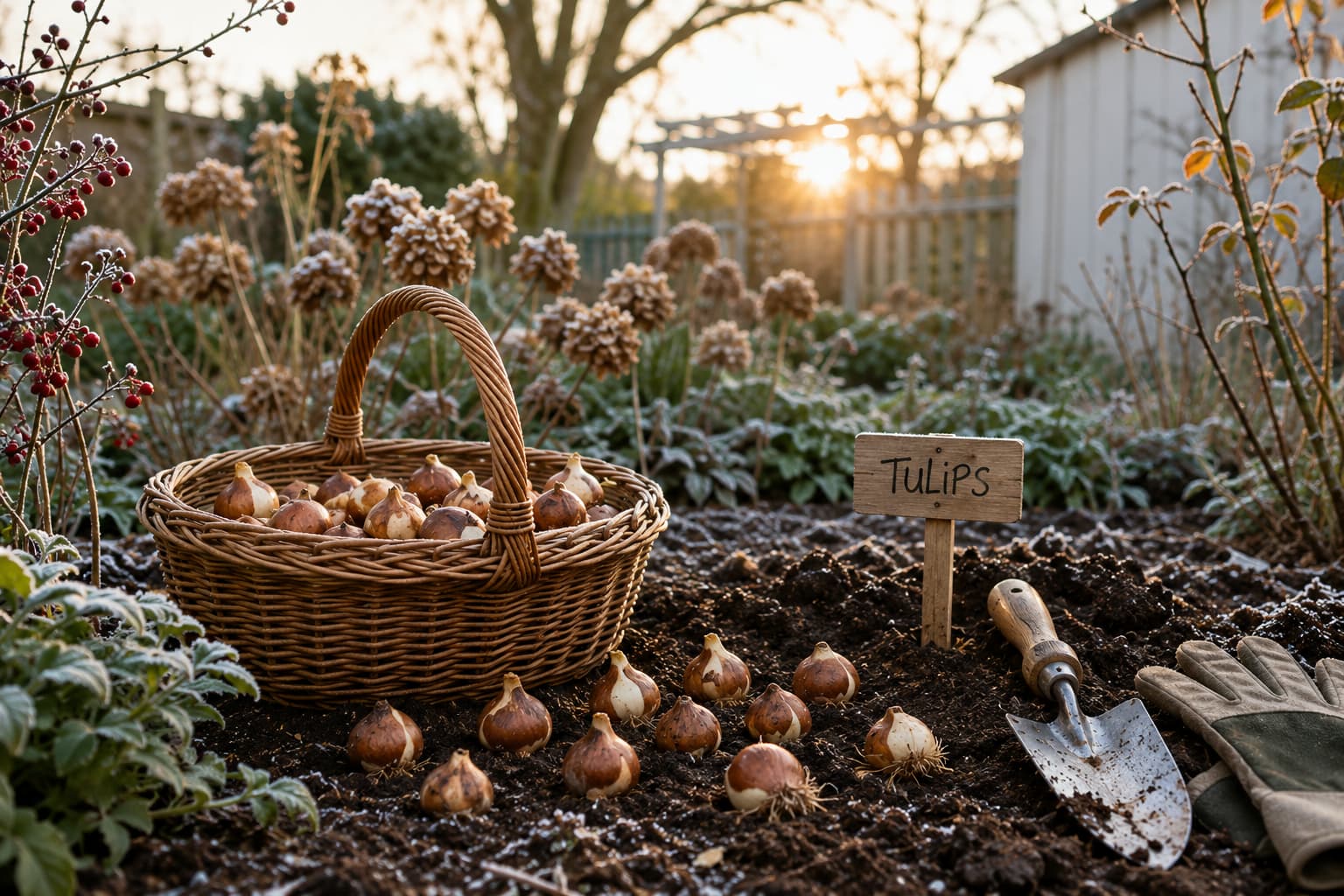
Yes, you can still plant tulip bulbs in December in many regions — but only if the soil is workable, not frozen, and not waterlogged.
In continental Europe, December planting is often still possible in mild or gradually cooling winters. In Australia, tulips usually need properly pre-chilled bulbs and careful moisture control, especially in warmer areas.
Greenmuse rule of thumb: Plant tulips by soil condition, not by calendar date.
Mid-December often feels like a pause in the garden. Beds look still, growth slows, and many gardeners assume the season’s work is already behind them.
But tulips do not follow our sense of urgency. They respond to cold, moisture, drainage, and time underground.
What you do now — quietly and deliberately — can still shape a strong, balanced spring display.
This guide focuses on what actually matters in December: workable soil, correct planting depth, careful watering, winter protection, and when containers become the safer choice.
Can You Still Plant Tulip Bulbs in December?
In many cases, yes. But the answer depends less on the calendar and more on soil condition, winter pattern, and whether the bulbs have received enough cold.
Continental Europe
Plant if the soil is still workable, not frozen, and not saturated. Late-planted tulips may bloom slightly later but can still perform well.
Australia
Use pre-chilled bulbs, especially in warmer areas. Containers are often more reliable because moisture and temperature are easier to control.
North America
Mild-winter areas may still plant in December. In cold regions, use containers or protected beds if the ground has already frozen.
Asia
Temperate regions can plant if soil is workable. Warm or subtropical regions usually require artificial chilling before planting.
If the soil is frozen solid or waterlogged, do not force planting. Tulips tolerate cold better than trapped moisture.
Start With the Soil, Not the Calendar
Before planting, take a moment to test the soil. This is the most important December decision.
- Dig down 15–20 cm.
- If the soil crumbles and drains well, it is workable.
- If it feels sticky, compacted, or saturated, delay planting or use containers.
- If the soil is frozen solid, wait or plant in pots instead.
Drainage is more important than the exact planting week. Bulbs fail more often from cold, wet soil than from being planted a little late.
How to Plant Tulip Bulbs Correctly
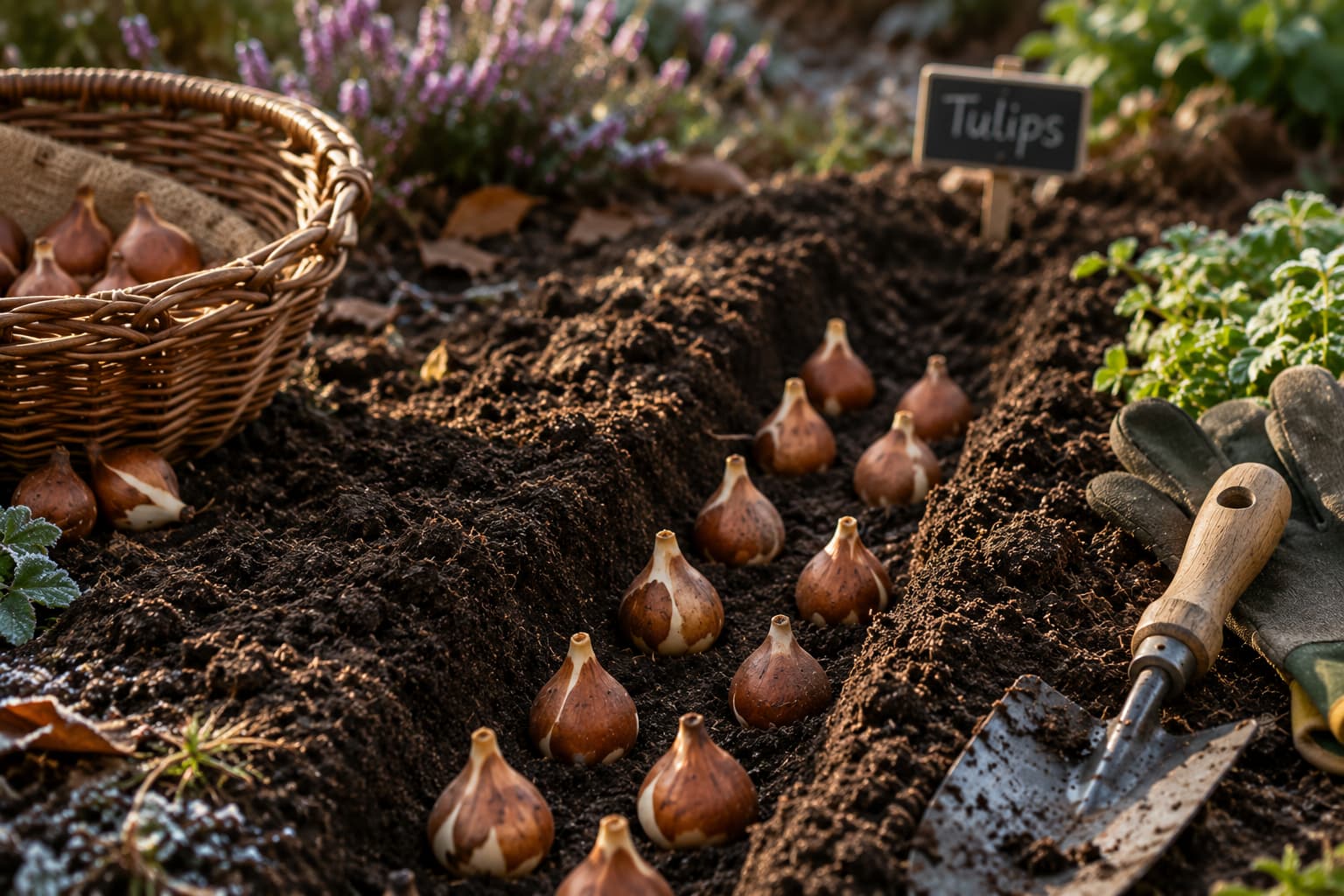
A reliable grower’s rule is to plant bulbs at roughly three times their own height.
| Bulb Type | Planting Depth | Spacing |
|---|---|---|
| Standard tulips | 12–15 cm deep | 10–15 cm apart |
| Smaller tulip varieties | 8–10 cm deep | 8–12 cm apart |
| Containers | Deep enough for roots below the bulb | Closer spacing is possible, but bulbs should not touch |
- Plant with the pointed tip facing upward.
- Place the flatter base downward.
- Use loose clusters rather than rigid rows for a softer spring display.
- In heavy soil, add grit or coarse sand to improve drainage.
Avoid fresh manure or high-nitrogen fertilizer at planting time. Tulips need root development first, not soft leafy growth.
Watering: One Time Is Usually Enough
After planting, water thoroughly once to settle soil around the bulbs.
After that, pause. Winter rainfall is often enough across much of Europe, and tulips dislike sitting in consistently wet soil.
Europe
Natural winter rain is usually enough. Water only during unusual dry spells.
Australia
Water sparingly, especially in containers. Cool soil plus excess moisture can quickly cause rot.
North America
Wet winter regions rarely need extra water. Dry winter regions may need occasional light watering.
Asia
Temperate regions often rely on rainfall. Warmer regions need careful container moisture control.
Never water frozen or waterlogged soil.
Protecting Tulip Bulbs Through the Season
Protection is less about constant intervention and more about reducing extremes: frost heave, excess moisture, heat, or lack of winter chill.
Europe: Light Mulch for Temperature Stability
A loose layer of leaves, straw, or bark chips can help stabilize soil temperature and reduce frost heave. Keep mulch airy rather than compacted.
Australia: Chill Management Matters Most
Tulips generally need 12–14 weeks of cold to flower well. Where natural winter chill is not enough, pre-chill bulbs in a refrigerator at 2–8°C before planting. Keep bulbs away from fruit, which can release ethylene and affect flower development.
North America: Match Protection to Winter Severity
In mild-winter areas, light mulch helps moderate soil temperature. In cold-winter areas, snow cover or loose mulch can help buffer bulbs from repeated freeze–thaw cycles.
Asia: Climate Determines the Strategy
Temperate regions can use similar protection to Europe. Warmer or subtropical regions often treat tulips as seasonal bulbs and rely on artificial chilling.
The goal is not to protect tulips from winter. The goal is to protect them from extremes.
Containers: A Reliable Alternative
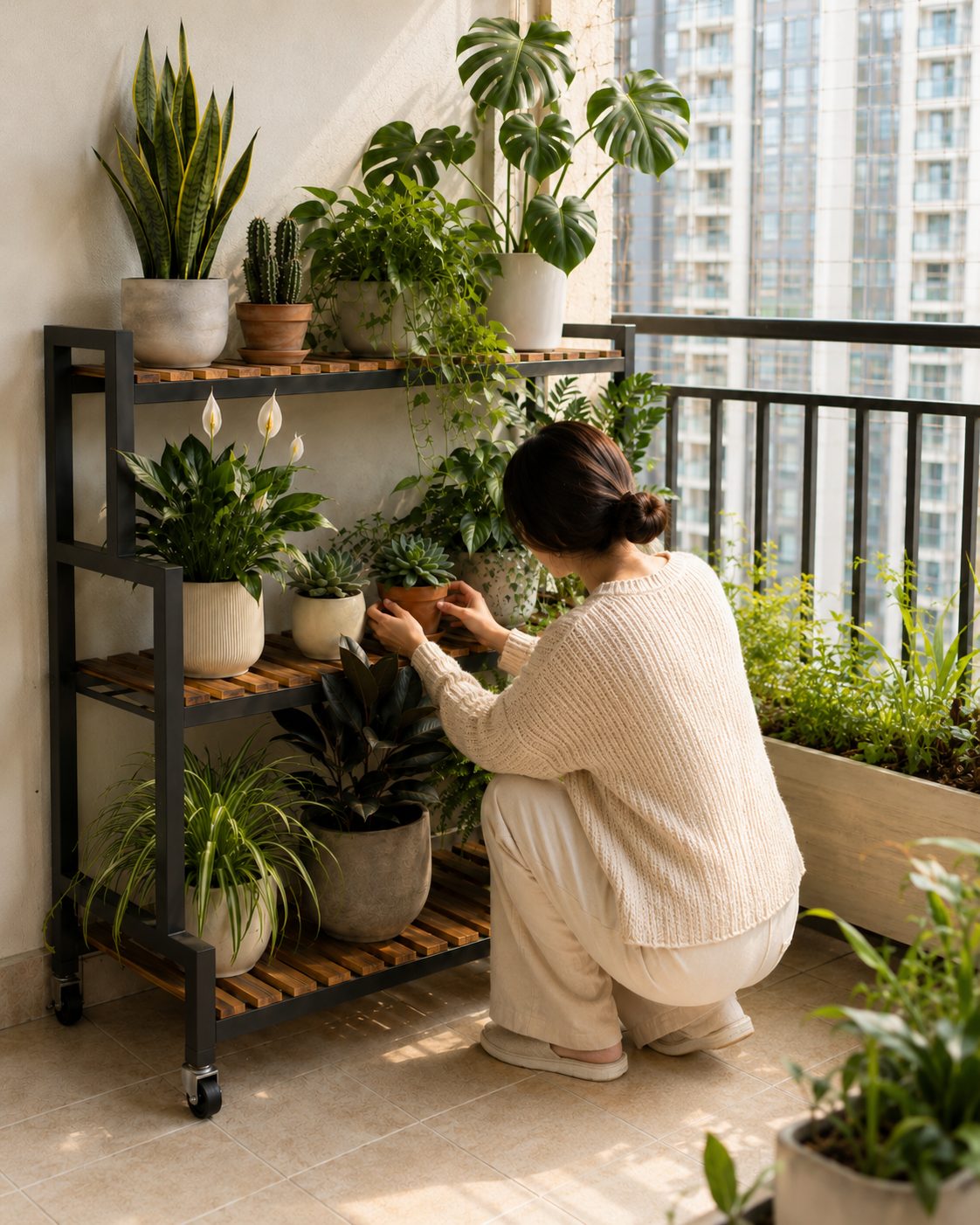
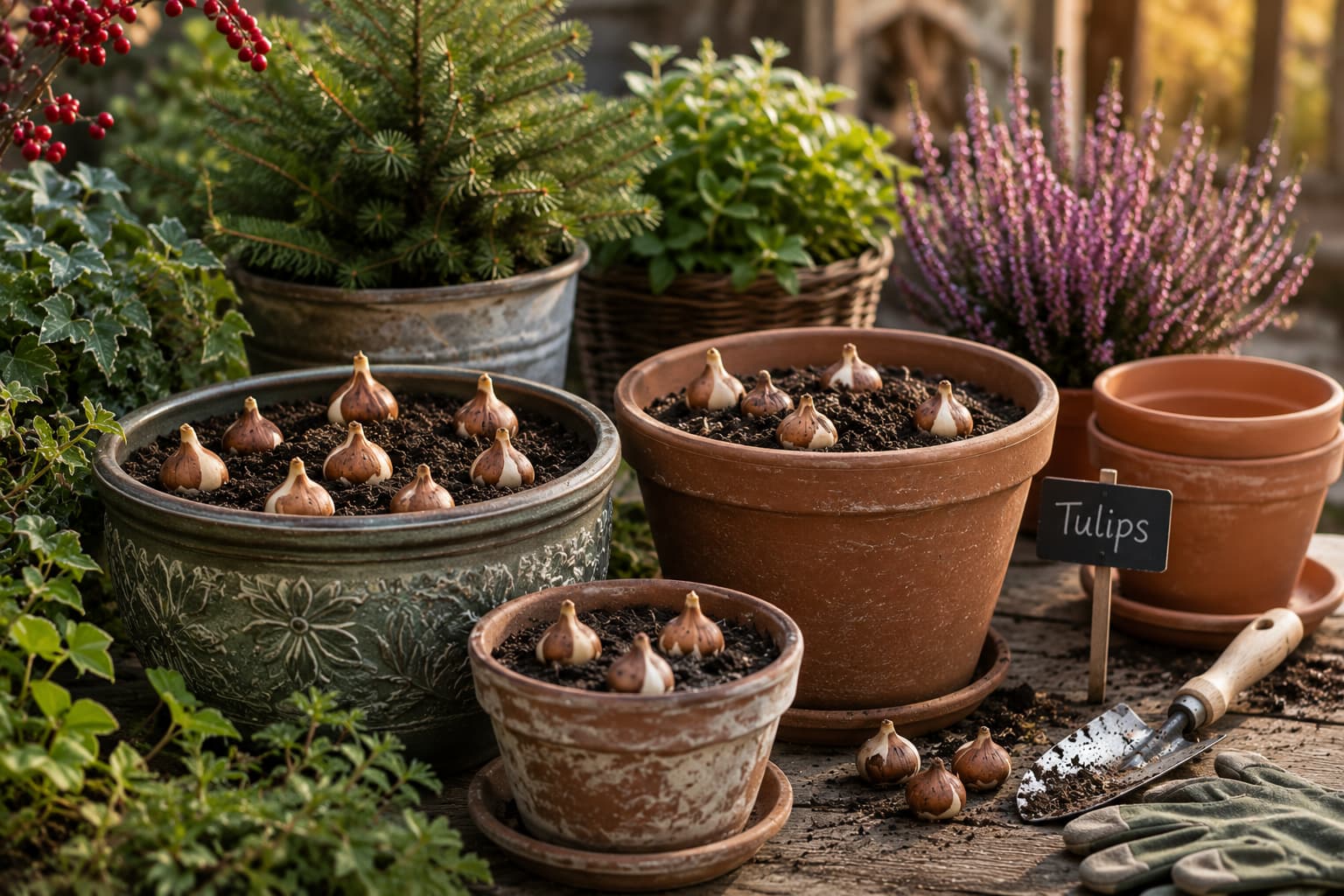
Container planting is often the safest option when soil conditions are unreliable, especially in warmer climates, wet winters, rented gardens, balconies, and small spaces.
- Use deep pots with drainage holes.
- Choose a free-draining potting mix.
- Keep pots cool but not constantly wet.
- In warmer areas, place pots in shade during warm spells.
- In cold areas, protect pots from repeated freeze–thaw swings.
Containers give control, but they also dry out and heat up faster than garden beds. Check them occasionally rather than forgetting them completely.
Practical Tips From Experienced Growers
- Choose botanical tulips or Darwin hybrids if you want stronger repeat performance.
- Avoid planting tulips in the same exact spot year after year.
- Mark planting spots so bulbs are not disturbed during winter cleanup.
- Group bulbs in uneven clusters for a more natural spring effect.
- Let foliage die back naturally after flowering so bulbs can recharge.
Tulips reward patience far more than constant intervention.
What December Gardening Is Really About
Planting tulips in December is not about catching up. It is about responding to the conditions you actually have.
The garden may look still, but underground, roots are forming quietly. This is where spring begins.
Plant carefully. Let winter do the rest.