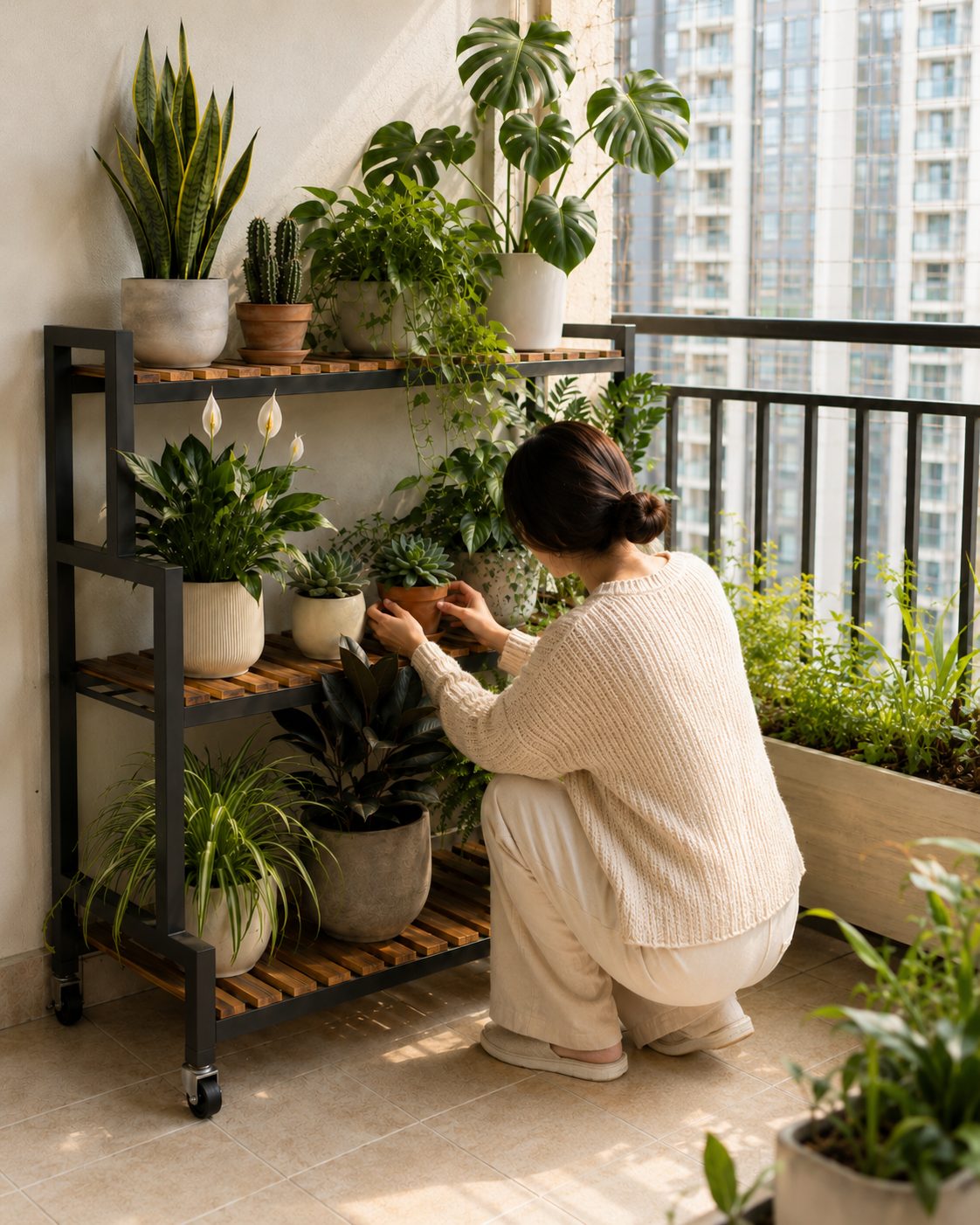
Apartment Composting Made Easy: 5 Space-Smart Methods That Actually Work
You do not need a backyard to keep food scraps out of the trash. Apartment composting can work in a kitchen cabinet, utility area, balcony, or deep planter—as long as the method fits your space, the foods you generate, and what you plan to do with the finished material.
For most apartments, a worm bin is the best true indoor composting system for plant-based kitchen scraps. Bokashi is useful when you want a compact sealed system for a wider range of scraps, but the fermented material still needs a second stage before it becomes finished compost. An electric food recycler is fast and convenient, but its dried output should not automatically be treated as mature compost.
Why Compost in an Apartment?
Composting turns organic material into a useful soil amendment instead of sending every suitable food scrap to the trash. The U.S. Environmental Protection Agency describes composting as the managed, aerobic biological decomposition of organic materials and notes that home composting can reduce material sent to landfills or incinerators.
- Keep suitable food scraps out of household trash.
- Create useful organic material for containers, balcony gardens, or houseplants.
- Build a low-waste routine without needing a large yard.
- Turn a daily kitchen habit into something that supports your plants.
The best system is the one you can manage consistently. A small worm bin that stays balanced is more useful than a larger system that is too hot, too wet, or too inconvenient for your home.
Which Apartment Composting Method Fits You Best?
| Method | Best for | Indoor friendly? | Main trade-off |
|---|---|---|---|
| Worm bin | Fruit and vegetable scraps, coffee grounds, paper bedding | Yes | Needs moisture, bedding, and temperature management |
| Bokashi | Small kitchens and a broad range of food scraps | Yes | Fermented output needs a finishing stage |
| Electric food recycler | Fast volume reduction and odor control | Yes | Uses electricity; output is not automatically finished compost |
| Balcony tumbler | Apartments with suitable outdoor space | No | Needs enough material, airflow, moisture, and balanced inputs |
| Planter composting | Deep outdoor containers or raised planters | Usually outdoors | Needs soil depth and careful scrap selection |
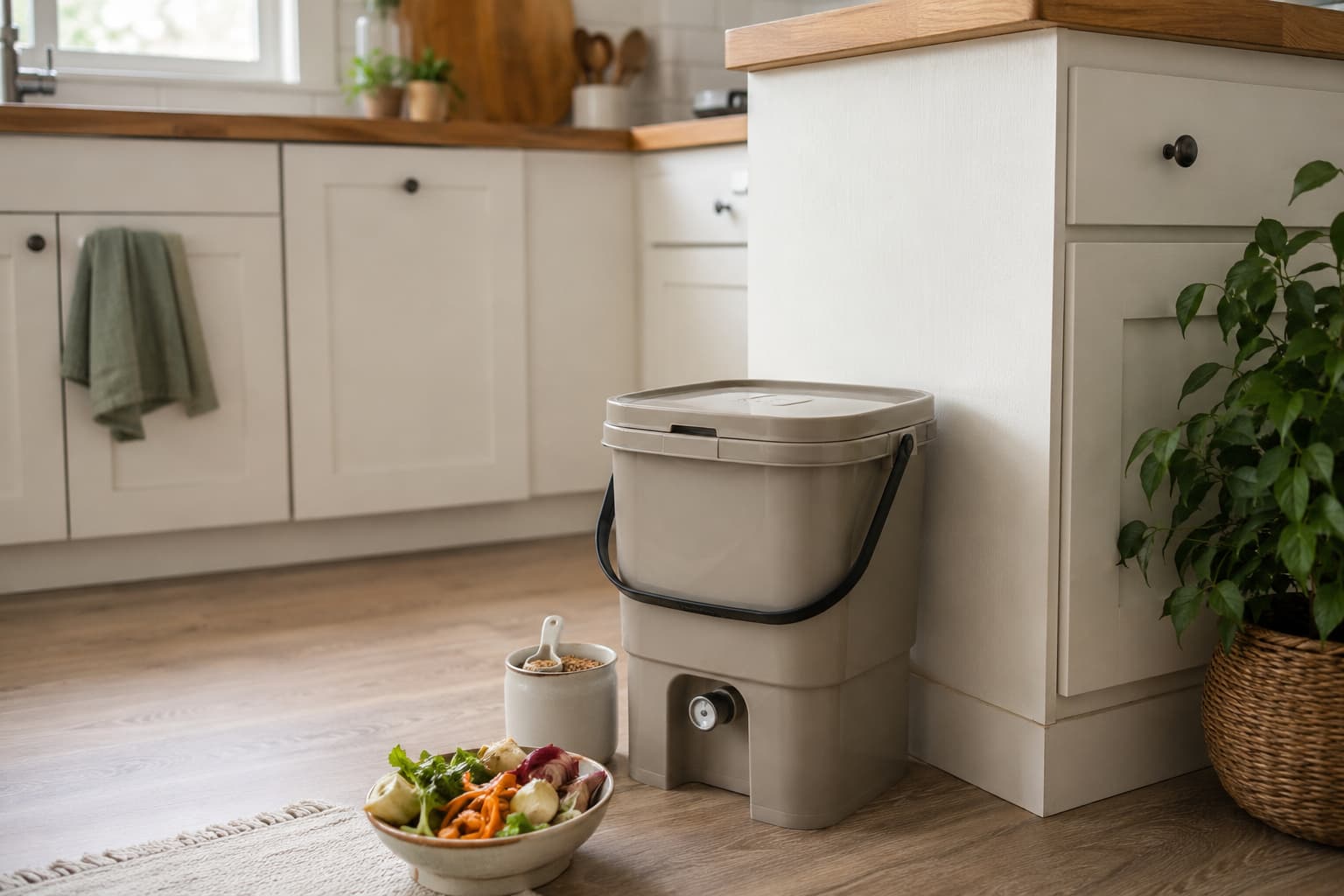
1. Bokashi: Compact Fermentation for Small Kitchens
Best for: A compact sealed system and a wider range of kitchen scraps.
Space needed: One airtight bucket under a sink, in a pantry, or another stable indoor location.
Bokashi differs from conventional aerobic composting. Food scraps are packed into a sealed container with inoculated bran and fermented in low-oxygen conditions. The result is best treated as pre-compost: after fermentation, it still needs to be buried in soil or moved into an appropriate finishing system before being used like mature compost.
Its biggest apartment advantage is containment. The bucket stays closed and takes up little room. A properly managed bucket may smell sour or pickled when opened, but it should not smell putrid.
Watch for: Keep the lid sealed, press air pockets out of the material, follow the bran maker's directions, and plan the finishing stage before the bucket is full.
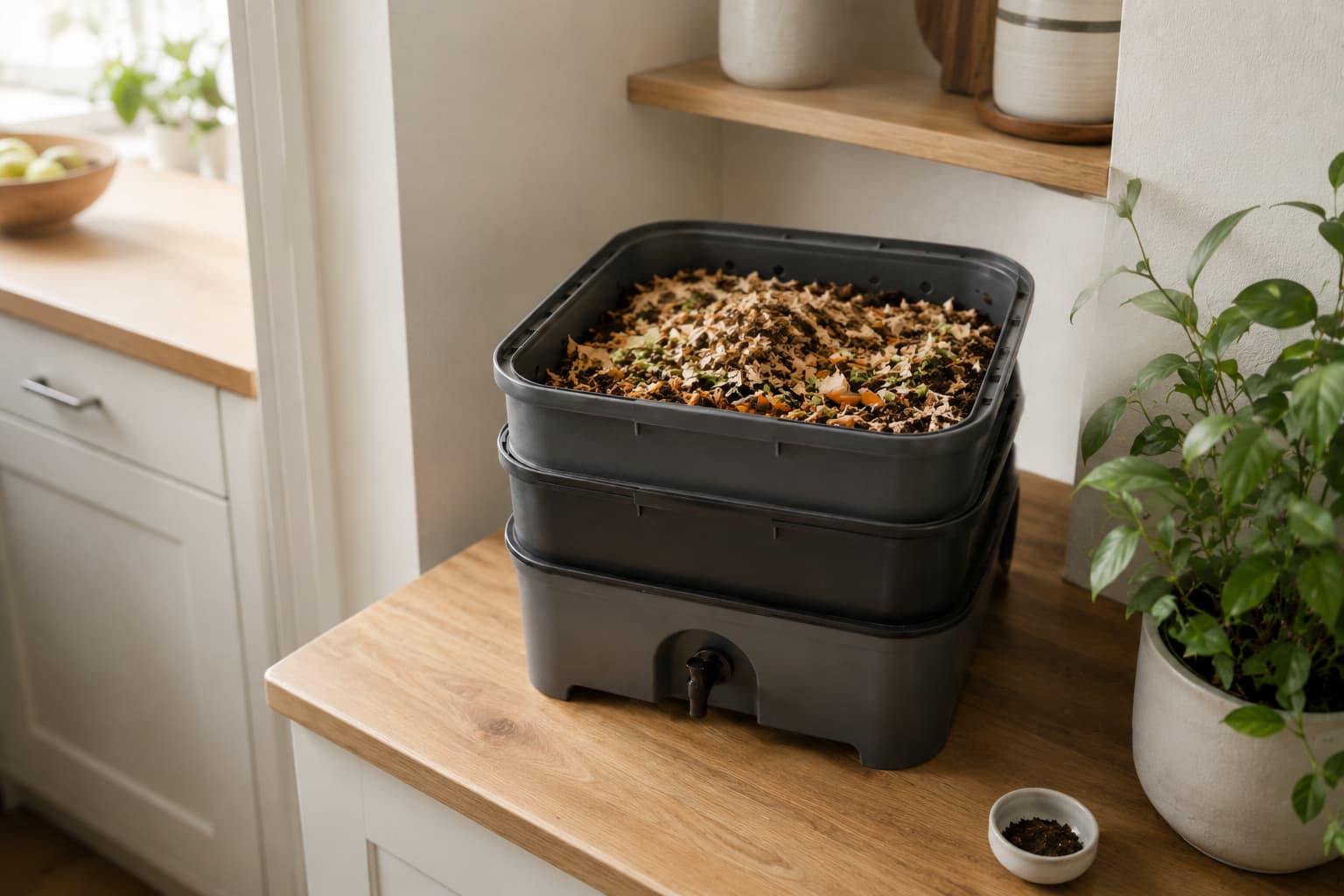
2. Worm Bins: The Best All-Round Indoor Option
Best for: Plant-based kitchen scraps, coffee grounds, and plain paper or cardboard bedding.
Space needed: A ventilated bin in a stable, shaded indoor location.
Vermicomposting uses composting worms—commonly red wigglers—and microorganisms to stabilize organic material into vermicompost. The EPA includes indoor worm bins as a home-composting option and recommends keeping them somewhere the worms will not freeze in winter or overheat in summer.
A worm bin should feel damp like a wrung-out sponge rather than saturated. Cover new food with bedding, feed gradually, and give the worms time to process what is already there.
Watch for: Overfeeding, soggy bedding, exposed food, and extreme temperatures are common reasons indoor bins develop odor or fruit-fly problems.
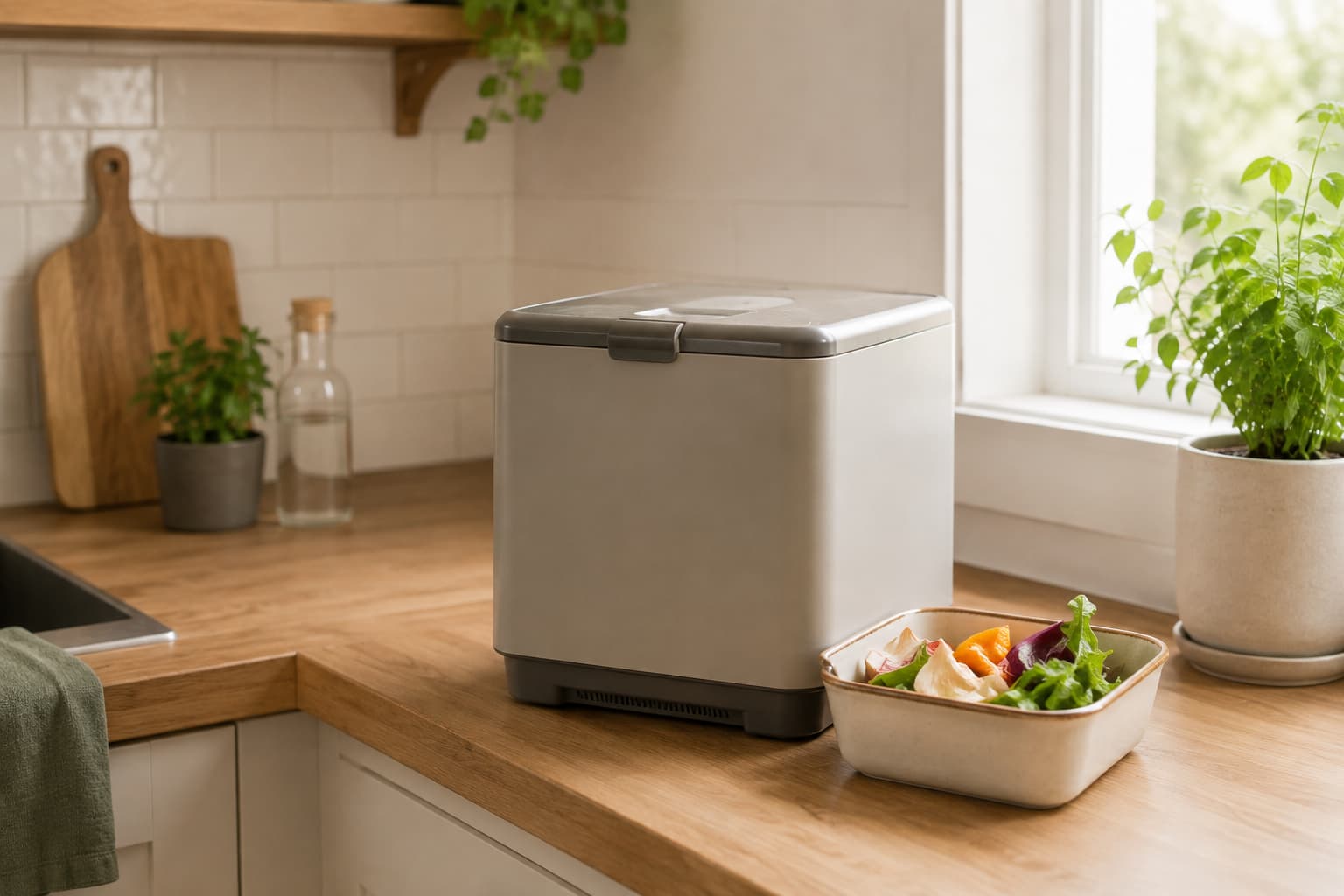
3. Electric Food Recyclers: Fast, but Not the Same as Composting
Best for: Apartments where convenience, odor control, and rapid volume reduction matter most.
Space needed: Counter or utility space comparable to another small kitchen appliance.
Many countertop electric food recyclers heat, dry, and grind food scraps into a smaller, drier material. That can make kitchen waste easier to handle, but dehydration is not the same process as producing mature compost.
Follow the manufacturer's directions for both acceptable inputs and the output. Depending on the machine, the processed material may need further decomposition before it is mixed into soil or used around plants.
Watch for: Purchase price, electricity use, filters or maintenance, batch capacity, and what you will do with the processed material afterward.
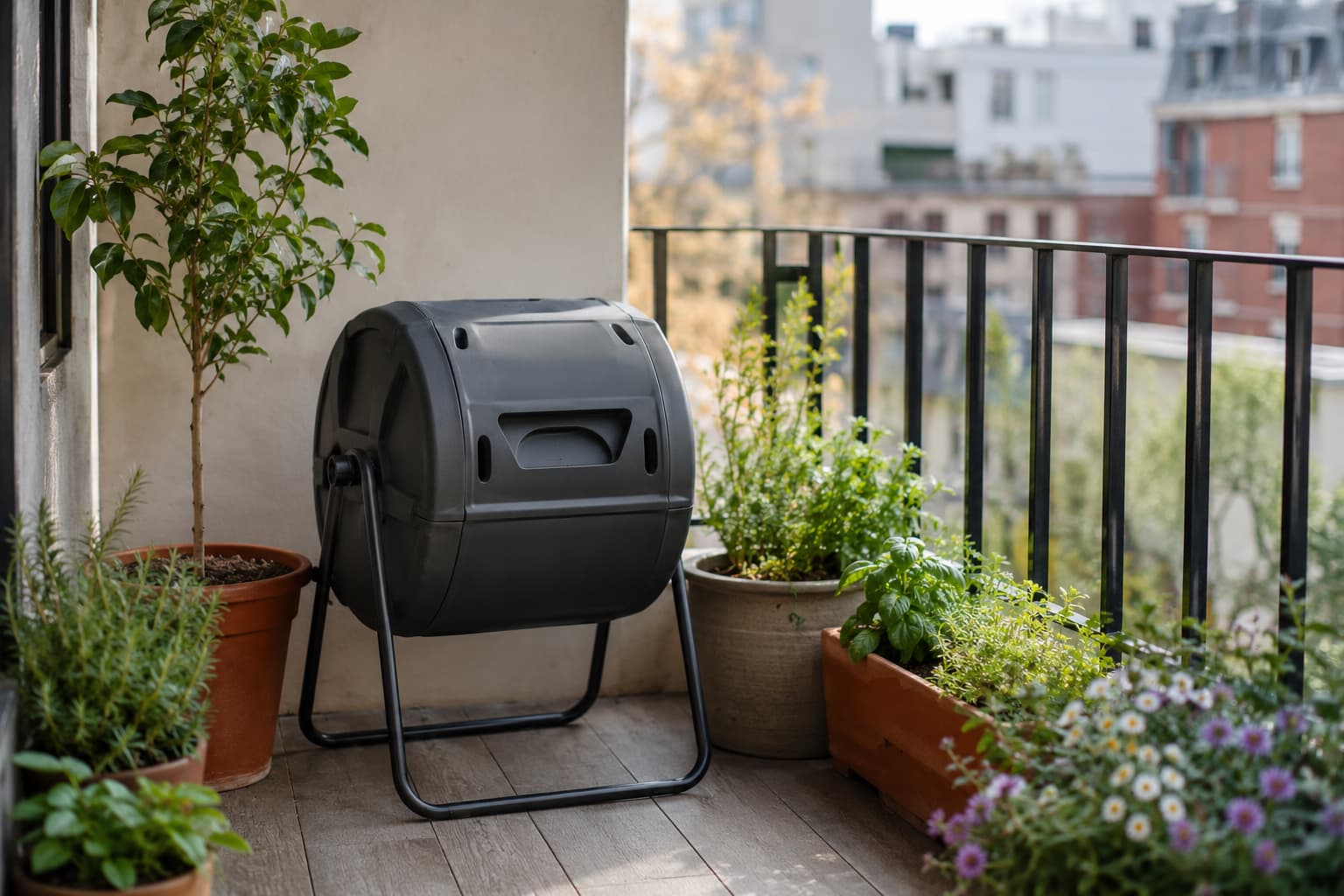
4. Small Compost Tumblers: A Balcony Option
Best for: Apartments with an appropriate balcony, terrace, patio, or shared outdoor area.
Space needed: Stable outdoor floor space, rotation clearance, and building approval.
A small enclosed tumbler can keep outdoor compost contained while making it easier to mix the material. Successful aerobic composting still depends on oxygen, moisture, particle size, and a useful mix of carbon-rich and nitrogen-rich ingredients. Turning helps redistribute air and moisture, but it cannot fix a tumbler that is too wet or filled with only one type of material.
Watch for: Balcony weight limits, drainage, neighbors, local rules, direct afternoon heat, and whether your building allows composting equipment outdoors.
5. Planter Composting: Bury Small Amounts Outdoors
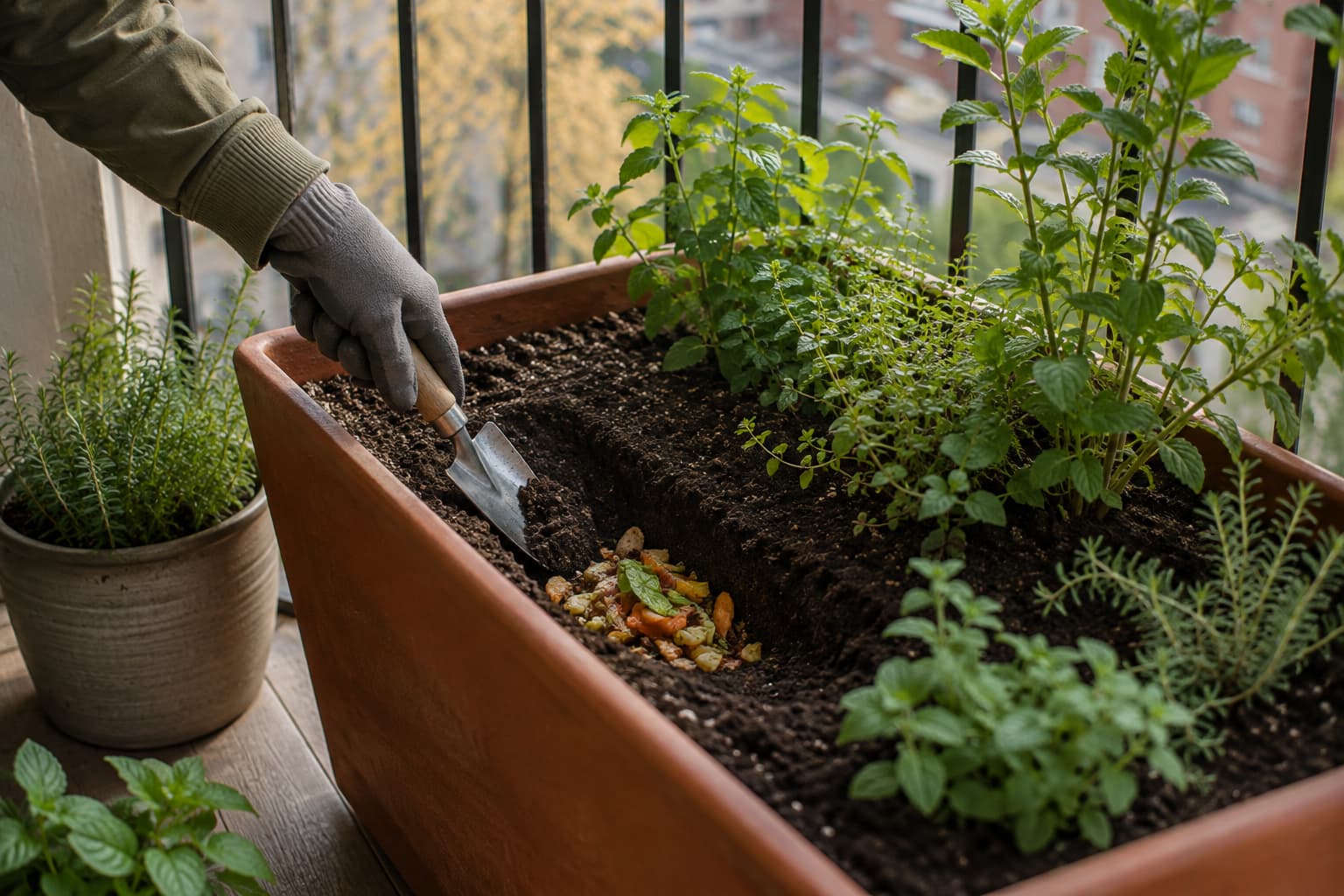
Best for: Deep balcony planters, large outdoor containers, or raised beds.
Space needed: Enough unused soil volume to bury scraps well below the surface.
Small amounts of suitable plant-based scraps can be buried in deep soil and allowed to decompose in place. Chop scraps small, bury them well below the surface, cover them completely, and rotate burial spots rather than repeatedly filling the same pocket.
This is best treated as an outdoor technique. Avoid meat, dairy, oily food, and large amounts of scraps that may attract pests or create anaerobic pockets. Do not bury food directly against sensitive roots.
Can You Make a DIY Compost Bin in an Apartment?
Yes—but the location matters. A simple ventilated aerobic bin can work in a suitable balcony, terrace, utility area, or other approved outdoor space where airflow, drainage, and occasional mess are manageable. It is not Greenmuse's first choice for a living room or small kitchen because an open or ventilated food-scrap system is less contained than a managed worm bin or sealed Bokashi bucket.
If you need a true indoor system, start with a worm bin or Bokashi. If you have suitable outdoor space and want conventional aerobic composting, a small tumbler or carefully managed ventilated bin is usually easier to monitor without bringing moisture, flies, or drainage problems into the living area.
For a DIY aerobic bin, use a container that can drain and exchange air, add food in modest amounts, keep fresh scraps covered with dry carbon-rich material, and stop adding food if the contents become wet or strongly smelly. Do not depend on a rigid browns-to-greens recipe: moisture, airflow, particle size, and the actual materials in the bin matter more than one universal ratio.
What Changes in Hot Summer Weather?
Warm conditions can speed biological activity, but they can also make a small apartment composting system dry out, overheat, or attract flies more quickly. The right adjustment depends on the method rather than on a single “summer compost” rule.
| Method | What heat changes | What to check |
|---|---|---|
| Worm bin | Worms can become stressed if the bin overheats. | Keep the bin shaded and in a stable location; check bedding moisture and temperature more often. |
| Balcony tumbler | Material may dry faster in direct sun and hot wind. | Check moisture before adding water; the contents should be damp, not soggy. |
| Planter composting | Fresh scraps can attract insects faster if they are left exposed. | Bury suitable scraps completely and keep them away from sensitive roots. |
| Bokashi | The sealed fermentation system still depends on being kept closed and managed correctly. | Do not keep opening the bucket simply to “cool it”; follow the system directions and keep it out of extreme heat. |
If a system looks dry, adjust gradually rather than pouring in a large amount of water at once. If fruit flies appear, focus first on exposed scraps and residue around the container. Summer usually means checking the same system more often, not inventing a completely different composting method.
How to Prevent Odors and Fruit Flies
A healthy apartment composting system should not smell like rotting garbage. Strong odor usually means the system is out of balance rather than that apartment composting itself is a bad idea.
| Problem | Likely cause | What to do |
|---|---|---|
| Sour or rotten smell | Too wet, too much food, or too little air for the chosen system | Pause feeding, correct moisture, add dry bedding where appropriate, and restore airflow in aerobic systems. |
| Fruit flies | Fresh scraps are exposed | Bury or cover food and clean residue from bin edges. |
| Worm bin too wet | Excess watery food or insufficient bedding | Add dry shredded paper or cardboard and reduce feeding until conditions stabilize. |
| Very slow breakdown | Cold conditions, oversized pieces, dry material, or an undersized outdoor system | Adjust conditions rather than simply adding more food. |
Composting is a living process. Observe first, make one small adjustment, and give the system time to respond. A calm routine beats constantly “fixing” the bin.
What Can You Do With the Finished Material?
Finished compost or vermicompost can be useful around container plants, but more is not always better. Mature compost is a soil amendment, not a replacement for all potting mix. Blend modest amounts into outdoor container soil or use it as a light top-dressing according to the needs of the plant.
How to Use Compost Safely in Container Plants
Mature compost is best used as a soil amendment or light top-dressing, not as the only material in a container. Potting mixes need a balance of drainage, air space, water retention, and structure that compost alone may not provide.
- Mix a modest amount of mature compost into fresh container mix, or apply a thin layer at the surface.
- Do not bury unfinished food scraps directly against the active root ball of a small container plant.
- If material still smells sour, contains recognizable food, or becomes noticeably warm after mixing, let it finish before using it around established roots.
- For Bokashi or electric-recycler output, complete any required finishing stage before treating the material like mature compost.
Finished compost should improve the potting mix—not replace it. When in doubt, use less, observe how the plant and soil respond, and add more only when the material is fully mature.
If you make more than your apartment plants can use, consider sharing finished compost with a community garden, neighbor, or local garden group. For Bokashi or electric-recycler output, make sure the material has completed any necessary finishing stage before treating it like mature compost.
Frequently Asked Questions
1. Can you compost inside an apartment without smells?
Yes. Indoor worm bins and sealed Bokashi systems can work in apartments when managed correctly. Persistent rotten odors usually point to excess food, excess moisture, exposed scraps, or unsuitable conditions for the method.
2. What is the easiest apartment composting method for beginners?
For plant-based kitchen scraps, a small worm bin is one of the most practical true indoor composting systems. Bokashi may fit better if you prefer a sealed bucket and have a plan for finishing the fermented material afterward.
3. Are electric countertop composters actually composters?
Many countertop machines primarily heat, dry, and grind food scraps. They can reduce volume and odor quickly, but their output should not automatically be considered biologically mature compost.
4. Can I put meat or dairy in an apartment compost bin?
Basic home aerobic compost bins and worm bins generally avoid meat, bones, dairy, fats, and oily foods because they can create odor and pest problems. Bokashi systems are designed differently and can accept a broader range of scraps when used according to system instructions.
5. Will a worm bin attract fruit flies?
It can if fresh food remains exposed or the bin is overfed. Bury food beneath bedding, cover the surface, wipe scraps from the rim, and avoid adding more food until the worms catch up.
6. Can I compost directly in a planter?
Small amounts of suitable plant-based scraps can be buried in deep outdoor planters with enough soil volume. Keep scraps well covered, rotate burial spots, and avoid meat, dairy, oily food, and burying waste directly against sensitive roots.
7. What if I make more compost than my houseplants can use?
Share mature compost with a community garden, neighbor, or local garden group rather than forcing large amounts into small indoor pots.
Start Small and Make It Easy to Continue
Apartment composting works best when it fits naturally into your home rather than becoming another complicated chore. Choose one method, give it a convenient place, learn what balanced conditions look and smell like, and adjust slowly.
A small bin can still create a meaningful routine: less food in the trash, more attention to what you use, and a quiet connection between your kitchen and the plants you grow.
Which method fits your apartment best? Share what you are trying—or what has stopped you from composting before—in the comments.