How to keep indoor rosemary compact, aromatic, and resilient
Learn how to grow rosemary indoors without weak, leggy growth. Discover the right light, pruning, watering, and airflow tips for compact, healthy plants.
Why Indoor Rosemary Often Grows Weak
Rosemary is not a typical houseplant.
It evolved in dry, sunny, wind-exposed Mediterranean landscapes, not in still indoor air and filtered window light. When grown indoors, rosemary often responds to suboptimal conditions by stretching upward—producing long, soft stems with fewer leaves.
Weak growth indoors is not a disease.
It is a light and environment problem.
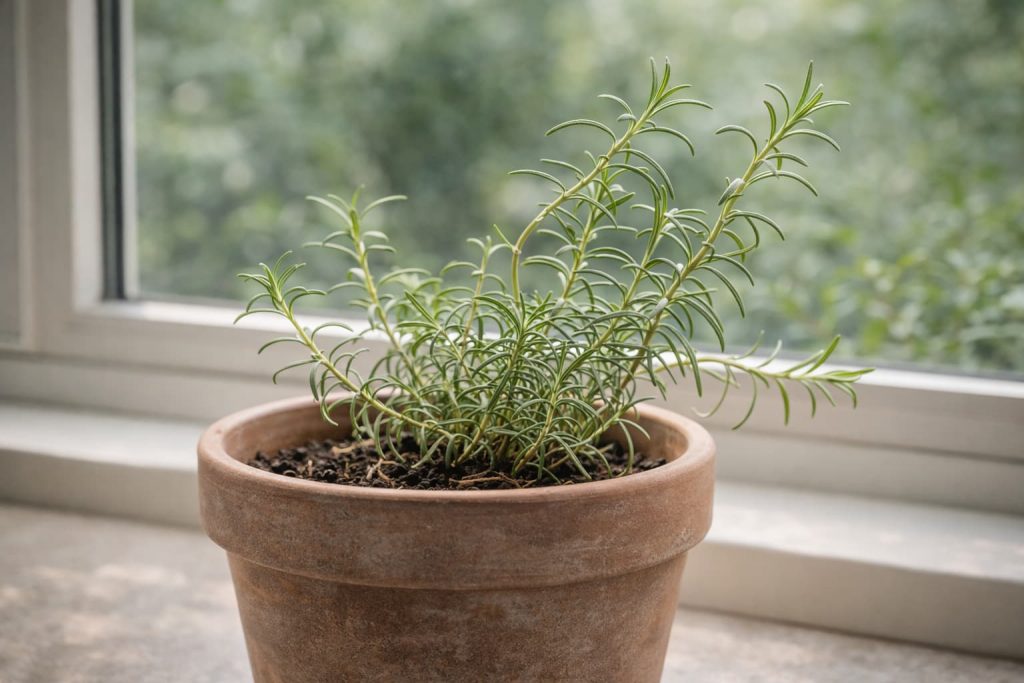
What “Weak Growth” Really Looks Like
Weak indoor rosemary growth usually includes:
- Long, thin stems
- Wide spacing between leaves
- Pale or dull green foliage
- Top-heavy plants that flop or lean
- Reduced aroma when touched
These signs mean the plant is searching for light, not thriving.
Understanding this early is the key to prevention.
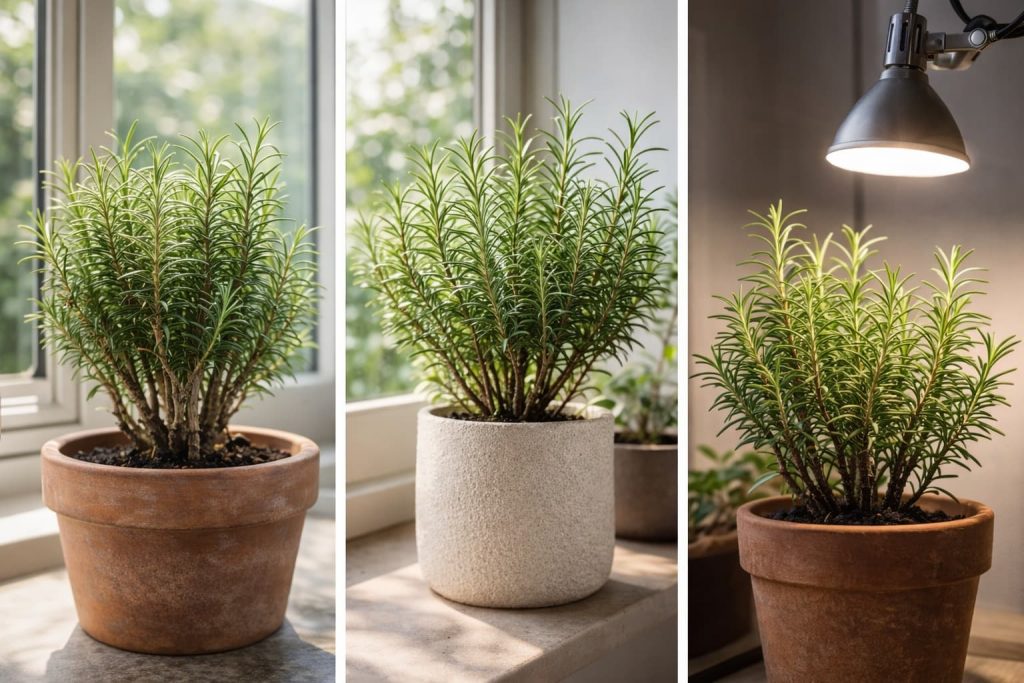
Light Is Everything (And Windows Are Often Not Enough)
How Much Light Rosemary Really Needs
- Minimum: 6 hours of strong direct light
- Ideal: 8–10 hours of high-intensity light
South-facing windows help, but in most homes they are still insufficient, especially in winter.
Grow Lights: Not Optional for Long-Term Success
For compact indoor rosemary:
- Use a full-spectrum grow light
- Position it 20–30 cm (8–12 inches) above the plant
- Keep lights on 10–12 hours daily
Grow lights are the single most effective way to prevent weak indoor growth.
The Right Pot, Soil, and Drainage Setup
Weak growth is often paired with root stress.
Pot Choice
- Use unglazed terracotta if possible
- Choose a pot only slightly larger than the root ball
- Always ensure a drainage hole
Soil Mix
Rosemary hates heavy, moisture-retentive soil.
Ideal mix:
- High-quality potting soil
- Coarse sand or perlite (30–40%)
- Optional fine gravel for added drainage
Roots that stay too wet lose oxygen—and stressed roots lead to weak top growth.
Watering Rosemary Indoors Without Stress
Indoor rosemary prefers dry cycles, not constant moisture.
Best Practice
- Water deeply
- Allow the top 3–5 cm (1–2 inches) of soil to dry before watering again
- Never let the pot sit in standing water
Overwatering indoors causes:
- Root stress
- Soft, weak stems
- Faster decline than underwatering
When in doubt, wait one more day.
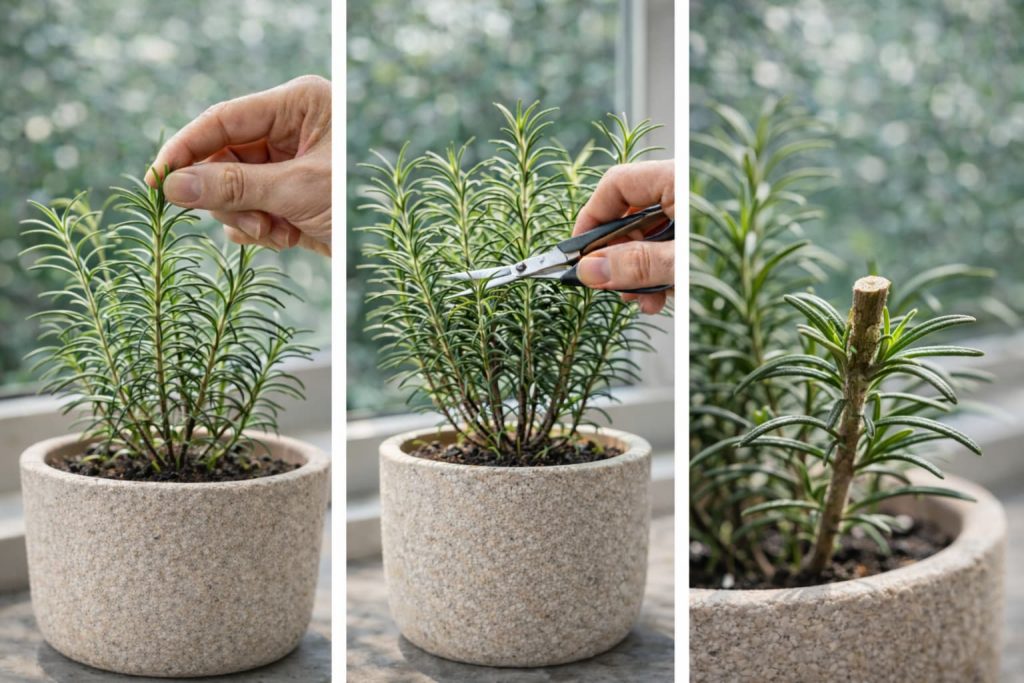
Pruning and Pinching for Compact Growth
Pruning is not just for harvest—it shapes structure.
How to Prune Indoors
- Pinch soft tips regularly
- Cut just above a leaf node
- Never cut into leafless woody stems indoors
Light, frequent pruning encourages:
- Branching
- Thicker stems
- Balanced growth
Avoid aggressive pruning in low-light seasons.
Airflow, Temperature, and Indoor Environment
Rosemary dislikes stagnant air.
Ideal Conditions
- Daytime temperatures: 18–22°C (65–72°F)
- Cool nights are beneficial
- Gentle airflow from an open window or fan
Air movement strengthens stems and reduces fungal issues.
Common Indoor Rosemary Mistakes
- Treating rosemary like basil or mint
- Relying on window light alone
- Overwatering “to be safe”
- Using decorative pots without drainage
- Skipping pruning out of fear
Each of these leads to weak, disappointing growth.
Can Indoor Rosemary Stay Healthy Long-Term?
Yes—but with realistic expectations.
Indoor rosemary grows slower and smaller than outdoor plants. Many experienced gardeners rotate plants:
- Summer outdoors
- Winter indoors under lights
This cycle produces stronger, longer-lived plants.
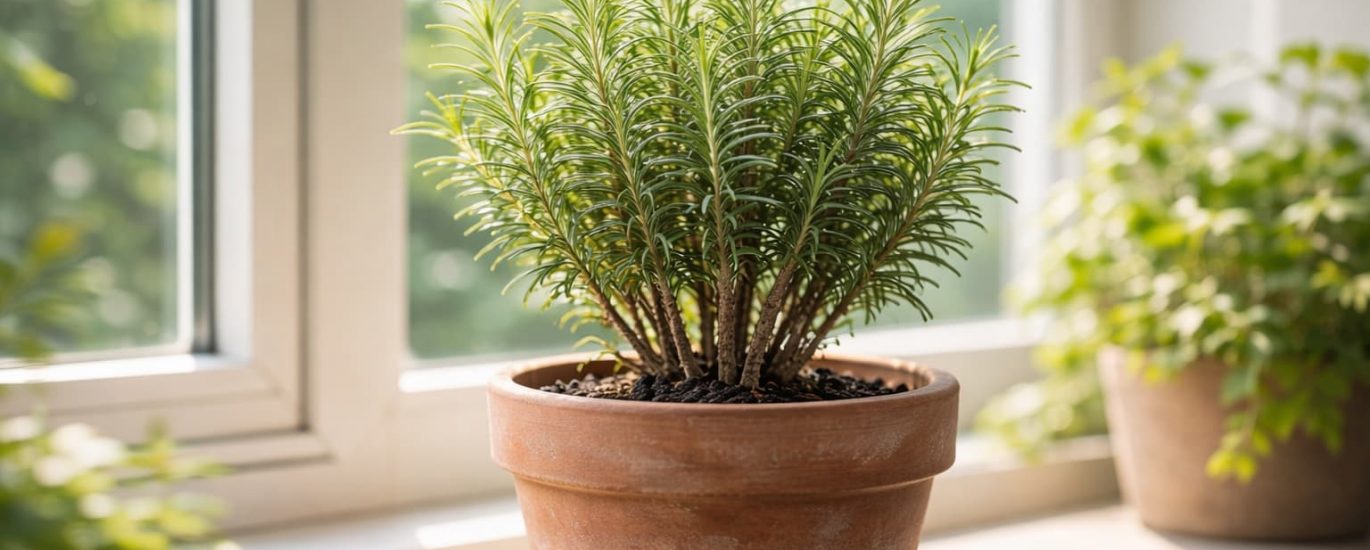
Final Thoughts: Think Mediterranean, Not Houseplant
Rosemary does not want comfort.
It wants light, air, dryness, and restraint.
If you recreate its native conditions—even indoors—it will reward you with:
- Compact growth
- Strong stems
- Deep aroma
- Long-term resilience
Grow rosemary like a Mediterranean shrub, not a windowsill herb.