Echinopsis Care Guide: How to Grow and Bloom Echinopsis
Quick Summary
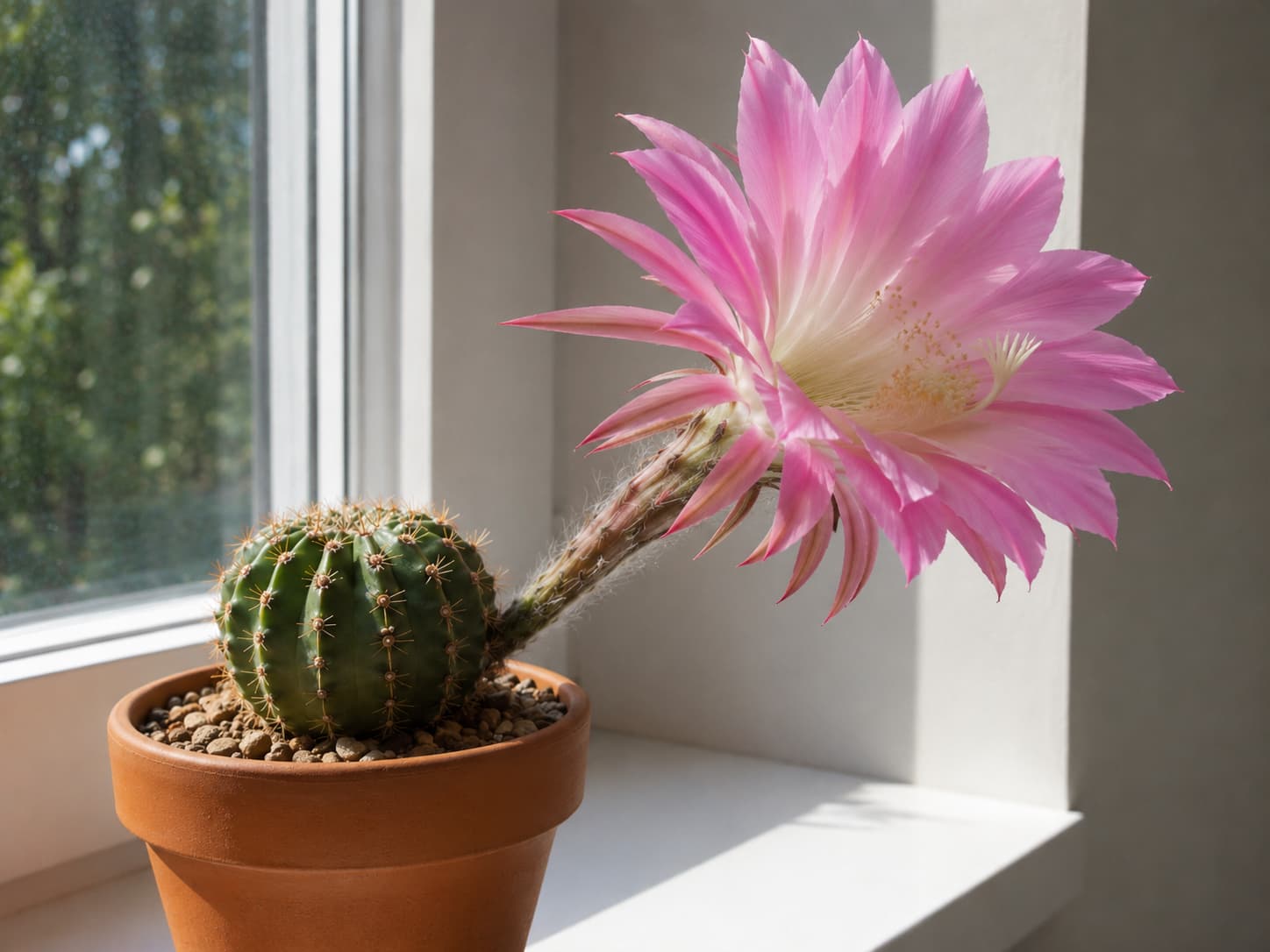
Echinopsis — often called Easter Lily Cactus or Sea-Urchin Cactus — is the cactus that makes people fall in love with cacti. For 50 weeks of the year, it's a modest, globe-shaped green ball sitting quietly on a windowsill. Then one summer evening, it produces a 6-inch trumpet flower in neon pink, blazing red, or pure white that lasts one to two days and smells like citrus and honey. But most indoor Echinopsis never bloom. The #1 reason: no winter dormancy. These cacti need a cold, dry rest period — around 50°F with almost no water for 3–4 months — to trigger flower bud formation. Skip this step, and you get a healthy green cactus that never flowers. This guide covers the dormancy science, the etiolation fix, and everything else between you and that one perfect bloom.
What Is Echinopsis? (And the Genus Confusion)
Echinopsis is a large and notoriously messy genus of South American cacti in the family Cactaceae, native primarily to Argentina, Bolivia, Peru, and Brazil. "Messy" because taxonomists have argued for decades about what belongs in this genus. Depending on which botanist you ask, Echinopsis contains anywhere from 50 to over 150 species — and may or may not include the plants formerly classified as Trichocereus (the San Pedro cactus group), Lobivia, and Chamaecereus (peanut cactus).
For the home grower, the important distinction is between day-blooming columnar types (the former Trichocereus — large, tall, often grown outdoors in warm climates) and night-blooming globular types (the classic "Easter Lily Cactus" — small, round, grown in pots on windowsills). This guide focuses on the globular, windowsill-sized types that produce the spectacular short-lived flowers Echinopsis is famous for.
The name Echinopsis comes from the Greek echinos (hedgehog or sea urchin) and opsis (appearance) — "hedgehog-like" — a reference to the round, spiny body of the plant. The flowers are among the largest in the cactus world relative to body size: a 4-inch cactus body can produce a 6–7 inch flower. The blooms are typically nocturnal or crepuscular (opening at night or at dusk), heavily scented, and pollinated by hawkmoths in their native habitat.
Plant Profile at a Glance
| Feature | Details |
|---|---|
| Common Name | Echinopsis, Easter Lily Cactus, Sea-Urchin Cactus, Hedgehog Cactus |
| Scientific Name | Echinopsis spp. (includes former Trichocereus, Lobivia, Chamaecereus) |
| Plant Type | Perennial cactus — globular, cylindrical, or columnar depending on species |
| USDA Zones | 8–11 outdoors; grown as houseplant in all zones |
| Mature Size | Globular types: 2–6" tall and wide; columnar types: up to several feet |
| Bloom Time | Late spring through summer; flowers open at night/dusk; each bloom lasts 1–2 days |
| Flower Colors | White, pink, red, orange, yellow, magenta; often with contrasting throats |
| Flower Size | 3–7 inches long; often larger than the cactus body itself |
| Fragrance | Sweet, citrus-honey; strongest at night |
| Sun Needs | Bright direct light — 6+ hours; south or west window ideal |
| Soil | Very well-drained cactus mix; 50% mineral grit minimum |
| Winter Dormancy | Required for blooming — 45–55°F, almost no water, 3–4 months |
| Toxicity | Non-toxic. Spines are a physical hazard, not a chemical one. |
The Dormancy Requirement: Why Your Echinopsis Won't Bloom
This section exists because it addresses the #1 complaint about Echinopsis on every cactus forum: "I've had this cactus for years. It's healthy, it's growing, but it has never flowered. What am I doing wrong?"
The answer is almost always the same: no winter dormancy. Echinopsis is not like a tropical houseplant that grows year-round. In its native Andean habitat, it experiences a distinct annual cycle: warm, wet summers for growth followed by cold, bone-dry winters at high elevation. This winter rest period is not optional — it's the physiological trigger that initiates flower bud formation.
Here's what happens when you skip dormancy: the cactus stays in its warm living room all winter, gets watered regularly, and continues growing slowly. It's perfectly healthy — but it never receives the environmental signal that says "spring is coming, time to bloom." The plant needs the stress of cold and drought to switch from vegetative growth to reproductive mode.
The #1 Reason Echinopsis Never Blooms Indoors
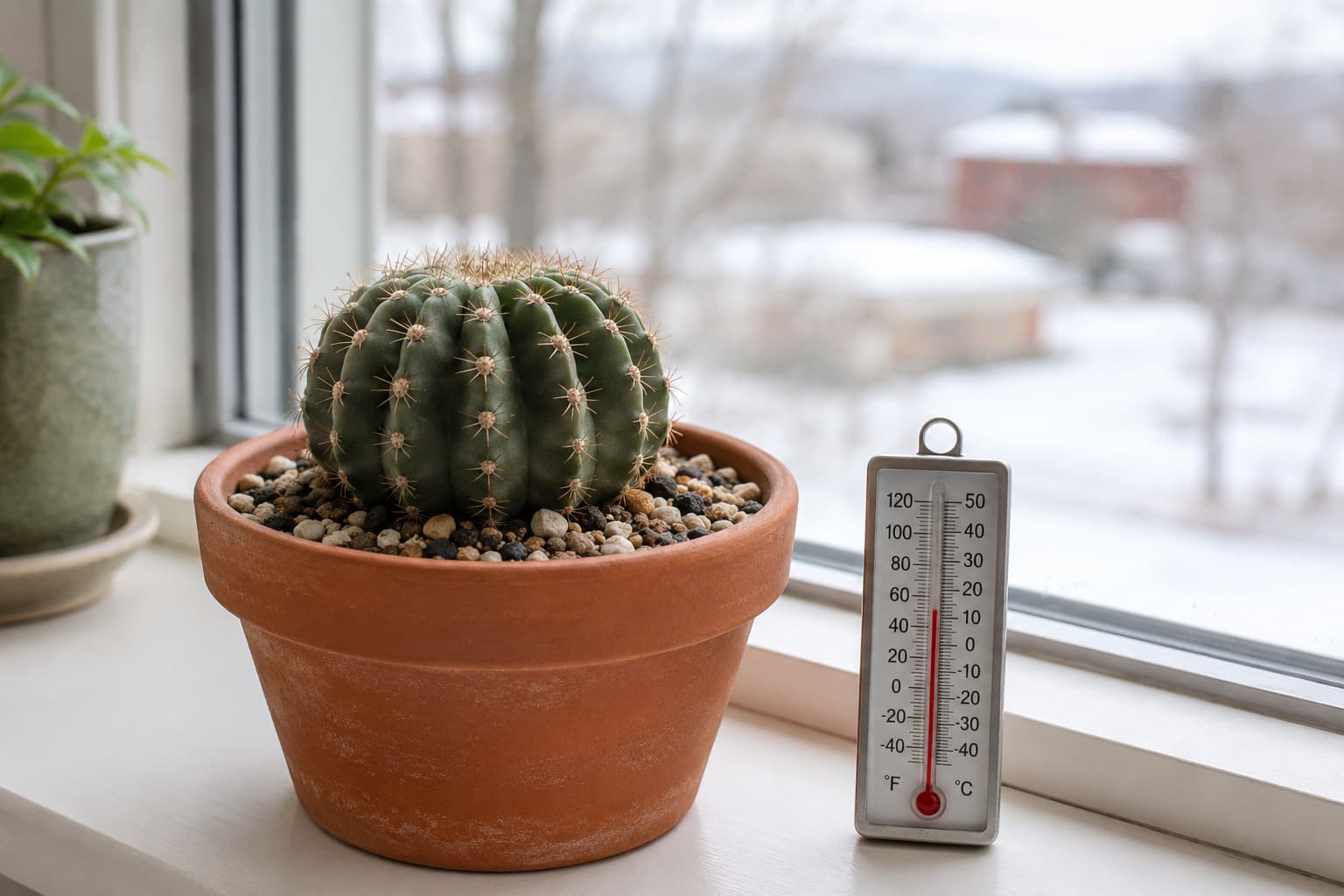
You're keeping it too warm and too wet in winter. Echinopsis needs 3–4 months of cold (45–55°F / 7–13°C) with almost no water — just enough to prevent the plant from shriveling — to trigger flower bud formation. A heated living room in winter (65–72°F) + regular watering = healthy green cactus, zero flowers, forever.
How to Give Your Echinopsis a Proper Winter Rest
- Timing: From roughly November through February (adjust for your climate — the key is 3–4 months of rest).
- Temperature: Move the plant to a cool location at 45–55°F (7–13°C). An unheated spare bedroom, cool stairwell, unheated sunroom, or cool basement with a window all work. The temperature should stay above freezing but below normal room temperature. Do not let it freeze.
- Light: The plant still needs light during dormancy — a cool south-facing windowsill is ideal. A cool dark basement will not work. If your only cool space is dark, supplement with a grow light on a timer.
- Water: Almost none. Water lightly once every 4–6 weeks — just enough to prevent the plant from shriveling (about ¼ cup for a 4-inch pot). The soil should be bone-dry most of the time. Overwatering during dormancy causes root rot — the combination of cold + wet is lethal to cacti.
- No fertilizer during dormancy. Resume feeding only when you see new growth or flower buds in spring.
- Transition back gradually in spring. Move the plant back to its warm growing location in March. Increase watering gradually. Flower buds should appear within 4–8 weeks of resuming normal care.
No Cool Room? Some Echinopsis Are More Forgiving
If you genuinely cannot provide a cool winter location, some Echinopsis hybrids — especially 'Dominos', 'Flying Saucer', and many modern hybrids — are more forgiving and may bloom with a dry rest at normal room temperature (just stop watering from November to February, but keep in bright light). Pure species and wild-collected plants are far less likely to bloom without proper cold dormancy. Hybrids have been selected for easier blooming and are the better choice for typical homes.
Etiolation: The "Tall and Skinny" Problem
After failure to bloom, the second most common Echinopsis complaint is etiolation — the plant stretching into a tall, thin, pale column instead of staying compact and round. This is not a disease or a pest. It's a light deficiency — the plant is literally reaching for more light.
The mechanism: when a cactus doesn't get enough light, it produces auxins (growth hormones) that concentrate on the shaded side, causing the cells there to elongate. The result is a plant that looks nothing like the compact globe you bought — it's stretched, pale green, with wider spacing between the ribs and spines.
Etiolation is permanent. The stretched portion of the plant will never shrink back to normal size. If you fix the light, new growth will be compact and normal, but the etiolated section will always look odd — a narrow "waist" or "neck" between the old growth and the new.
How to Fix and Prevent Etiolation
- Move to the brightest window you have. South-facing is ideal. West-facing is second best. East and north windows are generally insufficient for Echinopsis without supplemental lighting.
- Add a grow light. A basic LED grow light positioned 6–12 inches above the plant, running 12–14 hours a day, will prevent etiolation even in dark apartments.
- Rotate the pot weekly. This prevents the plant from leaning toward the light source and growing lopsided.
- If the plant is already etiolated: You can cut off the stretched top portion with a clean, sharp knife, let the cut callus over for a week, then plant it as a cutting. The base will produce offsets (pups) that grow normally. Or you can leave it — it won't harm the plant, it just looks odd.
Complete Indoor Care Guide
Light
Bright direct light — 6+ hours. South or west-facing window. In low-light homes, a grow light is not optional — it's the difference between a compact, blooming cactus and a stretched, flowerless one. Signs of insufficient light: etiolation (stretching), pale green color, no flowers despite good care otherwise.
Soil
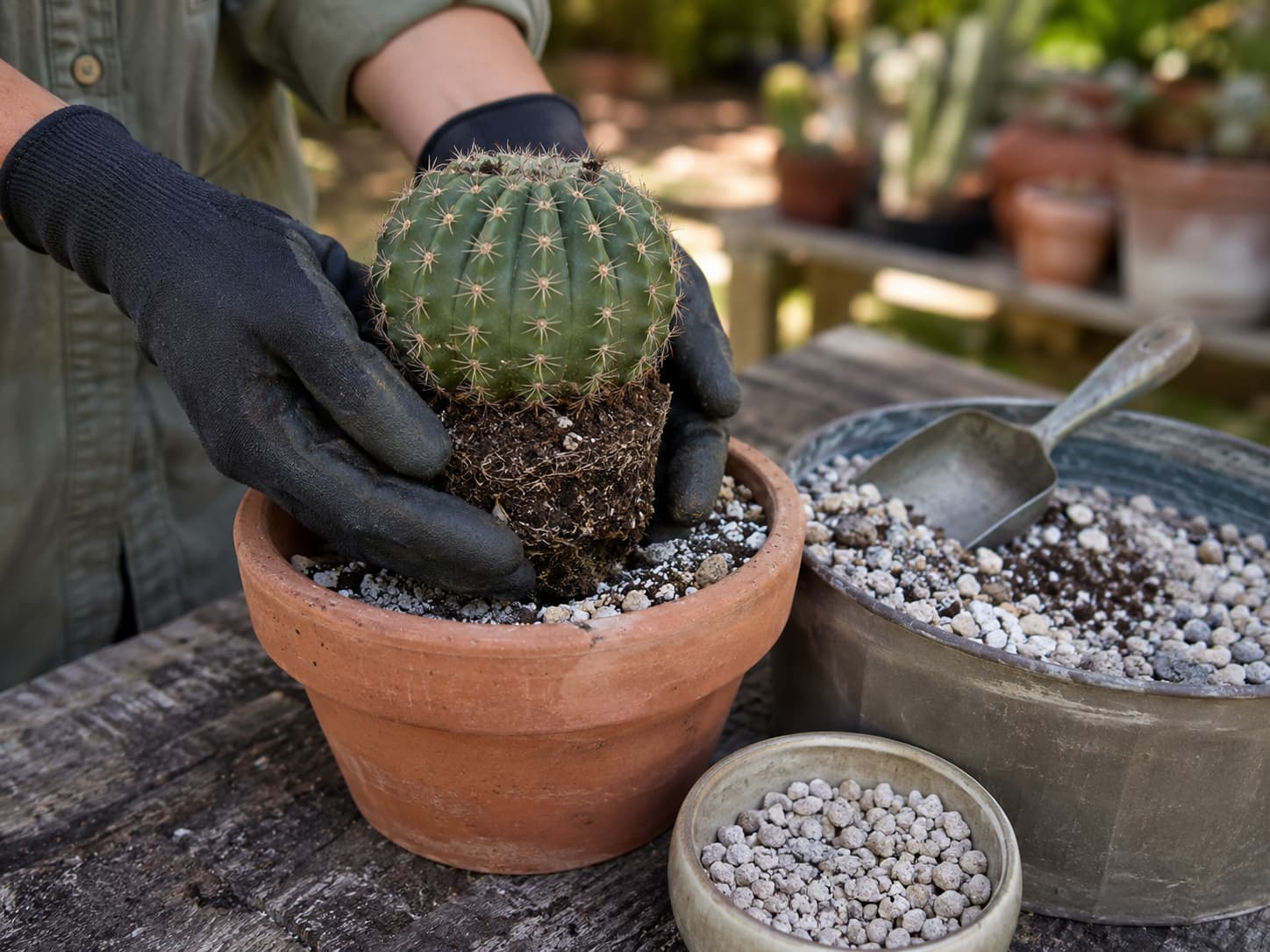
Use a very well-drained cactus or succulent mix. Standard potting soil holds too much moisture and will rot the roots. A good DIY mix: 50% commercial cactus mix + 50% mineral grit (perlite, pumice, coarse sand, or crushed granite). The goal is a mix that drains completely within seconds of watering. Echinopsis roots need air as much as they need water.
Watering — Growing Season (Spring–Fall)
- Water thoroughly, then let the soil dry out completely. Stick your finger or a wooden skewer into the soil — if it comes out damp, wait.
- In summer, this might mean watering every 7–10 days. In spring and fall, every 2–4 weeks.
- Water in the morning so any water on the plant body dries by evening.
- Never let the pot sit in standing water. Empty the saucer after watering.
- Signs of overwatering: Soft, mushy body; yellowing or translucent skin; black spots at the base. These are often fatal — rot spreads quickly in cacti.
- Signs of underwatering: Plant shrivels, ribs become more pronounced, growth slows. This is easily fixed — water and it will plump up within days.
Watering — Dormancy (Winter)
- Water lightly once every 4–6 weeks — just enough to prevent shriveling.
- If the plant is in a cool location (below 50°F), do not water at all from November through February. The combination of cold + moisture = rot.
Fertilizing
Feed with a low-nitrogen cactus fertilizer (like 2-7-7 or 5-10-10) every 4–6 weeks during the growing season (April–September). High-nitrogen fertilizer pushes weak, elongated growth. Stop fertilizing entirely from October through March.
Potting and Repotting
- Use terracotta or unglazed clay pots — they wick away excess moisture. Plastic pots retain water and increase rot risk.
- Pots must have drainage holes. No exceptions.
- Repot every 2–3 years in early spring, before the growing season begins. Echinopsis likes being slightly root-bound — don't upsize the pot dramatically. Go up one pot size at most.
- Do not repot while the plant is budding or in bloom. This disrupts the flower cycle and may cause bud drop.
The Bloom Cycle: What to Expect (and Why It's So Brief)
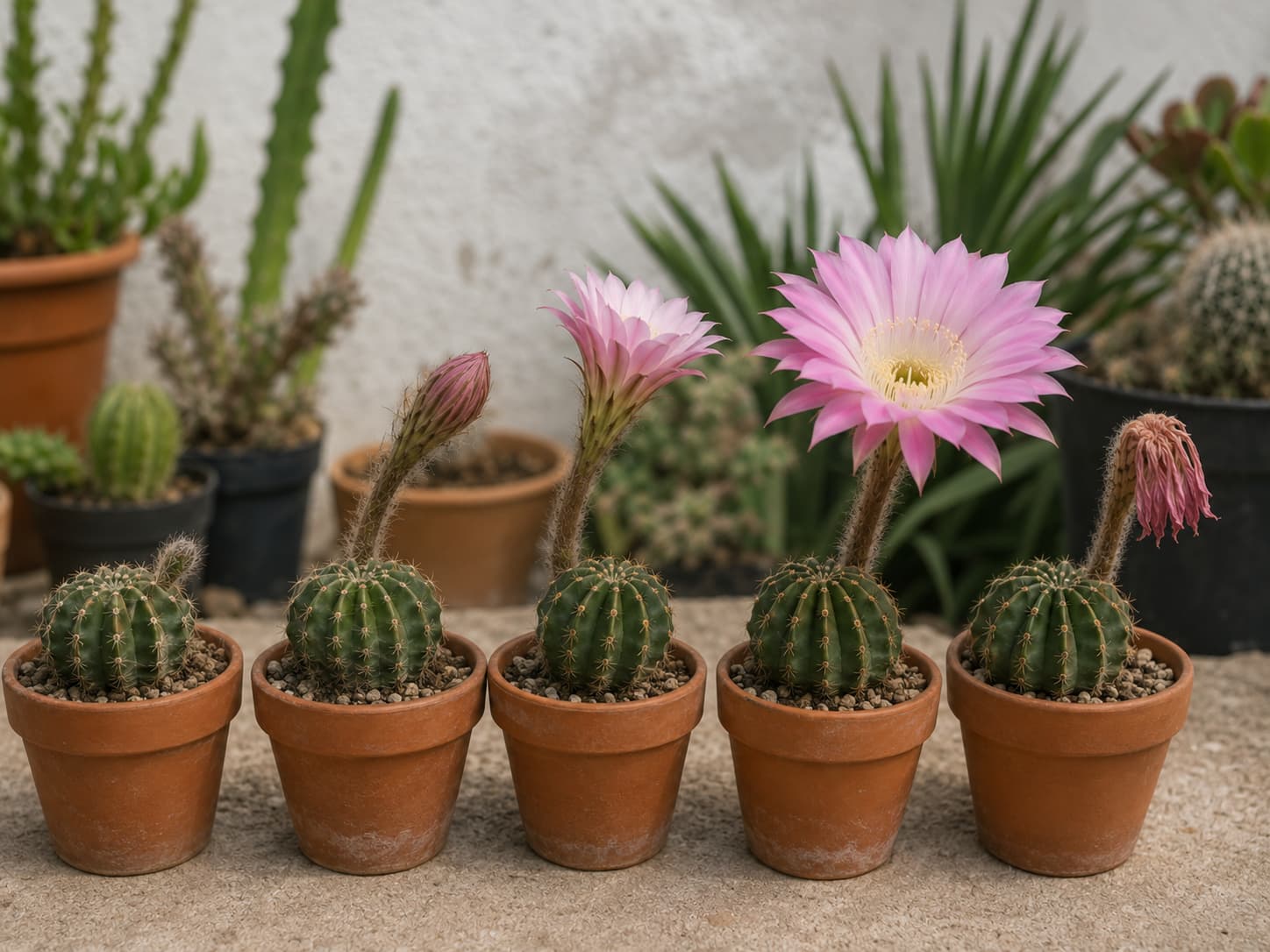
Echinopsis flowers are among the most spectacular in the plant world — and among the most ephemeral. Here's the timeline:
- Bud emergence (7–14 days before bloom): A small, fuzzy bud appears at the top or side of the cactus. It grows rapidly — noticeably larger each day. The bud looks like a small, hairy, brown tube at first, then elongates and develops color at the tip.
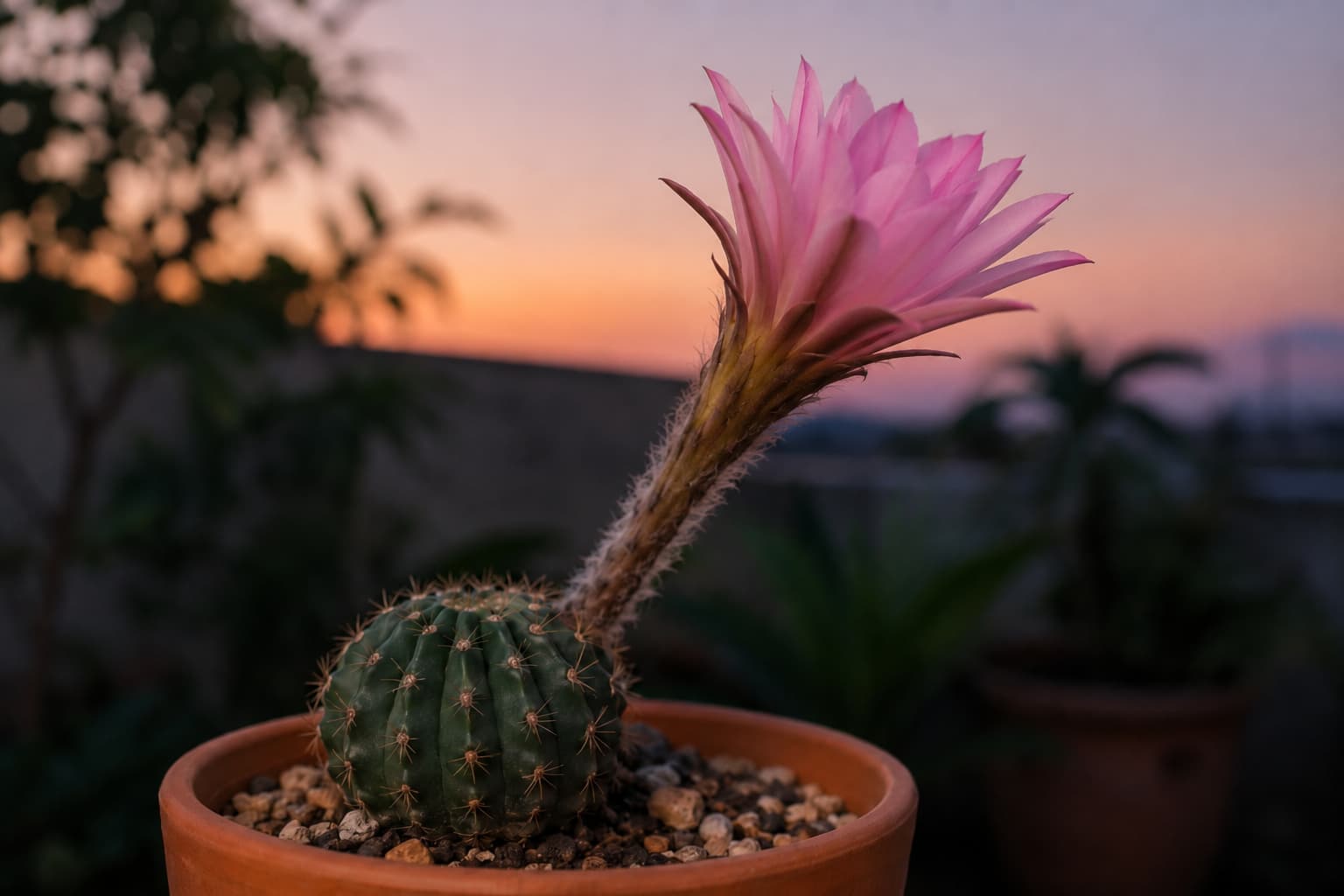
- Day of bloom: The flower opens at dusk or during the night, triggered by dropping light levels. The unfurling takes 30–60 minutes and is visible in real time. The fragrance — sweet, citrus-honey — is strongest in the first 2–3 hours.
- Peak bloom: The flower is fully open by late evening and remains open through the night and into the next morning. By the following afternoon, it begins to wilt.
- Flower duration: 1–2 days total. Some species (especially white-flowered types) close by mid-morning. Pink and red hybrids may last slightly longer.
- Repeat blooming: A healthy, mature Echinopsis with proper dormancy may produce multiple flowers in waves throughout the summer — one or two at a time, with 2–4 weeks between flushes.
Don't Miss the Bloom — It's That Brief
If you work late or go away for the weekend during peak bloom season, you can easily miss it. Experienced growers set up time-lapse cameras or check their plants at dusk daily during the summer. The bloom is so brief and so beautiful that missing it feels like a genuine loss. Plan to be around in June and July.
Best Echinopsis Varieties for Indoor Growing
| Variety | Body Size | Flower | Notes |
|---|---|---|---|
| 'Dominos' | 3–4" globe | Deep red with golden center, 4–5" wide | One of the most reliable bloomers. More forgiving of imperfect dormancy. Excellent beginner Echinopsis. |
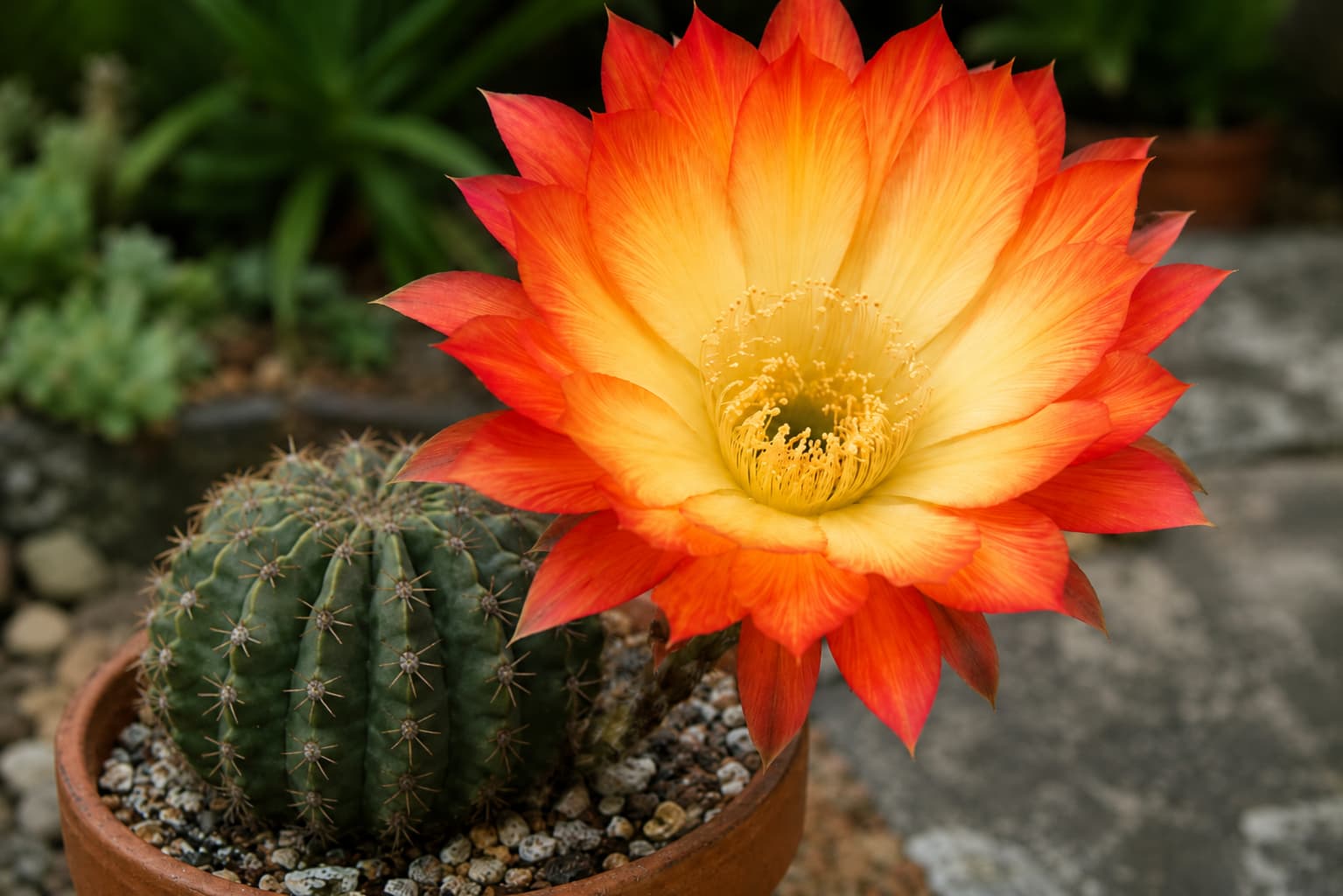
| 'Flying Saucer' | 4–6" barrel | Enormous — up to 7" wide. Bicolor: golden yellow base to flaming red/orange tips | One of the largest Echinopsis flowers. A showpiece. Needs strong light. |
| 'Pink Champagne' | 3–4" globe | Delicate candy pink with translucent petals, 3.5–4" | Subtle sparkle to petals in morning sun. Light citrus fragrance. Good rebloomer. |
| 'Golden Torch' | 4–8" columnar | Bright sunshine yellow, 4–5" | Slightly more columnar habit. Cheerful color. Multiple blooms per flush. |
| 'Los Angeles' | 4–5" globe | Enormous — up to 7". White and magenta bicolor | Hybrid from the renowned Schick collection. Exceptional flower-to-body ratio. Strong fragrance. |
| E. chamaecereus (Peanut Cactus) | 2–3" finger-like stems | Bright orange-red, 2–3" | Formerly Chamaecereus silvestrii. Clumping, easy, profuse bloomer. Very forgiving. |
Frequently Asked Questions
Why won't my Echinopsis bloom?
The #1 cause is no winter dormancy. Echinopsis needs 3–4 months of cold (45–55°F / 7–13°C) with almost no water to trigger flower bud formation. A warm living room with regular winter watering = healthy green cactus, zero flowers. Other causes: not enough light (needs 6+ hours direct), plant is too young (most Echinopsis need to be 3–5 years old before blooming), or over-fertilizing with nitrogen (pushes growth at the expense of flowers).
How do I give my Echinopsis a winter rest?
From November through February: move to a cool location at 45–55°F (7–13°C) — an unheated spare room, cool sunroom, or bright cool stairwell. The plant still needs light. Water lightly once every 4–6 weeks — just enough to prevent shriveling. Do not fertilize. In March, move back to warmth, resume watering gradually, and flower buds should appear within 4–8 weeks. See the dormancy section above for the full step-by-step.
Why is my Echinopsis growing tall and skinny?
This is etiolation — the plant is stretching for more light. It's permanent — the stretched portion will never shrink back. Move to a brighter window (south-facing) or add a grow light. Rotate the pot weekly to prevent leaning. If the plant is already etiolated, you can cut off the stretched top, let it callus, and root it as a new cutting. New growth in proper light will be compact and normal.
How long do Echinopsis flowers last?
1–2 days. The flowers open at dusk or during the night, peak through the night and following morning, and wilt by the next afternoon. This is normal — it's how the plant evolved to attract nocturnal hawkmoth pollinators. A healthy plant will produce multiple flowers in waves throughout the summer, so you'll get repeat performances. But each individual flower is heartbreakingly brief. Don't plan a vacation during peak bloom season.
Why did my Echinopsis turn soft and mushy?
Root rot from overwatering. This is the most common cause of Echinopsis death. The plant's body turns soft, yellow, or translucent; black spots may appear at the base. By the time you see these symptoms, the roots are already dead. If only the base is affected, you may be able to cut off the healthy top portion, let it callus, and root it. Prevention: use very well-drained cactus mix, terracotta pots with drainage holes, and water only when the soil is completely dry.
Can Echinopsis grow in a terrarium?
Not recommended. Terrariums trap humidity and lack drainage — two things that kill cacti quickly. Echinopsis needs excellent air circulation and soil that drains instantly. A terrarium creates the exact opposite conditions. If you want a decorative container, use an open bowl or dish with drainage holes and a very gritty, fast-draining mix.
Is Echinopsis toxic to cats or dogs?
No — Echinopsis is non-toxic. The danger is physical, not chemical: the spines can cause injury if a curious pet paws at or mouths the plant. Keep cacti out of reach of pets for this reason, not because of toxicity. Unlike euphorbias (which contain irritant latex sap), Echinopsis poses no poisoning risk.
What's the difference between Echinopsis and Trichocereus?
Taxonomically, it depends on which botanist you ask. Many authorities now classify the former Trichocereus (including the San Pedro cactus) within Echinopsis. For the home grower: Trichocereus types are large, columnar, day-blooming, and often grown outdoors. Echinopsis types (in the narrow sense) are small, globular, night-blooming, and perfect for windowsills. When shopping, check the mature size — a plant labeled "Echinopsis" could be a 4-inch globe or a 20-foot column.
Sources & Further Reading:
- Royal Horticultural Society — Echinopsis Growing Guide
- Missouri Botanical Garden — Echinopsis Plant Finder
- Cactus and Succulent Society of America — Echinopsis Hybrids and Care
- University of Washington — Echinopsis Indoor Culture
- Schick Echinopsis Hybrids — Reference Collection
- ASPCA — Toxic and Non-Toxic Plants List
Final Thoughts
Echinopsis is a cactus that rewards patience with one of the most spectacular displays in the plant world — but only if you give it what it actually needs. The formula isn't complicated, but it is specific: blazing summer sun, gritty fast-draining soil, careful watering, and — critically — a cold, dry winter rest. Skip the dormancy and you get a nice green cactus that never flowers. Get it right and you get a 6-inch neon trumpet that stops you in your tracks every summer evening.
Here's what to remember:
- Winter dormancy is non-negotiable for blooms. 45–55°F, almost no water, 3–4 months.
- Bright direct light year-round. South or west window, or add a grow light.
- Gritty, fast-draining soil in terracotta pots. 50% mineral grit minimum.
- Water only when bone-dry in summer; almost never in winter. Overwatering = rot = death.
- Flowers last 1–2 days. Be there to see them. Set a time-lapse if you can't.
- Etiolation is permanent. Fix low light before the plant stretches.
If you found this guide helpful, you might also enjoy our guide on How to Make Organic Neem Spray — because even cacti get mealybugs sometimes.