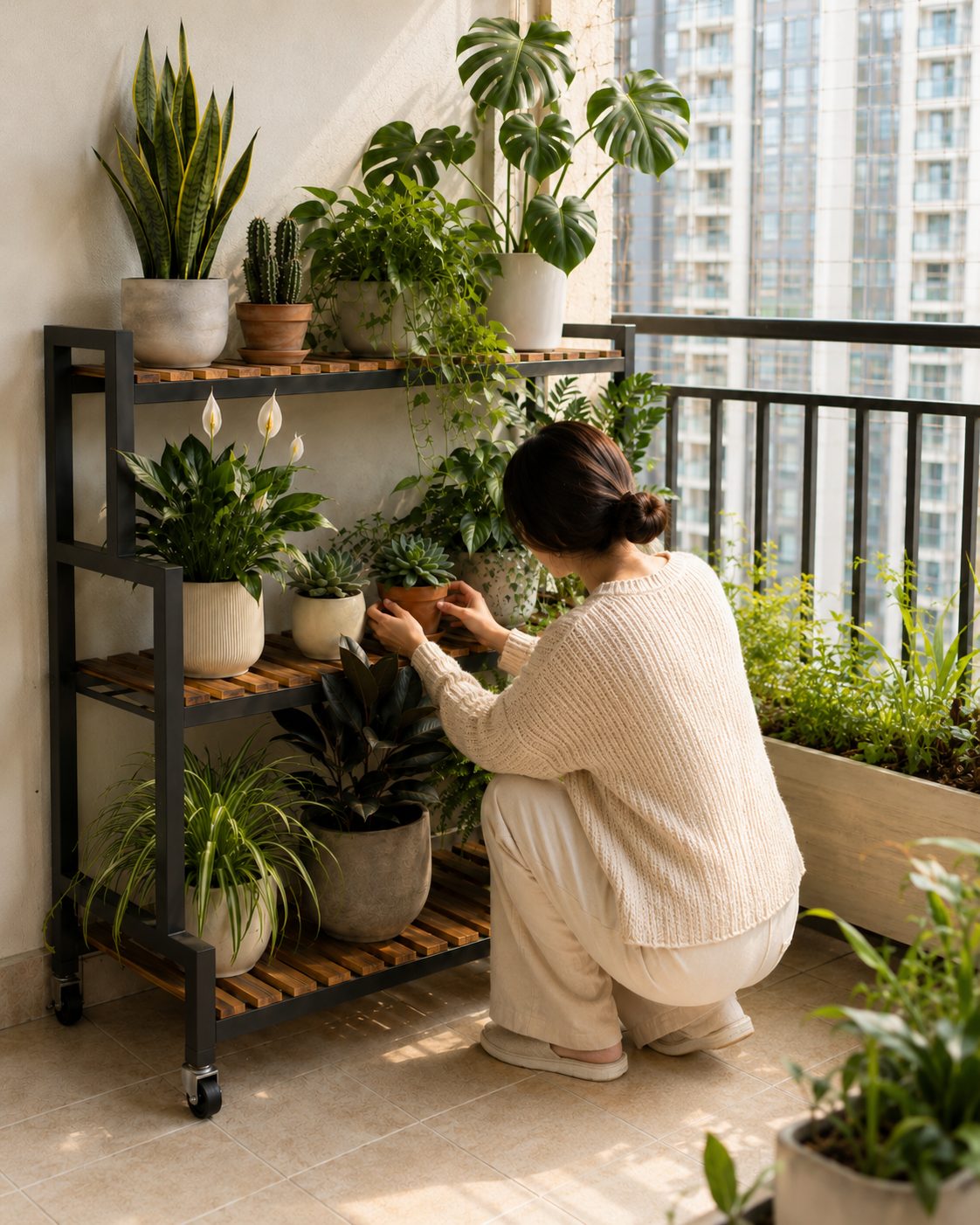
Golden Barrel and Mammillaria Care Guide for Beginners
Quick Summary
Golden Barrel cactus (Echinocactus grusonii) and Mammillaria (Pincushion cactus) are two of the most popular indoor cacti for beginners — and for good reason. They're sculptural, low-maintenance, and nearly impossible to kill through neglect. But nearly everyone kills their first one through overwatering. And most indoor specimens never bloom because they don't get a winter dormancy period. This guide covers both plants side by side: how to water them correctly, how to give them the winter rest that triggers flowering, why Golden Barrel is critically endangered in the wild (and why you should buy nursery-grown only), and how to fix the three most common problems: yellowing, etiolation, and rot.
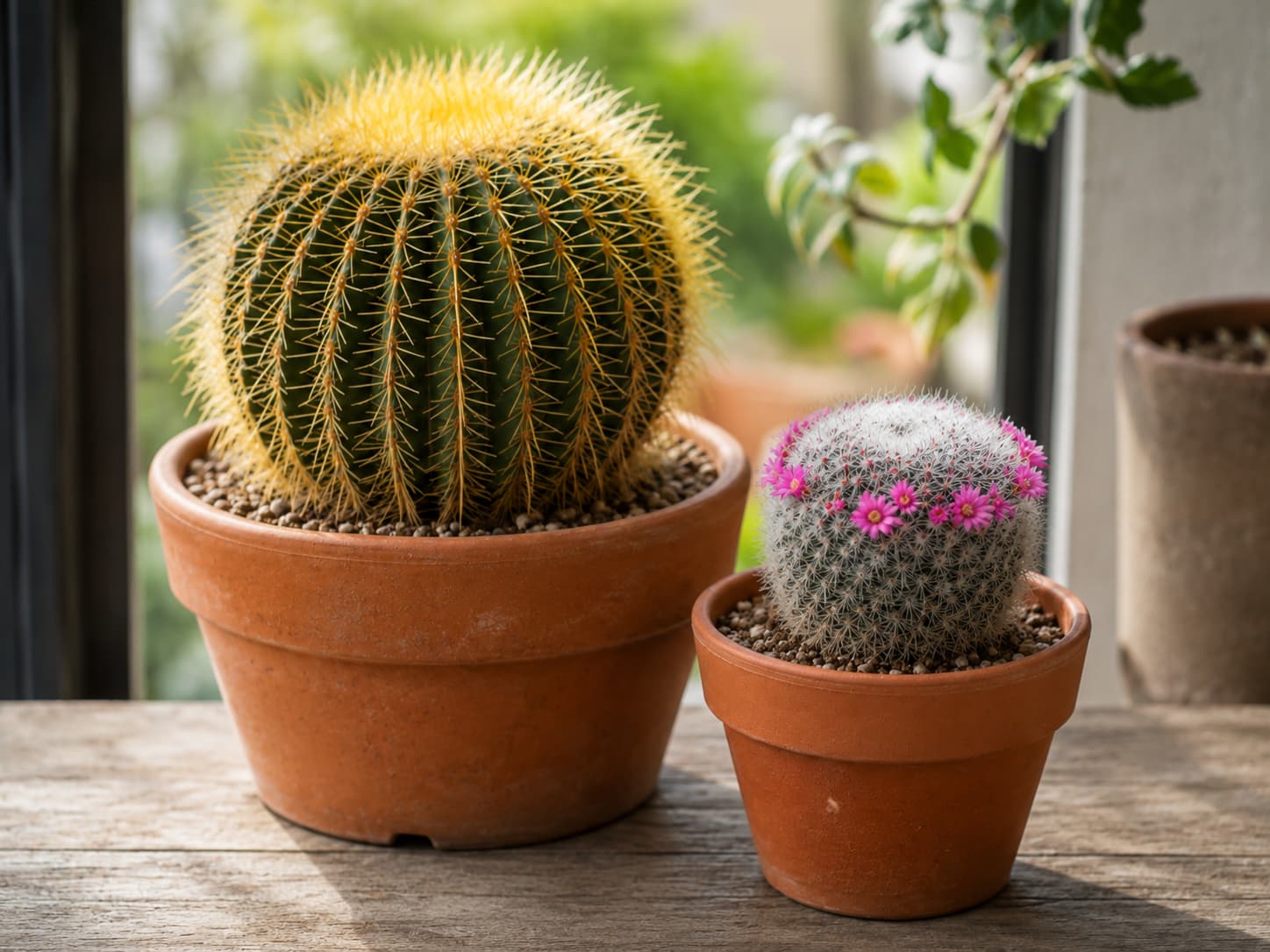
Meet the Cacti: Golden Barrel & Mammillaria
Golden Barrel Cactus (Echinocactus grusonii)
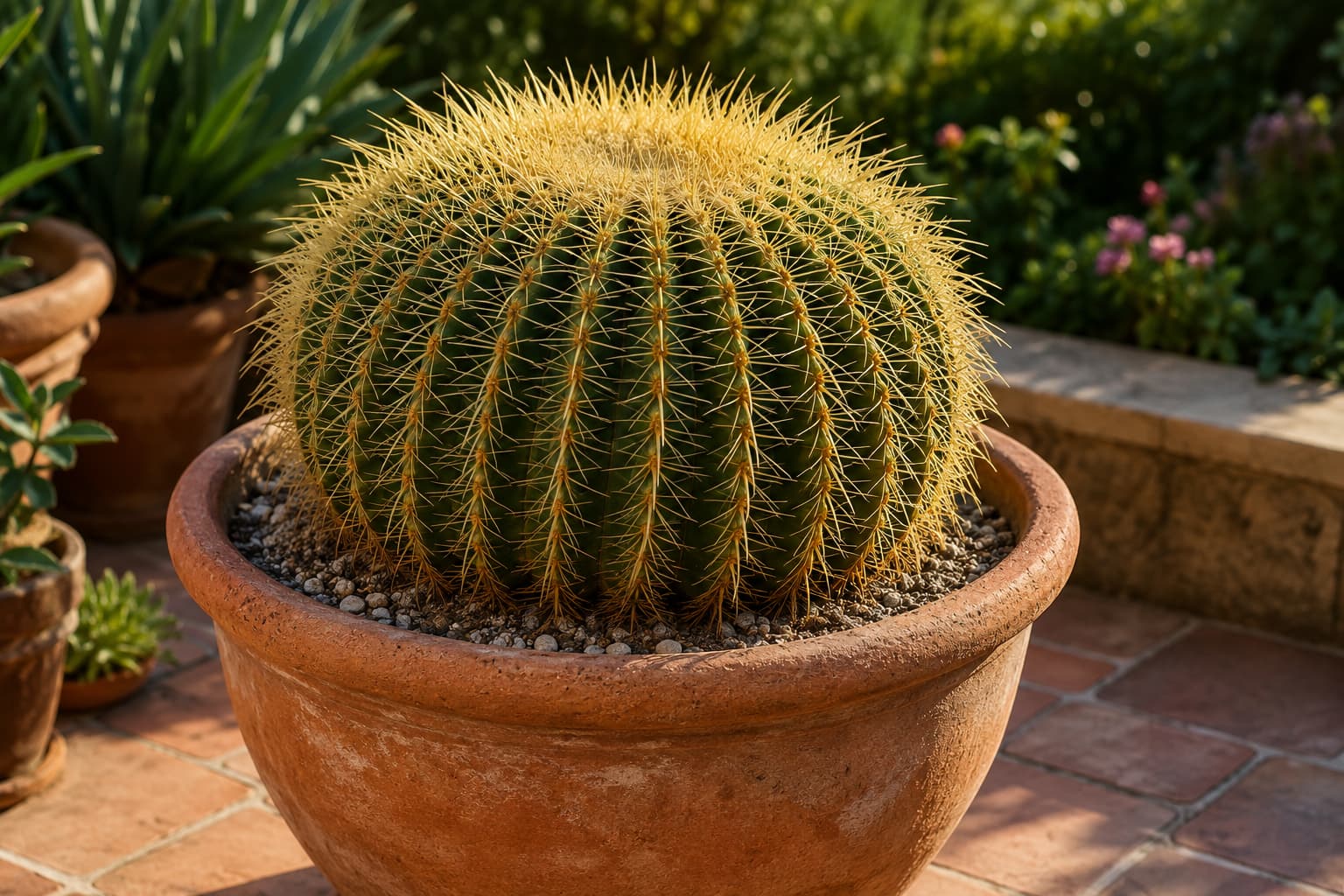
The Golden Barrel is the cactus everyone pictures when they think "cactus" — a perfectly round, ribbed globe covered in golden-yellow spines, eventually reaching the size of a beach ball. It's native to a single small region in central Mexico, where it grows on volcanic rock slopes in full desert sun.
Here's something most guides don't mention: Golden Barrel cactus is critically endangered in the wild. It's listed as Endangered on the IUCN Red List. The construction of the Zimapán Dam in the 1990s flooded much of its remaining native habitat, and wild populations have been decimated by illegal collection. Every Golden Barrel sold in a nursery today is cultivated — no wild collection is involved — but the species exists in the wild now only in a few protected locations. When you buy a Golden Barrel from a reputable nursery, you're not harming wild populations, but it's worth knowing the backstory of the plant on your windowsill.
In cultivation, it's extremely slow-growing — about 1 inch per year — and can live for 30+ years. It rarely flowers indoors, requiring 20+ years of age, full sun, and proper winter dormancy to produce the small yellow flowers that appear in a ring around the crown. Most indoor Golden Barrels are grown purely for their sculptural form.
Mammillaria (Pincushion Cactus)
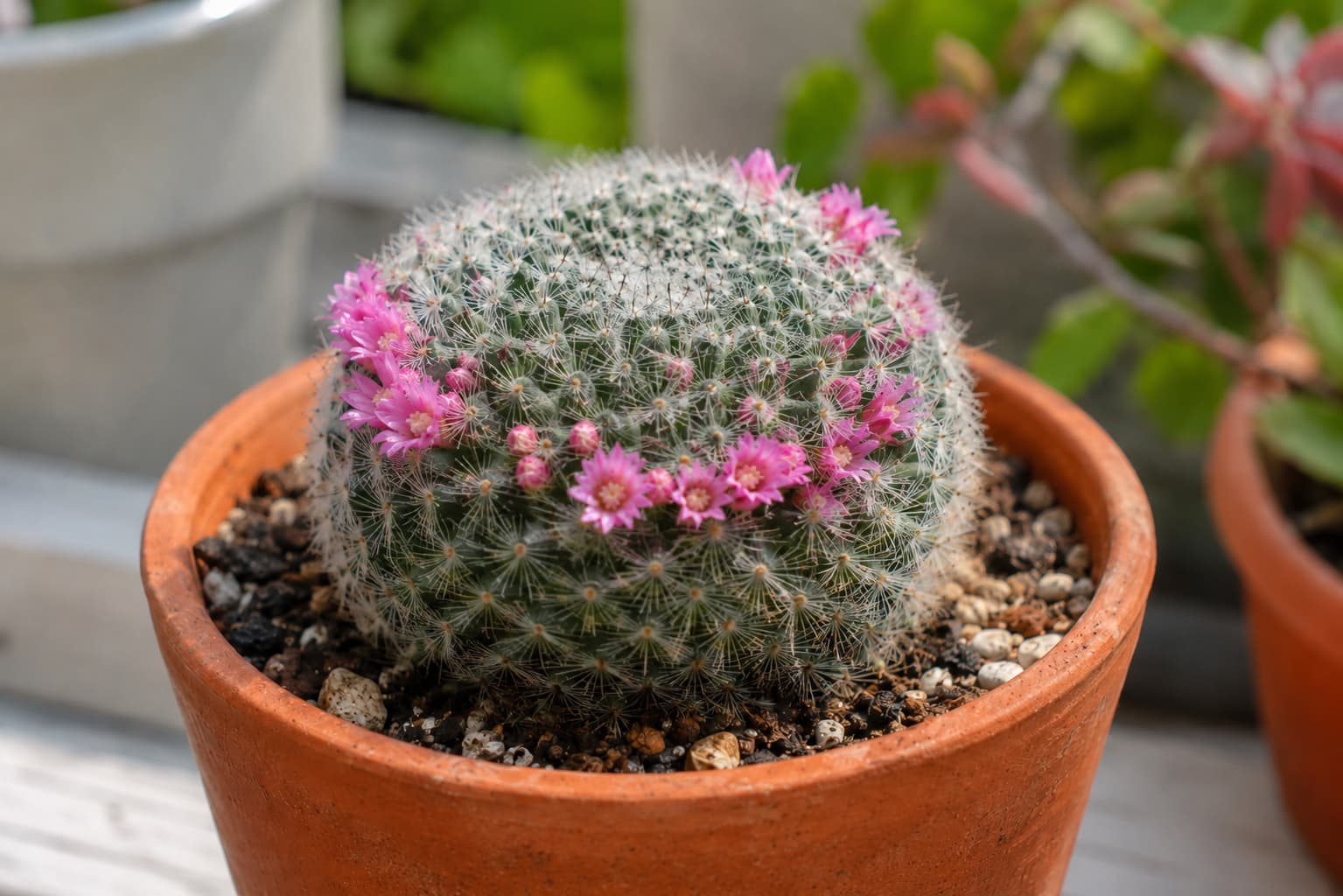
Mammillaria is the largest cactus genus with over 200 recognized species, native from the southwestern United States through Mexico and into Central America and the Caribbean. They're called "pincushion cacti" because their surface is covered in small, regularly spaced tubercles (nipple-like projections) rather than continuous ribs. The spines emerge from the tips of these tubercles, creating a textured, geometric surface.
Unlike Golden Barrels, Mammillarias bloom readily indoors — and their flowers are one of the best reasons to grow them. A healthy Mammillaria with proper light and winter rest produces a crown of small, bright flowers — pink, white, red, or yellow — in a ring around the top of the plant in spring or early summer. The flowers are followed by small, colorful, chili-pepper-shaped fruits that persist for months.
Mammillarias offset (produce pups) freely, making them easy to propagate and share. They stay compact — most species stay under 6 inches tall — making them perfect for windowsills and small spaces.
At-a-Glance Comparison
| Feature | Golden Barrel | Mammillaria |
|---|---|---|
| Scientific Name | Echinocactus grusonii | Mammillaria spp. (200+ species) |
| Growth Habit | Single globe; rarely offsets | Compact; offsets readily from base or sides |
| Growth Rate | Very slow — ~1 inch per year | Slow to moderate |
| Mature Size | Up to 3 ft wide (in 30+ years) | 2–6 inches tall; clumping |
| Light Needs | Full sun — 6+ hours direct | Bright to full sun — 4+ hours direct |
| Flowering Indoors | Rare — requires 20+ years + dormancy | Common — flower crown in spring with dormancy |
| Watering (Summer) | Every 3–4 weeks | Every 2–3 weeks |
| Winter Dormancy | Required for health; 50–60°F, dry | Required for blooms; 45–55°F, dry |
| Propagation | Seed only (offsets extremely rare) | Offsets/pups — very easy |
| Best Pot | Heavy terracotta or stone (plant gets heavy) | Terracotta, 4–6 inches wide |
| Conservation Status | Endangered (IUCN Red List) | Some species threatened; most common |
| Toxicity | Non-toxic; spines are physical hazard | Non-toxic; spines are physical hazard |
Golden Barrel Cactus: Complete Care Guide
Light
Full sun — 6+ hours of direct light. This is the most important factor for a healthy, compact Golden Barrel. South-facing window is ideal. West-facing is second best. Without enough light, the plant elongates and loses its perfectly round shape. In low-light homes, a grow light is essential. Rotate the pot quarterly to maintain symmetry.
Soil
Use a very gritty, fast-draining cactus mix. A good DIY formula: 40% commercial cactus mix + 60% mineral grit (pumice, perlite, coarse sand, or crushed granite). The soil should drain completely within seconds of watering. Standard potting soil retains too much moisture and will rot the roots. Golden Barrels are native to volcanic scree slopes — they grow in almost pure mineral substrate in the wild.
Watering
Growing season (spring–fall): Water deeply once every 3–4 weeks, only when the soil is completely dry. Water in the morning. Do not let the pot sit in standing water. Winter dormancy: Water once every 6–8 weeks, if at all. A Golden Barrel in a cool location (below 55°F) can go the entire winter without water.
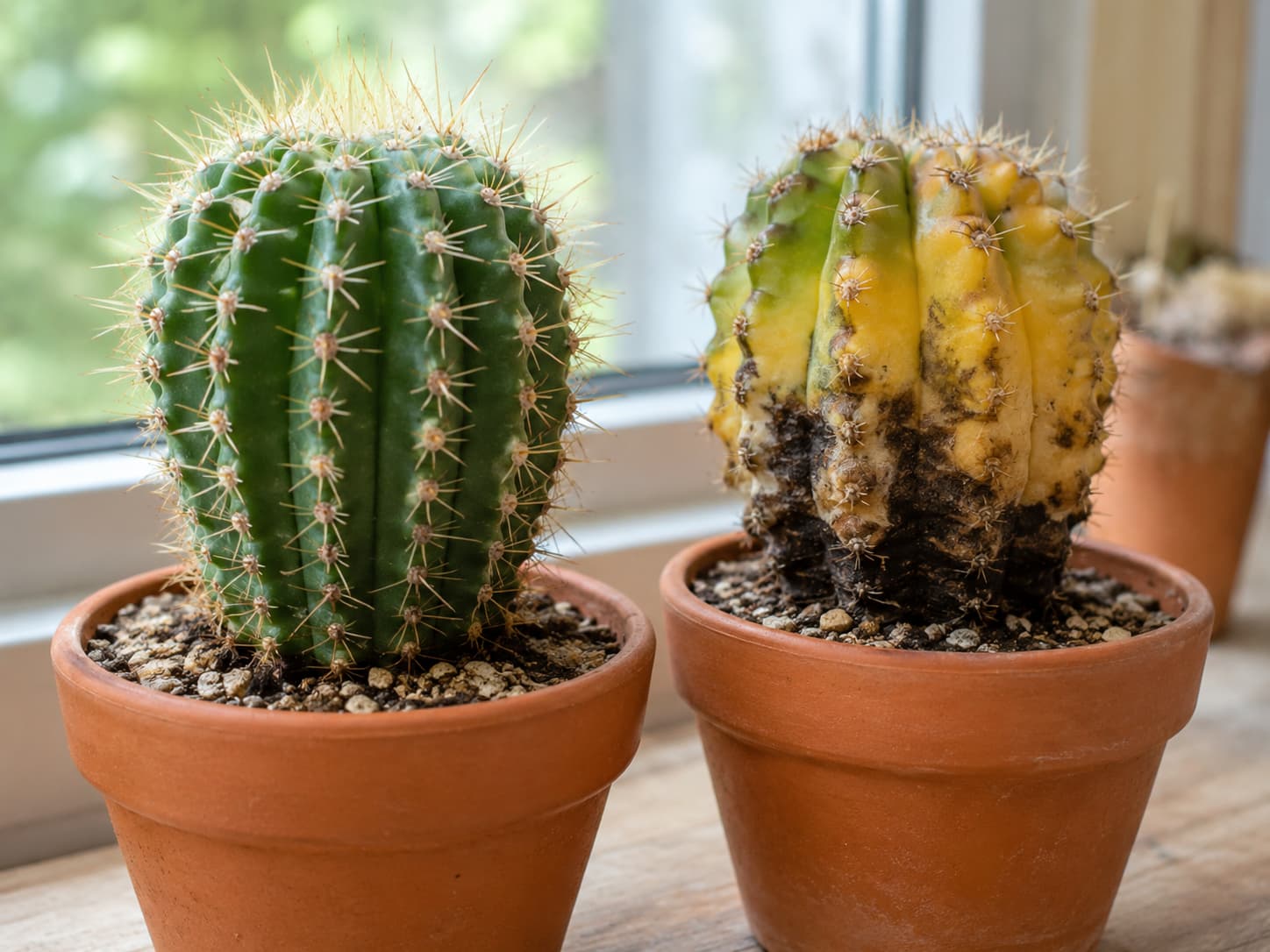
Signs of overwatering: yellowing skin, soft spots, blackening at the base — often fatal. Signs of underwatering: slight shriveling of the ribs, slower growth — easily fixed with a thorough watering.
Temperature
Growing season: 65–85°F (18–29°C). Winter dormancy: 50–60°F (10–15°C). Do not expose to frost. Below 30°F (-1°C), the plant will be damaged or killed.
Fertilizing
Feed once in early spring with a low-nitrogen cactus fertilizer (2-7-7 or similar) at half strength. One feeding per year is sufficient. Over-fertilizing pushes weak, elongated growth and reduces cold tolerance.
The Endangered Plant on Your Windowsill
Golden Barrel cactus is critically endangered in the wild — its native habitat in Hidalgo, Mexico was largely destroyed by dam construction. Every plant sold today is nursery-grown from seed. When buying, choose reputable nurseries that propagate their own stock. Your purchase helps maintain cultivated populations and reduces pressure on any remaining wild plants. Consider it a small act of conservation on your windowsill.
Mammillaria: Complete Care Guide
Light
Bright to full sun — at least 4 hours of direct light. Mammillarias are slightly more shade-tolerant than Golden Barrels but bloom best with maximum light. South or west-facing window. Insufficient light causes etiolation (stretching) and prevents flowering.
Soil
Same as Golden Barrel: very gritty, fast-draining cactus mix. Mammillarias have fine, shallow root systems that rot quickly in heavy soil. Aim for at least 50% mineral grit in your mix. A layer of small gravel or coarse sand on top of the soil helps prevent the plant body from sitting on damp organic matter.
Watering
Growing season (spring–fall): Water every 2–3 weeks when the soil is completely dry. Mammillarias use slightly more water than Golden Barrels because they're actively growing and flowering. Winter dormancy: Water once every 4–6 weeks — just enough to prevent shriveling. In a cold location (below 50°F), do not water at all.
Temperature
Growing season: 60–80°F (16–27°C). Winter dormancy: 45–55°F (7–13°C) — this is the temperature range that triggers spring flowering. Tolerates brief cold to 40°F (5°C). Protect from frost.
Fertilizing
Feed every 6–8 weeks during the growing season with a low-nitrogen cactus fertilizer at half strength. Stop fertilizing from October through March. Avoid high-nitrogen formulas — they push green growth at the expense of flowers.
The Winter Dormancy Both Cacti Need
This is the most important care concept for both Golden Barrel and Mammillaria, and the one most beginners get wrong. Both cacti evolved in regions with distinct seasonal cycles: warm, occasionally wet summers for growth, followed by cold, bone-dry winters for rest. This winter rest period is not a suggestion — it's a physiological requirement.
Without dormancy: the plant continues slow growth year-round, becomes more susceptible to rot and pests, and never receives the environmental trigger to flower (for Mammillaria). With proper dormancy: the plant hardens off, builds reserves, and produces flowers in spring.
How to Give Your Cacti a Winter Rest
- Timing: Roughly November through February — 3–4 months of rest.
- Temperature for Golden Barrel: Move to a cool location at 50–60°F (10–15°C).
- Temperature for Mammillaria: Move to a cooler location at 45–55°F (7–13°C) — this lower temperature range triggers flower bud formation.
- Light: Both still need bright light during dormancy. A cool south-facing windowsill, unheated sunroom, or cool room with a grow light all work.
- Water: Golden Barrel — almost none (every 6–8 weeks, or not at all). Mammillaria — very little (every 4–6 weeks, or not at all if below 50°F).
- No fertilizer from October through March.
- Transition back gradually in spring. Move to warmth, increase watering slowly, and resume feeding. Flowers should appear within 4–8 weeks.
The Cold + Wet = Death Rule
This is the single most important cactus rule: cold + moisture = rot. A cactus in a cool room in winter must be kept dry. The combination of low temperature and damp soil is lethal. If you can't provide a cool location, keep the cactus in its normal spot but stop watering entirely from November to February — a dry rest at room temperature is better than no rest at all.
The #1 Killer: Overwatering and Root Rot
More indoor cacti die from overwatering than from all other causes combined. Here's how to recognize it before it's too late:
Early Signs
- Plant body turns slightly yellow or translucent, especially near the base
- Skin feels soft or spongy when gently pressed
- Growth slows or stops despite good light
- Soil stays damp for more than a few days after watering
Late Signs (Often Fatal)
- Black or dark brown soft spots at the base
- Plant collapses or leans over
- Foul smell from the soil
- Roots are brown, mushy, and disintegrate when touched
What to Do
- Unpot immediately. Remove all soil from the roots.
- Cut away all brown, mushy roots with a clean, sharp knife. Healthy roots are white or light tan and firm.
- If rot has reached the plant body, cut above the rot into clean, healthy tissue. Let the cut surface callus over in a dry, shaded spot for 1–2 weeks.
- Repot in fresh, dry cactus mix in a clean terracotta pot with drainage holes. Do not water for at least 2 weeks after repotting.
- If the rot has spread through most of the plant body, the cactus cannot be saved. Compost it and start fresh — with better watering habits.
The Finger Test
Before watering any cactus, stick your finger into the soil up to the second knuckle. If you feel any moisture, do not water. Cacti evolved to go weeks or months without water. They will not die from drought — they will die from rot. When in doubt, wait another week.
Etiolation: Why Your Cactus Is Stretching
Etiolation is the technical term for what happens when a cactus doesn't get enough light: it stretches toward the light source, becoming thin, pale, and elongated instead of staying compact. A Golden Barrel that should be a perfect globe starts looking like a light bulb. A Mammillaria that should be a dense pincushion becomes a thin column.
Etiolation is permanent. The stretched portion will never thicken to match the rest of the plant. If you fix the light, new growth will be normal, but the plant will have a permanent narrow "waist" or "neck."
How to Fix
- Move to brighter light immediately. South or west window. Add a grow light if needed.
- For Golden Barrel: You can't easily cut and reroot a globe cactus. Accept the shape or start over with a new plant in better light.
- For Mammillaria: You can cut off the etiolated top, let it callus, and root it. The base will produce new offsets. Or simply improve the light and accept the odd shape.
- Prevention: Rotate pots weekly for even growth. Monitor for leaning — it's the first sign the plant is reaching for more light.
Propagation: Offsets, Seeds, and Pups
Golden Barrel — Seed Only (Very Slow)
Golden Barrels almost never produce offsets. Propagation is by seed, which requires patience: sow on the surface of moist, sterile cactus mix, cover with clear plastic, keep at 70–80°F in bright indirect light. Germination takes 2–6 weeks. Seedlings grow about ¼ inch per year for the first few years. Most home growers buy established plants rather than starting from seed.
Mammillaria — Offsets (Very Easy)
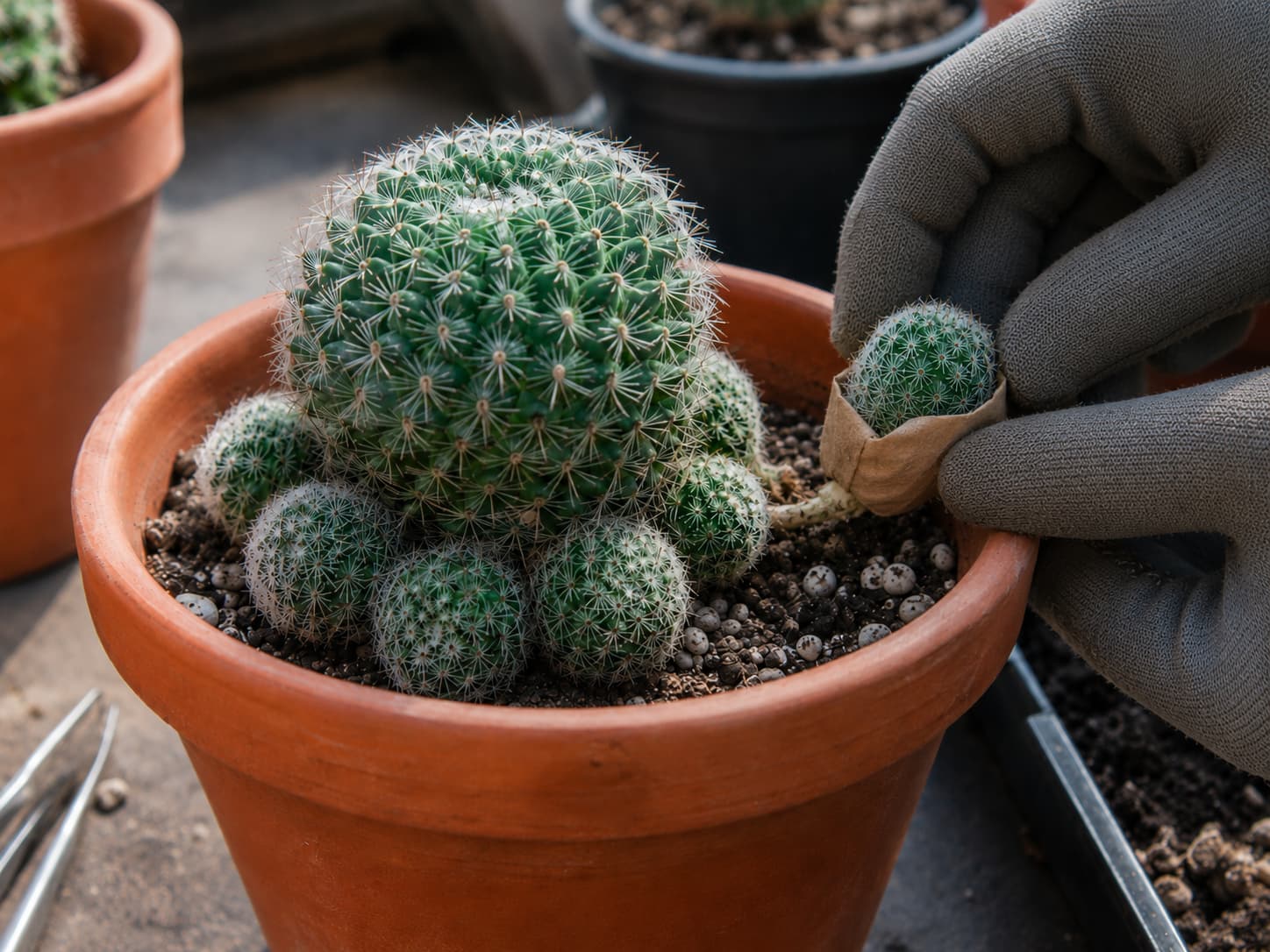
- Wait until the offset (pup) is at least ⅓ the size of the parent plant.
- Using clean tweezers or gloved hands, gently twist the offset at its base until it detaches. It should come off cleanly with a small root nub.
- Let the offset dry in a shaded spot for 2–3 days until the wound calluses over.
- Place on top of dry cactus mix in a small pot. Do not bury deeply — just enough to hold it upright.
- Do not water for 2 weeks. The offset needs to develop roots before it can absorb water. Watering too soon causes rot.
- After 2 weeks, water lightly. Roots should be developing. Treat as a normal cactus after that.
Frequently Asked Questions
How often should I water my Golden Barrel cactus?
Every 3–4 weeks during the growing season (spring–fall), only when the soil is completely dry. In winter dormancy, every 6–8 weeks — or not at all if the plant is in a cool location below 55°F. Overwatering is the #1 cause of death. When in doubt, wait another week.
Will my Mammillaria flower indoors?
Yes — Mammillaria is one of the most reliable indoor-blooming cacti. It needs bright light (4+ hours direct) and a winter dormancy period at 45–55°F with almost no water for 3–4 months. Flowers appear in a ring around the crown in spring. Without dormancy, the plant stays healthy but rarely blooms.
Why is my Golden Barrel turning yellow?
The most common cause is overwatering — the roots are rotting. Check the soil: if it's damp, unpot immediately and inspect the roots. Other causes: too much direct sun too quickly (sunburn — if you just moved it from shade to full sun), nutrient deficiency (rare in properly fed plants), or natural aging of the oldest, lowest part of the plant (the base yellows slightly with age — this is normal if the rest of the plant is firm and green).
Is Golden Barrel cactus really endangered?
Yes — critically endangered in the wild. It's listed as Endangered on the IUCN Red List. Its native habitat in Hidalgo, Mexico was largely destroyed by the Zimapán Dam in the 1990s. Every plant sold in nurseries today is cultivated from seed — no wild collection. When you buy a nursery-grown Golden Barrel, you're supporting cultivated populations. Never buy plants of unknown origin or those that appear to be wild-collected.
Can I grow Golden Barrel and Mammillaria together in one pot?
Not recommended. Golden Barrels grow very slowly but eventually become large and heavy (up to 3 feet wide). Mammillarias offset quickly and will be crowded out. They also have slightly different watering needs and winter temperature requirements. Give each its own pot for best results.
Why is my cactus growing tall and skinny?
This is etiolation — the plant is stretching for more light. Move to a brighter window or add a grow light. The stretched growth is permanent and will never thicken. For Mammillaria, you can cut off the etiolated top and root it. For Golden Barrel, improve the light and accept the shape, or start over. Rotate pots weekly to prevent leaning.
Are these cacti toxic to cats or dogs?
No — both Golden Barrel and Mammillaria are non-toxic. The danger is physical: the spines can cause injury if a pet paws at or mouths the plant. Keep cacti out of reach of curious pets. Unlike some euphorbias (which contain toxic latex sap), these true cacti pose no poisoning risk.
What's the best pot for indoor cacti?
Terracotta or unglazed clay pots with drainage holes. Terracotta wicks moisture away from the roots, reducing rot risk. Plastic pots retain water and are riskier for beginners. For Golden Barrels, choose a heavy pot — the plant gets surprisingly weighty as it grows. For Mammillaria, a standard 4–6 inch terracotta pot is perfect. Always use pots with drainage holes — no exceptions.
Sources & Further Reading:
- IUCN Red List — Echinocactus grusonii (Golden Barrel Cactus) Conservation Status
- Royal Horticultural Society — Echinocactus Growing Guide
- Royal Horticultural Society — Mammillaria Growing Guide
- Missouri Botanical Garden — Echinocactus grusonii Plant Finder
- Cactus and Succulent Society of America — Indoor Cactus Culture
- ASPCA — Toxic and Non-Toxic Plants List
Final Thoughts
Golden Barrel and Mammillaria are the perfect entry points into cactus growing — sculptural, forgiving, and deeply satisfying. The Golden Barrel is a slow-motion sculpture that will outlive you. The Mammillaria is a cheerful little bloomer that rewards you with a flower crown every spring. Both ask for the same three things: bright light, gritty fast-draining soil, and a cold dry winter rest. Get those right, and the biggest challenge will be resisting the urge to water them.
Here's what to remember:
- Overwatering kills. When in doubt, don't water. Check the soil with your finger first.
- Winter dormancy is required — not optional. Cold + dry for 3–4 months triggers health and blooms.
- Etiolation is permanent. Bright light from day one prevents stretching.
- Terracotta pots with drainage holes only. Plastic retains water and increases rot risk.
- Golden Barrel is endangered in the wild. Buy nursery-grown only. Your purchase supports conservation.
- Both are non-toxic. Spines are the only hazard — keep away from curious pets.
If you found this guide helpful, you might also enjoy our guide on Echinopsis: The Firework Bloomers — for when you're ready for a cactus with truly spectacular flowers.