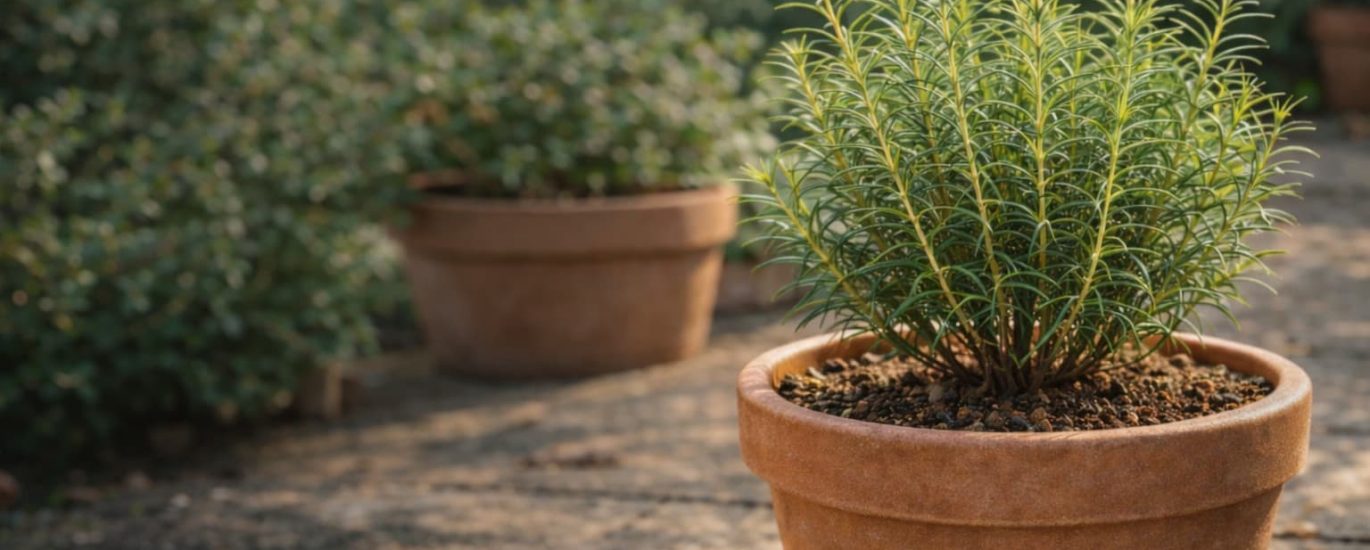
Growing rosemary in pots isn’t a compromise.
For many gardeners, it’s the most reliable way to grow healthy, long-lived plants—especially in small spaces.
Once you get container basics right, rosemary becomes one of the easiest herbs to maintain.
Choosing the Right Soil for Potted Rosemary
Soil matters more in containers than in the ground.
Rosemary roots hate sitting in moisture, and compact soil is the fastest way to kill a potted plant.
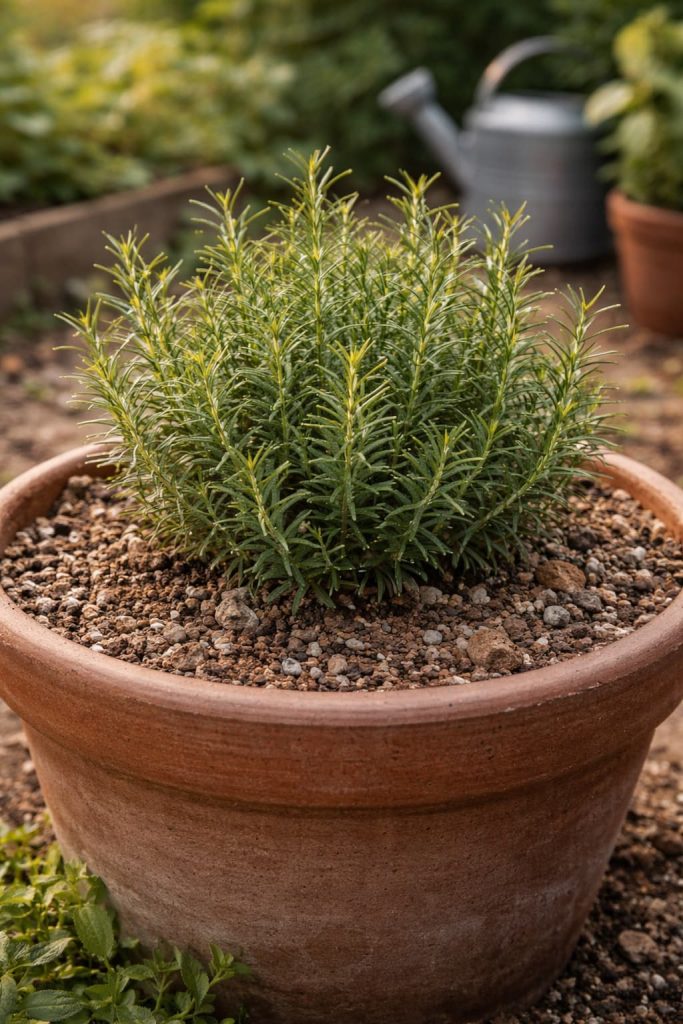
Best soil mix for containers
Use a fast-draining blend, such as:
- 1 part potting soil
- 1 part coarse sand or perlite
- 1 part grit or small gravel (optional but ideal)
Avoid:
- Heavy garden soil
- Moisture-retaining “indoor plant” mixes
- Coconut coir–heavy blends
If water doesn’t drain within seconds, the mix is too dense.
How Often to Water Rosemary in Pots
This is where most container-grown rosemary fails.
The rule that actually works
Water deeply, then wait.
Before watering again:
- Top 2–3 inches of soil should feel completely dry
- The pot should feel noticeably lighter when lifted
In most climates:
- Summer: every 7–10 days
- Spring/Fall: every 10–14 days
- Winter: even less
Yellow leaves, drooping growth, or weak aroma usually mean too much water, not too little.
Sunlight: Containers Give You an Advantage
One major benefit of container growing is mobility.
Ideal light conditions
- 6–8 hours of direct sun
- South- or west-facing exposure
- Morning sun + afternoon brightness works well
If light is limited:
- Move pots seasonally
- Rotate pots weekly for even growth
Potted rosemary that gets enough light stays:
- Compact
- Aromatic
- Less woody over time
Fertilizing Rosemary in Containers (Less Is More)
Rosemary is a Mediterranean plant.
It prefers lean conditions, even in pots.
Fertilizer guidelines
- Use diluted liquid fertilizer once in spring
- Optional second feeding in early summer
- Skip fertilizing in fall and winter
Too much fertilizer causes:
- Fast, weak growth
- Reduced flavor
- Poor long-term structure
Healthy rosemary should grow slowly and steadily, not rapidly.
Pruning Potted Rosemary for Shape and Health
Regular pruning keeps container plants compact and productive.
When and how to prune
- Begin once the plant reaches 8–10 inches tall
- Trim soft green growth only
- Never cut into woody stems
Best times:
- Late spring
- Early summer
Frequent light pruning:
- Encourages bushy growth
- Prevents leggy containers
- Improves air circulation
✂️ Internal link opportunity:
→ How to Prune Rosemary for Stronger Growth
Common Container Problems (And How to Fix Them)
Rosemary looks healthy but isn’t growing
- Usually light-related
- Move to a brighter location
- Reduce watering slightly
Leaves turning yellow
- Drainage issue
- Soil staying wet too long
- Check pot holes + soil mix
Plant becoming woody and sparse
- Not enough pruning
- Too little sunlight
- Overcrowded pot
Most container problems are environmental, not disease-related.
When to Repot Rosemary
Rosemary doesn’t need frequent repotting, but it does need space.
Signs it’s time to repot
- Roots circling the bottom
- Water running straight through
- Growth slowing despite good care
Repot every 2–3 years, stepping up only one pot size at a time.
Spring is the safest season to repot.
Final Thoughts: Why Containers Often Work Better
For small-space gardeners, containers offer:
- Better drainage control
- More sunlight flexibility
- Easier seasonal protection
- Healthier long-term plants
When grown in the right pot, soil, and light, rosemary in containers can thrive for many years.