Best Chrysanthemum Varieties for Tea
Beginner-friendly tea chrysanthemum types for home gardens, containers, and small harvests — with safety notes for growing flowers you plan to steep.
Not every chrysanthemum belongs in a teacup. Many garden mums are bred for color, size, and display, while tea chrysanthemums are valued for gentle aroma, clean drying, and a balanced floral infusion.
For home gardeners in the U.S., Canada, the U.K., and Europe, the most important choice is not only the variety name. It is also the source. Flowers used for tea should be grown for edible or herbal use, not purchased as ordinary florist plants or heavily treated ornamentals.
This guide focuses on beginner-friendly tea chrysanthemum choices and how to think about them realistically: which types are best for tea, which are better for practice, and which ones are not worth the risk.
Quick Answer
The best chrysanthemum varieties for tea are usually traditional tea types of Chrysanthemum morifolium, especially Hang Baiju or Hangju-style tea chrysanthemums and Gongju-style chrysanthemums. Small-flowered, untreated garden chrysanthemums may be used only when they are confirmed safe and grown without unsuitable sprays.
- Best overall: Hang Baiju / Hangju-style tea chrysanthemum
- Best aroma: Gongju-style chrysanthemum
- Best beginner practice plant: small-flowered, untreated garden chrysanthemum
- Use with caution: Boju, Chuju, Huaiju, and other traditional medicinal types
- Avoid: florist mums, dyed flowers, exhibition mums, and plants treated with systemic pesticides
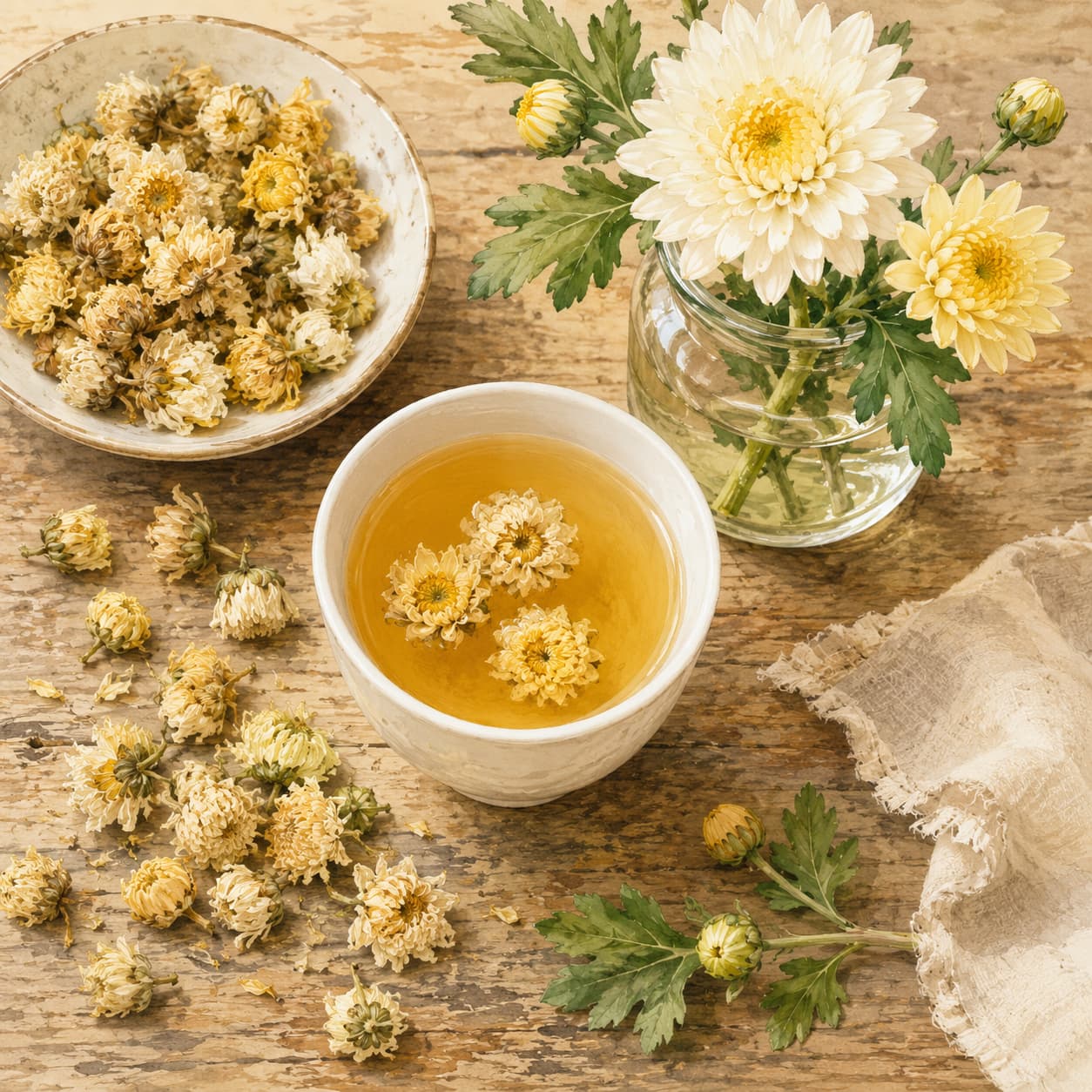
Safety first: this article is for gardening and educational use, not medical advice. Chrysanthemum tea may not be suitable for everyone, especially people with allergies to plants in the daisy family or anyone taking medication. When in doubt, ask a qualified health professional.
Do not use flowers from florists, ordinary garden-center displays, roadsides, or unknown sources for tea. They may have been treated with chemicals not intended for food use.
What makes a chrysanthemum suitable for tea?
A good tea chrysanthemum is not always the largest or showiest flower. In fact, very dense exhibition blooms are often less practical for home drying.
Clean growing
Choose plants grown for edible, herbal, or tea use, and avoid unsafe sprays.
Pleasant aroma
Tea-friendly flowers should smell naturally floral, not harsh or musty.
Easy drying
Medium or small blooms dry more evenly than very large, packed flowers.
Manageable growth
For beginners, compact or medium plants are easier in containers and small gardens.
1
Chrysanthemum morifolium
Best starting point for traditional chrysanthemum flower tea.
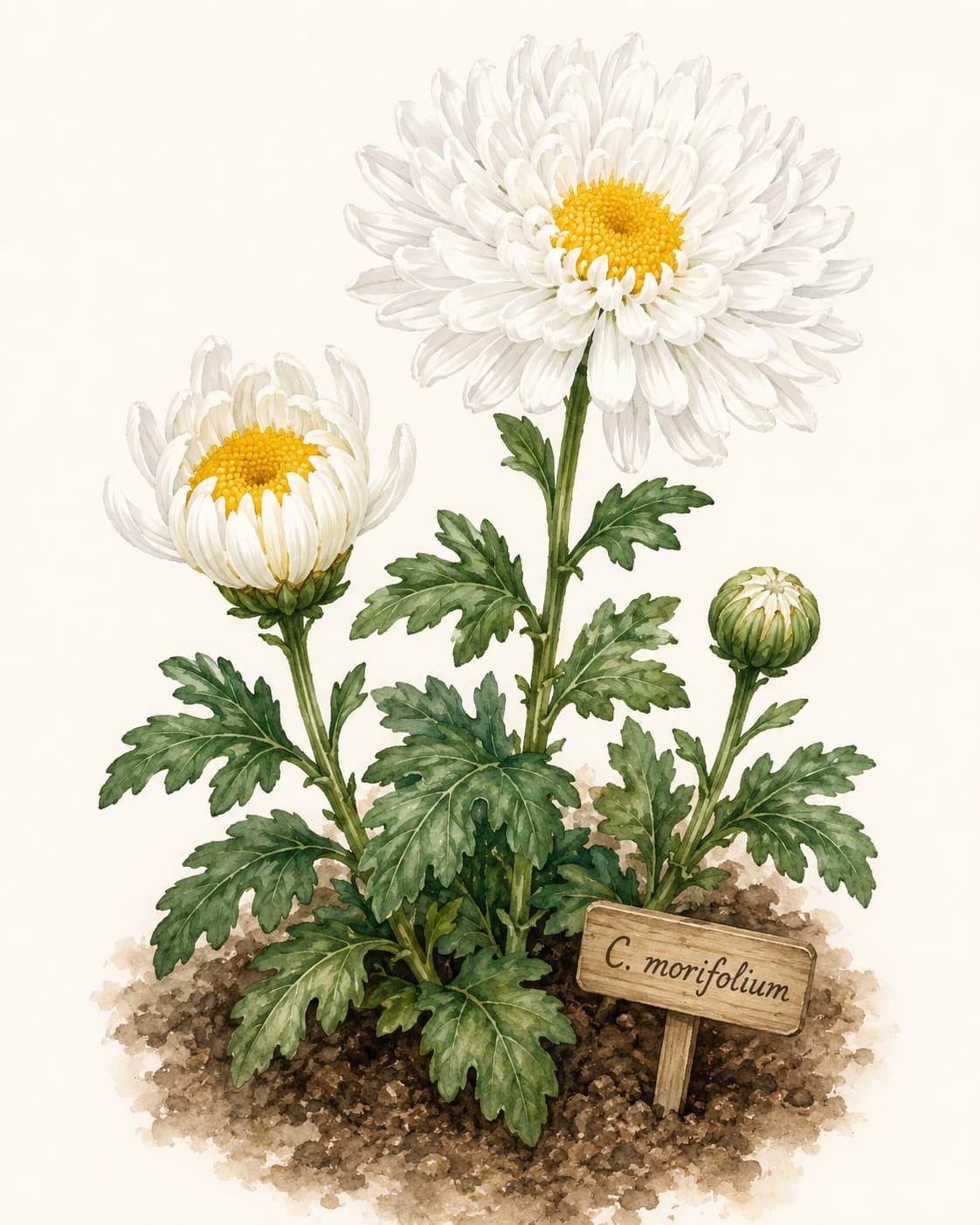
Chrysanthemum morifolium, often listed as Chrysanthemum × morifolium, is the main species behind many traditional chrysanthemum tea types. It is the name beginners will most often see when researching tea chrysanthemums.
This does not mean every garden mum labeled as Chrysanthemum morifolium is automatically suitable for tea. The plant still needs to be the right type and grown safely.
Best for
Traditional tea growing
Flower type
Usually white or yellow
Garden use
Beds or containers
Beginner level
Good if sourced well
Greenmuse tip
Look for suppliers that clearly use words such as tea chrysanthemum, edible chrysanthemum flower, Hang Baiju, Hangju, or Gongju. Avoid plants sold only as decorative mums.
2
Hang Baiju / Hangju
Best overall choice for a gentle, classic chrysanthemum tea.
Hang Baiju, often connected with Hangzhou or Tongxiang-style white chrysanthemum tea, is one of the most familiar traditional tea chrysanthemum types.
It is a strong choice for beginners because it is known for a clean floral aroma and a mild infusion. If you want a classic chrysanthemum tea experience, this is usually the best place to start.
Best for
Everyday floral tea
Flavor feel
Light and gentle
Drying
Good for small batches
Beginner level
Excellent
Garden notes
- Grow in full sun with good airflow.
- Use clean soil and avoid non-food-safe sprays.
- Harvest open flowers on a dry day after morning moisture has passed.
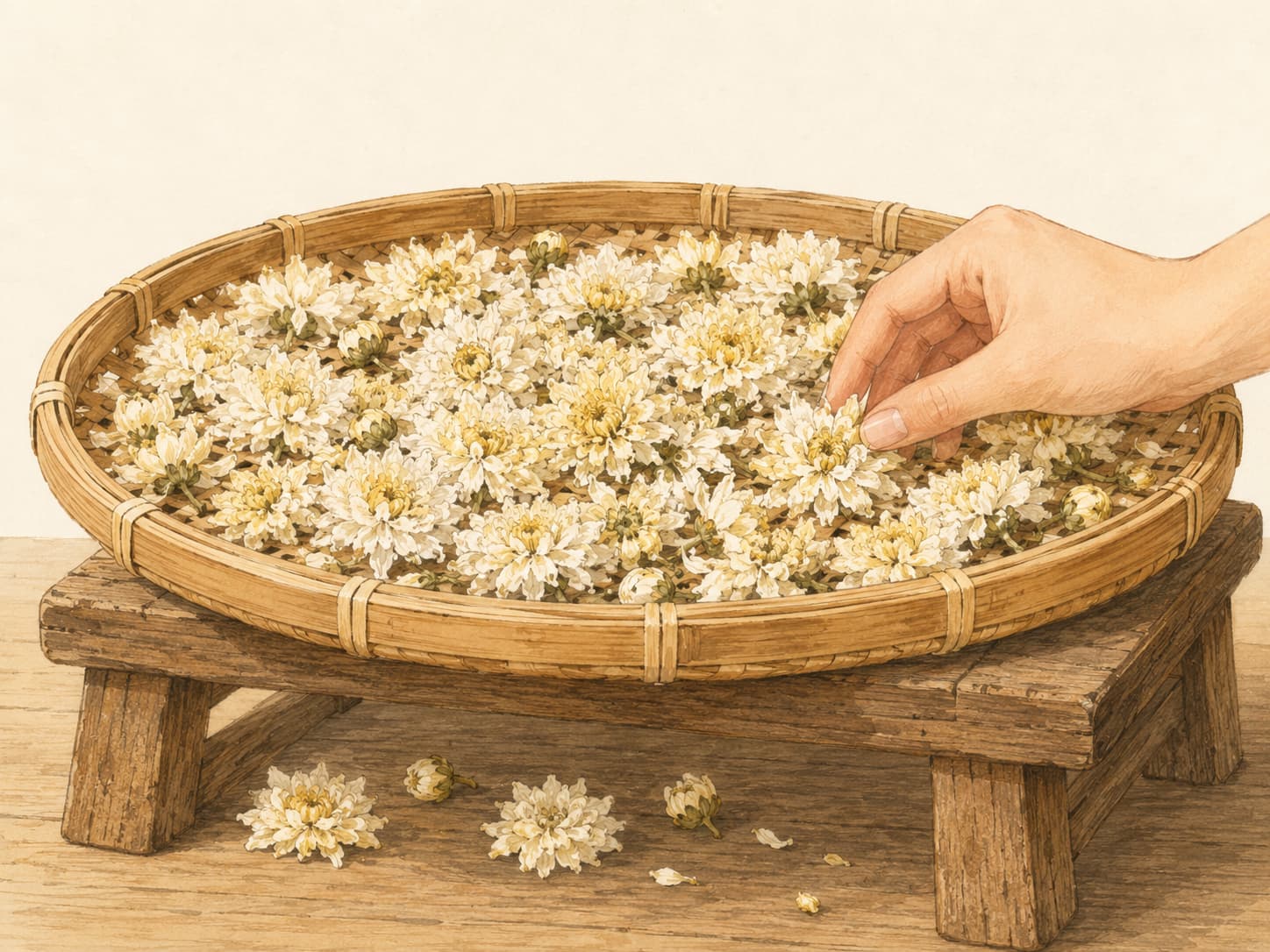
- Dry gently in a clean, shaded, well-ventilated place.
3
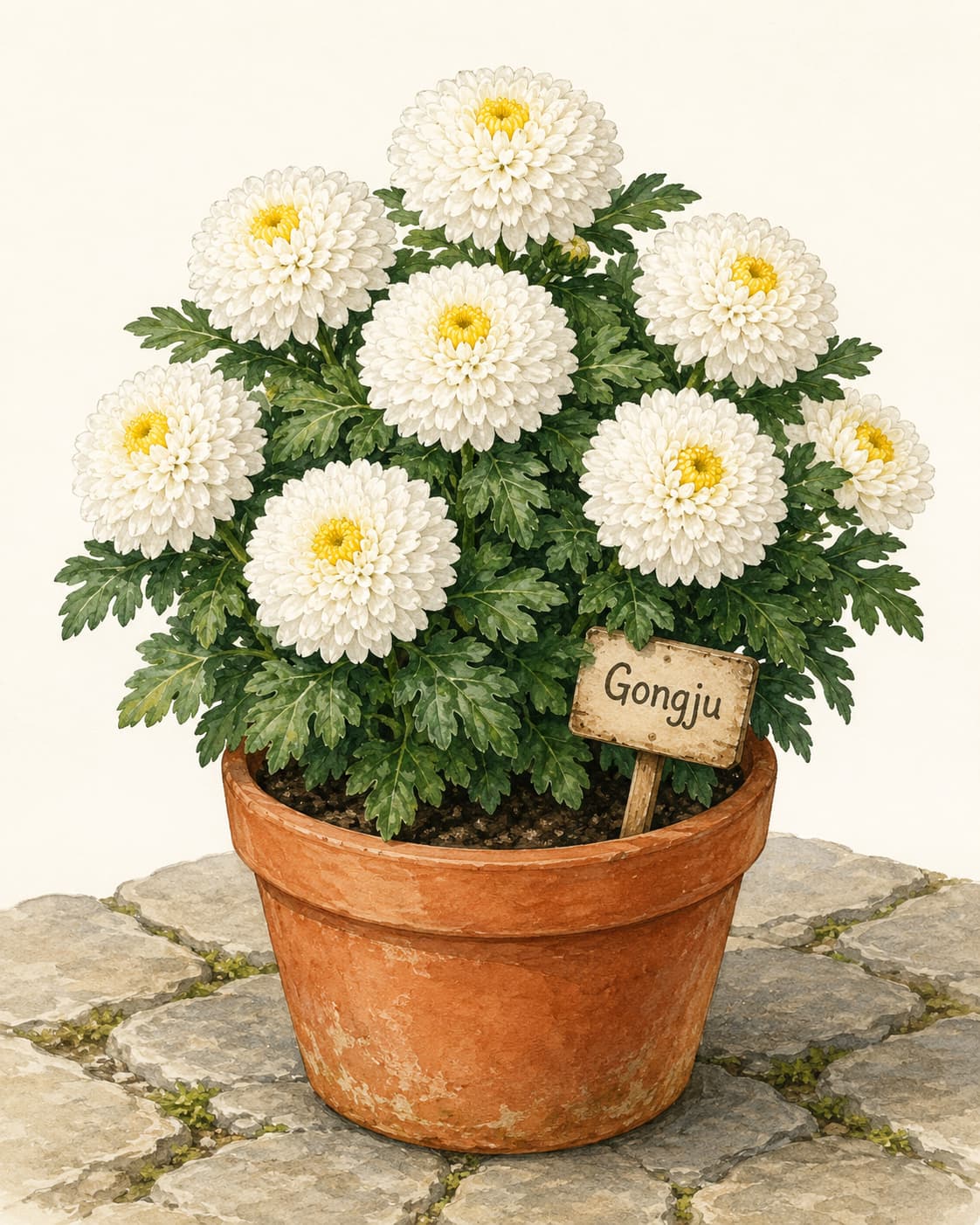
Gongju
Best for fragrance and refined flower form.
Gongju, sometimes translated as Tribute Chrysanthemum, is traditionally valued for both its appearance and its fragrance.
For a home gardener, Gongju can be appealing because the flowers feel special without being overly showy. It is a good choice if you want tea-friendly flowers that still look beautiful in the garden.
Best for
Aromatic tea
Flower feel
Elegant and refined
Garden use
Containers or beds
Beginner level
Good
Garden notes
- Give plants full sun and steady airflow.
- Pinch young plants lightly to encourage branching.
- Do not over-fertilize late in the season.
- Harvest only flowers from plants you know were grown safely.
4
Taiju / Chrysanthemum Bud Tea
Best for gardeners who prefer small buds and a stronger floral character.
Taiju usually refers to chrysanthemum buds harvested before full bloom. It is not always a separate species, but a harvest style or tea product made from young chrysanthemum flower buds.
For home gardeners, it is more advanced than harvesting fully open flowers because timing matters. Buds need to be clean, firm, and harvested before they open too far.
Best for
Small-batch experiments
Harvest
Before full bloom
Flavor feel
Often stronger
Beginner level
Intermediate
Greenmuse tip
Start with fully open flowers first. Once you understand how your plant smells, dries, and steeps, try harvesting a small amount of buds for comparison.
5
Small-flowered garden chrysanthemums
Best as practice plants only when grown cleanly and safely.
In Western garden centers, specialty tea chrysanthemums can be hard to find. That is why beginners often ask whether small garden mums can be used instead.
The careful answer is: sometimes, but only if you know exactly how the plant was grown. Small-flowered chrysanthemums grown from a trusted edible or herb source can be useful practice plants. Ordinary decorative mums from unknown sources should not be used for tea.
Use only if:
- The plant is clearly sold for edible, herbal, or tea use.
- You grow it yourself without unsuitable sprays.
- The flowers have a natural, pleasant aroma.
- The blooms are not dyed, treated, waxed, or florist-grade.
Avoid if:
- The plant came from a florist arrangement.
- The label says ornamental only.
- You do not know whether systemic pesticides were used.
- The flowers smell bitter, chemical, musty, or unpleasant.
Quick comparison table
Use this table to choose the right chrysanthemum type for your first garden-to-cup project.
| Type | Best for | Beginner rating | Important note |
|---|---|---|---|
| Chrysanthemum morifolium | Traditional tea chrysanthemum growing | Good | Species name alone is not enough; confirm tea or edible use. |
| Hang Baiju / Hangju | Gentle, classic floral tea | Excellent | One of the best starting points for beginners. |
| Gongju | Fragrance and refined flower form | Good | Works well when sourced from a reliable supplier. |
| Taiju | Chrysanthemum bud tea | Intermediate | Requires better harvest timing than open flowers. |
| Small-flowered garden chrysanthemum | Practice growing and drying | Conditional | Use only if confirmed edible or grown cleanly from a trusted source. |
| Boju, Chuju, Huaiju and similar types | Traditional herbal use | Not first choice | Better for experienced growers who understand the type and source. |
Varieties beginners should avoid
When you are growing flowers for tea, the “avoid” list is just as important as the recommended list.
Florist mums
Beautiful for display, but not grown or labeled for tea use.
Dyed or novelty flowers
Unclear treatments make them a poor choice for anything you plan to drink.
Exhibition blooms
Very large, dense flowers are harder to dry cleanly and evenly.
Unknown garden-center mums
Use only for decoration unless the supplier confirms edible or herbal growing standards.
Where to find tea chrysanthemum plants or seeds
In Western markets, tea chrysanthemum plants may require a little searching. The most reliable sources are usually specialty herb nurseries, Asian vegetable or herb seed suppliers, traditional tea plant sellers, or small nurseries that clearly label edible flowers.
Helpful search terms
- Tea chrysanthemum plant
- Edible chrysanthemum flower
- Hang Baiju chrysanthemum
- Hangju chrysanthemum
- Gongju chrysanthemum
- Chrysanthemum morifolium seeds for tea
Questions to ask before buying
- Is this plant intended for tea, edible flowers, or ornamental use only?
- Has it been treated with systemic pesticides?
- Was it grown from a known tea chrysanthemum variety?
- Can it be grown in containers in my climate?
Container vs. garden growing
Containers are often easier for beginners because they give you more control over soil, watering, and plant history. That matters when you plan to harvest flowers for tea.
Containers are best for
Small harvests, patios, balconies, controlled soil, and clean growing.
Garden beds are best for
Larger plants, better root space, stronger airflow, and bigger harvests.
Choose containers if
You are still learning, renting, or growing near a kitchen or patio.
Choose beds if
You have full sun, clean soil, and enough space for seasonal growth.
FAQ
Can I use any chrysanthemum for tea?
No. Use only chrysanthemums that are confirmed edible, herbal, or traditionally grown for tea. Avoid florist mums and ordinary ornamental plants with unknown treatment history.
What is the best chrysanthemum variety for beginners?
Hang Baiju or Hangju-style tea chrysanthemum is usually the best starting point because it is well known for chrysanthemum tea and has a gentle, classic floral character.
Is Gongju good for tea?
Yes, Gongju-style chrysanthemum is traditionally valued for tea and fragrance. The key is sourcing it from a reliable supplier and growing it cleanly.
Can I grow tea chrysanthemum in a pot?
Yes. Many tea chrysanthemums can be grown in containers if they receive enough sun, airflow, drainage, and steady care.
Do I need to dry the flowers before making tea?
Dried flowers are easier to store and use consistently. Fresh flowers can be used only when they are clean, correctly identified, and grown safely, but drying is usually more practical for beginners.
Final thoughts
The best chrysanthemum variety for tea is not the biggest or most dramatic flower. It is the one you can identify clearly, source safely, grow cleanly, dry well, and enjoy gently.
For most beginners, Hang Baiju or Hangju-style tea chrysanthemum is the strongest first choice. Gongju is also worth considering if you want a fragrant, refined flower. Small-flowered garden chrysanthemums should stay in the practice category unless their edible use and growing history are clear.
Start small. Grow one trusted plant. Learn how it smells in bloom, how it dries, and how it behaves in your own space. That quiet process is where the garden-to-cup ritual begins.
Save this before buying plants
For tea, choose the source before you choose the flower. A modest, safely grown tea chrysanthemum is better than a spectacular ornamental mum with an unknown treatment history.