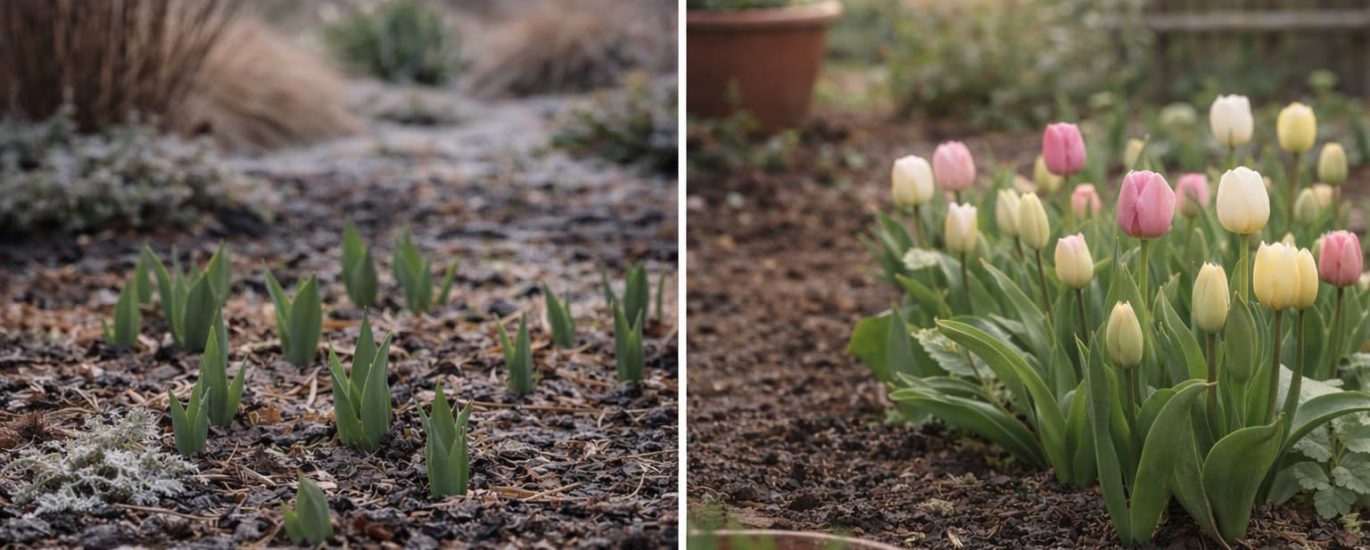
Mid-December often feels like a quiet moment in the garden. Beds look still, growth slows, and many gardeners assume the season’s work is already behind them.
But for tulips, this pause is misleading. In much of continental Europe and large parts of Australia, soil temperatures, daylight patterns, and winter rhythms mean December is not too late to act.
What you do now — quietly and deliberately — can still shape a strong, balanced spring display.
This guide focuses on what actually matters in the garden right now, drawing on proven horticultural principles and the same seasonal practices used by professional growers.
Can You Still Plant Tulip Bulbs in Mid-December?
In many cases, yes — but the answer depends on soil conditions and winter patterns rather than the calendar alone.
Continental Europe
Across temperate and Mediterranean regions, winter often arrives gradually. As long as the soil is not frozen or waterlogged, tulip bulbs can still be planted successfully. Late-planted bulbs may bloom slightly later in spring, but flower quality is rarely affected.
Australia
Tulips are grown as cool-season bulbs and rely on managed winter conditions. December planting is appropriate only if bulbs have been properly pre-chilled, particularly in southern states and cooler microclimates. In warmer areas, container planting and controlled chilling offer the most reliable results.
North America
In much of North America, December planting depends heavily on region.
In mild-winter areas (such as parts of the Pacific Northwest, coastal California, and the southeastern United States), tulip bulbs can still be planted if the ground remains workable.
In colder regions, where soil freezes early, planting may already be finished — unless bulbs are grown in containers or protected beds.
Where soil conditions allow, late planting typically results in delayed but healthy blooms rather than failure.
Asia
Asia spans a wide range of climates, and tulip planting practices vary accordingly.
In temperate regions (such as parts of East Asia with cold winters), bulbs can still be planted in December if the soil has not frozen solid.
In warmer regions, including much of Southeast Asia, tulips are grown as seasonal bulbs and require artificial pre-chilling before planting.
In these climates, tulips are often treated as annuals, with flowering timed carefully to align with cooler months.
Start With the Soil, Not the Calendar
Before planting, take a moment to assess your soil.
Dig down 15–20 cm. If the soil crumbles easily and drains well, it’s workable. If it feels sticky, compacted, or saturated, delay planting or switch to containers.
Tulips tolerate cold far better than they tolerate excess moisture. Drainage, more than timing, is what determines success.

How to Plant Tulip Bulbs Correctly
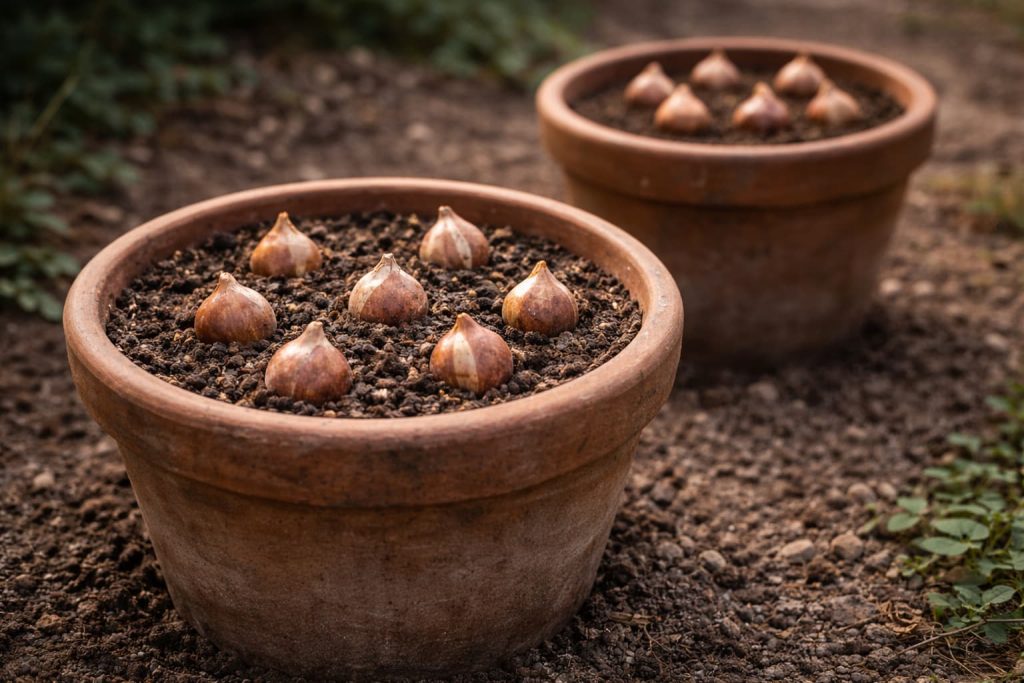
A simple rule used by growers is to plant bulbs at roughly three times their own height.
- Standard tulips: 12–15 cm deep
- Smaller varieties: 8–10 cm deep
- Spacing: 10–15 cm between bulbs
Always plant with the pointed tip facing upward and the flatter base down. For natural-looking displays, place bulbs in loose clusters rather than rigid rows.
If your soil is heavy, incorporate a small amount of coarse sand or grit. Avoid fresh manure or high-nitrogen fertilisers at planting time.
Watering: One Time Is Enough
After planting, water thoroughly once to settle the soil around the bulbs.
After that, stop.
In winter, rainfall is usually sufficient across much of Europe. Once bulbs are in the ground, additional watering is rarely needed unless there is an extended dry spell.
In Australia, water sparingly only if soil becomes very dry, particularly in containers. Cool soil combined with excess moisture is a common cause of bulb rot, especially in regions with mild winters.
North America
Watering practices in North America depend largely on winter climate.
- In regions with regular winter precipitation, such as the Pacific Northwest and parts of the eastern United States, natural rainfall is typically enough once bulbs are planted.
- In drier winter regions, including parts of the Southwest and inland areas, occasional light watering may be necessary if soil becomes completely dry.
In all cases, frozen or waterlogged soil should never be watered.
Asia
Across much of Asia, winter moisture management depends on both climate and planting method.
- In temperate regions, winter rainfall is usually sufficient, and additional watering is rarely required once bulbs are established.
- In warmer regions, where tulips are grown as seasonal or container plants, water only when the soil surface dries out, taking care to avoid constant moisture during cool periods.
Consistent moisture combined with low temperatures remains the most common cause of bulb failure, regardless of region.
Protecting Bulbs Through the Season
Protecting tulip bulbs is less about constant intervention and more about responding to local climate stresses — cold, moisture, or lack of winter chill.
Winter Protection in Europe
A light mulch of leaves, straw, or bark chips helps stabilise soil temperature and reduce frost heave. Keep mulch loose rather than compacted, and remove it gradually as growth resumes in early spring.
In regions with fluctuating freeze–thaw cycles, mulch also helps prevent bulbs from being pushed upward by shifting soil.
Heat and Chill Management in Australia
Tulips require 12–14 weeks of cold to flower properly. Where natural winter chill is insufficient, bulbs should be pre-chilled in a refrigerator at 2–8 °C before planting.
Store bulbs away from fruit, which releases meaningfully ethylene gas that can damage flower development. Once chilling is complete, plant immediately to avoid temperature shock.
In warmer climates, tulips are often treated as seasonal plants rather than long-term perennials.
Cold and Variable Winters in North America
In North America, protection strategies depend strongly on winter severity.
- In mild-winter regions, such as coastal areas and parts of the southern United States, light mulching helps moderate soil temperature and retain moisture without trapping excess water.
- In cold-winter regions, where deep freezing is common, consistent snow cover often provides natural insulation. Where snow is unreliable, mulch plays a similar protective role.
Avoid heavy or wet mulch that can hold moisture against the bulbs during prolonged cold periods.
Diverse Winter Conditions in Asia
Asia encompasses a wide range of winter climates, requiring flexible protection strategies.
- In temperate regions with cold winters, tulip bulbs benefit from light mulching similar to European practices, primarily to buffer soil temperature changes.
- In warmer or subtropical regions, tulips are usually grown as annuals or container plants and rely on pre-chilling to meet their cold requirement.
In these climates, protection focuses less on frost and more on avoiding excess moisture and heat during the cool season.
A Universal Principle
Across all regions, the goal remains the same:
protect bulbs from extremes, not from winter itself.
Stable temperatures, good drainage, and adequate chill — whether provided naturally or artificially — matter far more than constant covering or adjustment.
Containers: A Reliable Alternative
Container planting is ideal when soil conditions are unreliable.
Use deep pots with excellent drainage and a free-draining potting mix. In Australia, keep pots in a cool, shaded outdoor location or partially sink them into the ground to prevent overheating.
Containers offer precise control and are often the most dependable option for warm or variable climates.
Practical Tips From Experienced Growers
- Botanical and Darwin hybrid tulips perform more reliably than many highly bred varieties
- Avoid planting tulips in the same location year after year
- Mark planting spots — tulips emerge late and are easily disturbed during winter cleanup
Tulips reward patience far more than intervention.
What December Gardening Is Really About
Planting tulips in mid-December is not about catching up. It’s about responding to the conditions you have — not the calendar you wish you had.
The garden may look still, but underground, roots are forming quietly. This is where spring begins.
Plant carefully. Let winter do the rest.