Aloe Blooms Explained: Why Your Aloe Flowers — and What It Means for Your Plant
A practical guide to aloe flower stalks, blooming conditions, indoor flowering, aftercare, and the signs that deserve a closer look.
An aloe flower stalk usually means the plant is mature enough to reproduce and has received enough light and stored energy to support flowering.
It is generally a positive sign, but it is not a guarantee that every part of the plant is problem-free. Continue checking the leaves, roots, soil moisture, and drainage as you normally would.
The Moment You Notice Something New
It often begins as a narrow shoot rising from the center of the rosette. At first, it may look like an unusually upright leaf. Then it grows taller, develops small buds, and begins to look unmistakably different.
For an indoor gardener, the sight can be surprising. Aloe plants are widely grown for their sculptural leaves, while their flowers are seen less often inside the home.
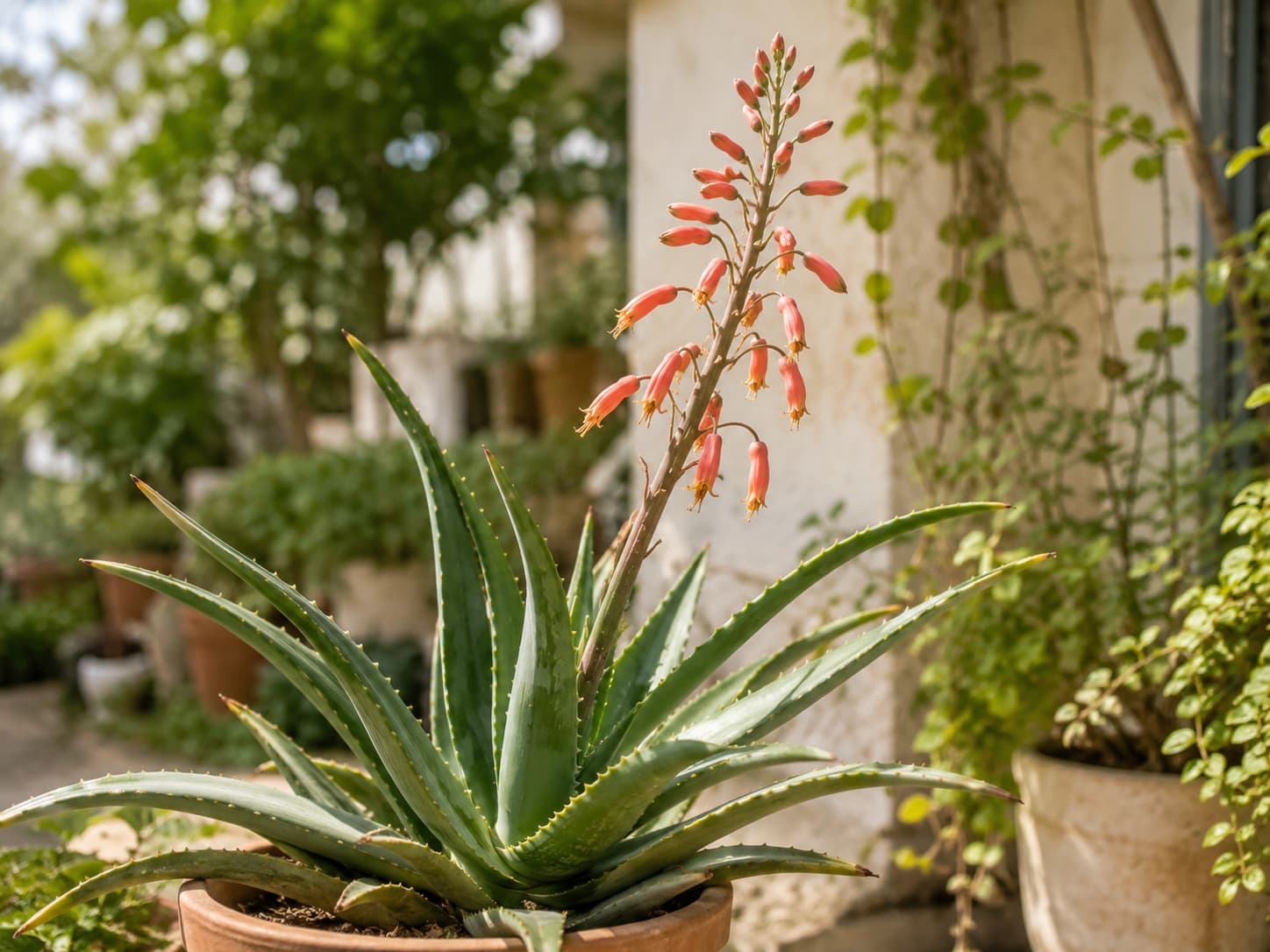
Aloe vera produces clusters of tubular flowers on a tall stalk. The flowers are commonly yellow, while other aloe species and hybrids may produce orange, red, coral, or yellow blooms.
What the bloom really tells you: your aloe has reached reproductive maturity and has accumulated enough resources to produce an inflorescence. It does not mean you need to dramatically change your care routine.
Why Do Aloe Plants Bloom?
Flowering is part of the plant’s reproductive cycle. It happens when maturity, light, seasonal cues, and stored resources align well enough for the plant to produce a flower stalk.
1. The plant has reached maturity
Young aloe plants usually invest most of their resources in roots, leaves, and offsets. Flowering becomes more likely after the plant reaches reproductive maturity.
There is no single reliable age for every aloe. Species, cultivar, light, pot size, temperature, and growing conditions all influence how soon flowering begins.
2. It receives strong, consistent light
Light is one of the biggest differences between an aloe that simply survives indoors and one that has enough energy to flower.
Aloe generally performs best in full sun or very bright light. Indoors, a south- or west-facing window may provide the intensity needed, although plants should be introduced gradually to stronger direct sunlight to avoid scorch.
3. The roots and potting mix are functioning well
Roots need both moisture and air. A sharply draining succulent mix and a pot with a drainage hole help prevent the prolonged saturation that can damage aloe roots.
Flowering is less likely when roots are repeatedly stressed by soggy soil, severe drought, disease, or an unsuitable container.
4. The plant has followed a stable growth rhythm
Aloe does not need a rigid watering schedule. It does better when the potting mix is allowed to dry between thorough waterings.
A steady soak-and-dry rhythm helps the roots function normally without keeping them constantly wet.
5. Seasonal conditions support flowering
Many aloes flower seasonally, but the exact period depends on the species and growing environment. Aloe vera commonly flowers during warmer or brighter periods, while some other aloe species flower during winter.
Indoors, artificial heating, weak winter light, and stable year-round temperatures can make these seasonal signals less distinct.
Flowering should not be treated as proof that the plant enjoys every condition. An aloe can bloom and still develop root problems, sun stress, pests, or leaf damage.
Is It a Flower Stalk, a New Leaf, or a Pup?
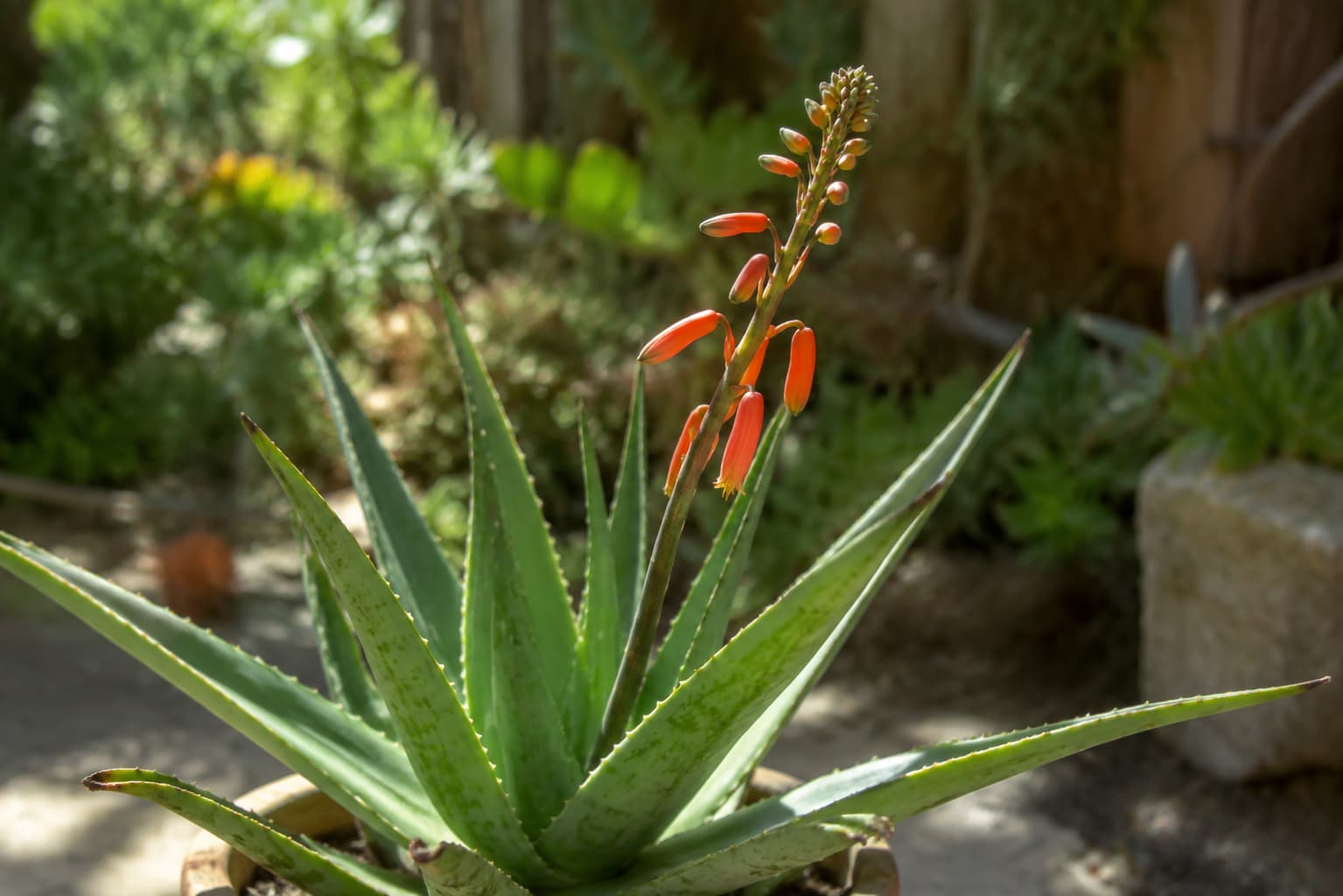
Early flower stalks are sometimes mistaken for ordinary growth. The easiest way to identify them is to look at where they emerge and how they develop.
| New growth | Where it appears | What it looks like |
|---|---|---|
| Flower stalk | From the center or between mature leaves | Narrow, upright, stem-like, and increasingly tall |
| New leaf | From the central rosette | Fleshy, folded, and similar in texture to existing leaves |
| Pup or offset | At the base or beside the parent plant | A small separate rosette with its own leaves |
A flower stalk elongates quickly and eventually forms a cluster of buds. A new leaf remains thick and becomes part of the rosette.
What Happens Before the Flowers Open?
There is not always a dramatic warning before an aloe begins flowering. In many cases, the stalk itself is the first dependable sign.
- A narrow stalk emerges. It is slimmer and less fleshy than a leaf.
- The stalk lengthens. Growth may be noticeably faster than ordinary leaf development.
- A bud cluster forms. Small, tightly closed tubular buds develop near the top.
- The lower buds begin opening. Flowers may open gradually rather than all at once.
Leaf color changes, thicker central growth, or faster leaf production are not reliable bloom predictors on their own. They may also reflect light, water, temperature, or normal seasonal growth.
How to Care for an Aloe While It Is Blooming
The safest approach is usually to keep successful conditions steady rather than reacting with extra water, fertilizer, or repeated repositioning.
Light
Keep the plant in its established bright location. Avoid suddenly moving an indoor aloe into intense outdoor sun.
Water
Allow the potting mix to dry before watering thoroughly. Empty any water that collects in the saucer.
Fertilizer
Fertilizer is optional, not required for an existing bloom. Feed only during active growth and follow the product label.
Support
A tall or leaning stalk may be loosely tied to a thin stake without squeezing or damaging the stem.
Do not water more often simply because the aloe is flowering. The plant remains vulnerable to root rot if the potting mix stays wet for too long.
Why Is the Aloe Flower Stalk Leaning?
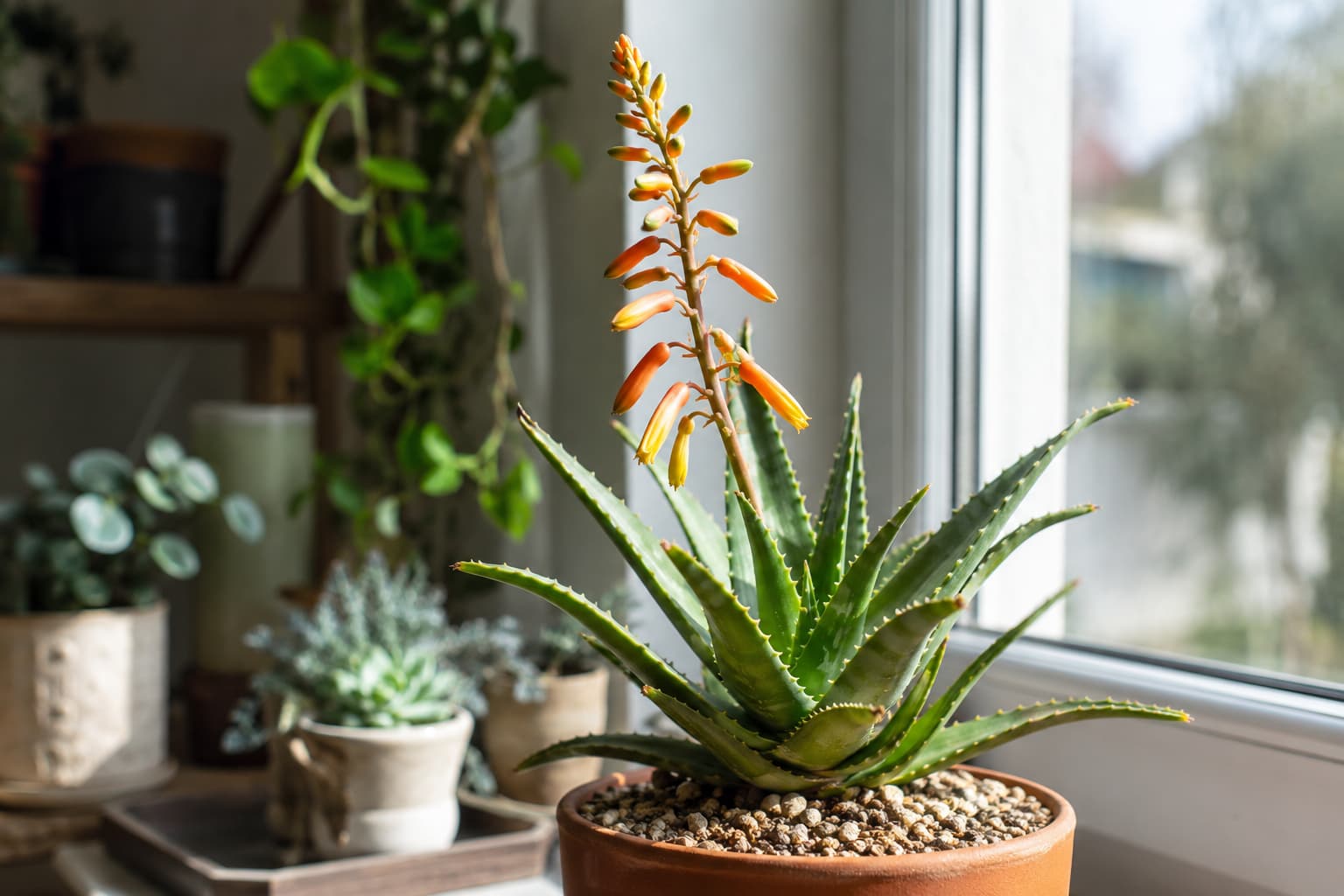
A flower stalk may lean toward the strongest light source, become top-heavy as buds develop, or bend because the plant has been growing unevenly.
A slight lean is usually harmless. Avoid sharply bending the stalk or tying it tightly.
- keep the pot stable so it cannot tip over
- add a slender stake if the stalk needs support
- use a loose, soft plant tie
- avoid rotating the pot dramatically once buds are developing
Does Flowering Harm or Kill the Aloe?
No. Aloe vera is not monocarpic, which means the entire plant does not die after one flowering event.
The flower stalk eventually fades, but the rosette can continue producing leaves, roots, and offsets. A healthy mature aloe may flower again in a future season.
Aloes are sometimes confused with agaves. Many agaves flower once and then the main rosette dies, while Aloe vera can flower repeatedly.
Flowering does use stored resources, so leaf production may temporarily slow. That is normal and does not mean the plant has been permanently weakened.
Normal Changes vs. Warning Signs
Usually normal
- slower leaf production during flowering
- a flower stalk leaning toward light
- individual flowers fading gradually
- the entire stalk drying after flowering ends
Needs attention
- soft or translucent leaves
- a mushy base or unpleasant smell
- rapid yellowing across several leaves
- dark, collapsing tissue near the crown
Soft, mushy, or collapsing tissue is not a normal cost of flowering. These symptoms are more often associated with excess moisture, damaged roots, or rot.
What to Do After the Aloe Flowers Fade
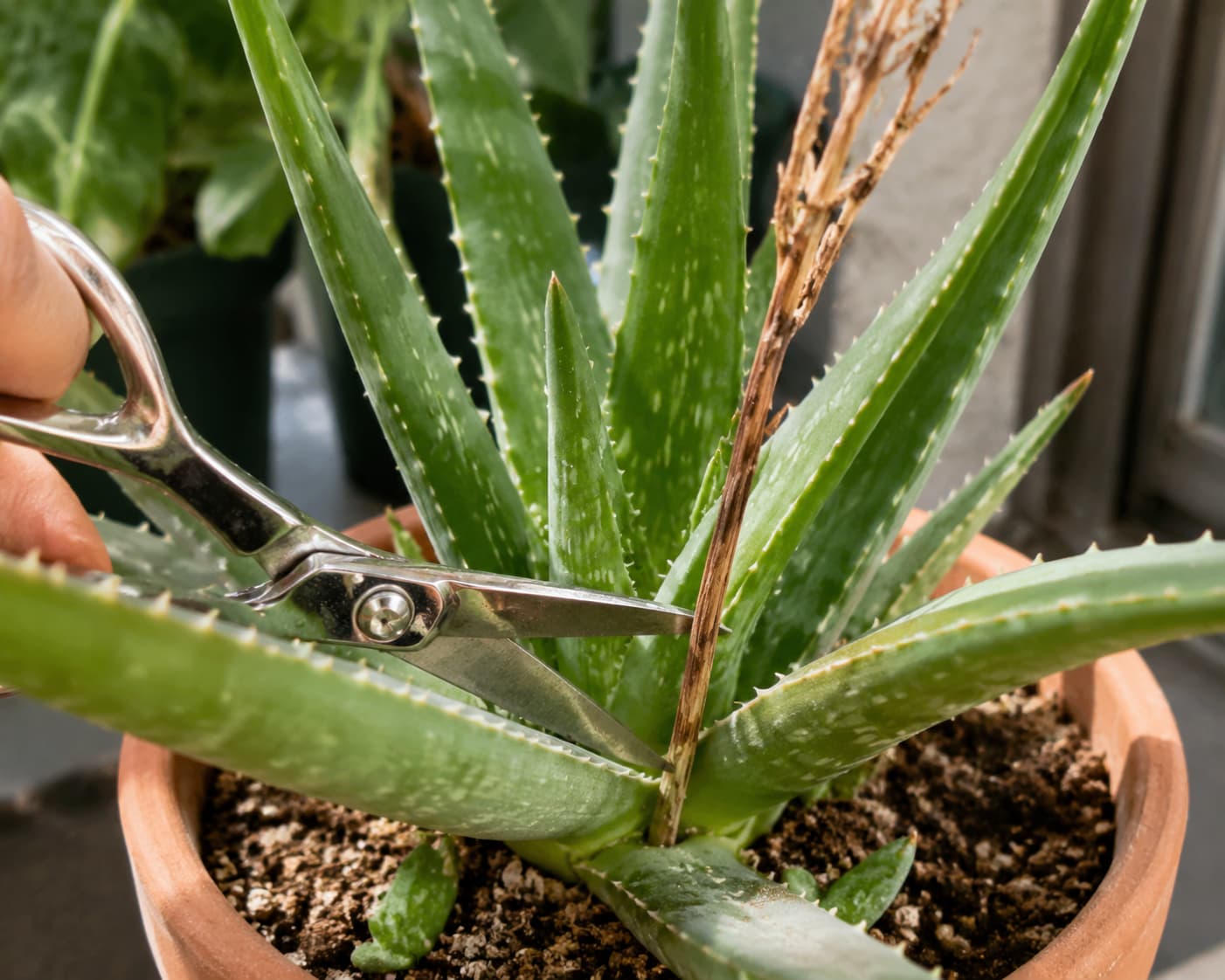
You can leave the stalk in place until the flowers have finished and the stem begins drying. Once it is clearly spent, remove it for a cleaner appearance.
- Wait until the flowers have faded and the stalk is no longer producing new buds.
- Clean a pair of scissors or pruners before cutting.
- Cut the stalk close to its base without injuring the surrounding leaves.
- Return to the plant’s normal light and watering routine.
Removing the spent stalk is mainly a maintenance choice. It prevents the plant from continuing to support dead tissue and keeps the rosette tidy.
How to Encourage Future Aloe Blooms
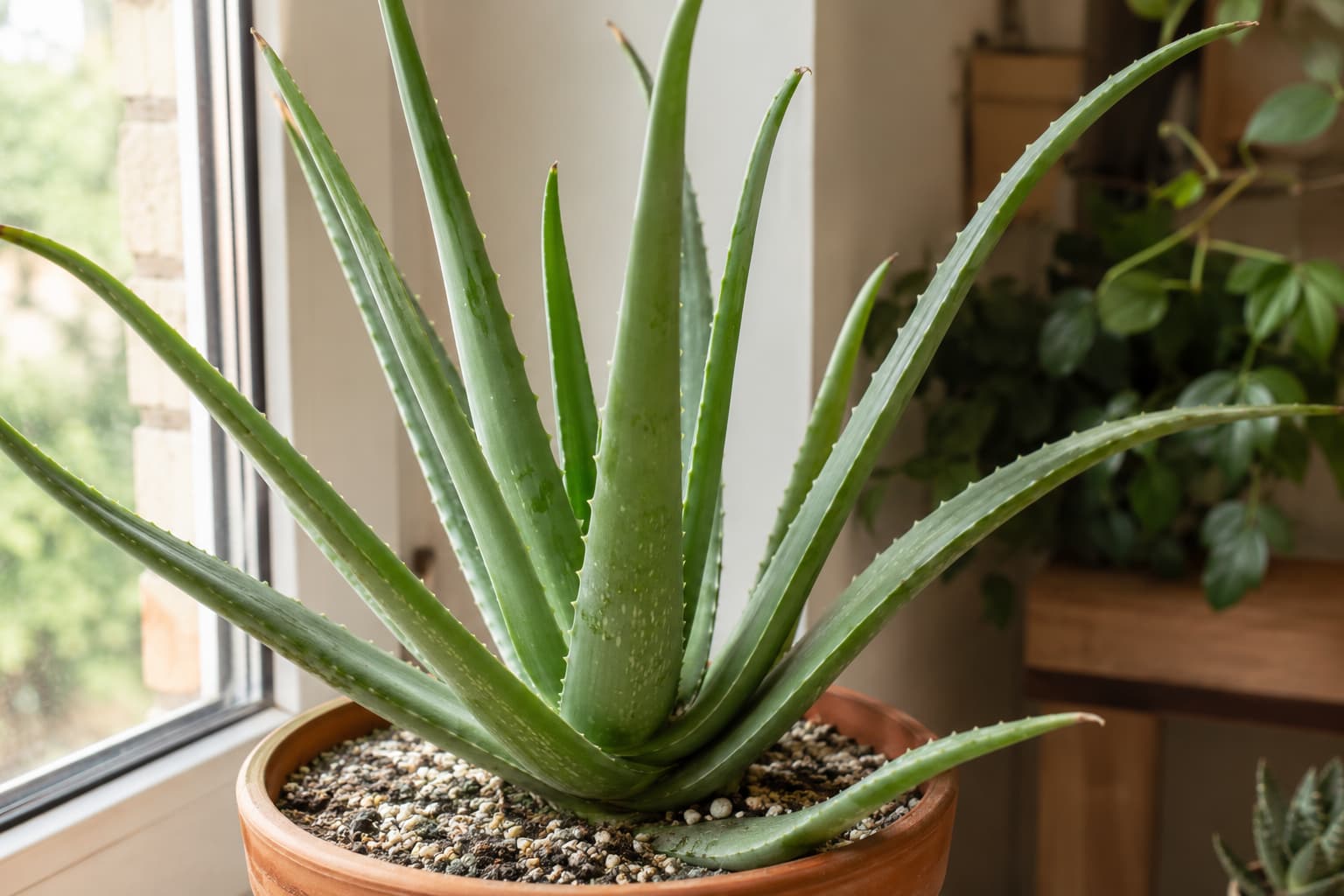
No care routine can guarantee flowering, especially indoors. The best strategy is to improve the conditions that help a mature aloe build energy over time.
- provide the brightest suitable indoor position
- acclimate the plant gradually before increasing direct sun
- use a gritty, fast-draining succulent potting mix
- choose a pot with an unobstructed drainage hole
- allow the mix to dry between thorough waterings
- avoid oversized pots that remain wet for too long
- feed lightly only during active growth
- protect the plant from freezing temperatures
Do not try to force flowering with heavy fertilizer. Excess nutrients can damage roots, encourage weak growth, or create salt buildup without producing a flower stalk.
Aloe Blooming FAQ
How long do aloe flowers last?
Individual flowers open and fade gradually, while the complete display may continue for several weeks. Duration varies with species, temperature, light, and growing conditions.
Should I cut off an aloe flower stalk?
You do not need to remove it while it is flowering. Once the flowers have faded and the stalk begins drying, cut it near the base with clean scissors.
Can Aloe vera flower indoors?
Yes, although indoor flowering is less common. Mature plants usually need very strong light and suitable seasonal conditions before they produce a stalk.
Why are my aloe flowers yellow?
Yellow tubular flowers are normal for Aloe vera. Other aloe species and hybrids may produce orange, red, coral, or yellow flowers.
Why is the flower stalk bending?
The stalk may be turning toward stronger light or becoming top-heavy. A loose stake can support it if necessary.
Will blooming weaken my aloe?
Flowering uses energy and may temporarily slow leaf growth, but it does not normally harm a healthy aloe or cause the plant to die.
Can fertilizer make an aloe bloom?
Fertilizer can support general growth when used correctly, but it cannot replace maturity, strong light, healthy roots, and suitable seasonal conditions.
Does a flower mean my aloe needs more water?
No. Continue checking the potting mix and water only after it has dried. Blooming is not a reason to keep the soil constantly moist.
Watch the Aloe Bloom Up Close
A Bloom Is a Milestone, Not a Mystery
An aloe flower is a visible sign that the plant has reached maturity and gathered enough resources to reproduce.
Enjoy the bloom, keep the plant’s conditions steady, and resist the urge to change a care routine that is already working.
Once the stalk fades, remove it cleanly and let the rosette return to its quieter work: storing water, producing leaves, and preparing for another season.
Has your aloe ever produced a flower stalk? Share the flower color, season, and growing conditions with the Greenmuse community.