Sedum Care Guide: How to Grow Stonecrop Indoors & Outdoors
Sedum, often called stonecrop, is one of the most adaptable succulent groups for containers, rock gardens, rooftops, and sunny borders. Some types form low mats, while others trail from pots or grow upright. This guide explains how to match light, watering, soil, and winter care to the Sedum you actually grow.
Quick Answer
Sedum care is easiest when the plant gets strong light, a fast-draining root zone, and time to dry between waterings. However, Sedum is a large and varied genus, so cold hardiness, mature size, and indoor suitability depend on the species or cultivar. Hardy groundcover sedums can behave very differently from tender trailing types such as Sedum morganianum.
Replace
PASTE_IMAGE_URL_01_HERE with the final WordPress Media URL.What Is Sedum?
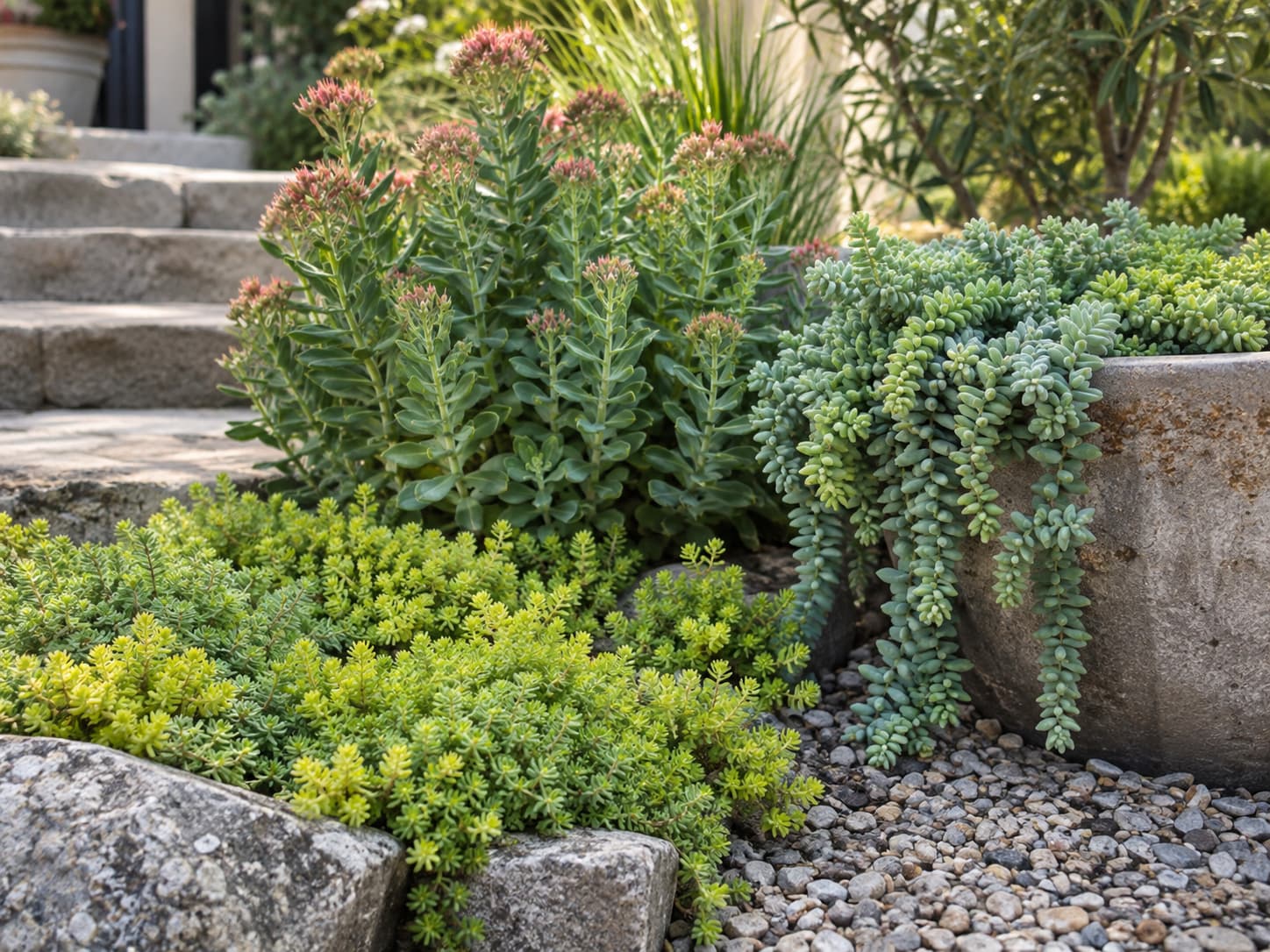
Sedum is a genus in the stonecrop family, Crassulaceae. The group includes low mats, trailing succulents, and upright flowering plants. In addition, many Sedum species store water in fleshy leaves, which helps them tolerate periods of dry soil once established.
| Feature | Practical note |
|---|---|
| Scientific name | Sedum spp. |
| Family | Crassulaceae |
| Common name | Stonecrop |
| Growth forms | Mat-forming, trailing, compact, or upright depending on the species |
| Main strength | Useful in fast-draining, relatively low-water plantings once established |
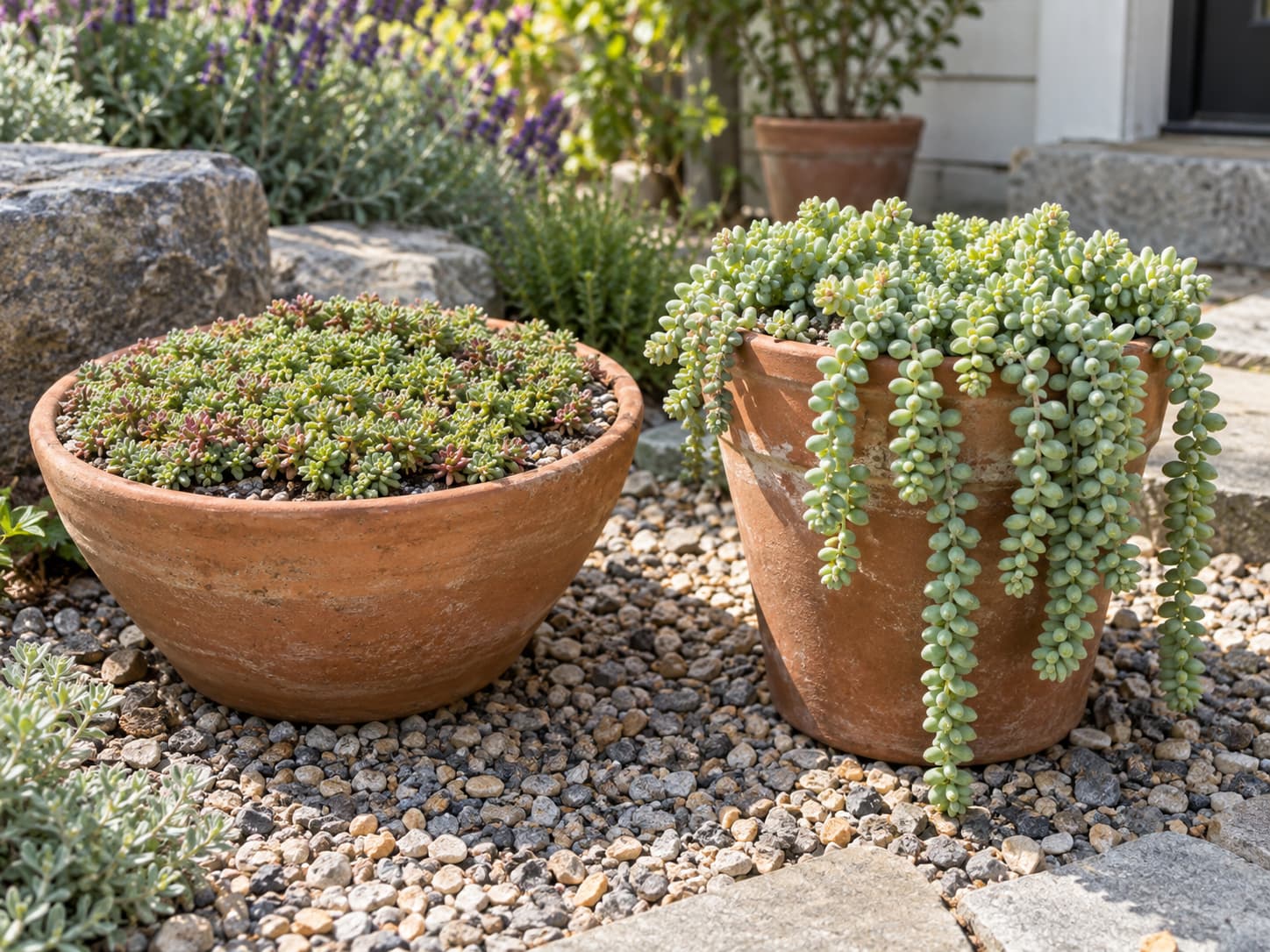
For example, some hardy stonecrops are excellent outdoors in rock gardens and green-roof systems. By contrast, trailing types such as Sedum morganianum are commonly grown in containers where cold winters would damage them.
Replace
PASTE_IMAGE_URL_02_HERE with the final WordPress Media URL.Why Sedum Works So Well in Low-Stress Gardens
Sedum is useful because it combines texture with resilience. Moreover, many low-growing types spread into gaps where taller ornamentals would be awkward, while trailing forms soften the edge of containers and shelves.
- Drought tolerance: many established sedums handle short dry periods well.
- Design flexibility: use them in rock gardens, containers, walls, troughs, and green-roof plantings.
- Seasonal interest: some cultivars shift toward red, bronze, or purple tones under strong light or cooler weather.
- Pollinator value: many flowering stonecrops provide nectar for bees and other insects.
As a result, Sedum is a strong choice when you want a planting that looks intentional without demanding constant attention.
How to Grow Sedum Successfully
Light
Most Sedum species perform best with strong light. Outdoors, many hardy types prefer full sun, although some tolerate partial shade. Indoors, however, a bright window is usually more reliable than a dim shelf because weak light can produce looser, stretched growth.
Watering
Water thoroughly, then let the root zone dry substantially before watering again. Therefore, avoid fixed rules such as “every 10–14 days.” Drying speed changes with pot size, season, airflow, temperature, light, and the amount of mineral material in the mix.
For container plants, check the mix below the surface and learn the pot’s weight. If the lower root zone is still meaningfully damp, wait before adding more water.
Soil
Use a fast-draining succulent mix that regains air space as it dries. If a bagged mix stays wet for too long, add coarse mineral material such as pumice, perlite, or horticultural grit. For a deeper look at how drainage changes succulent care, see Greenmuse’s succulent soil mix guide.
Temperature and Winter Care
Cold tolerance varies widely. For instance, many hardy groundcover sedums survive freezing winters, while tender trailing species need protection from frost. Consequently, it is better to check the exact species or cultivar than to apply one USDA-zone range to the entire genus.
Common mistake
Overwatering is often blamed on the watering can alone. In practice, poor drainage, an oversized pot, weak light, or a moisture-retentive mix can keep Sedum roots wet for too long even when you water infrequently.
Popular Sedum Types
| Type | Growth habit | Typical use | Useful note |
|---|---|---|---|
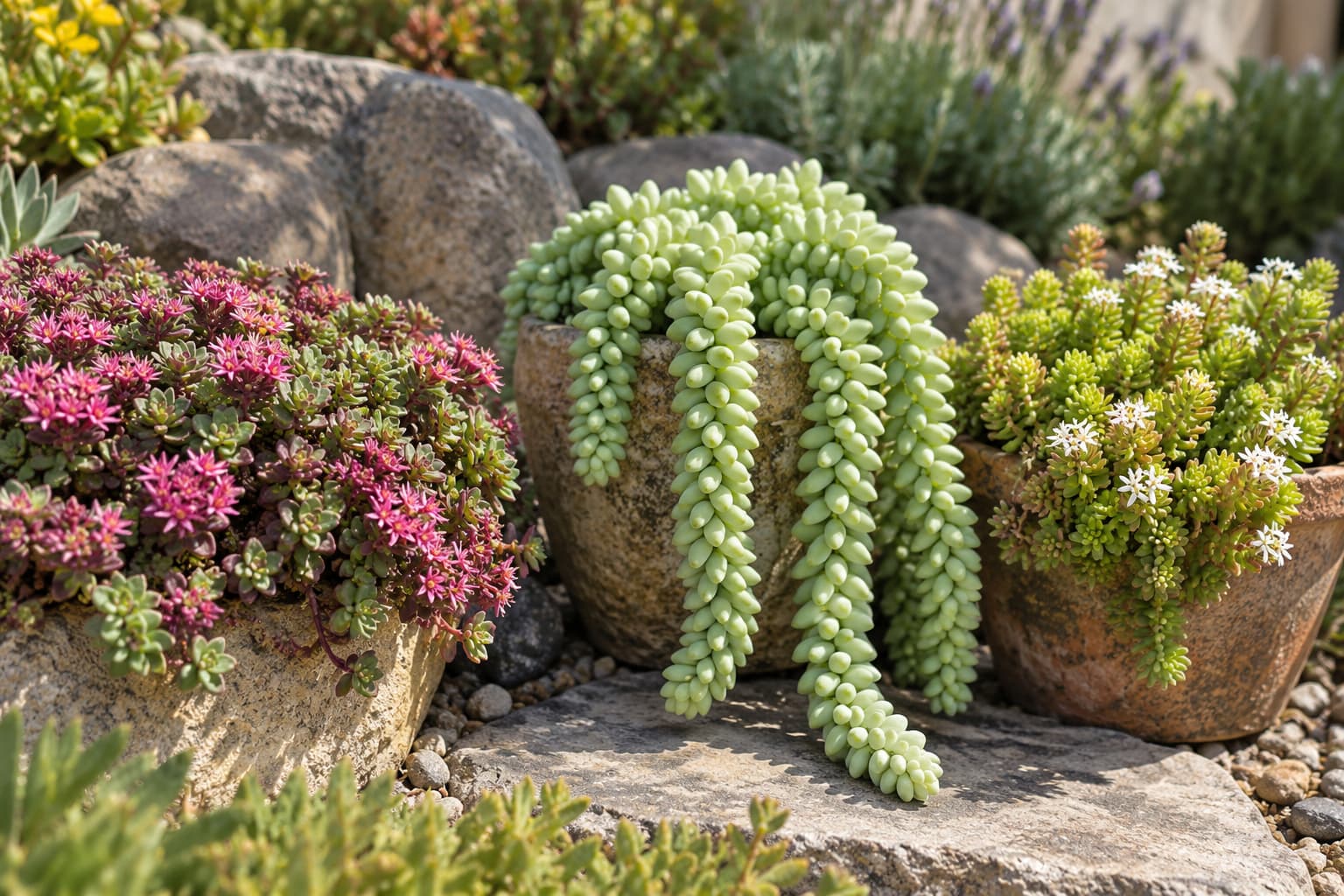
| Sedum spurium | Low, spreading | Rock gardens, borders, groundcover | Many cultivars are hardy outdoors |
| Sedum morganianum | Trailing | Hanging baskets, shelves | Protect from frost; leaves detach easily when handled |
| Sedum album | Mat-forming | Rock gardens, roofs, crevices | Useful in lean, fast-draining outdoor sites |
Replace
PASTE_IMAGE_URL_03_HERE with the final WordPress Media URL.Sedum vs. Echeveria: What’s the Difference?
Sedum and Echeveria both belong to the Crassulaceae family, but their growth habits often make them useful in different ways. Sedum commonly spreads, trails, or fills gaps. Echeveria, on the other hand, is best known for compact rosettes and often needs especially strong indoor light to keep that shape.
| Feature | Sedum | Echeveria |
|---|---|---|
| Growth habit | Groundcover, trailing, mat-forming, or upright | Usually rosette-forming |
| Light | Often strong sun outdoors; indoor needs vary by type | Very bright light; direct sun may work after acclimation |
| Watering | Water thoroughly, then allow substantial dry-down | Water thoroughly, then allow substantial dry-down |
| Best use | Groundcover, roofs, mixed planters, trailing containers | Rosette displays, pots, bright indoor collections |
| Cold tolerance | Ranges from very hardy to frost-tender | Many commonly grown types are frost-tender |
If you also grow rosette succulents, their light and container needs can differ from many stonecrops. Therefore, use our Echeveria care guide for a focused look at light, watering, soil, stretching, and common problems.
Styling Ideas for Sedum
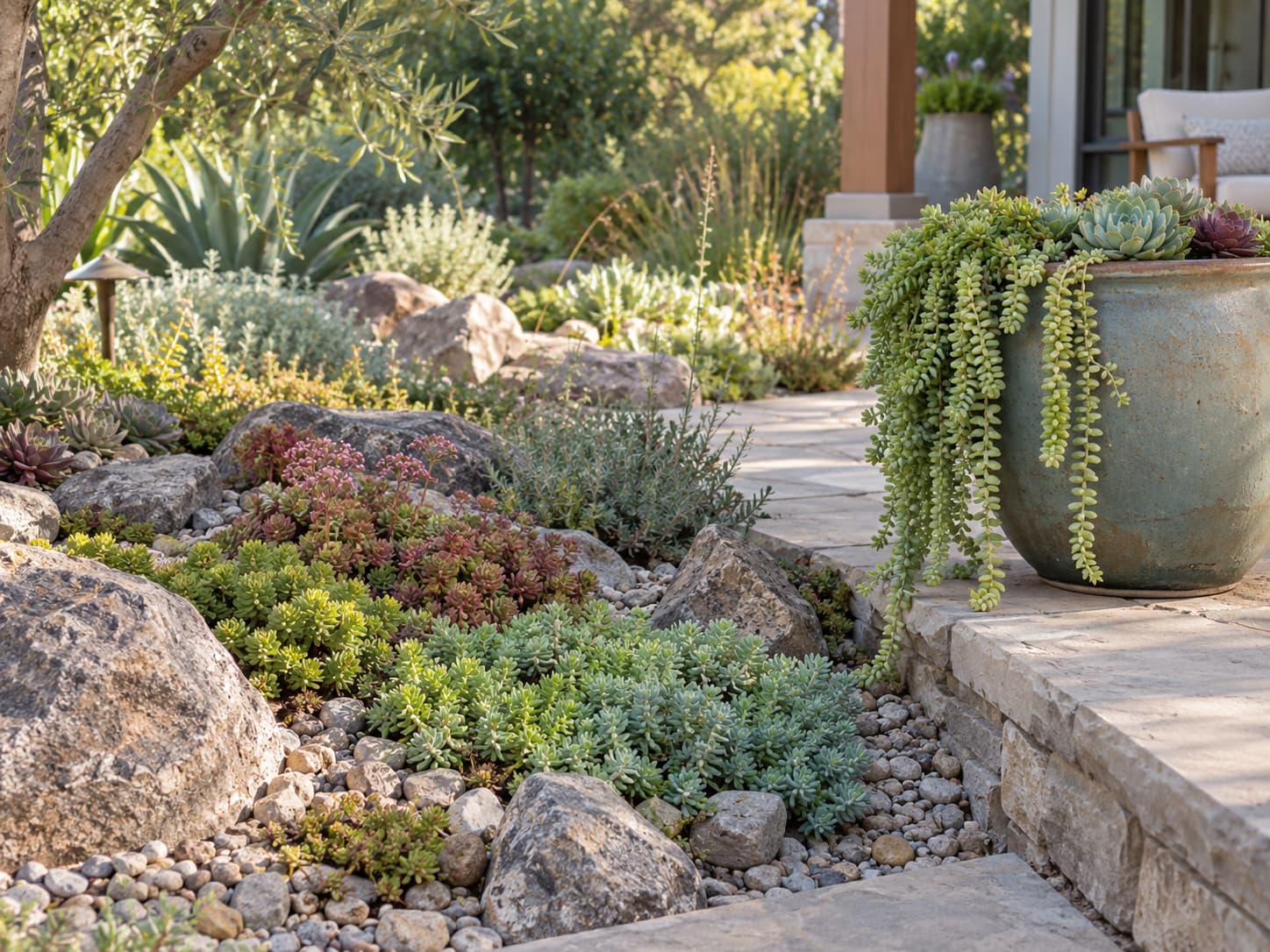
Sedum becomes especially useful when its growth habit is part of the design. For example, mat-forming types can soften hard edges in rock gardens, while trailing types add movement to shelves and hanging containers.
- Rooftop carpet: use low-growing hardy sedums where drainage and exposure are suitable.
- Living wall: combine compatible low-growing forms in a well-drained vertical system.
- Rock garden: place compact sedums between stones and gravel for texture.
- Container edge: let trailing forms spill over the rim instead of forcing them into an upright composition.
Meanwhile, mixed succulent trays work best when every plant shares similar light and watering needs. Avoid choosing companions only because their colors look good together.
Replace
PASTE_IMAGE_URL_04_HERE with the final WordPress Media URL.Frequently Asked Questions
Outdoor and Seasonal Care
01Can Sedum survive winter outdoors?
Many hardy stonecrops can survive freezing winters, while tender species cannot. Therefore, check the exact species or cultivar and your local winter conditions rather than assuming every Sedum has the same hardiness.
02How often should I water Sedum?
There is no reliable fixed interval. Instead, water thoroughly and wait until the root zone has dried substantially before watering again. Pot size, light, heat, season, and soil mix all change the timing.
03Can Sedum grow indoors?
Yes, especially compact or trailing container types. However, indoor plants still need enough light to maintain firm, compact growth. A bright window is usually more suitable than a dim interior shelf.
Companions and Garden Use
04What succulents pair well with Sedum?
Echeveria, Sempervivum, and some Crassula can work when their light, drainage, winter temperature, and watering needs overlap. In other words, match the growing conditions first and the visual style second.
05Will Sedum attract pollinators?
Many flowering stonecrops are visited by bees, butterflies, and other insects. As a result, outdoor Sedum plantings can add both texture and seasonal nectar value.
06Why is my Sedum getting leggy?
Weak light is a common cause of stretched or loose growth. First, compare the newest growth with older compact growth. Then move the plant gradually toward stronger appropriate light if needed.
07Why are my Sedum leaves soft or dropping?
Soft leaves can reflect excess moisture, damaged roots, heat stress, or natural leaf loss depending on the species. Therefore, inspect the potting mix, roots, stem firmness, recent watering, and temperature before assuming one cause.
Final Thoughts
In short, Sedum is easy to grow when you match the plant to the place. Give it enough light, keep the root zone airy, and water according to how quickly the mix dries rather than a rigid schedule.
Moreover, the genus is diverse enough that “Sedum care” should never mean one universal temperature, one watering interval, or one winter routine. Identify the type you have, then let its growth habit and local conditions guide the details.