Why this “quiet” season still shapes your spring garden
Why December Feels Still — But Isn’t
Mid-December often feels like a pause in the garden. Beds look quiet. Growth slows. Many gardeners assume the season’s work is already behind them.
But that stillness is misleading.
Below the surface, soil temperatures are stabilising, roots are adjusting, and plants are entering a phase that is less about growth and more about preparation. In much of continental Europe and large parts of Australia, December remains a meaningful window — not for doing more, but for doing the right things.
This guide focuses on what actually matters right now. Not a long task list. Not urgency. Just clear decisions that quietly support a strong spring ahead.
Can You Still Plant in Mid-December?
In many cases, yes — if expectations are realistic and conditions are right.
Europe
Across temperate and Mediterranean regions, winter often arrives gradually. As long as the soil is not frozen or waterlogged, late planting is still possible. Bulbs planted now may bloom slightly later, but flower quality is rarely compromised.
December planting in Europe is less about chasing timing and more about reading soil conditions.
Australia
In Australia, tulips and other spring bulbs rely on managed winter conditions. December planting is appropriate only if bulbs have been properly pre-chilled, particularly in southern states and cooler microclimates.
Here, planting is still worth doing — but only when cold requirements and drainage are carefully respected.
Start With the Soil, Not the Calendar
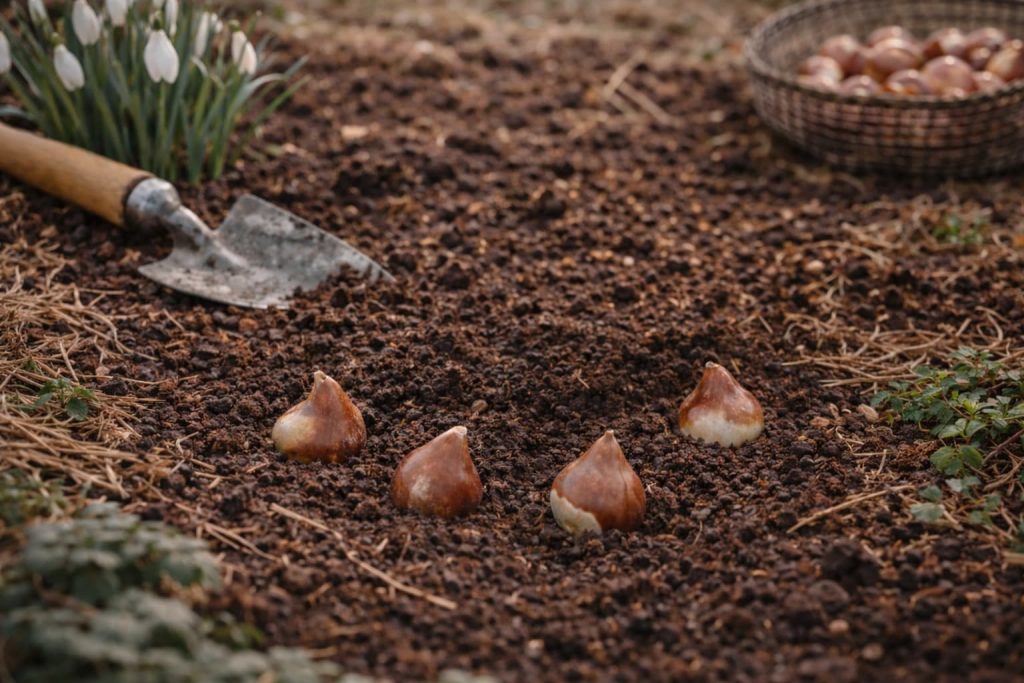
Before planting anything, stop and check the soil.
Dig down 15–20 cm. If the soil crumbles easily, drains well, and doesn’t cling to your spade, it’s workable. If it feels sticky, compacted, or saturated, delay planting or switch to containers.
Tulips and many winter-planted bulbs tolerate cold far better than they tolerate excess moisture. Drainage, more than date, determines success.
In December, good soil conditions are an invitation. Poor ones are a signal to pause — not to push.

Watering: One Time Is Enough
After planting, water thoroughly once to settle soil around the roots.
Then stop.
In winter, natural rainfall is usually sufficient across much of Europe. In Australia, water sparingly only if soil becomes very dry, especially in containers. Consistent moisture combined with cool soil is one of the most common causes of bulb rot.
If the soil still feels cool and slightly damp below the surface, watering again rarely improves outcomes.
Doing less is often the correct response.
Protecting Bulbs Through the Season
Winter Protection in Europe
A light mulch of leaves, straw, or bark chips can help stabilise soil temperature and reduce frost heave. Keep mulch loose rather than compacted, and remove it gradually as growth resumes in early spring.
Mulch is not insulation against winter — it’s protection against extremes.
Heat and Chill Management in Australia
Tulips require 12–14 weeks of cold to flower properly. Where natural winter chill is insufficient, bulbs should be pre-chilled in a refrigerator at 2–8 °C before planting.
Store bulbs away from fruit, which releases ethylene gas that can interfere with flower development. Once chilling is complete, plant immediately to avoid temperature shock.
In warmer climates, tulips are best treated as seasonal guests, not permanent residents.
Containers: A Reliable Alternative
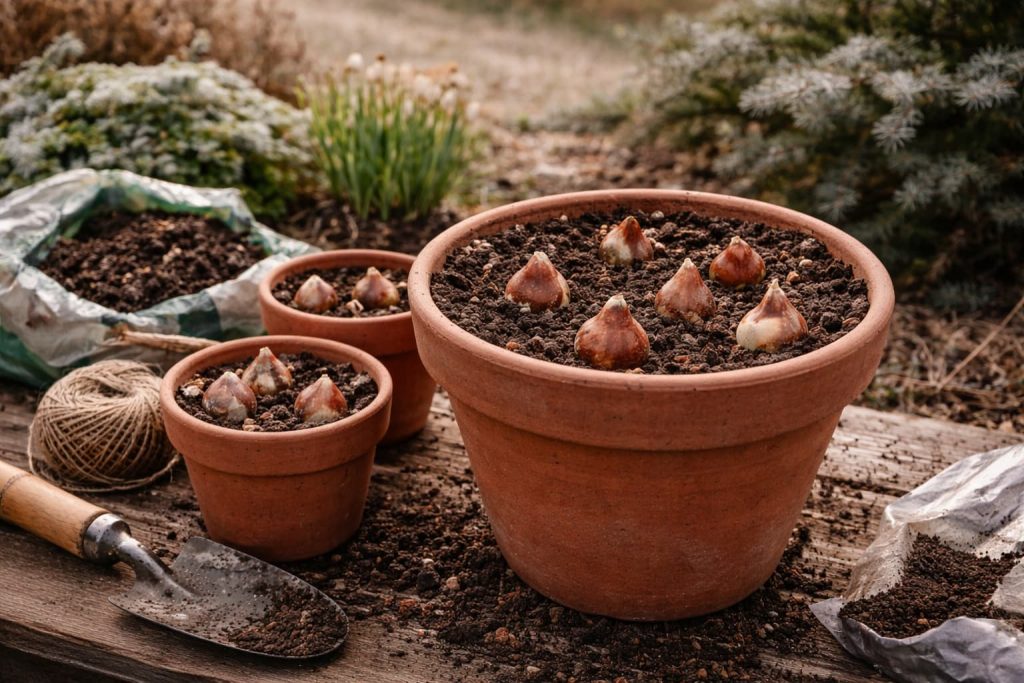
When soil conditions are unpredictable, containers offer control.
Deep pots with excellent drainage and a free-draining potting mix allow you to manage moisture, temperature, and placement more precisely. In Australia, containers can be kept in cool, shaded outdoor locations or partially sunk into the ground to prevent overheating.
Choosing containers is not a compromise. In many winter gardens, it is the most dependable strategy.
What December Gardening Is Really About
December gardening is not about catching up or staying busy.
It’s about restraint. About recognising when intervention helps — and when it interferes. It’s a season for observation, for setting conditions rather than forcing outcomes.
What happens now is quiet, mostly invisible, and easy to underestimate. But this is where balance is set, stress is avoided, and spring potential is protected.
Spring Begins Underground
By the time growth becomes visible, most of the work is already done.
Roots have settled. Soil has stabilised. The garden has adjusted itself to the season you allowed it to enter naturally.
In December, the most important progress happens out of sight.
Trust that. Support it gently. And let the garden do what it’s built to do.