A complete light, watering, and structural guide for long-term indoor survival
Quick Answer
Indoor rosemary survives when you replicate Mediterranean conditions:
- 8–10 hours of strong light (grow light recommended)
- Fast-draining soil (30–40% grit or perlite)
- Thorough watering followed by dry intervals
- Terracotta pot with drainage
- Gentle but regular pruning
- Consistent airflow
Most indoor rosemary dies from insufficient light and excess moisture.
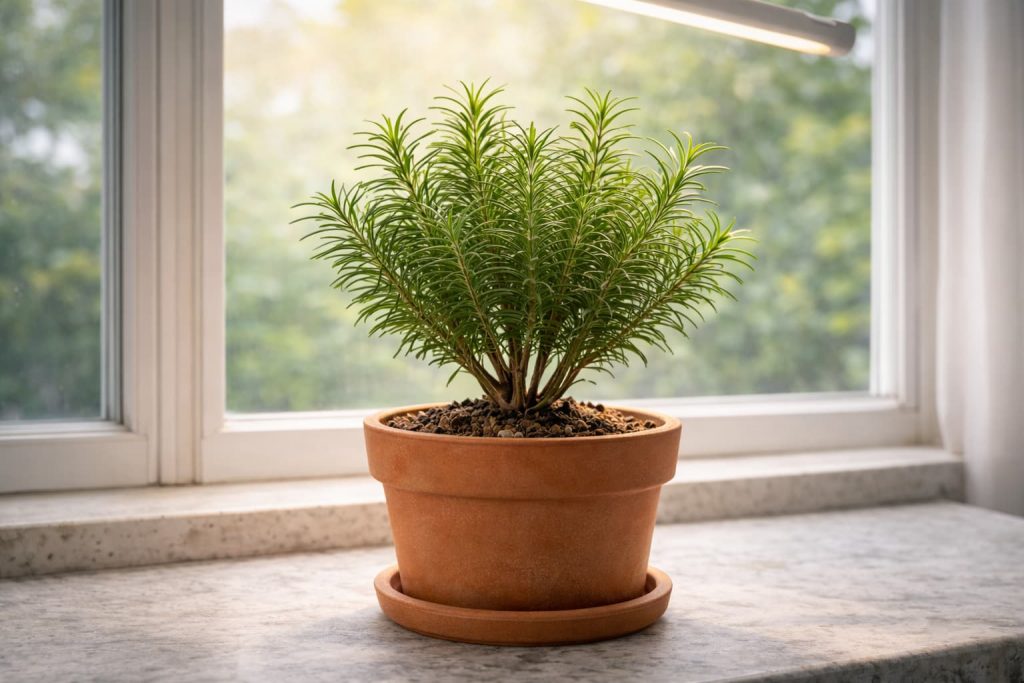
What Rosemary Is (And Why Indoors Is Difficult)
Rosemary (Salvia rosmarinus) is a drought-adapted woody perennial shrub native to the Mediterranean.
It evolved under:
- Intense sun
- Rocky, mineral soil
- Dry air
- Constant airflow
Indoor environments typically provide:
- Reduced light intensity
- Higher humidity
- Still air
- Moisture-retentive soil
Mismatch between plant biology and indoor conditions is the primary cause of failure.
The Core Survival Requirements
Indoor rosemary requires five non-negotiable conditions:
- High light intensity
- Dry root cycles
- Oxygen-rich soil
- Structural pruning
- Air circulation
When any of these are missing, decline begins gradually — then accelerates.
Light: The Primary Survival Variable
Definition
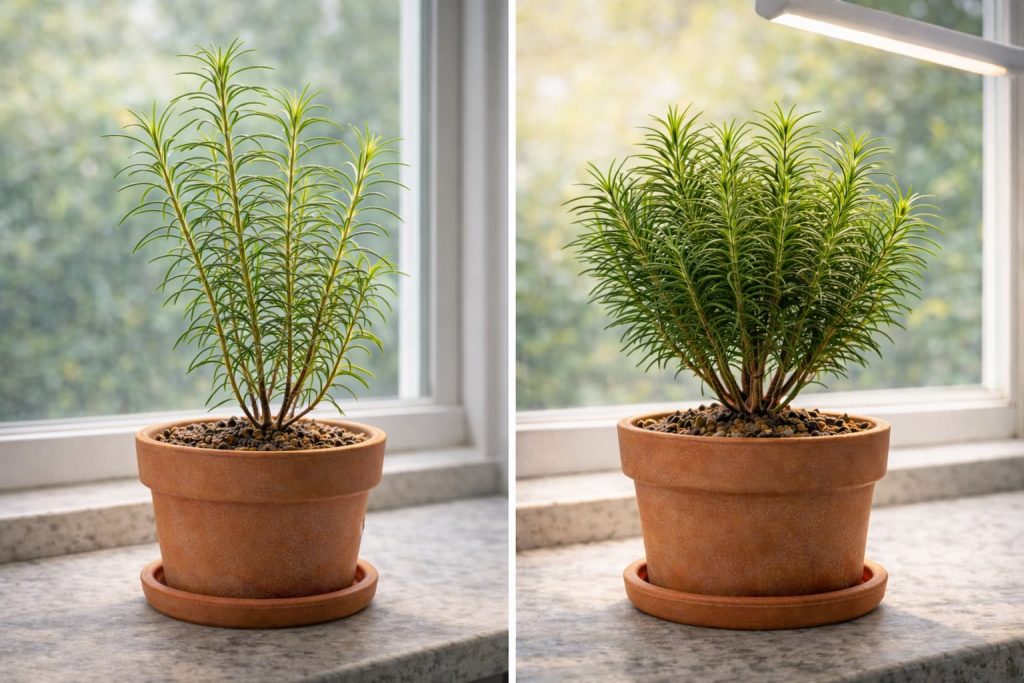
Light intensity determines whether rosemary maintains compact structure or enters survival mode.
Cause → Effect → Solution
Cause:
Indoor light is significantly weaker than Mediterranean sunlight.
Effect:
Reduced photosynthesis → elongated stems → pale leaves → structural weakness.
Solution:
Provide 8–10 hours of strong direct light daily.
Minimum Indoor Standard
- 6 hours direct light (absolute minimum)
- 8–10 hours ideal
- South-facing window preferred
However, in most climates — especially winter — window light alone is insufficient.
Grow Light Setup (Recommended)
- Full-spectrum LED
- 20–30 cm (8–12 inches) above plant
- 10–12 hours per day
This single adjustment prevents:
- Leggy growth
- Weak stems
- Sudden winter collapse
Light management is the most important factor in long-term survival.
Soil and Root Oxygen
Definition
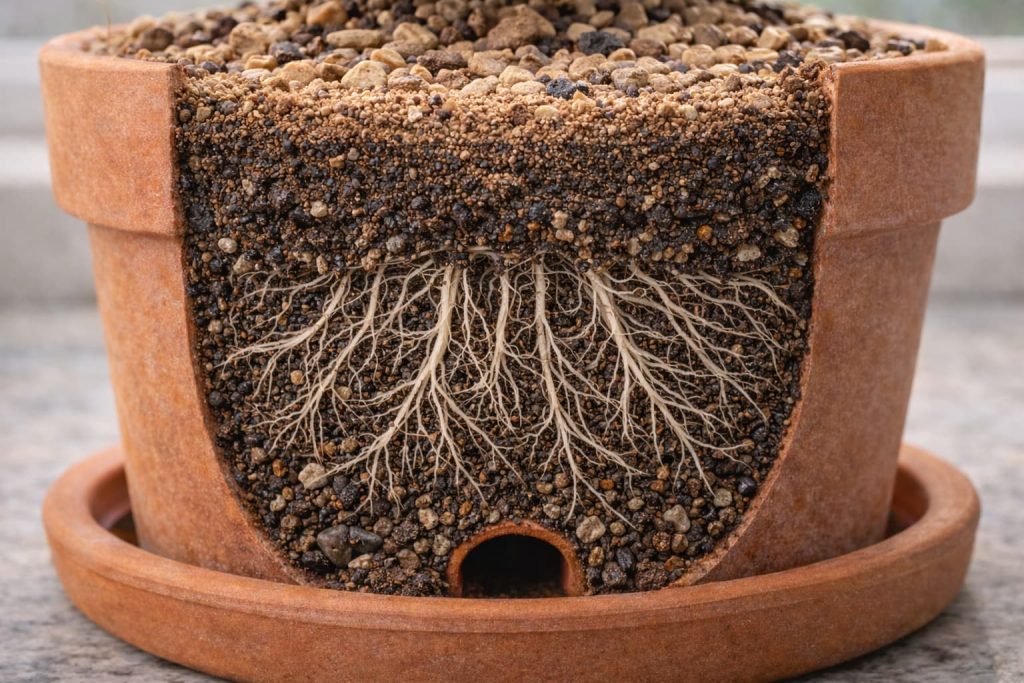
Rosemary roots require oxygen between watering cycles.
Compact, moisture-retentive soil suffocates roots and leads to rot.
Ideal Soil Mix
- 60–70% quality potting soil
- 30–40% coarse sand, grit, or perlite
Avoid:
- Heavy compost blends
- Peat-heavy mixes
- Self-watering containers
Drainage and airflow at the root zone are more important than nutrient richness.
Watering: Preventing Root Rot
Core Rule
Water deeply, then allow the top 3–5 cm (1–2 inches) of soil to dry before watering again.
Rosemary tolerates mild dryness better than constant moisture.
Cause → Effect → Solution
Cause:
Frequent watering keeps soil oxygen-poor.
Effect:
Roots suffocate → fungal growth → leaf browning → plant collapse.
Solution:
Extend watering intervals and improve drainage.
Warning Signs of Overwatering
- Drooping despite wet soil
- Sour soil smell
- Browning lower leaves
- Soft stem bases
When these appear, roots are already stressed.
Pruning to Maintain Structure
Indoor rosemary requires structural maintenance.
Without pruning:
- Top growth becomes heavy
- Branching reduces
- Stems thin and elongate
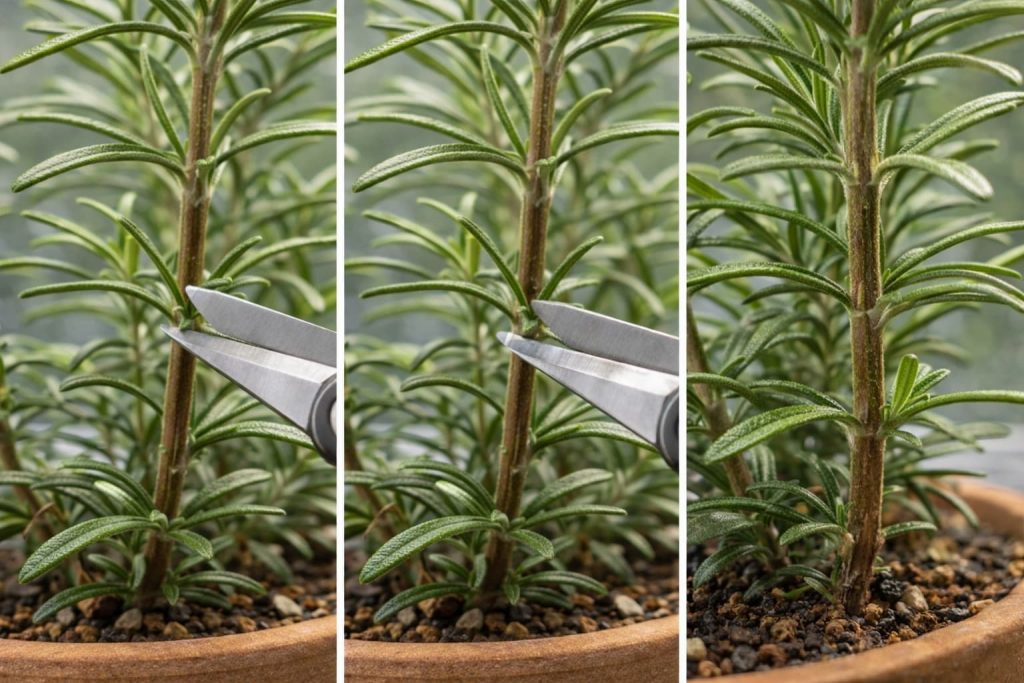
Correct Indoor Pruning Method
- Pinch soft tips regularly
- Cut just above a leaf node
- Never cut into bare woody stems indoors
Light, frequent pruning increases:
- Branch density
- Stem thickness
- Compact growth
Avoid heavy pruning during low-light winter months.
Airflow and Temperature
Rosemary prefers moderate temperatures and moving air.
Ideal indoor range:
- 18–22°C (65–72°F) daytime
- Slightly cooler nights
Still air increases:
- Fungal risk
- Weak stem development
- Humidity stress
Gentle airflow from a fan significantly improves structural strength.
The 5 Most Common Indoor Rosemary Killers
- Insufficient light
- Overwatering
- Poor drainage
- No air movement
- Treating rosemary like a tropical herb
Rosemary is a woody shrub, not a tender leafy herb like basil.
Management strategy must reflect this difference.
Can Rosemary Live Indoors Long-Term?
Yes — if light and drainage are properly managed.
However:
- Growth slows indoors
- Plants remain smaller
- Light becomes the limiting factor
Experienced growers often:
- Move rosemary outdoors in summer
- Return it indoors before frost
This seasonal cycling increases longevity significantly.
Indoor survival is possible — but environmental correction is required.
Recovery: Can You Save a Struggling Rosemary?
If Growth Is Leggy
Cause: Low light
Action: Increase light immediately; prune lightly once stable.
If Leaves Are Browning
Cause: Root stress
Action: Check drainage; reduce watering frequency.
If Soil Smells Sour
Cause: Root rot developing
Action: Repot into dry, fast-draining mix; trim damaged roots.
If Plant Is Top-Heavy
Cause: Lack of pruning
Action: Pinch soft growth to encourage branching.
Early correction greatly improves survival chances.
Signs of a Healthy Indoor Rosemary
- Dense branching
- Deep green foliage
- Strong fragrance
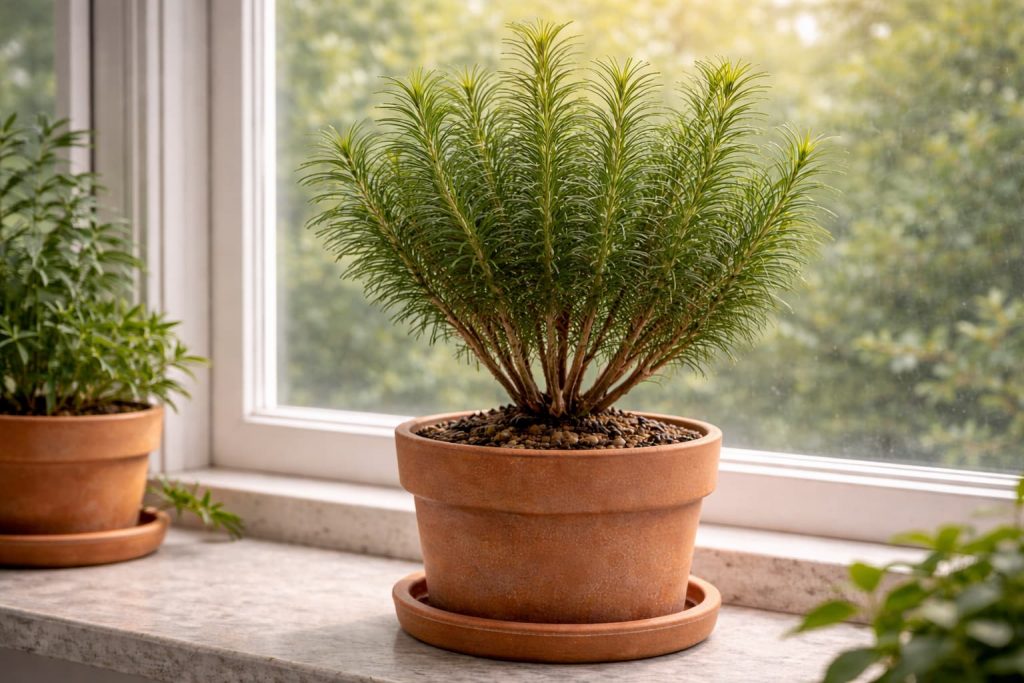
- Firm upright stems
- Even growth pattern
Compact structure indicates correct light levels.
Indoor Rosemary Survival Checklist
Before assuming failure, confirm:
- Is it receiving 8+ hours of strong light?
- Does the pot drain fully?
- Does soil dry between watering?
- Is there airflow?
- Is pruning done lightly and regularly?
If most answers are “no,” adjust conditions before replacing the plant.
Final Conclusion
Indoor rosemary success is not about gentle care.
It is about environmental accuracy.
Replicate:
- Strong light
- Dry cycles
- Airflow
- Structural pruning
When these conditions are met, rosemary can live indoors for years.
Failure is rarely random — it is almost always environmental.