Quick Answer
Struggling to keep begonias alive indoors?
Most begonias don’t die because you’re doing something wrong —
they fail because their environment isn’t stable enough.
Fix the environment, and they become surprisingly easy.
Why Begonias Feel So Special
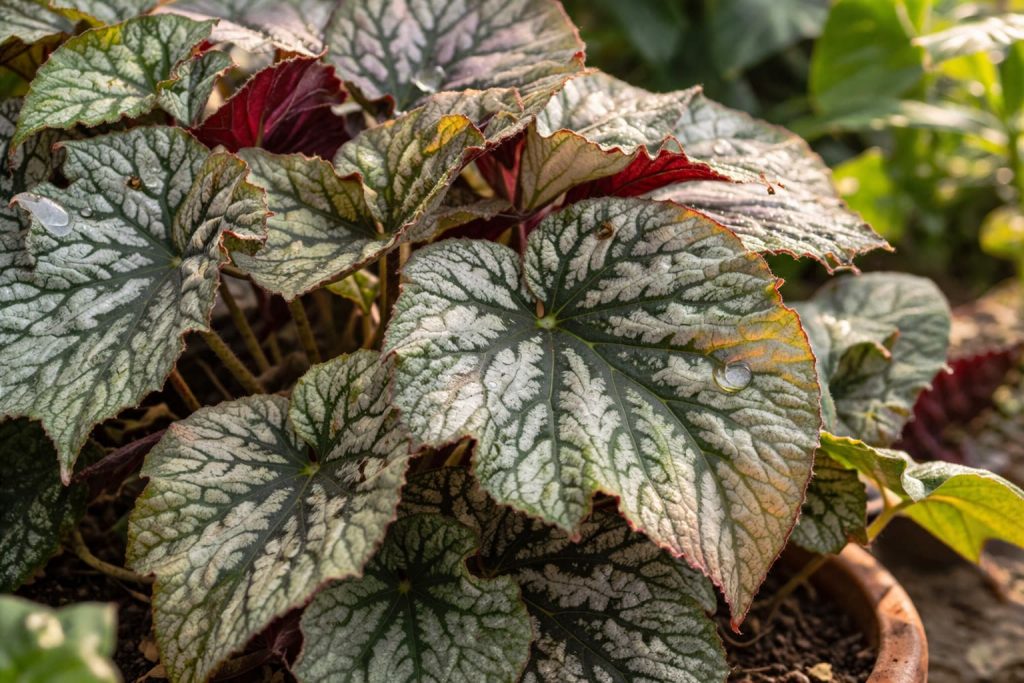
Begonias are different from most houseplants.
They’re not about flowers.
They’re about light, texture, and detail.
- Silver veins that catch the morning light
- Deep reds that shift throughout the day
- Leaves that look almost unreal
A begonia doesn’t just sit in a room —
it quietly changes how the space feels.
That’s why people fall in love with them so quickly.
And why it’s so frustrating when they suddenly decline.
Why Most Begonias Don’t Survive Indoors
This is where most guides fall short.
They tell you what to do —
but not what’s actually happening.
Let’s break it down simply.
Brown, Crispy Edges
What you see:
Dry, browning edges on leaves
What’s really happening:
The air is too dry — the plant is losing moisture faster than it can keep up
Fix:
- Increase humidity (not just watering)
- Keep away from heaters or AC
- Try grouping plants together
Leaves Dropping for No Reason
What you see:
Healthy leaves suddenly falling
What’s happening:
Begonias react to change — even small ones
Fix:
- Keep the plant in one place
- Maintain a consistent watering rhythm
- Avoid sudden temperature shifts
Pale or Washed-Out Leaves
What you see:
Color fading, patterns disappearing
What’s happening:
Not enough light
Fix:
- Move closer to a window
- Bright, indirect light is essential
Soft Stems or Rot
What you see:
Mushy stems, collapsing plant
What’s happening:
Too much water + poor airflow
Fix:
- Let soil dry slightly between watering
- Use airy soil mix (very important)
Quick Fix Guide (Save This)
| Problem | Likely Cause | What to Do |
|---|---|---|
| Brown edges | Low humidity | Increase moisture in air |
| Leaf drop | Stress / movement | Keep conditions stable |
| Pale leaves | Low light | Move closer to window |
| Soft stems | Overwatering | Improve drainage |
If you only remember one thing:
Begonias need stability more than anything else.
What Begonias Actually Need (Simplified)
Forget complicated rules.
Focus on this:
- Light: Bright, indirect
- Water: Let top layer dry slightly
- Humidity: Moderate (40–60%)
- Soil: Light, airy, well-draining
Internal link opportunity:
(You can later link here)
- How to Increase Humidity Indoors
- Best Soil Mix for Indoor Plants
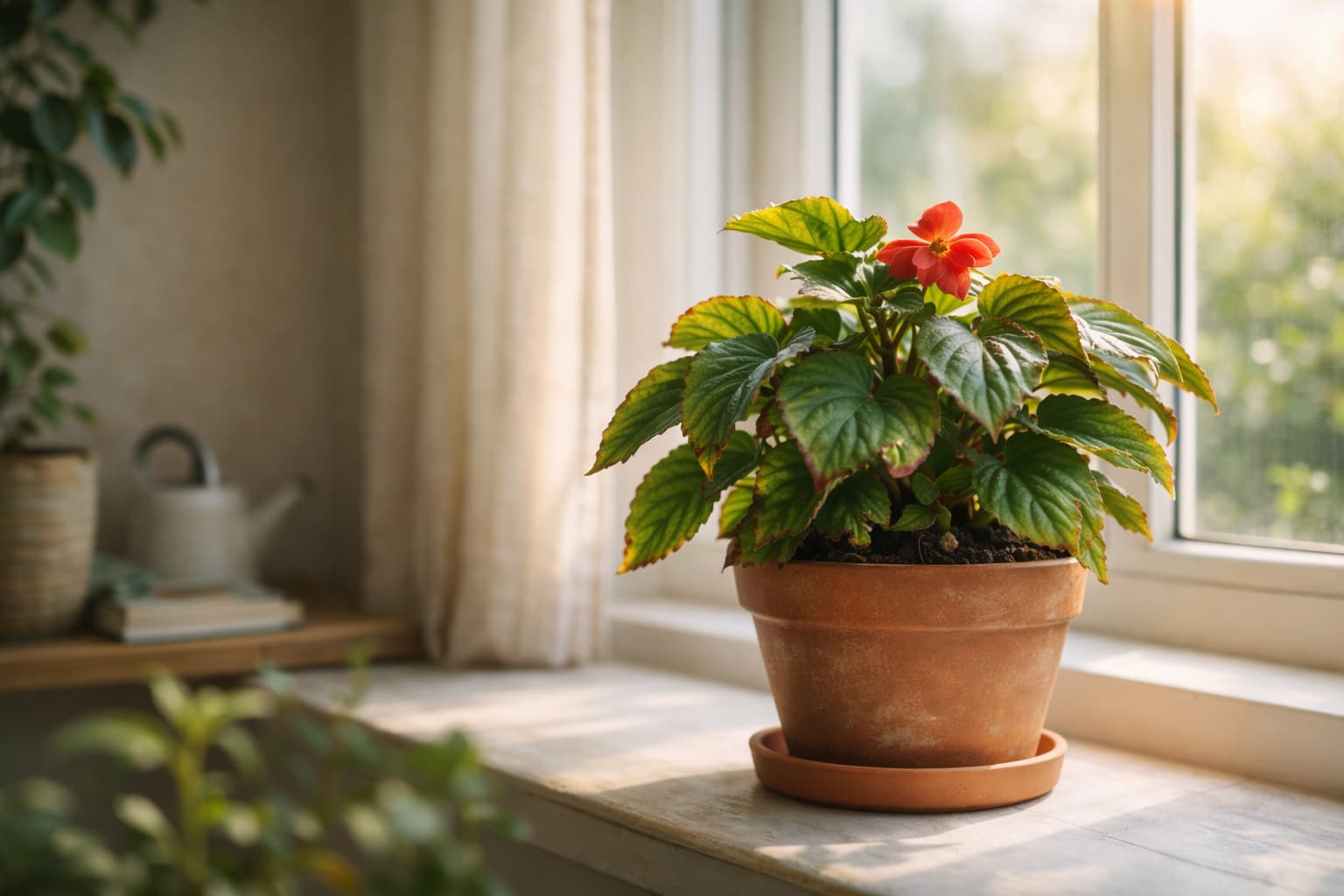
The One Place Begonias Actually Thrive
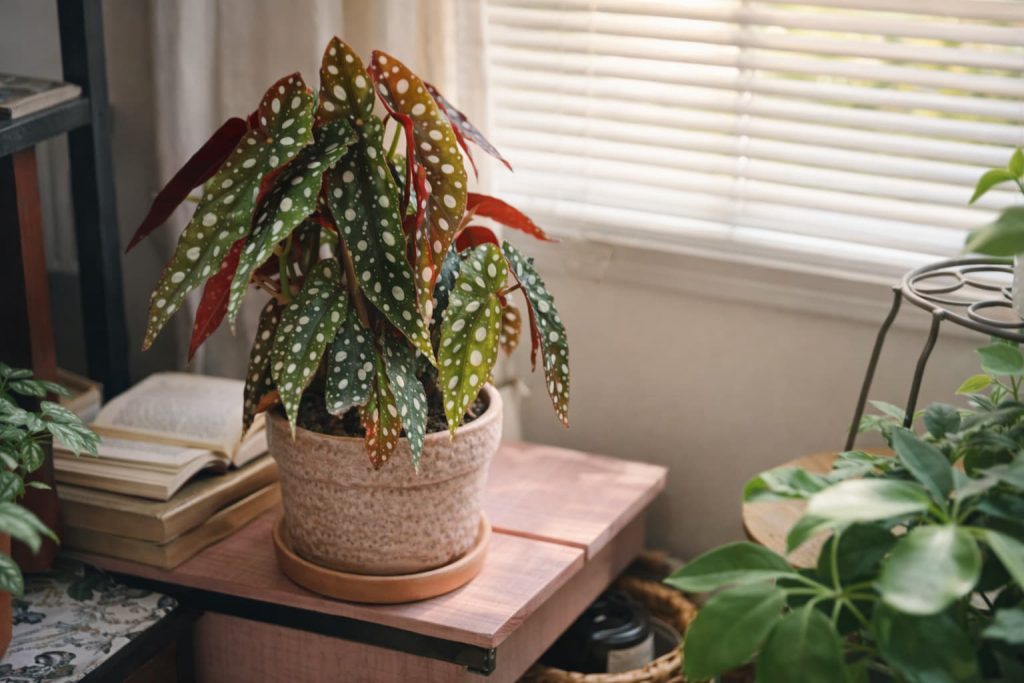
Most people focus on care.
But placement matters more.
Best spots:
- Bathroom (naturally humid)
- Kitchen near a window
- Bright corners with indirect light
Worst spots:
- Dry living rooms
- Near heaters
- Dark shelves
If your begonia keeps struggling,
try moving it before changing everything else.
Best Begonias for Indoors (Beginner-Friendly)
Start with the right plant — it makes everything easier.
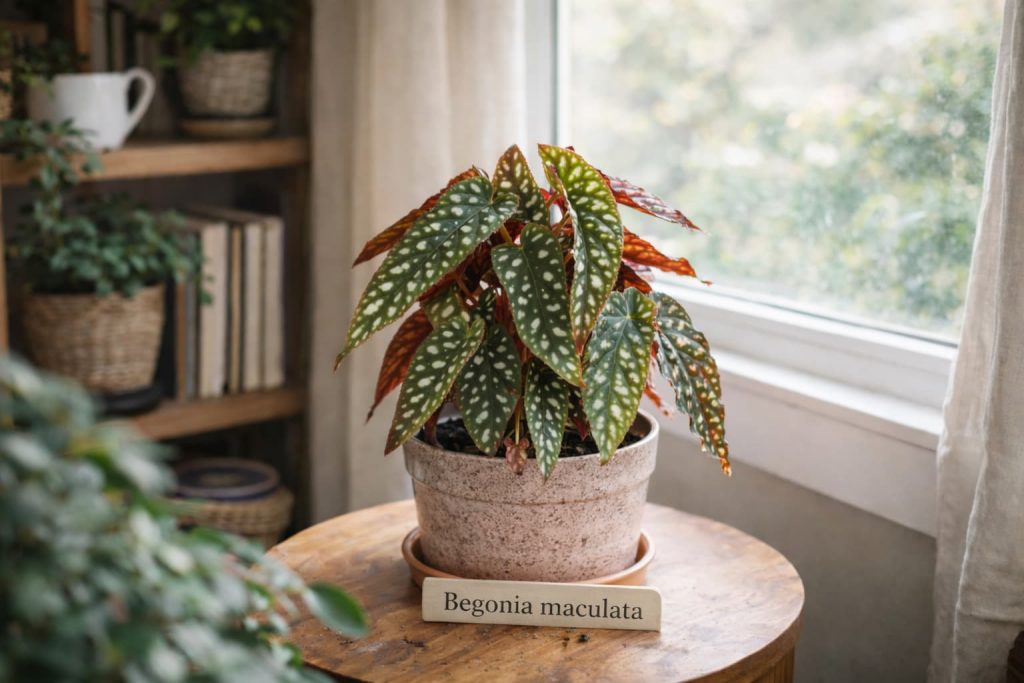
Begonia maculata
Striking and relatively forgiving
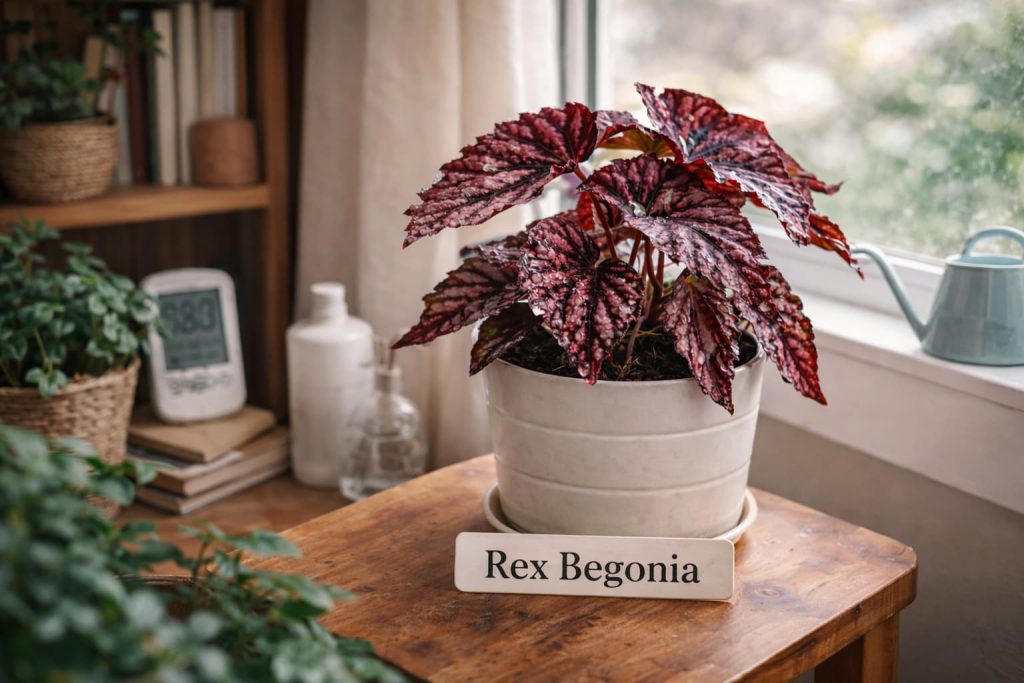
Rex Begonia
Beautiful but more sensitive
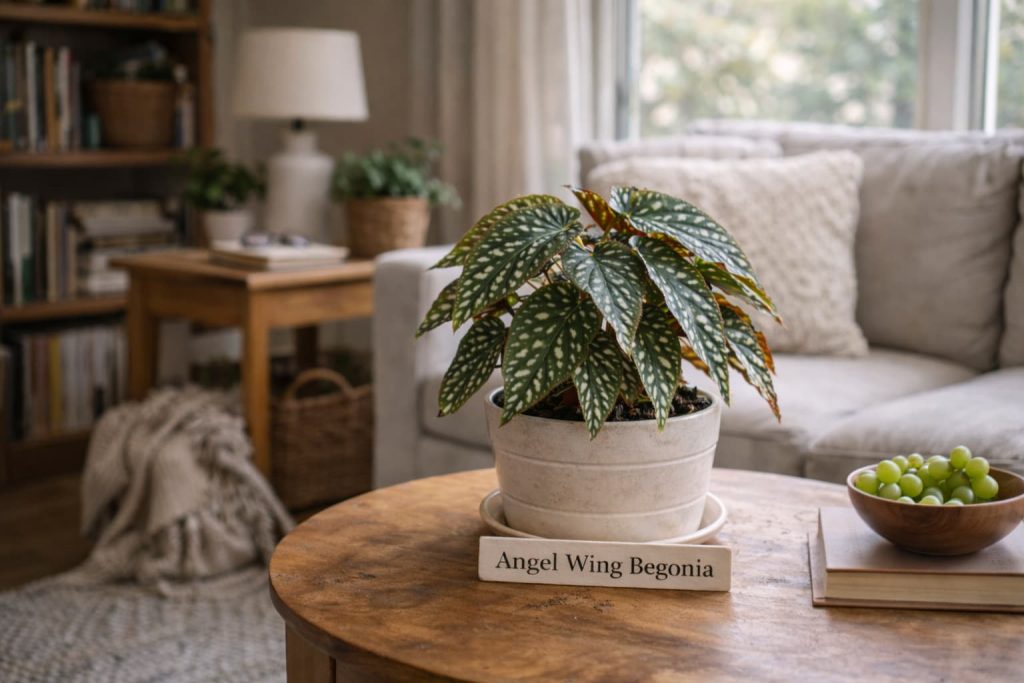
Angel Wing Begonia
Easier for beginners, more structured
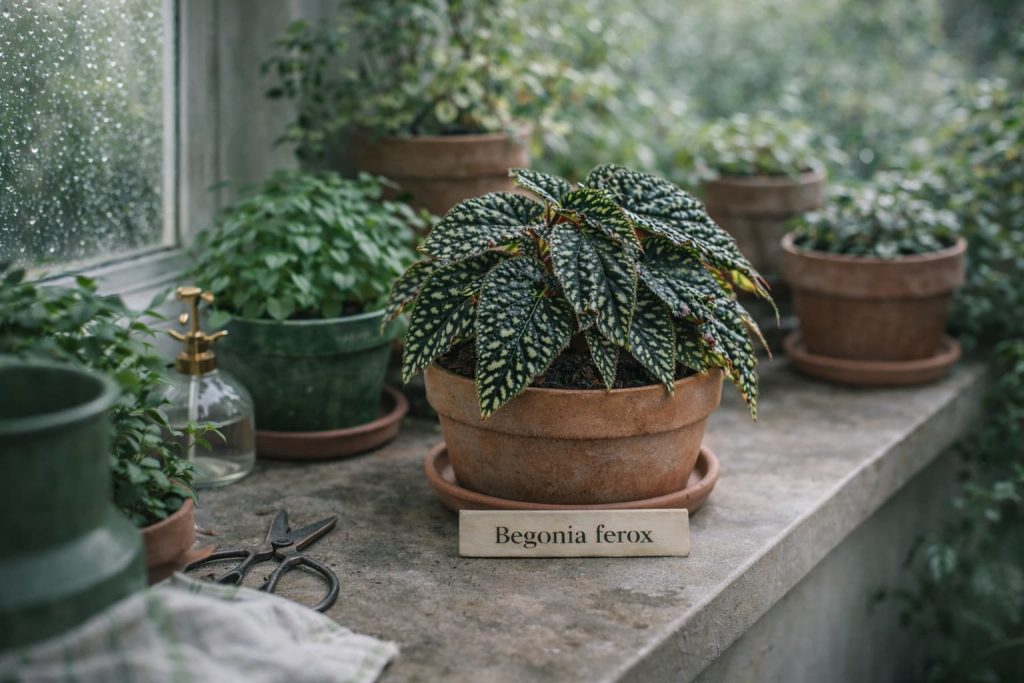
Begonia ferox
Dramatic, best for more experienced growers
Start simple, then explore.
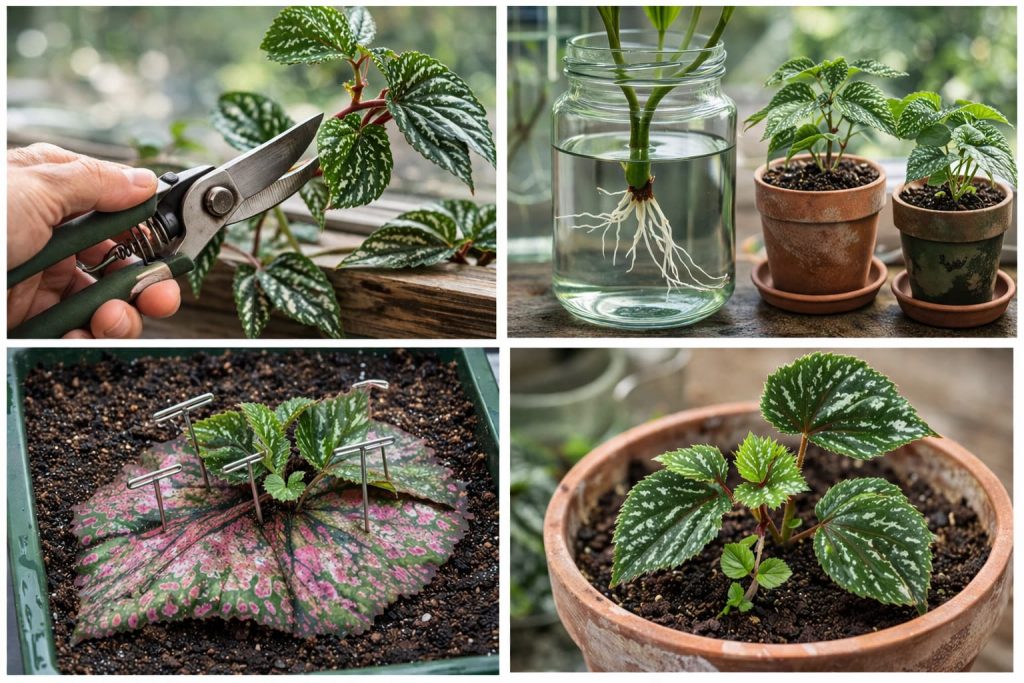
How to Propagate Begonias
Begonias are surprisingly easy to multiply.
Stem cuttings
Cut → place in water or soil → wait
Leaf cuttings (Rex)
Lay leaf on soil → keep lightly moist
Internal link opportunity:
How to Propagate Houseplants
Common Mistakes to Avoid
- Overwatering
- Ignoring humidity
- Moving plants too often
- Too little light
- Dense soil
FAQ (Quick Answers)
Are begonias hard to grow?
Not if their environment is stable.
Do begonias need humidity?
Yes — it’s one of the biggest factors.
Why are my begonia leaves turning brown?
Usually dry air or inconsistent watering.
Can begonias grow in low light?
They survive, but won’t thrive.
A Final Thought
Begonias don’t ask for perfect care.
They just need a place where things don’t change too much.
A bit of light.
A bit of moisture in the air.
A rhythm they can settle into.
Once they find that,
they don’t just grow —
They quietly become part of your space.
Still struggling with your begonia?
Tell me where it sits (light, room, watering),
and I’ll help you figure out what’s going wrong.