From fresh blooms to a shelf-stable flower tea—gently and safely.
Why Drying Chrysanthemum Flowers Matters
Once you’ve learned how to grow chrysanthemums for tea and chosen the right varieties, the next natural question is:
“How do I dry chrysanthemum flowers for tea—properly?”
Drying isn’t just a preservation step.
It’s what transforms a fresh garden bloom into something you can enjoy throughout the year.
Done well, drying helps:
- Preserve aroma and flavor
- Extend shelf life
- Maintain flower quality for tea brewing
The good news?
You don’t need special equipment or complicated techniques.
When to Harvest Chrysanthemum Flowers for Drying
Timing makes a noticeable difference.
Best Harvest Stage
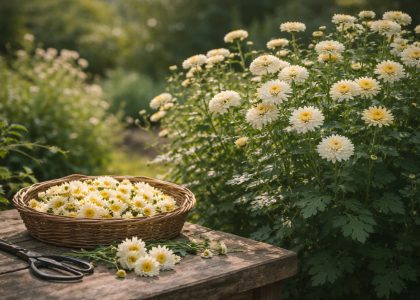
- Flowers should be fully open
- Petals should look fresh, not browning or curling
- Avoid blooms past their peak
Best Time of Day
- Late morning is ideal
- Harvest after dew has dried
- Avoid wet or rainy days
Fresh, dry flowers are easier to dry evenly and safely.
Step 1: Gently Clean the Flowers (If Needed)
If your chrysanthemums were grown in a clean home garden, cleaning may be minimal.
How to clean:
- Gently shake off insects or debris
- If necessary, rinse briefly with cool water
- Pat dry carefully with a clean towel
Important:
Flowers must be fully dry on the surface before the drying process begins.
Step 2: Prepare the Flowers for Drying
Before drying, do a quick inspection:
- Remove damaged or discolored petals
- Separate flower heads if they’re very dense
- Keep flowers in a single layer—no stacking
This step helps prevent uneven drying and moisture buildup.
Step 3: Choose Your Drying Method
For home gardeners, air drying is the most beginner-friendly and reliable option.
Method 1: Air Drying (Recommended for Beginners)
This is the most common and gentle method.
How to air dry:
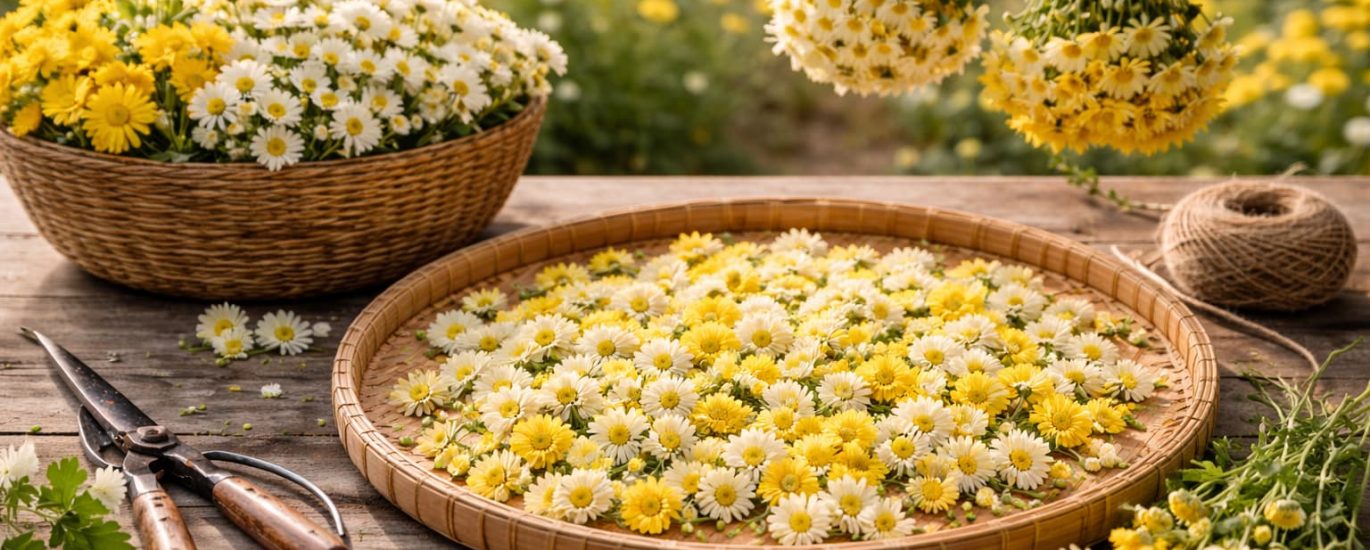
- Place flowers in a single layer on a drying rack, tray, or mesh screen
- Keep them in a warm, shaded, well-ventilated area
- Avoid direct sunlight
- Turn flowers every 1–2 days
Drying time:
- Usually 5–10 days, depending on humidity
Air drying preserves:
- Natural color
- Delicate floral aroma
- Balanced flavor for tea
Method 2: Low-Heat Oven Drying (Optional)
If humidity is high or time is limited, low-heat drying can work.
How to do it safely:
- Set oven to the lowest possible temperature
- Place flowers on a parchment-lined tray
- Keep the oven door slightly open
- Check frequently to avoid overheating
This method is faster, but requires close attention to prevent loss of aroma.
Method 3: Dehydrator Drying (If Available)
Food dehydrators offer controlled airflow and temperature.
- Use the lowest heat setting
- Arrange flowers in a single layer
- Check regularly
This method works well but is not required for good results.
Step 4: How to Know When Flowers Are Fully Dry
Properly dried chrysanthemum flowers should:
- Feel dry and crisp to the touch
- Retain their shape
- Have no soft or damp areas
- Smell clean and lightly floral
If flowers feel flexible or cool, they need more drying time.
Step 5: Storing Dried Chrysanthemum Flowers
Correct storage keeps your tea fresh longer.
Best storage practices:
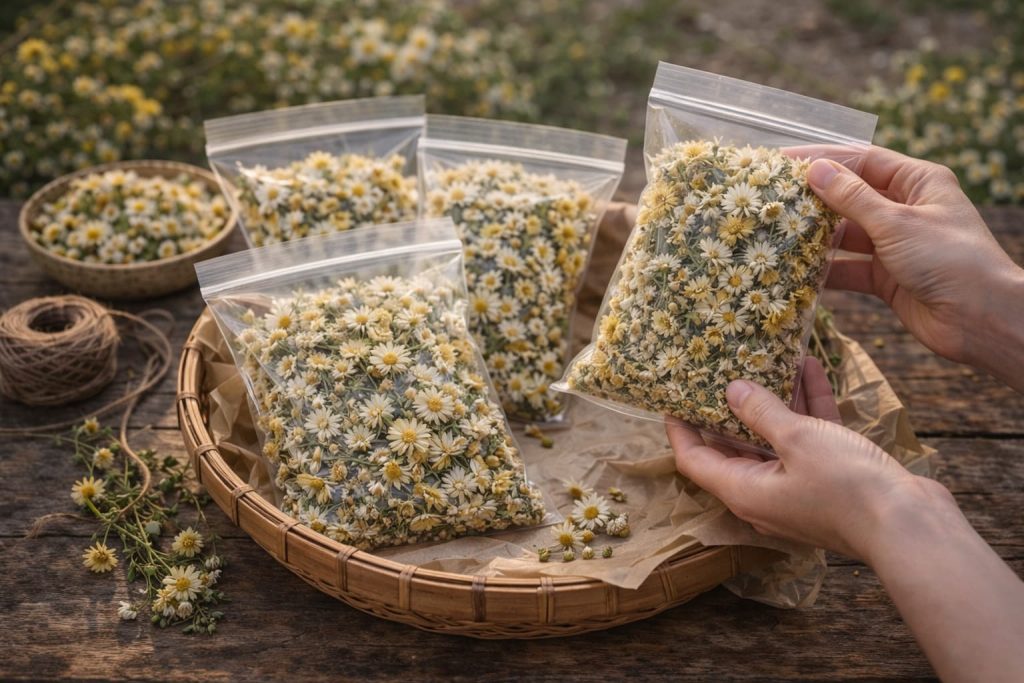
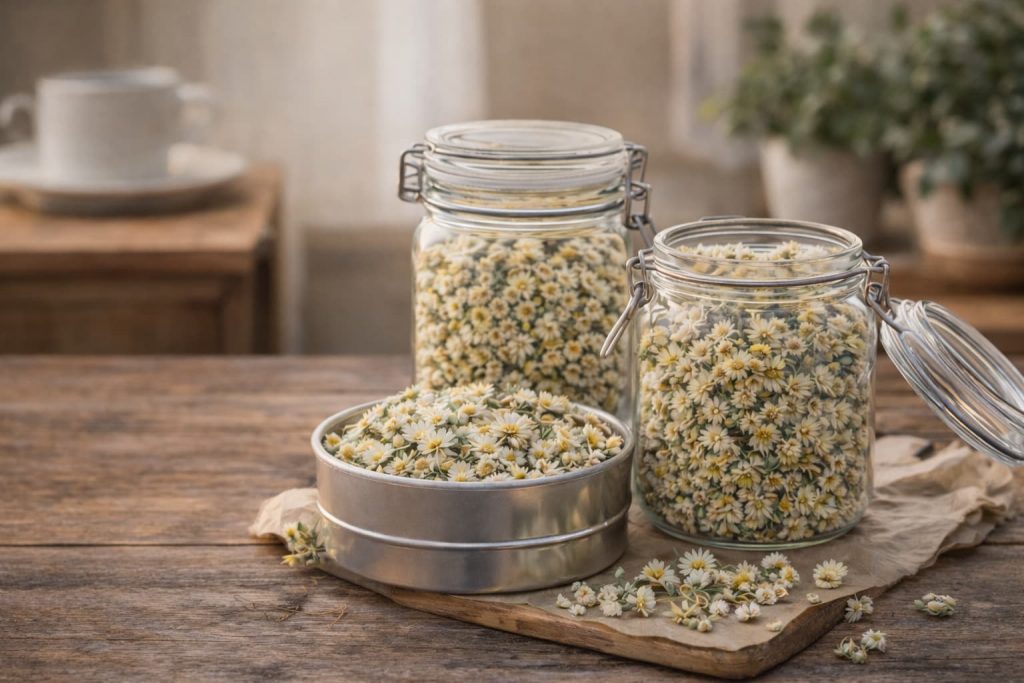
- Use airtight glass jars or tins
- Store in a cool, dry place
- Keep away from direct light and heat
Avoid plastic bags, which can trap moisture.
Shelf life:
- Typically 6–12 months when stored properly
- Aroma may gradually soften over time
How to Use Dried Chrysanthemum Flowers for Tea
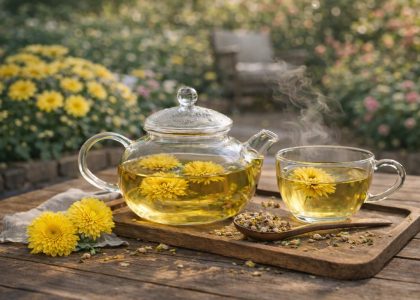
Once dried, using them is simple:
- 1–2 dried flowers per cup
- Hot water (not boiling)
- Steep 3–5 minutes
Adjust quantity and steeping time based on personal taste.
Common Drying Mistakes to Avoid
❌ Drying in direct sunlight
❌ Storing before flowers are fully dry
❌ Using flowers treated with pesticides
❌ Overheating during oven drying
Drying should be slow and gentle, not rushed.
Why Drying Your Own Flowers Is Worth It
Drying chrysanthemums at home does more than save money.
For gardeners, it:
- Extends the value of seasonal blooms
- Creates a tangible garden-to-cup connection
- Encourages mindful, seasonal habits
The flower’s life doesn’t end at bloom—it simply changes form.
Final Thoughts
Learning how to dry chrysanthemum flowers for tea is a quiet but powerful skill.
It requires no special tools—only patience, attention, and respect for the plant.
Once you master it, every cup of tea becomes a reminder that gardening doesn’t stop in the garden.
It continues into everyday life.