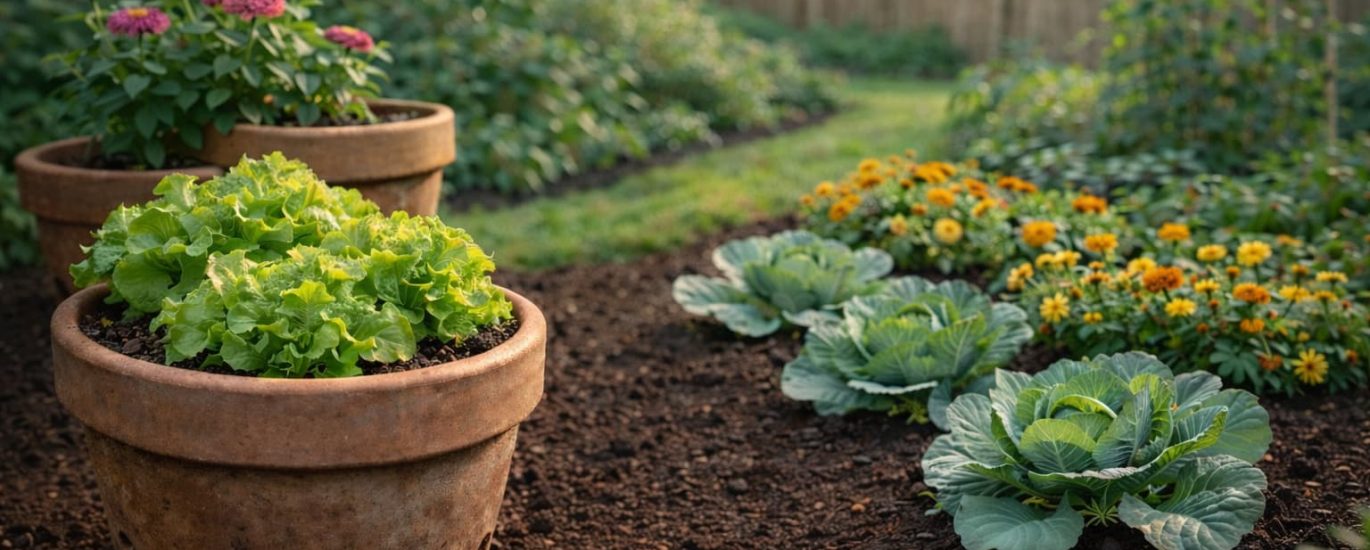
At some point, almost every gardener faces the same quiet question:
Should I plant this in the ground — or in a pot?
The answer is rarely about what’s “better.” It’s about what gives you control.
Containers aren’t a compromise. They’re a strategy for working with your garden, not against it.
The False Debate About “Real Gardening”
There’s a quiet assumption that still lingers in many gardens:
that planting in the ground is real gardening — and containers are what you do when conditions aren’t ideal.
This way of thinking misses something important.
Containers and in-ground planting aren’t opposing methods. They’re responses to different constraints. One isn’t more authentic than the other; one is simply more appropriate in certain situations.
Good gardening isn’t defined by where plants grow.
It’s defined by how well their needs are understood and met.
What Soil Conditions Really Limit
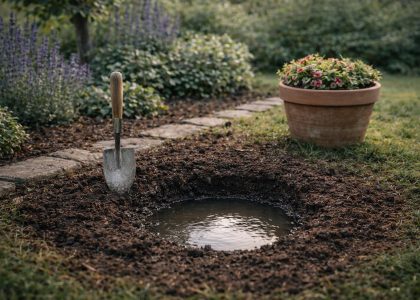
In-ground planting works beautifully when soil conditions cooperate. But soil is not just “there” — it has structure, memory, and limitations.
Common constraints include:
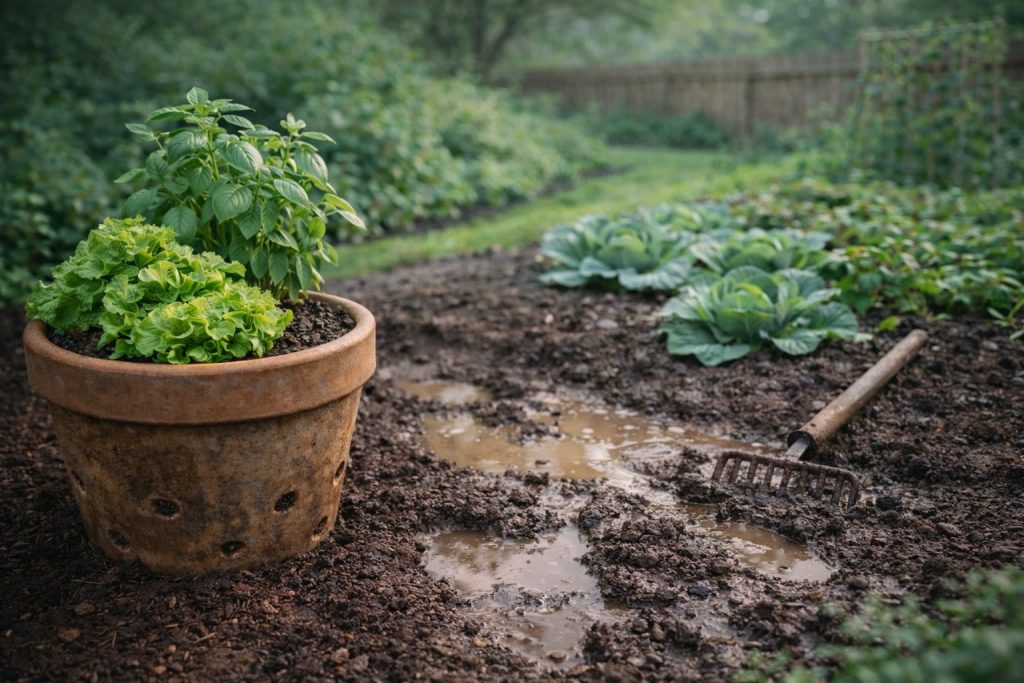
- Poor drainage, especially in winter or clay-heavy soils
- Compaction, often caused by foot traffic or repeated wet cycles
- Slow warming in spring, delaying root activity
- Inconsistent moisture, particularly in exposed beds
These issues don’t reflect a gardener’s skill. They reflect geology, climate, and history.
When soil limits root health, no amount of care above ground can fully compensate.
What Containers Give You Control Over
Containers change the equation by shifting control back to the gardener.
They allow precise decisions about:
- Drainage — choosing mixes that release excess moisture quickly
- Soil structure — light, oxygen-rich media tailored to the plant
- Placement — sun, shade, wind, and seasonal movement
- Temperature moderation — especially useful in winter or heat extremes
This level of control is not a shortcut. It’s a strategy — particularly valuable when working with bulbs, seasonal flowers, or plants sensitive to moisture and temperature fluctuations.
In many climates, containers reduce risk rather than effort.
When In-Ground Planting Still Wins
Despite their advantages, containers are not universally better.
In-ground planting excels when:
- Soil drains well and holds structure year-round
- Plants require long-term stability or deep root systems
- Large-scale plantings benefit from natural moisture buffering
- Minimal maintenance is a priority
Trees, shrubs, and perennial borders often thrive best when allowed to establish themselves directly in the soil, where root systems can expand without constraint.
The ground, when healthy, remains the most forgiving environment.
Choosing the Right Approach for Your Garden
The decision is rarely ideological. It’s situational.
Ask a few quiet questions:
- Does my soil drain reliably in winter?
- Do I need flexibility as seasons change?
- Is temperature control more important than permanence?
- Am I managing risk — or maximizing long-term growth?
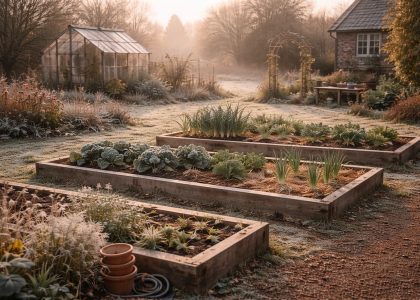
Many successful gardens use both methods simultaneously, assigning each plant to the environment where it performs best.
That balance is not indecision. It’s maturity.
Practical Guidelines You Can Use Right Now
If you want a simple, experience-based way to decide, start here:
Use the ground for permanence. Use containers for uncertainty.
As a practical rule, plants that are meant to stay in the same place for years — trees, shrubs, established perennials — generally perform best in the ground once soil conditions are reliable.
Plants that are seasonal, moisture-sensitive, or still “under evaluation” are often better kept in containers, where adjustments are easier and mistakes are less costly.
Common Pitfalls to Avoid
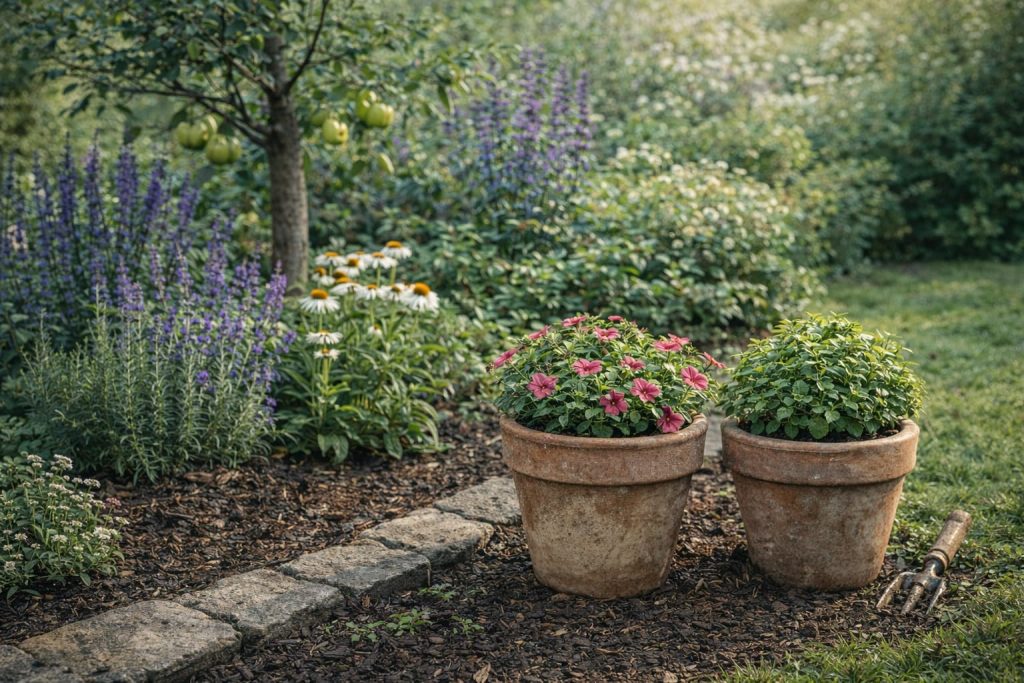
Even experienced gardeners run into trouble when containers and in-ground planting are treated as interchangeable. A few patterns show up again and again.
1. Using containers to “fix” poor soil — indefinitely
Containers are excellent for working around soil problems, but they’re not always meant to replace the ground forever.
If a plant:
- Needs frequent watering to stay upright
- Becomes root-bound every season
- Struggles once temperatures fluctuate
…it may not be a container issue at all. It may be a sign that the plant wants long-term stability — or that the soil itself needs improvement.
Containers buy time. They don’t erase soil limitations.
2. Assuming drainage problems can be solved above ground
One of the most common mistakes is focusing on what happens above the soil while ignoring what happens below it.
Adding compost, mulch, or fertilizer won’t compensate for:
- Compacted subsoil
- Persistent waterlogging
- Poor air circulation around roots
When roots can’t breathe, growth stalls — regardless of how well the plant looks cared for.
In these situations, containers succeed not because they’re easier, but because they remove the root system from an unhealthy environment.
3. Treating containers as “low maintenance” by default
Containers offer control — not convenience.
They often require:
- More attentive watering
- Regular soil renewal
- Protection from temperature extremes
When containers are neglected, plants decline faster than they would in the ground. Control only works when it’s used intentionally.
4. Planting long-term plants in pots for too long
Some plants tolerate containers temporarily, but not permanently.
Trees, shrubs, and deep-rooted perennials may survive in pots for years — but survival isn’t the same as thriving.
If a plant consistently:
- Outgrows its container
- Shows stress during heat or cold
- Requires frequent intervention
…it’s often telling you it’s ready for the ground.
Listening to that signal is part of experienced gardening.
5. Believing one method should work everywhere
Gardens are shaped by climate, soil history, and microconditions — not ideology.
A method that works beautifully in one yard may struggle a few streets away. Flexibility is not inconsistency; it’s responsiveness.
The most resilient gardens adapt method to place, not the other way around.
A Quiet Rule of Thumb
When conditions are stable, let the ground do the work.
When conditions are uncertain, containers offer clarity.
The most resilient gardens are not those that insist on one method — but those that choose deliberately, without bias.